Kong’s Series C deck is a masterclass in visual storytelling for technical infrastructure. Spanning only 10 slides, the presentation avoids dense financial tables and instead focuses on the architectural pain points of scaling modern software. By contrasting the inefficiency of managing 'Tens or Hundreds of APIs' with 'Thousands or Millions of connections' (Slide 4) against a unified Kong gateway (Slide 6), the deck makes a compelling case for its middleware. Despite the lack of a formal team slide, financial projections, or a specific 'Ask' within the slides themselves, the company successfu…
Key takeaways
- The deck defines its core market as 'Distributed API Management' on the title slide.
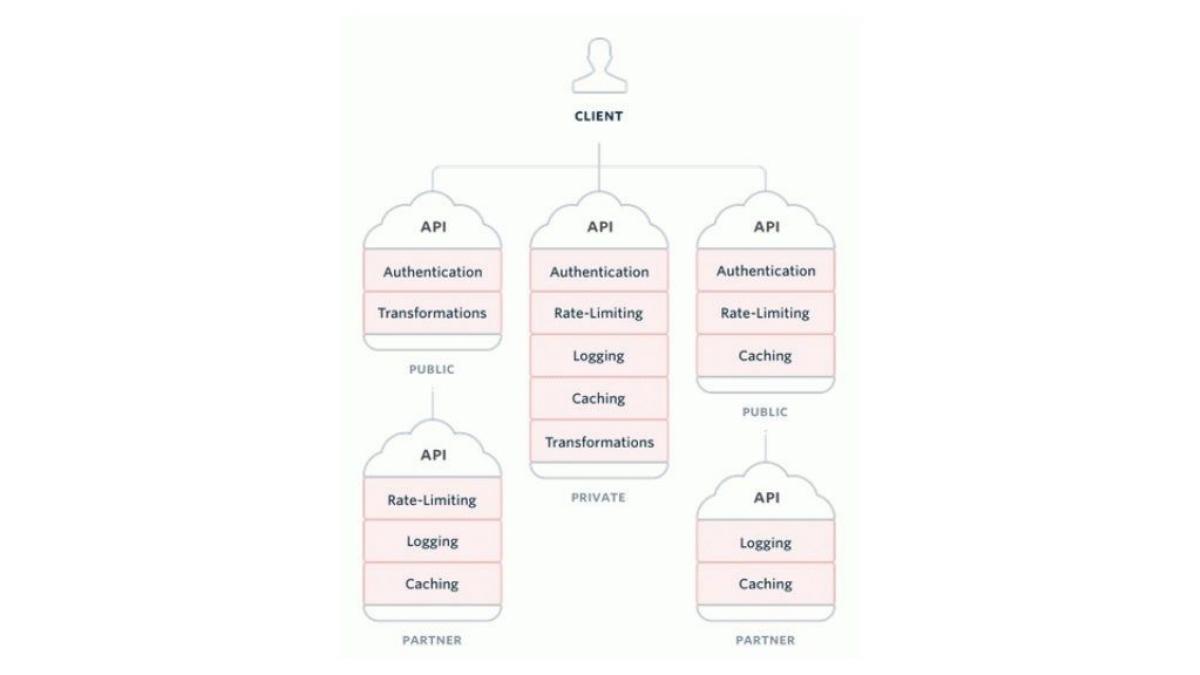
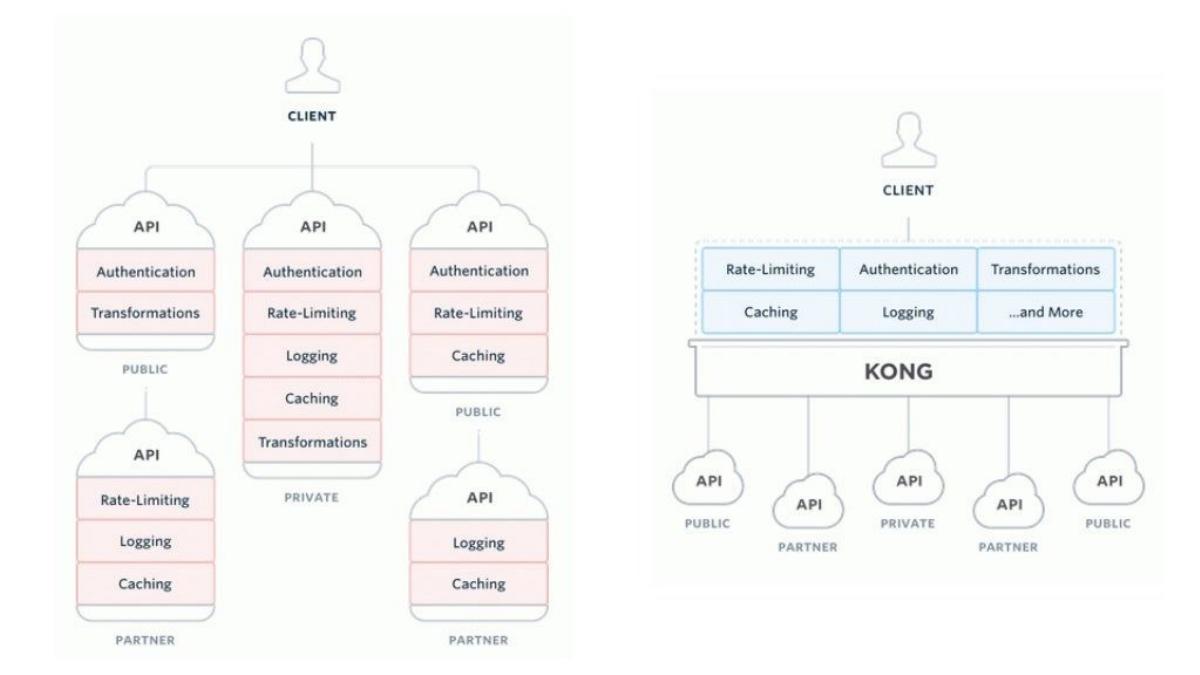
- Slide 3 uses a diagram to illustrate the complexity of managing authentication, rate-limiting, and logging across multiple siloed APIs.
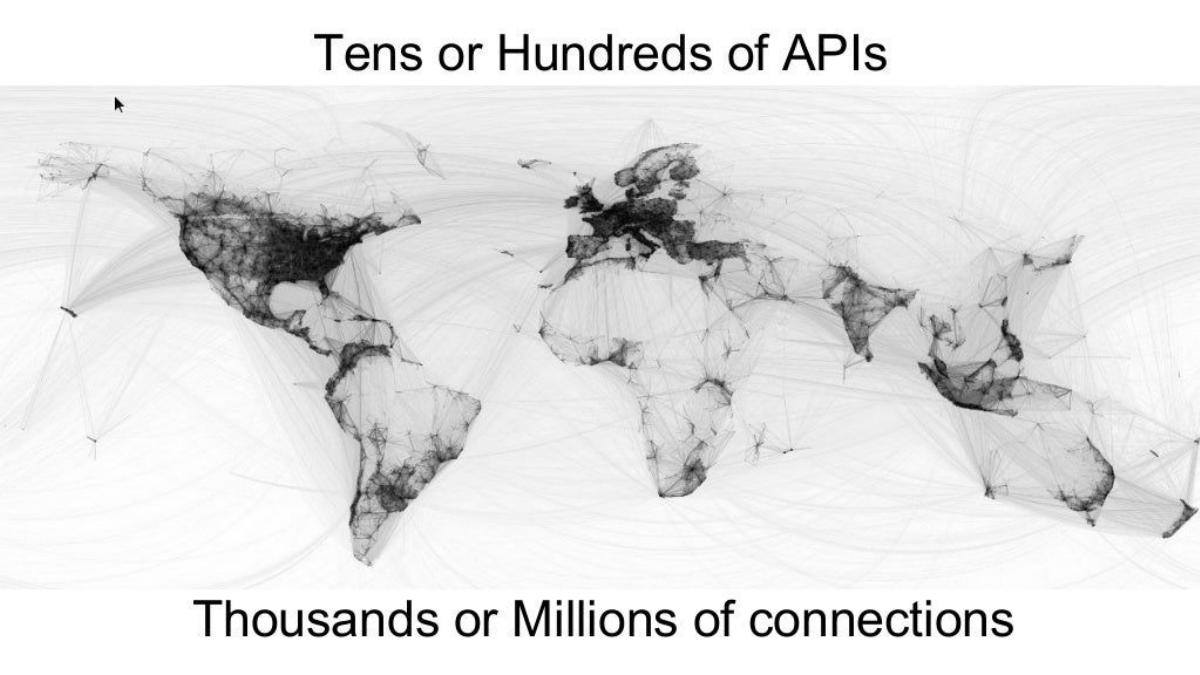
- The scale of the problem is quantified on Slide 4 as involving 'Thousands or Millions of connections' across a global map.
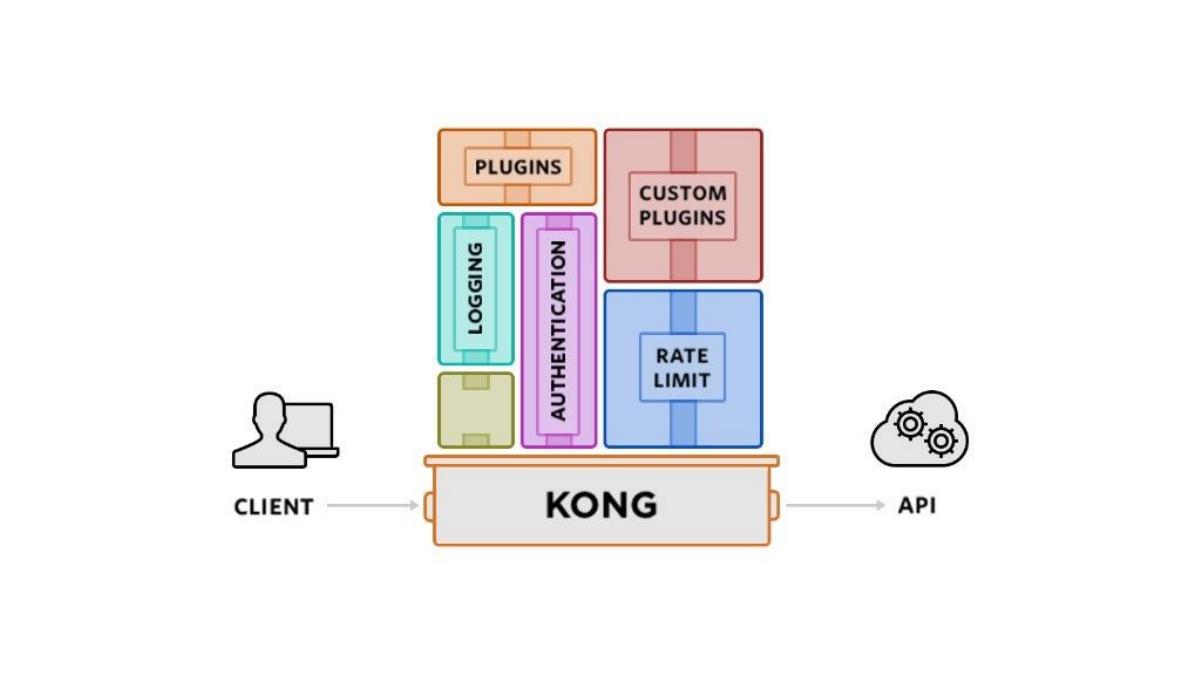
- Slide 5 introduces the solution as a modular gateway capable of handling logging, authentication, and custom plugins.
- A direct 'Before vs. After' comparison on Slide 6 shows how Kong centralizes common services like caching and transformations.
- Technical compatibility is signaled on Slide 7 through logos for Docker, Ubuntu, and LuaRocks.
- Slide 8 uses a large '30 MIN' graphic to imply rapid deployment or time-to-value.
- The final value proposition on Slide 9 promises to 'Shorten Development Time' and be 'Infinitely Expandable'.
Introduction: The Power of Architectural Minimalism
The Kong Series C pitch deck is an anomaly in the world of high-stakes fundraising. While many growth-stage companies produce 30-slide decks filled with cohort analysis and CAC/LTV ratios, Kong (formerly Mashape) secured $43M with a 10-slide visual narrative. This teardown explores how a company can leverage technical clarity to bypass the standard 'pitch deck template' and still win over top-tier firms like Index Ventures.
According to the catalogue facts, this round brought Kong's total funding to $69.1M. The deck is not a data dump; it is a strategic argument for a new way of managing the connective tissue of the internet: APIs. It focuses almost exclusively on the transition from fragmented, repetitive development to a centralized, plugin-based architecture.
Slide 1: Title and Positioning
The deck opens with the Kong logo—a stylized gorilla with a bowtie—and the clear subtitle: Distributed API Management . The slide also identifies the presenter as Trent Oswald, a Full Stack Developer at Mashape. This is a critical detail. It suggests that the deck was designed to speak to the technical reality of the product, positioning it as a tool built by developers for developers. There is no fluff here; the company defines its category immediately.
Slide 2: The Emotional Hook (Visual Metaphors)
Slide 2 is a collage of five images: a child with magnifying glasses, keys in a lock, hands held up in a 'stop' gesture, a butterfly, and a browser window. In a live pitch, these likely served as prompts for a discussion on the core challenges of API management: visibility (the magnifying glass), security (the keys), control (the stop gesture), and the fragility or beauty of the web (the butterfly). By using imagery instead of bullet points, the presenter forces the audience to listen to the narrative rather than read the slide.
Slide 3: The Problem of Fragmentation
Slide 3 introduces the technical 'villain' of the story. It shows a diagram of a client connecting to multiple APIs (Public, Private, and Partner). Each individual API is burdened with its own stack of Authentication, Transformations, Rate-Limiting, Logging, and Caching . The visual makes the inefficiency obvious: developers are rebuilding the same middleware for every single service. This is the 'before' state that Kong intends to disrupt.
Slide 4: The Scale of the Challenge
To move from a technical problem to a venture-scale opportunity, Slide 4 introduces the concept of volume. Over a grayscale map of global connectivity, the text reads: Tens or Hundreds of APIs and Thousands or Millions of connections . This slide justifies the Series C valuation. It isn't just about making one developer's life easier; it is about managing the massive, global infrastructure of modern digital business.
Slide 5: The Kong Solution
Slide 5 introduces the Kong gateway as a modular box sitting between the Client and the API. It visualizes the 'Plugin' architecture. We see blocks for Logging, Authentication, Rate Limit, and Custom Plugins . This slide communicates the core product value: instead of hard-coding these features into every API, you 'plug' them into the Kong layer. It promises a cleaner, more manageable stack.
Slide 6: The Before and After Comparison
This is the most important slide in the deck. It places the fragmented diagram from Slide 3 side-by-side with the new Kong-mediated architecture. In the Kong version, the individual APIs are 'thin'—they no longer carry the weight of authentication or logging. Instead, those services are centralized in the Kong box. The visual contrast is stark: the right side of the slide looks organized and scalable, while the left side looks cluttered and redundant. This is a classic 'Value Proposition' slide delivered through architecture.
Slide 7: Ecosystem and Compatibility
Slide 7 is a logo wall, but not a customer wall. It features Docker, Ubuntu, Debian, and LuaRocks . This tells the investor that Kong is not a walled garden. It lives where modern developers live. By highlighting these specific technologies, Kong signals that it is part of the 'Cloud Native' movement, which was a massive tailwind during their Series C round.
Slide 8: The Speed Metric
Slide 8 contains only two words: 30 MIN . In the absence of a voiceover, this is a bold claim. It likely refers to the time-to-value. In the enterprise software world, where deployments can take months, a 30-minute setup is a competitive moat. It suggests that the friction to adoption is near zero, which is essential for the 'bottom-up' developer adoption strategy that Kong employed.
Slide 9: The Final Value Prop
Slide 9 summarizes the business impact in three lines: Shorten Development Time , Increase Reliability of common services , and Infinitely Expandable . This slide bridges the gap between the developer (who wants to save time) and the CTO (who wants reliability and scalability). It is the 'so what?' of the entire presentation.
Slide 10: The Close
The deck ends with a simple 'Thank You' and a call to action to visit getkong.org . It also includes the presenter's social handles. Notably, the URL is a .org, emphasizing the open-source roots of the project, which was a key driver of their early growth and community engagement.
What Works in the Kong Deck
Clarity of Architecture: The deck does an exceptional job of explaining a complex middleware product. By using consistent diagrams (Slides 3 and 6), it makes the 'Kong way' look objectively better than the status quo.
Focus on Pain Points: The deck doesn't start with features; it starts with the pain of redundancy. Every developer has felt the frustration of setting up yet another authentication layer. Kong taps into that professional empathy.
Minimalism: By keeping the slides sparse, the company ensures that the focus remains on the speaker. This is a deck designed for a conversation, not for being read in isolation.
What is Missing from the Kong Deck
The Team: There is no slide highlighting the founders or the engineering talent. While the catalogue facts mention the company's history as Mashape, an investor seeing this deck in a vacuum would have no idea who is running the ship.
Financials and Traction: There are no mentions of ARR, growth rates, or customer logos. For a Series C, this is highly unusual. It is likely that these details were provided in a separate document or discussed during the due diligence phase.
Market Size (TAM): While Slide 4 hints at a global scale, there is no specific dollar amount attached to the API management market. Investors usually want to see a path to a multi-billion dollar exit.
Competition: The deck ignores incumbents like Apigee (Google) or MuleSoft (Salesforce). Acknowledging the competitive landscape is usually necessary to explain why your specific approach is superior.
What a Founder Should Copy
The 'Before and After' Visual: If you are building infrastructure or a tool that improves a workflow, use Slide 6 as a template. Show the 'messy' current state and the 'clean' state with your product. It is the most persuasive way to communicate technical value.
Category Definition: Use your title slide to own a category. 'Distributed API Management' is specific and descriptive. It tells the investor exactly which bucket to put you in.
Modular Visualization: If your product is extensible, show it visually as Kong did on Slide 5. Using 'blocks' or 'plugins' helps non-technical investors understand how a platform can grow over time without becoming a monolithic mess.
Conclusion Kong’s Series C deck is a testament to the fact that at the growth stage, the narrative of 'technical inevitability' can be just as powerful as a spreadsheet. By proving that the old way of building APIs was broken and that Kong was the logical solution, they turned a 10-slide presentation into a $43M check.
Frequently asked questions
- How did Kong raise $43M with only 10 slides and no financial data?
- At the Series C stage, investors like Index Ventures typically have access to a full data room. The deck itself serves as a narrative anchor for the pitch meeting rather than a standalone financial document. It focuses on the technical 'why' and the architectural shift, assuming that the due diligence process will cover the revenue metrics and unit economics separately.
- Why is there no team slide in the Kong pitch deck?
- By the time a company reaches a $43M Series C, the leadership team is usually well-known in the industry. Additionally, the catalogue facts indicate this deck was presented by a Full Stack Developer from Mashape (the company that became Kong), suggesting it may have been used for technical briefings or as part of a broader investor presentation where the founders were already introduced.
- What is the significance of the logos on Slide 7?
- Slide 7 features Docker, Ubuntu, Debian, and LuaRocks. This is a 'compatibility and ecosystem' slide. It tells technical investors that Kong integrates seamlessly with the standard DevOps stack of the time. It positions Kong as a foundational layer of the modern cloud-native infrastructure rather than a niche tool.
- What does the '30 MIN' on Slide 8 represent?
- While not explicitly captioned, in the context of API management, '30 MIN' almost certainly refers to the time it takes to get the gateway up and running. This addresses a major pain point in enterprise software: long implementation cycles. It promises immediate utility, which is a strong selling point for both developers and the executives who fund them.
- Is the minimalist style of this deck recommended for seed-stage startups?
- Generally, no. Seed-stage founders usually need to prove their team's pedigree and the market size to get a foot in the door. Kong could afford this minimalism because they were already a category leader with significant traction. Early-stage decks should include the slides Kong omitted, such as Market Size, Business Model, and Team.