KOS, a plant-based nutrition brand, used this 30-slide deck to raise $12M in Series A funding in 2022. The presentation leans heavily on the brand's rapid transition from a digital-native entity to a brick-and-mortar powerhouse. By October 2021, the company had earned over 34,000 Total Distribution Points (TDPs), representing a 446% increase since their retail migration began in late 2019. The deck effectively balances mission-driven storytelling—highlighting a partnership with Feeding America to provide 10 million meals—with hard market data. Notably, KOS positioned itself as the 4th largest…
Key takeaways
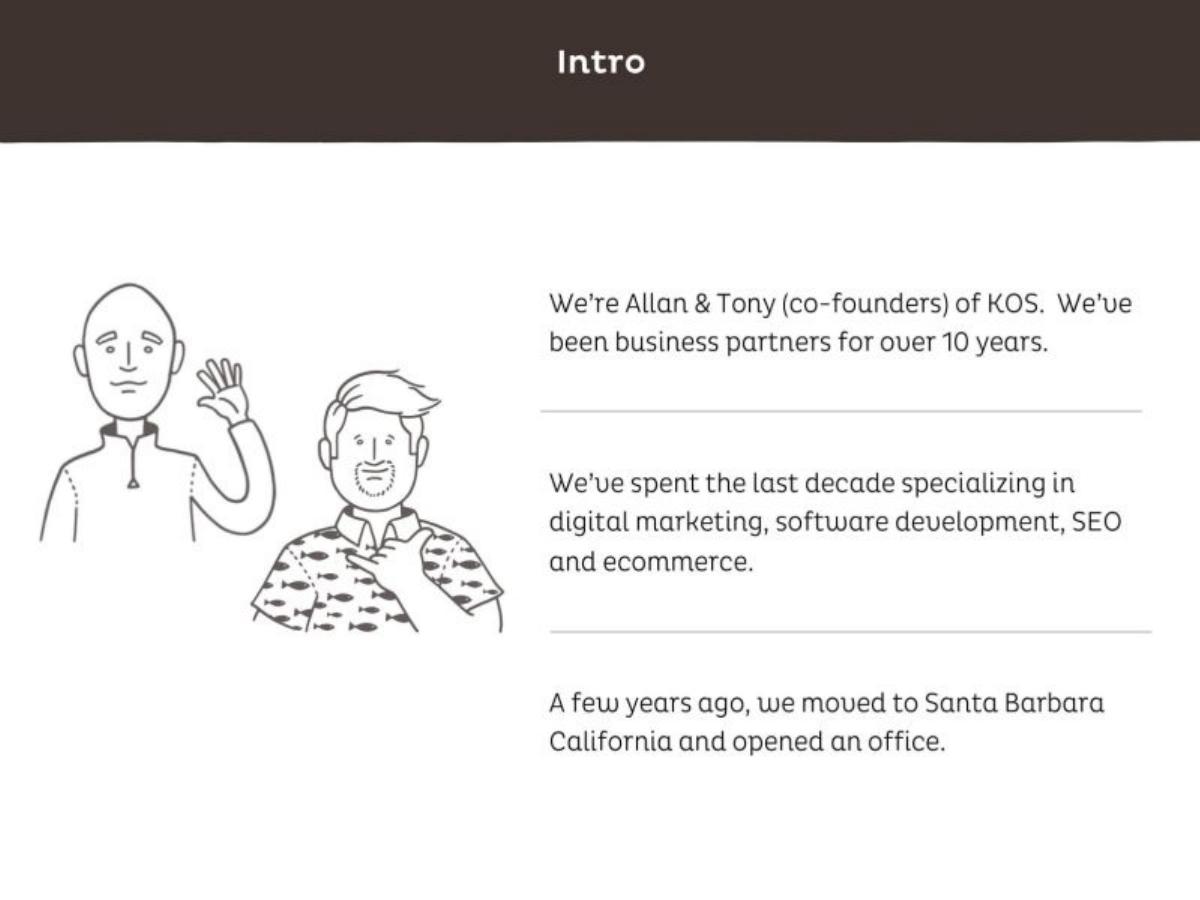
- The founders, Allan and Tony, emphasize a 10-year history as business partners specializing in digital marketing and ecommerce (Slide 2).
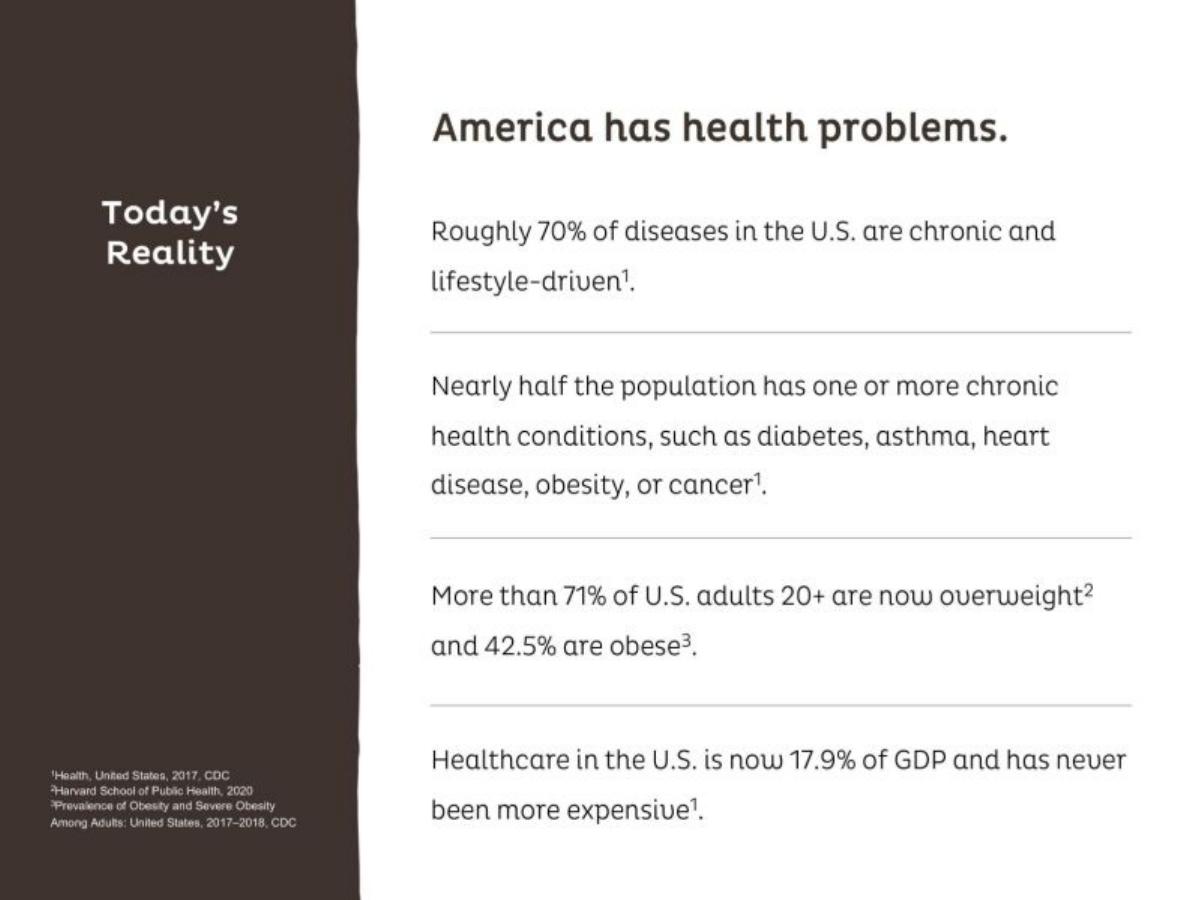
- KOS identifies that 70% of U.S. diseases are chronic and lifestyle-driven to establish the necessity of plant-based diets (Slide 3).
- Revenue growth is presented as a steep upward curve from 2018 to Q4 2021, though specific dollar amounts are redacted in this version (Slide 6).
- The brand has pledged to donate 10 million meals through Feeding America, with 1,886,621 meals already delivered at the time of the deck (Slide 8).
- KOS maintains a 5% market share in the $194.8M Amazon plant protein category, ranking as the 4th largest brand (Slide 12).
- Retail expansion saw a 327% increase in 'Retail Doors' between December 2019 and October 2021 (Slide 13).
- The deck lists high-value exit comparables, such as RXBAR (5x EV/Rev) and Vital Proteins (4-5x EV/Rev), to signal potential investor returns (Slide 14).
- The product platform spans four distinct categories: protein shakes, beverage blends, functional powders, and encapsulated supplements (Slide 9).
The KOS Series A Teardown: A Masterclass in Multi-Channel CPG Scaling
In 2022, KOS raised $12M to fuel its mission of bringing plant-based nutrition to the masses. The deck is a visual departure from the standard corporate aesthetic, utilizing hand-drawn illustrations and a 'KOS Universe' theme that aligns with their brand identity. However, beneath the whimsical exterior is a data-heavy argument for why KOS is a top-tier contender in the retail space.
Slide 1-2: Brand Identity and Founder Pedigree
The deck opens with the 'KOS Universe' (Slide 1), immediately establishing a playful, approachable brand voice. This is critical in a category—plant-based supplements—that is often perceived as clinical or overly serious. Slide 2 introduces Allan and Tony, the co-founders. The key takeaway here isn't just their names, but their 10-year partnership and background in digital marketing and SEO. For a Series A company, proving that the founders have a history of working together reduces 'team risk' for investors.
Slide 3-5: The Macro Problem and Plant-Based Solution
Slide 3, titled 'Today’s Reality,' uses CDC and Harvard data to frame the U.S. health crisis. By stating that 70% of diseases are lifestyle-driven, KOS creates a massive Total Addressable Market (TAM) based on necessity rather than just lifestyle preference. Slide 4 and 5 transition into the solution: 'Dial down the meat... and get plants into you.' The visual flow from the sun to plants to humans (Slide 5) simplifies their supply chain philosophy and reinforces their 'Nature-Powered' tagline.
Slide 6: The Revenue Hockey Stick
While the specific dollar amounts are redacted in this public version, the visual representation of revenue growth on Slide 6 is unmistakable. It shows a consistent upward trajectory from their 2018 launch through Q4 2021. The inclusion of an 'Annualized Run Rate' and 'Trailing 12 Months' metric is standard for a Series A deck, providing investors with a snapshot of current momentum versus historical performance.
Slide 7-8: Mission and Social Impact
KOS leans heavily into its mission on Slide 7: 'To build an uncomplicated and embraceable approach to wellness.' Slide 8 introduces 'Project 10 Million Meals,' a partnership with Feeding America. By showing a progress bar (1,886,621 meals donated out of a 10,000,000 goal), KOS demonstrates that their social impact is a core business function, not just a marketing tagline. This is increasingly important for ESG-focused institutional investors.
Slide 9-11: Product Platform and Category Expansion
Slide 9 is one of the most important slides for understanding the company's scale. It shows a massive product platform across four categories. This suggests that KOS is not a 'one-hit-wonder' protein powder company but a holistic wellness brand. Slides 10 and 11 drill down into specific sub-categories like 'Nutritional Beverage Blends' and 'Specialty Supplements,' highlighting high-margin product lines and recent launches in Whole Foods Market (WFM) as of January 2021.
Slide 12-13: The Retail and Amazon Powerhouse
These two slides represent the 'meat' of the business case. Slide 12 shows that KOS owns 5% of the Amazon plant protein category, ranking 4th behind Orgain (29%), Vega (24%), and Garden of Life (10%). Being the 4th largest in a $194.8M category on a single platform is a significant proof of concept. Slide 13 complements this by showing brick-and-mortar growth. The 'Total Distribution Points' (TDP) metric grew by 446% to over 34,000 by October 2021. This proves that the brand successfully migrated from a digital-only strategy to a true omni-channel presence.
Slide 14: The Exit Strategy
KOS doesn't leave the 'end game' to the investor's imagination. Slide 14, 'Strong Market for Consumer Growth Brands,' lists specific M&A targets and their revenue multiples. By showing that companies like RXBAR sold for 5x revenue and Vital Proteins for 4-5x, KOS provides a roadmap for how the Series A investors will eventually get their money back. The inclusion of logos like Nestlé, Hershey's, and General Mills as potential acquirers makes the exit feel tangible.
Slide 15: The Close
The deck ends as it began, with the 'KOS Universe' illustrations and contact information for the Co-CEOs. The consistency of the visual theme throughout all 15 slides reinforces brand maturity.
What Works in the KOS Deck
Omni-Channel Proof: The strongest part of this deck is the transition from Slide 12 (Amazon dominance) to Slide 13 (Retail growth). Many DNVBs struggle to move into physical retail; KOS shows they have already cracked that code with 34,000 distribution points.
Visual Consistency: The hand-drawn style is unique and memorable. In a pile of 100 pitch decks, an investor will remember the 'illustrated one.' It also serves to make a complex product line (Slide 9) look organized and cohesive.
Clear Comparables: Slide 14 is a textbook example of how to present 'Comps.' It categorizes them by IPO success, M&A environment, and institutional capital activity, providing a 360-degree view of the sector's health.
What Is Missing from the KOS Deck
Unit Economics: While the deck shows revenue growth and distribution points, it omits specific unit economics. There is no mention of Customer Acquisition Cost (CAC), Lifetime Value (LTV), or contribution margins. For a $12M Series A, investors would typically require a deep dive into these numbers to ensure the growth is sustainable.
Burn Rate and Use of Funds: The 15 slides provided do not include a 'Use of Funds' slide. While the listing states they raised $12M, the deck itself (in this version) does not specify how that capital will be allocated—whether for inventory, marketing, or team expansion.
Competitive Landscape (Beyond Amazon): Slide 12 shows Amazon competitors, but there is no broader competitive matrix for the retail landscape. How does KOS stack up against these same brands on the shelves of Whole Foods or Walmart?
Founder Advice: What to Copy from KOS
Use 'TDP' for Retail: If you are in CPG, use Total Distribution Points (TDP) as a metric (Slide 13). It is a more sophisticated measure of retail health than just 'number of stores' because it accounts for how many different SKUs are on the shelves in each location.
Validate with Third-Party Data: KOS uses SPINS data, Clear Cut Analytics, and CDC stats throughout the deck. This adds a layer of objective authority to their claims. Never just say you are 'growing fast'; show a chart with a third-party logo in the corner.
Lead with the Team's History: If you have worked with your co-founder for a long time, highlight it early (Slide 2). Investors are betting on the relationship as much as the product, especially when things get difficult.
Final Thought: The KOS deck is a high-energy, data-backed presentation that successfully bridges the gap between a 'cool brand' and a 'serious business.' By focusing on multi-channel distribution and clear exit paths, they made a $12M investment seem like a logical step in a well-defined journey.
Frequently asked questions
- What is the primary problem KOS aims to solve?
- KOS addresses the U.S. health crisis, noting on Slide 3 that 71% of adults are overweight and healthcare costs consume 17.9% of GDP. They propose a shift toward plant-based nutrition to mitigate chronic conditions like diabetes and heart disease, which they claim account for 70% of U.S. diseases.
- How does KOS demonstrate market traction?
- Traction is shown through two primary lenses: Amazon performance and retail distribution. Slide 12 highlights that KOS is the 4th largest brand in its Amazon category, while Slide 13 shows a massive jump to 34,000 Total Distribution Points in brick-and-mortar retail by late 2021.
- What is the background of the founding team?
- Co-founders Allan Stevens and Tony Stahl (Slide 2 and 15) have worked together for over a decade. Their expertise is rooted in digital marketing, software development, SEO, and ecommerce, which explains the brand's early success as a digitally native vertical brand (DNVB).
- What does the product roadmap look like?
- Slide 9 illustrates a broad 'Product Platform.' It includes core plant protein shakes, nutritional beverage blends (like 'Bolt from the Blue'), functional ingredient powders (adaptogens and mushrooms), and a newer line of encapsulated functional supplements launched in Whole Foods Market in early 2021.
- What exit opportunities does the deck suggest?
- Slide 14 explicitly lists M&A activity and IPO success for consumer growth brands. It cites Beyond Meat (19x EV/Revenue) and Peloton (12x EV/Revenue) as public comps, and mentions acquisitions by Nestlé, General Mills, and Hershey’s to show a clear path to liquidity.