Ingu Solutions’ 2016 pre-seed deck is an outlier in the world of fundraising, consisting of only 8 slides with almost no bullet points or financial projections. Instead, the company relies on visceral imagery—a $1 billion oil spill, massive industrial machinery, and a simple orange sensor ball—to tell a story of disruption. By contrasting the enormous, expensive status quo with their small, scalable solution, Ingu effectively communicated its value proposition to investors. While the deck lacks traditional metrics like CAC, LTV, or a specific 'Ask' slide, its clarity on the problem (2 million…
Key takeaways
- The deck uses a high-stakes emotional hook on slide 2, citing a $1 billion cleanup cost for a Michigan oil spill.
- Visual contrast is the primary narrative tool, comparing massive traditional inspection rigs (slide 3) to small sensor balls (slide 8).
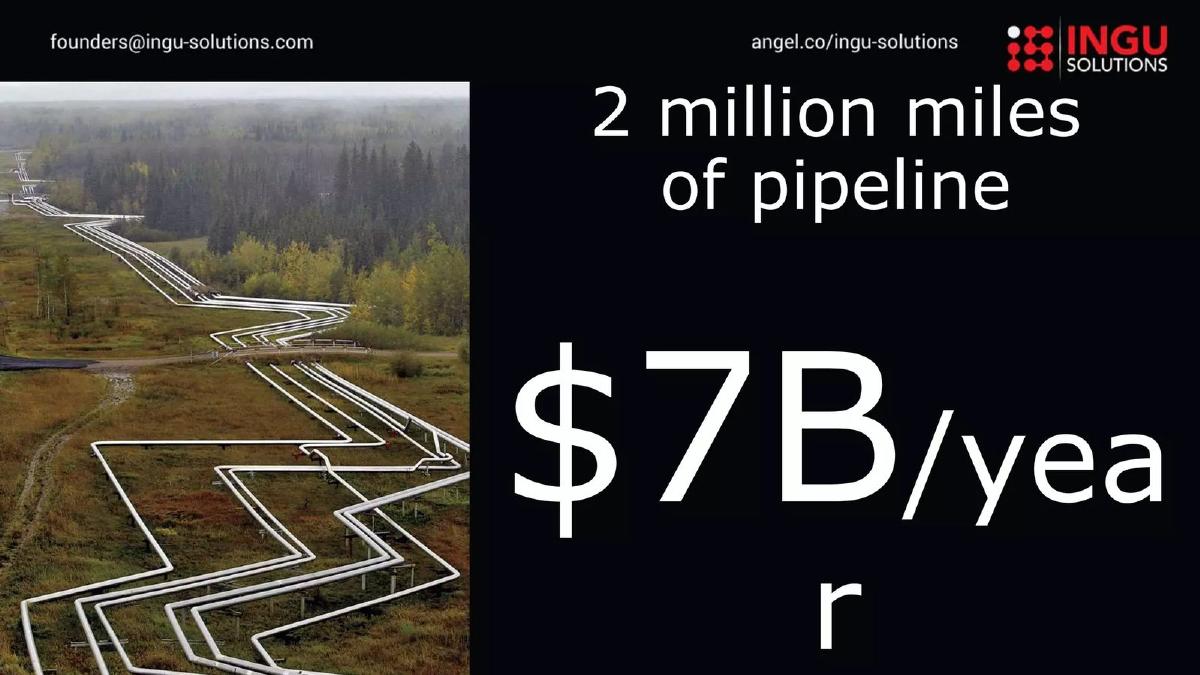
- The total addressable market is framed simply as 2 million miles of pipeline and a $7B annual spend on slide 5.
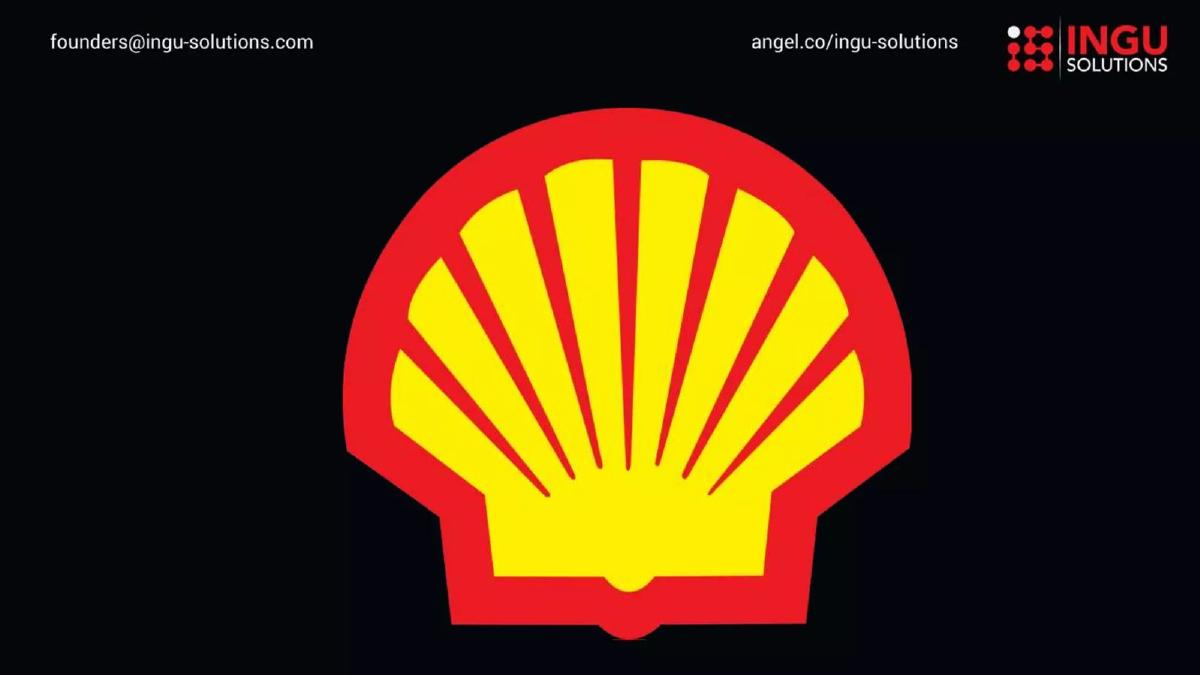
- Strategic validation is implied through the prominent use of the Shell logo on slide 6, suggesting a pilot or partnership.
- The team slide (slide 7) features four executives with logos from BT, Stork, and KPN, emphasizing industrial and tech experience.
- There is a complete absence of financial tables, revenue models, or unit economics within the 8 slides.
- The deck does not include a formal 'Ask' slide detailing the amount of capital sought or the intended use of funds.
- The business model is identified as SaaS in catalogue data, though the deck focuses entirely on the hardware sensor technology.
The Power of Visual Storytelling in Industrial Tech
The Ingu Solutions pitch deck is a masterclass in the 'Show, Don't Tell' philosophy. In an industry as conservative and capital-intensive as Oil and Gas, founders often feel the need to overwhelm investors with schematics, regulatory compliance lists, and 10-year revenue projections. Ingu took the opposite approach. With only 8 slides and fewer than 50 words of body text, they managed to raise CA$304.8K in 2016. This teardown explores how they used visual narrative to bridge the gap between a massive environmental problem and a miniaturized hardware solution.
Slide 1: The Hook
The cover slide is standard: the company logo and the tagline 'The Future of Pipeline Inspection.' It establishes the sector immediately. The logo itself, featuring a series of connected dots with one white 'outlier' dot, subtly hints at their technology—a single sensor moving through a network. This slide sets a professional, minimalist tone that persists throughout the deck.
Slide 2: The Emotional and Financial Stake
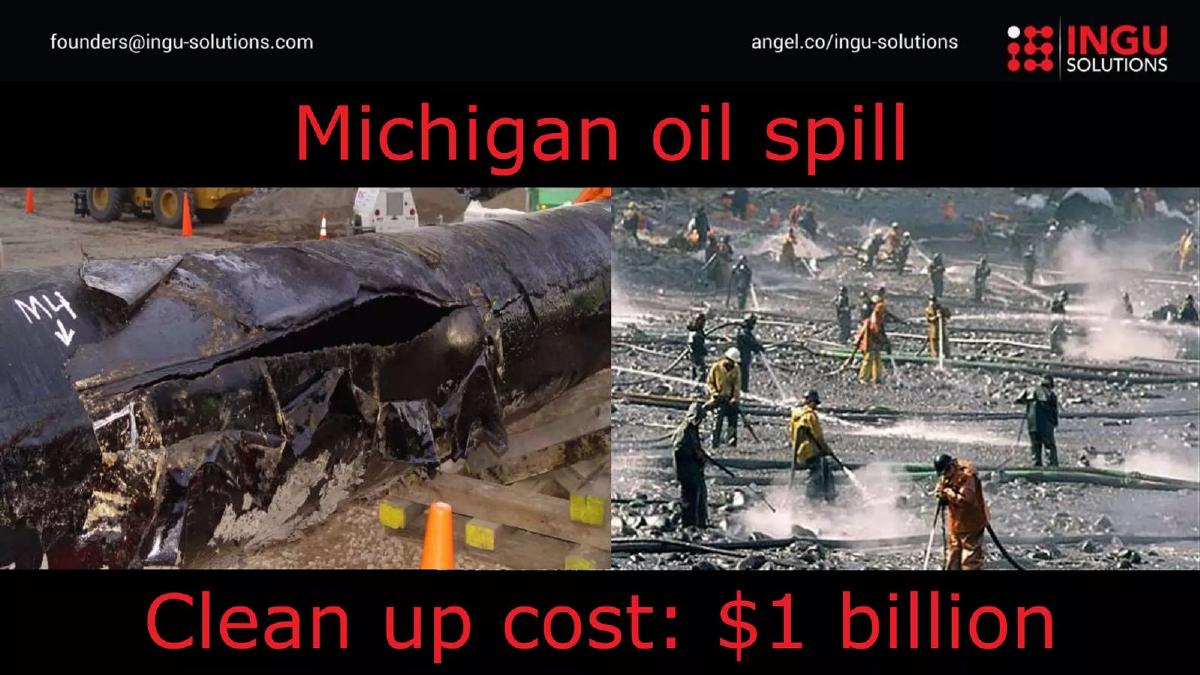
Slide 2 is the 'Problem' slide, but it doesn't use bullet points. It uses a split-screen image of a ruptured pipe and a massive cleanup crew. The text is stark: 'Michigan oil spill' and 'Clean up cost: $1 billion.' By citing a specific, high-profile disaster, Ingu establishes the 'Cost of Inaction.' Investors aren't just looking at a pipe company; they are looking at an insurance policy against a billion-dollar catastrophe.
Slide 3 & 4: The Status Quo Complexity
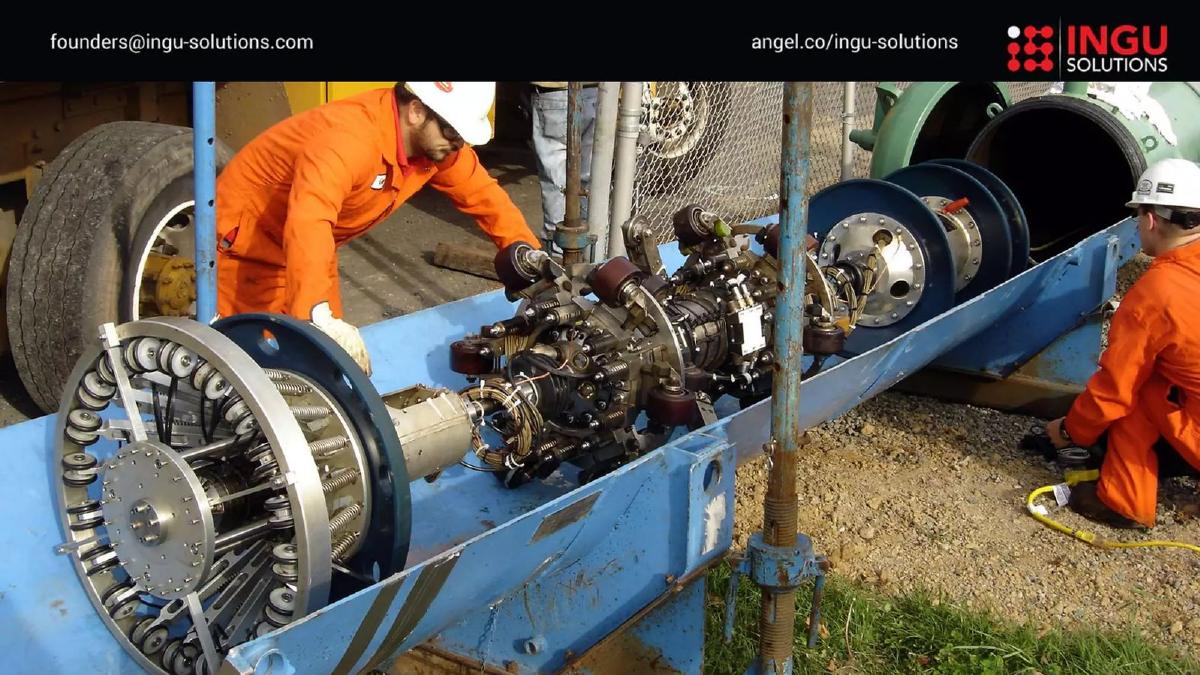
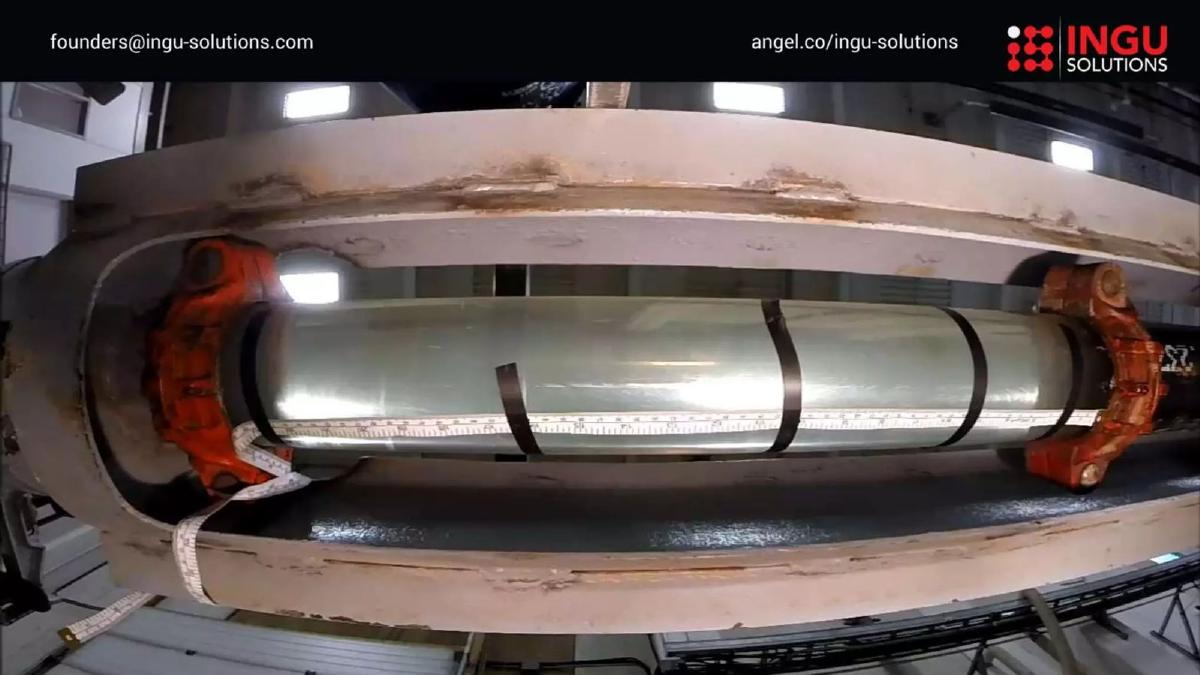
Slides 3 and 4 are entirely wordless. Slide 3 shows three technicians struggling to load a massive, complex, multi-component robotic 'pig' (the industry term for pipeline inspection gauges) into a pipe. Slide 4 shows a close-up of a large, transparent cylinder being measured. The message is clear: current solutions are huge, heavy, require multiple people, and are likely very expensive to deploy. This creates a 'tension' in the investor's mind—there must be a better way.
Slide 5: Market Scale
After establishing the pain and the clunky current solution, Slide 5 defines the opportunity. It features a photo of a pipeline snaking through a wilderness, paired with two numbers: '2 million miles of pipeline' and '$7B/year.' This is a classic TAM (Total Addressable Market) slide. It tells the investor that the problem isn't localized to Michigan; it is a global, multi-billion dollar recurring expense for energy companies.
Slide 6: The Validation
Slide 6 contains nothing but the Shell logo. In the startup world, this is a 'Power Slide.' For a pre-seed company in 2016, having any association with Shell—whether it was an accelerator program (like Shell GameChanger), a pilot, or a letter of intent—is a massive signal of credibility. It answers the investor's unspoken question: 'If this is so good, why hasn't a major oil company done it?' The logo suggests that a major oil company is, in fact, looking at it.
Slide 7: The Team
The team slide introduces the CEO, CTO, CCO, and COO. Below their headshots are logos of former employers and affiliated institutions: BT, KPN, Stork, University of Groningen, and TU/e (Eindhoven University of Technology). This mix of major European telecommunications firms and technical universities suggests a team that understands both data transmission (crucial for sensors) and heavy industrial services.
Slide 8: The Solution
The final slide reveals the product. In a direct contrast to the massive machinery shown on Slide 3, Slide 8 shows a small acrylic box filled with orange, golf-ball-sized sensors. The tagline 'The Future of Pipeline Inspection' returns. The visual punchline is effective: instead of a multi-million dollar rig that requires a crew of five, Ingu offers a handful of sensors that can be dropped into the flow. It is the 'miniaturization' play that has worked in every other sector of tech, now applied to pipelines.
What Works in This Deck
Extreme Clarity: An investor can flip through this deck in 30 seconds and understand exactly what the company does, how big the market is, and why the current way of doing things is broken. This is ideal for a first-touch deck designed to get a meeting.
Visual Contrast: The juxtaposition of the massive rig on Slide 3 and the box of 'balls' on Slide 8 is the core of the pitch. It visualizes the disruption. You don't need to explain 'lower OpEx' when the images show a 90% reduction in equipment size.
Credibility by Association: Using the Shell logo and established corporate logos for the team provides the 'adults in the room' vibe necessary for a hardware play in a dangerous industry.
What Is Missing
The Business Model: While the catalogue lists this as SaaS (likely 'Hardware-as-a-Service' or 'Data-as-a-Service'), the deck doesn't explain how they make money. Do they sell the balls? Do they charge per mile of data? This is a significant omission for a pitch deck.
The 'Ask': There is no slide indicating how much money they are raising or what the milestones are. This makes the deck feel more like a sales presentation than a fundraising tool.
Competition: The deck implies that the only competition is the 'big rigs,' but it doesn't address other emerging sensor technologies or why Ingu's specific ball-shaped form factor is superior to other small-format 'pigs.'
Unit Economics: There is no mention of the cost to produce one sensor versus the value of the data it collects. For a hardware startup, these margins are critical.
What Other Founders Should Copy
The 'One Idea Per Slide' Rule: Ingu follows this perfectly. Slide 2 is the Cost. Slide 5 is the Scale. Slide 6 is the Partner. Slide 8 is the Product. This prevents cognitive overload.
High-Quality Imagery: Instead of using generic clip art or low-resolution stock photos, the founders used real-world industrial photography. This makes the venture feel 'real' and grounded in physical operations.
The Use of 'Anchor' Numbers: By using '$1 billion' and '$7 billion,' they frame the entire conversation around massive numbers, making a CA$300K investment seem like a very small price to pay for a seat at the table.
Conclusion
Ingu Solutions' deck is a reminder that at the pre-seed stage, you are selling a vision and a team. By stripping away the fluff and focusing on the sheer scale of the pipeline problem, they created a compelling narrative of 'Small Tech vs. Big Problem.' While the deck is too sparse for a Series A, it was perfectly calibrated for a 2016 pre-seed round where the goal was to prove that a massive, antiquated industry was ripe for a miniaturized, data-driven revolution.
Frequently asked questions
- How can a deck with only 8 slides and almost no text be successful?
- Ingu Solutions succeeds by focusing on 'The Gap.' By showing a $1 billion problem and a $7 billion market, then showing how current solutions are massive and cumbersome, the small sensor balls shown at the end feel like an inevitable evolution. For technical or industrial products, showing the physical reality of the problem often carries more weight than a slide full of buzzwords.
- Why is the Shell logo on a slide by itself?
- In the oil and gas industry, a partnership or pilot with a 'Supermajor' like Shell is the ultimate form of de-risking. By placing the logo on slide 6 without explanation, the founders force the investor to ask about it, likely leading to a conversation about their validation process, pilot results, or technical approval within the industry’s most demanding ecosystem.
- What are the risks of omitting a financial 'Ask' slide?
- Omitting the 'Ask' can be a strategic choice for a deck intended for wide circulation or for use as a visual aid during a live pitch. However, it requires the founder to be prepared to discuss valuation and use of proceeds immediately upon follow-up. In this case, the catalogue data confirms they were seeking a pre-seed round, eventually raising CA$304.8K.
- Is this deck too simple for a complex CleanTech product?
- While simple, it isn't shallow. It identifies the specific pain point (leaks), the scale (millions of miles), and the current technical hurdle (size/complexity of equipment). It leaves the deep technical specs for the due diligence phase, which is appropriate for a pre-seed deck designed to pique interest rather than provide an engineering manual.
- What does the team slide tell us about the company's DNA?
- The team slide (slide 7) is heavy on corporate and academic pedigree. With logos like BT (telecom), Stork (industrial services), and University of Groningen, the founders are signaling that they aren't just 'tech kids,' but experienced professionals who understand the enterprise sales cycles and the physical realities of the energy sector.