Cloosiv’s 22-slide deck is a masterclass in comparative positioning. The company identifies a massive market—independent coffee shops represent a $20B opportunity—and positions itself as the digital infrastructure these shops lack compared to giants like Starbucks. The deck relies heavily on a +40% monthly GMV growth rate to prove product-market fit. While the team slide is minimalist and the financial specifics are largely obscured by '$X' placeholders in the appendix, the core thesis is clear: democratizing the 'order-ahead' technology that fueled Starbucks' growth. The deck successfully tr…
Key takeaways
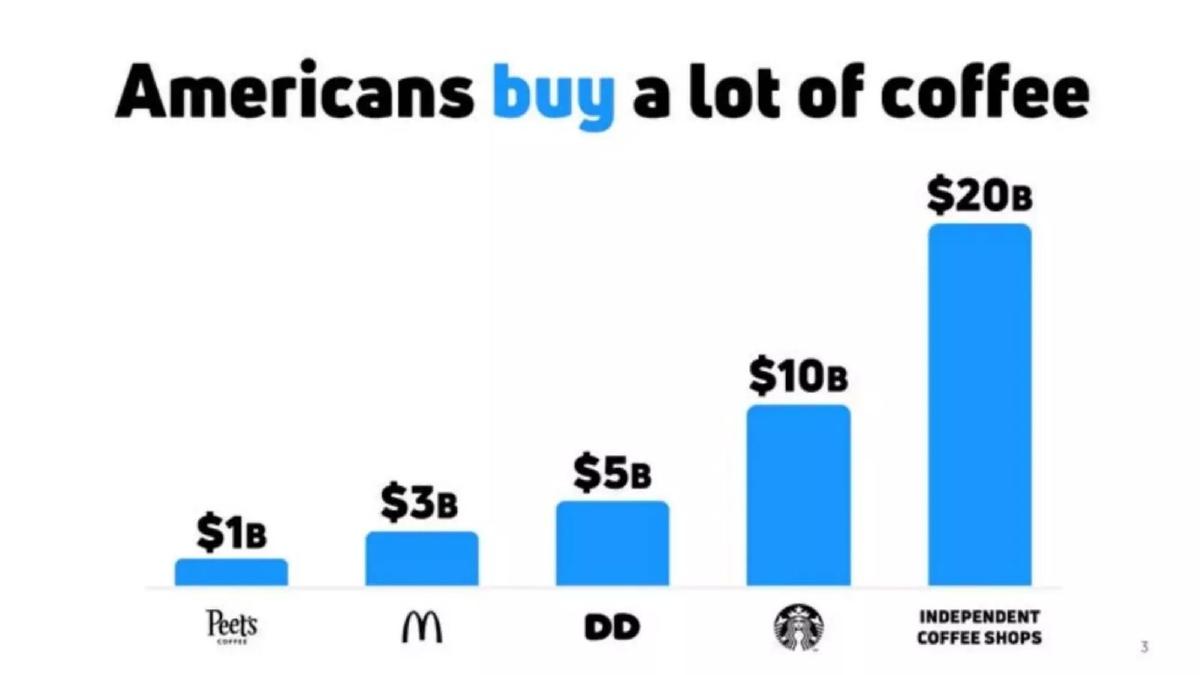
- Independent coffee shops represent a $20B market, larger than Starbucks and Dunkin combined (Slide 3).
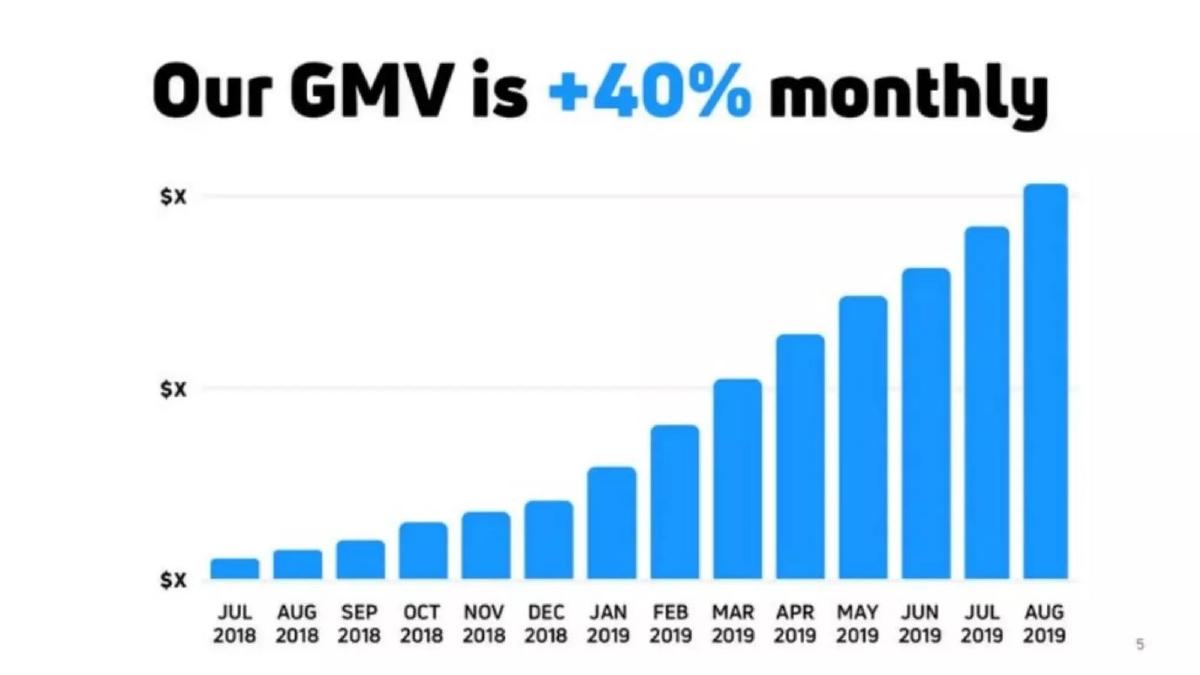
- The company claims a consistent +40% monthly GMV growth rate from July 2018 to August 2019 (Slide 5).
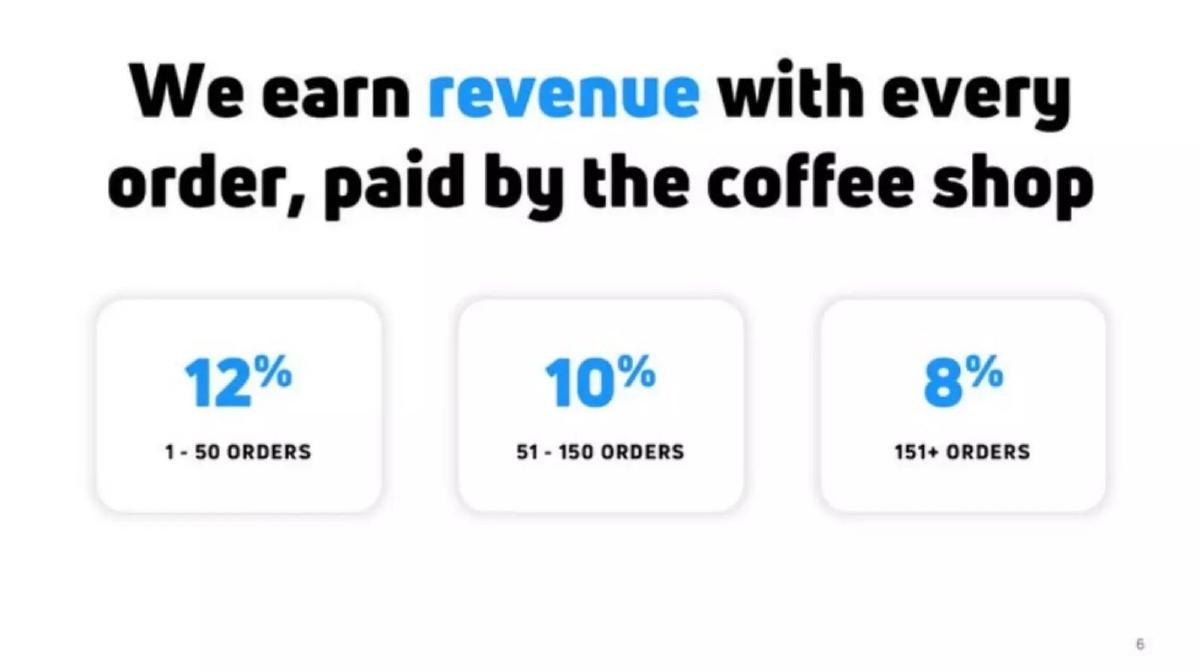
- Revenue is generated through a tiered commission model ranging from 12% for low-volume shops to 8% for high-volume ones (Slide 6).
- Cloosiv targets mid-market chains with 10 to 60 locations as their primary growth engine for 2019-2023 (Slide 11).
- User acquisition is driven by in-store advertising and a $5 per user referral program (Slide 10).
- The 'Ask' slide seeks $1 million to add 800+ coffee shops and reach $60k+ monthly net revenue (Slide 16).
- The deck uses an appendix to show growth trends in mobile orders and active users, though Y-axis values are redacted with '$X' (Slides 19-22).
- A significant revenue spike in August 2019 is attributed to a 'pivot to new pricing model' (Slide 22).
The Narrative: Democratizing the Starbucks Experience
Cloosiv’s pitch deck is built on a single, powerful observation: Starbucks is winning not just because of its coffee, but because of its app. By framing the problem as a technological gap in a $20B independent market, Cloosiv positions itself as an inevitable utility rather than a luxury. The deck follows a classic venture trajectory: market size, the 'Starbucks benchmark,' traction, and a clear expansion roadmap.
Slides 1-4: The Inevitability of Mobile Ordering
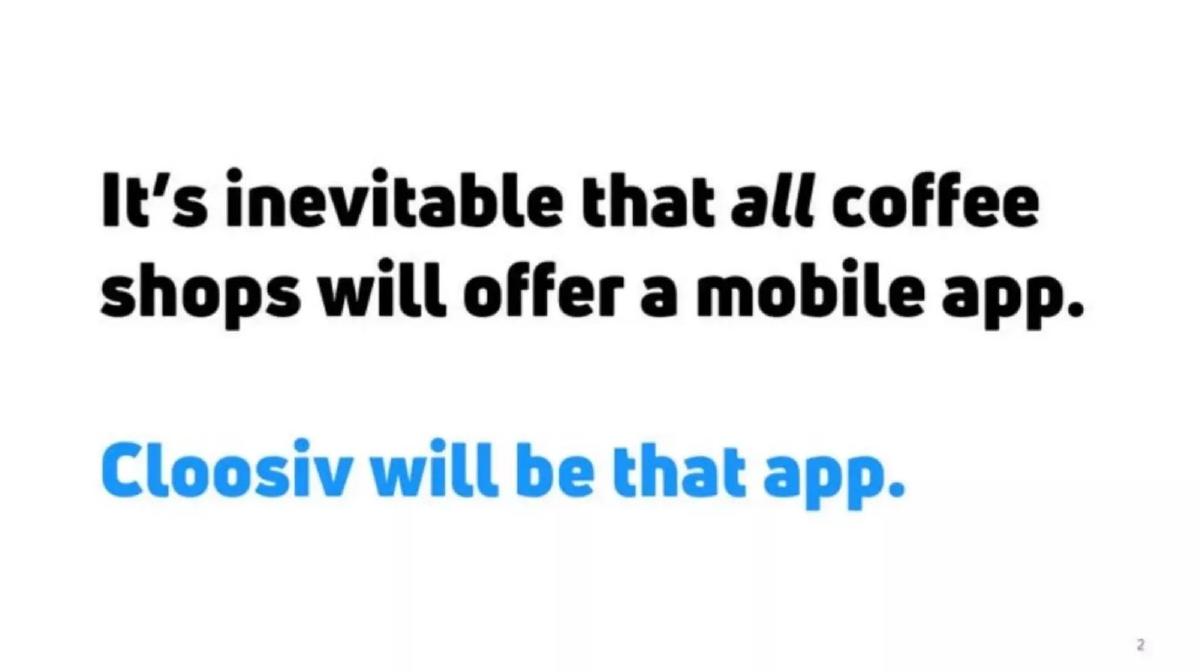
The deck opens with a bold claim on Slide 2 : "It’s inevitable that all coffee shops will offer a mobile app. Cloosiv will be that app." This sets a high-stakes tone. Slide 3 provides the market validation, showing a bar chart where 'Independent Coffee Shops' represent $20B in spending, dwarfing Starbucks ($10B), Dunkin ($5B), and McDonald's ($3B). This is a crucial slide because it proves the 'Long Tail' of coffee is actually the largest segment.
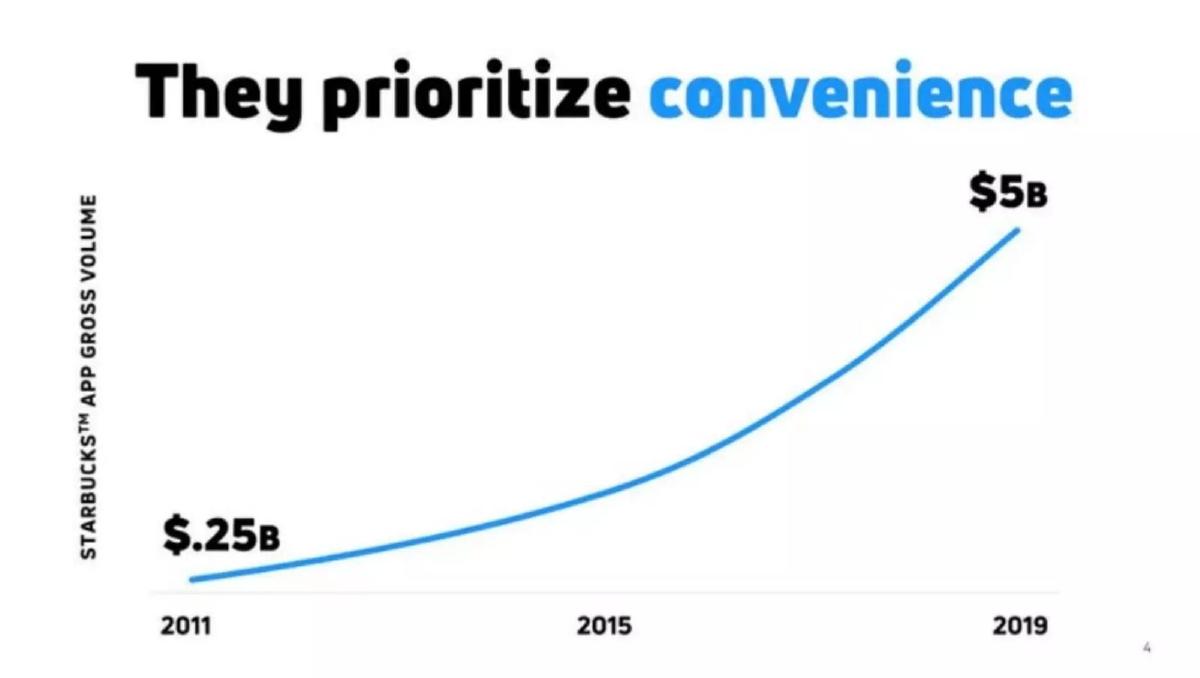
Slide 4 introduces the 'Starbucks Benchmark.' It shows Starbucks app gross volume growing from $0.25B in 2011 to a projected $5B in 2019. The subtext is clear: if independent shops don't adopt similar technology, they will lose their share of that $20B market to the giants who prioritize convenience.
Slides 5-7: Traction and the Revenue Engine
Slide 5 is the 'money slide' for investors. It displays a bar chart showing GMV growing at +40% monthly from July 2018 to August 2019. While the Y-axis uses '$X' instead of real numbers, the visual slope is aggressive and consistent. This suggests the team has found a repeatable growth lever.
The business model on Slide 6 is transparent. Cloosiv charges the coffee shop a percentage of each order. Interestingly, the rate decreases as volume increases (12% down to 8%), which incentivizes shops to drive more traffic through the app. Slide 7 adds 'Multiple service revenue streams,' including a $499 optional merchant upgrade and a $0.10 per-swipe user fee. This diversification shows the company is thinking about both B2B and B2C monetization.
Slides 8-11: Social Proof and Target Markets
Slides 8 and 9 use testimonials from shop owners (L. Burleson and A. Lemnes). Notably, the data boxes next to these quotes (Locations, Users, Orders, Volume) are filled with zeros or placeholders like '$00,000.' This is likely a redaction for the public deck, but in a live pitch, these would be the specific case studies proving the app's ROI for a single merchant.
Slide 11 is a sophisticated 'Target Market' slide. It ranks coffee chains by the number of U.S. locations. It identifies the 'Mid-Market' (brands with 10-60 locations like Blue Bottle and Philz) as the 2019-2020 targets, while larger chains (100-400 locations) are slated for 2021-2023. This shows a disciplined, phased approach to sales rather than a 'spray and pray' strategy.
Slides 12-14: The Vision of Ubiquity
Cloosiv isn't just pitching an app; they are pitching a 'ubiquitous experience.' Slide 12 outlines four pillars: Point-of-Sale Agnostic, Tailored Function, Repetitive Value, and Network Availability. Being 'POS Agnostic' is a key technical advantage, as it reduces the friction for a shop to sign up. Slide 13 visualizes this with a map of the U.S. covered in pins, claiming they are building "the largest coffee chain in America"—a virtual chain that owns the customer relationship without owning the real estate.
Slides 15-17: The Team and The Ask
Slide 15 introduces the team: Tim Griffin (CEO), James Burkhardt (CTO), and Jessie Kolbenschlag (Sales). The slide uses stylized avatars rather than photos and lists their functional areas (e.g., Product, Engineering, Business Development). It lacks traditional 'pedigree' markers like previous company logos or universities, which places the burden of proof entirely on the traction slides.
Slide 16 contains the 'Ask.' They are raising $1 million to achieve three specific goals: add 800+ coffee shops, scale product/sales/marketing, and reach $60k+ monthly net revenue. This is a very specific set of milestones, which investors generally prefer over vague 'growth' goals.
Slides 18-22: The Appendix and Redacted Data
The appendix ( Slides 19-22 ) provides more granular views of the growth mentioned earlier. We see charts for Mobile Orders, Active Users, and Coffee Shops. All show the same upward hockey-stick curve. Slide 22 is particularly interesting; it shows 'Total Monthly Revenue' with a massive spike in August 2019. A small footnote explains this was a "Pivot to new pricing model." This suggests the company was agile enough to recognize their initial pricing wasn't capturing enough value and successfully corrected it.
What Works in This Deck
The Benchmark: Using Starbucks as a proxy for the entire industry's future is a brilliant way to create urgency. It makes the 'Problem' feel like an existential threat to independent shops. · The Tiered Pricing: Showing a 12% to 8% scale demonstrates an understanding of merchant psychology. It rewards success and makes the platform stickier as the merchant grows. · Phased Targeting: The breakdown of which chains they will target and when (Slide 11) shows a level of operational maturity often missing in seed decks.
What is Missing
Unit Economics: While we see revenue and GMV, there is no mention of Customer Acquisition Cost (CAC) or Lifetime Value (LTV). For a two-sided marketplace, these are critical. · Competitive Landscape: The deck mentions Starbucks and Dunkin as benchmarks, but it ignores direct competitors like Joe Coffee or larger delivery platforms (UberEats, GrubHub) that were moving into the 'order-ahead' space at the time. · Team Pedigree: The team slide is very thin. Investors at the seed stage usually want to see why this specific team is uniquely qualified to execute this plan (e.g., past experience in fintech, POS systems, or the coffee industry).
What a Founder Should Copy
The 'Inevitable' Narrative: Start your deck by identifying a trend that is already proven by a market leader and argue why it must eventually apply to the rest of the market. · The Appendix for Granularity: Keep the main deck punchy with high-level growth percentages (like the +40% GMV slide) and move the detailed charts (Users, Orders, Shops) to the appendix. · Specific Milestones for the Ask: Don't just ask for money; tell the investor exactly what that money buys in terms of headcount, shop count, and revenue.
Frequently asked questions
- How does Cloosiv make money?
- Cloosiv employs a multi-stream revenue model. Primarily, they take a commission on every order paid by the coffee shop: 12% for the first 50 orders, 10% for orders 51-150, and 8% for 151+ orders. Additionally, they offer an optional $499 merchant service upgrade and charge a $0.10 per-swipe user service fee.
- What is the primary market opportunity identified in the deck?
- The deck highlights that while Starbucks has seen massive growth through its app (reaching $5B in volume by 2019), independent coffee shops—which constitute a $20B market—lack similar mobile ordering infrastructure. Cloosiv aims to be the universal app for these independent and mid-market players.
- What metrics did Cloosiv use to show traction?
- The core traction metric presented is a +40% monthly growth in Gross Merchandise Volume (GMV). The appendix further illustrates upward trends in the number of mobile orders, active users, and participating coffee shops, although specific numerical values for these metrics are redacted in the public version of the deck.
- Who is the target customer for Cloosiv?
- While the app serves coffee drinkers, the business targets independent coffee shops and mid-market chains. Slide 11 specifically lists targets like Blue Bottle, Philz Coffee, and La Colombe, focusing on brands with 10 to 60 locations for their 2019-2020 expansion phase.
- What was the result of this fundraising round?
- According to catalogue facts, Cloosiv raised $2,100,000 in 2017. The deck itself asks for $1,000,000, suggesting the round may have been oversubscribed or expanded. The company later merged with Odeko to further consolidate the supply chain and technology stack for independent cafes.