Ocean.io’s Series A deck is a masterclass in identifying a specific market failure—the inaccuracy of traditional industry categorization—and positioning a product as the surgical solution. By contrasting 'Traditional Categorization' with their own AI-driven 'Context Vector' approach, they move beyond simple lead lists into strategic account-based marketing (ABM). The deck is light on dense financial tables but heavy on product utility, showcasing features like AI lookalike search and TAM calculators. With $60K MRR and 150 customers at the time of the deck, the narrative focuses on the transit…
Key takeaways
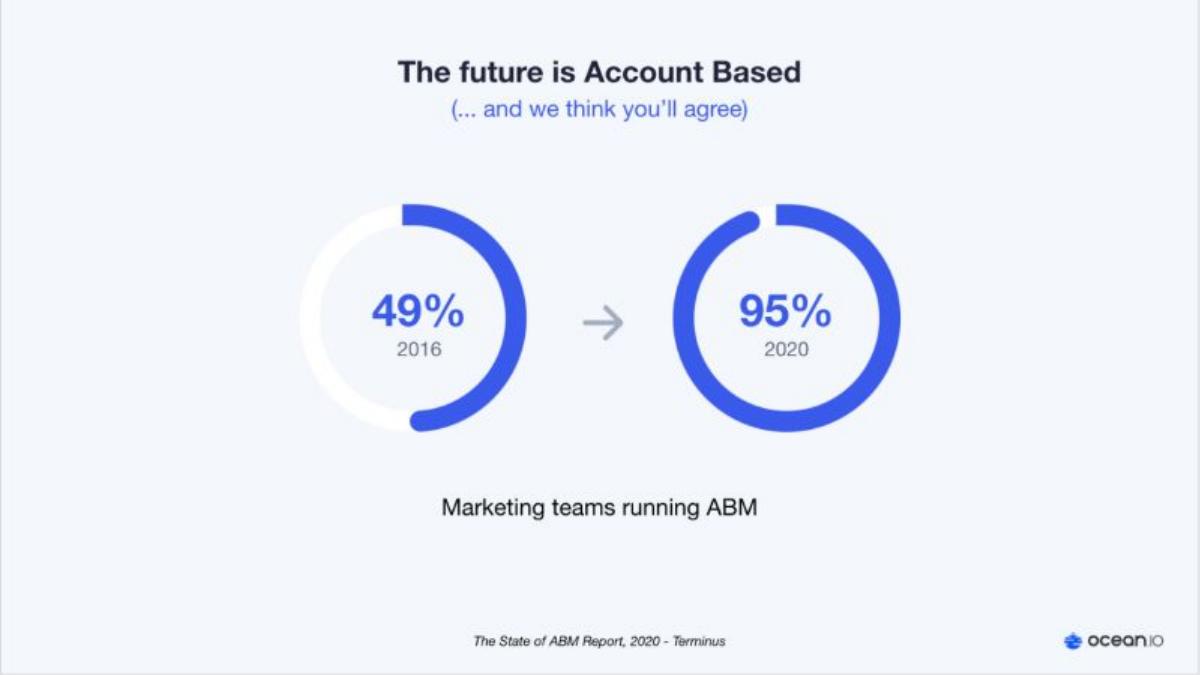
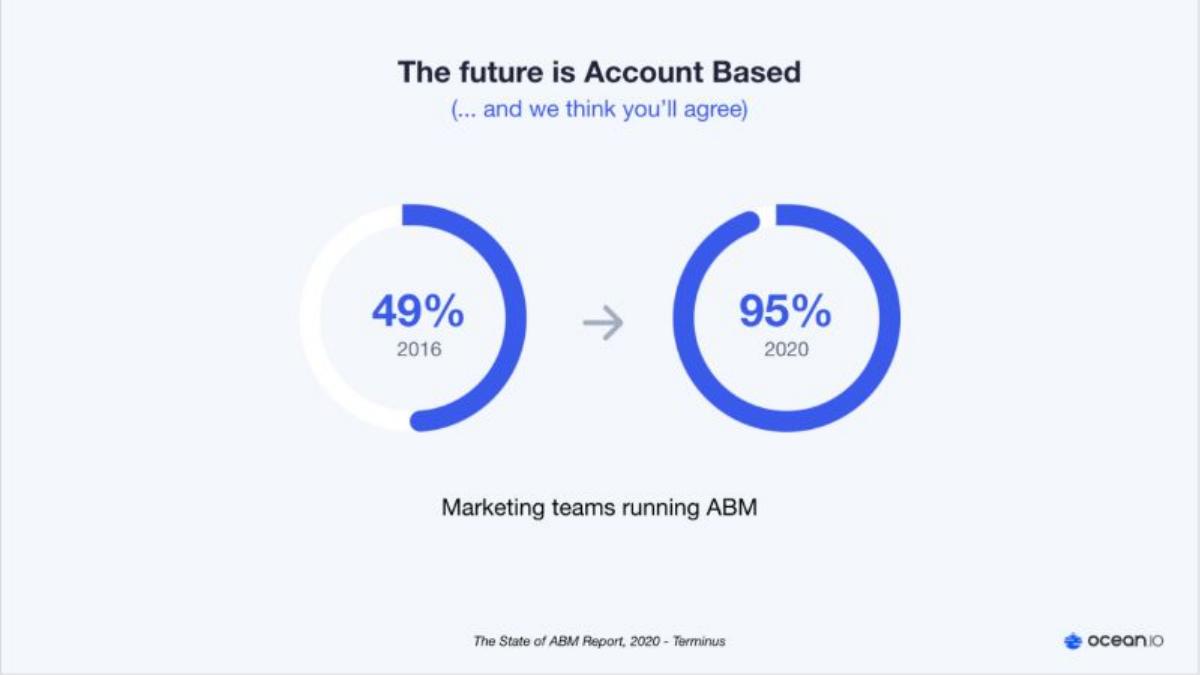
- The deck identifies a massive shift in marketing, noting that teams running ABM grew from 49% in 2016 to 95% in 2020 (Slide 1).
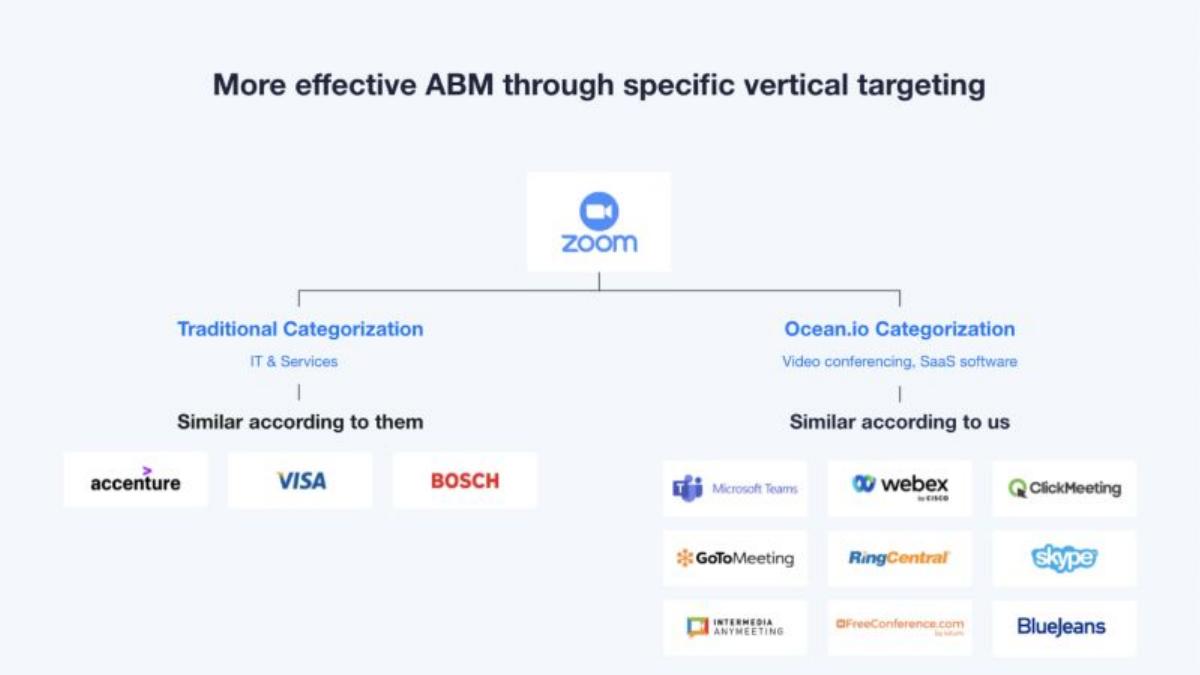
- Ocean.io differentiates itself by challenging traditional industry codes, showing how Zoom is misclassified as 'IT & Services' by competitors but correctly as 'Video conferencing' by Ocean (Slide 5).
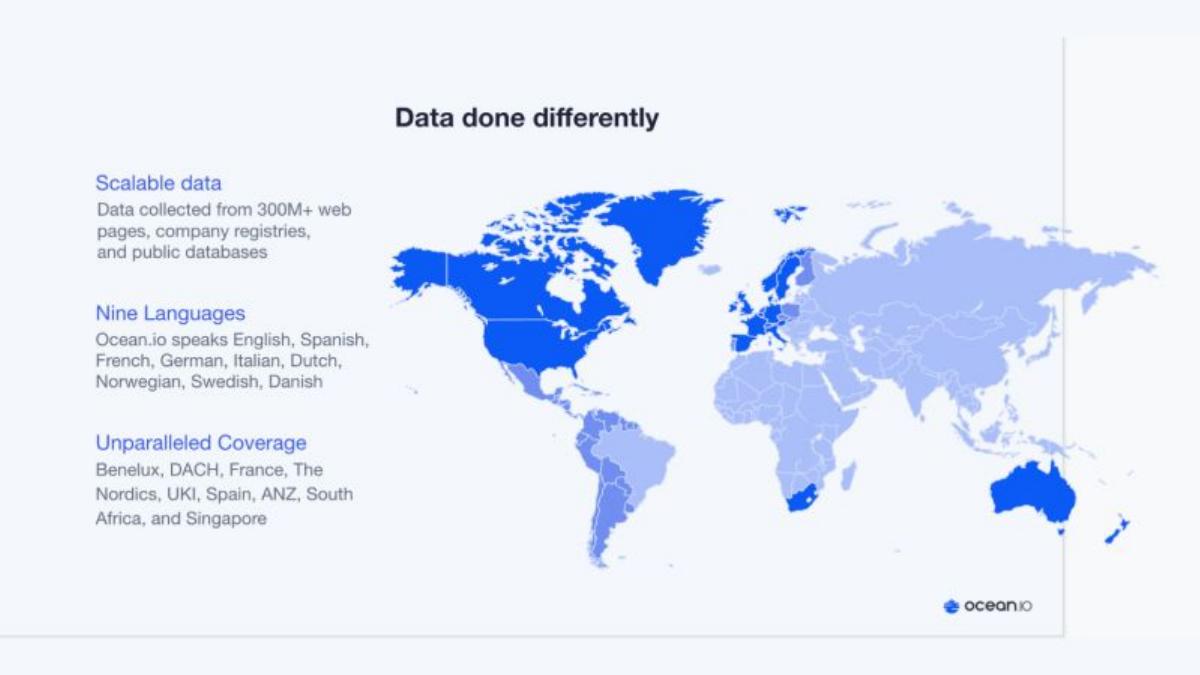
- The platform's data scale is significant, claiming data collection from 300M+ web pages and support for nine languages (Slide 6).
- Product functionality is divided into four key pillars: Targeting, Personas, Intelligence, and Integrations (Slide 7).
- The 'Intelligence' feature includes a TAM calculator and revenue projections to take the 'guesswork' out of ICP (Slide 10).
- Traction is clearly stated as $60K MRR, which was a 3x increase in 2021, with 150 customers as of August 2021 (Slide 15).
- The competitive landscape slide positions Ocean.io as the only player with 'Context Vector' industry categories and 2-way CRM integration (Slide 16).
- The deck lacks a specific 'Team' slide featuring founder bios or a detailed 'Use of Funds' slide for the $7M raise.
The Hook: The Rise of Account-Based Marketing
Slides 1-4: The Problem with Broad Targeting
Ocean.io opens with a compelling market trend. Slide 1 cites 'The State of ABM Report, 2020' to show that marketing teams running ABM increased from 49% in 2016 to 95% in 2020. This sets the stage: everyone is doing ABM, but as Slide 2 claims, 'Most companies are doing it completely wrong.'
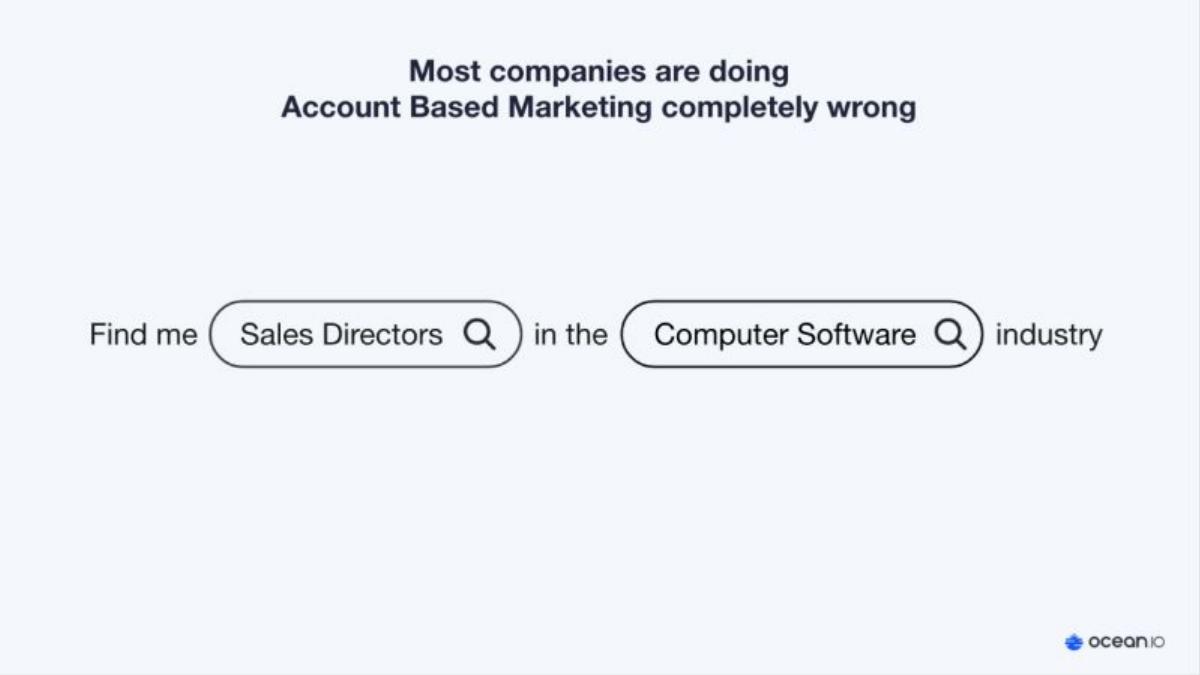
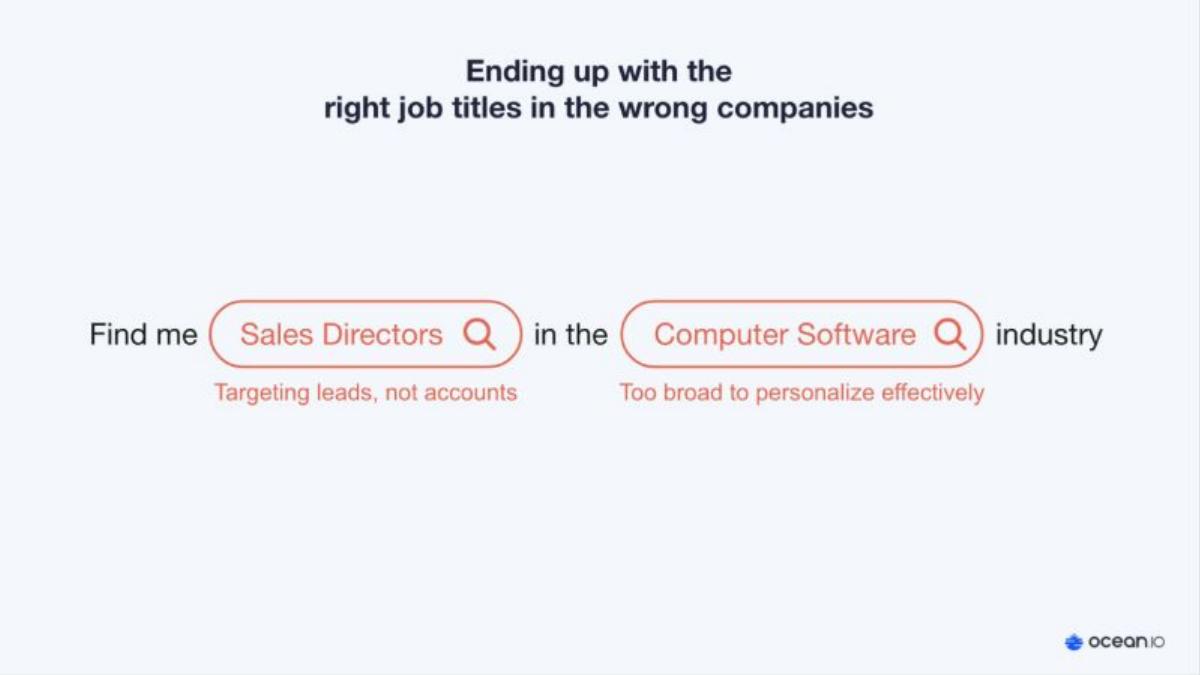
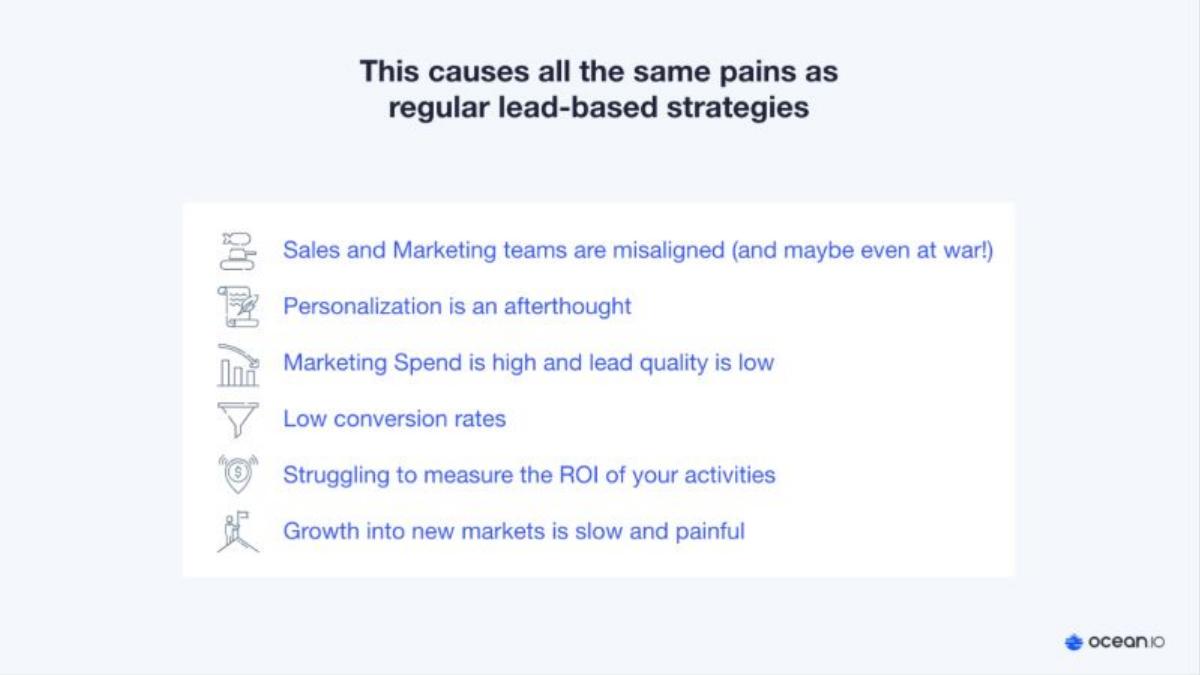
The deck uses a simple visual metaphor on Slide 3 to explain the failure point: searching for 'Sales Directors' in the 'Computer Software' industry. They argue this results in 'the right job titles in the wrong companies.' The consequence, detailed on Slide 4, is a list of pains: misaligned sales and marketing teams, high spend with low quality, and slow growth into new markets. This section is effective because it identifies a specific technical flaw—broad industry codes—rather than just complaining about 'bad data.'
The Solution: Precision through Context
Slides 5-6: Vertical Targeting and Data Scale
Slide 5 is the 'aha' moment of the deck. It compares 'Traditional Categorization' with 'Ocean.io Categorization' using Zoom as an example. Traditional systems lump Zoom with Accenture and Visa under 'IT & Services.' Ocean.io identifies Zoom as 'Video conferencing, SaaS software,' grouping it with Microsoft Teams, Webex, and Skype. This visual proof of their 'Context Vector' technology is the strongest differentiator in the deck.
Slide 6 backs this up with the scale of their data engine. They claim to collect data from 300M+ web pages, company registries, and public databases. They also highlight their linguistic range, covering nine languages including English, Spanish, French, German, Italian, Dutch, Norwegian, Swedish, and Danish. This positions them as a global solution rather than a regional tool.
Product Deep Dive: From Targeting to Intelligence
Slides 7-11: Feature Set and Integrations
Slide 7 provides a high-level architecture of the platform, divided into Targeting, Personas, Intelligence, and Integrations. The following slides (8-10) use clean UI screenshots to prove the product's existence and sophistication. Slide 8 focuses on 'AI Lookalike Search' and 48 filters, while Slide 9 shows the 'Persona Search' which allows users to find the 'buying committee' by seniority and department.
Slide 10 introduces 'Intelligence,' which is a significant step up from basic prospecting. It features a TAM (Total Addressable Market) calculator, revenue projections, and regional performance tracking. This moves the product from a sales rep's tool to a strategic dashboard for leadership. Slide 11 rounds out the product section by listing integrations with Pipedrive, Salesforce, HubSpot, LinkedIn, and Zapier.
The Methodology and Social Proof
Slides 12-13: The 'Ocean.io Way' and Customer Testimonials
Slide 12 outlines a six-step circular process for ABM: ICP identification, building account lists, finding personas, messaging, engagement, and improvement. This slide serves to educate the investor on how the product fits into a daily workflow. Slide 13 provides social proof with quotes from Leadinfo, Brandbassador, and ZenMedia. Notably, Quirijn Kleppe from Leadinfo claims to have 'doubled our demo booking rate in the first week.' The slide also displays logos of major brands like Sony, Tele2, and Brandwatch, suggesting enterprise-level adoption.
Traction and Roadmap
Slides 14-15: Evolution and Growth Metrics
Slide 14 provides a 'Product Evolution' timeline from 2017 to 2021. It shows the transition from a simple browser lookup tool to a deep-tech platform using Natural Language Processing (NLP) to replace '100-year-old Industry Codes.' This history builds credibility, showing that the technology isn't just a wrapper on someone else's API.
Slide 15 is the 'Money Slide.' It lists 53 people across 3 offices and a $6M initial investment. Most importantly, it states they are 'tracking at $60K MRR (3x in 2021)' with a 'Net Revenue Retention (NRR) at 100%' and 150 customers as of August 2021. These are solid Series A metrics that demonstrate both growth and stickiness.
Market Strategy and Competition
Slides 16-17: The Competitive Landscape and TAM
Slide 16 is a direct comparison table against Cognism, Vainu, ZoomInfo, and LinkedIn. Ocean.io claims the middle ground on pricing while winning on 'Context Vector' industry categories and 2-way CRM integration. This is a bold slide that clearly defines their 'blue ocean' (pun intended) in the market. Slide 17 defines their TAM as any B2B company with 10+ people in sales and marketing, with a specific focus on Western European enterprises using HubSpot or Salesforce.
What Works and What is Missing
What Works
The Zoom Example: Slide 5 is a perfect example of showing, not just telling, why your technology is better. · Specific Metrics: Citing $60K MRR and 100% NRR on Slide 15 provides the hard data investors need to validate the story. · Product-Led Narrative: The deck spends a lot of time on the UI and specific features (TAM calculator, lookalike search), making the platform feel tangible.
What is Missing
The Team Slide: Surprisingly, there is no dedicated slide introducing the founders or the executive team. While names appear on the roadmap (Slide 14), their backgrounds are not highlighted. · The Ask: The deck does not explicitly state how much they are raising or how they plan to spend the $7M mentioned in the catalogue facts. · Unit Economics: While NRR is mentioned, there is no data on Customer Acquisition Cost (CAC) or Lifetime Value (LTV), which are standard for a Series A SaaS deck.
What a Founder Should Copy
The Problem/Solution Contrast: Use a specific, relatable example (like the industry code failure) to make a technical problem easy to understand. · The Roadmap as Credibility: Showing the 'Commercial Focus' alongside 'Product Evolution' (Slide 14) proves you can execute on a long-term vision. · Visualizing the Competitive Edge: The table on Slide 16 is a clean way to show exactly where you fit in a crowded market without being overly aggressive.
Frequently asked questions
- What is the primary problem Ocean.io solves?
- According to Slides 2 and 3, the primary problem is that companies are doing Account-Based Marketing (ABM) wrong by targeting the 'right job titles in the wrong companies.' This happens because traditional industry categorization is too broad, leading to high marketing spend and low lead quality.
- How does Ocean.io's data differ from competitors like ZoomInfo or LinkedIn?
- Slide 16 highlights that while competitors use 'Traditional' industry categories and focus on 'Leads,' Ocean.io uses 'Context Vectors' and focuses on 'Companies.' They also claim to be the only provider in their competitive set offering 2-way CRM integration and global coverage simultaneously.
- What are the key metrics shared in the deck?
- Slide 15 provides the core traction: 53 employees across 3 offices, $60K MRR (3x growth in 2021), 100% Net Revenue Retention (NRR), and 150 customers as of August 2021. The data engine is powered by 300M+ web pages (Slide 6).
- What integrations does the platform support?
- As shown on Slide 11, Ocean.io integrates with major CRM and sales tools including Pipedrive, Salesforce, HubSpot, LinkedIn, and Zapier. These integrations are described as 'seamless connections' to the existing tech stack.
- What is the target market for Ocean.io?
- Slide 17 defines the target as B2B companies with 10+ people in sales and marketing globally. Their immediate focus starting in Q3 2021 was on Enterprise companies in Western Europe that use HubSpot or Salesforce.