Octi’s 2019 seed deck is a masterclass in selling a vision rather than just a product. Positioned at the intersection of social media and augmented reality, the company argues that existing AR tools suffer from 'zero retention' and 'no utility.' They counter this with a proprietary tech stack capable of 3D skeleton reconstruction and facial recognition, allowing users to interact with digital 'mini apps' anchored to real people. The deck is light on traditional business metrics like CAC or LTV, focusing instead on technical milestones—such as scanning 63,000 faces in two weeks—and a heavy-hit…
Key takeaways
- The deck frames AR as the 'third platform' or 'Mirror World,' citing Wired's Kevin Kelly to establish market gravity (Slide 2).
- Octi identifies 'zero retention' and 'pure novelty' as the primary failures of existing consumer AR platforms like Snapchat (Slide 3).
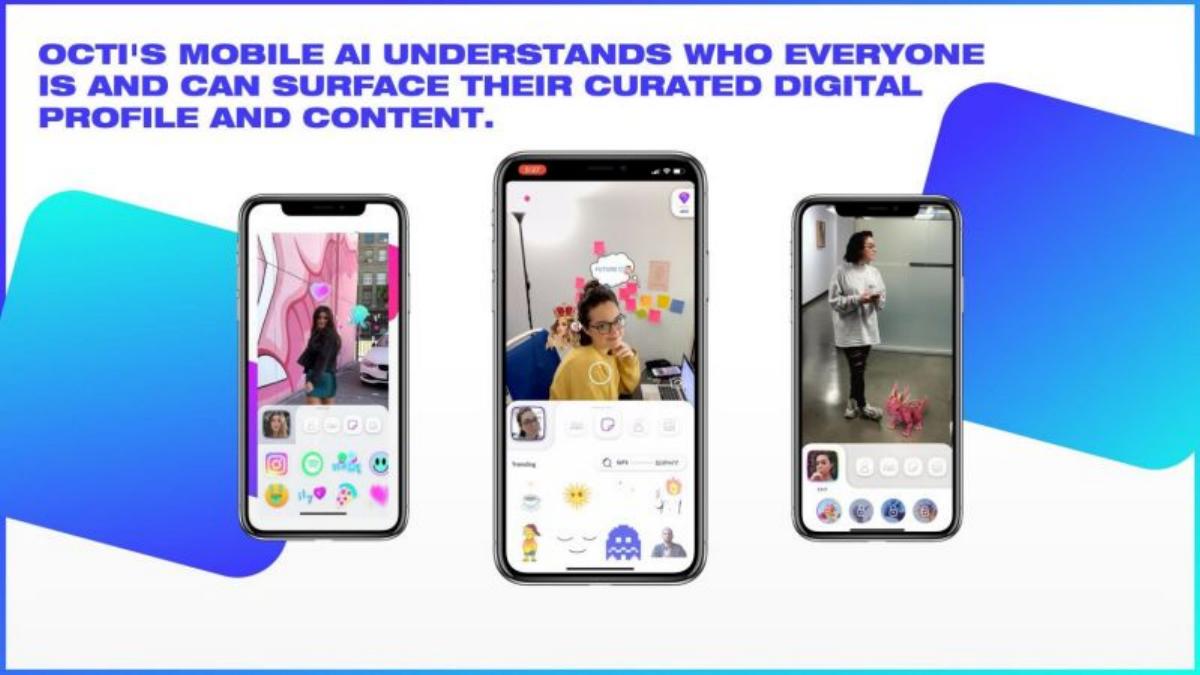
- The core value proposition is 'Humans as a Platform,' where mobile AI surfaces curated digital profiles when a camera is pointed at a person (Slide 4).
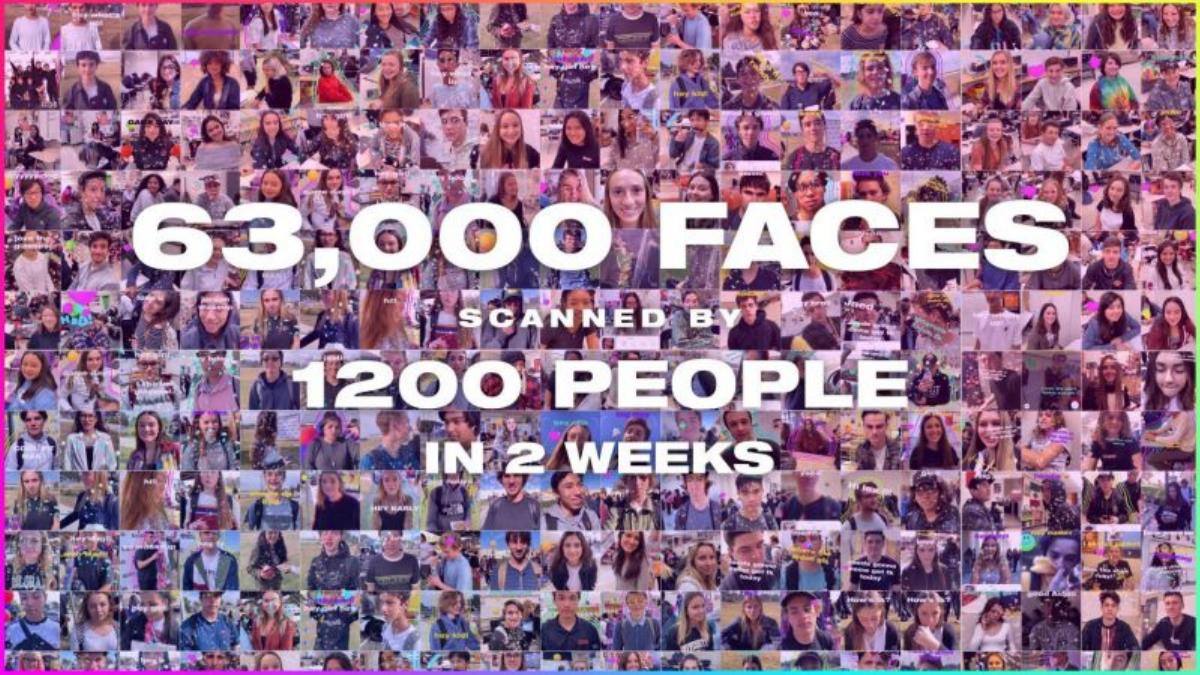
- Traction is demonstrated through a high-velocity data collection phase: 63,000 faces scanned by 1,200 people in just two weeks (Slide 5).
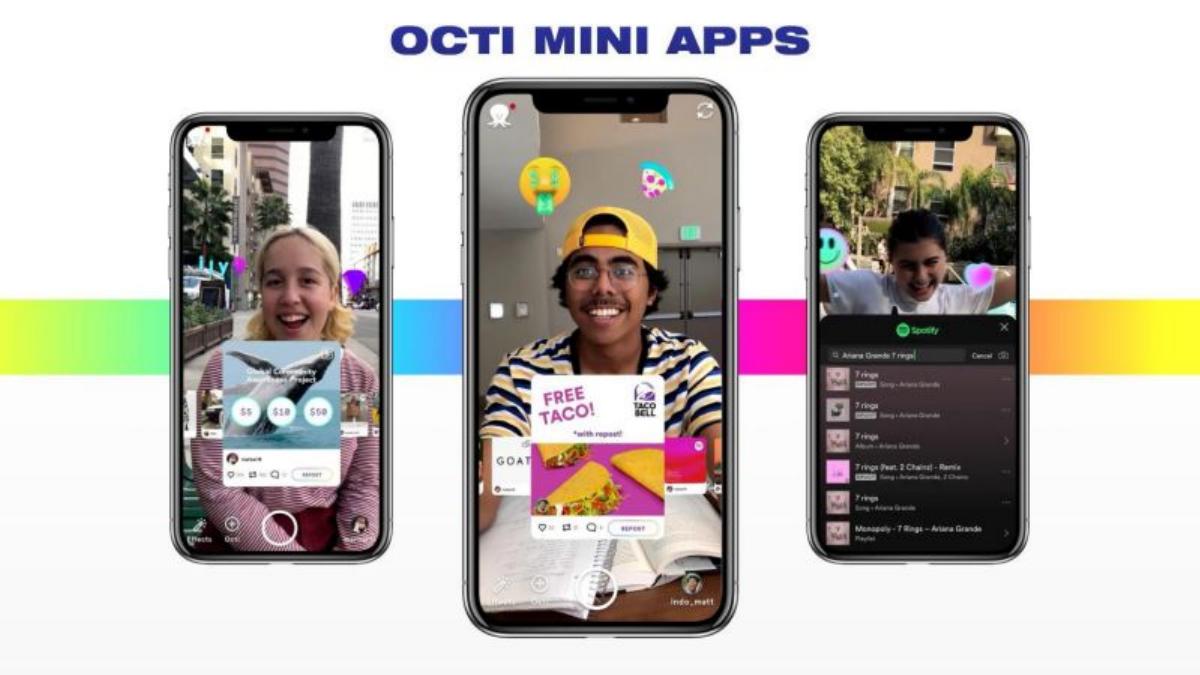
- The product vision includes 'Mini Apps' that integrate third-party services like Spotify, Taco Bell, and Yelp directly into the AR viewfinder (Slides 6 and 7).
- Technical defensibility is highlighted through a patented stack including 3D skeleton reconstruction and gesture recognition (Slide 8).
- The investor list is exceptionally strong for a seed round, featuring Scott Belsky (Adobe), Joshua Kushner (Thrive Capital), and LiveNation (Slide 9).
- The deck completely omits a team slide, business model details, and a specific financial 'ask' (Slides 1-12).
The Vision of the Mirror World
Octi’s 2019 pitch deck is a product of its time, leaning heavily into the promise of Augmented Reality (AR) as the next dominant computing paradigm. The deck avoids the typical 'problem/solution' slide for the first few pages, opting instead to build a narrative around the 'Mirror World.' By quoting Kevin Kelly of Wired Magazine, Octi positions itself not just as an app, but as a contender for the 'third platform' that will create the wealthiest companies in history. This is a high-stakes opening designed to capture the imagination of venture capitalists looking for the next platform shift.
Slide 1: Title Slide
The deck opens with a minimalist title slide featuring the Octi logo—a friendly, multi-colored octopus—and the text 'octilabs | Q1 2019.' The branding is clean and consumer-focused, signaling a friendly entry point into what is otherwise a very technical product.
Slide 2: The Market Thesis
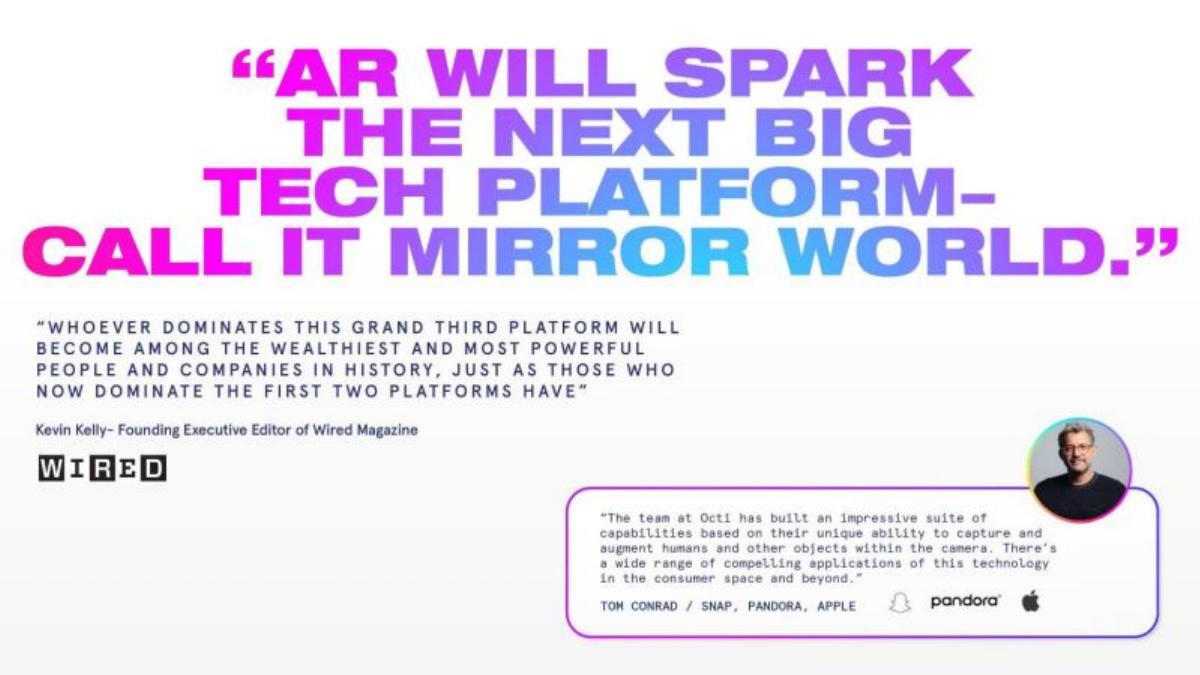
Slide 2 is dedicated to social proof and market validation. It features a large quote from Kevin Kelly about the 'Mirror World' and the wealth that will be generated by those who dominate it. Crucially, it also includes a testimonial from Tom Conrad (Snap, Pandora, Apple), who praises Octi's 'unique ability to capture and augment humans.' This slide establishes that the company is operating in a massive projected market and already has the attention of industry veterans.
Slide 3: The Problem with Current AR
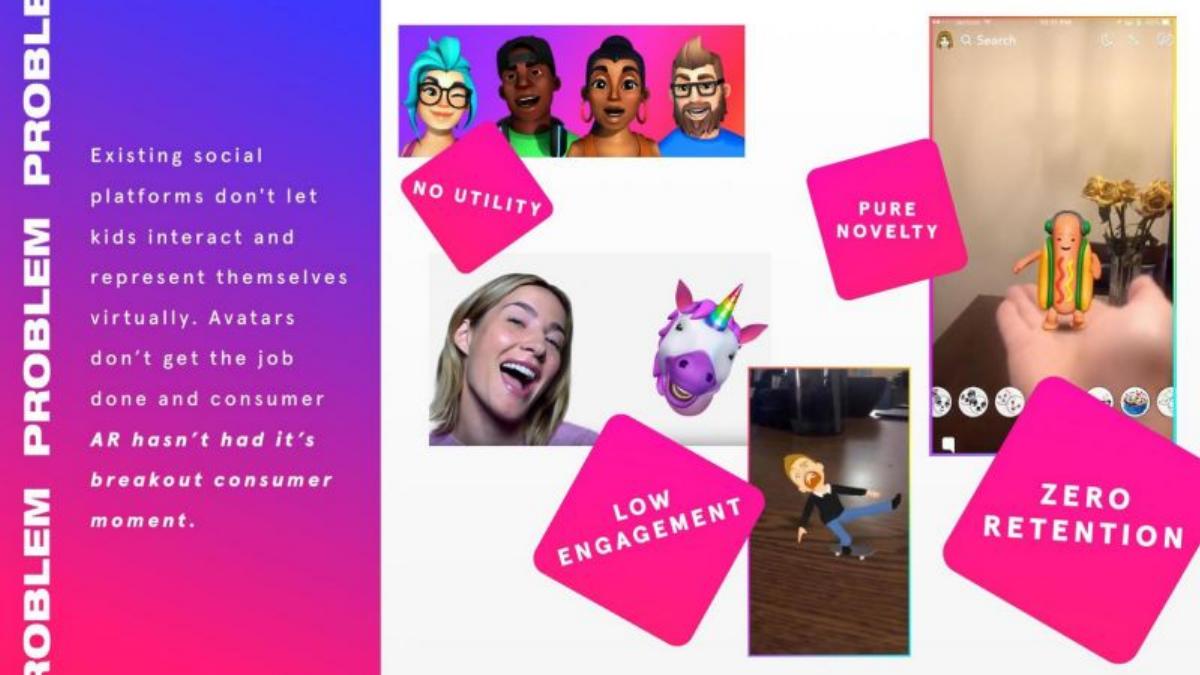
Octi takes a direct shot at the status quo on slide 3. They argue that existing social platforms don't allow for authentic virtual representation. Using images that resemble Snapchat filters and Apple Animojis, they tag current AR with four damning labels: 'No Utility,' 'Pure Novelty,' 'Low Engagement,' and 'Zero Retention.' This sets the stage for Octi to present itself as the first 'useful' AR platform.
Slide 4: The Solution - Mobile AI
Slide 4 introduces the core product: a mobile AI that 'understands who everyone is.' The slide shows three smartphone mockups where the camera is pointed at people, and the UI surfaces 'curated digital profiles.' This is the first glimpse of the 'Humans as a Platform' concept, where the person becomes the anchor for digital content.
Slide 5: Rapid Traction and Data Collection
One of the most visually striking slides in the deck, slide 5 features a collage of hundreds of faces. The headline claims '63,000 faces scanned by 1,200 people in 2 weeks.' This is a clever way to show traction without having to disclose daily active users (DAU) or revenue. It proves that their technology works in the wild and that they can collect the data necessary to train their models at scale.
Slide 6: Octi Mini Apps
Slide 6 expands on the utility of the platform. It shows 'Mini Apps' appearing in the AR view. Examples include a donation button for a 'Global Community Awareness Project,' a 'Free Taco' promotion from Taco Bell, and a Spotify integration. This slide suggests that Octi is building a layer on top of the physical world where commerce and content can live.
Slide 7: Humans as a Platform
Slide 7 reinforces the platform play. A central image of a person is surrounded by icons for Yelp, Venmo, Snapchat, Spotify, Instagram, and LinkedIn. The message is clear: Octi wants to be the connective tissue that links a physical person to their entire digital footprint via the camera lens.
Slide 8: The Tech Stack
For a seed deck, slide 8 is unusually technical. It outlines the 'Octi Tech Stack,' including facial feature recognition, instance segmentation, and 3D skeleton reconstruction. They specifically mention leveraging 'custom GPU level programming for iOS (Metal) and Android (Vulkan).' This slide is intended to prove technical defensibility—that this isn't just a wrapper on top of ARKit or ARCore, but a proprietary engine.
Slide 9: The Investor Roster
Slide 9 is a 'flex' slide. It lists an impressive array of investors, including Scott Belsky (Adobe), Joshua Kushner (Thrive Capital), and institutional names like Shasta Ventures and LiveNation. For a seed-stage company, this level of backing is a significant signal of quality and potential.
Slide 10: The Closing Testimonial
Instead of a traditional 'Ask' slide, slide 10 features a 'Thank You' with contact information and a quote from Joe Marchese, former President of Ad Revenues at Fox. He states that the technology will 'change how people can communicate using AR.' The inclusion of a media executive here hints at the advertising and communication potential of the platform.
Slide 11: Logo Outro
A simple closing slide with the Octi logo centered on a white background.
Slide 12: BestPitchDeck.com Promo
This is a non-company slide added by the catalogue source and is not part of the original pitch.
What Works in the Octi Deck
1. Strong Narrative Gravity: By starting with the 'Mirror World' concept, Octi frames itself as a participant in a historical technological shift rather than just another social app. This appeals to 'big picture' investors.
2. Technical Defensibility: Slide 8 does an excellent job of showing that the company has built something difficult. By listing specific technologies like '3D Skeleton Reconstruction' and 'GPU-level programming,' they distance themselves from simple filter apps.
3. High-Signal Social Proof: The investor list and the testimonials from executives at Snap and Fox are incredibly powerful. In the absence of massive user growth metrics, these endorsements act as a proxy for de-risking the investment.
What is Missing from the Octi Deck
1. The Team Slide: Perhaps the most glaring omission is a dedicated team slide. While individual investors are mentioned, the founders' backgrounds and the engineering team's pedigree are not highlighted. In a seed round, the team is usually the most important factor.
2. Business Model: While 'Mini Apps' suggest a path to monetization, there is no slide explaining how Octi actually makes money. Is it a rev-share with partners like Taco Bell? Is it an ad model? The deck leaves this to the imagination.
3. The Ask: There is no slide detailing how much money is being raised or what the milestones for the next 18 months will be. This makes the deck feel more like a 'vision deck' used for networking rather than a formal 'funding deck.'
4. Competition: The deck mentions Snapchat and Apple Animojis as 'problems,' but it doesn't provide a competitive matrix or explain how it will stay ahead of these giants once they inevitably improve their own human-recognition capabilities.
Founder's Guide: What to Copy
Use 'Proxy Metrics' for Traction: If you don't have thousands of users yet, follow Octi's lead on slide 5. They showed how much data they processed in a short time. This proves the tech works and that there is a 'velocity' to the business, even if it hasn't hit the App Store charts yet.
Define the 'Current State' Failures: Slide 3 is a great example of how to frame the competition. By labeling existing solutions as 'Pure Novelty' and 'Zero Retention,' Octi creates a vacuum that only their product can fill. Founders should clearly articulate why the current market leaders are failing to meet the moment.
Visualize the 'Platform' Potential: Slide 7 is a powerful visual. It takes a complex idea—linking digital identities to physical bodies—and makes it instantly understandable through logos and lines. If you are building a platform, show the ecosystem you intend to inhabit.
Final Word: The Octi deck is a high-polish, vision-heavy presentation that relies on technical superiority and elite social proof to carry the day. While it lacks the nuts-and-bolts of a traditional business plan, it succeeds in making the 'Mirror World' feel both inevitable and imminent.
Frequently asked questions
- What is Octi's core technology?
- According to slide 8, Octi built a proprietary tech stack for 'human understanding' on smartphones. This includes facial feature recognition, instance segmentation, 2D and 3D skeleton detection, and gesture recognition. They leverage custom GPU-level programming for both iOS (Metal) and Android (Vulkan) to enable these real-time AR experiences.
- How does Octi plan to monetize?
- The deck does not explicitly state a business model. However, slides 6 and 7 hint at a platform play involving 'Mini Apps.' These slides show integrations with brands like Taco Bell (offering a 'Free Taco' coupon) and services like Spotify and Yelp, suggesting potential revenue through advertising, lead generation, or platform fees.
- What problem are they solving in the AR market?
- Slide 3 argues that current social platforms fail because avatars do not represent users well and consumer AR lacks utility. They label existing AR as 'pure novelty' with 'low engagement' and 'zero retention.' Octi aims to fix this by making AR about real-time human interaction rather than just filters.
- Who are the key investors in Octi?
- Slide 9 lists a high-profile group of backers, including institutional investors like Thrive Capital, Shasta Ventures, and Human Ventures. Notable individual angels include Scott Belsky (CPO of Adobe), Tom Conrad (former VP Product at Snap), and Joe Marchese (former President of Ad Revenues at Fox).
- What traction did Octi show in this deck?
- The primary traction metric provided on slide 5 is a data-gathering milestone: 63,000 faces were scanned by 1,200 people within a two-week period. This metric is used to demonstrate both the speed of their AI learning and the initial user engagement with the scanning technology.