Launchrock’s 2011 seed deck is a quintessential example of 'traction-first' fundraising. By the third slide, the company reveals a staggering 1,000,000+ signups, immediately silencing doubts about market demand for their pre-launch landing page tool. The deck avoids dense text, opting for high-impact numbers and visual representations of viral loops. While it lacks traditional sections like a detailed business model, unit economics, or a specific financial ask, it compensates with an overwhelming list of high-profile investors and advisors, including 500 Startups and the founders of HubSpot a…
Key takeaways
- The deck leads with a massive 'hero metric' of 1,000,000+ signups on slide 3 to establish immediate credibility.
- Launchrock identifies a specific, underserved niche: the 'pre-launch' phase where getting users is traditionally hard (slide 2).
- The 'social proof' strategy is aggressive, listing 14 individual investors and 5 high-profile advisors (slide 15).
- Viral mechanics are explained visually through a network graph rather than technical jargon (slide 11).
- The company highlights a diverse range of use cases, from the Olsen Twins' clothing line to independent films (slide 8).
- The deck completely omits a business model slide, revenue projections, and a specific dollar amount for the 'Ask'.
- The value proposition is distilled into three core pillars: amplification, conversion, and user insights (slide 9).
The Power of the Hero Metric
Launchrock’s deck is a product of its time—2011, the height of the 'lean startup' and 'viral growth' era. It doesn't waste time with industry deep dives. Instead, it focuses on a single, undeniable truth: they found a way to make user acquisition easy. By leading with traction, they shift the investor's mindset from 'Will this work?' to 'How big can this get?'
Slides 1-2: The Hook and the Problem
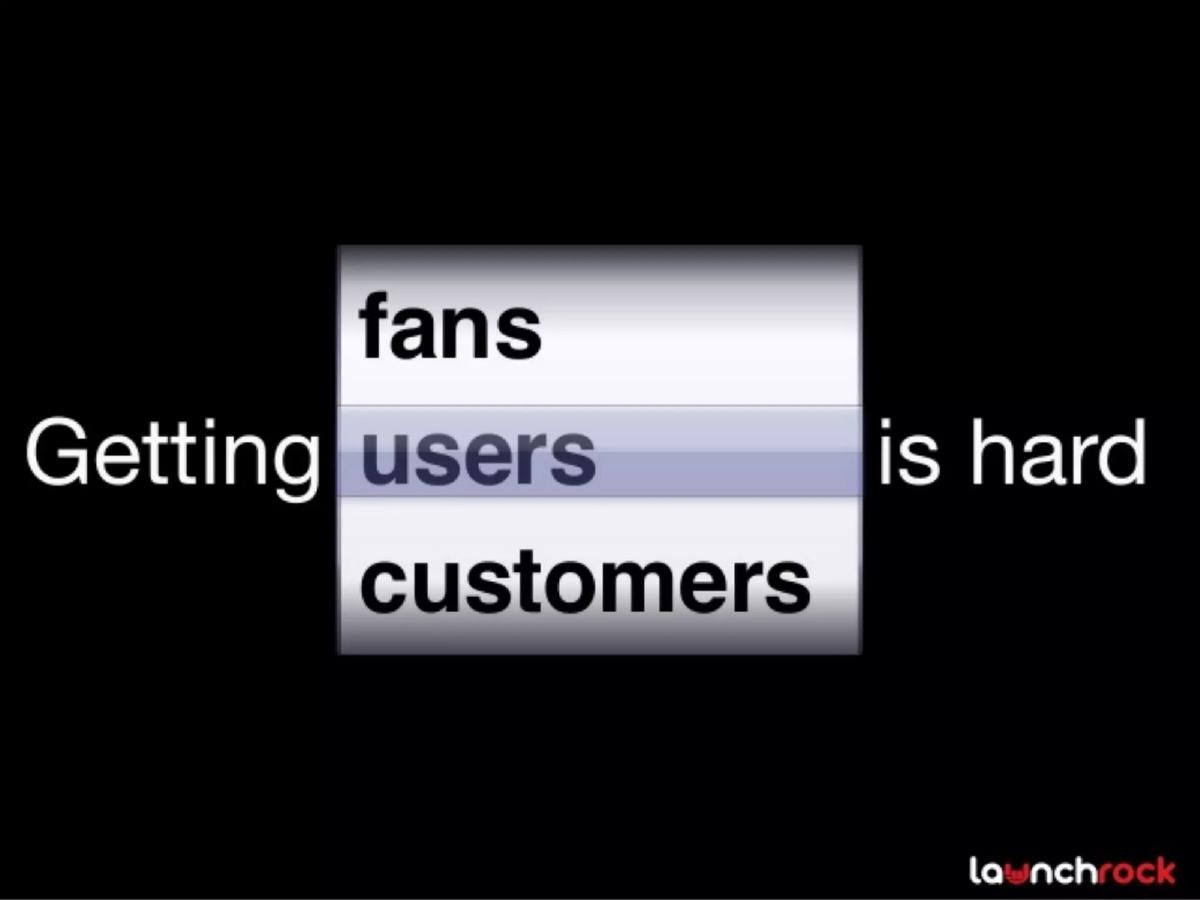
Slide 1 is a minimalist title slide featuring the logo and the tagline 'we get users.' It includes contact info for AngelList, which was the primary platform for discovery at the time. Slide 2 frames the problem with a simple slot-machine visual: 'Getting [fans/users/customers] is hard.' It’s a universal pain point for every founder in the room, making the problem immediately relatable without needing a single bullet point of text.
Slides 3-5: The Traction Triple-Threat
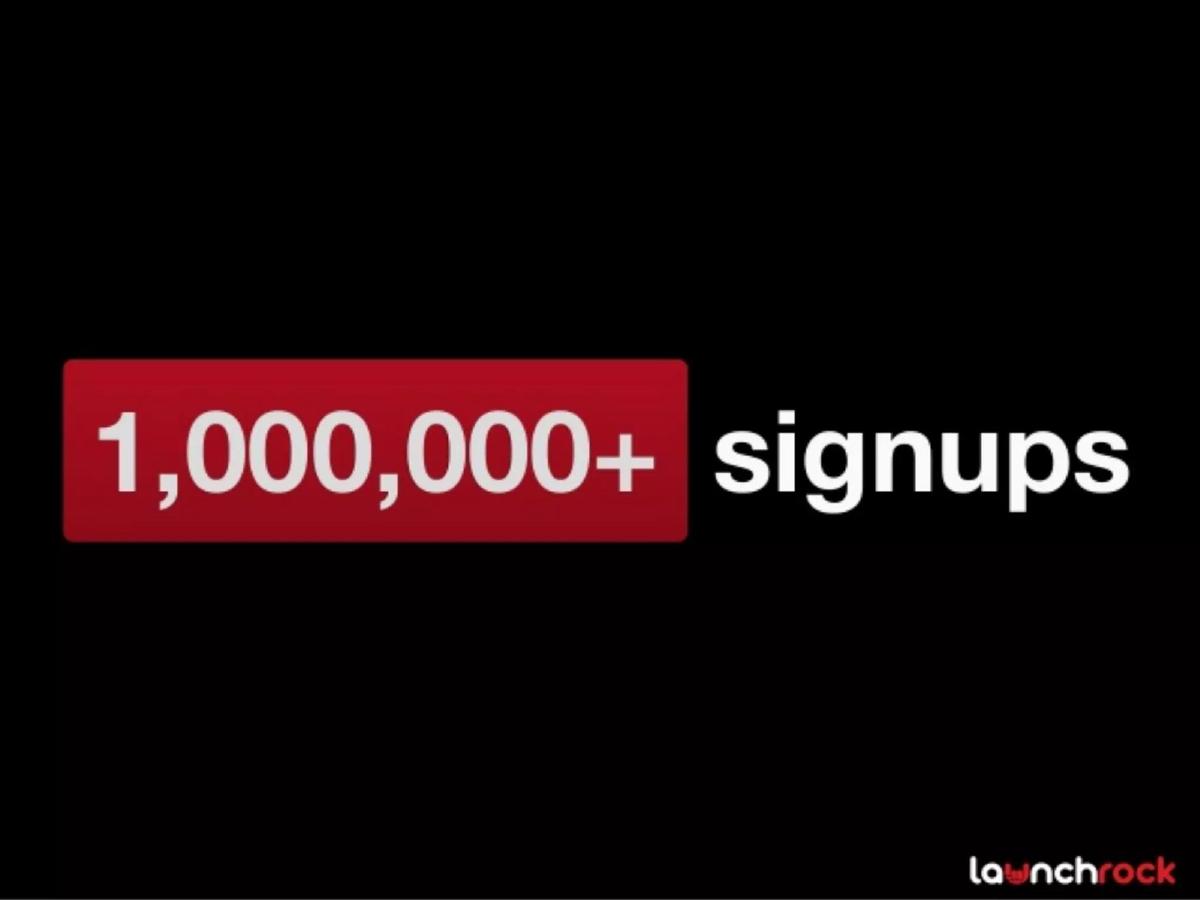
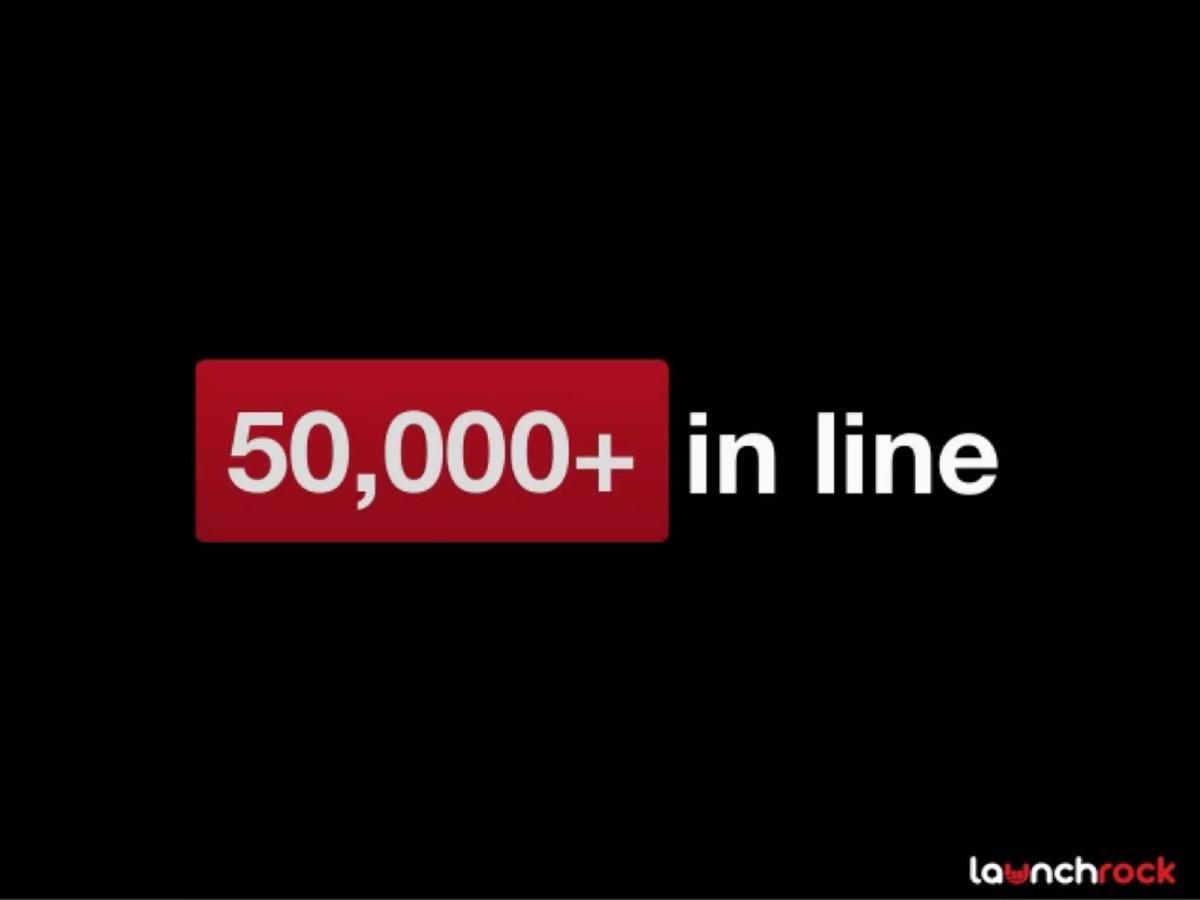
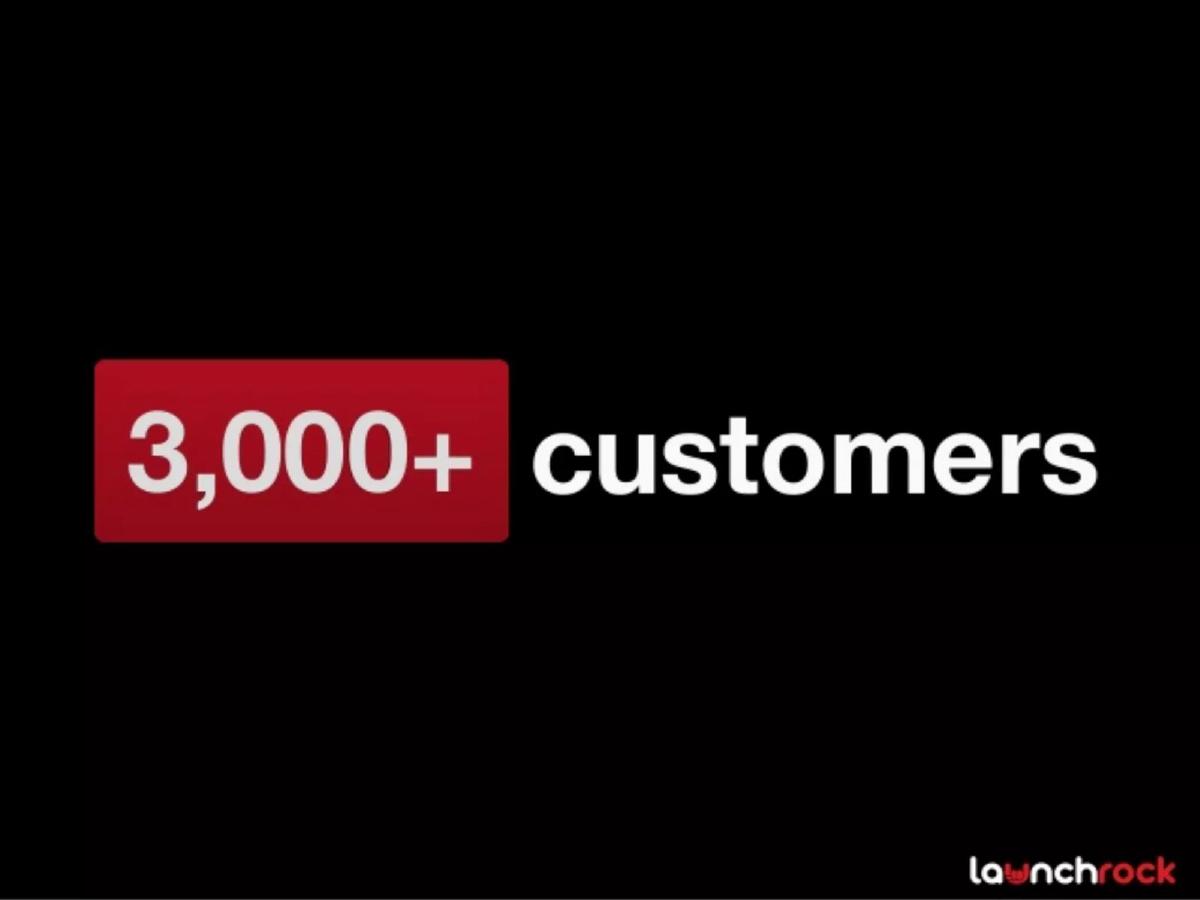
This is where the deck wins. Slide 3 displays '1,000,000+ signups' in a bold red box. Slide 4 follows with '50,000+ in line,' and Slide 5 claims '3,000+ customers.' By separating these metrics, Launchrock demonstrates a full funnel: massive reach, a waiting list (scarcity), and actual paying or active customers. This sequence effectively de-risks the investment before the product is even fully explained.
Slides 6-7: Product in Action
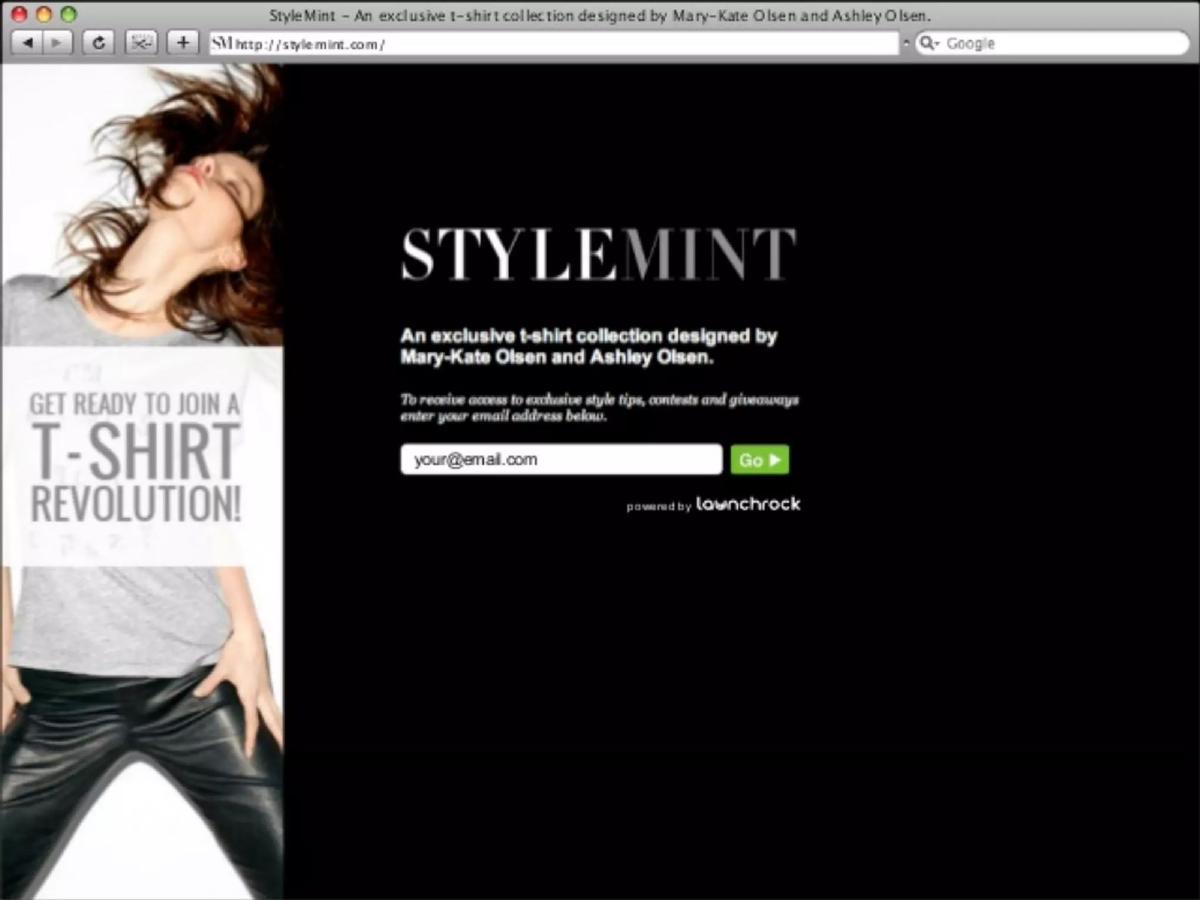
Rather than listing features, Launchrock shows a live use case. Slide 6 shows a landing page for 'StyleMint,' a T-shirt collection by the Olsen Twins. It’s a clean, high-end example of their 'coming soon' page. Slide 7 illustrates the 'viral loop'—showing how a user's signup is amplified across Facebook and Twitter, and how a personalized referral link is used to 'keep moving you further up the priority list.' This is a classic 'gamified' growth hack that was revolutionary in 2011.
Slides 8-9: Market Validation and Learning
Slide 8 lists the diversity of their client base under the heading 'Launched all sorts of things.' Logos include TaskRabbit, HubSpot, and Reading Rainbow. This proves the tool isn't just for tech startups; it works for celebrities, films, and established brands. Slide 9 , titled 'We’ve learned that...', shows a level of maturity. It lists why people share (status, value exchange) and what customers want (amplification, user insights). This slide tells investors that the team isn't just lucky—they are students of user behavior.
Slides 10-11: The Vision and the Viral Loop
Slide 10 is a conceptual graph showing the evolution from Web 1.0 (Search) to Web 2.0 (Social Networks) to '& Beyond' (Relationships). It positions Launchrock as the tool for the 'Relationship' era. Slide 11 is a purely visual representation of a referral tree. A single user on the left branches out into dozens of users on the right, some of whom carry the Launchrock logo. It’s a wordless explanation of their K-factor (viral growth rate).
Slides 12-13: The Product Stack and Team
Slide 12 breaks down the platform into three pillars: User Management (Infrastructure/Relationships), Marketing (Referrals/Preferences), and Social Insights (Engagement/User Insights). This is the closest the deck gets to a 'features' slide. Slide 13 introduces the team: Jameson Detweiler (CEO), Sean McCullough (Chief System Architect), Zachary Melamed (Lead Developer), and Thomas Knoll (Chief of Product). The roles are clearly defined, covering both the technical and product/relationship sides of the house.
Slides 14-16: Social Proof and the 'Ask'
Slide 14 is a 'wall of fame.' It lists 14 investors and 5 advisors. Seeing names like Dave McClure (500 Startups), Dharmesh Shah (HubSpot), and Gabriel Weinberg (DuckDuckGo) creates a 'fear of missing out' (FOMO) for other investors. Slide 15 is the closing slide, which is surprisingly informal. It features a blurred screenshot of an analytics dashboard with the text 'Raising Big BUCK$' overlaid. It lacks a specific dollar amount or valuation. Slide 16 appears to be an external promotional slide for a pitch deck collection and is not part of the original Launchrock narrative.
What Launchrock Did Right
Traction First: By putting the 1M+ signups at the front, they earned the right to be brief for the rest of the deck. · Visual Storytelling: They used screenshots and network diagrams instead of text-heavy slides to explain a complex viral mechanism. · Extreme Social Proof: They didn't just list their investors; they used headshots and titles of high-profile tech figures to build massive authority. · Niche Focus: They owned the 'pre-launch' space, a specific moment in a company's lifecycle that was previously underserved.
What is Missing
Business Model: There is no mention of how Launchrock actually makes money. Is it a monthly SaaS fee? A per-lead charge? A freemium model? The deck is silent on revenue. · Competition: In 2011, tools like KickoffLabs or even simple WordPress plugins were competitors. Launchrock ignores the landscape entirely. · Financials: There are no burn rate figures, no revenue projections, and no unit economics (CAC/LTV). · The Ask: 'Raising Big BUCK$' is not a professional 'Ask' slide. Usually, investors want to see a specific range (e.g., '$750k - $1M') and a breakdown of how that capital will be deployed.
Founder's Guide: What to Copy
The 'Hero Metric' Slide: If you have one number that is undeniably impressive, give it its own slide with huge font. Don't bury it in a chart. · Show, Don't Tell: Use a real customer's landing page to show your product's value rather than a list of bulleted features. · The 'Learnings' Slide: Showing that you have gathered qualitative insights from your data makes you look like a much more capable founder than someone just chasing vanity metrics. · Minimalist Design: Notice the black backgrounds and high-contrast text. It’s easy to read on a projector and keeps the focus on the content.
Frequently asked questions
- How much did Launchrock raise with this deck?
- According to catalogue facts from Failory, Launchrock raised $800,000 in a Seed round in 2011. Interestingly, the deck itself does not specify the amount being raised, simply stating 'Raising Big BUCK$' on slide 15.
- What is Launchrock's 'hero metric'?
- The hero metric is the 1,000,000+ signups featured on slide 3. This is followed by '50,000+ in line' on slide 4 and '3,000+ customers' on slide 5, creating a narrative of overwhelming demand.
- Who were the key investors in Launchrock?
- Slide 15 lists a heavy-hitting roster including 500 Startups, Venture51, Dharmesh Shah (HubSpot), Ryan Holmes (Hootsuite), and David Tisch (TechStars NYC). This level of social proof was likely a major factor in their successful seed round.
- Does the deck explain how the product works?
- Yes, but mostly through visual examples. Slides 6 and 7 show a real-world implementation for 'StyleMint,' demonstrating the email capture and the social sharing 'priority list' mechanics that drive virality.
- What is missing from the Launchrock pitch deck?
- The deck is missing several standard components: a business model/monetization slide, a competitive landscape analysis, detailed financial projections, and a specific use-of-funds breakdown.