Mysten Labs’ Series A deck is a textbook example of how 'founder-market fit' can drive a massive valuation even in the absence of traditional revenue metrics. The deck relies heavily on the team’s background—specifically their roles as senior leaders in Facebook’s advanced blockchain R&D organization (Novi Research). Instead of proposing a simple Layer 1 blockchain, they pitched the 'Polaris web3 platform,' a modular approach to infrastructure that abstracts away L1 and L2 complexities. The deck is notably light on financial projections and market sizing, choosing instead to focus on technica…
Key takeaways
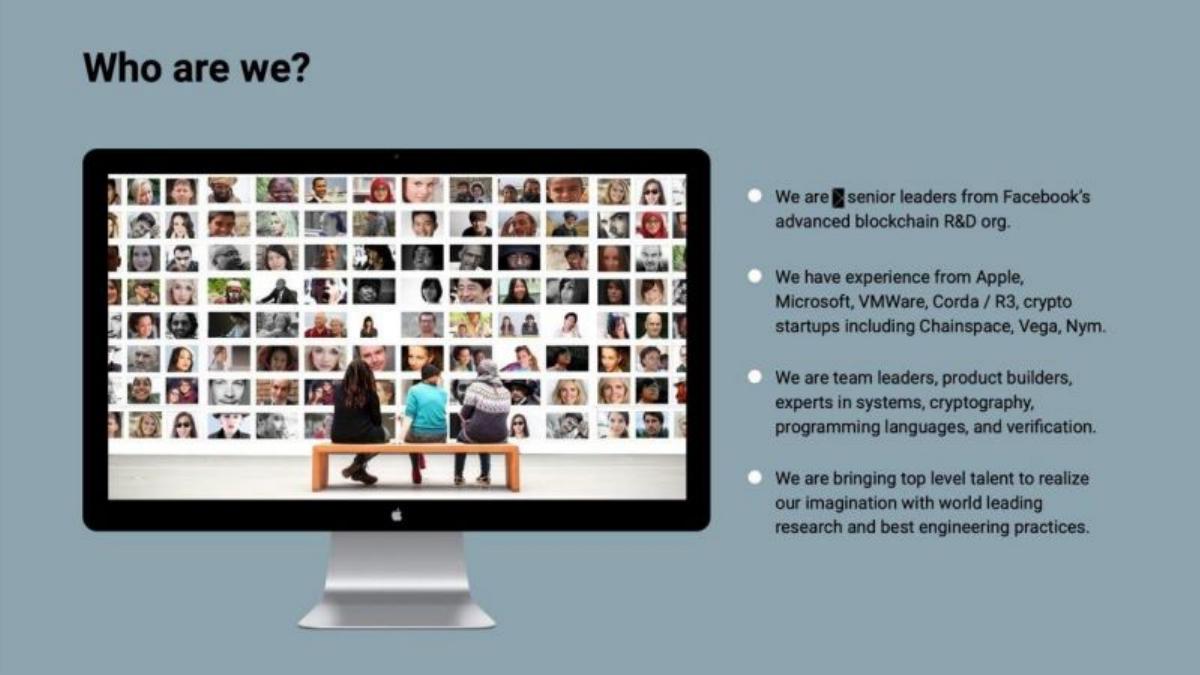
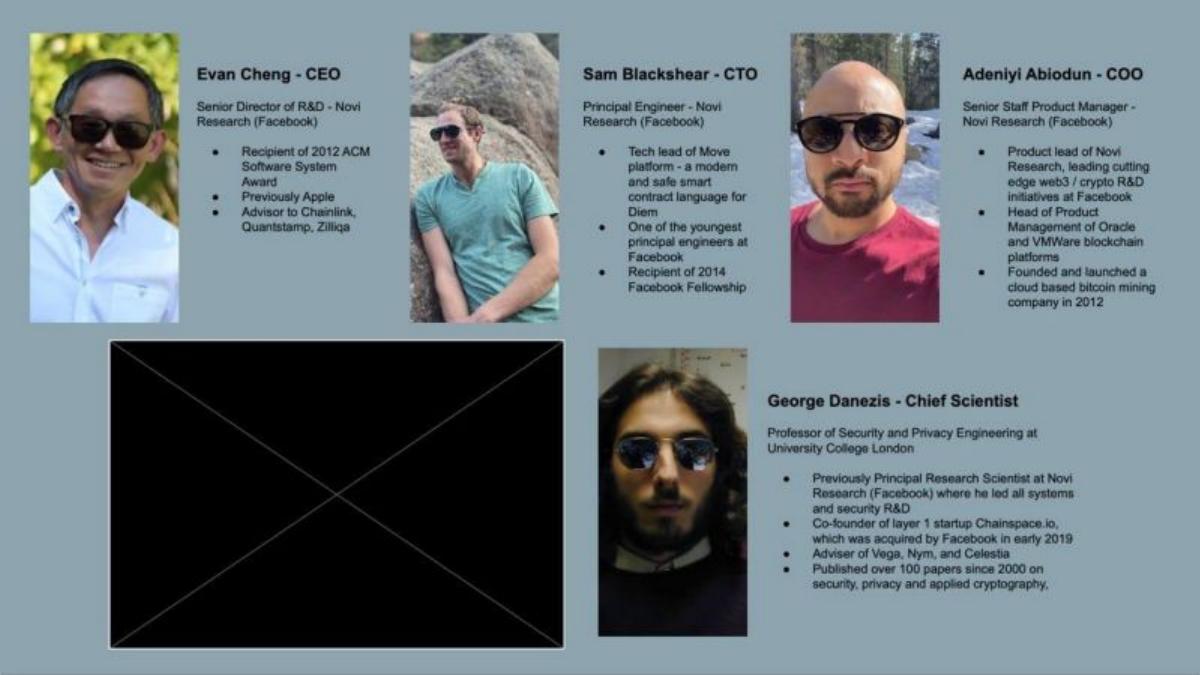
- The team slide (Slide 2 and 3) is the deck's strongest asset, highlighting senior leadership from Facebook’s Novi Research and experience at Apple and Microsoft.
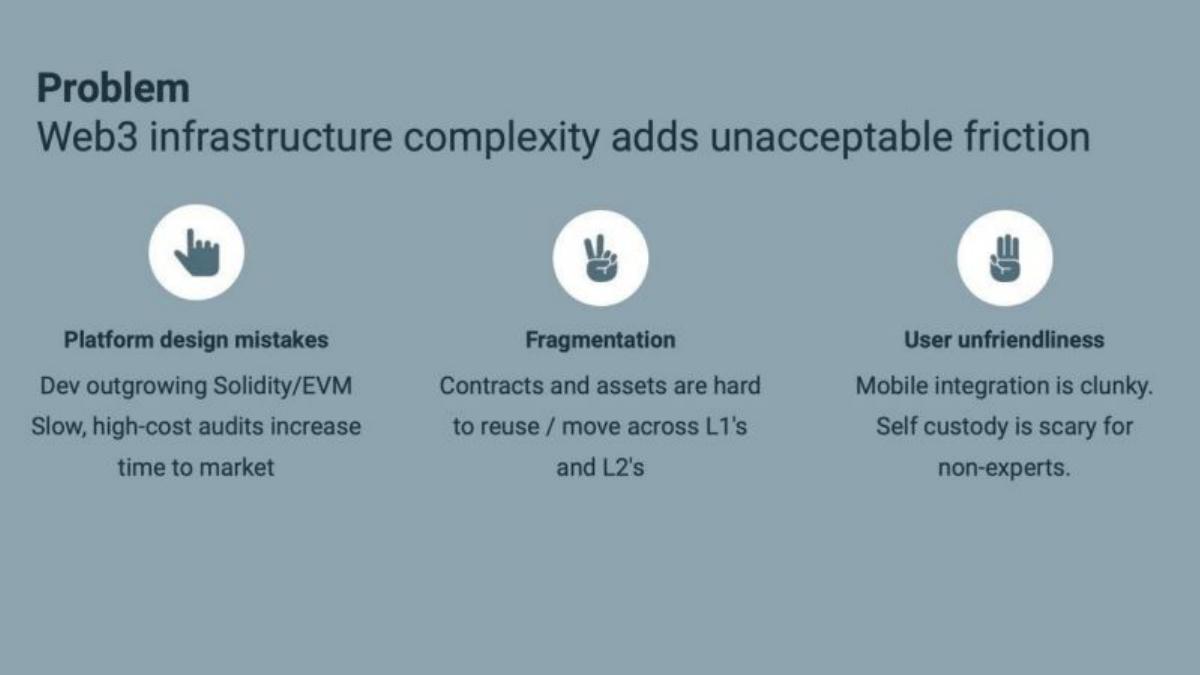
- The problem is defined as 'Web3 infrastructure complexity' causing unacceptable friction due to platform design mistakes, fragmentation, and user unfriendliness (Slide 4).
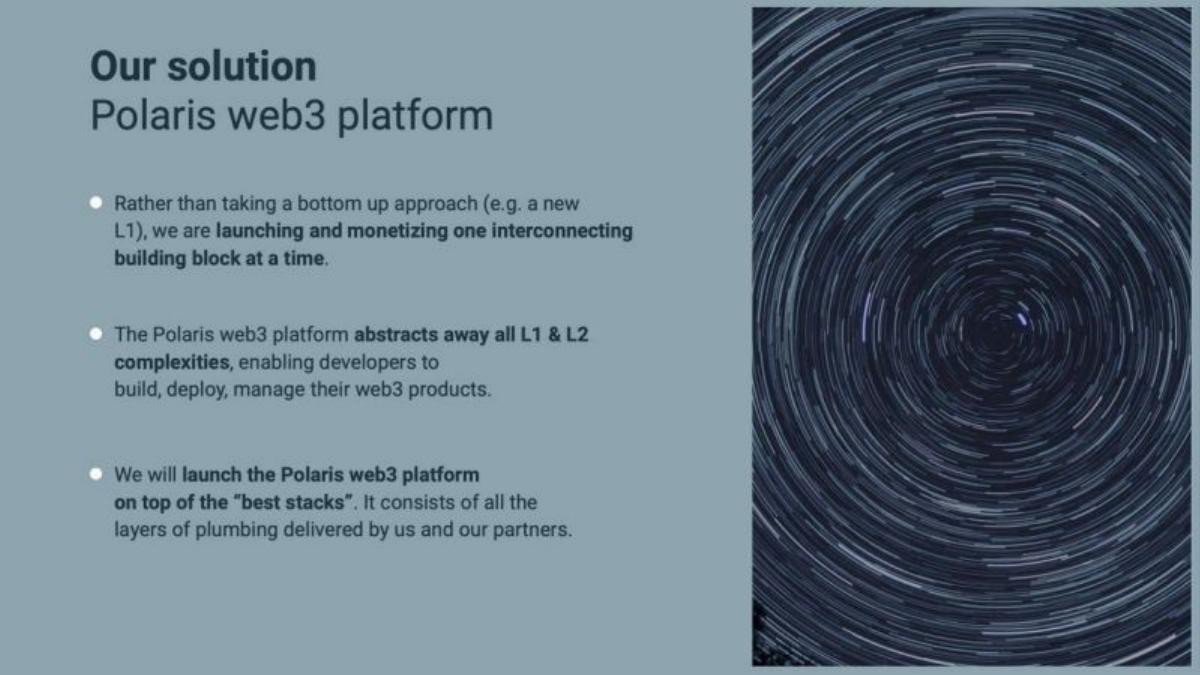
- The 'Polaris' solution avoids a bottom-up approach, opting instead to launch and monetize one interconnecting building block at a time (Slide 5).
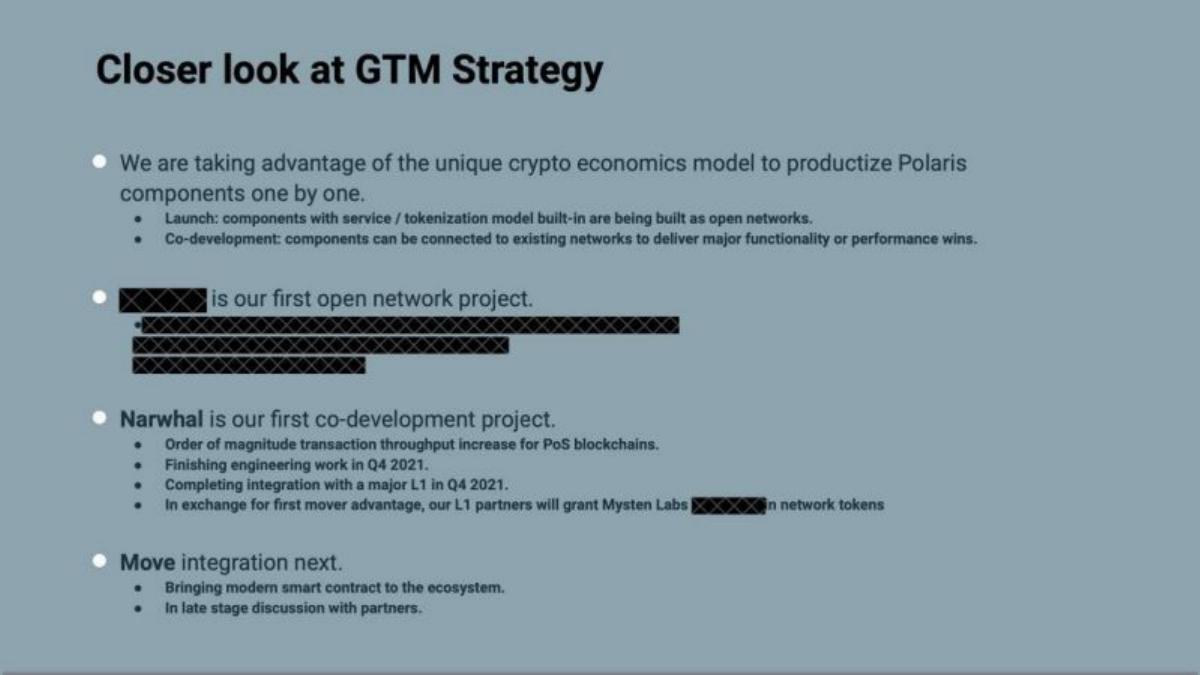
- Narwhal is identified as the first co-development project, promising an order of magnitude transaction throughput increase for PoS blockchains (Slide 6).
- The business model relies on receiving network tokens from L1 partners in exchange for 'first mover advantage' and technical integration (Slide 6).
- The 'Road to Polaris' roadmap (Slide 8) outlines a four-year plan, culminating in the launch of Polaris 2.0 with hyper-scalable BFT in 2025.
- Recent traction includes signed co-development agreements with Celo and Sommelier.finance (Slide 9).
- The deck completely omits an 'Ask' slide, financial forecasts, or a competitive landscape analysis, relying instead on the team's unique technical moat.
The Power of Pedigree: A Slide-by-Slide Analysis
Slide 1: Title and Mission
The deck opens with a minimalist title slide. The company name, Mysten Labs , is paired with a clear, high-level mission statement: "We create foundational infrastructure to accelerate web3 adoption." The visual of interconnected cubes suggests the complex, structural nature of their work. This slide establishes the company as an infrastructure play rather than a consumer application.
Slide 2: The 'Who Are We?' Overview
Slide 2 is a high-density credibility builder. It uses a mosaic of team photos to suggest a large, established organization rather than a small startup. The bullet points are the primary focus: "senior leaders from Facebook’s advanced blockchain R&D org." It also lists blue-chip tech experience from Apple, Microsoft, and VMware, alongside crypto-native startups like Chainspace and Vega. This slide aims to eliminate any doubt regarding the team's technical capability to build at scale.
Slide 3: The Executive Team
This slide provides specific biographies for the four core leaders. Evan Cheng (CEO) is noted as a recipient of the 2012 ACM Software System Award. Sam Blackshear (CTO) is credited as the tech lead of the Move platform. Adeniyi Abiodun (COO) is highlighted for his product leadership at Novi and VMware. George Danezis (Chief Scientist) is introduced as a Professor at University College London with over 100 papers published. The blacked-out box likely contained a fifth key hire or a confidential advisor. The depth of academic and industrial experience here is the primary 'hook' for the $300M raise.
Slide 4: Defining the Web3 Problem
The problem slide identifies three specific friction points: Platform design mistakes (Solidity/EVM limitations), Fragmentation (difficulty moving assets across L1s/L2s), and User unfriendliness (clunky mobile integration and scary self-custody). By framing the problem as 'infrastructure complexity,' Mysten Labs positions itself to build the 'plumbing' that fixes the entire ecosystem, rather than just one part of it.
Slide 5: The Polaris Solution
The solution is the Polaris web3 platform . The key differentiator stated is that they are not taking a "bottom-up approach (e.g. a new L1)" but are instead "launching and monetizing one interconnecting building block at a time." This modular strategy is intended to reduce the risk of building a ghost-town network by ensuring each component has utility on existing stacks.
Slide 6: Go-to-Market (GTM) Strategy
This slide details how they will productize the platform. It mentions Narwhal as the first co-development project, promising a "transaction throughput increase for PoS blockchains." It also mentions Move integration as the next step. Crucially, it outlines the business model: in exchange for these integrations, partners grant Mysten Labs "network tokens." This is a B2B2C model where the 'customers' are other blockchain networks.
Slide 7: The Polaris Stack Diagram
Slide 7 provides a visual architecture of the ecosystem. It shows the Polaris SDK connecting to various nodes, including a "Polaris L1" and partner networks like Celo and Sommelier . The legend distinguishes between networks launched by Mysten Labs (green) and strategic co-developments (blue). This visualizes the 'interconnecting building block' strategy mentioned in Slide 5.
Slide 8: The Four-Year Roadmap
The "Road to Polaris" spans from 2021 to 2025. 2021/22 focuses on deploying Move and Narwhal into partner networks for token stakes. 2023 focuses on R&D for hyper-scale protocols. 2024 marks the launch of Polaris 1.0 network and token . 2025 aims for Polaris 2.0 with "hyper scalable BFT" supporting thousands of nodes at millisecond latency. This long-term view signals to investors that this is a generational infrastructure play, not a quick flip.
Slide 9: Recent Progress
This slide provides immediate validation. It lists signed co-development agreements with Celo and Sommelier.finance . It also notes that the core protocol R&D is complete with a testnet expected within 6 months. The 'Recruiting' section, though heavily redacted, suggests aggressive hiring to fill out the technical team. This slide proves that the 'building block' strategy is already in motion.
Slide 10: Conclusion
The final slide is a simple 'Thank You' with a contact email. It maintains the professional, understated aesthetic of the rest of the deck, letting the previous nine slides of technical authority speak for themselves.
What Mysten Labs Does Exceptionally Well
The Mysten Labs deck is a masterclass in Authority Signaling . In the world of blockchain infrastructure, the 'how' is often more important than the 'what.' By highlighting their roles in creating the Move language and leading Facebook's Novi, the founders establish themselves as the only team capable of executing this specific vision. They don't just say they can build a better blockchain; they show they have already built the foundational technologies that others are using.
Furthermore, the Modular Strategy is a brilliant fundraising tactic. Most L1 pitches require investors to believe that the new network will successfully attract thousands of developers from scratch. Mysten’s approach of "monetizing one building block at a time" by integrating with existing giants like Celo provides a de-risked path to adoption and immediate token-based revenue.
What is Missing from the Deck
Despite the massive raise, several standard venture capital slides are missing:
Market Size (TAM/SAM/SOM): There is no mention of the total addressable market for blockchain infrastructure. The founders likely assumed that at a $300M Series A, the investors already understood the multi-trillion dollar potential of the space. · Competitive Landscape: The deck does not mention competitors like Solana, Ethereum, or Aptos (another Facebook spinoff). This omission suggests a 'category of one' positioning. · The 'Ask': There is no slide stating how much money they are raising or how they will spend the capital. This is common in highly competitive rounds where the terms are negotiated via a term sheet rather than a pitch deck. · Financial Projections: There are no charts showing projected revenue or burn rates. The focus is entirely on technical milestones and token stakes.
Founder Lessons: What to Copy
1. Lead with your 'Unfair Advantage': If your team has a world-class pedigree, make it the centerpiece. Mysten Labs put their team slide second, ensuring that every subsequent technical claim was viewed through the lens of their proven expertise.
2. Solve the 'Cold Start' Problem: Don't just pitch a new platform; pitch a way to integrate with existing ecosystems. By showing they could improve Celo and Sommelier, Mysten proved their tech worked before their own mainnet even launched.
3. Use a Long-Term Roadmap: For infrastructure projects, a 12-month roadmap is insufficient. Showing a 4-year vision (Slide 8) demonstrates the scale of the ambition and justifies a larger capital injection.
4. Visual Simplicity: The deck uses a consistent, muted color palette and avoids cluttered slides. This clean design mirrors the 'abstraction of complexity' that their product promises to deliver.
Frequently asked questions
- How did Mysten Labs raise $300M with only 10 slides?
- The raise was driven by the extreme 'pedigree' of the founding team. Slides 2 and 3 establish that the founders were the architects of Facebook's (Meta's) blockchain efforts. In deep-tech infrastructure, investors often bet on the team's ability to solve problems that others cannot, making traditional metrics like MRR or user growth less relevant at the Series A stage.
- What is the 'Polaris' platform mentioned in the deck?
- Polaris is described as a Web3 platform that abstracts away Layer 1 and Layer 2 complexities. According to Slide 5, it allows developers to build and manage products without dealing with the underlying plumbing. It is presented as a modular stack rather than a single monolithic blockchain.
- What is Mysten Labs' revenue model according to the deck?
- The deck suggests a 'token-based' monetization strategy. Slide 6 and Slide 8 indicate that Mysten Labs receives 'network tokens' or a 'million stake' in partner networks (like Celo) in exchange for deploying their technical components like Narwhal, Tusk, and Move.
- Who are the key people behind Mysten Labs?
- The leadership includes CEO Evan Cheng (former Senior Director of R&D at Novi), CTO Sam Blackshear (creator of the Move language), COO Adeniyi Abiodun (former Lead at Novi), and Chief Scientist George Danezis (Professor at UCL). Their collective experience spans Facebook, Apple, and Microsoft.
- Is there a mention of the Sui blockchain in this deck?
- Interestingly, the name 'Sui'—which became Mysten Labs' flagship product—is not explicitly named in the unredacted portions of this specific deck. It refers instead to the 'Polaris' platform and 'open network projects,' suggesting the branding was finalized or kept confidential during this specific phase of the raise.