INZMO’s 15-slide deck from 2016 is a high-impact presentation that prioritizes speed and cost-efficiency. The startup tackles the 'insurance sucks' problem by targeting 1.7 billion millennials with a mobile-first solution. The core of the pitch rests on a compelling comparative cost analysis, claiming INZMO is 30% more effective than traditional insurers by slashing management and sales costs. They introduce a unique technical moat—5-second video verification—to combat fraud. While the deck is light on detailed financial projections, it compensates with strong social proof, including a commit…
Key takeaways
- The deck identifies a massive target demographic of 1.7 billion millennials on slide 4.
- INZMO claims a 30% efficiency advantage over traditional insurance by reducing management costs from 20% to 10% and sales costs from 30% to 15% (Slide 8).
- A proprietary 5-second video-verification process is presented as the primary tool for fraud reduction on slide 9.
- The startup successfully piloted in Estonia with 100k EUR before seeking expansion (Slide 10).
- The team slide includes 10 members, featuring specific advisors for the US, EU, and Estonian markets (Slide 12).
- At the time of the deck, 580k EUR was already committed by 500 Startups and an EU insurer (Slide 13).
- The total seed round target was set at EUR 1.1 million (Slide 13).
- The deck lacks a detailed competitive landscape or a multi-year financial forecast slide.
The Efficiency Play: INZMO's 2016 Teardown
INZMO entered the European insurtech scene with a clear mandate: remove the friction from personal insurance. Their 2016 seed deck is a lean, 15-slide presentation that focuses heavily on the 'how' of their business model rather than just the 'what.' By the time this deck was circulating, the company had already secured a pilot in Estonia and was eyeing the DACH region (Germany, Austria, Switzerland) for its next phase of growth.
The Hook and the Audience (Slides 1-5)
Slide 1 sets the tone with the tagline: "Get insurance cover in seconds." It is a standard title slide featuring their logo and contact information for CEO Meeri Klausen. Slide 2 is an external promotional slide for the NOAH17 conference, which serves as a timestamp for the deck's era but adds little to the narrative.
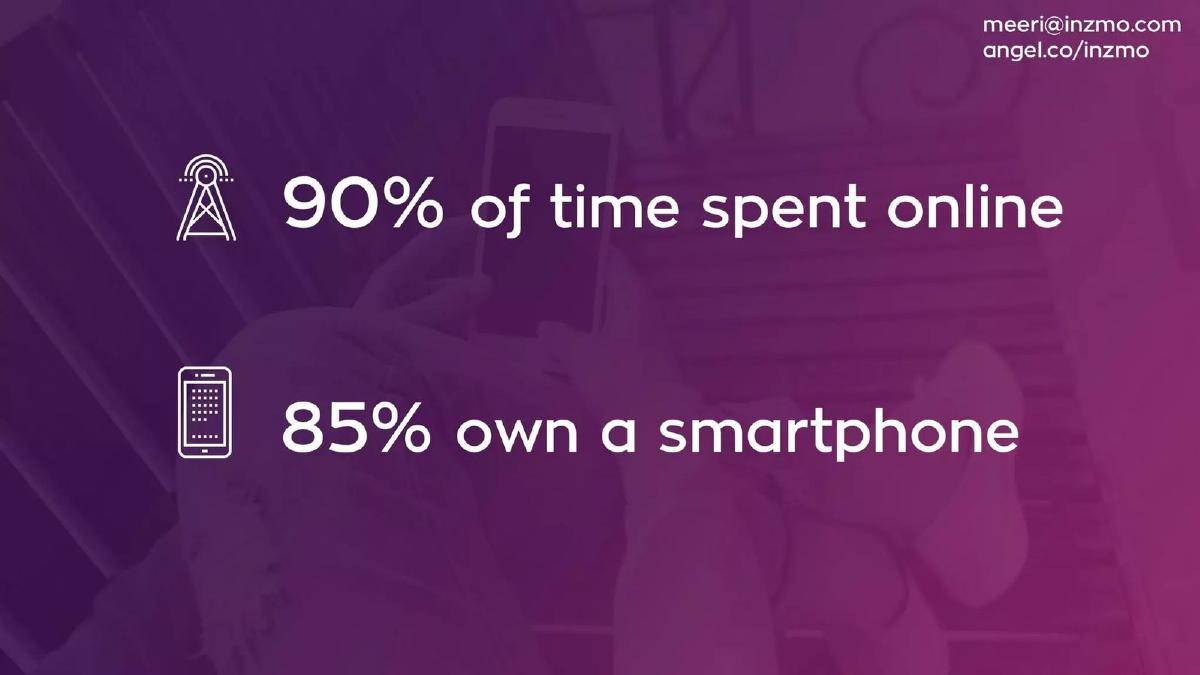
Slide 3 and Slide 4 define the problem and the target. The problem is stated as "Insurance sucks!"—a common trope in fintech decks of the mid-2010s. The opportunity is quantified by the "1.7 billion millennials" globally. Slide 5 provides the behavioral justification for a mobile-first approach, noting that this demographic spends 90% of their time online and 85% own a smartphone. This section is brief, assuming the investor already agrees that traditional insurance is ripe for disruption.
The Solution and the Economic Moat (Slides 6-8)
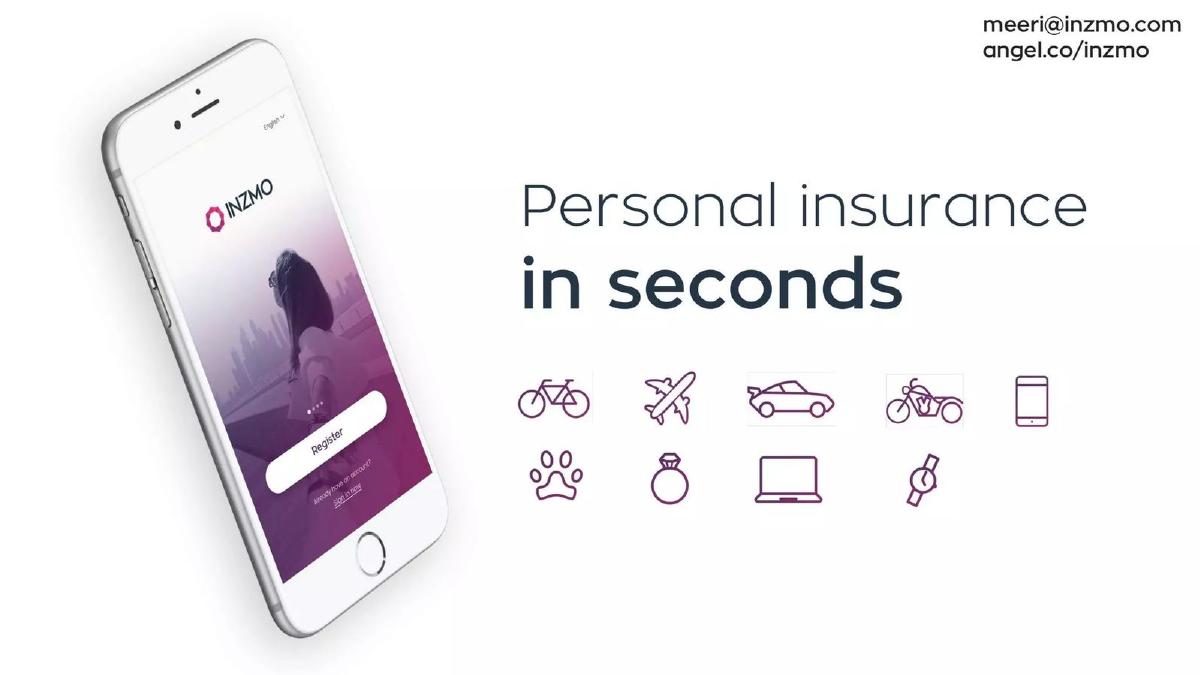
Slide 6 introduces the product: "Personal insurance in seconds." It displays an iPhone mockup and icons representing the various verticals INZMO covers: bikes, travel, cars, motorcycles, electronics, pets, jewelry, laptops, and watches. This suggests a horizontal platform approach rather than a niche product focus.
The most critical part of the pitch begins on Slide 7 and Slide 8 . INZMO presents a side-by-side comparison of cost structures. Slide 7 breaks down traditional insurance: 20% Management, 30% Sales costs, 15% Fraud, and 35% Legitimate loss. Slide 8 then reveals the INZMO advantage. By automating processes, they claim to reduce Management to 10% and Sales costs to 15%. They also project a drop in Fraud to 10%. The result is a claim of being "30% more effective" than incumbents. For an investor, this is the 'meat' of the deck—it explains exactly where the profit margin comes from in a low-margin industry.
Technical Innovation and Traction (Slides 9-11)
To support the claim of reduced fraud, Slide 9 introduces "Video-verification of items." It shows a 5-second video interface used to verify the condition of a car. This is presented as a proprietary or at least primary technological differentiator. It solves a major pain point for insurers: knowing the state of an asset before it is insured without sending a physical inspector.
Slide 10 and Slide 11 show the geographic roadmap. They started with a "100k EUR to pilot" in Estonia (Slide 10). Slide 11 then highlights a broader EU map, specifically calling out an "Underwriter + investor" in Austria. This is a vital piece of information for an insurtech startup; having a secured underwriting partner is often a bigger hurdle than building the software itself.
The Team and The Ask (Slides 12-15)
Slide 12 presents a robust team of ten. It includes co-founders Meeri Klausen (CEO) and Risto Klausen (CTO), but more importantly, it lists three specific insurance advisors for the EU, US, and Estonia. This demonstrates that the founders recognized their need for deep regulatory and industry expertise early on.
Slide 13 is the 'Ask' slide. It states a goal of "EUR 1,1 mil seed" and notes that "580k EUR [is] committed by Insurer in EU + existing investors + 500 [Startups]." It also sets a timeline for the Austria and Germany launches in early 2017. Slide 14 is a closing slide with the slogan "Make insurance great again!"—a play on the political zeitgeist of 2016. Slide 15 is an appendix-style slide for NOAH Advisors, which appears to be a corporate finance boutique's credentials rather than part of the INZMO core pitch.
What Works in the INZMO Deck
The strongest element of this deck is the comparative cost analysis on slides 7 and 8. Most startups claim they will be "cheaper" or "better," but INZMO actually breaks down the percentage points of the insurance premium. By showing exactly which buckets (Management and Sales) they are shrinking, they provide a logical path to higher margins.
The video verification feature (Slide 9) is also a highlight. It provides a tangible example of how their technology actually reduces costs (specifically fraud). It moves the deck from "we have an app" to "we have a process that changes the risk profile of the business."
Finally, the social proof on slide 13 is excellent. Having 50% of the round already committed by a reputable accelerator (500 Startups) and a strategic partner (an EU insurer) creates a sense of urgency and validation for new investors.
What is Missing
Despite its strengths, the deck has several notable omissions:
Unit Economics: While they show the cost structure of a premium, they don't show the Customer Acquisition Cost (CAC) vs. Lifetime Value (LTV). In a crowded insurance market, sales costs are often higher than anticipated. · Competitive Landscape: There is no slide addressing other neo-insurers like Lemonade (which launched around the same time) or local European competitors. · Detailed Financial Projections: The deck stops at the seed round ask. There is no indication of what the revenue targets are for the Germany and Austria launches. · Regulatory Strategy: Insurance is heavily regulated. While they mention an Austrian underwriter, they don't explain their licensing status (e.g., are they an MGA or a full carrier?).
What a Founder Should Copy
Founders in complex, legacy industries should emulate INZMO's transparency regarding industry cost structures . If you are disrupting a market, don't just say you are better; show the pie chart of the incumbent's expenses and show exactly which slices you are going to eat.
Additionally, the specific advisor roles on the team slide are a great touch. Instead of just listing "Advisors," INZMO assigned them specific territories (US, EU, EST). This tells investors that the company is thinking about the localized nature of insurance regulation from day one.
Lastly, the use of a pilot to prove a model (Slide 10) is a textbook way to de-risk a seed round. Showing that you've already spent a small amount of capital (100k EUR) to prove the concept in a smaller market (Estonia) makes the larger ask for expansion (1.1M EUR) much more palatable.
Frequently asked questions
- What is the primary problem INZMO aims to solve?
- INZMO targets the friction and inefficiency of traditional insurance, which they summarize with the blunt statement 'Insurance sucks!' on slide 3. They specifically address the needs of millennials who spend 90% of their time online and 85% of whom own smartphones, requiring a 'seconds-not-days' approach to coverage.
- How does INZMO claim to be more efficient than traditional insurers?
- According to slide 8, INZMO is '30% more effective.' They achieve this by halving management costs (from 20% to 10%) and sales costs (from 30% to 15%). They also claim a reduction in fraud from 15% to 10%, while maintaining the same 35% 'legitimate loss' ratio as traditional players.
- What is the 'Video-verification' feature mentioned in the deck?
- Slide 9 introduces a 5-second video verification process for items. This mobile-first feature allows users to record their belongings (like cars or electronics) to prove their condition and existence at the time of policy inception, which serves as a deterrent and detection tool for insurance fraud.
- Who were the key investors at the time of this pitch?
- Slide 13 notes that 580k EUR was already committed to the round. The named investors include 500 Startups (now 500 Global) and an unnamed 'Insurer in EU,' along with existing investors. The total goal for the seed round shown in the deck was EUR 1.1 million.
- What was INZMO's initial geographic focus?
- The deck shows a pilot in Estonia (Slide 10) followed by a rapid expansion plan. Slide 13 explicitly states the launch dates for new markets: Austria in January 2017 and Germany in April 2017, supported by an Austrian underwriter and investor.