iPlaysafe presents a dual-pronged solution to the rising rates of STIs: a physical home-testing kit and a digital platform for sharing verified results. The deck effectively uses a narrative approach to highlight the 'awkwardness' of sexual health conversations, positioning their app as a friction-reducing tool for the dating app era. With a clear focus on regulatory compliance (ISO 13485 and EU-MDR) and strategic partnerships with labs like Viapath, the company seeks to build trust in a sensitive market. While the deck is strong on product flow and branding, it leaves questions regarding the…
Key takeaways
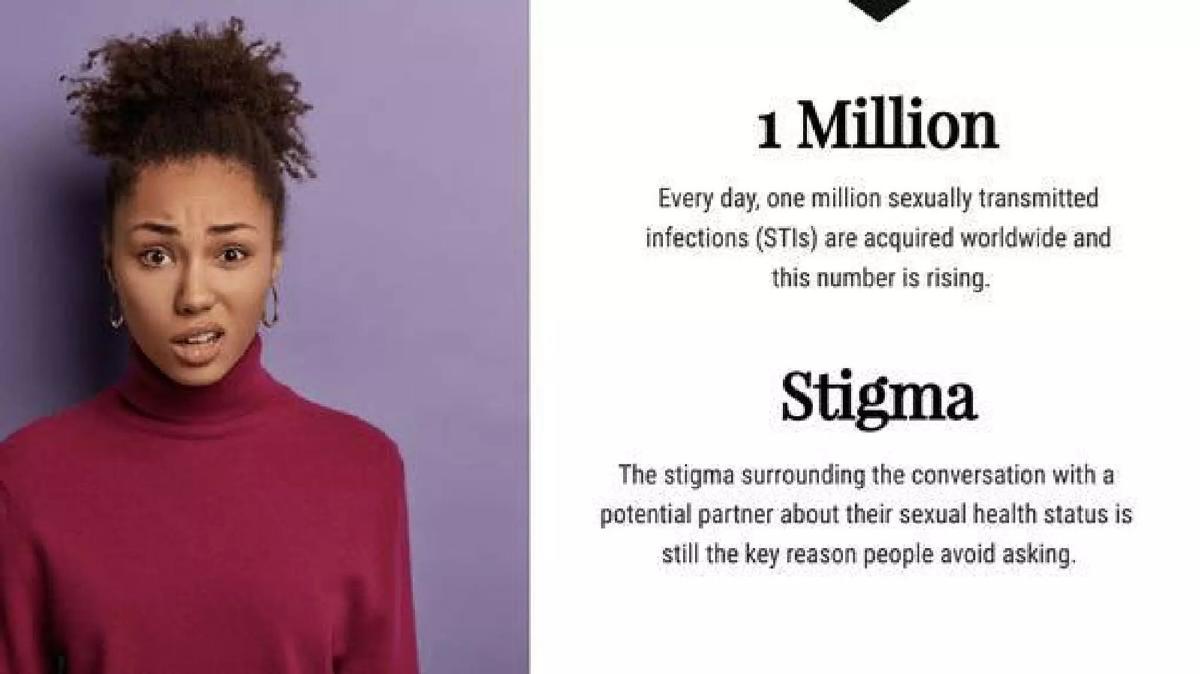
- The company identifies a massive market problem with 1 million STIs acquired daily worldwide (Slide 2).
- iPlaysafe utilizes a 4-step process: order online, collect sample, lab processing, and sharing a verified badge (Slide 9).
- The product is positioned as 'Medical-Grade Software' compliant with ISO 13485:2016 and IEC 62304 standards (Slide 15).
- Market validation is provided by citing the revenue of competitors like Everlywell ($130M) and LetsGetChecked ($100M) (Slide 12).
- The business model includes B2C sales, pharmacy affiliates, and dating app partnerships (Slide 17).
- The 'Badge Concept' gamifies health by using color-coded indicators for testing frequency and results (Slide 19).
- iPlaysafe is seeking an Angel Round to reach 20,000 transactions and £2M in revenue over 12 months (Slide 14).
- The team includes a dedicated Medical Director and a Financial Advisor, alongside the co-founders (Slide 22).
The Narrative: From Awkwardness to Verification
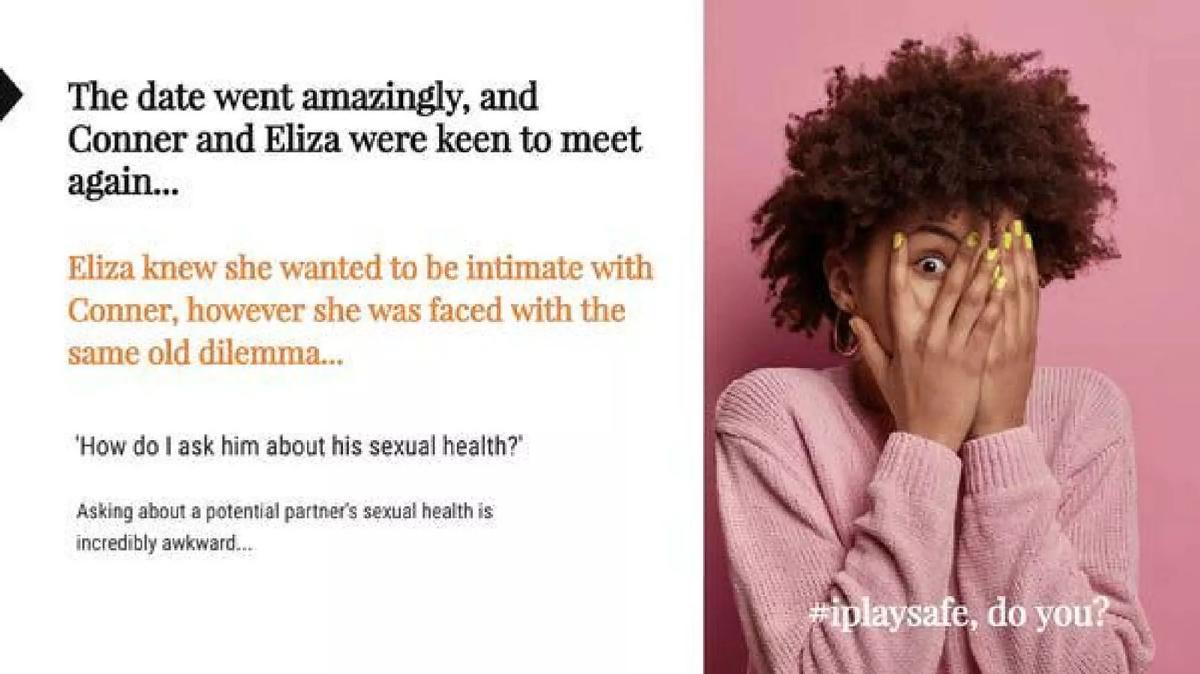
iPlaysafe opens its 2020 pitch deck with a relatable narrative, a common tactic for consumer-facing apps. By introducing 'Conner and Eliza' on Slide 3, the deck moves from a global health statistic—1 million STIs daily—to a specific, personal friction point: the 'incredibly awkward' conversation about sexual health before intimacy (Slide 4). This sets the stage for a product that isn't just a medical tool, but a social facilitator.
The Problem and Market Landscape (Slides 1-6)
Slide 1 serves as a standard title page, establishing the brand's purple-and-teal color palette and the 'iPlaysafe App' logo. The contact information is clearly displayed.
Slide 2 introduces the macro problem. It cites that 1 million STIs are acquired daily and highlights 'Stigma' as the primary barrier to communication. This slide establishes the 'Why' behind the venture.
Slides 3 and 4 use a storyboard approach. They mention there are over 1,500 dating apps (Slide 3), framing the market as a high-volume environment where matches happen frequently, but health verification lags. Slide 4 explicitly labels the 'dilemma' of asking a partner about their status.
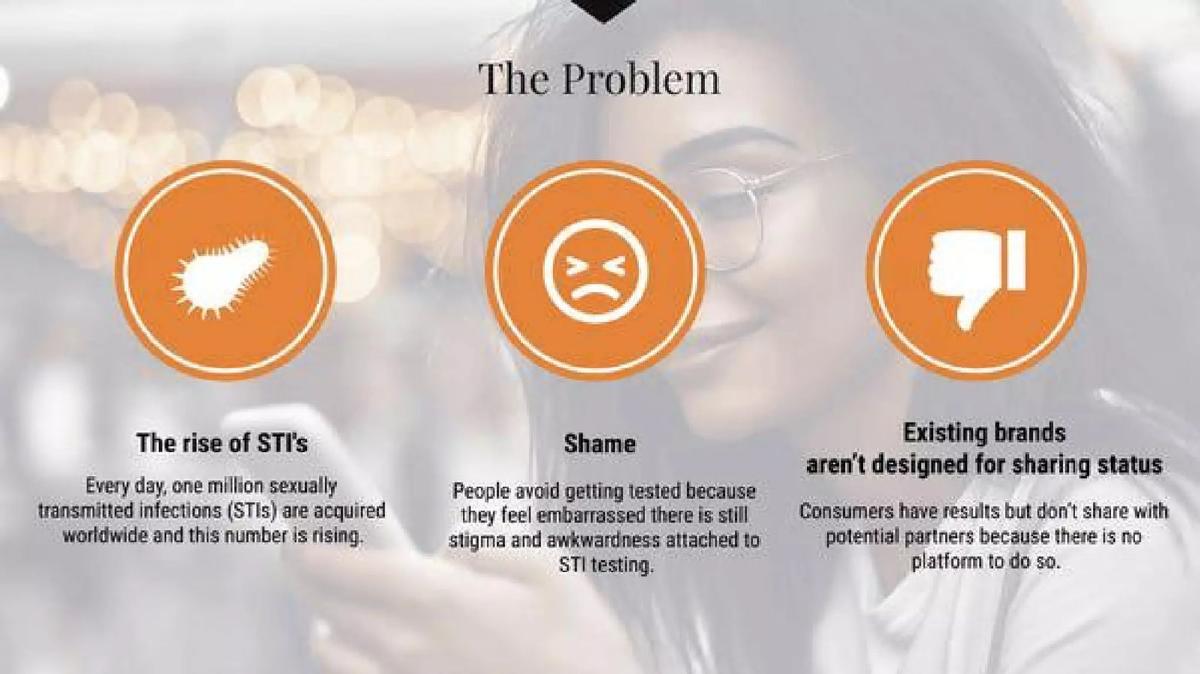
Slide 5 summarizes 'The Problem' into three pillars: the rise of STIs, the shame associated with testing, and the fact that existing brands are not designed for status sharing. This is a crucial distinction; iPlaysafe isn't just competing with labs, but with the lack of a sharing platform.
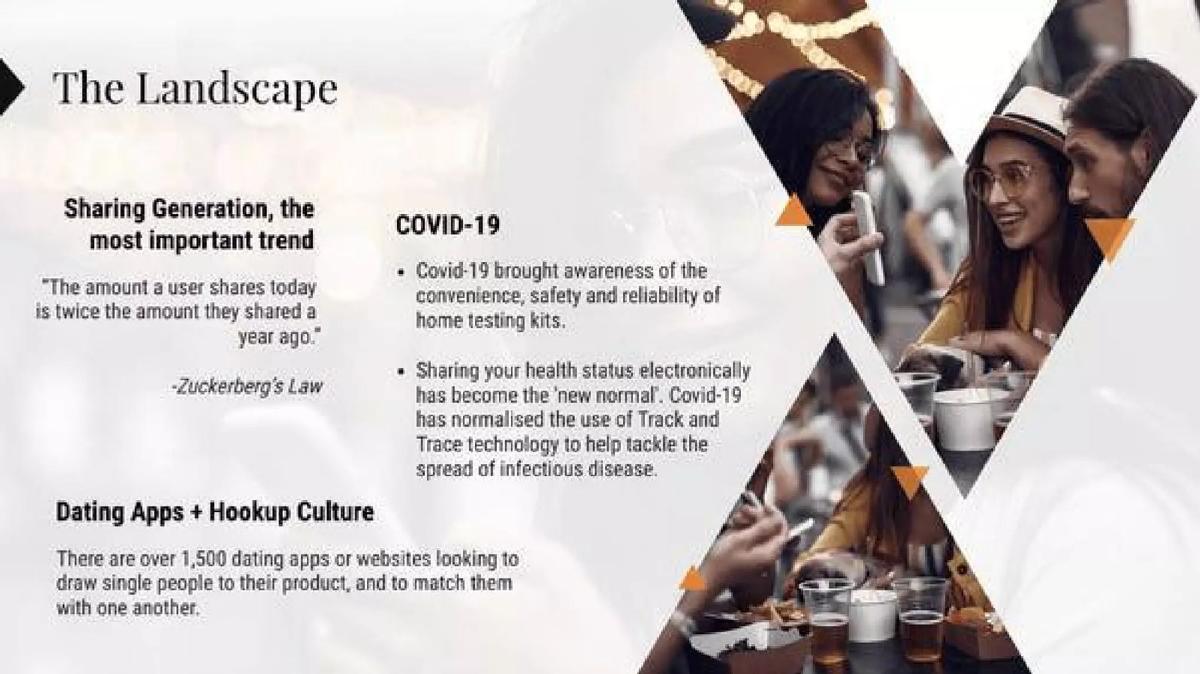
Slide 6 looks at 'The Landscape,' citing 'Zuckerberg’s Law' regarding the sharing generation. It also cleverly pivots to the COVID-19 pandemic, noting that the crisis normalized home testing kits and 'Track and Trace' technology, making the public more comfortable with digital health tracking.
The Solution and Product Deep-Dive (Slides 7-11)
Slide 7 introduces 'Our Solution.' It focuses on gamifying sexual health, providing a simple sharing solution, and integrating with existing dating apps. The goal is to change the 'dynamic of the conversation.'
Slide 8 shows the physical and digital components: the 'Medical Grade Software' and the 'home STI testing kit' which carries a CE Mark. This slide confirms that iPlaysafe is a full-stack health company, managing both the hardware (kits) and software (app).
Slide 9 outlines the '4-STEPS' of the user journey: Order, Collect/Return, Lab Processing, and Share. This is a standard flow for D2C health startups, but the fourth step—the 'verified badge'—is the company's unique value proposition.
Slides 10 and 11 provide more detail on the ordering and collection process. Slide 11 mentions that the box design was handled by Hudson Wright Easton to deliver an 'emotionally charged' and 'relevant' user experience, emphasizing that this is a lifestyle brand, not just a clinical one.
Market Validation and Business Strategy (Slides 12-14)
Slide 12 provides 'Market Validation' by listing successful peers. It cites Everlywell at $130M estimated annual revenue and LetsGetChecked at $100M. This demonstrates that investors have already backed the home-testing model, though iPlaysafe adds a social layer those competitors lack.
Slide 13 details the 'Go-to-Market Strategy.' It is divided into four goals: launching in the UK with API connections to pharmacies, connecting with dating apps, expanding to the EU (Spain, France, Italy, Germany), and finally a USA launch focused on NYC and California.
Slide 14 is the 'Financial' slide. The company states they are looking for '12 months financing to reach 20K transactions.' They project £2M in revenue over 12 months based on an 'avg. fee £99 per box.' This is the first mention of an 'Angel Round' and specific revenue targets.
Competitive Advantages and Partnerships (Slides 15-18)
Slide 15 focuses on 'Competitive Advantages.' The most significant points here are the regulatory milestones: ISO 13485:2016 and IEC 62304 compliance. They claim this took 1.5 years to achieve, suggesting a significant 'moat' against fast-following competitors.
Slide 16 lists 'Our Partners.' These are not just logos but functional integrations: Viapath (labs), Zendra Health (software development), and MedDX (distribution). This slide is intended to de-risk the operational side of the business for investors.
Slide 17 breaks down the 'Revenue Stream.' It includes B2C (kits and subscriptions), Affiliates (pharmacies), and Partnerships (dating apps). This multi-channel approach suggests they aren't solely reliant on individual kit sales.
Slide 18 is a 'Before and After' comparison. It contrasts a paper lab report from 2011 with the iPlaysafe digital badge in 2021, visually reinforcing the modernization of the industry.
The App Experience and Team (Slides 19-23)
Slide 19 explains 'The Badge Concept.' It details the color-coded system (Green, Blue, Red) based on testing frequency and results. This is the core of their 'gamification' strategy.
Slide 20 shows the 'Tracking Test Results' interface. It lists specific tests like Chlamydia, Gonorrhoea, and HIV 1/2, showing a 'Not Detected' status. It also mentions a 'dedicated medical team' for support.
Slide 21 returns to the 'Sample Collection' phase with a focus on the user experience, reiterating the 'convenient' and 'pre-paid' nature of the service.
Slide 22 introduces 'Our Team.' It features Georgia Di Mattos (CEO), Bianca Dunne (CIO), Dr. Rupert Wharton (Medical Director), Ulf Ek (Financial Advisor), and Richard Bull (CTO). The inclusion of a Medical Director is essential for a health-tech pitch.
Slide 23 concludes with a vision statement: "We are the future of sex, health and technology," accompanied by various press and incubator logos including EU-Startups and Netdoctor.
What Works in This Deck
Regulatory Transparency: Citing specific ISO and IEC standards (Slide 15) provides immediate credibility in a sector where 'wellness' apps often dodge medical scrutiny. · Clear Monetization: The £99 per box figure (Slide 14) and the three-pronged revenue model (Slide 17) give a clear picture of how the business scales. · Narrative Flow: The deck follows a logical path from a global problem to a personal story, then to a technical solution and market validation. · Partnership Strength: By naming Viapath and MedDX (Slide 16), the founders show they have solved the 'unsexy' parts of the business—logistics and lab capacity.
What is Missing
Unit Economics: While the £99 price point is mentioned, there is no breakdown of COGS (Cost of Goods Sold). Investors would want to know the margin after lab fees, shipping, and kit manufacturing. · Customer Acquisition Cost (CAC): There is no mention of how much it costs to acquire a user. In a crowded dating/health market, CAC is often the silent killer of startups. · Dating App Traction: The deck mentions 'connecting API with dating apps' as a goal (Slide 13), but doesn't list any signed LOIs (Letters of Intent) or pilot programs with specific platforms. · Data Privacy: For an app handling sensitive STI data, a dedicated slide on data encryption, HIPAA/GDPR compliance, and server security is a notable omission.
What a Founder Should Copy
The 'Landscape' Pivot: Using a global event (COVID-19) to explain why consumer behavior has changed (Slide 6) is a powerful way to argue for 'Why Now.' · The Badge System: Visualizing the product's output (Slide 19) helps investors understand the 'viral loop' or sharing mechanism of the app immediately. · Competitor Revenue Benchmarking: Instead of just listing names, providing the estimated revenue of competitors (Slide 12) proves the size of the 'prize' and validates the business model.
Frequently asked questions
- What is the primary product offered by iPlaysafe?
- iPlaysafe offers a two-part solution: a CE-marked home STI testing kit and a medical-grade mobile application. As shown on Slide 8, the software allows users to track results and share a 'verified badge' with potential partners, aiming to remove the stigma and awkwardness associated with discussing sexual health.
- How does iPlaysafe plan to make money?
- According to Slide 17, the company has three revenue streams: direct B2C sales of testing kits and subscriptions, affiliate commissions from pharmacies for medication referrals, and partnerships with dating apps where users can link their verified health status directly to their dating profiles.
- What regulatory standards does the company follow?
- The deck emphasizes high regulatory hurdles on Slide 15, stating the solution is compliant with ISO 13485:2016 and IEC 62304. They also note they are 'EU-MDR Ready' for the May 2021 medical device regulations, a process they claim took 1.5 years to achieve.
- What is the 'Badge Concept' mentioned in the deck?
- Slide 19 explains a color-coded system to gamify sexual health. A green badge indicates a subscriber who tested negative within the last 6 months; a blue badge indicates a one-off negative test within 6 months; and a red badge indicates it has been more than 6 months since the last test.
- Who are the key partners for iPlaysafe?
- Slide 16 lists three critical partners: Viapath for laboratory integration and scientific expertise, Zendra Health for medical-grade software development, and MedDX for the supply and distribution of the physical testing kits.