Jasper (formerly Credit Stacks) utilizes a highly visual, narrative-driven 10-slide deck to pitch a credit card solution for professionals without established US credit history. The deck excels at humanizing the problem through the founder's personal experience of being 'declined' despite having an MBA and entrepreneurial success. It identifies a 3-million-person market representing a $15B missed opportunity. Strategically, the deck highlights that the company has already 'overcome barriers' by securing an issuing bank, credit line, and Mastercard partnership—effectively moving the conversati…
Key takeaways
- The deck uses a personal narrative on Slide 2 to illustrate the 'credit invisible' problem facing high-potential professionals.
- It quantifies the total addressable market as 3 million people with 'no access to credit' on Slide 3.
- The company identifies a $15B 'missed opportunity' in the credit card market on Slide 4.
- Product features include a $5,000 unsecured credit line and an 'innovative mobile experience' as shown on Slide 6.
- Slide 7 lists five critical regulatory and infrastructure barriers already 100% overcome, including an issuing bank and Mastercard partnership.
- The deck claims a $10 or less customer acquisition cost (CAC) through B2B2C channels on Slide 8.
- The team slide (Slide 9) emphasizes 'multiple exits' and experience at major institutions like PayPal, Chase, and the FDIC.
- The presentation completely omits a specific funding 'ask' or use of funds slide.
The Narrative Power of the Jasper (Credit Stacks) Deck
The Jasper pitch deck, originally branded as Credit Stacks, is a lean 10-slide presentation that prioritizes emotional resonance and structural de-risking. In the world of fintech, where decks are often bogged down by complex flowcharts of money movement and regulatory hurdles, Jasper takes a different approach. They lead with a human story and follow up with the proof that they have already cleared the hardest hurdles in the industry.
Slides 1-2: The Personal Hook
Slide 1 is a minimalist title slide featuring the branding 'CreditStacks' and the tagline 'Lightning Credit Card: Credit That Empowers.' It establishes a modern, tech-forward aesthetic with a high-contrast blue and black color scheme.
Slide 2 is the emotional core of the deck. It features a black-and-white portrait of Elnor Rozenrot, the CEO, with a large red 'DECLINED' stamp across his face. The text describes him as a 'Successful entrepreneur, MBA, full of hope and dreams.' This slide immediately identifies the irony of the credit system: a person can be objectively successful and high-income, yet still be rejected by traditional banks because they lack a specific geographic data point (a US credit score). This 'founder-problem fit' is a powerful way to build empathy with investors.
Slides 3-5: Quantifying the Pain
Slide 3 moves from the personal to the systemic. It splits the frame between a group of young professionals and a revolving door, with the text '3 Million People' and 'No Access to Credit.' By framing the problem this way, Jasper defines their market not by who they are, but by the barrier they face.
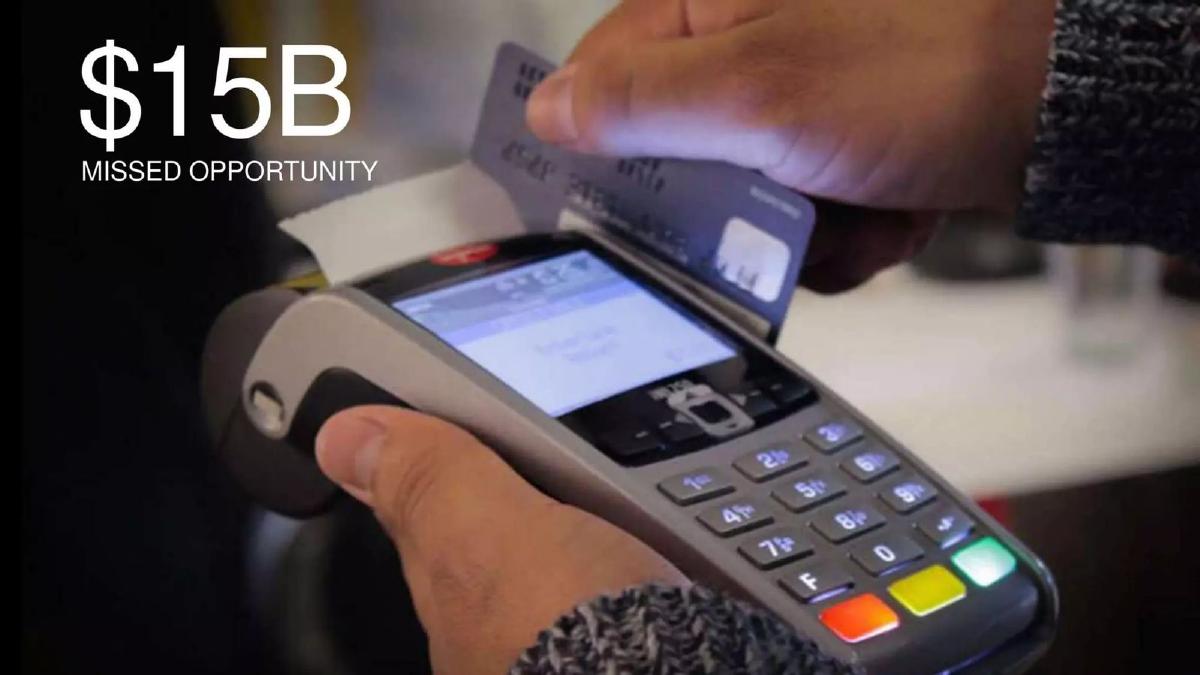
Slide 4 puts a dollar value on the problem: '$15B Missed Opportunity.' The visual of a credit card being swiped is a direct nod to the interchange and interest revenue that traditional banks are leaving on the table by ignoring this demographic. It is important to note that the deck does not provide a source for this $15B figure on the slide, but it serves as a bold 'anchor' for the market size conversation.
Slide 5 is a transitional 'vision' slide. It shows a man in a suit running up stairs with the text 'Always Forwards Not Backwards.' While visually striking, this slide provides little data and serves primarily to pace the presentation, emphasizing the 'momentum' the brand wants to associate with its users.
Slides 6-7: The Solution and De-Risking
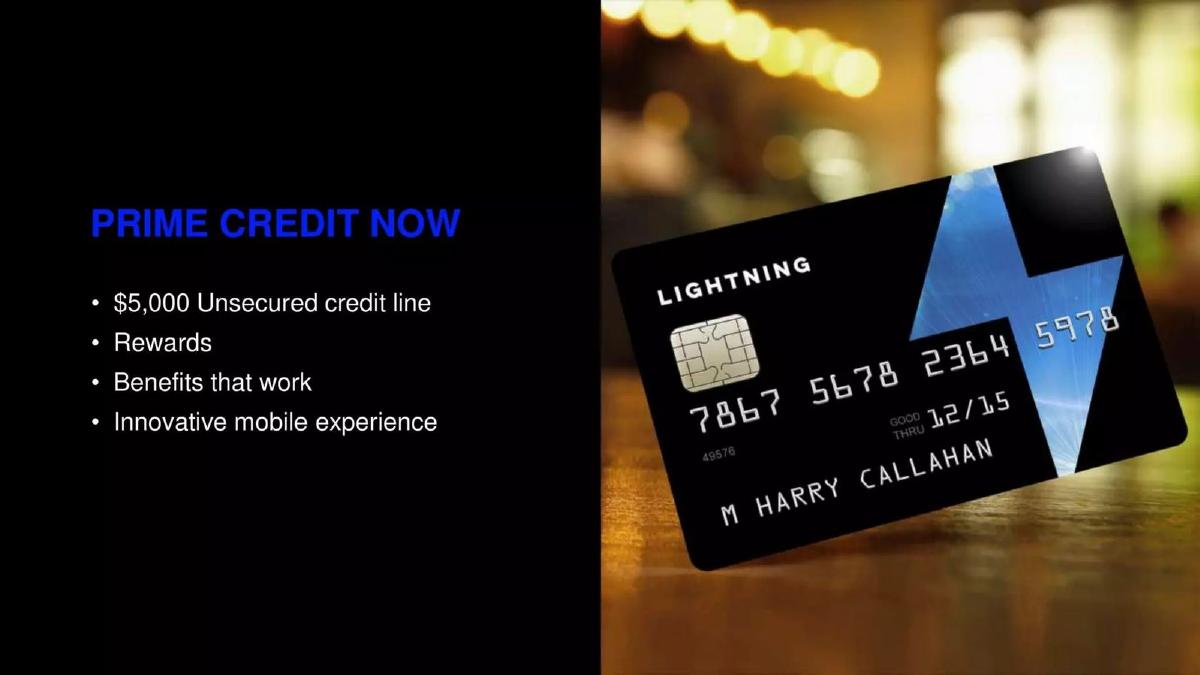
Slide 6 introduces the 'Prime Credit Now' product. It lists four key features: a $5,000 unsecured credit line, rewards, 'benefits that work,' and an 'innovative mobile experience.' The mention of a $5,000 limit is a critical differentiator. Most cards for people with no credit history are 'secured' (requiring a deposit) or have very low limits ($500). By offering $5,000, Jasper is signaling that their underwriting model is superior and targets a premium customer.
Slide 7 is perhaps the most important slide for a fintech investor. Titled 'We Overcame Barriers,' it lists five items with '100%' next to them: Issuing bank, Credit line, Processor + servicer, Regulation, and Mastercard. In fintech, the 'zero to one' is notoriously difficult due to these exact dependencies. By stating these are 100% secured, Jasper tells investors that their capital will not be spent on 'trying' to get a bank partner, but on 'growing' the business with partners already in place.
Slides 8-10: Economics, Team, and Conclusion
Slide 8 tackles the biggest challenge in the credit card industry: Customer Acquisition Cost (CAC). The slide claims a '$10 Acquisition Cost' using 'b2b2c marketing channels.' It explicitly states they reduce the cost from 'hundreds of dollars to $10 or less.' This is a massive claim, as major banks often spend $250-$500 to acquire a single cardholder. The 'b2b2c' strategy implies they are partnering with companies to offer the card to relocating employees, a highly efficient 'point of entry' strategy.
Slide 9 presents the 'Experienced Team With Multiple Exits.' It shows five team members with backgrounds in Regulation, Marketing, Risk, Technology, and the CEO. The logos at the bottom—PayPal, Chase, American Express, Wonga, LG, and the FDIC—provide significant institutional credibility. Having a team member with FDIC experience is a strategic inclusion for a company navigating the complex US banking regulatory environment.
Slide 10 is the closing slide, inviting investors to 'Join us to help empowering people.' It includes the website and the CEO's email address. Notably, there is no 'Ask' slide in this deck. There is no mention of how much money is being raised, the valuation, or the specific milestones they intend to hit with the new capital.
What Works in the Jasper Deck
The 'Declined' Narrative: Starting with the founder's personal failure to get credit despite an MBA is a brilliant way to illustrate a market inefficiency. It makes the '3 million people' stat on the next slide feel personal rather than abstract. · Infrastructure Proof: Slide 7 (Overcoming Barriers) is a masterclass in de-risking. For a seed or Series A fintech, the biggest risk is regulatory or partner-based. Showing that these are 100% resolved is a major green flag. · The CAC Disruptor: Claiming a $10 CAC in an industry where $300 is the norm is the 'hook' that gets a second meeting. Even if investors are skeptical, the B2B2C explanation provides enough logic to warrant a deeper look at the unit economics. · Visual Consistency: The deck is professional, uncluttered, and uses high-quality imagery that aligns with a 'premium' credit card brand.
What is Missing from the Jasper Deck
The Ask: This is the most glaring omission. A pitch deck is a fundraising tool, yet this version of the deck does not state how much capital is required or what the runway will look like. · Competitive Landscape: There is no mention of other 'newcomer' credit cards or how they compare to traditional 'Big Bank' offerings like the Chase Sapphire or Amex Gold, which their target demographic would eventually graduate to. · Unit Economics: While they mention a $10 CAC, they don't mention LTV (Lifetime Value), churn, or the expected APR/interest income. For a credit product, the 'Risk' side of the equation is just as important as the 'Acquisition' side. · Traction Data: The deck is heavy on 'what we will do' and 'what we have set up,' but light on 'what we have done.' There are no metrics regarding current waitlists, early beta users, or transaction volume.
What a Founder Should Copy
The 10-Slide Constraint: Jasper proves you don't need 30 slides to tell a compelling story. Each slide has a single, clear purpose. · The 'Barriers Overcome' Slide: If you are in a regulated industry (Fintech, Healthtech, Insurtech), create a slide that shows exactly which 'hard things' you have already finished. It shifts the investor's mindset from 'if' to 'when.' · The B2B2C Angle: If your product has a high consumer CAC, look for a B2B entry point where you can acquire users in clusters. Highlighting this in your deck shows you understand the math of scaling. · Use of Logos for Credibility: Don't just list names on a team slide. Use the logos of the massive institutions your team has worked for to borrow authority.
Frequently asked questions
- What is the primary problem Jasper is solving?
- Jasper addresses the 'credit invisible' problem for high-earning professionals moving to the US. As shown on Slide 2, even successful entrepreneurs with MBAs are often declined for credit because they lack a domestic credit history. The deck targets a population of 3 million people (Slide 3) who are creditworthy by income standards but locked out of the traditional banking system.
- How does Jasper plan to acquire customers cheaply?
- According to Slide 8, Jasper utilizes B2B2C marketing channels to reduce customer acquisition costs (CAC) from 'hundreds of dollars' to '$10 or less.' By partnering with employers or organizations that relocate high-earning professionals, they can reach their target audience at the point of need before they enter the traditional banking funnel.
- What stage of development is the company in based on the deck?
- The company appears to be in the 'ready to scale' phase. Slide 7 indicates they have 100% completed the setup for an issuing bank, credit line, processor, regulation, and Mastercard partnership. This suggests the heavy lifting of fintech infrastructure is finished, and the current round is likely intended for growth and user acquisition.
- Who is the target customer for the Lightning card?
- The target customer is a high-potential professional, likely an immigrant or expat, who lacks a US credit score. Slide 6 highlights a '$5,000 Unsecured credit line,' which is significantly higher than typical 'starter' cards, signaling they are targeting a 'Prime' demographic rather than the subprime market.
- What is missing from this pitch deck?
- The deck is missing several standard components: a specific funding 'ask' (how much they are raising), a use of funds breakdown, detailed financial projections, and a competitive landscape analysis. It also lacks specific traction data, such as current cardholders or revenue, focusing instead on the potential of the $15B market opportunity.