Libeo’s Series A deck is a masterclass in identifying a specific, high-friction pain point and presenting a streamlined solution. The company targets the €25 trillion European B2B payment market, contrasting the ease of P2P payments with the manual, costly reality of SME accounts payable. With a network already reaching 35,000 companies and a subscription model ranging from €25 to €175 per month, Libeo demonstrates significant early traction. The deck effectively uses a 5-step process visualization to demystify its product—from invoice centralization to IBAN-less payments. While it lacks deta…
Key takeaways
- The deck identifies a massive market opportunity in Europe with €25 trillion in intercompany payments (Slide 4).
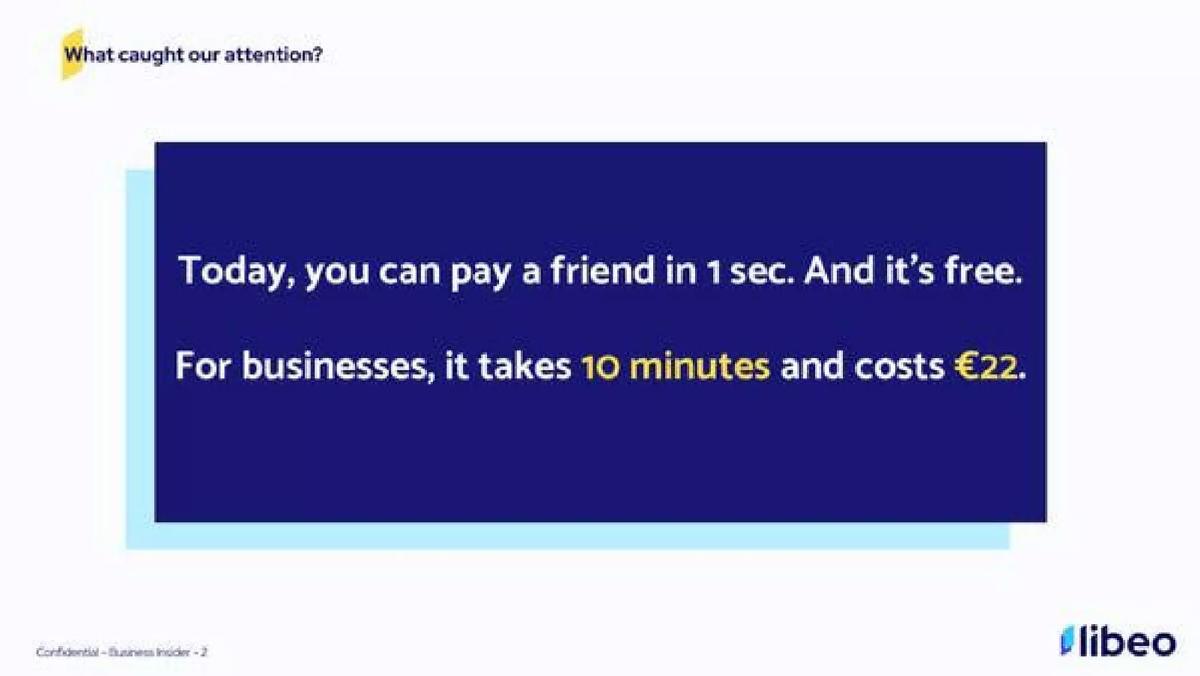
- Libeo highlights a stark contrast: P2P payments are instant and free, while B2B payments take 10 minutes and cost €22 (Slide 2).
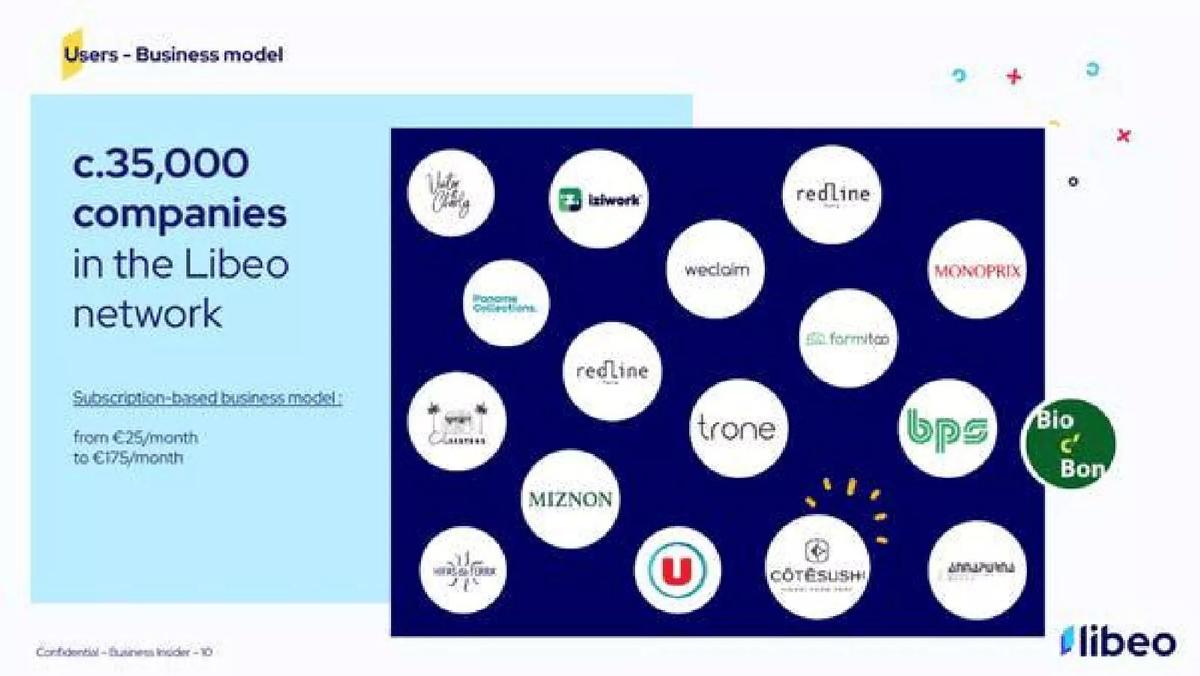
- The platform has already built a network of approximately 35,000 companies (Slide 10).
- Revenue is generated through a tiered subscription model ranging from €25/month to €175/month (Slide 10).
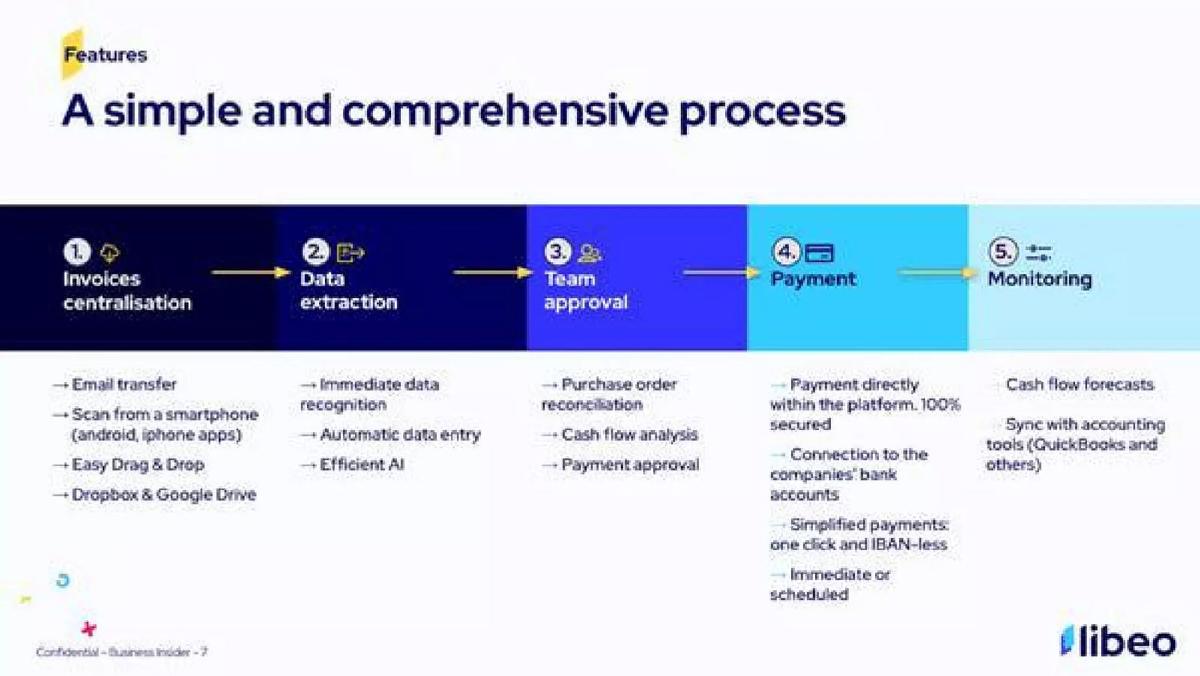
- The product workflow is simplified into five stages: Centralisation, Extraction, Approval, Payment, and Monitoring (Slide 7).
- Libeo claims their process is 6x faster than traditional manual or paper-based methods (Slide 8).
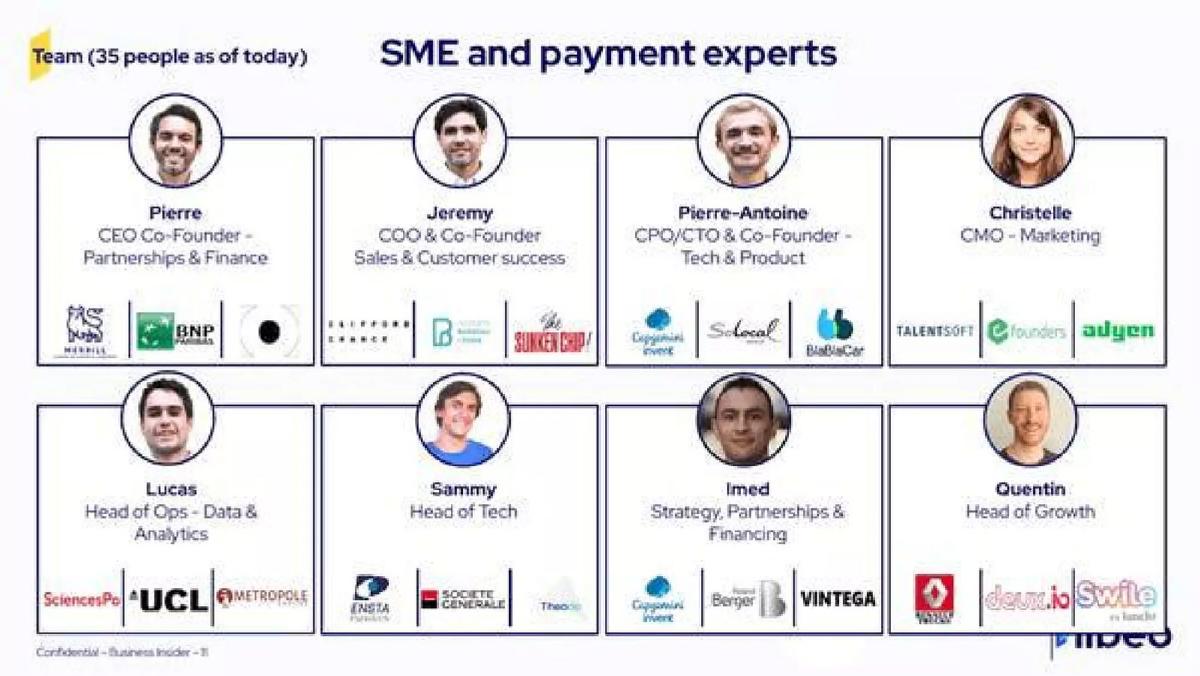
- The team is positioned as 'SME and payment experts' with backgrounds from BNP Paribas, Adyen, and Société Générale (Slide 11).
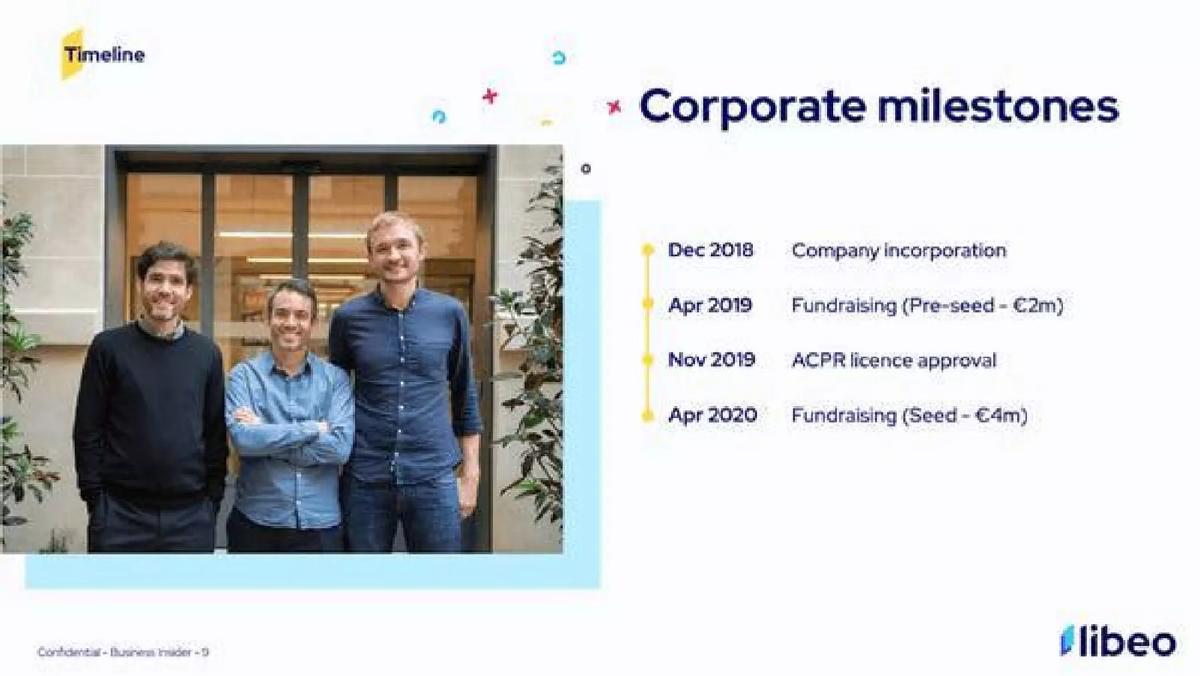
- A critical regulatory milestone was achieved in November 2019 with ACPR license approval (Slide 9).
The Hook: Consumer Ease vs. Business Friction
Libeo opens its deck not with a product feature, but with a relatable frustration. Slide 2, titled "What caught our attention?", presents a simple comparison: paying a friend takes 1 second and is free, while for a business, the same action takes 10 minutes and costs €22. This sets the stage for the entire narrative—the consumerization of B2B fintech.
The Problem and Market Opportunity
Slide 3: Pain The deck quantifies the inefficiency of accounts payable for Small and Medium Enterprises (SMEs). It lists three primary pain points: 10 hours lost per week on manual data entry, the fact that 1/4 of bankruptcies are caused by payment delays, and that 84% of companies are unsatisfied due to a lack of cash flow visibility. By linking manual processes to actual business failure (bankruptcies), Libeo elevates the problem from a mere inconvenience to a critical business risk.
Slide 4: Opportunity Libeo frames the market as a "booming" SaaS sector where no dominant European player has emerged. The figures are massive: €25 trillion in European intercompany payments and €60 billion in payment fees. Crucially, the slide points out a "low equipment rate," noting that in France, only 4.2% of 1.9 billion invoices were digitized in 2018. This suggests a greenfield opportunity rather than a battle for existing market share.
The Solution and Mission
Slide 5: Solution The solution slide is minimalist. It states: "Libeo automates accounts payable processes and payments for SMEs in Europe." It includes a clean screenshot of the dashboard, showing a high-level overview of expenses and supplier lists. This is the first time the investor sees the actual interface.
Slide 6: Our Mission The mission is defined as making intercompany payments "simple, fast and secure." The imagery used throughout these slides—people working in what looks like a small cafe or retail environment—reinforces the target audience: the everyday SME owner, not just enterprise CFOs.
Product Features and Benefits
Slide 7: Features This is the most functional slide in the deck. It breaks the Libeo process into five clear steps: 1. Invoices centralisation (via email, scan, or drag-and-drop), 2. Data extraction (using AI), 3. Team approval (purchase order reconciliation), 4. Payment (direct, secured, and IBAN-less), and 5. Monitoring (cash flow forecasts and accounting sync). This slide effectively explains how the product works without getting bogged down in technical jargon.
Slide 8: Benefits The benefits are categorized into four buckets: Time-saving (6x faster), Collaborative (digital workflows), Secure (fraud prevention and IBAN inspection), and Efficient control (smart vision on cash). The mention of "IBAN inspection" and "fraud prevention" is particularly important for a payment platform, as security is a primary concern for business owners.
Traction and Business Model
Slide 9: Timeline The corporate milestones show a rapid pace of execution. Incorporated in Dec 2018, the company raised a €2m pre-seed in April 2019, secured an ACPR license in November 2019, and raised a €4m seed round in April 2020. This timeline demonstrates momentum and regulatory competency.
Slide 10: Users - Business Model This slide provides the proof of concept. It claims "c.35,000 companies in the Libeo network" and displays logos of recognizable French brands like Monoprix, Bio c' Bon, and Côté Sushi. The business model is a straightforward SaaS subscription, ranging from €25/month to €175/month. This transparency regarding pricing and scale is a strong signal of a mature Series A candidate.
The Team
Slide 11: Team The team slide brands the group as "SME and payment experts." It highlights the three co-founders and five heads of departments. The logos at the bottom of each profile (BNP Paribas, Adyen, Société Générale, BlaBlaCar) provide institutional credibility. It shows a balanced team with expertise in finance, sales, tech, and growth.
Closing
Slide 12: Thank You The deck concludes with a final dashboard screenshot and the company website. It is a standard, clean exit.
What Works in This Deck
The Contrast Strategy: Starting with the P2P vs. B2B comparison (Slide 2) immediately makes the problem intuitive. It frames the current B2B state as absurdly outdated. · Regulatory De-risking: Mentioning the ACPR license approval (Slide 9) is vital for a fintech company. It tells investors that the company has already cleared significant legal hurdles. · Process Clarity: The 5-step process on Slide 7 is excellent. It moves the conversation from "what is it?" to "how does it work?" very efficiently. · Network Effect: Highlighting 35,000 companies in the network (Slide 10) suggests that Libeo isn't just a tool, but a growing ecosystem, which is much more valuable to investors.
What is Missing
The Ask: There is no slide detailing how much capital is being raised in this specific round or how the funds will be allocated. While the catalogue facts state $26M was raised, the deck itself doesn't explicitly state the target. · Financial Projections: For a Series A, investors usually expect to see a slide on MRR growth, CAC/LTV, or a 3-year revenue forecast. This deck is very product and vision-heavy but light on hard financial modeling. · Competitive Landscape: While Slide 4 mentions no player has emerged in Europe, it doesn't name or differentiate against existing competitors (like Spendesk, Qonto, or traditional bank portals). · Unit Economics: Beyond the subscription price, there is no data on churn, customer acquisition costs, or the average number of invoices processed per user.
What a Founder Should Copy
The Problem Quantification: Don't just say a process is "slow." Say it takes "10 hours per week" and leads to "1/4 of bankruptcies." Specificity creates urgency. · The Tiered Pricing: Showing a clear subscription range (€25 to €175) makes the business model feel tangible and scalable. · The "Expert" Branding: Grouping your team under a specific title like "SME and payment experts" helps define the company's DNA immediately. · Clean Visuals: The deck uses a consistent color palette and avoids cluttered slides. The use of white space and large text makes it very readable for a quick first pass by a VC.
Frequently asked questions
- How much did Libeo raise with this deck?
- According to the catalogue facts, Libeo raised $26,000,000 in 2019 for its Series A round. The deck itself tracks the preceding milestones, including a €2m pre-seed in April 2019 and a €4m seed round in April 2020 (Slide 9).
- What is Libeo's primary value proposition for SMEs?
- Libeo focuses on time and cost savings. It claims to make processing 6x faster (Slide 8) and addresses the '10 hours lost per week' that the average SME spends manually entering invoice data (Slide 3).
- What is the 'IBAN-less' payment feature mentioned?
- As described in the company listing and Slide 7, Libeo allows for 'one click and IBAN-less' payments. This simplifies the accounts payable process by removing the need to manually enter bank details for every supplier transaction.
- Who are the key members of the Libeo leadership team?
- The team is led by co-founders Pierre (CEO), Jeremy (COO), and Pierre-Antoine (CPO/CTO). They are supported by heads of Marketing, Ops, Tech, Strategy, and Growth, with experience from major firms like Adyen and BNP Paribas (Slide 11).
- What market data does Libeo use to justify its opportunity?
- Slide 4 cites McKinsey Global Payments 2018 data, noting that only 4.2% of the 1.9 billion invoices issued in France in 2018 were digitized, and 67% of SMEs still use Excel to monitor cash flow.