Minna’s Series B deck is a masterclass in narrative-driven FinTech storytelling. Spanning just 10 slides, the presentation focuses heavily on the macro trend of 'skyrocketing' subscriptions, projecting a rise from 11 subscriptions per consumer in 2020 to 17 by 2025. The deck positions Minna as a B2B2C solution that integrates directly into banking apps, allowing users to identify, cancel, and improve their recurring costs. While the deck is visually polished and provides strong biographical detail on the management team, it is notably light on hard financial metrics, churn data, or specific b…
Key takeaways
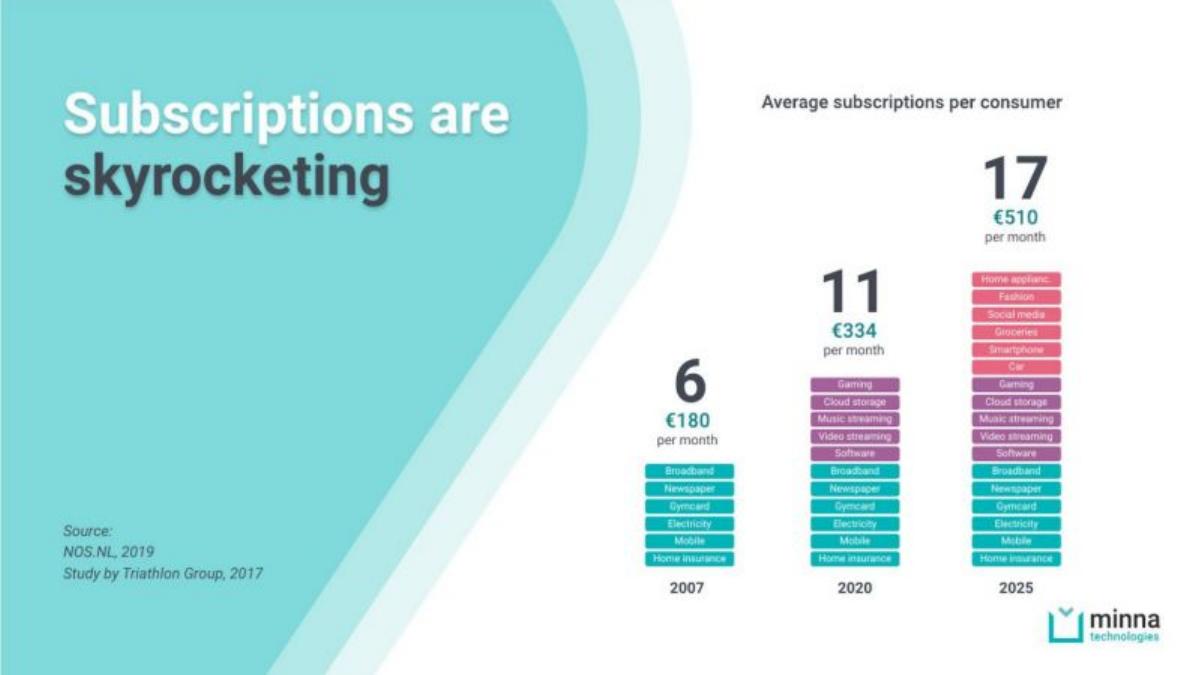
- The deck projects that the average consumer will have 17 subscriptions costing €510 per month by 2025 (Slide 2).
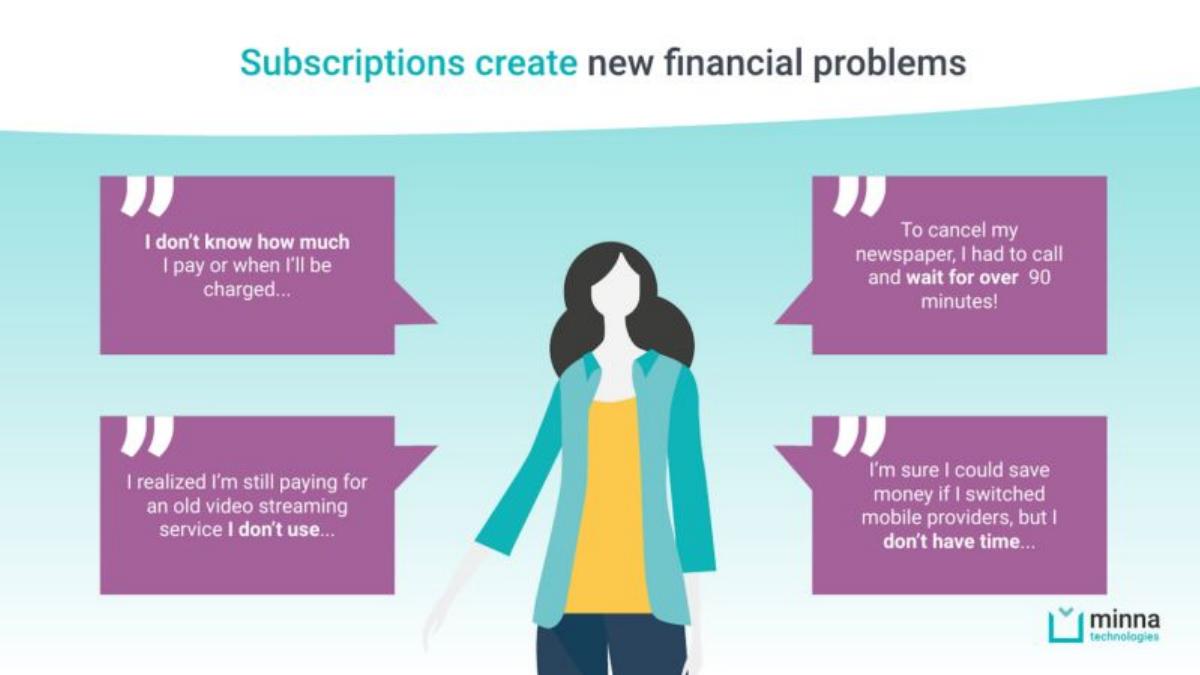
- Minna identifies four core user pain points: lack of transparency, difficult cancellation processes, paying for unused services, and the friction of switching providers (Slide 3).
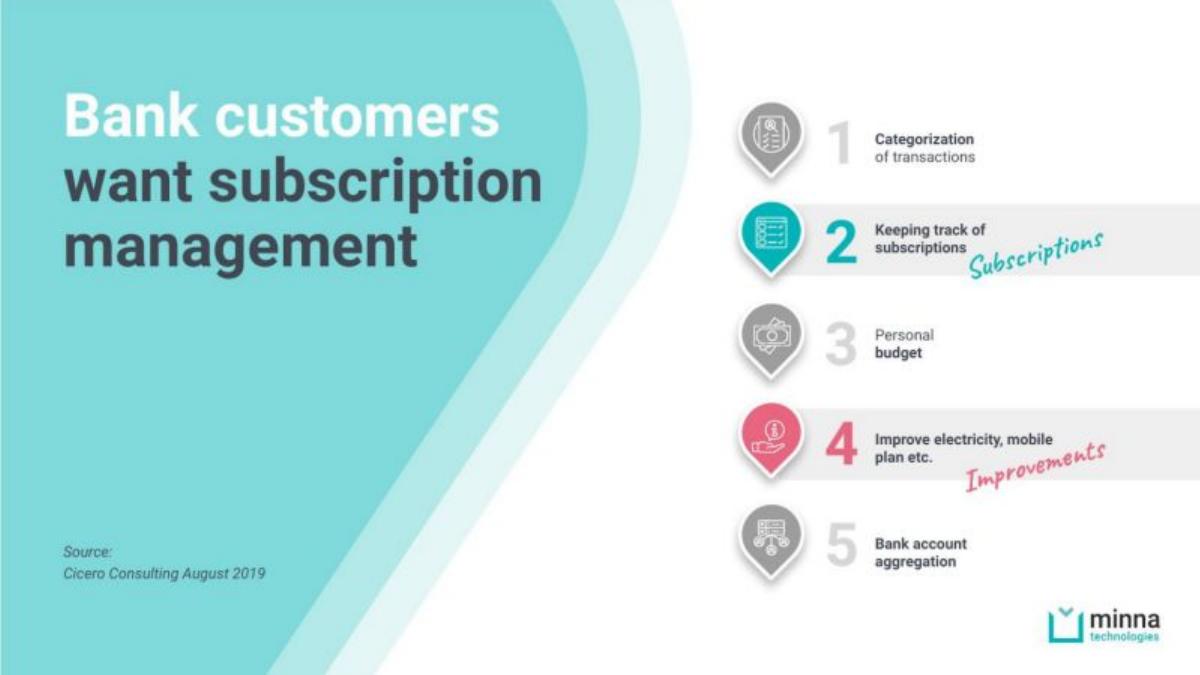
- Subscription management is ranked as the second most desired feature for bank customers, trailing only transaction categorization (Slide 4).
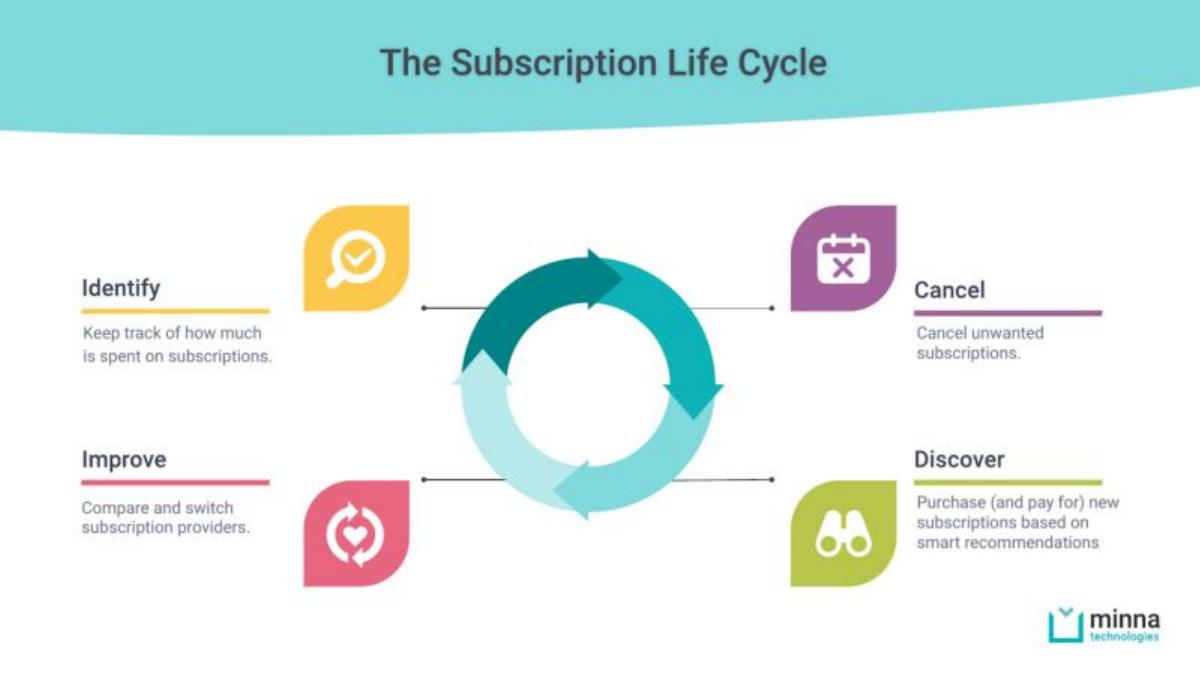
- The product lifecycle is defined by four stages: Identify, Cancel, Improve, and Discover (Slide 5).
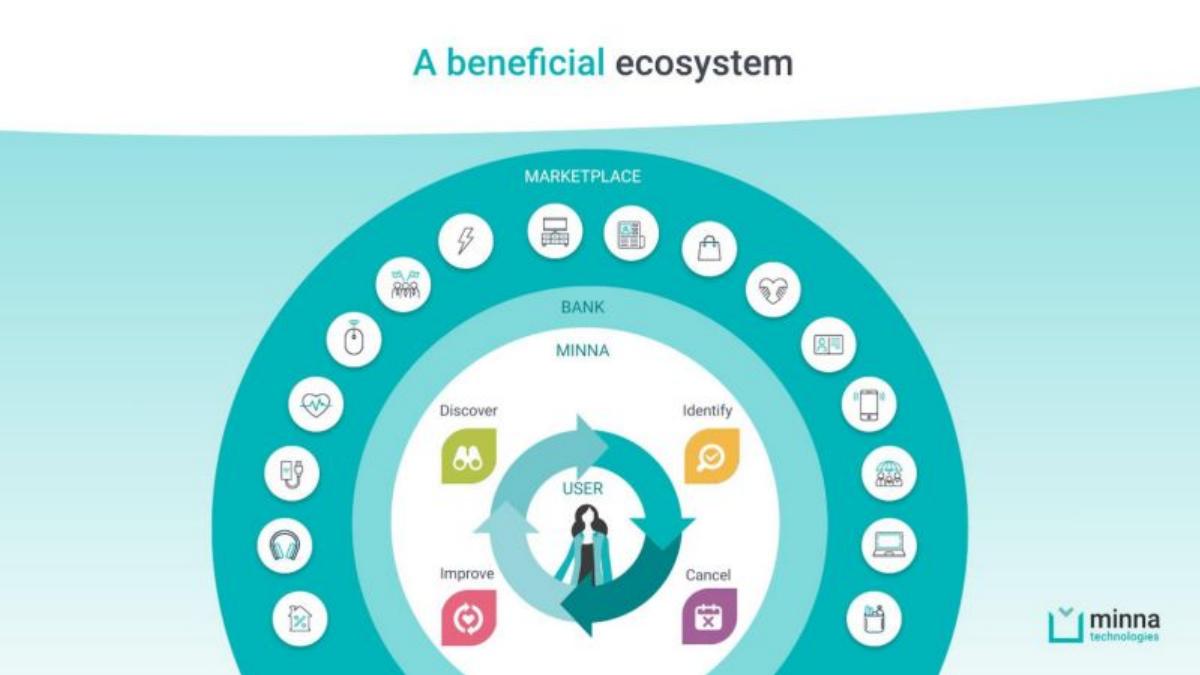
- Minna positions itself as the middle layer in a 'beneficial ecosystem' connecting the User, the Bank, and the Marketplace (Slide 6).
- The management team features founders with over 15 years of software experience and 10 years in venture building (Slide 7).
- The company maintains a physical presence in three major European hubs: Gothenburg, London, and Amsterdam (Slide 8).
- The deck lacks a specific 'Ask' slide detailing the exact use of funds or valuation targets (Omitted).
The Narrative of the Subscription Economy
Minna Technologies’ Series B deck is a concise 10-slide presentation that leans heavily into the 'why now' of the subscription economy. Rather than overwhelming the reader with complex API diagrams or financial spreadsheets, the deck focuses on a relatable consumer problem: the administrative burden of managing dozens of recurring payments. By the time the reader reaches the team slide, the company has established a clear case for why banks must evolve to include these management tools to remain relevant to the modern consumer.
Slide 1: Title and Vision
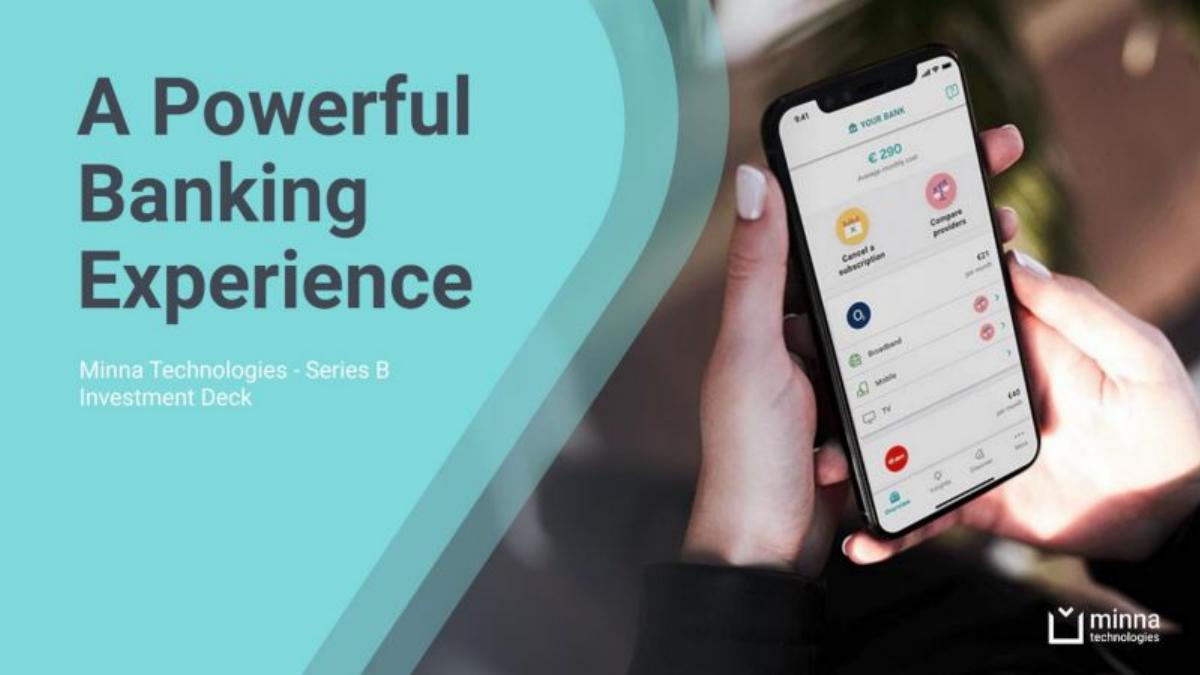
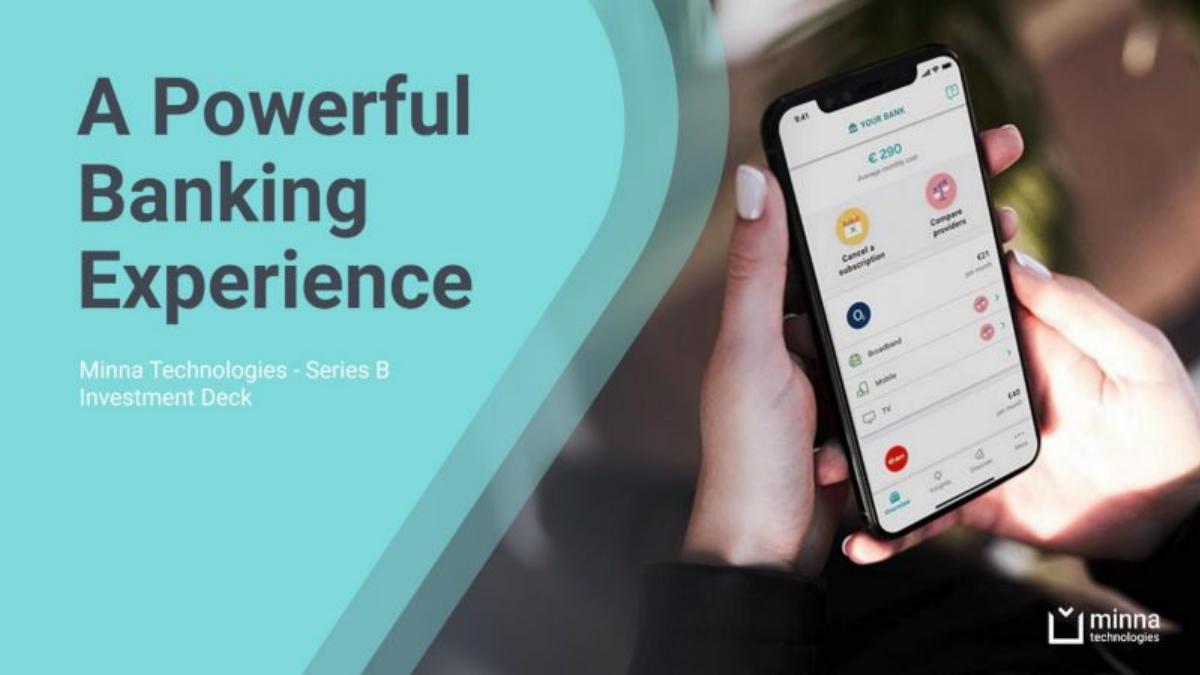
The deck opens with a high-fidelity image of a smartphone displaying a banking app. The headline, "A Powerful Banking Experience," immediately signals that Minna is not a standalone consumer app, but an enhancement for existing financial institutions. The sub-text identifies this as the "Series B Investment Deck," setting the stage for a growth-stage conversation. The branding is clean, using a teal and white palette that feels professional yet modern.
Slide 2: The Macro Trend
Slide 2 is the foundation of the investment thesis. Titled "Subscriptions are skyrocketing," it uses a bar chart to show the evolution of consumer behavior. It cites a 2017 study by Triathlon Group and 2019 data from NOS.NL to show that in 2007, the average consumer had 6 subscriptions costing €180 per month. By 2020, this rose to 11 subscriptions (€334). The slide projects that by 2025, consumers will manage 17 subscriptions at a cost of "€510 per month." This projection is critical as it suggests the problem Minna solves is only going to get worse, increasing the value of their solution over time.
Slide 3: Defining the Pain Points
Using a persona-based approach, Slide 3 outlines "Subscriptions create new financial problems." Four quotes highlight specific frustrations: lack of transparency on billing dates, 90-minute wait times to cancel a newspaper, paying for unused streaming services, and the time-consuming nature of switching mobile providers. By humanizing the data from the previous slide, Minna makes the 'Identify, Cancel, Improve' product roadmap feel like a logical necessity rather than just a feature set.
Slide 4: The Bank Customer’s Perspective
Slide 4 bridges the gap between consumer pain and bank utility. Citing "Cicero Consulting August 2019," the slide lists the top five things bank customers want. "Keeping track of subscriptions" is ranked at number two, and "Improve electricity, mobile plan etc." is ranked at number four. This slide is the 'smoking gun' for a B2B2C pitch; it tells the investor that banks aren't just adding these features for fun—their customers are actively demanding them.
Slide 5: The Subscription Life Cycle
This slide introduces the Minna product framework. It breaks the user journey into four distinct quadrants: Identify (tracking spend), Cancel (unwanted services), Improve (switching providers), and Discover (purchasing new services). This circular 'Life Cycle' graphic suggests that Minna isn't just a tool for saving money, but a marketplace for continuous engagement. It moves the product from a 'cost-cutter' to a 'revenue-generator' for the bank and marketplace partners.
Slide 6: The Beneficial Ecosystem
Slide 6 is the most complex visual in the deck, illustrating "A beneficial ecosystem." It places the User at the center, surrounded by Minna’s logic, then the Bank’s infrastructure, and finally a broad Marketplace of services (represented by icons for utilities, insurance, streaming, etc.). This slide explains the business model without using a single dollar sign: Minna sits in the middle, facilitating value exchange between the consumer’s bank account and the various service providers they pay every month.
Slide 7: The Management Team
The "Management Team" slide provides significant detail on the four key leaders. Joakim Sjöblom (CEO) is noted for running tech ventures since 2011. Marcus Lönnberg (CTO) is credited with 15 years of software experience, specifically 6 years in "transaction data and bank integrations." Jonas Karles (COO/CPO) and Navpreet Randhawa (CFO) round out the group with experience in organizational scaling and investment banking. The inclusion of LinkedIn icons and specific tenure lengths provides the 'social proof' necessary for a Series B round.
Slide 8: The Human Element
Slide 8 features a full-team photo on a beach, titled "Minna’s Team - The Success Factor." It lists three geographic hubs: "Gothenburg, London & Amsterdam." For an investor, this slide demonstrates scale and culture. It shows a company that has moved beyond a small founding team into a multi-office organization with dozens of employees, which is consistent with a Series B stage.
Slide 9: The Closing Statement
The final content slide is a simple brand message: "Together We bring power to the modern consumer." It includes the contact information for Navpreet Randhawa, the CFO. This reinforces that the CFO is the primary point of contact for the raise, which is standard for a Series B where financial due diligence is paramount.
Slide 10: External Reference
The final slide is a promotional graphic for the source library, which is not part of the original Minna pitch content.
What Minna Does Well
The deck is exceptionally strong at market education . Many investors might view subscription management as a 'nice-to-have' feature, but Minna uses data to frame it as a fundamental shift in consumer finance. By projecting the growth to 17 subscriptions per person, they create a sense of urgency. The 'Ecosystem' slide is also a highlight, as it clearly explains a multi-sided business model without getting bogged down in technical jargon. It shows that Minna understands its place in the value chain: they are the glue between the bank and the merchant.
What is Missing from the Deck
As a Series B deck, there are several glaring omissions that were likely handled in a separate data room but are missing from this presentation. First, there is no mention of traction . At Series B, investors expect to see the number of integrated banks, total reachable users, and volume of cancellations processed. Second, there is no financial data . Revenue growth, CAC (Customer Acquisition Cost), and LTV (Lifetime Value) are absent. Third, there is no competitive analysis . The deck assumes Minna is the only player in the space, ignoring competitors like Subly or the internal build-outs from neobanks like Revolut. Finally, there is no 'Ask' slide . The deck doesn't specify how much they are raising or how the capital will be deployed across R&D, sales, or geographic expansion.
What Founders Should Copy
Founders should emulate Minna’s use of third-party validation . By citing Cicero Consulting and other studies, they move the 'problem' from an opinion to a documented market fact. The 'Subscription Life Cycle' (Slide 5) is also a great example of how to simplify a product's value proposition into four easy-to-understand verbs. This makes the pitch memorable and easy for an associate to explain to a general partner. Lastly, the geographic footprint (Slide 8) is a subtle but effective way to signal that the company is already operating at an international scale, which is a key requirement for most Series B investors.
Frequently asked questions
- What is Minna's primary business model?
- Based on the deck, Minna operates a B2B2C model. They provide the technology for banks to offer subscription management tools within their own mobile applications. This creates a 'beneficial ecosystem' where the bank provides the platform, Minna provides the management logic, and the marketplace offers new services to the user.
- How does Minna justify the market need for their product?
- Minna uses a 'problem-solution' framework centered on the explosion of the subscription economy. They cite data showing that subscriptions per consumer grew from 6 in 2007 to 11 in 2020, with a projected 17 by 2025. They argue that this volume creates financial anxiety and time-waste for consumers that banks are best positioned to solve.
- Who are the key people leading Minna?
- The leadership includes Joakim Sjöblom (CEO), who has run tech ventures since 2011; Marcus Lönnberg (CTO), with 15 years in software and 6 years in bank integrations; Jonas Karles (COO/CPO), an organizational expert with 10 years of experience; and Navpreet Randhawa (CFO), a former investment banker.
- What specific features does the Minna platform offer?
- The platform focuses on four pillars: Identify (tracking spend), Cancel (one-click termination of unwanted services), Improve (comparing and switching providers for utilities or insurance), and Discover (recommendations for new subscriptions).
- Is there any mention of competition in the deck?
- No. The 10-slide deck completely omits a competitive landscape analysis. It focuses entirely on the internal ecosystem and the macro market trend rather than comparing Minna to other subscription management tools like Truebill or Billshark.