Shopline’s 2013 pitch deck is a masterclass in the 'X for Y' strategy, specifically positioning itself as the Shopify for the Asian market. With only 11 slides, the deck focuses heavily on the massive market discrepancy between the U.S. and Asia, noting that while 75% of U.S. SMBs had independent shops, only 10-20% did in Asia at the time. The deck successfully raised $1.2 million by emphasizing localization—native language support and regional payment gateways—over generic global features. While it lacks detailed unit economics and a specific financial 'Ask' slide, the traction slide showing…
Key takeaways
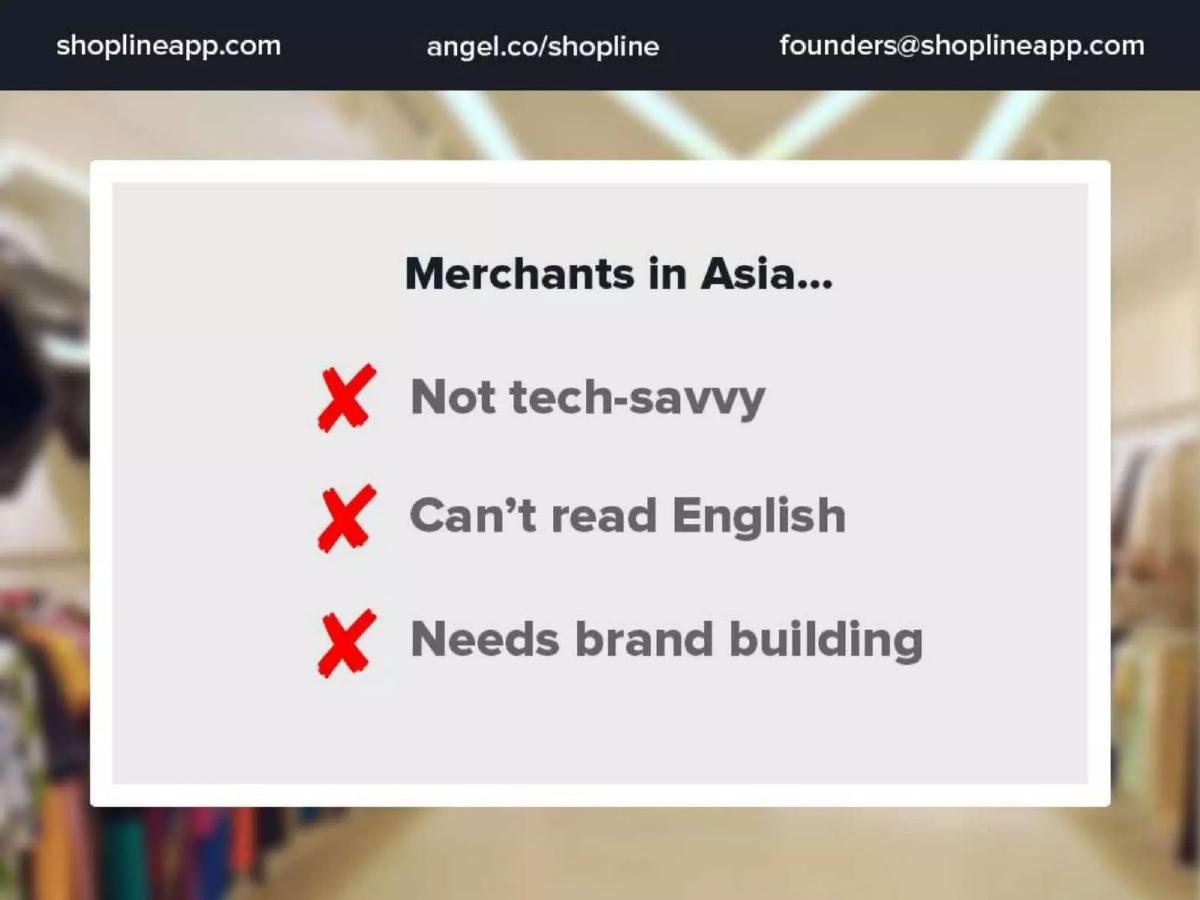
- The deck identifies three specific pain points for Asian merchants: lack of tech-savviness, English language barriers, and the need for brand building (Slide 2).
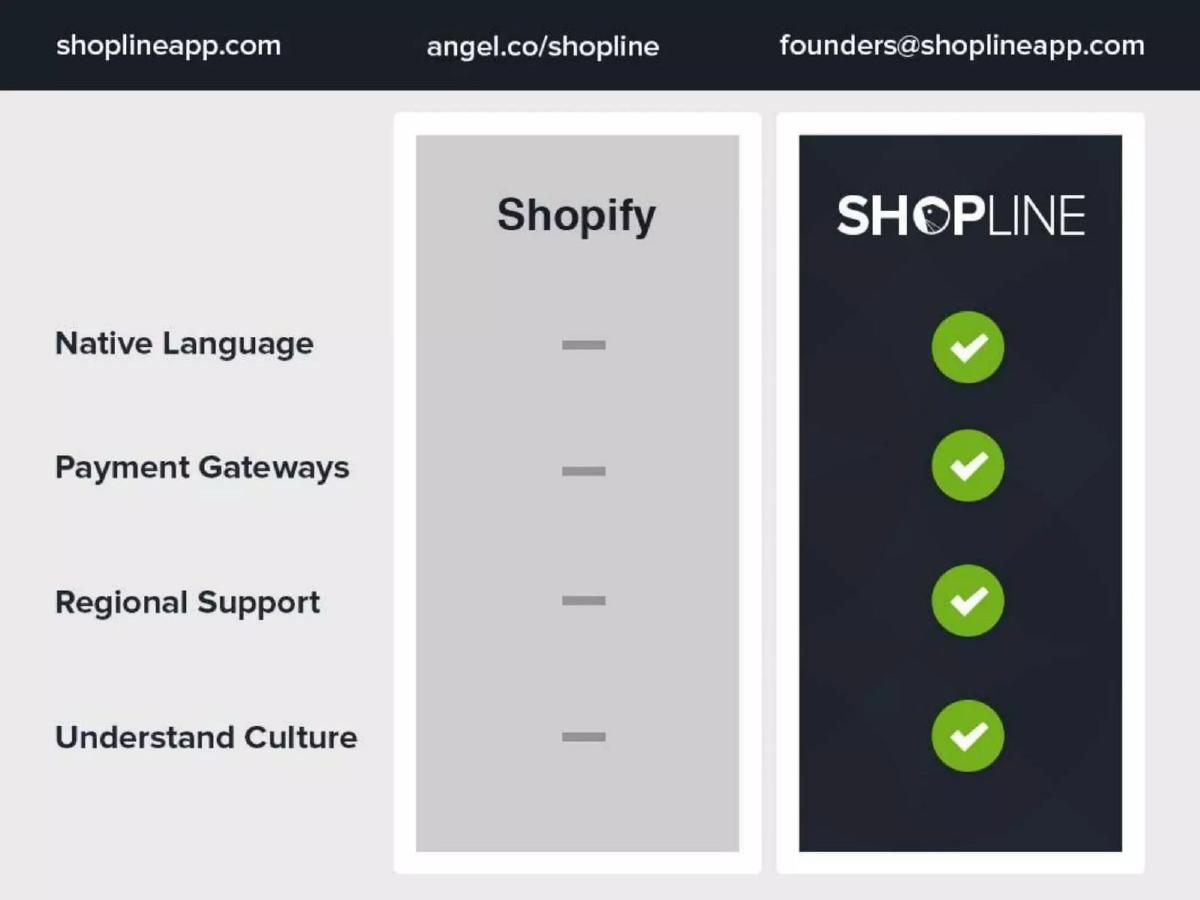
- A direct comparison table positions Shopline against Shopify, claiming superiority in native language, payment gateways, regional support, and cultural understanding (Slide 3).
- The market opportunity is framed by a McKinsey (2013) stat showing 90+ million SMBs in Asia compared to 23 million in the U.S. (Slide 8).
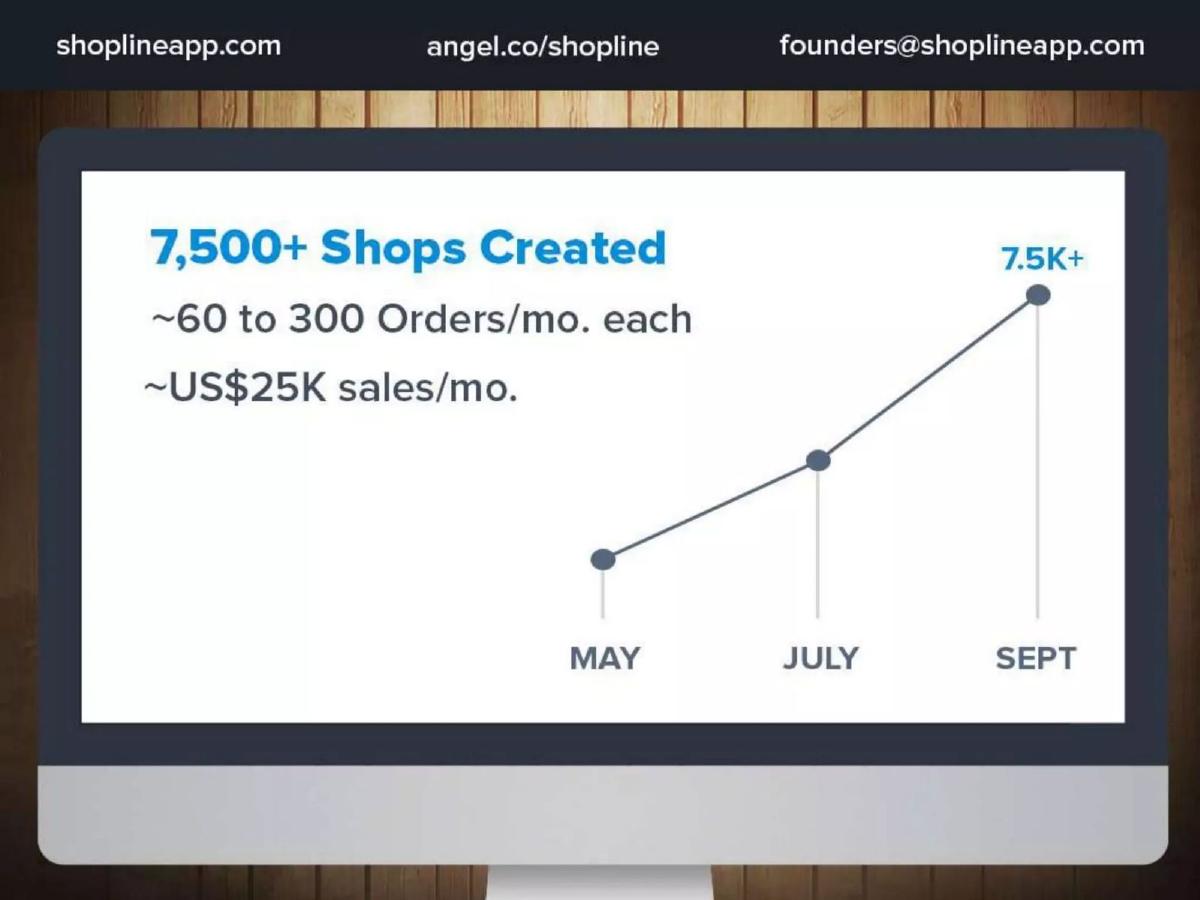
- Traction is demonstrated through a growth chart showing an increase from May to September, reaching 7,500+ shops created (Slide 6).
- The company estimates that merchants on the platform average between 60 to 300 orders per month, totaling approximately $25,000 in sales per month (Slide 6).
- The business model is simplified into two revenue streams: Subscription and Transactions (Slide 7).
- Market projections suggest APAC B2C e-commerce sales would reach $1,052B by 2017, nearly double the North American projection of $660B (Slide 9).
- The team slide leverages high-profile logos including Goldman Sachs, Disney, and Lehman Brothers to establish professional credibility (Slide 10).
The 'Shopify for Asia' Playbook
Shopline’s 2013 pitch deck is a concise, 11-slide presentation that leans heavily on the 'proven model' narrative. By 2013, Shopify was already a known success in the West, and Shopline’s strategy was to convince investors that a localized version was not just viable, but necessary for the Asian market. The deck is visually clean, uses minimal text, and focuses on the massive delta between e-commerce adoption in the U.S. versus Asia.
The Opening: Problem and Differentiation (Slides 1-3)
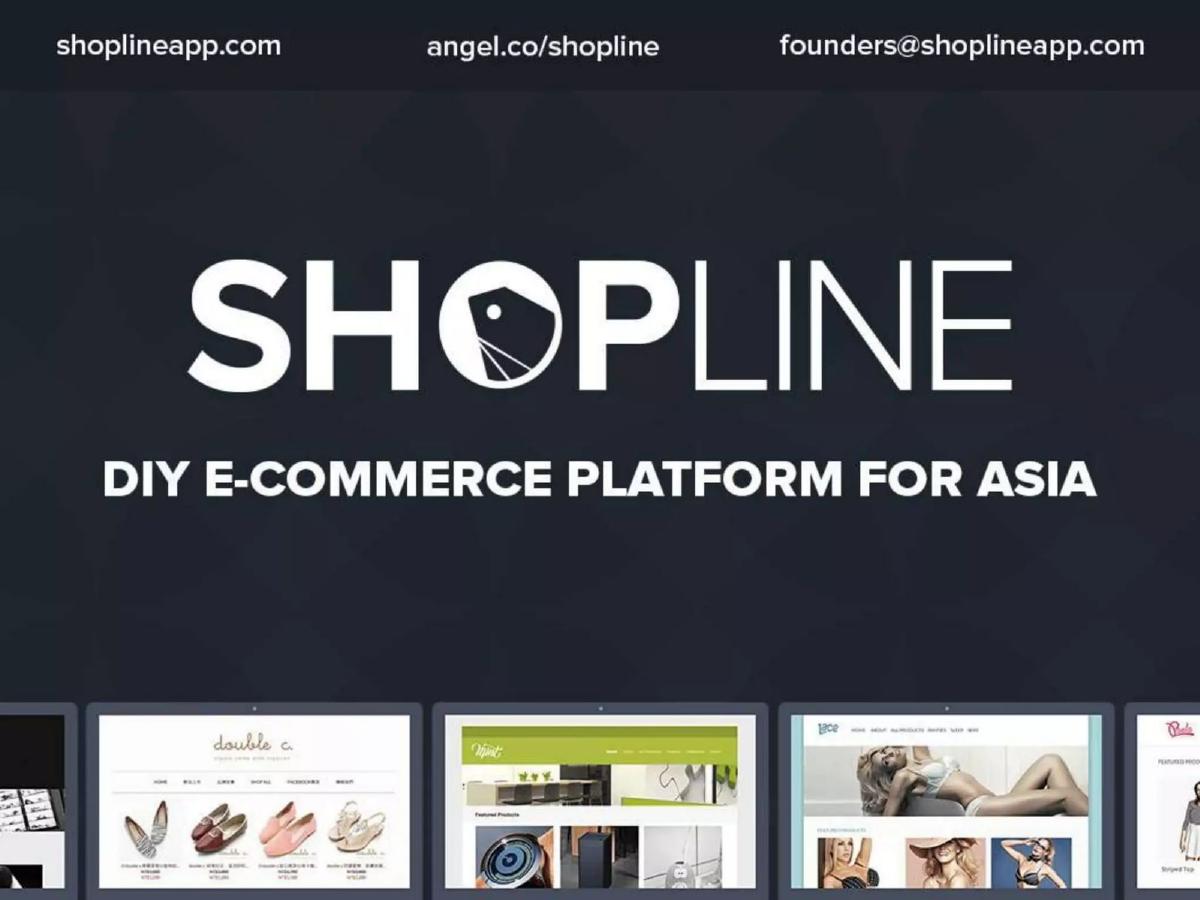
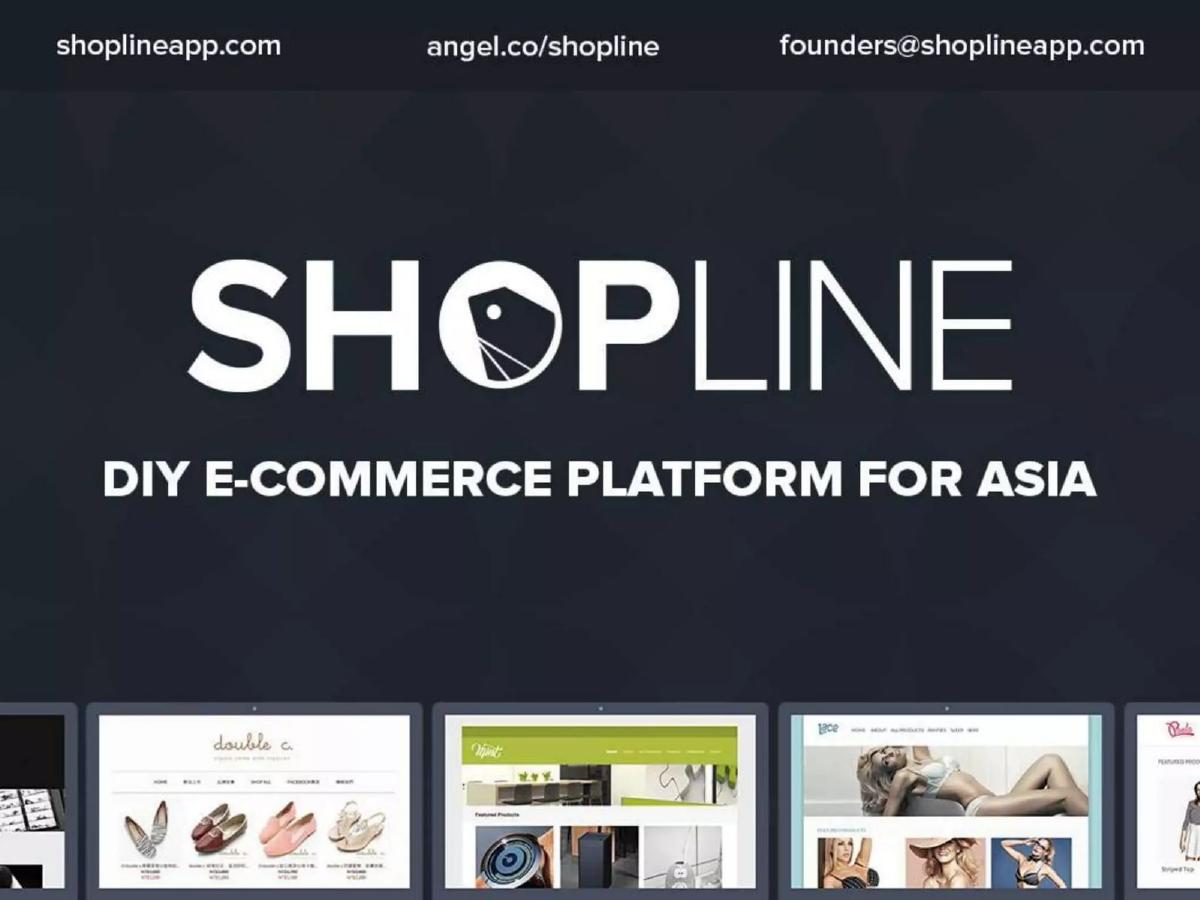
Slide 1 introduces Shopline as a DIY E-COMMERCE PLATFORM FOR ASIA . It immediately anchors the company to a specific geography, which is the core of their value proposition. The bottom of the slide features a carousel of actual storefronts, providing immediate visual proof that the product is live and functional.
Slide 2 identifies the specific hurdles for Asian merchants. It lists three 'red X' points: Not tech-savvy , Can’t read English , and Needs brand building . This is a classic problem slide that sets up the solution as a bridge for non-technical, non-English speaking business owners. By identifying 'brand building' as a need, they hint that their platform offers more than just a checkout button; it offers a professional identity.
Slide 3 is a bold competitive analysis. It pits Shopline directly against Shopify. While Shopify is a global giant, Shopline marks them with dashes (indicating a lack of features) for Native Language , Payment Gateways , Regional Support , and Understand Culture . Shopline, conversely, gives itself green checkmarks for all four. This is a high-stakes way to frame the market: Shopify might be the better software, but Shopline is the better partner for an Asian merchant.
Product and Market Context (Slides 4-5)
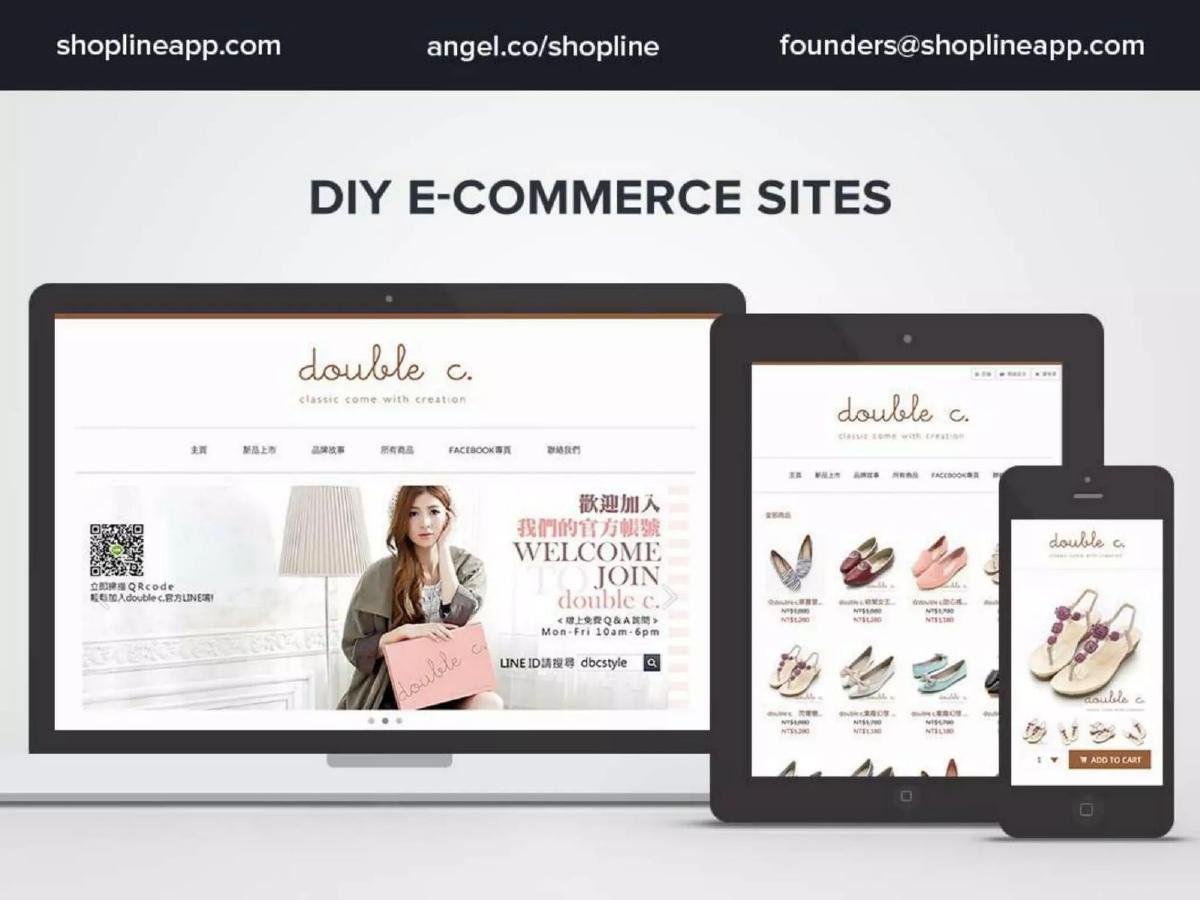
Slide 4 showcases the product's responsiveness. Titled DIY E-COMMERCE SITES , it displays a single merchant ('double c.') across a laptop, tablet, and smartphone. This reinforces the 'mobile-first' claim mentioned in the company's self-description, which was critical in a region where many consumers skipped the desktop era entirely.
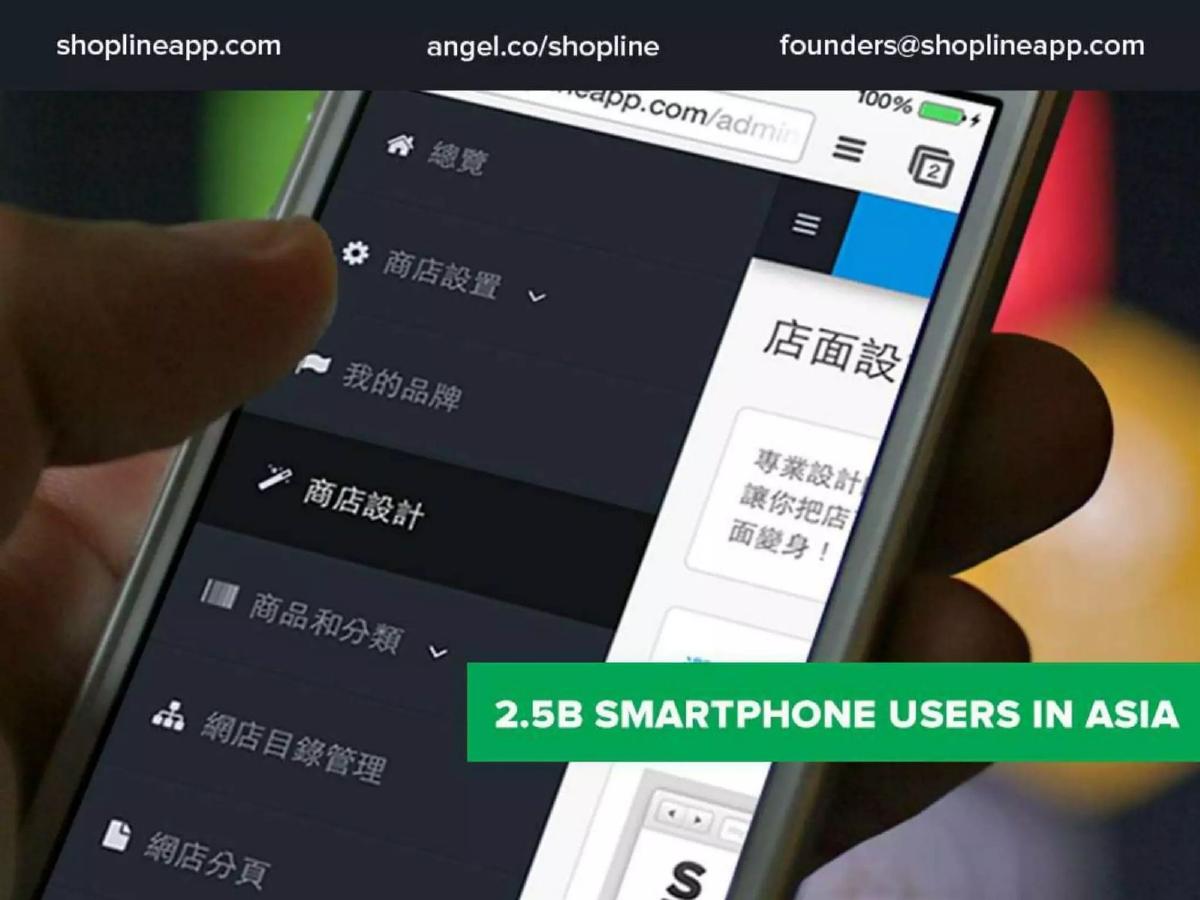
Slide 5 doubles down on the mobile opportunity. It shows a close-up of the mobile admin interface (in Chinese characters) with a prominent green banner stating 2.5B SMARTPHONE USERS IN ASIA . This slide connects the product's functionality directly to the scale of the hardware market, suggesting that every smartphone user is a potential merchant or customer.
Traction and Business Model (Slides 6-7)
Slide 6 provides the 'proof of life.' It shows a growth curve from May to September. The key figures are 7,500+ Shops Created and an estimate of ~US$25K sales/mo. across the platform. While $25,000 in total monthly GMV is relatively low for 7,500 shops (averaging just a few dollars per shop), the growth in shop creation is the primary metric intended to show viral or high-demand interest.
Slide 7 outlines the Business Model . It is extremely simple: SUBSCRIPTION and TRANSACTIONS . The deck does not provide pricing tiers, take rates, or churn numbers. In 2013, for a seed-stage 'Other' round, this high-level overview was often sufficient to signal that the company understood the standard SaaS + Fintech monetization path.
The Macro Opportunity (Slides 8-9)
Slide 8 is perhaps the most compelling slide for a venture capitalist. It compares the number of SMBs in the U.S. (23 Million) to Asia (90+ Million). More importantly, it highlights that 75% of U.S. SMBs have independent online shops, while only 10-20% of Asian SMBs do. The 'Opportunity' is visualized as the massive white space remaining in the Asian bar chart. This slide argues that the market isn't just bigger; it's significantly under-penetrated.
Slide 9 supports this with a line graph of B2C E-commerce Sales . Using a 2012-2017 timeline, it shows the APAC region (green line) overtaking North America (blue line) in 2014. By 2017, the gap is projected to be nearly $400 billion ($1,052B vs $660B). This creates a sense of urgency—the shift is happening now.
Team and Closing (Slides 10-11)
Slide 10 introduces the founders: Raymond Yip (CEO), Tony Wong (CTO), and Fiona Lau (COO). The slide is light on biographical text but heavy on 'trust logos.' By featuring Lehman Brothers, Citibank, Deloitte, University of Chicago, Goldman Sachs, and The Walt Disney Company , the founders are borrowing institutional credibility to offset the risks of an early-stage startup.
Slide 11 is a simple 'Lets Chat!' closing slide. It reiterates the three pillars of their pitch: PROVEN MODEL , MASSIVE MARKET , and TALENTED TEAM . It also includes contact info and their AngelList URL, which was a standard call to action for the era.
What Works in this Deck
The Localization Argument: The deck does a fantastic job of explaining why a global incumbent (Shopify) isn't enough for the Asian market. By focusing on language, payments, and culture, they turn their smaller size into a specialized advantage.
Visual Proof: Including screenshots of actual shops and the mobile admin interface in the local language makes the product feel real and ready for market. It moves the conversation from 'what we will build' to 'how we will scale what we have.'
Market Comparison: Slide 8 is a textbook example of how to use a 'Market Gap' slide. Comparing a mature market (U.S.) to an emerging one (Asia) with specific percentages makes the 'Opportunity' feel quantifiable rather than theoretical.
What is Missing from this Deck
The Ask: There is no slide detailing how much money they are raising, what the valuation is, or what the milestones for the next 18 months look like. While this information is in the catalogue listing ($1.2M), its absence from the deck is a missed opportunity to frame the investment terms.
Unit Economics: The deck mentions subscription and transaction revenue but provides zero data on Customer Acquisition Cost (CAC), Lifetime Value (LTV), or even the price of a single subscription. Investors are left guessing about the margins.
Logistics and Fulfillment: E-commerce in Asia is notoriously difficult due to fragmented logistics. The deck mentions payment gateways but completely ignores how goods actually get from the merchant to the customer, which is a major part of the 'DIY' experience.
What a Founder Should Copy
The 'X for Y' Framing: If you are building a localized version of a successful Western business, use the Shopline approach. Don't shy away from the comparison; embrace it and then clearly list the 3-4 reasons why the 'Global' version fails in your specific region.
Logo Borrowing: If your team has worked at prestigious firms, use their logos. It is the fastest way to signal 'professionalism' and 'competence' to an investor who doesn't know you personally.
Minimalist Design: This deck is easy to read. It doesn't use walls of text. Each slide has one clear message. Founders often try to cram too much data into a seed deck; Shopline proves that 11 focused slides can be enough to raise seven figures.
Final Thoughts
Shopline's deck succeeded because it sold a 'sure thing' in an 'unsure market.' The Shopify model was already proven; the only question was who would win the Asian version of that race. By showing early traction (7,500 shops) and a team with high-finance backgrounds, Shopline positioned themselves as the most 'bankable' team to execute that transition. The lack of financial depth in the slides suggests the 2013 fundraising environment was more focused on market capture and team pedigree than rigorous unit economic analysis at the seed stage.
Frequently asked questions
- How much did Shopline raise with this deck?
- According to the catalogue listing, Shopline raised $1,200,000 in 2013. Interestingly, the deck itself does not contain a slide specifying the 'Ask' or the valuation, which suggests these details were likely handled in the verbal pitch or a separate supplemental document.
- What was Shopline's primary competitive advantage?
- Shopline's advantage was localization. As shown on Slide 3, they differentiated themselves from Shopify by offering native language support, regional payment gateways, and localized customer support. They argued that global platforms failed to 'Understand Culture' in the Asian context.
- What traction did the company have at the time of the pitch?
- By September 2013, Shopline reported over 7,500 shops created on their platform. Slide 6 also notes that these shops were generating roughly $25,000 in sales per month, with individual merchants processing between 60 and 300 orders monthly.
- Who were the founders and what was their background?
- The team consisted of Raymond Yip (CEO, Design), Tony Wong (CTO, Development), and Fiona Lau (COO, Business). Their collective experience included stints at major institutions like Citibank, Goldman Sachs, Deloitte, and The Walt Disney Company, as highlighted on Slide 10.
- What was the projected market size for e-commerce in Asia?
- Slide 9 uses data to project that B2C e-commerce sales in the APAC region would grow to $1,052 billion by 2017. This was presented in contrast to the North American market, which was projected to reach only $660 billion in the same timeframe.