The Shoelace pitch deck is a 12-slide presentation from April 2017 that focuses on the automation of e-commerce retargeting. Eschewing the traditional text-heavy format, the deck uses a narrative-driven visual style to explain how it replaces the need for expensive marketing experts. The core of the deck's strength lies in its transparency regarding traction, showing a clear climb from $4,000 MRR in April 2016 to $40,000 MRR by April 2017 across 1,000 customers. While it lacks traditional sections like a detailed team slide, competition matrix, or specific use of funds, the momentum of the re…
Key takeaways
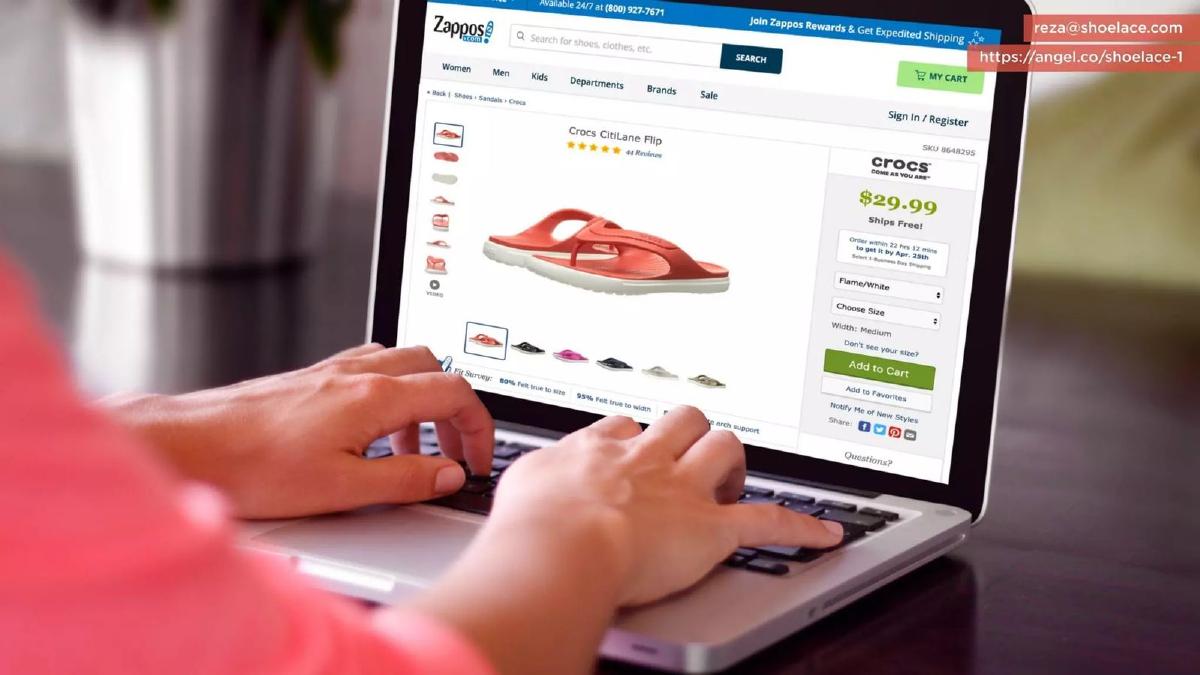
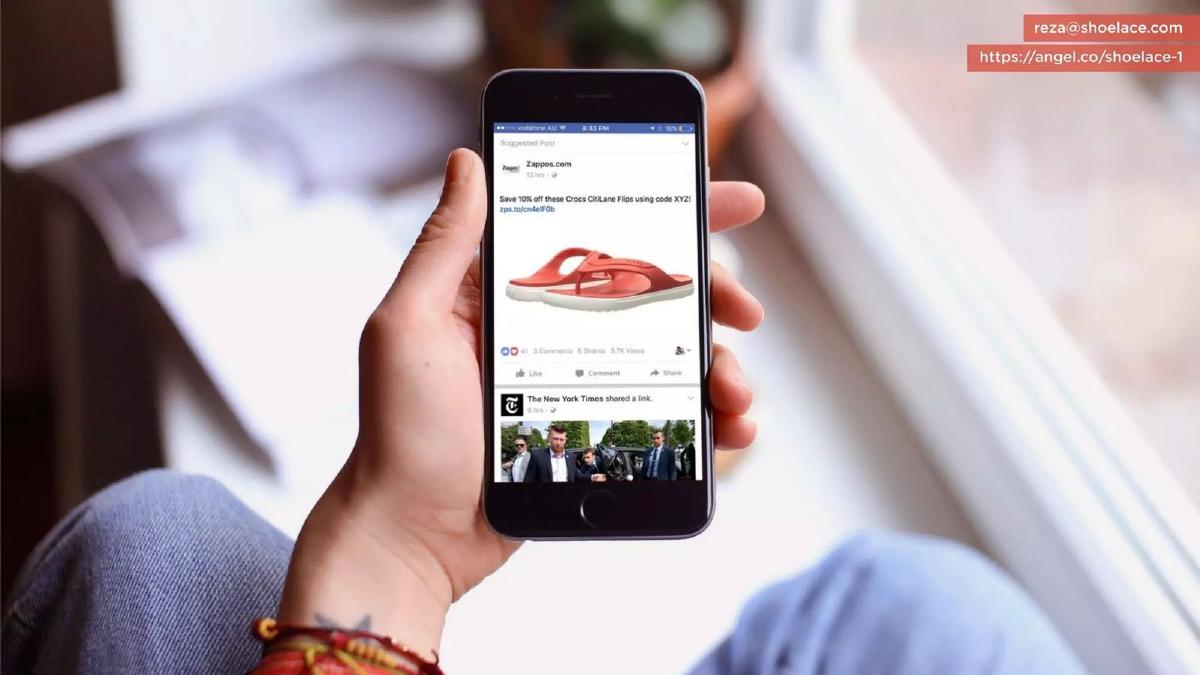
- The deck uses a narrative visual sequence (Slides 2-3) to demonstrate the core problem of abandoned carts and the solution of retargeting.
- Shoelace positions itself as a direct replacement for a 'Marketing Expert' (Slide 5), framing the software as a cost-saving labor alternative.
- The product is presented as a conversational automation tool where users simply approve campaigns with a 'Yes' (Slide 8).
- A massive $20,000,000+ figure is highlighted on Slide 10, representing the scale of the opportunity or impact achieved.
- The company demonstrated 10x revenue growth in 12 months, moving from $4k to $40k MRR (Slide 11).
- The deck highlights a customer base of 1,000 paying users at the time of the presentation (Slide 11).
- The ecosystem strategy is clear, showing integrations with major platforms like Facebook, Instagram, MailChimp, and Google AdWords (Slide 12).
- The deck completely omits a team slide, financial projections, and a specific funding 'ask' or valuation.
The Visual Narrative of Automation
The Shoelace pitch deck from April 2017 is a departure from the standard venture capital template. It is a highly visual, almost cinematic presentation that relies on the viewer's ability to connect dots between images rather than reading bullet points. At 12 slides, it is concise, focusing heavily on the 'before and after' of marketing automation and the undeniable proof of their growth metrics.
Slides 1-3: Setting the Scene
Slide 1 introduces the brand with the tagline "Retargeting on Autopilot." The date is April 2017. The design is minimalist, using a signature coral-red color that persists throughout the deck. A contact email and AngelList link are visible in the top right corner, providing immediate access for interested investors.
Slide 2 and Slide 3 function as a wordless problem/solution set. Slide 2 shows a user looking at a pair of Crocs on Zappos. Slide 3 shows the same user later, holding a mobile phone, seeing a Facebook ad for those exact Crocs with a 10% discount. This is a textbook illustration of retargeting. By using a recognizable brand like Zappos/Crocs, Shoelace anchors their product in a real-world behavior that every investor understands.
Slides 4-6: The Human vs. Machine Conflict
Slide 4 simply states "Retargeting Works." This acts as a transition, moving from the consumer experience to the business logic. It validates the market before introducing the friction point.
Slide 5 introduces the current status quo: the "Marketing Expert." The icon shows a person with dollar signs over their head, implying that human expertise is expensive and perhaps a bottleneck for small to medium-sized merchants. This sets up the 'villain' of the story—the high cost and complexity of manual campaign management.
Slide 6 is a palette cleanser, featuring only the Shoelace logo. This serves to signal that the solution to the human bottleneck is the company itself. It is a bold use of space that forces the audience to focus on the brand name before the product mechanics are revealed.
Slides 7-9: The Product as a Conversational Agent
Slide 7 uses an infographic style to show the "Marketing Expert" feeding into a Shoelace-branded megaphone, which then outputs automated sales actions (mobile shopping, currency, chat). It suggests that Shoelace amplifies or replaces the expert's input to drive multi-channel results.
Slide 8 is perhaps the most important slide for understanding the user experience. It shows a mock-up of a mobile interface where "Shoelace" sends a message: "Hi Alicia, let's run this campaign." The user, Alicia, replies with a simple "Yes!" and Shoelace confirms, "You got it!" This slide effectively communicates that the product is not a complex dashboard, but a proactive assistant. It promises the merchant the benefits of an agency with the ease of a text message.
Slide 9 shows the Shoelace logo branching out to Facebook and Instagram. This establishes the initial footprint of the product, focusing on the two most critical channels for e-commerce retargeting in 2017.
Slides 10-12: The Proof and the Ecosystem
Slide 10 is a high-impact data point: "$20,000,000+." While the slide doesn't explicitly label this figure, in the context of a retargeting startup, it almost certainly refers to the total attributed revenue generated for their clients. It is a "wow" metric intended to show that the system is already operating at scale.
Slide 11 provides the hard evidence of product-market fit. It features a bar chart showing Monthly Recurring Revenue (MRR) growth over one year. The figures are:
April '16: $4K · July '16: $9K · Oct '16: $14K · Jan '17: $23K · April '17: $40K
The slide also highlights that they have reached "1000 Customers." This 10x growth in revenue over 12 months is the core of the investment thesis. It shows a consistent, accelerating upward trend that suggests the 'autopilot' model is resonating with the market.
Slide 12 concludes the deck by showing Shoelace at the center of a much larger ecosystem. The arrows point to Facebook, Instagram, Pinterest, HubSpot, Google AdWords, MailChimp, and Campaign Monitor. This slide answers the "what's next" question, suggesting that while they started with social retargeting, their ambition is to be the automated connective tissue for the entire e-commerce marketing stack.
What Works
The Traction Chart: Slide 11 is the strongest part of the deck. A 10x growth in MRR while reaching a milestone of 1,000 customers is a clear signal of a working acquisition engine. The consistency of the growth bars suggests a predictable and scalable sales process.
Visual Simplicity: By using images to explain retargeting (Slides 2-3) and a chat interface to explain the product (Slide 8), Shoelace avoids the trap of over-explaining technical features. They sell the outcome (sales) and the experience (ease of use) rather than the algorithm.
Clear Positioning: The deck successfully positions the software as a replacement for a "Marketing Expert." This is a powerful value proposition because it frames the software's cost against a human salary, making the ROI calculation easy for the customer and the investor.
What is Missing
The Team: There is no team slide. Investors at the Seed stage typically invest in the founders as much as the metrics. The deck provides no information on who built the technology or their background in e-commerce or ad-tech.
The Ask: The deck does not state how much money is being raised, the valuation, or what the milestones will be for the next 18 months. This makes it a 'teaser' deck rather than a complete fundraising package.
Unit Economics: While MRR is shown, there is no mention of Customer Acquisition Cost (CAC), Lifetime Value (LTV), or churn. For a SaaS business with 1,000 customers, these metrics are vital to prove that the $40k MRR is profitable and sustainable.
Competition: The deck ignores the competitive landscape. In 2017, the retargeting space was crowded with players like AdRoll and Criteo. Shoelace doesn't explicitly explain why their 'autopilot' approach is a defensible moat against these larger incumbents.
What a Founder Should Copy
The 'Human-in-the-Loop' Visual: If your product simplifies a complex task, copy Slide 8. Showing a simple "Yes/No" interaction is the most effective way to communicate that you have solved the usability problem of your industry.
The Narrative Flow: Start with a relatable consumer story. Shoelace didn't start with "We are a SaaS platform for Shopify." They started with a person looking at shoes and then seeing an ad. This builds empathy and immediate understanding of the product's utility.
Metric Transparency: If you have a chart like Slide 11, make it the hero of the deck. Don't hide your revenue growth in a tiny corner of a busy slide. Use a full slide to show the trajectory and the customer count to prove that people are willing to pay for your solution.
Frequently asked questions
- What is the primary value proposition of Shoelace according to the deck?
- The primary value proposition is 'Retargeting on Autopilot.' The deck argues that while retargeting works, it usually requires a human marketing expert. Shoelace replaces that expert with a software solution that automates the creation and execution of ad campaigns across social platforms, requiring only simple confirmation from the merchant.
- How much traction did Shoelace have when this deck was used?
- At the time of the April 2017 deck, Shoelace had reached $40,000 in Monthly Recurring Revenue (MRR) and served 1,000 customers. This represented significant growth from one year prior, when they were at $4,000 MRR in April 2016.
- Which platforms does Shoelace integrate with?
- The final slide of the deck shows a hub-and-spoke model where Shoelace connects to Facebook, Instagram, Pinterest, HubSpot, Google AdWords, MailChimp, and Campaign Monitor. This indicates a broad multi-channel retargeting and marketing automation strategy.
- Is there a team slide in the Shoelace pitch deck?
- No, the 12-slide deck provided does not include a team slide. It focuses entirely on the problem, the product's automated nature, and the revenue traction. While the founder's email is present on every slide, the backgrounds and expertise of the founding team are not detailed.
- What is the significance of the $20,000,000 figure in the deck?
- Slide 10 displays '$20,000,000+' in large white text on a red background. Given the context of the surrounding slides regarding retargeting and revenue, this likely refers to the total sales generated for their customers or the total ad spend managed by the platform at that time.