Shokunin-san.com presents a specialized portal designed to solve labor shortages and logistical inefficiencies in the construction sector. The deck, dating from 2012, focuses on the Japanese market, highlighting a platform that facilitates job matching, equipment search, and even tool theft prevention. With a reported $145,000,000 raised at a later stage, the deck relies heavily on established partnerships, citing 70 contracted manufacturers and 400 pro-shop locations. While the visual presentation is minimalist and lacks detailed financial projections or a formal 'ask' slide, it effectively…
Key takeaways
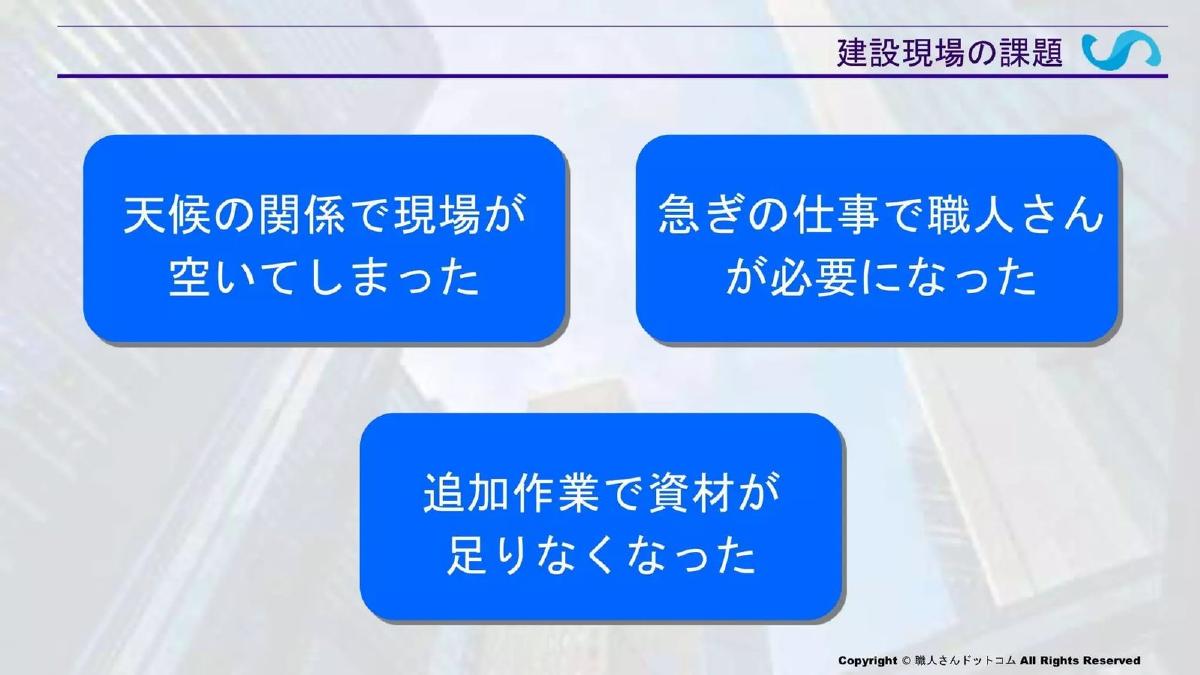
- The platform addresses three core construction site problems: weather-related downtime, urgent labor needs, and material shortages (Slide 3).
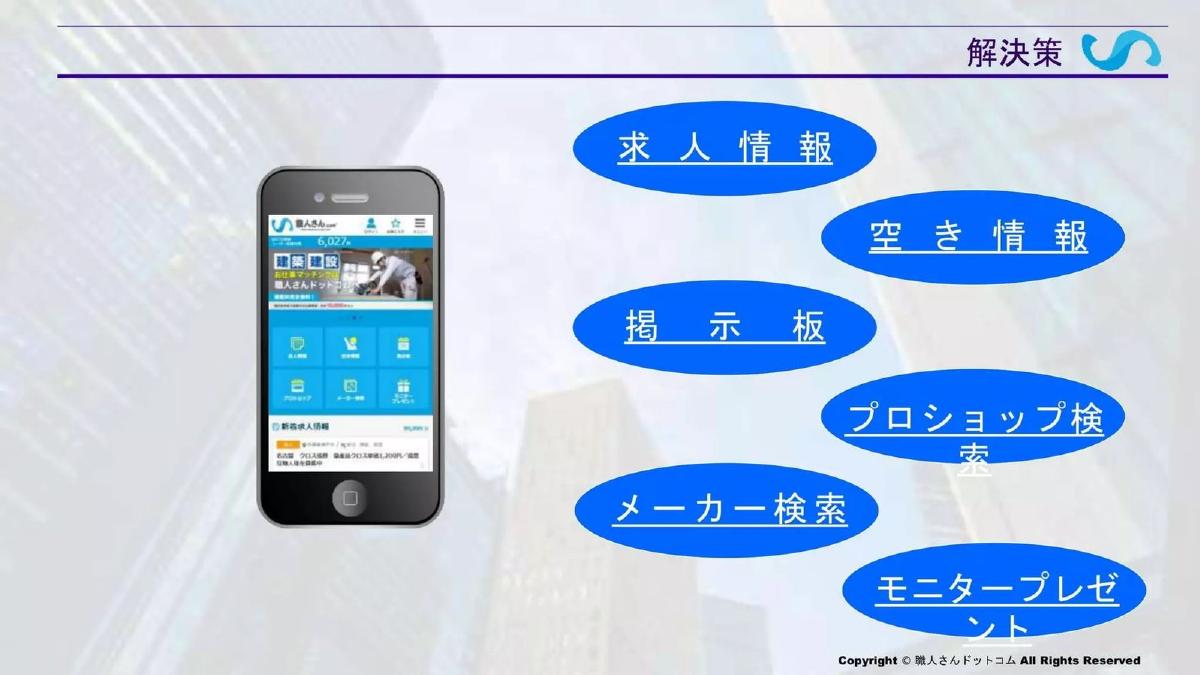
- The solution includes job information, availability updates, bulletin boards, and search functions for manufacturers and pro-shops (Slide 4).
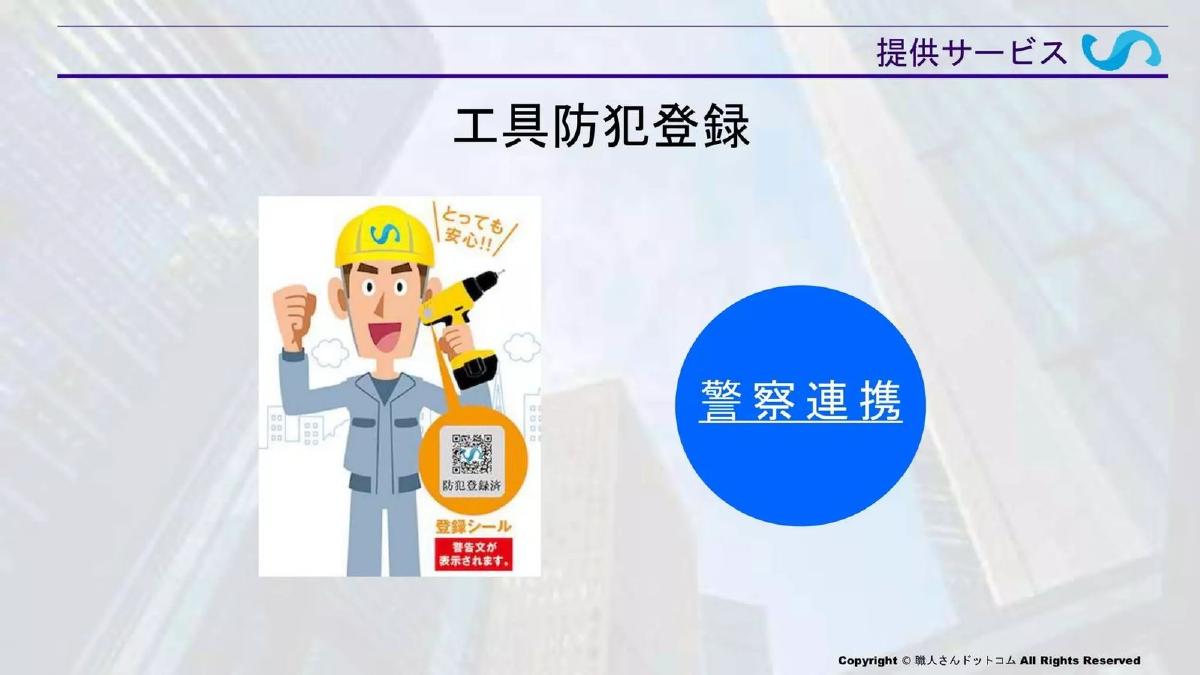
- A unique value add is the 'Tool Crime Prevention Registration' service, which includes police cooperation (Slide 5).
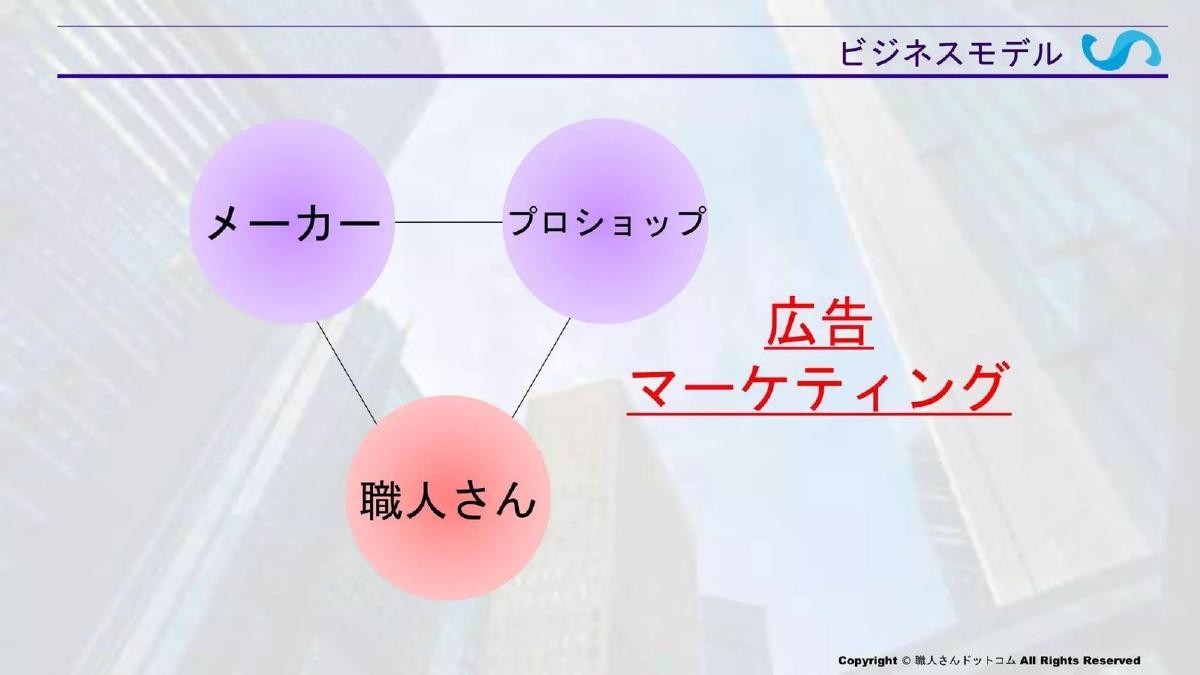
- The business model is built on a triangular relationship between Manufacturers, Pro-shops, and Craftsmen, driven by advertising and marketing (Slide 6).
- The company demonstrates significant market penetration with 70 contracted manufacturers, including brands like 3M and Mizuno (Slide 7).
- Physical retail reach is evidenced by partnerships with 400 pro-shop locations, such as DCM Kahma and LIXIL Viva (Slide 8).
- The deck is extremely brief at only 9 slides and omits common sections like competition, financial history, and specific funding requirements.
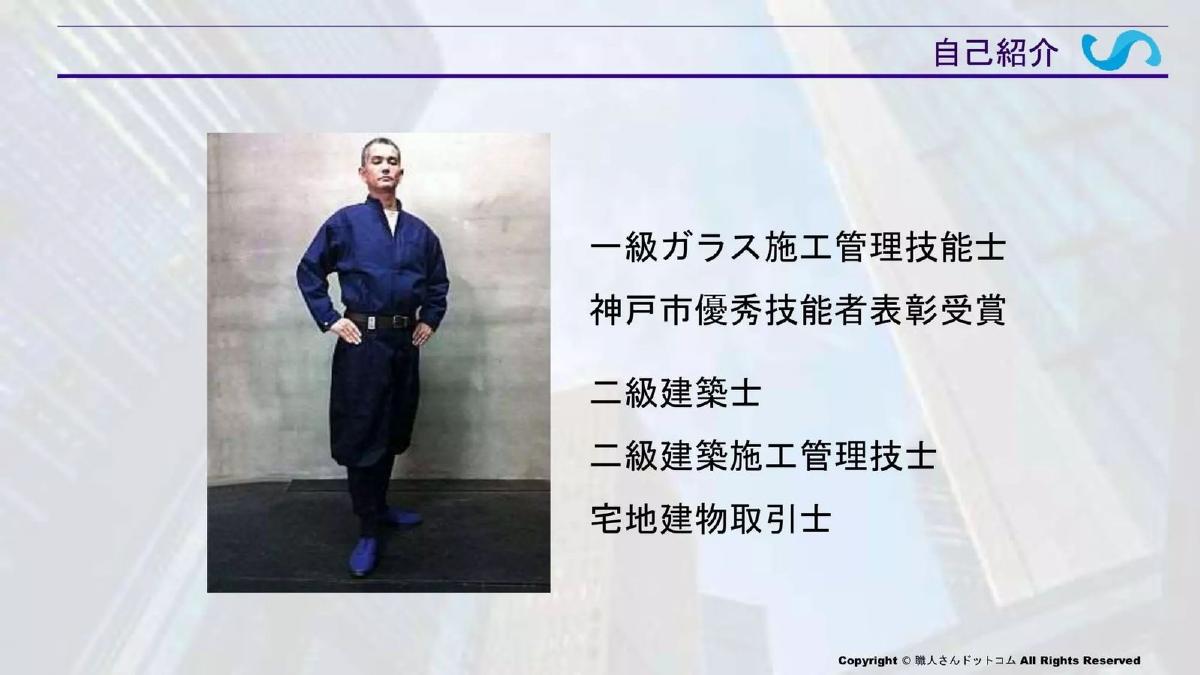
- The founder's background is emphasized through professional certifications in glass construction and architecture, establishing industry authority (Slide 2).
Introduction: The Digital Hub for the Construction Site
Shokunin-san.com operates in a highly specialized niche: regional information services for the Japanese construction industry. In a sector often characterized by traditional workflows and fragmented communication, this platform attempts to centralize the needs of the 'Shokunin' (craftsman). The deck, consisting of only 9 slides, is a study in brevity, focusing on the immediate utility of the mobile portal and the strength of its existing corporate partnerships. According to catalogue data, the company raised $145,000,000 in 2012 at a later stage, suggesting that this deck served as a high-level overview of a mature business model rather than a speculative seed-stage pitch.
The Opening and Founder Authority
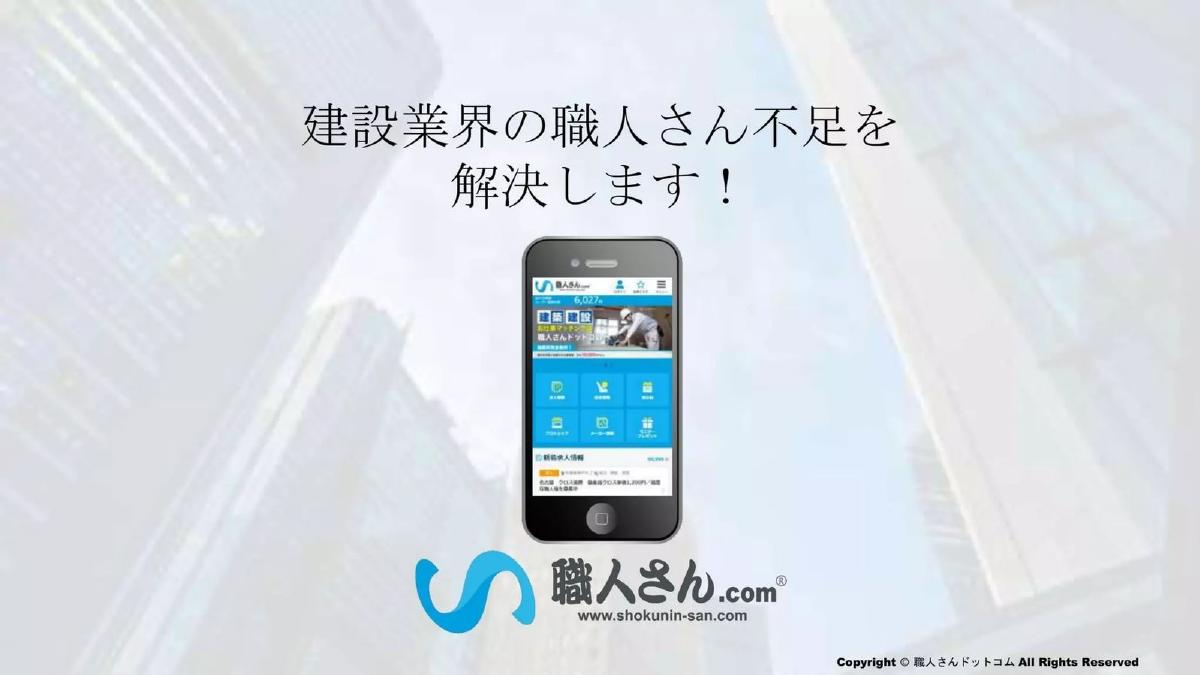
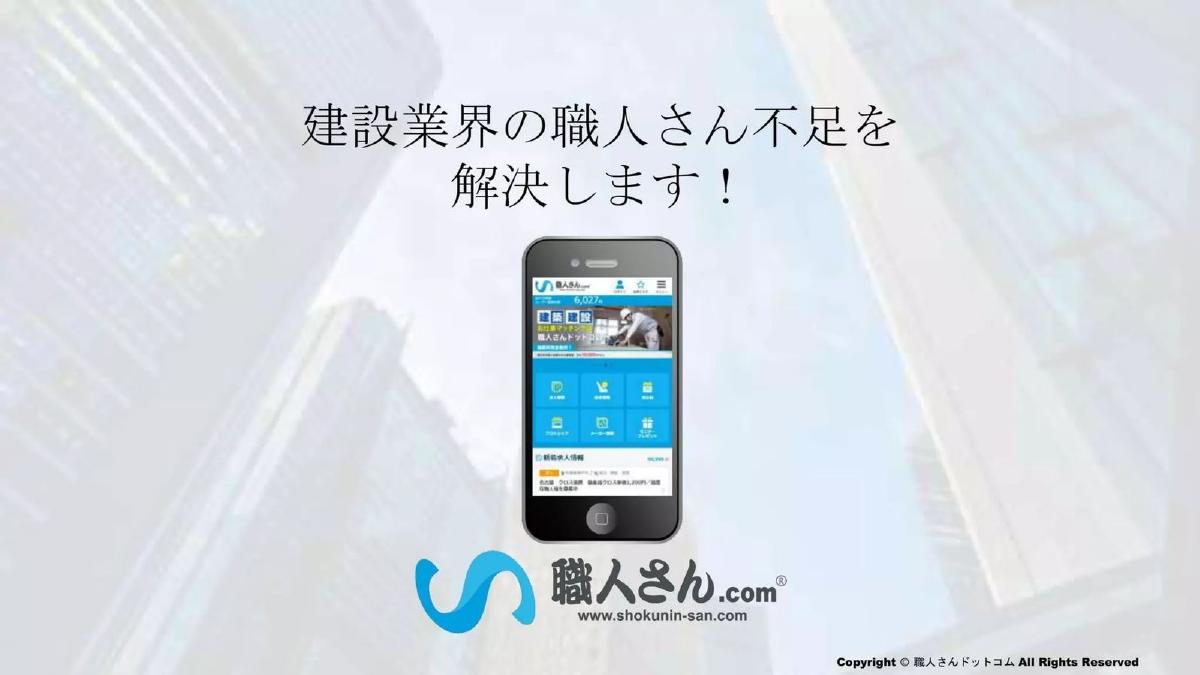
Slide 1: Title The cover slide features a mobile device displaying the Shokunin-san.com portal against a backdrop of high-rise buildings. The text translates to a promise to solve the shortage of craftsmen in the construction industry. It establishes the brand identity immediately with the 'S' logo and the URL.
Slide 2: Self-Introduction Instead of a traditional multi-person team slide, Slide 2 focuses entirely on the founder/CEO, Yukio Izawa. The slide lists several professional certifications: First-class Glass Construction Management Technician, Kobe City Excellent Technician Award winner, Second-class Architect, Second-class Building Construction Management Technician, and Real Estate Broker. This is a strategic choice; in the construction industry, technical credentials carry more weight with stakeholders than general business degrees. It signals that the platform was built by someone who understands the regulatory and technical nuances of the trade.
Problem and Solution Framework
Slide 3: Construction Site Issues The deck identifies three specific operational hurdles:
Sites becoming empty/idle due to weather conditions. · The urgent need for craftsmen for rush jobs. · Running out of materials during unexpected additional work.
This slide is effective because it avoids broad industry generalities and targets the day-to-day frustrations of site managers and independent contractors.
Slide 4: The Solution The solution is presented as a mobile-first portal. The slide lists six key features:
Job Information (Recruitment). · Availability Information (Real-time labor tracking). · Bulletin Boards (Community interaction). · Pro-shop Search (Finding local hardware stores). · Manufacturer Search (Finding specific parts/tools). · Monitor Presents (Likely a promotional or product testing feature).
This demonstrates that the app is intended to be a daily utility tool, not just a job board.
Unique Value and Business Ecosystem
Slide 5: Provided Services - Tool Crime Prevention One of the most distinct features of the deck is the 'Tool Crime Prevention Registration.' The slide shows a mascot holding a drill with a QR code registration sticker. It explicitly mentions 'Police Cooperation.' Theft of expensive professional tools is a major issue in construction; by addressing this, Shokunin-san.com moves from being a 'nice-to-have' job site to a 'must-have' security service.
Slide 6: Business Model The business model is visualized as a triangle connecting Manufacturers, Pro-shops, and Craftsmen. The central revenue drivers are listed as 'Advertising' and 'Marketing.' This indicates a B2B2C model where the platform monetizes the access it provides to a highly targeted, professional demographic. Manufacturers want their tools seen by craftsmen, and pro-shops want to drive foot traffic to their regional locations.
Traction and Partnerships
Slide 7: Contracted Manufacturers This is the primary 'traction' slide. It features a large blue circle with '70 companies' (70社) written in the center. Surrounding the circle are logos for major brands, including 3M, Cemedine, Ryobi, Mizuno, Tajima, Co-Cos, KTC, and Dragonbeard. The inclusion of Mizuno (an athletics brand) suggests the platform also covers workwear and safety gear.
Slide 8: Contracted Pro-shops Similar to the previous slide, this one highlights '400 stores' (400店舗). It displays logos for major Japanese hardware and home center chains, such as DCM Kahma, DCM Daiki, Cainz Pro, Nafco, and LIXIL Viva. This slide proves the platform's regional reach and physical integration into the supply chain.
Slide 9: Contact Information The deck ends abruptly with the company name, the CEO's name (Yukio Izawa), and a general info email address. There is no summary of the investment opportunity or a vision statement for the future.
What Works in the Shokunin-san.com Deck
The deck's greatest strength is its industry credibility . By leading with the founder's technical certifications (Slide 2), the company immediately overcomes the 'outsider' stigma often faced by tech startups entering blue-collar industries. The focus on very specific problems, like weather-related downtime (Slide 3), shows a deep empathy for the user base.
Furthermore, the partnership density shown on Slides 7 and 8 is impressive. For a later-stage company, showing that you have already captured 70 major manufacturers and 400 retail locations is a powerful way to demonstrate a 'moat.' It suggests that any competitor would have to spend years replicating these institutional relationships.
What is Missing from the Shokunin-san.com Deck
This is a remarkably incomplete deck by modern venture standards. The most glaring omissions include:
Financial Data: There are no mentions of revenue growth, GMV (Gross Merchandise Volume) of the jobs posted, or user acquisition costs. · Market Size: The deck does not quantify the Total Addressable Market (TAM) for construction services in Japan. · Competition: There is no slide addressing other job boards or procurement platforms. · The Ask: The deck does not state how much money is being raised or what the milestones for the next phase are. · Unit Economics: While advertising is mentioned as the model, there is no detail on the average contract value or churn rates for the 70 manufacturers.
Given the $145M funding figure, it is highly likely that this deck was a 'teaser' or a supplementary visual aid for a much more detailed data room or a verbal presentation.
Founder Takeaways: What to Copy
Use Credentials to Build Trust: If you are building for a specialized trade, don't just list your MBA. List your licenses and industry awards as Shokunin-san.com did on Slide 2. It proves you speak the language of your customers.
Solve a 'Painful' Niche Problem: The tool theft prevention feature (Slide 5) is a brilliant example of a 'hook.' It’s a specific, high-anxiety problem that a simple digital registry can help solve, creating immediate value that isn't just about 'finding work.'
Visualize the Ecosystem: Slide 6's simple triangle is a great way to explain a multi-sided marketplace. It clearly shows who the players are and how the company sits at the center of the flow of information and marketing dollars.
Focus on Logos for Traction: If you have big-name partners, don't bury them in a list. Use the 'logo cloud' approach seen in Slides 7 and 8 to create a visual sense of scale and market dominance. Even if you only have a few, highlighting them prominently builds instant institutional trust.
Conclusion
The Shokunin-san.com deck is a functional, no-frills presentation that relies on the strength of its existing network rather than flashy design or complex financial modeling. While it leaves many questions unanswered regarding its internal economics, it successfully paints a picture of a company that has become an infrastructure layer for the Japanese construction trade. For founders, it serves as a reminder that in traditional industries, specialized utility and established partnerships are often more persuasive than generic growth projections.
Frequently asked questions
- What is the primary problem Shokunin-san.com aims to solve?
- According to Slide 3, the company focuses on three specific pain points at construction sites: sites becoming idle due to weather conditions, the sudden need for craftsmen for urgent jobs, and running out of materials during additional work. The platform acts as a real-time coordinator to mitigate these common industry delays.
- How does the company generate revenue based on the deck?
- Slide 6 explicitly labels 'Advertising' and 'Marketing' as the core of the business model. The platform sits at the center of a network involving manufacturers and pro-shops, suggesting that these entities pay to reach the specific audience of craftsmen using the portal for jobs and equipment searches.
- What makes the 'Tool Crime Prevention' feature significant?
- Slide 5 details a service for registering tools to prevent theft, featuring a QR-coded sticker and 'Police Cooperation.' For construction workers, tools are high-value capital assets; by offering a security layer tied to law enforcement, the platform increases user stickiness and provides a utility beyond simple job matching.
- Who are the key partners mentioned in the deck?
- The deck highlights two major groups of partners. Slide 7 shows 70 contracted manufacturers, including global brands like 3M and specialized ones like Tajima and KTC. Slide 8 lists 400 pro-shops, featuring major Japanese home center and hardware chains like DCM, Cainz Pro, and LIXIL Viva.
- Is there a clear investment 'ask' in this pitch deck?
- No. The 9-slide deck concludes with a contact slide (Slide 9) featuring the CEO's name and email address. It does not specify the amount of capital being sought, the valuation, or the intended use of funds, which is typical for a high-level introductory deck or a later-stage summary.