MailHaven’s 2016 pre-seed deck is a masterclass in visual storytelling and problem identification. By focusing on the visceral frustration of 'missed delivery' notices and the massive $45 billion economic loss associated with delivery failures, the company established a clear need for its smart mailbox. The deck successfully balances hardware aesthetics with a recurring revenue model ($15/month), a rarity for physical consumer products at this stage. While the deck is light on technical specifications and manufacturing logistics, it leverages a high-profile 'Pilot Partnership' with UPS to bui…
Key takeaways
- The deck identifies a $45 billion loss in the delivery ecosystem on slide 4.
- The target market is specifically defined as 27 million homeowners on slide 5.
- The business model combines a $399 one-time hardware fee with a $15 monthly subscription on slide 10.
- Credibility is established through a 'Pilot Partnership' with UPS highlighted on slide 12.
- The team slide (slide 11) emphasizes founder experience, including a '2X Founder' and 15 years in consumer electronics.
- Visuals are used to demonstrate ease of use, showing a three-step 'Install, Scan, Retrieve' process on slide 9.
- The deck omits a formal 'Ask' slide detailing how the $100,000 would be spent.
- The presentation relies heavily on lifestyle photography to position the hardware as a premium home addition (slides 6-8).
The Pitch Deck Teardown: MailHaven
MailHaven entered the market in 2016 with a hardware solution for a problem that has only grown more acute with the rise of e-commerce: package security and delivery logistics. This 13-slide deck was used to secure $100,000 in pre-seed funding. It is a lean, visually-driven presentation that prioritizes the 'vibe' and the 'problem' over dense spreadsheets.
The Hook and the Problem (Slides 1-4)
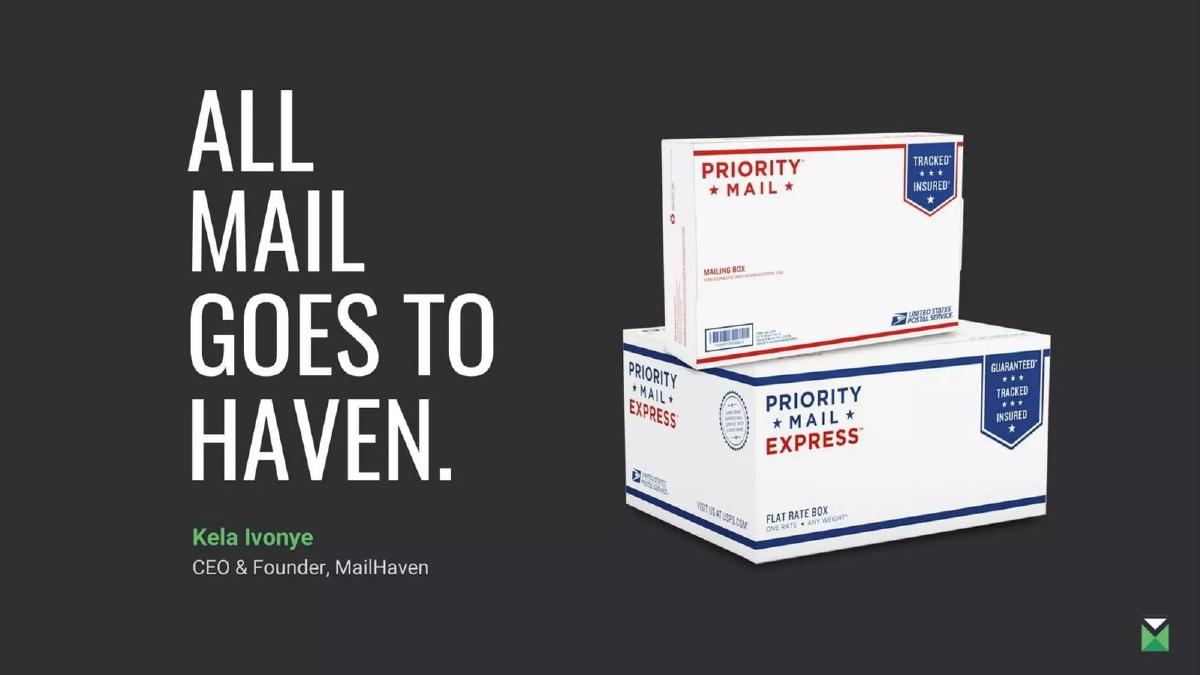
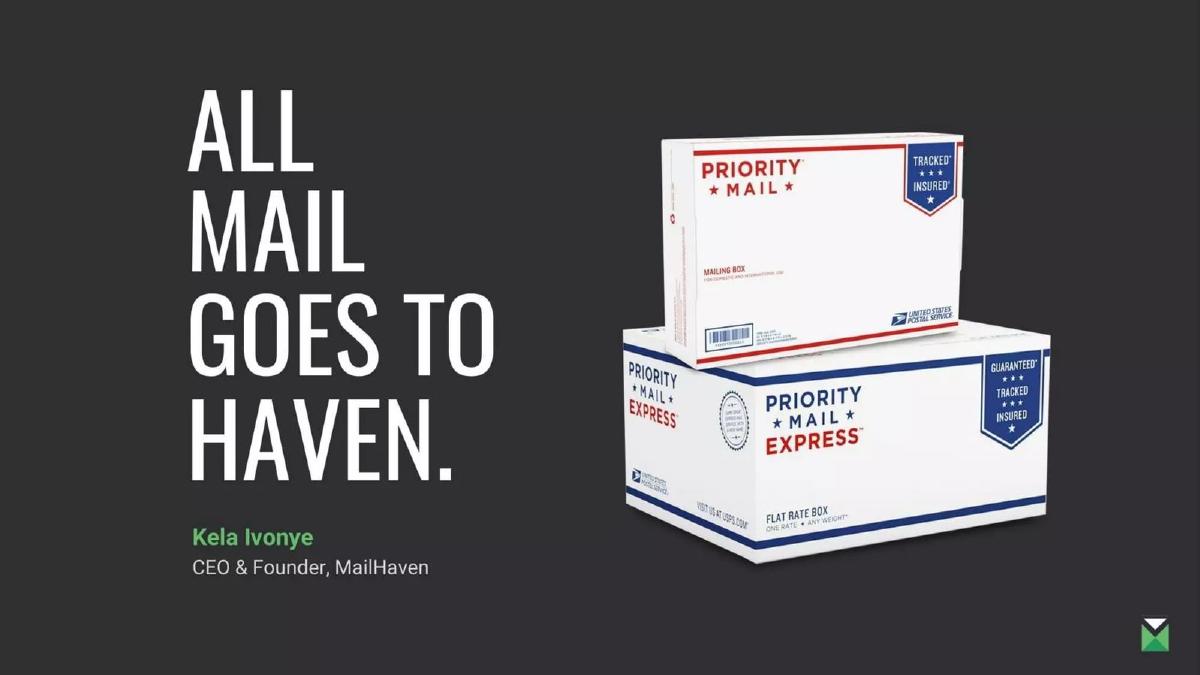
Slide 1: Title Slide The deck opens with the slogan "ALL MAIL GOES TO HAVEN." It features the name of CEO & Founder Kela Ivonye and an image of USPS Priority Mail boxes. It is clean and sets a professional tone immediately.
Slide 2: The Relatable Pain Point Slide 2 is arguably the most effective in the deck. It features a large green block with the text "WE MISSED YOU..." next to a photo of a UPS delivery failure notice stuck to a glass door. This is a universal frustration for online shoppers. By starting with the emotional pain of a missed delivery, MailHaven bypasses the need for a long explanation of what they do.
Slide 3: The Ideal State Following the 'pain' of slide 2, slide 3 shows a 'pleasure' image: a woman smiling while opening a package in a well-lit, modern kitchen. There is no text on this slide, only the company's contact info in the footer. It represents the successful outcome the product promises.
Slide 4: The Macro Problem MailHaven moves from the personal to the professional on slide 4. Under a stopwatch icon, it states "$45 BILLION LOST." This slide quantifies the cost of delivery inefficiencies, theft, and redeliveries. It tells investors that this isn't just a minor annoyance for homeowners; it is a massive financial leak in the global economy.
The Market and the Solution (Slides 5-9)
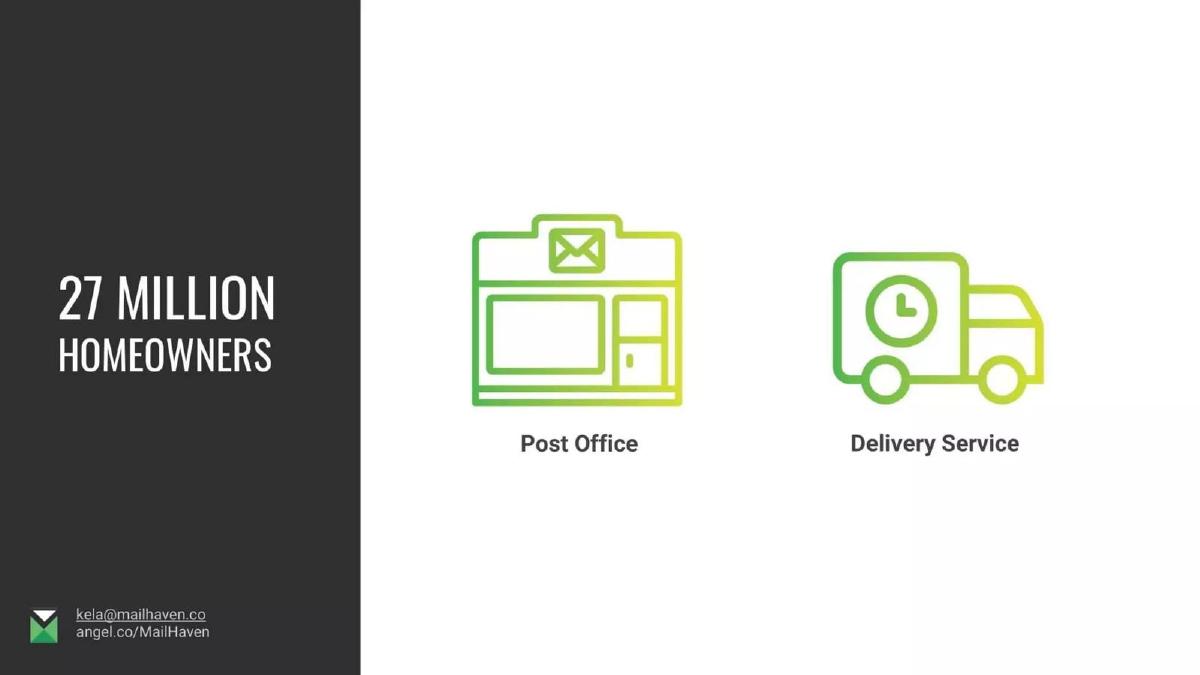
Slide 5: Target Audience The deck identifies its primary market on slide 5: "27 MILLION HOMEOWNERS." It uses simple icons for a Post Office and a Delivery Service to show where MailHaven fits into the existing logistics chain. This is a focused TAM (Total Addressable Market) that feels achievable rather than an inflated 'everyone in the world' figure.
Slide 6-8: Product Reveal These three slides introduce "The Haven." Slide 6 shows the smart mailbox in front of a traditional suburban home. Slide 7 uses a focus effect to highlight the device itself. Slide 8, titled "CUSTOM TO THE HOME," shows the mailbox in a different finish (wood grain) in front of a high-end modern house. This positioning is crucial; it suggests the Haven is an architectural upgrade, not just a plastic bin.
Slide 9: Functionality Titled "EASY TO USE & INSTALL," this slide breaks down the user experience into three steps: "INSTALL, SCAN, RETRIEVE." The photos show a base being bolted into concrete, a courier scanning a package to unlock the box, and a package safely resting inside the open unit. This slide is vital for a hardware pitch as it addresses the 'how does it work' question for both the consumer and the delivery driver.
Business Model and Traction (Slides 10-12)
Slide 10: The Economics MailHaven presents a clear, dual-revenue stream on slide 10. They charge a "$399 One-time fee" for the hardware and "$15 A month" for the service. For a pre-seed company, showing a path to recurring revenue (SaaS-style) is much more attractive to venture investors than a pure hardware play, which often suffers from low margins and one-off sales.
Slide 11: The Team The team slide features three individuals. Kela Ivonye is listed as a "2X Founder." Ed Hatfield, the Head of Engineering, brings "15 Years Consumer Electronics" experience and a degree from Rose-Hulman Institute of Technology. Zach Blender, the Operations Lead, brings a Berkeley and Wells Fargo pedigree. This covers the three pillars of a hardware startup: leadership, technical execution, and operational logistics.
Slide 12: Strategic Validation Slide 12 is a powerful 'de-risking' slide. Titled "BUILDING THE FUTURE OF DELIVERY," it features a large UPS logo and the words "PILOT PARTNERSHIP." For a startup trying to change how packages are delivered, having the endorsement (or at least the cooperation) of a major carrier like UPS is a massive signal of credibility.
Conclusion and Social Proof (Slide 13)
Slide 13: The Closer The final slide is a "THANK YOU" page that doubles as a social proof board. It features logos from 500 Startups, Highway 1, and various media outlets like Recode, Inc., Yahoo Finance, and CNBC. This tells the investor that MailHaven is already part of respected accelerators and has captured the attention of the press.
What Works in the MailHaven Deck
Visual Storytelling: The deck uses very little text. It relies on high-quality imagery to convey the problem and the solution, which makes for a fast, engaging read. · The Business Model: Including the $15/month subscription fee on slide 10 is a smart move. It transforms the company from a 'mailbox manufacturer' into a 'logistics platform.' · Relatability: Every investor has received a 'missed delivery' notice. By leading with that image on slide 2, the founders ensure the audience is nodding in agreement before they even see the product. · Institutional Credibility: The UPS pilot and the 500 Startups logo provide the necessary 'social proof' to justify a pre-seed investment.
What is Missing from the MailHaven Deck
The Ask: The deck never explicitly states how much they are raising or what the milestones are for the next 18 months. While the catalogue facts state they raised $100,000, that information is not on the slides. · Unit Economics: While we see the price ($399), we don't see the cost to manufacture (COGS). Investors in hardware want to know if the company can actually make a profit on the physical unit. · Technical Specs: There is no mention of how the box connects to the internet (Wi-Fi, LTE, Bluetooth?), how it is powered (Battery, solar, hardwired?), or how it integrates with other carriers like FedEx or Amazon. · Competition: The deck ignores the existence of competitors like Amazon Key, porch-lockers, or simple security cameras (Ring).
What a Founder Should Copy
The Three-Step Process: Slide 9's "Install, Scan, Retrieve" is a perfect way to simplify a complex hardware/software interaction. · Problem Quantification: Don't just say the problem is bad; use a slide like slide 4 to show the dollar amount lost to the status quo. · Aesthetic Consistency: The use of a consistent dark grey background with green accents and high-end photography makes the company look more established than a typical pre-seed startup. · The 'Pain' Slide: Use a real-world photo of the problem you are solving. It is much more effective than a bulleted list of grievances.
Frequently asked questions
- What is the primary problem MailHaven is solving?
- MailHaven addresses the 'last mile' delivery failure, specifically focusing on missed deliveries and package theft. Slide 2 uses a relatable image of a UPS 'Sorry we missed you' sticky note, while slide 4 quantifies the broader economic impact as a $45 billion loss.
- How does MailHaven make money?
- According to slide 10, the company utilizes a hybrid revenue model. Customers pay a $399 one-time fee for the physical smart mailbox hardware, followed by a $15 monthly recurring subscription fee for the software and tracking services.
- Does the deck show a working prototype?
- Slide 9 shows photos of a person installing a base and a delivery driver placing a package into the unit. While slides 6, 7, and 8 appear to be high-quality 3D renders or staged lifestyle shots, slide 9 provides the most evidence of a physical form factor and functional use case.
- What is the size of the market MailHaven is targeting?
- Slide 5 identifies the core market as 27 million homeowners. It visually links these homeowners to the 'Post Office' and 'Delivery Service' infrastructure, suggesting the product sits at the intersection of residential property and logistics.
- Who are the key members of the MailHaven team?
- Slide 11 lists three key leaders: Kela Ivonye (CEO & Founder, noted as a 2X founder), Ed Hatfield (Head of Engineering & Co-Founder with 15 years in consumer electronics), and Zach Blender (Operations Lead with experience at Berkeley and Wells Fargo).