Mahmee’s 2019 Seed deck is a masterclass in brevity, utilizing only 8 slides to secure $3M in funding. The presentation avoids traditional text-heavy slides, opting instead for high-impact photography and singular, bold metrics. By grounding the pitch in the clinical expertise of its founding team and demonstrating a clear path to monetization—specifically citing an average purchase value of $560 in the first six months—Mahmee bypassed the need for extensive market projections. While the deck lacks a formal 'Ask' slide or a detailed competitive landscape, its focus on the immediate 'Annual Ru…
Key takeaways
- The deck is exceptionally brief at only 8 slides, omitting common sections like Market Size (TAM/SAM/SOM) and Competition.
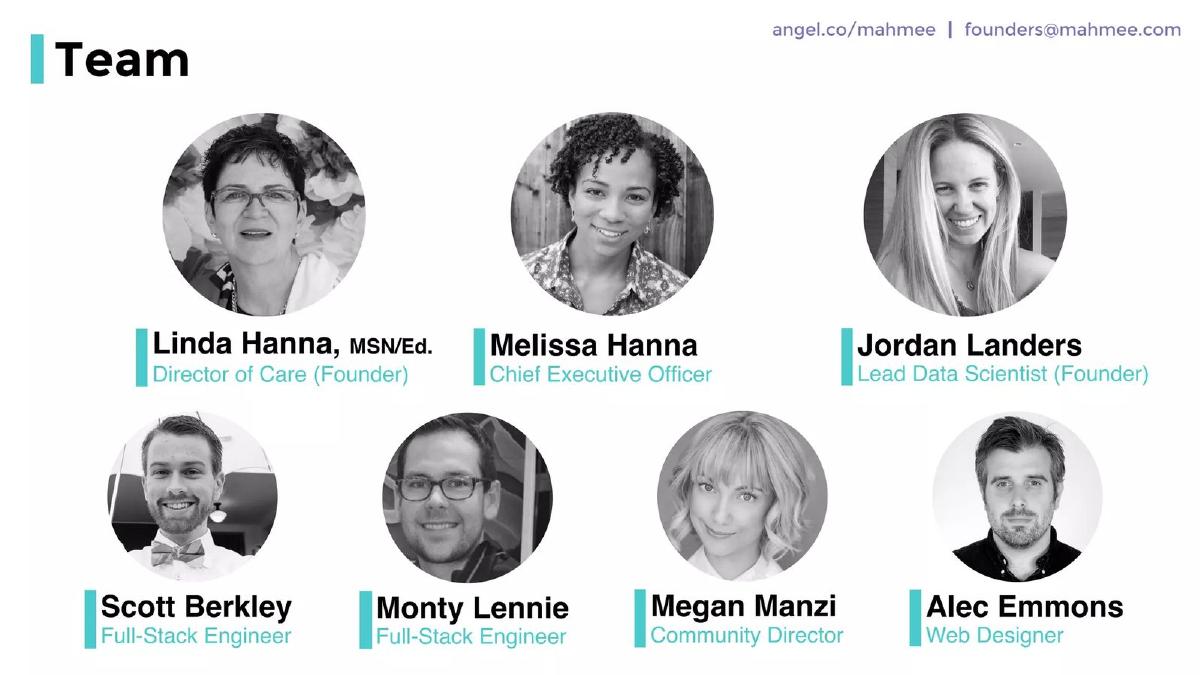
- Clinical credibility is established on Slide 4 by featuring Linda Hanna, MSN/Ed., as a co-founder and Director of Care.
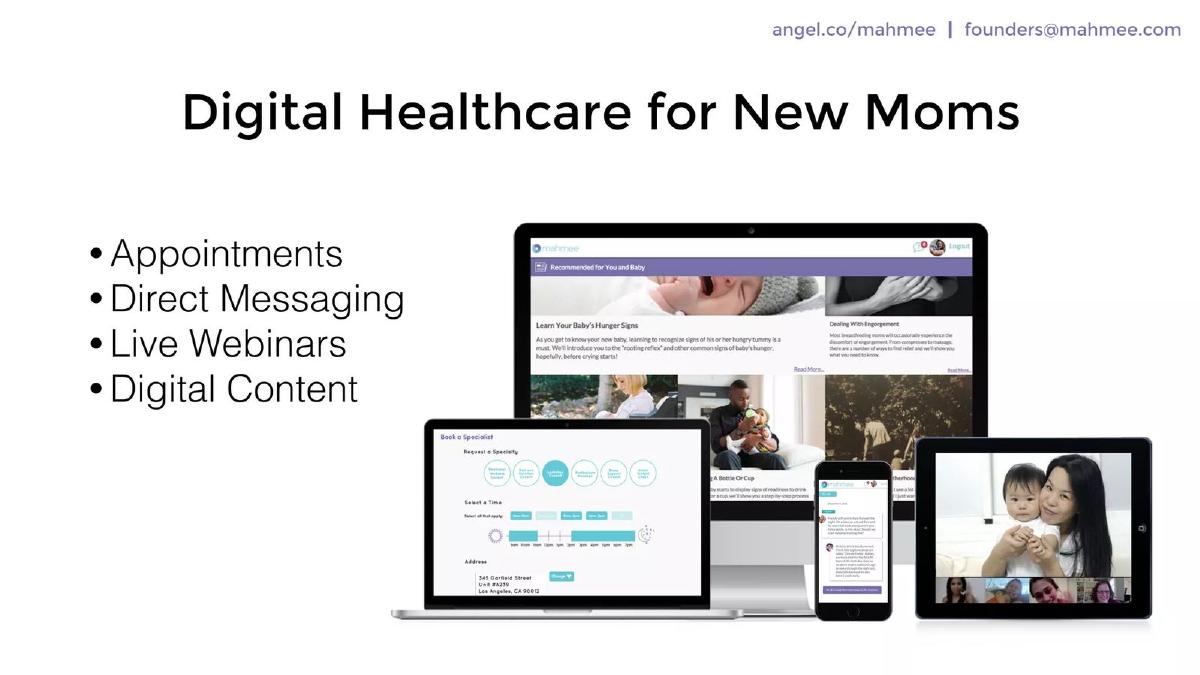
- The product is defined as a digital hub including appointments, messaging, webinars, and content on Slide 5.
- Unit economics are highlighted on Slide 6, showing $560 in average purchases during a user's first six months.
- Traction is summarized on Slide 7 with a stated Annual Run Rate (ARR) of $360,000.
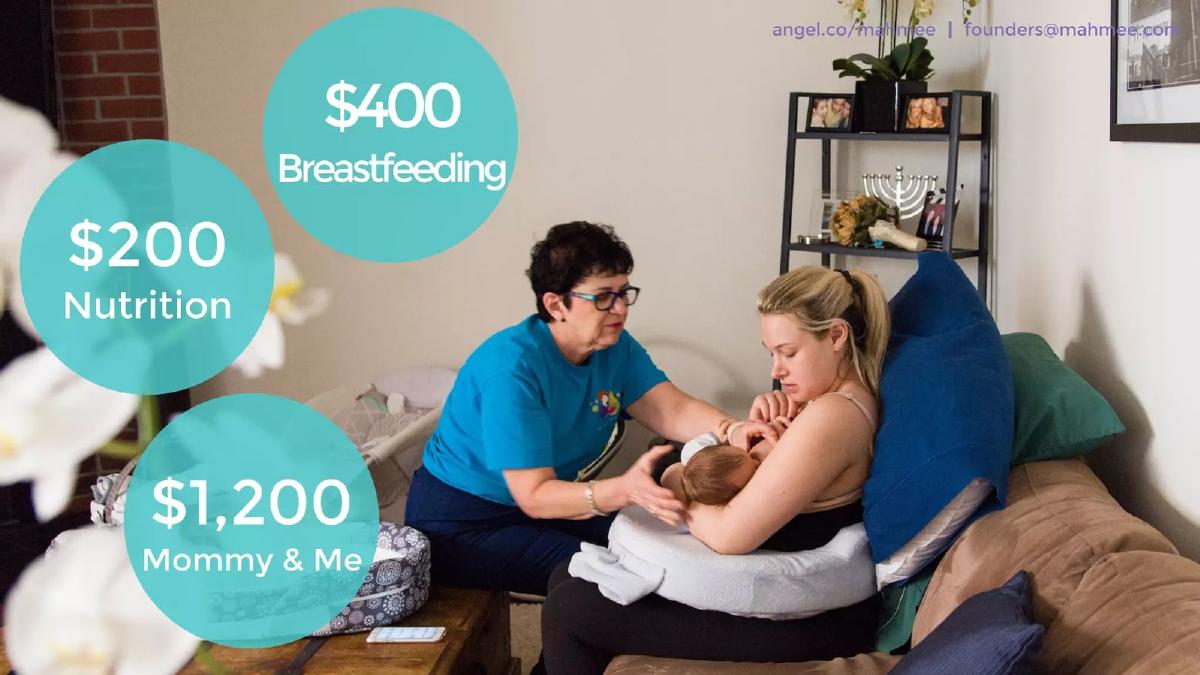
- The 'Problem' is communicated visually through Slides 2 and 3, emphasizing the high costs of fragmented care like $1,200 for 'Mommy & Me' programs.
- The team includes specialized technical roles, such as a Lead Data Scientist and two Full-Stack Engineers, as shown on Slide 4.
- The deck lacks a specific 'Ask' slide, failing to detail how the $3M investment would be allocated or what milestones it would fund.
The 8-Slide Seed Strategy
Mahmee’s pitch deck is an anomaly in the world of venture capital. While many founders feel pressured to produce 20-slide deep dives into market dynamics and five-year projections, Mahmee secured a $3M Seed round in 2019 with just eight slides. This teardown examines how they used minimalism, clinical authority, and specific unit economics to tell a compelling story without the fluff.
Slide 1: Title and Branding
The deck opens with the Mahmee logo and the tagline: "maternal healthcare, delivered." The branding is soft, utilizing teal and purple tones, which aligns with the maternal health sector. There are no claims of being the "Uber for X" or "AI-powered"; the focus is entirely on the service being provided. This sets a professional, healthcare-first tone from the outset.
Slides 2 & 3: The Visual Problem Statement
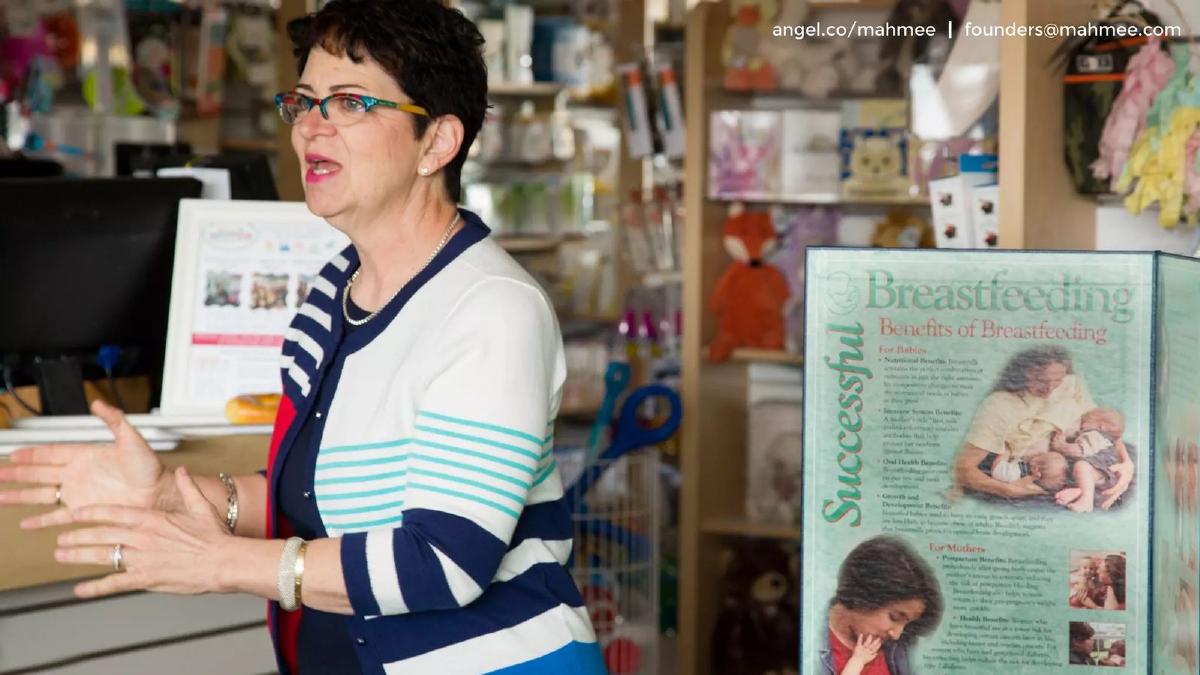
Slide 2 features a photograph of a woman, presumably a healthcare provider, in a retail or clinical setting with breastfeeding educational materials. There is no text on this slide other than the contact information in the corner. This is a bold choice that relies on the presenter to narrate the fragmentation of the current maternal health landscape.
Slide 3 moves from the abstract to the financial. It shows a provider assisting a mother with breastfeeding, overlaid with three teal circles representing current market costs: $400 for Breastfeeding , $200 for Nutrition , and $1,200 for Mommy & Me . By highlighting these high price points, Mahmee implicitly argues that maternal care is currently expensive and fragmented, creating a clear opening for a consolidated digital solution.
Slide 4: Team and Clinical Authority
The Team slide is perhaps the most important in the deck. It features seven individuals, led by three founders. Linda Hanna, MSN/Ed. , is listed as the Director of Care. Her credentials (MSN/Ed.) provide immediate clinical legitimacy, which is vital in the healthcare space. Melissa Hanna (CEO) and Jordan Landers (Lead Data Scientist) round out the leadership, signaling a balance of business, clinical, and technical expertise.
The inclusion of two Full-Stack Engineers, a Community Director, and a Web Designer suggests that the company is not just a service provider but a product-led technology firm. This team composition addresses the 'execution risk' that investors often fear in early-stage healthcare startups.
Slide 5: The Product Solution
Under the heading "Digital Healthcare for New Moms," Slide 5 provides a high-level overview of the platform's capabilities. It lists four key features: Appointments , Direct Messaging , Live Webinars , and Digital Content . The slide uses mockups of the interface across a desktop, tablet, and smartphone, demonstrating a cross-platform approach. This slide directly answers the problem of fragmentation by showing a single hub where a mother can access various forms of support.
Slide 6: Unit Economics
Slide 6 is a 'money slide.' It features a large, bold figure: $560 Average Purchases in First Six Months . This is a critical metric for a Seed round. It proves that the customer base is not only engaged but is willing to spend significant capital on the platform early in their journey. By focusing on the first six months, Mahmee highlights the high-intent nature of the postpartum period, which is their primary window for monetization.
Slide 7: Traction and Revenue
Following the unit economics, Slide 7 presents the macro view of their success: $360K Annual Run Rate . For a Seed round in 2019, this figure represents significant traction. It moves the conversation from "this might work" to "this is already working." The use of a high-quality photo of children playing with a tablet reinforces the idea that their technology is integrated into the modern family's life.
Slide 8: The Call to Action
The final slide is a simple "Get in touch!" with the company's email and AngelList profile. Notably, there is no 'Ask' slide in this deck. There is no mention of the $3M target, the valuation, or the specific milestones they intend to hit. This suggests that the deck was likely used as a visual aid for a verbal pitch rather than a standalone document sent via email, or that the 'Ask' was handled in a separate, more confidential document.
What Mahmee Does Well
1. Clinical Credibility: In healthcare, the "who" is often more important than the "what." By putting a Master of Science in Nursing (MSN) on the founding team, Mahmee avoids the "tech bros fixing healthcare" trope that many VCs find off-putting. The team looks like they understand the medical and emotional nuances of the problem.
2. Extreme Focus on Revenue: Many Seed decks focus on user growth or "engagement." Mahmee focuses on dollars. Stating a $560 LTV (or at least a 6-month value) and a $360k ARR provides a concrete foundation for a valuation. It shows a clear path to a sustainable business model.
3. Visual Storytelling: The deck is not cluttered. By using large images and minimal text, the founders ensure that the investor's attention remains on the speaker. The photos used are professional and evoke the specific 'care' environment they are trying to digitize.
What is Missing from the Deck
1. The Market Opportunity (TAM): There is no slide explaining how many new moms there are in the US or globally. While investors likely know the market is large, failing to define the Total Addressable Market (TAM) is a missed opportunity to show the potential scale of the company.
2. Competitive Landscape: The deck assumes that the current alternative is simply "expensive fragmented care." It does not mention other startups in the maternal health space or how Mahmee differentiates itself from hospital-provided portals or other telehealth apps.
3. The 'Ask' and Use of Funds: As noted, the deck lacks a slide detailing how much money they are raising and what they will do with it. For a $3M round, investors typically want to see a breakdown of hiring plans (e.g., "We will hire 5 more engineers") or expansion goals.
What Founders Should Copy
1. The 'Money Slide' Format: Slide 6 is a perfect example of how to present a key metric. One large number, one clear description. Don't bury your best data in a complex chart; make it impossible to miss.
2. Role-Specific Team Slides: Don't just list names. Mahmee listed specific roles like "Lead Data Scientist" and "Full-Stack Engineer." This shows that the company has already thought through its organizational structure and has the technical talent to build what they are promising.
3. Problem-Solution Alignment: Slide 3 sets up the costs ($400, $200, $1,200), and Slide 5 provides the digital alternative. This direct 1:1 mapping of the problem to the solution is the core of any successful pitch.
Final Thoughts
Mahmee’s deck is proof that you don't need 20 slides to raise millions. If your team is qualified and your revenue metrics are trending in the right direction, brevity can be your greatest asset. By focusing on the clinical necessity and the proven willingness of mothers to pay for better care, Mahmee turned a complex healthcare problem into a straightforward investment opportunity.
Frequently asked questions
- How did Mahmee raise $3M with only 8 slides?
- Mahmee focused on the 'who' and the 'how much.' By showcasing a team that combined clinical nursing expertise with data science and engineering, they de-risked the execution. Furthermore, by showing a specific $560 revenue-per-user metric, they proved that their target demographic was willing to pay for maternal health services, making the business model tangible even without a long presentation.
- What is missing from the Mahmee pitch deck?
- The deck is missing several 'standard' venture slides: there is no competitive matrix, no market sizing (TAM), no Go-To-Market strategy, and no financial projections. Most notably, there is no 'Ask' slide. While the catalogue facts state they raised $3M, the deck itself does not specify the amount sought or the intended use of funds.
- How does Mahmee define its business model in the deck?
- The deck suggests a transactional or subscription-based SaaS model. Slide 3 lists specific price points for services ($400 for breastfeeding, $200 for nutrition), and Slide 6 highlights 'Average Purchases.' This indicates a platform that facilitates paid clinical interactions and educational content, which the catalogue facts identify as a B2B2C SaaS model.
- Why are the first few slides mostly photos?
- Mahmee uses a 'show, don't tell' approach to the problem. Instead of a bulleted list of healthcare failures, they use images of a clinical expert interacting with a mother. This humanizes the healthcare tech and emphasizes the 'care' aspect of their Director of Care’s role, making the solution feel more grounded in reality than a typical software pitch.
- Is the $360k ARR enough for a Seed round?
- In 2019, an ARR of $360,000 was a strong signal for a Seed stage healthcare company. It demonstrated that the platform was live, functional, and generating consistent revenue. For VCs, this figure, combined with the $560 per-user purchase metric, suggested a scalable path toward the larger maternal health market.