The Net-A-Porter deck is a concise, 10-slide presentation focused primarily on digital media strategy rather than corporate financials or long-term scaling. It identifies a broad female target audience (ages 18 to 55) and emphasizes a 'magazine-style' shopping experience. The deck is notable for its specific tactical focus on early 2010s digital channels, including Pinterest, Twitter, and Google AdWords. While it lacks traditional venture elements like a team slide, competitive landscape, or historical revenue growth, it provides a clear breakdown of a $300,000 marketing budget. The presentat…
Key takeaways
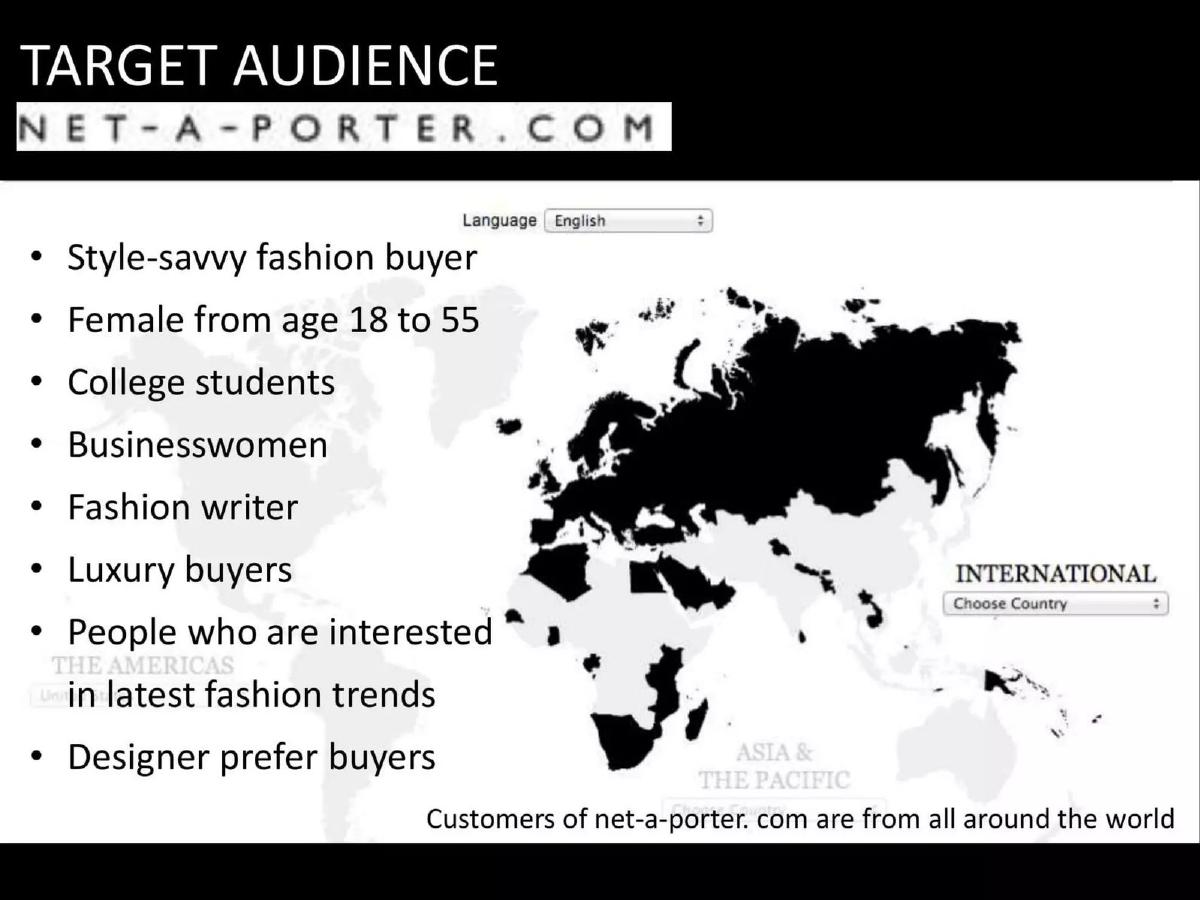
- The deck defines its target audience broadly as females aged 18 to 55, including college students and businesswomen (Slide 3).
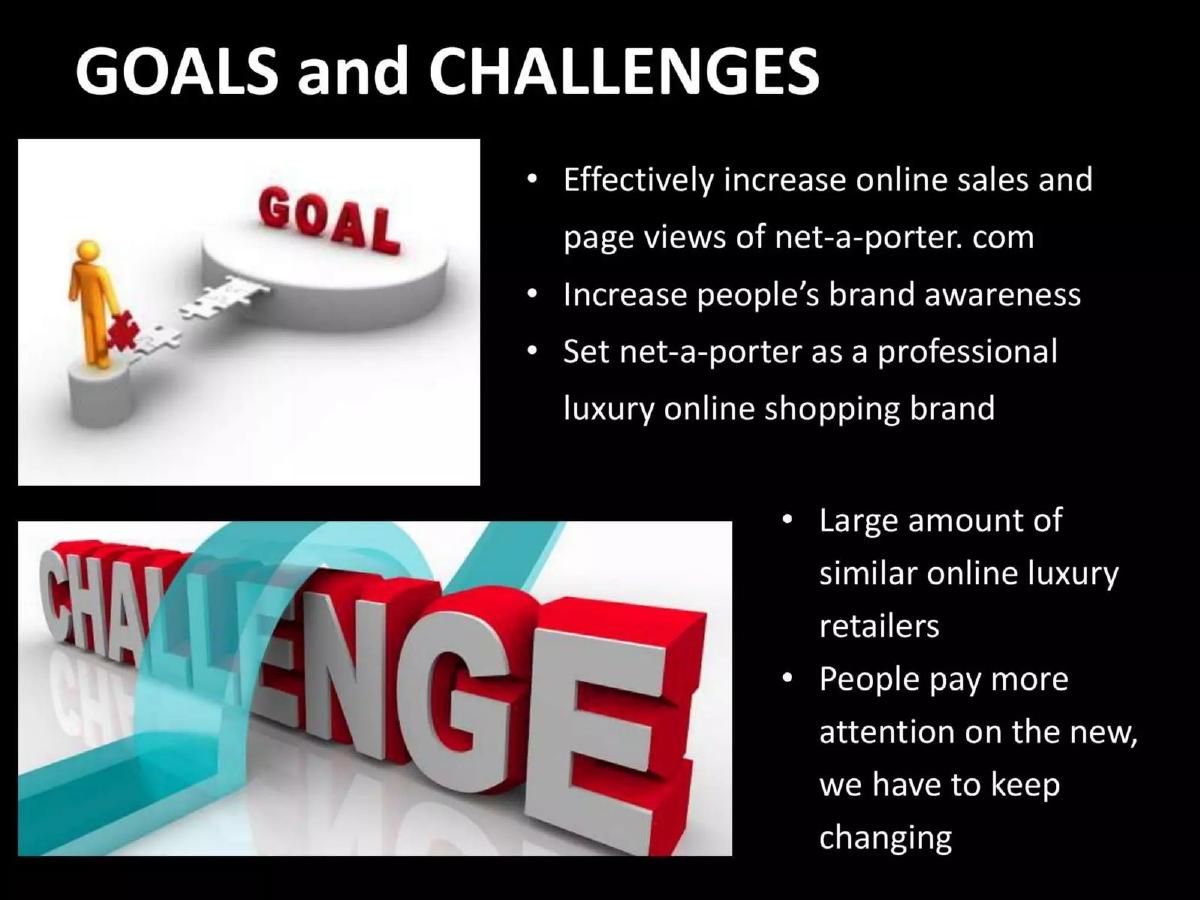
- A primary goal is to establish the brand as a 'professional luxury online shopping brand' to combat the challenge of numerous similar retailers (Slide 4).
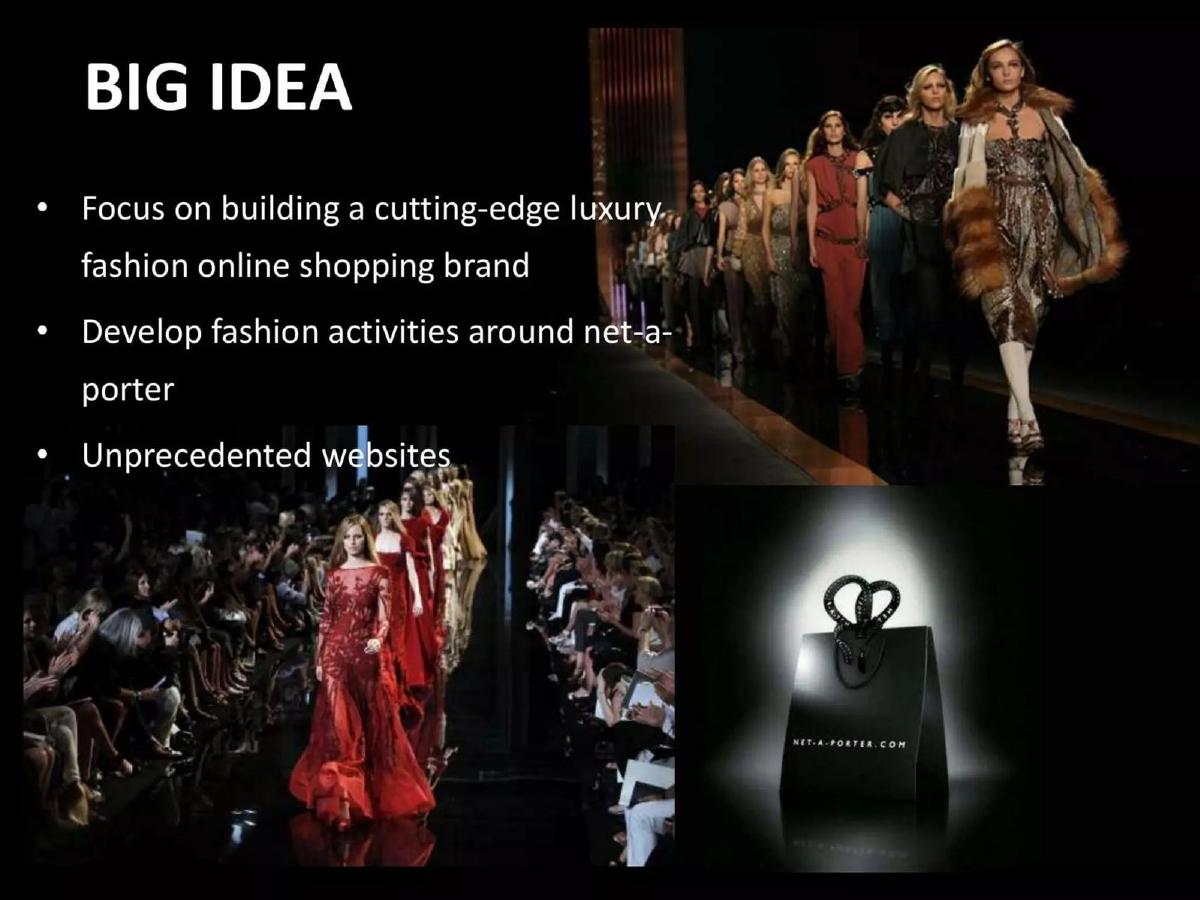
- The 'Big Idea' centers on building a cutting-edge luxury brand through 'unprecedented websites' and fashion activities (Slide 5).
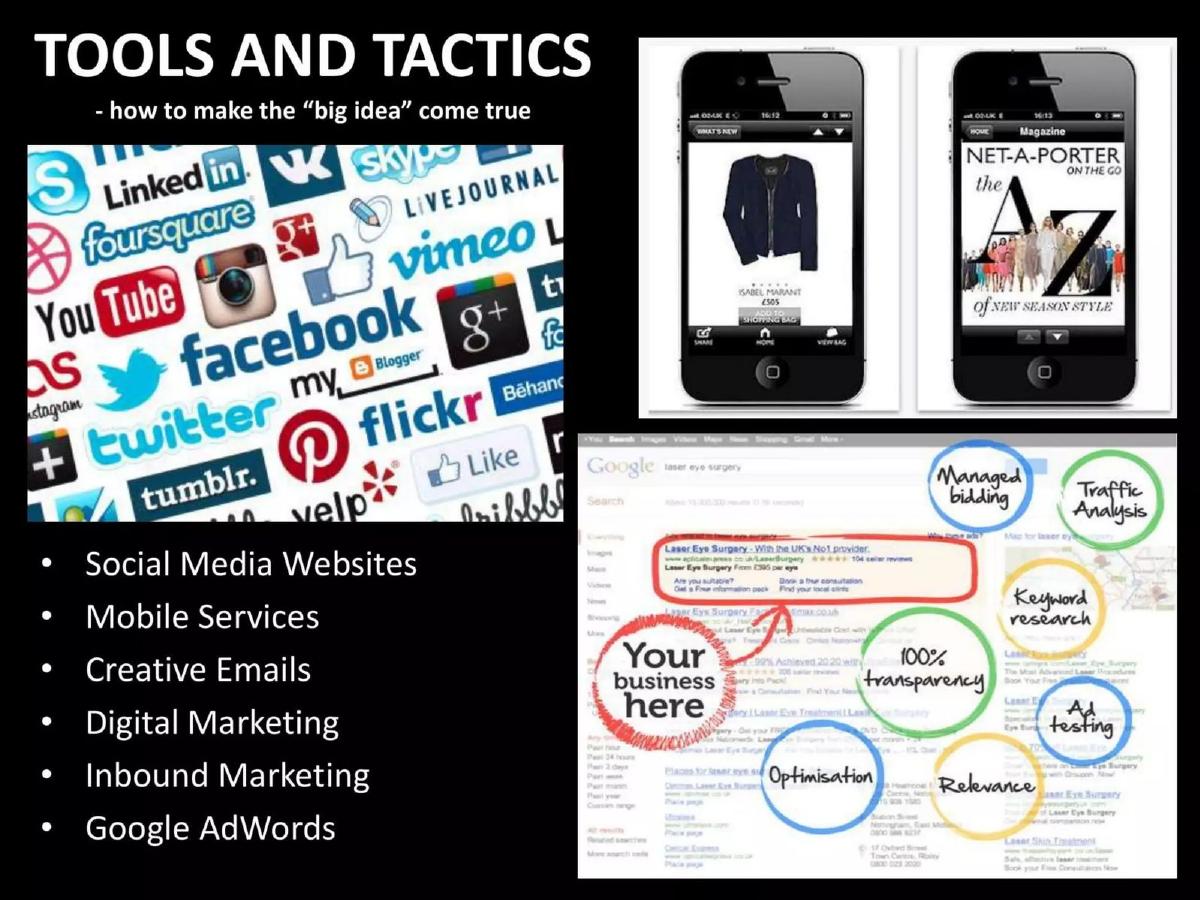
- Marketing tactics are heavily weighted toward social media, mobile services, and Google AdWords (Slide 6).
- The deck highlights a 'Blog Power List' as a core component of its inbound marketing strategy (Slide 7).
- Social proof is demonstrated through screenshots of active Facebook, Twitter, and Pinterest accounts (Slide 8).
- Success is measured by four 'KEP Performance Indicators,' including website traffic flow and social media follower counts (Slide 9).
- The total digital strategy budget is explicitly set at $300,000, with $85,000 (28%) allocated to the website (Slide 10).
Introduction: The Content-Commerce Hybrid
The Net-A-Porter deck is a focused 10-slide presentation that prioritizes brand positioning and digital execution over traditional corporate metrics. Unlike modern decks that lead with a massive Problem/Solution framework, this deck assumes the viability of luxury e-commerce and focuses entirely on the Digital Media Strategy required to win the market. Presented by Xue Kang, the deck serves as a tactical blueprint for how a luxury brand intended to navigate the transition from print-style editorial to a digital-first shopping experience.
Slide 1: Title and Branding
The cover slide is minimalist, featuring the Net-A-Porter logo and a stylized fashion illustration of a woman. The title, Digital Media Strategy , immediately sets the scope of the presentation. It does not claim to be a full business plan, but rather a specific functional strategy. The inclusion of the presenter's name, Xue Kang, suggests this may have been a specialized internal or agency-led proposal rather than a founder-led fundraising deck.
Slide 2: Defining the Brand
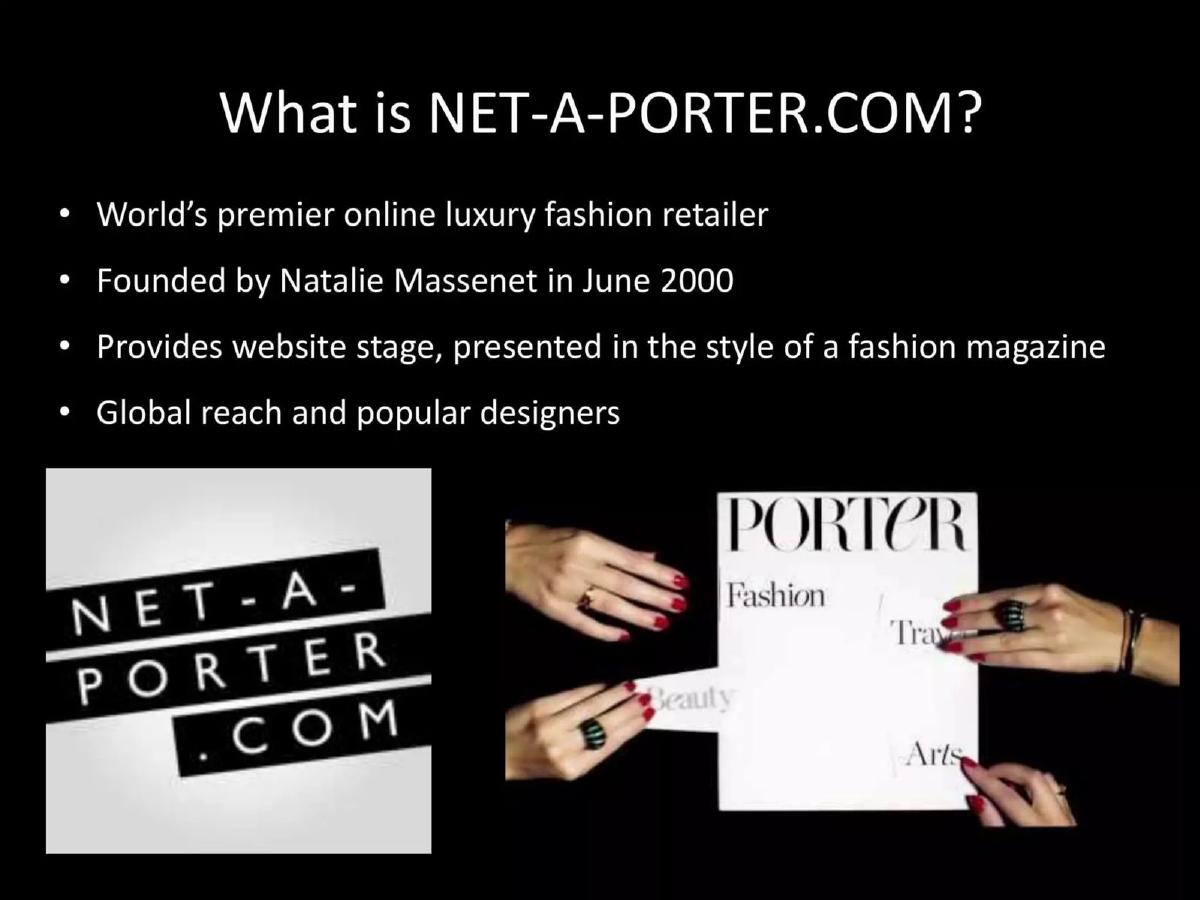
Slide 2 asks, "What is NET-A-PORTER.COM?" and answers with four bullet points. It identifies the company as the "World’s premier online luxury fashion retailer," noting its founding by Natalie Massenet in June 2000. The key differentiator highlighted here is the "website stage, presented in the style of a fashion magazine." This is a critical distinction in the history of e-commerce; Net-A-Porter was a pioneer in treating the storefront as an editorial product. The slide is supported by imagery of the logo and a magazine spread titled "PORTER," reinforcing the physical-to-digital translation of fashion media.
Slide 3: Target Audience Segmentation
The TARGET AUDIENCE slide (Slide 3) is broad. It lists females from age 18 to 55, including college students, businesswomen, fashion writers, and luxury buyers. While modern decks often demand more granular personas, this slide reflects a wide-net approach to the luxury market. A map of the world is included with the text "Customers of net-a-porter.com are from all around the world," though the map itself is a simple black-and-white graphic without specific regional data or penetration metrics.
Slide 4: Strategic Goals and Market Challenges
Slide 4, titled GOALS and CHALLENGES , uses stock-style imagery to illustrate its points. The goals are straightforward: increase online sales and page views, increase brand awareness, and set the brand as a "professional luxury online shopping brand." The challenges section is more revealing, noting a "Large amount of similar online luxury retailers" and the fact that "People pay more attention on the new, we have to keep changing." This acknowledges the high-churn, high-competition nature of the fashion industry.
Slide 5: The Big Idea
The BIG IDEA slide (Slide 5) emphasizes the brand's aspiration to be "cutting-edge." It mentions developing "fashion activities" around the brand and creating "Unprecedented websites." The visuals show runway models and a high-end shopping bag, anchoring the digital strategy in the physical luxury experience. There is no mention of specific technology or proprietary software; the "Big Idea" is purely a branding and positioning play.
Slide 6: Tools and Tactics
Slide 6, TOOLS AND TACTICS , provides a look at the digital landscape of the era. It lists Social Media Websites, Mobile Services, Creative Emails, Digital Marketing, Inbound Marketing, and Google AdWords. The slide is cluttered with logos from the early social era, including Foursquare, Vimeo, and LiveJournal. It also features a screenshot of a Google search result for "Laser Eye Surgery" as an example of AdWords optimization, which is a curious choice for a fashion brand, but it serves to illustrate the mechanic of managed bidding and traffic analysis.
Slide 7: Inbound Marketing and Editorial Influence
Slide 7 focuses on ONLINE MAGAZINES AND BLOGS . It showcases "The BLOG POWER LIST," featuring industry figures like Mickey Boardman and Derek Blasberg. This slide reinforces the company's commitment to the editorial format. By involving "industry experts to select their top ten favorite blogs," Net-A-Porter positions itself as an arbiter of taste rather than just a warehouse for clothes. This is the most effective slide in the deck for demonstrating how the company intends to build authority in the fashion space.
Slide 8: Social Media Presence
Slide 8 provides visual proof of the brand's social footprint across Facebook, Twitter and Pinterest . It shows a Facebook page with "1,240,890 likes" and a Twitter account with "608K followers." The inclusion of Pinterest is notable, as it was a primary driver of visual discovery for fashion at the time. These screenshots serve as the deck's only real form of traction data, showing that the brand already has a significant and engaged audience.
Slide 9: Measuring Success
Slide 9 covers KEP PERFORMANCE INDICATORS (likely a typo for KPI). The metrics listed are: number of people visited, website traffic flow, customer feedback, and the number of followers. This is a very top-of-funnel view of success. There is no mention of conversion rates, repeat purchase rates, or lifetime value (LTV), which would be standard for an e-commerce business today.
Slide 10: The Budget
The final slide, BUDGET , is the most concrete. It presents a 3D pie chart totaling $300,000. The breakdown is: Website ($85,000) , Social Media ($65,000) , Google AdWords ($60,000) , Email Marketing ($60,000) , and Mobile Marketing ($30,000) . This slide provides a clear view of where the company believes the highest ROI lies, with the website and social media taking up 50% of the total spend.
What Works in This Deck
The deck is highly focused. It does not try to explain the entire business model of Net-A-Porter; instead, it sticks strictly to the digital marketing strategy. The use of high-quality fashion imagery (Slides 5 and 7) helps maintain the luxury aesthetic of the brand, which is essential for this sector. The budget slide (Slide 10) is a strong finish because it moves from abstract ideas to a concrete financial plan, giving the reader a clear sense of the scale and priorities of the proposed activities.
What Is Missing
As a fundraising tool, this deck has significant gaps. There is no Team Slide , which is usually the most important factor for investors. There is no Competitive Landscape analysis beyond a brief mention of "similar retailers" on Slide 4. Most importantly, there are no Financial Projections or sustainability metrics. We see how they will spend $300,000, but we don't see what kind of revenue that spend is expected to generate. The deck also lacks a clear Ask —it doesn't state what it wants from the viewer (e.g., investment, approval, or a partnership).
What a Founder Should Copy
Founders should emulate the Editorial Integration shown on Slide 7. Net-A-Porter understood that in a commodity market (selling clothes other people also sell), the only way to win is through a unique voice and curated content. The way they leveraged industry experts to build a "Power List" is a masterclass in inbound marketing. Additionally, the Budget Transparency on Slide 10 is a good practice; even if the numbers are small, showing exactly how you will allocate capital demonstrates a level of operational maturity that many early-stage founders lack.
Conclusion
The Net-A-Porter Digital Media Strategy deck is a relic of a time when luxury was just beginning to take the internet seriously. While it lacks the data-heavy rigor of modern D2C (Direct-to-Consumer) decks, it perfectly captures the "Content is King" philosophy that allowed Net-A-Porter to dominate the high-end retail space for over a decade. It is a reminder that in luxury, brand perception and editorial authority are often just as important as the underlying technology.
Frequently asked questions
- Is this a standard seed round pitch deck?
- No. This deck is specifically titled 'Digital Media Strategy' and functions as a tactical marketing plan rather than a comprehensive business pitch. It lacks essential venture capital components like a founder team slide, a clear 'ask' for equity, and a detailed competitive analysis. It is best viewed as a strategic roadmap for brand positioning and customer acquisition within the luxury e-commerce sector.
- How does Net-A-Porter define its competitive advantage?
- According to Slide 2 and Slide 5, the company differentiates itself by presenting its website in the style of a fashion magazine. This 'content and commerce' hybrid is described as an 'unprecedented' approach to luxury retail. The deck suggests that by blending editorial content with shopping, they can overcome the challenge of a crowded market filled with 'similar online luxury retailers' (Slide 4).
- What are the specific budget allocations mentioned?
- Slide 10 provides a precise breakdown of a $300,000 budget. The largest portion, $85,000 (28%), is dedicated to the website itself. Social Media is allocated $65,000 (22%), while Google AdWords and Email Marketing each receive $60,000 (20%). The smallest allocation is $30,000 (10%) for Mobile Marketing, reflecting the digital landscape at the time of the deck's creation.
- What metrics does the company use to define success?
- The deck lists four 'KEP Performance Indicators' on Slide 9: the number of visitors, website traffic flow, customer feedback, and the number of followers on social networking sites. Notably, it does not list revenue, average order value (AOV), or customer acquisition cost (CAC), which are standard metrics for modern e-commerce teardowns.
- Who is the intended audience for this specific deck?
- Given the focus on 'Digital Media Strategy' and the specific $300,000 budget breakdown, this deck was likely intended for internal stakeholders or a specific marketing partner rather than a traditional VC. It focuses on the 'how' of brand growth through digital channels rather than the 'why' of the company's overall financial valuation.