Nen’s 14-slide pitch deck focuses on a highly specific and underserved niche: pediatric oncology pain management. The company leverages Cognitive Behavioral Therapy (CBT) delivered through a gamified mobile interface to help children aged 2-17 modulate pain. The deck is notable for its clear regulatory and commercial roadmap, transitioning from a B2C patient support tool to a fully reimbursed prescription digital therapeutic (PDT). While the competitive landscape slide is left blank, the team slide highlights deep pharmaceutical and digital health expertise, including a founder who served as…
Key takeaways
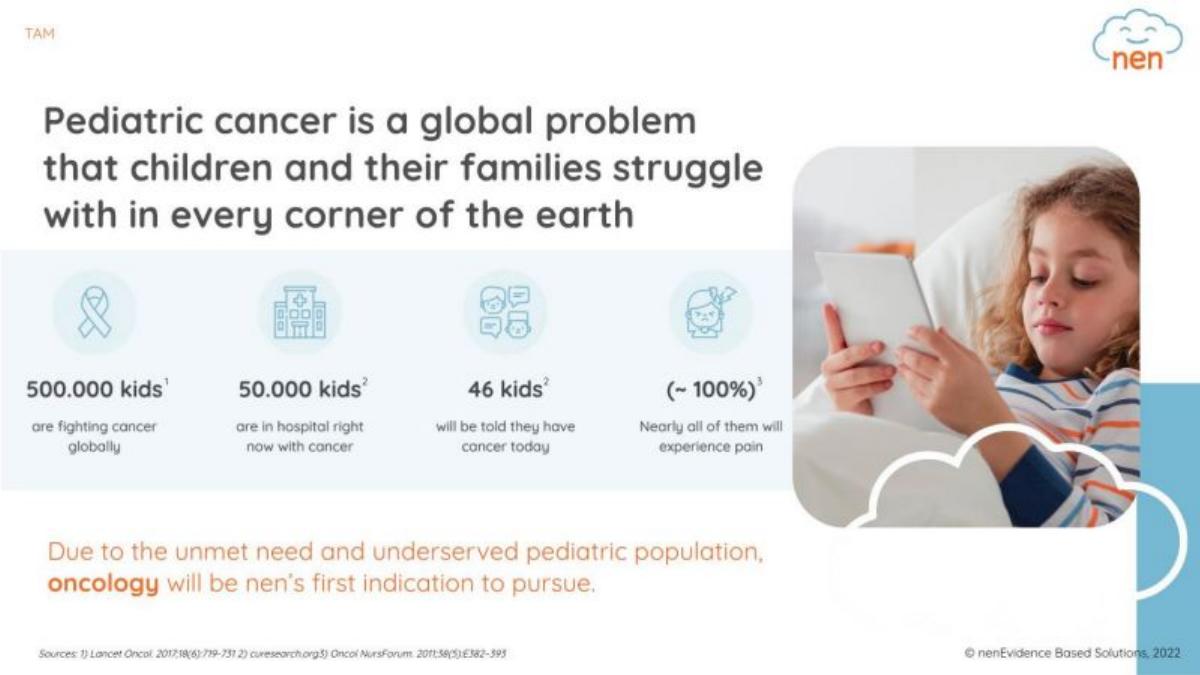
- The startup targets a global population of 500,000 children fighting cancer, nearly 100% of whom experience pain (Slide 3).
- Nen identifies a gap in current care where 74% of children prefer technological pain assessment platforms over traditional scales (Slide 4).
- The product combines gamification with age-appropriate CBT modules to assess and treat pain (Slide 7).
- A dedicated Parents Portal provides health reporting, mood tracking, and a clinical trial finder (Slide 8).
- The business model evolves through four stages: B2C support tool, B2B digital medicine platform, Rx standalone PDT, and expansion into other chronic pain indications (Slide 9).
- The competitive landscape slide (Slide 10) is entirely blank, omitting specific names of rival firms or alternative therapies.
- The funding ask is €3-5M via a convertible note to support MVP development and clinical trials (Slide 11).
- The roadmap explicitly targets an 'EXIT' as the final milestone following geographic expansion and DTx reimbursement (Slide 11).
Executive Summary and Mission
Slide 1: Title Slide
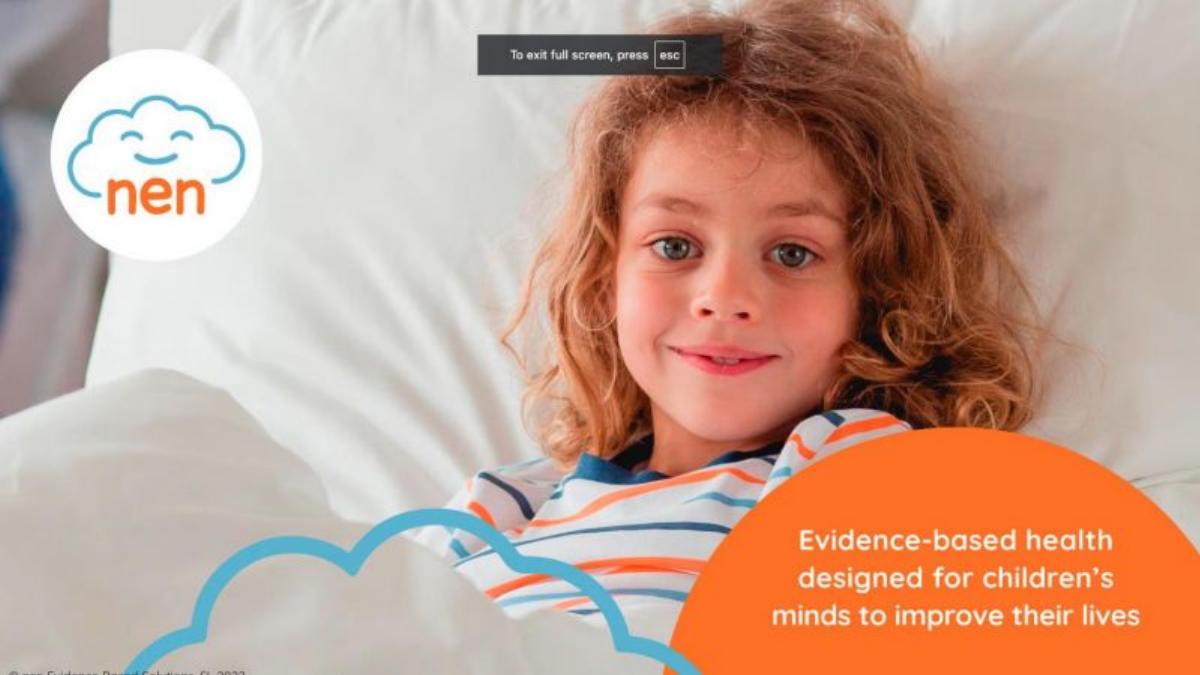
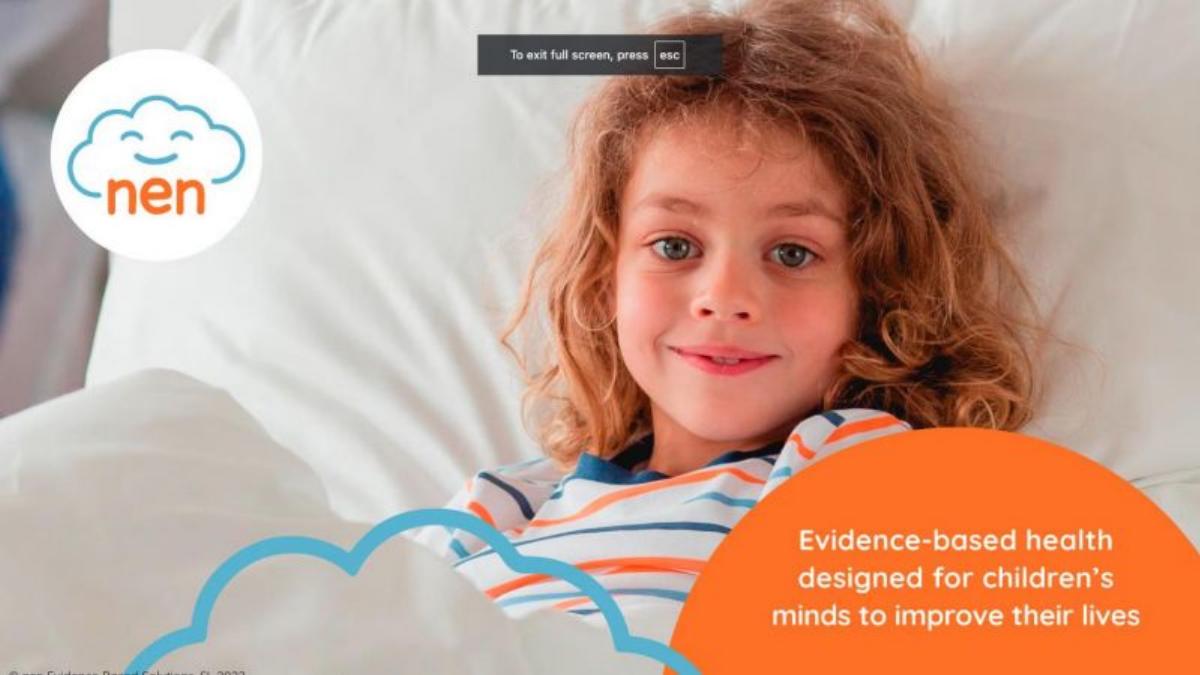
The deck opens with a high-resolution image of a child in a hospital setting, establishing the emotional and clinical context immediately. The tagline, "Evidence-based health designed for children's minds to improve their lives," emphasizes the scientific foundation of the product. The branding is soft, using a cloud logo with a smiling face, signaling a child-friendly approach.
Slide 2: The Mission
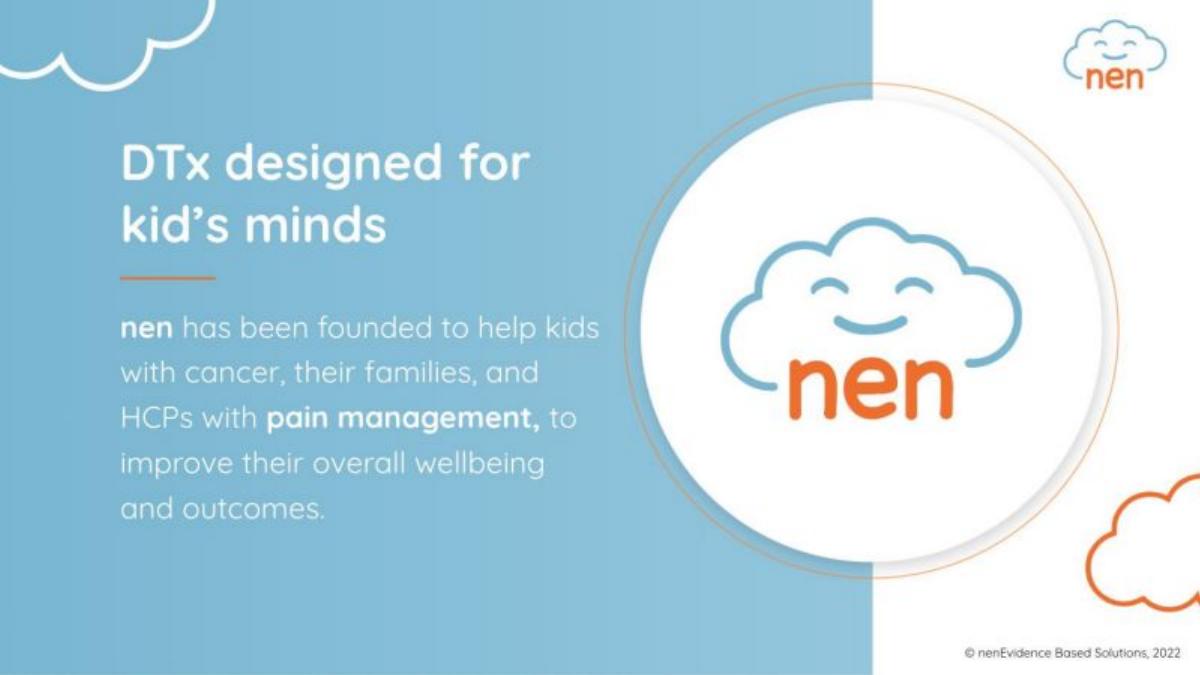
Slide 2 defines Nen as a Digital Therapeutic (DTx) company. It states the company was founded to help kids with cancer, their families, and healthcare providers (HCPs) with pain management . The slide explicitly links pain management to improved overall wellbeing and clinical outcomes, setting the stage for a medical rather than purely wellness-based pitch.
The Problem and Market Opportunity
Slide 3: Total Addressable Market (TAM)
This slide quantifies the crisis in pediatric oncology. It cites four key statistics: 500,000 kids fighting cancer globally, 50,000 kids currently in hospitals, 46 new diagnoses per day, and the fact that nearly 100% of these children will experience pain. The slide notes that oncology is the first indication Nen will pursue due to the "unmet need and underserved pediatric population." Sources from Lancet Oncology and CureSearch are cited to validate these figures.
Slide 4: The Failure of Traditional Approaches
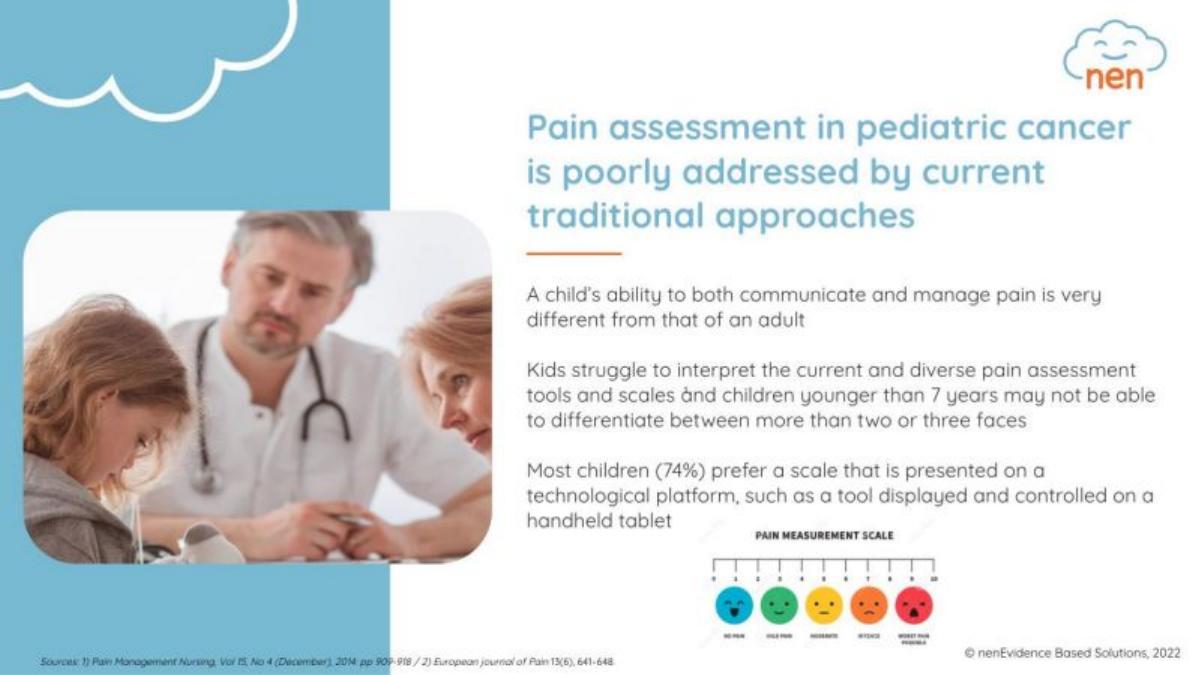
Nen argues that current pain assessment in pediatric cancer is "poorly addressed." The slide highlights that children under 7 years old struggle to differentiate between more than two or three faces on traditional pain scales. Crucially, it notes that 74% of children prefer a technological platform for pain assessment. This slide identifies the specific friction point: the communication gap between a suffering child and a clinical assessment tool.
Slide 5: The Need for Novel Approaches
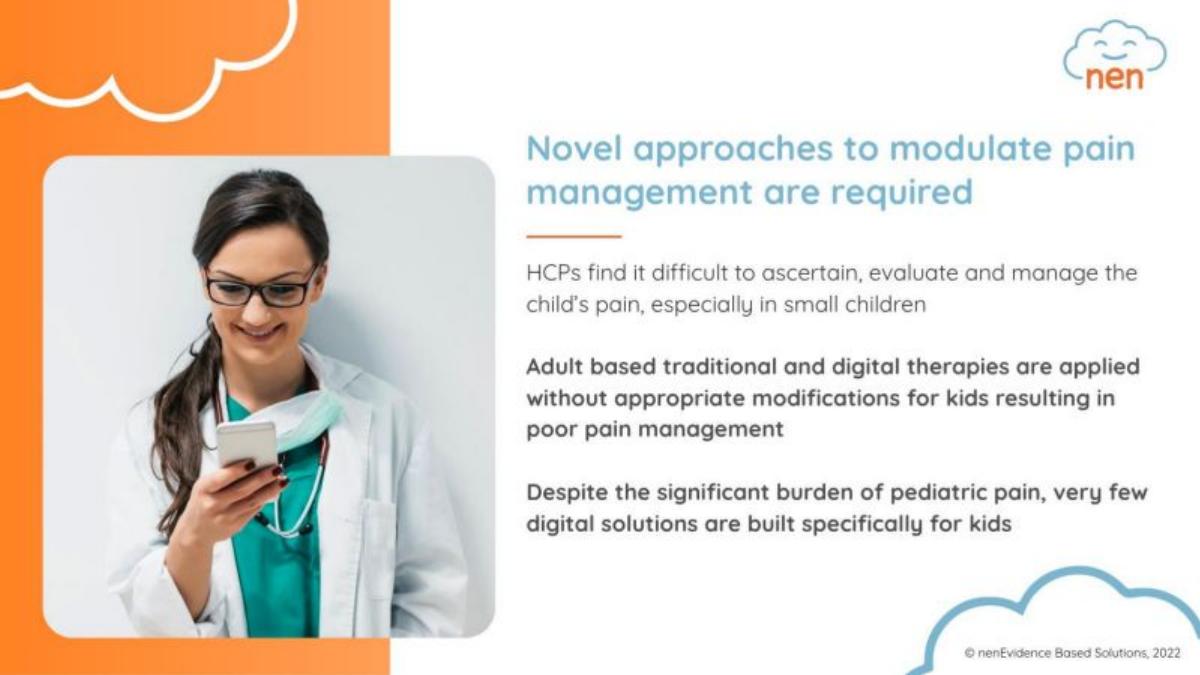
This slide shifts the focus to healthcare providers (HCPs). It claims that HCPs find it difficult to evaluate pain in small children because adult-based traditional and digital therapies are applied without appropriate modifications. The core thesis is that the lack of kid-specific digital solutions results in a significant burden of pediatric pain that remains unmanaged.
The Solution and Product
Slide 6: Who We Are
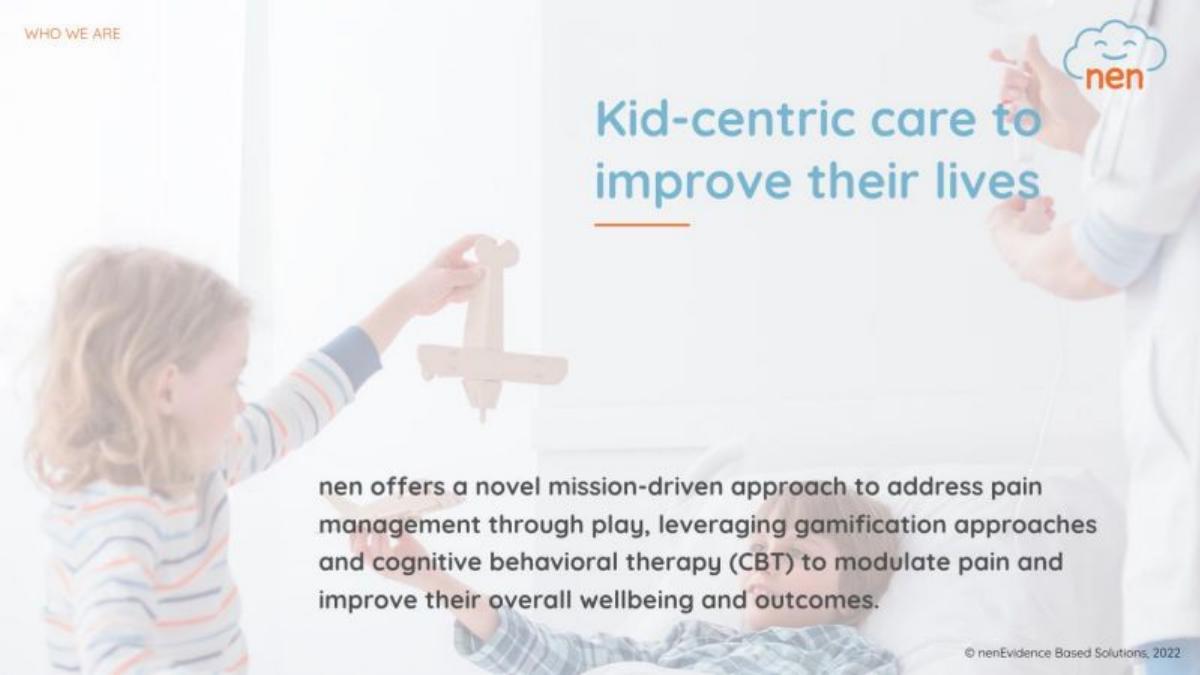
Nen introduces its "novel mission-driven approach" which centers on "pain management through play." The slide mentions the two pillars of their intervention: gamification and Cognitive Behavioral Therapy (CBT). The goal is to modulate pain and improve outcomes through a kid-centric care model.
Slide 7: Pain Management with Nen
This slide provides the first look at the product interface. It shows a smartphone screen with a colorful, animated forest environment and diverse avatars. The slide explains that the gamified approach assesses and treats children while offering continuous feedback. It mentions specific modules: "Dolores" for pain management and "Sara and Tony" for mental health and wellbeing. The use of chemical structures (dopamine and serotonin) next to these names suggests a biological basis for the psychological intervention.
Slide 8: Parents Portal
Recognizing that parents are key stakeholders, Nen includes a dedicated portal. This functionality provides health reporting to HCPs, mindfulness tools, community support, and a clinical trial finder. Data from the child's game journey is sent to the portal so parents can track mood and pain status, allowing them to alert medical teams if the pain worsens.
Business Strategy and Competition
Slide 9: Business Model and Expansion
Nen presents a four-stage roadmap. B2C: A patient support tool for advocacy groups, designed for GDPR/HIPAA compliance. B2B: A digital medicine platform involving research collaborations and enterprise-wide agreements. Rx: A standalone Prescription Digital Therapeutic (PDT) seeking reimbursement through payor systems. Expansion: Moving into other chronic pain indications and broadening the target age range from the initial 2-7 to 8-13 and 14-17.
Slide 10: Competitive Landscape
This slide is titled "Landscape demonstrates no direct competitors to nen." However, the slide itself is functionally empty. It lists categories such as "Patient Support," "Symptom Tracker," and "DTx" across the top, but no company names or logos are populated in the grid. This is a notable omission that leaves the investor to guess who the indirect competitors might be.
Financials and Team
Slide 11: Use of Proceeds
The company is seeking a €3-5M convertible note for seed funding. The primary use is for MVP development and clinical evaluation. The slide features a linear timeline of eight milestones: 1) MVP/Beta testing, 2) Patient Centric Design, 3) Initial research collaboration, 4) Patient Advocacy partnership, 5) First Commercial enterprise deal, 6) Geographic expansion, 7) Reimbursement of DTx, and 8) EXIT. Explicitly stating an "EXIT" as the final milestone is a direct signal to VC investors regarding the intended liquidity event.
Slide 12: The Team
The leadership consists of two primary executives. Francesca Domenech Wuttke, PhD (Founder and CEO): A former Chief Digital Officer and pharmaceutical executive with 25 years of experience, including roles in digital health VC. Xènia Riasol Cercós (COO): An expert in launching DTx across Europe and deploying digital strategy. The slide also includes "Doggos" as Chief Comfort Officers, a common culture-building element in modern decks, though it takes up a significant portion of the slide.
Slide 13: Contact Slide
The final slide repeats the tagline and provides direct email addresses for the CEO and COO, set against a background image of a child using a tablet in a hospital bed.
What Nen Does Well
Nen excels at defining a clear, clinical "why." By focusing on the specific inability of children under 7 to use traditional pain scales, they identify a high-value problem that is easily understood by both clinicians and investors. The transition from a B2C support tool to a reimbursed Rx product shows a sophisticated understanding of the digital health landscape. The founder's background as a Chief Digital Officer in pharma provides significant credibility for navigating the complex regulatory and reimbursement hurdles required for a PDT.
What Is Missing from the Deck
The most glaring omission is the competitive analysis on Slide 10. Leaving a landscape slide blank is a missed opportunity to show how Nen differs from general pediatric apps or adult-focused pain management platforms like Hinge Health or Kaia Health. Furthermore, while the deck mentions "clinical evaluation," it does not provide any preliminary data or pilot results to prove the gamified CBT actually reduces pain scores in their target demographic. Finally, the deck lacks a detailed breakdown of the €3-5M spend; it lists milestones but does not allocate specific amounts to R&D, clinical trials, or headcount.
Founder Lessons: What to Copy
Founders should emulate Nen's use of a phased business model (Slide 9). Many DTx startups fail because they aim for reimbursement on day one; Nen's strategy of starting with B2C advocacy groups to build a user base and clinical evidence before moving to the Rx model is a lower-risk path to market. Additionally, the clear link between the product features (gamified CBT) and the biological outcome (pain modulation) helps bridge the gap between a "game" and a "medical device." The inclusion of a Parents Portal is also a smart move, acknowledging that in pediatric health, the user (the child) and the buyer/decision-maker (the parent/HCP) are different entities.
Frequently asked questions
- What is the primary problem Nen is solving?
- Nen addresses the 'unmet need and underserved pediatric population' in oncology pain management. According to Slide 3, 500,000 children globally fight cancer, and nearly all experience pain. Slide 4 notes that traditional pain assessment tools are poorly suited for children, especially those under age 7 who cannot differentiate between complex pain scales, leading to poor pain management outcomes.
- How does the product actually work for the child?
- The product is a web-based platform for smartphones and tablets that uses 'treatment through play.' As shown on Slide 7, it utilizes a gamified interface to assess and treat pain while providing continuous feedback. It incorporates age-appropriate Cognitive Behavioral Therapy (CBT) modules designed to be engaging, helping children modulate their pain through psychological techniques delivered via a game journey.
- What is Nen's go-to-market strategy?
- Nen employs a phased approach detailed on Slide 9. It begins with a B2C model targeting patient advocacy groups and parent lobby groups. It then moves to a B2B model involving research collaborations with academic institutions to generate clinical evidence. The final phase is 'Rx,' where the product is registered as Software as a Medical Device (SaMD) to seek reimbursement as a standalone prescription digital therapeutic.
- Who are the competitors in this space?
- Slide 10, titled 'Landscape demonstrates no direct competitors to nen,' is left completely blank in the provided deck. While it lists categories like 'Patient Support,' 'Symptom Tracker,' and 'DTx,' it does not name any specific companies. This is a significant omission, as investors generally expect to see how a startup differentiates itself from existing digital health or pediatric care providers.
- What are the specific milestones for the Seed funding?
- The €3-5M convertible note is intended to fund eight specific milestones listed on Slide 11. These include MVP/Beta testing, patient-centric design, initial research collaborations, a patient advocacy partnership, the first commercial enterprise-wide deal, geographic expansion, reimbursement of the DTx, and finally, an exit. The primary focus for this round is the development and clinical evaluation of pain and mental health modules.