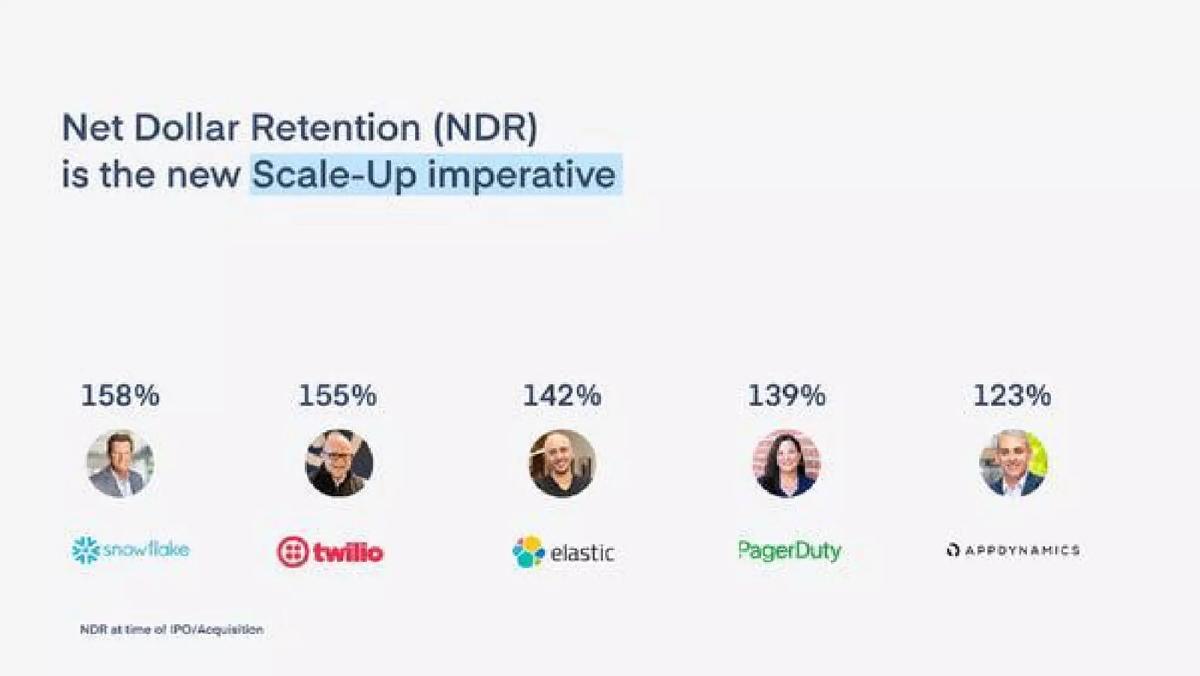
Paddle’s 14-slide deck is less of a traditional pitch and more of a strategic narrative designed to elevate the company from a 'payments tool' to a 'Revenue Delivery Platform.' The deck focuses heavily on Net Dollar Retention (NDR) as the primary metric for SaaS success, citing high-performing public companies like Snowflake (158%) and Twilio (155%) on Slide 3. It identifies a gap in the market, arguing that while hosting (AWS) and CRM (HubSpot) are 'growth-ready,' revenue infrastructure remains a 'chaos' of fragmented apps (Slide 6). The deck uses case studies from Kaleido and Framer to demo…
Key takeaways
- The deck anchors its entire value proposition on Net Dollar Retention (NDR), calling it the 'new Scale-Up imperative' on Slide 3.
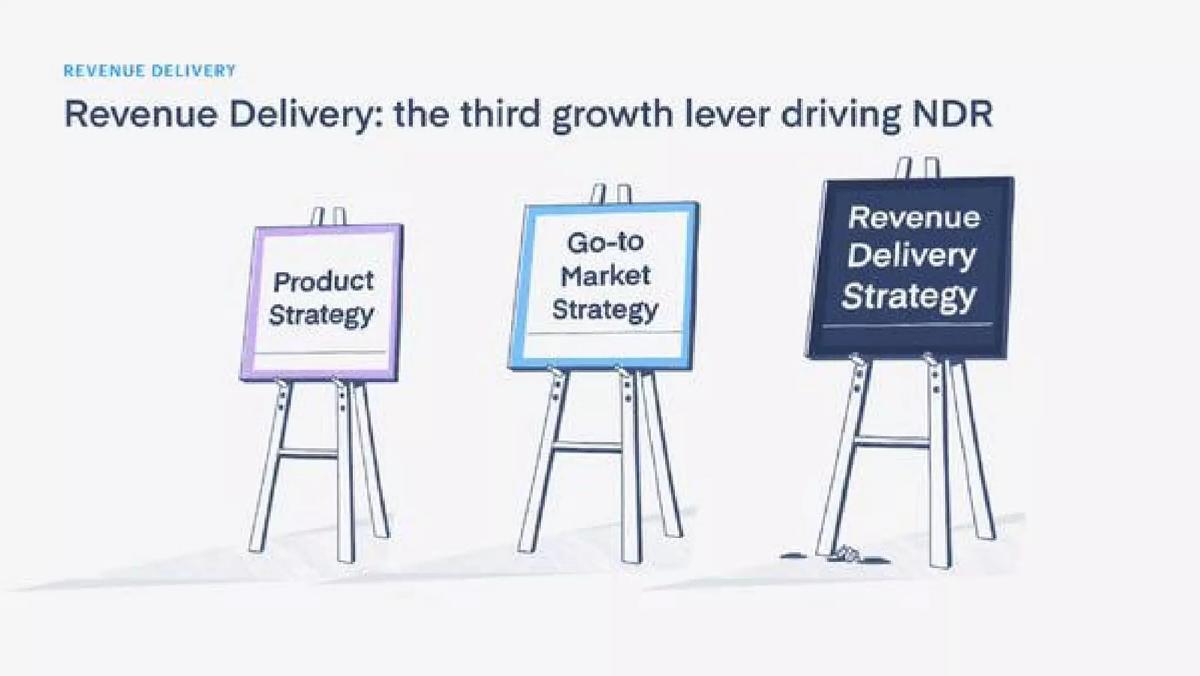
- It positions 'Revenue Delivery' as the third critical growth lever alongside Product and Go-to-Market strategies (Slide 4).
- The 'chaos' of fragmented payments apps is visualized on Slide 7 as a primary blocker to scaling.
- Paddle defines a 'Growth-Ready' platform through six specific requirements, including global compliance and data-driven decision making (Slide 10).
- A case study for Kaleido shows the platform enabled a launch to 42,000 customers in 181 countries within 18 months (Slide 11).
- The Framer case study highlights a transition from $15/month licenses to $100,000+ enterprise deals enabled by Paddle's invoicing (Slide 12).
- The product is presented as four core 'engines': Checkout, Invoice, Subscribe, and Comply (Slide 13).
- The deck completely omits a team slide, competition slide, and a specific dollar amount for the 'ask.'
The Strategic Narrative of Revenue Delivery
Paddle’s pitch deck is a masterclass in category creation. Rather than leading with features or a standard 'problem/solution' format, it builds a narrative around a single, high-stakes metric: Net Dollar Retention (NDR). This deck is designed to convince investors that Paddle is not just a payments company, but a fundamental piece of the SaaS growth stack, on par with AWS for hosting or HubSpot for CRM.
The NDR Imperative (Slides 1-3)
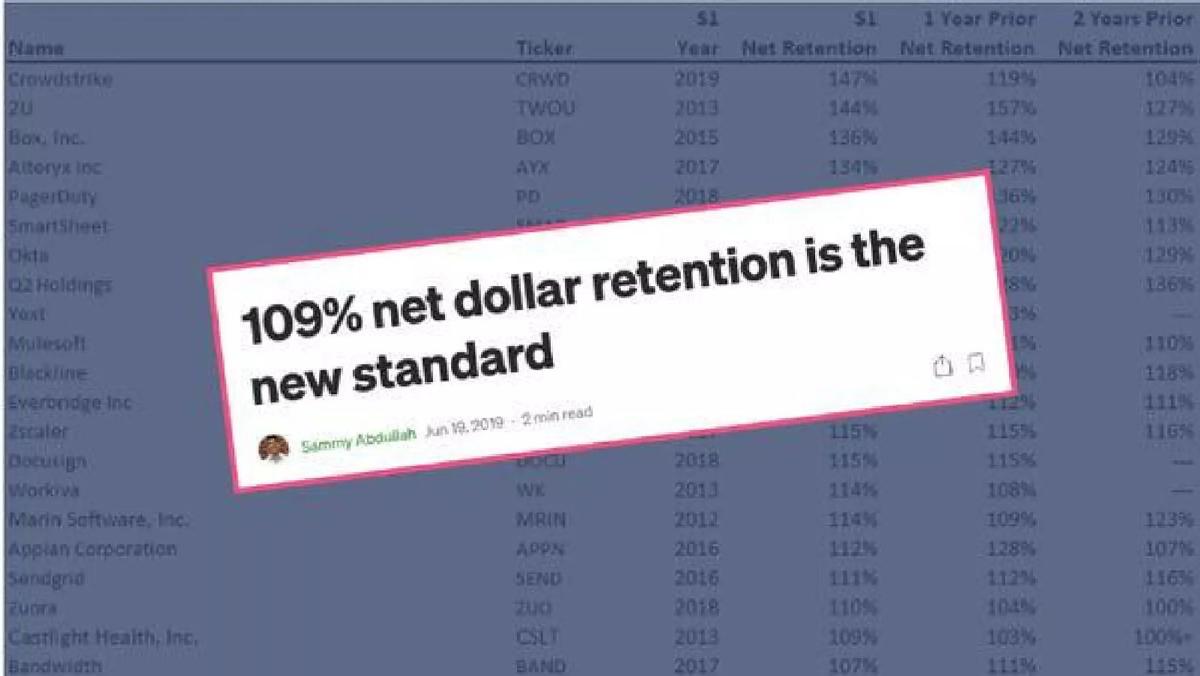
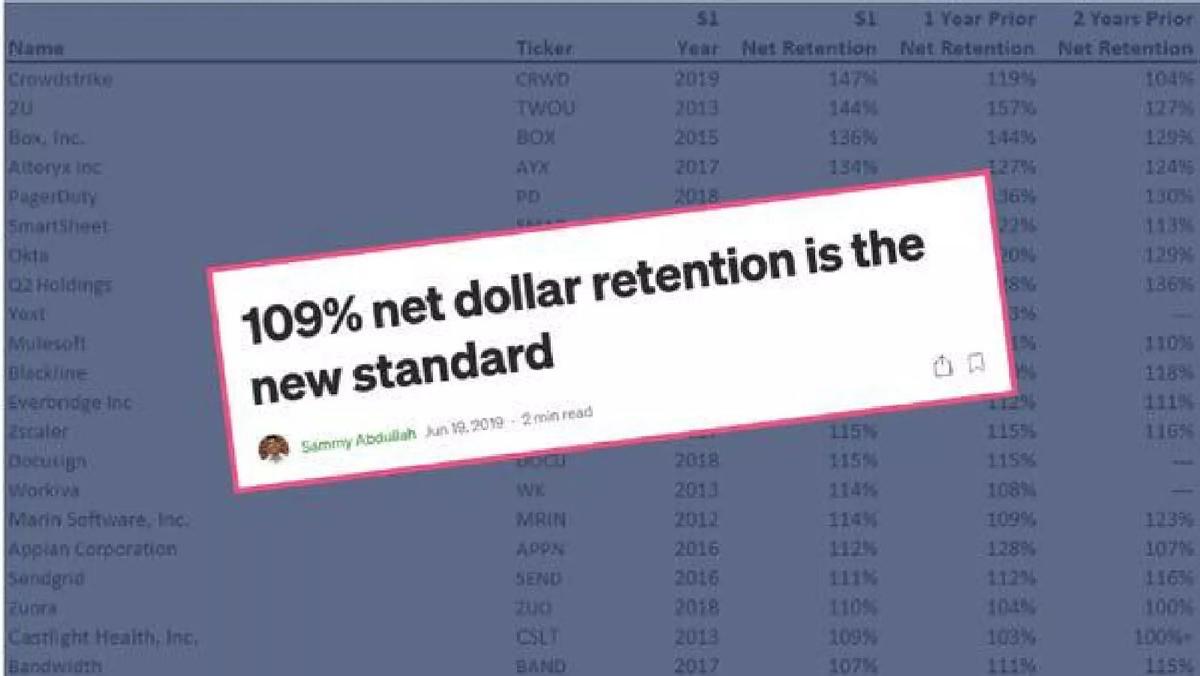
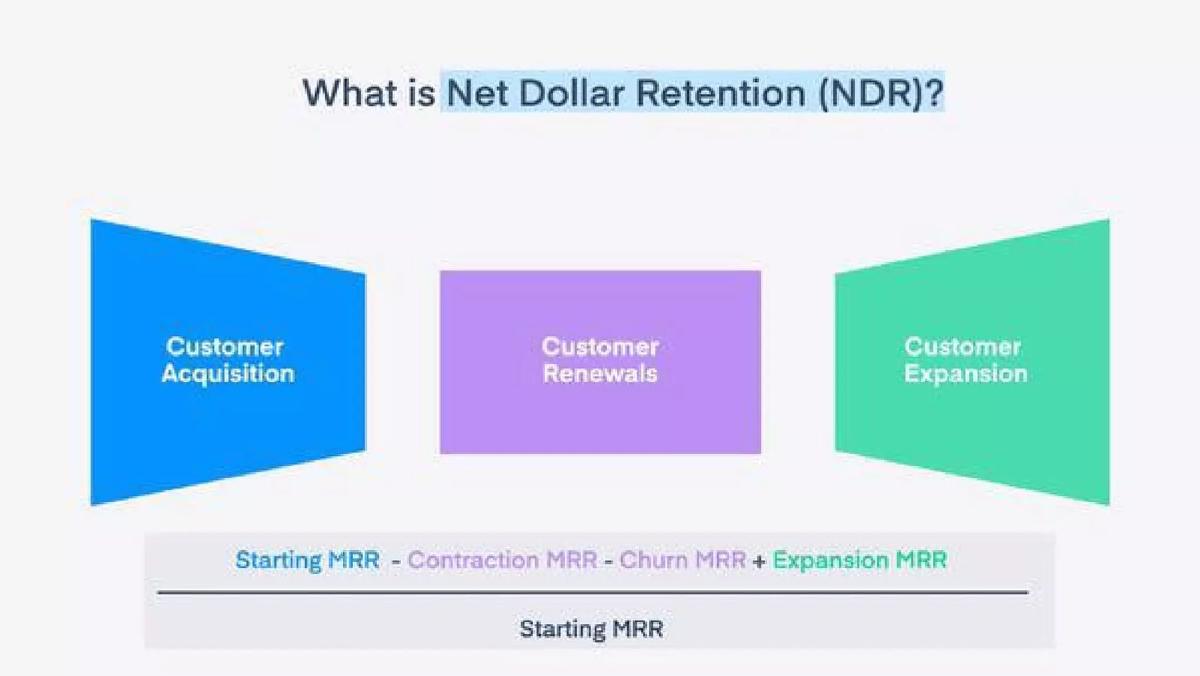
The deck opens by setting the stage with a macro-trend. Slide 1 uses a headline from an article stating that '109% net dollar retention is the new standard.' This immediately grounds the pitch in the current reality of SaaS valuations, where retention and expansion are more valuable than raw acquisition. Slide 2 provides a primer on NDR, defining it through a visual formula: Starting MRR minus contraction and churn, plus expansion. This ensures the investor is aligned on the terminology before the 'hook' on Slide 3 . Here, Paddle lists the NDRs of top-tier public companies at the time of their IPO: Snowflake (158%), Twilio (155%), Elastic (142%), PagerDuty (139%), and AppDynamics (123%). By associating themselves with these 'Scale-Up' success stories, Paddle subtly suggests that their platform is the engine that makes these numbers possible.
The Third Growth Lever (Slides 4-7)
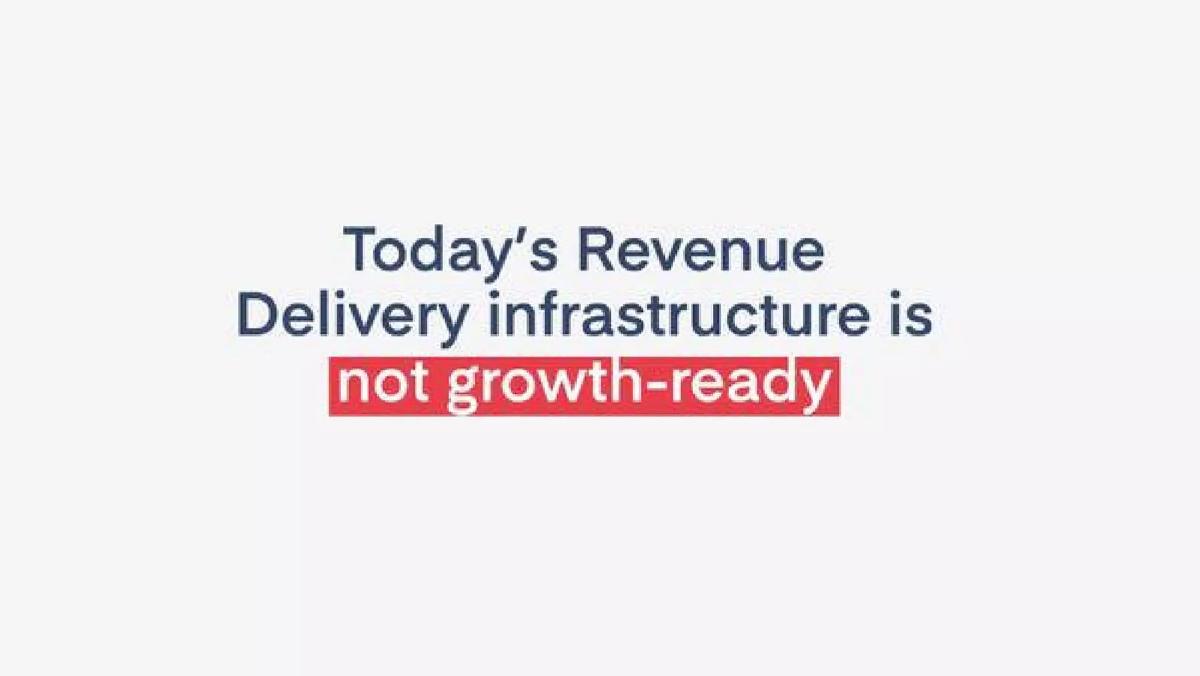
Slide 4 introduces the core thesis of the deck: 'Revenue Delivery' is the third growth lever driving NDR, alongside Product Strategy and Go-to-Market Strategy. This is a bold claim, elevating payments and billing from a back-office function to a primary strategic pillar. Slide 5 and Slide 6 contrast the maturity of other infrastructure categories with the 'chaos' of revenue. They show that while companies have 'Growth-Ready' hosting (AWS) and 'Growth-Ready' GTM infrastructure (HubSpot), their revenue delivery is 'not growth-ready.' Slide 7 visualizes this 'chaos' as a tangled mess of silos, integrations, and fragmented tools for currencies, billing engines, and tax compliance. The message is clear: the current way of doing things is a drain on resources and a barrier to scaling.
Defining the Solution (Slides 8-10)
Having established the chaos, Slide 8 introduces the 'Revenue Delivery Platform' as the necessary strategic response. It promises four key outcomes: activating new business models instantly, entering new markets with ease, turning on new offerings with one click, and making renewals friction-free. Slide 9 expands on this with 'The 6 Requirements' of a growth-ready platform, including 'All-in-One NDR Optimization,' 'Global Day One,' and 'Never Break the Law' (referring to tax and data compliance). This slide serves as a checklist that conveniently only Paddle can fulfill. Slide 10 reinforces this framework, positioning the platform as the bridge to a 'Growth-Ready' future.
Proof Points: Kaleido and Framer (Slides 11-12)
The deck moves from theory to practice with two high-impact case studies. Slide 11 features Kaleido (remove.bg), which used Paddle to launch to 42,000 customers in 181 countries in just 18 months. This highlights the 'Global Day One' requirement. Slide 12 features Framer, showing how the platform enabled them to move from $15/month self-serve licenses to $100,000+ enterprise deals via Paddle’s invoicing capabilities. This addresses the 'Friction-Free Scale' requirement. These case studies are critical because they show the platform solving two very different, but equally common, SaaS growth challenges.
The Product and Vision (Slides 13-14)
Slide 13 finally shows the product architecture, though it remains high-level. It depicts the 'Paddle Revenue Delivery Platform' as a central hub connected to four engines: Checkout (self-serve), Invoice (sales-assisted), Subscribe (recurring billing), and Comply (tax and data). It also mentions the 'Paddle Global Finance Team' and 'Paddle Global Support Team,' emphasizing that this is a managed service, not just software. The final slide, Slide 14 , reiterates the brand promise: 'The Revenue Delivery Platform for a growth-ready future.'
What Works in This Deck
Category Creation: By naming the category 'Revenue Delivery,' Paddle avoids being compared to 'payment gateways' like Stripe. They are selling a result (revenue), not a tool (payments). · Metric-Driven Narrative: Anchoring the entire pitch on NDR is brilliant. It speaks the language of late-stage VCs and aligns the company's success with the most important metric in SaaS. · Visualizing the 'Chaos': Slide 7 is a highly effective way to trigger 'problem awareness' in an investor. Most SaaS founders have felt the pain of managing a fragmented billing stack, and this slide validates that pain. · Strategic Case Studies: Instead of a long list of logos, they focus on two deep stories that cover the two main ways SaaS companies grow: geographic expansion and moving upmarket.
What Is Missing
The Team: There is no team slide in this deck. For a company that raised nearly $300M, the leadership's pedigree is a major asset that is surprisingly absent here. · Competition: While they visualize 'chaos,' they never explicitly address how they differ from major players like Stripe, Adyen, or legacy ERPs. · Financials and Traction: The deck contains no revenue figures, growth rates, or unit economics for Paddle itself. It relies entirely on the NDR of other companies to imply its own value. · The Ask: There is no slide detailing how much they are raising or what the funds will be used for. This suggests the deck was used as a teaser or as part of a larger data room.
What a Founder Should Copy
The 'Third Lever' Framework: If you are building infrastructure, try to position your product as a 'third pillar' alongside existing, undisputed categories like CRM or Cloud Hosting. · External Benchmarking: Use the performance of public companies (like the NDR slide) to set the 'standard' that your product helps customers achieve. · Outcome-Based Headlines: Notice that almost every slide headline is a statement of value ('Revenue delivery chaos is holding back scale-up') rather than a label ('Our Product'). · The 'Chaos' Slide: If you are replacing a fragmented workflow, create a visual representation of that mess. It is often more persuasive than a list of features.
Frequently asked questions
- Why does the deck focus so much on Net Dollar Retention (NDR)?
- For a B2B SaaS audience, NDR is the ultimate health metric. By linking their 'Revenue Delivery' platform directly to NDR, Paddle moves from being a commodity payment processor to a strategic partner. They argue that by reducing friction in renewals and expansions, they directly increase the enterprise value of their customers, as seen in the high NDRs of companies like Snowflake and Twilio cited on Slide 3.
- What is the 'Revenue Delivery' category Paddle is trying to create?
- Paddle uses this deck to move away from the 'Merchant of Record' label and toward 'Revenue Delivery.' This category encompasses checkout, invoicing, subscription management, and tax compliance. By framing it as a 'third lever' of growth (Slide 4), they position their software as being as essential as a CRM or a hosting provider, rather than just a financial utility.
- How does Paddle handle the competition in this deck?
- Interestingly, the deck does not name specific competitors like Stripe or Chargebee in a traditional grid. Instead, it uses Slide 7 to visualize 'Revenue delivery chaos'—a tangled web of logos representing the status quo of using multiple disparate tools. This frames the 'competitor' not as another company, but as the internal complexity and fragmentation that their customers currently face.
- What is the purpose of the Kaleido and Framer case studies?
- These slides (11 and 12) provide concrete proof of the 'Growth-Ready' claims. Kaleido demonstrates speed and scale (181 countries in 18 months), while Framer demonstrates the ability to move upmarket (from $15 to $100k deals). These two examples cover the most common growth paths for SaaS: global expansion and enterprise sales, making the platform's value tangible to investors.
- Is this a typical Series A or B deck?
- No. Given the lack of team, financials, and market size slides, this appears to be a 'vision deck' used for a later-stage round (like their $200M+ Series D) or a high-level partnership presentation. It assumes the audience already knows the basics of the business and focuses entirely on the strategic narrative of why Paddle is the future of SaaS infrastructure.