Paddle’s 14-slide deck (7 slides analyzed here) is a masterclass in narrative-driven fundraising for a Series C round. Rather than leading with product features, the deck establishes a new industry benchmark—Net Dollar Retention (NDR)—and positions Paddle as the only way to achieve it. By citing high-growth IPOs like Snowflake (158% NDR) and Twilio (155% NDR) on slide 2, Paddle creates an 'imperative' for their solution. The deck identifies the 'chaos' of fragmented billing systems (slide 4) and presents a unified 'Revenue Delivery Platform' (slide 7) as the antidote. This teardown explores h…
Key takeaways
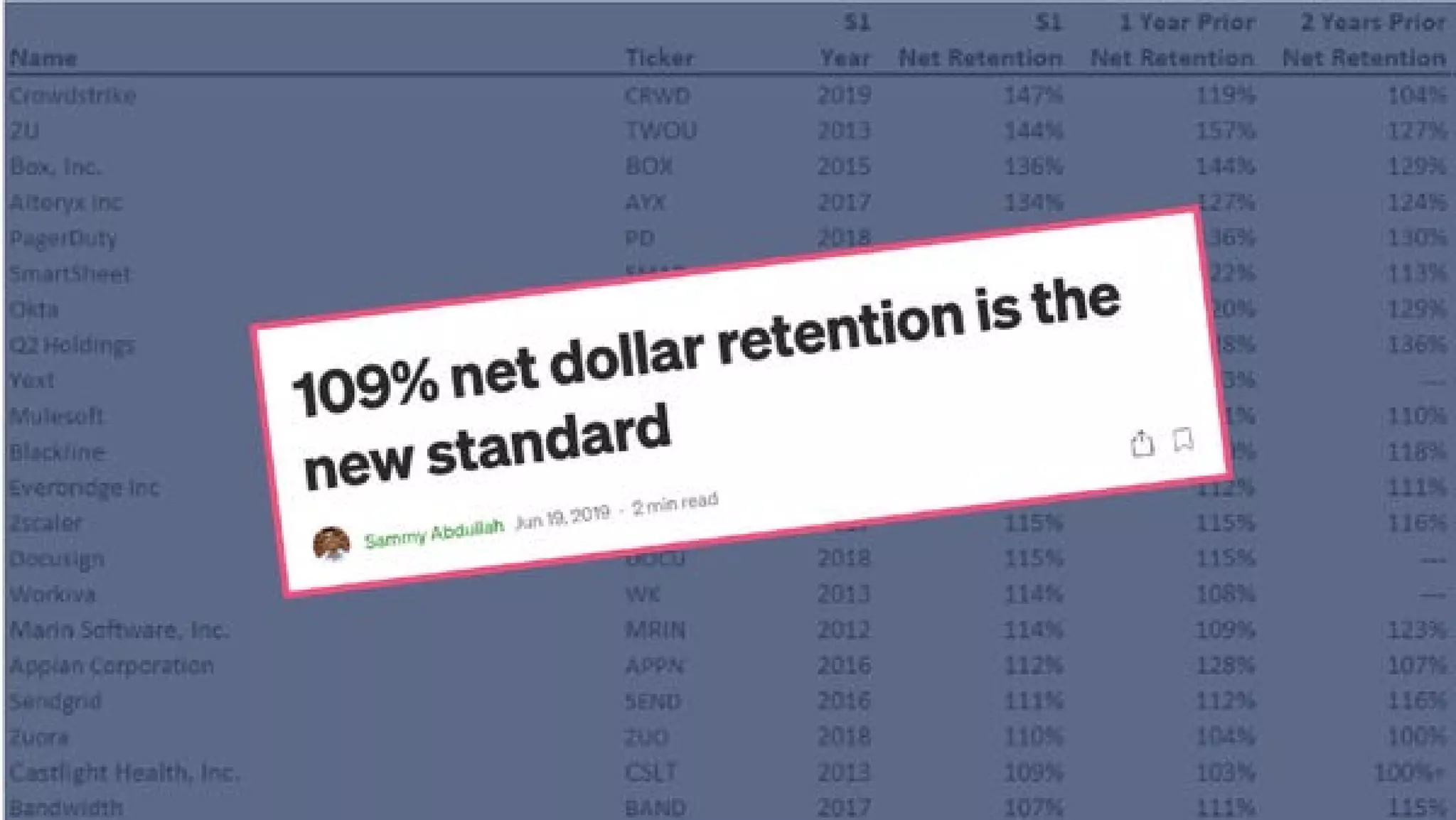
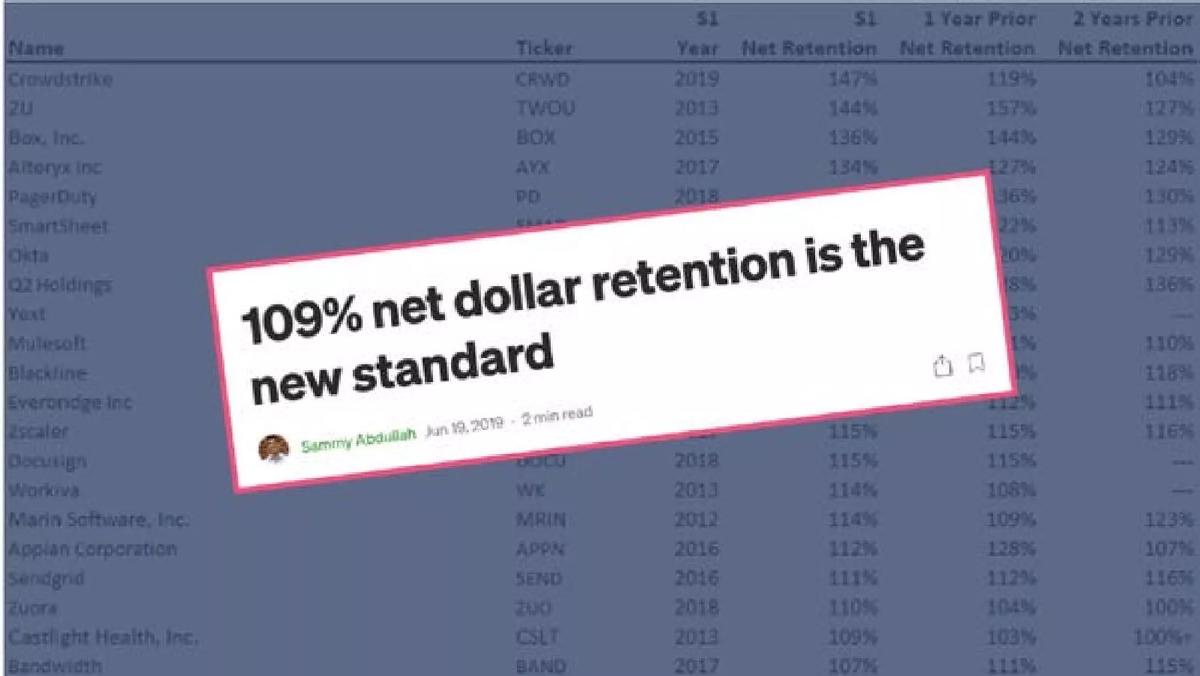
- The deck leads with a macro-trend, citing a 2019 article stating that 109% NDR is the new industry standard (Slide 1).
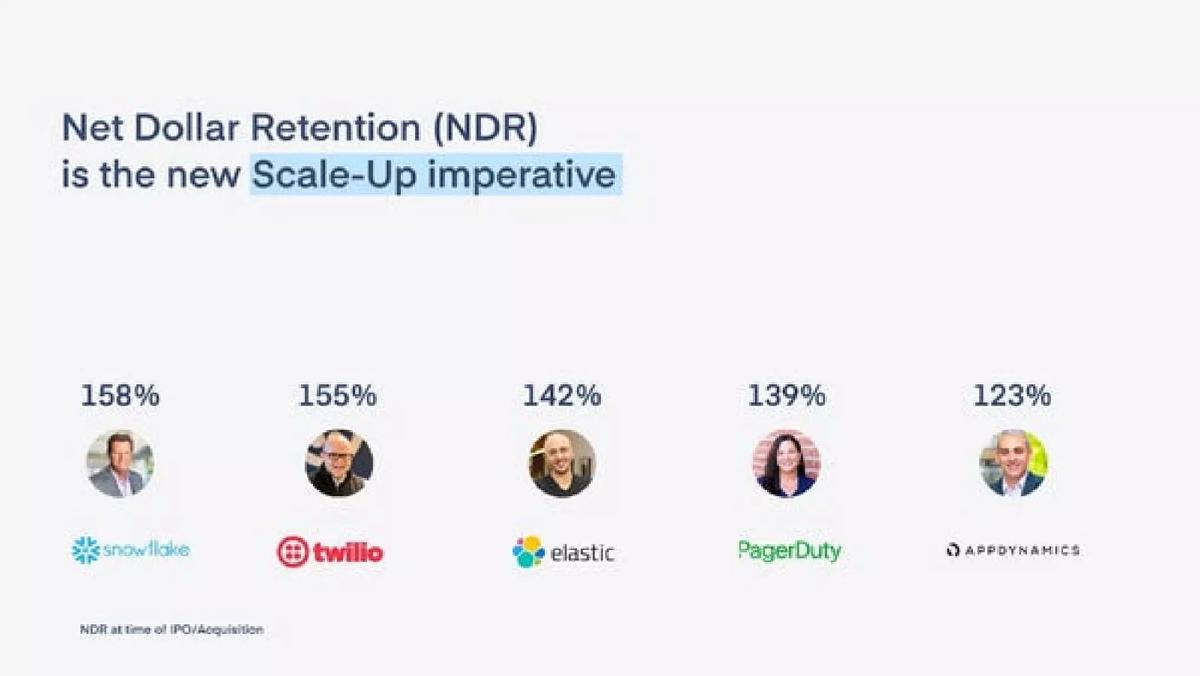
- It uses social proof from high-performing public companies like Snowflake and PagerDuty to define 'Scale-Up' success (Slide 2).
- The problem is framed as 'Revenue Delivery Chaos,' visually represented by a tangled web of logos including Stripe, PayPal, and Recurly (Slide 4).
- Paddle defines six specific requirements for a growth-ready platform, including 'Never Break the Law' and 'Global Day One' (Slide 5).
- A specific case study for Framer demonstrates a transition from $15/month licenses to $100,000+ enterprise deals (Slide 6).
- The solution is presented as a four-pillared engine: Checkout, Invoice, Comply, and Subscribe (Slide 7).
- The deck omits a traditional team slide, financial projections, and a specific 'Ask' in this 7-slide selection.
- The narrative shift from 'payments' to 'revenue delivery' allows Paddle to distance itself from commodity payment processors.
The Narrative of the 'Scale-Up Imperative'
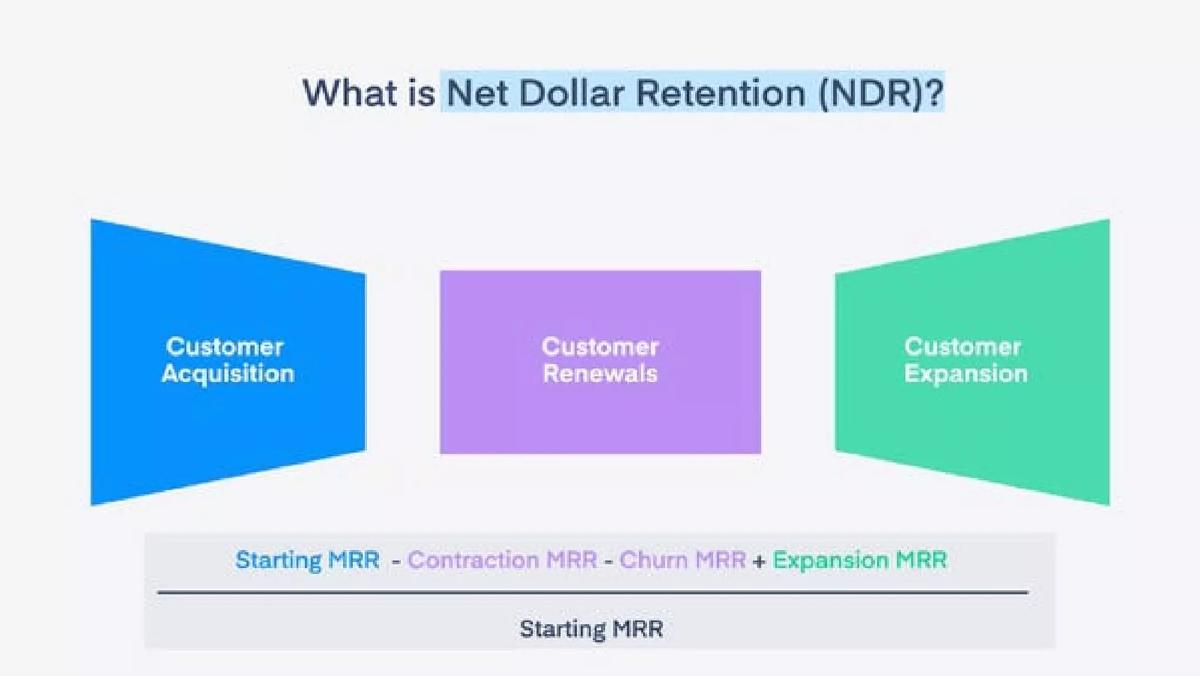
Paddle’s Series C deck is a textbook example of how to sell a vision rather than a utility. By the time a company reaches a $68M round, the product is usually well-known. The goal of this deck is to reframe the company’s category. Paddle stops calling itself a payment processor and begins calling itself a 'Revenue Delivery Platform.' This shift is supported by a narrative that focuses on the single most important metric for SaaS investors: Net Dollar Retention (NDR).
Slide 1: The New Standard
The deck opens not with a logo, but with a screenshot of a 2019 article by Sammy Abdullah. The headline is bold: "109% net dollar retention is the new standard." This is a classic 'Change in the World' opening. It establishes an external, objective truth that the investor must agree with before the pitch even begins. By citing a 2-minute read from a third party, Paddle builds immediate credibility and sets the stage for why their existence is necessary.
Slide 2: Benchmarking Success
Slide 2 reinforces the opening by showing the NDR of successful public companies at the time of their IPO or acquisition. The figures are high: Snowflake at 158%, Twilio at 155%, Elastic at 142%, PagerDuty at 139%, and AppDynamics at 123%. The text labels NDR as the "new Scale-Up imperative." This slide serves two purposes: it creates a sense of FOMO (Fear Of Missing Out) for investors who want to find the next Snowflake, and it defines the 'Scale-Up' phase as one dictated by retention, not just acquisition.
Slide 3: The Growth-Ready Gap
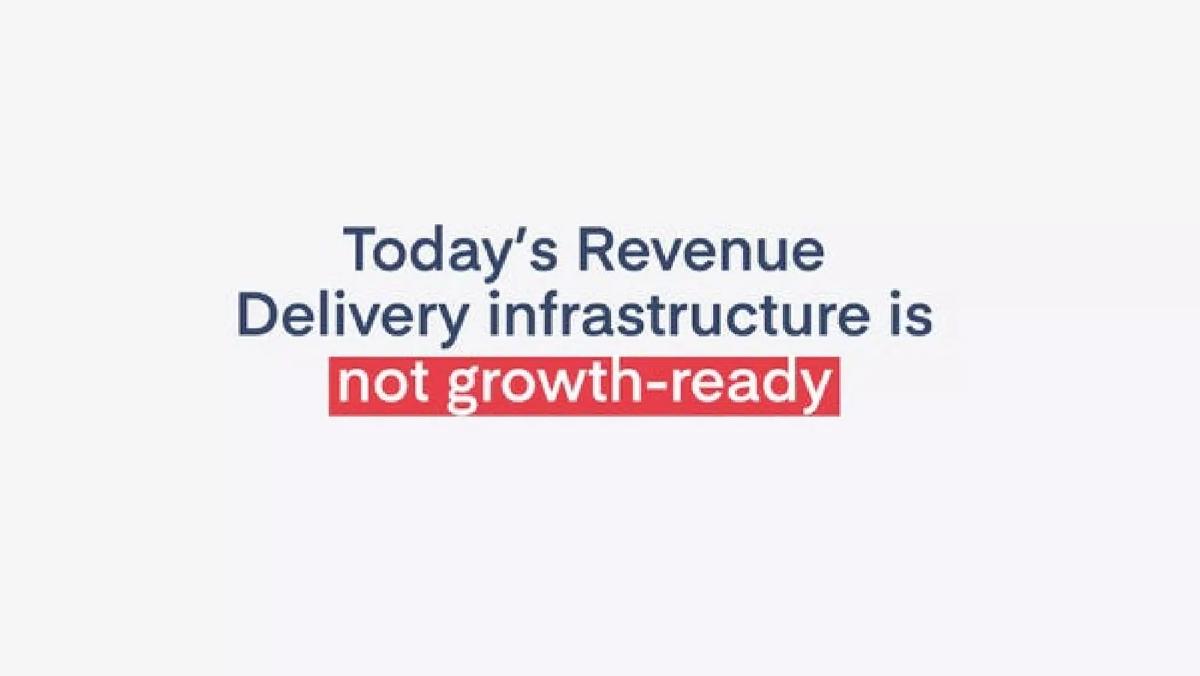
Slide 3 is a simple transition slide with a stark message: "Today’s Revenue Delivery infrastructure is not growth-ready." The phrase 'not growth-ready' is highlighted in red. This is the 'Enemy' in the narrative. It suggests that while a company might have a product that people want, their internal systems are a ticking time bomb that will prevent them from reaching the NDR benchmarks shown on the previous slide.
Slide 4: Visualizing the Chaos
Slide 4 visualizes the problem. It shows a tangled web of logos representing the status quo. You can see the logos for Stripe (S), PayPal (P), Recurly (R), Zuora (Z), and Taxamo . The slide lists the symptoms of this 'chaos': Silos, Requires Integration, Difficult to modify, and Drains resources. This is a direct attack on the 'best-of-breed' stack approach. Paddle is arguing that by stitching together these individual tools, companies create a mess that holds back their growth.
Slide 5: The Six Requirements
Having established the problem, Slide 5 introduces the solution’s framework. It asks, "What makes a Growth-Ready Revenue Delivery Platform?" and answers with a hexagonal diagram of "The 6 Requirements." These include:
All-in-One NDR Optimization · Never Break the Law · Decide with Data · Friction-Free Scale · Respond Faster · Global Day One
This slide is designed to move the investor from a general understanding of the problem to a specific set of criteria that—conveniently—only Paddle can meet.
Slide 6: The Framer Case Study
Slide 6 provides the 'Proof.' It features Framer , a well-known design tool. The headline states that Framer moved from "$15/month licenses to $100,000+ enterprise deals." It credits Paddle’s invoicing for allowing them to sell to bigger organizations and notes that "Positive NDR [was] key to [a] successful fundraise." This slide is crucial because it connects Paddle’s technical features (invoicing, one-click add-ons) directly to the high-level financial outcomes (enterprise deals, successful fundraising) discussed in the first two slides.
Slide 7: The Unified Solution
The final slide in this set, Slide 7, presents "The Paddle Revenue Delivery Platform." It shows a central 'Paddle' hub connected to four engines: Checkout (Optimized Self-serve), Invoice (Sales Assisted), Comply (Tax & data compliance), and Subscribe (Recurring Billing). It also shows data syncing with major platforms like Salesforce, HubSpot, and NetSuite. This slide resolves the 'chaos' shown on Slide 4. It replaces the tangled web with a clean, centralized system managed by the "Paddle Global Finance Team" and "Paddle Global Support Team."
What Works in the Paddle Deck
The strongest element of this deck is its narrative discipline . Every slide builds toward the same conclusion: if you want high NDR, you need a unified revenue delivery platform. By starting with public market data (Snowflake, Twilio), Paddle makes their product feel like an inevitability rather than a choice. The use of a specific, recognizable customer like Framer makes the abstract concept of 'infrastructure' feel very real and profitable.
What is Missing
As this is a partial set of 14 slides, several standard components are absent:
The Team: There is no slide detailing the founders' backgrounds or the executive team. · Market Size (TAM): The deck focuses on the 'how' and 'why' but doesn't explicitly state the 'how big' in terms of total addressable market dollars. · Financials: While it mentions NDR, it does not show Paddle’s own revenue growth, burn rate, or margins. · The Ask: The specific amount being raised ($68M) and the intended use of funds are not on these slides. · Competition: While it mocks the 'chaos' of using multiple tools, it doesn't provide a head-to-head comparison with direct competitors who might also offer all-in-one solutions.
Founder Takeaway: The 'Category Creation' Strategy
Founders should copy Paddle’s approach to category reframing . If Paddle had pitched as a 'billing and tax tool,' they would have been compared to Stripe on a feature-by-feature basis. By calling themselves a 'Revenue Delivery Platform' and tying their value to 'Net Dollar Retention,' they moved the conversation to a higher strategic level. They aren't just processing credit cards; they are 'optimizing NDR.' This allows for a much higher valuation and a more compelling story for Series C investors who are looking for infrastructure that can scale to an IPO.
Frequently asked questions
- Why does Paddle focus so heavily on Net Dollar Retention (NDR)?
- At the Series C stage, investors are looking for efficient growth and long-term enterprise value. By anchoring the deck in NDR, Paddle moves away from being a 'cost center' (like a payment gateway) and becomes a 'growth enabler.' They argue that fragmented billing systems hurt retention, and their unified platform fixes it, making them a strategic partner rather than just a vendor.
- How does Paddle position itself against competitors like Stripe or PayPal?
- Slide 4 explicitly shows Stripe (S), PayPal (P), and Recurly (R) as part of the 'chaos.' Paddle argues that using these individual 'silos' requires complex integration and drains resources. Instead of competing on payment processing fees, Paddle positions itself as the layer that sits above these tools to provide a unified 'Revenue Delivery Platform.'
- What is the significance of the Framer case study on Slide 6?
- The Framer slide is the 'proof of work.' It shows a tangible transformation: moving from low-cost $15 licenses to six-figure enterprise deals. This proves that Paddle’s infrastructure isn't just for small startups; it facilitates the 'Scale-Up' journey by handling the complexities of enterprise invoicing and global compliance that smaller tools cannot manage.
- What are the '6 Requirements' mentioned on Slide 5?
- Paddle defines a 'Growth-Ready' platform through six pillars: All-in-One NDR Optimization, Never Break the Law (compliance), Global Day One, Respond Faster, Friction-Free Scale, and Decide with Data. This creates a checklist for investors where Paddle is the only company that ticks every box, effectively framing the competition as incomplete.
- What is missing from this version of the deck?
- This 7-slide sequence lacks a team slide, a clear market size (TAM) analysis, a roadmap, and the specific terms of the $68M raise. While the full deck likely contained these, the core narrative focuses almost entirely on the 'Why Now' and the 'Product-Market Fit' through the lens of retention metrics.