Paddle’s 14-slide Series C deck is notable for what it omits as much as what it includes. Eschewing traditional team bios or granular financial tables, the presentation focuses entirely on a high-level strategic narrative. It identifies Net Dollar Retention (NDR) as the primary metric for SaaS success and positions 'Revenue Delivery' as the missing infrastructure required to optimize it. By benchmarking against high-performing public companies like Snowflake (158% NDR) and Twilio (155% NDR), Paddle elevates its product from a utility tool to a strategic imperative. The deck uses social proof…
Key takeaways
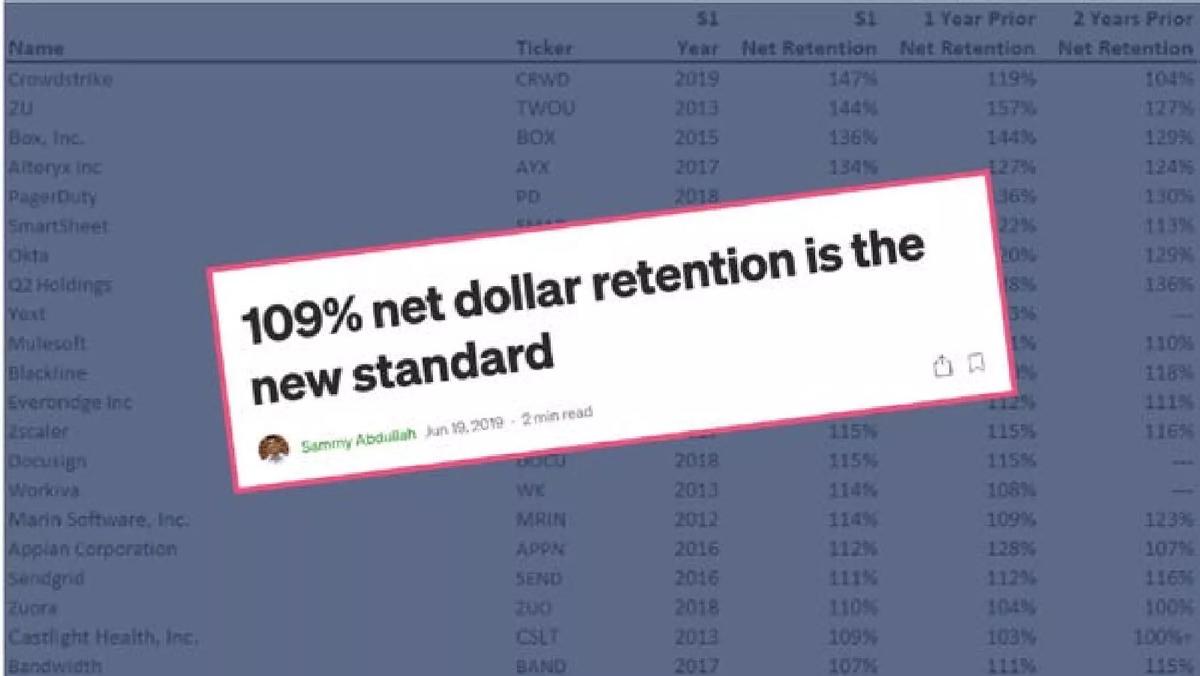
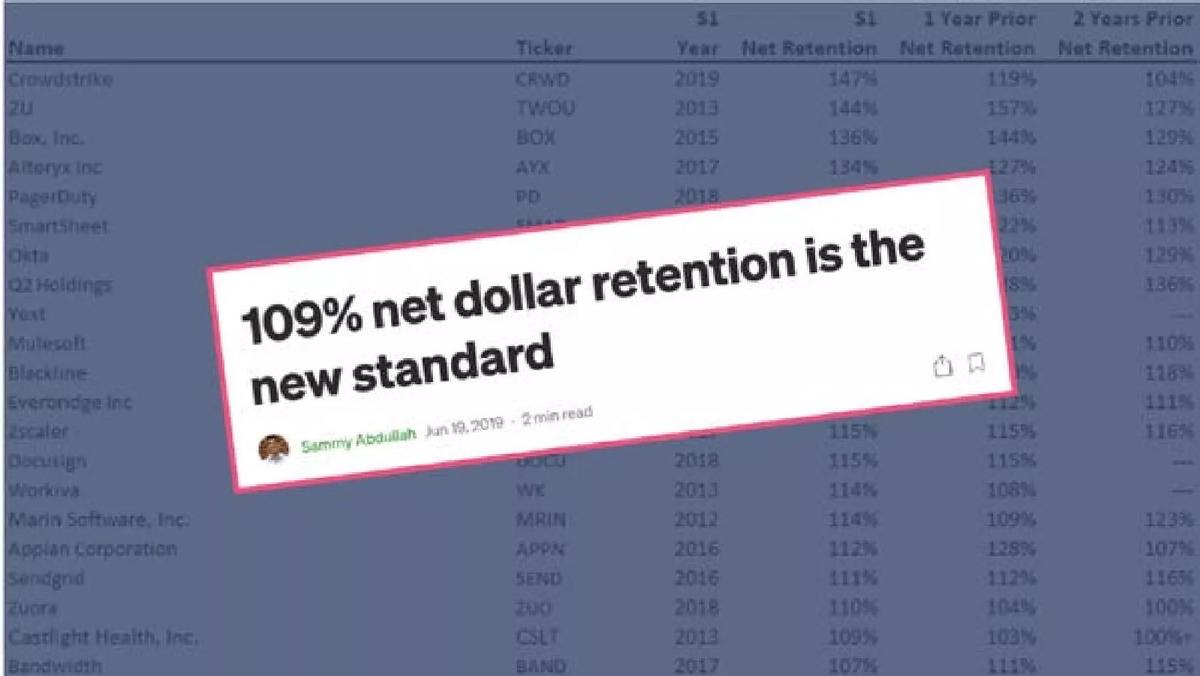
- The deck establishes a 'new standard' for SaaS by citing a 109% net dollar retention benchmark on slide 1.
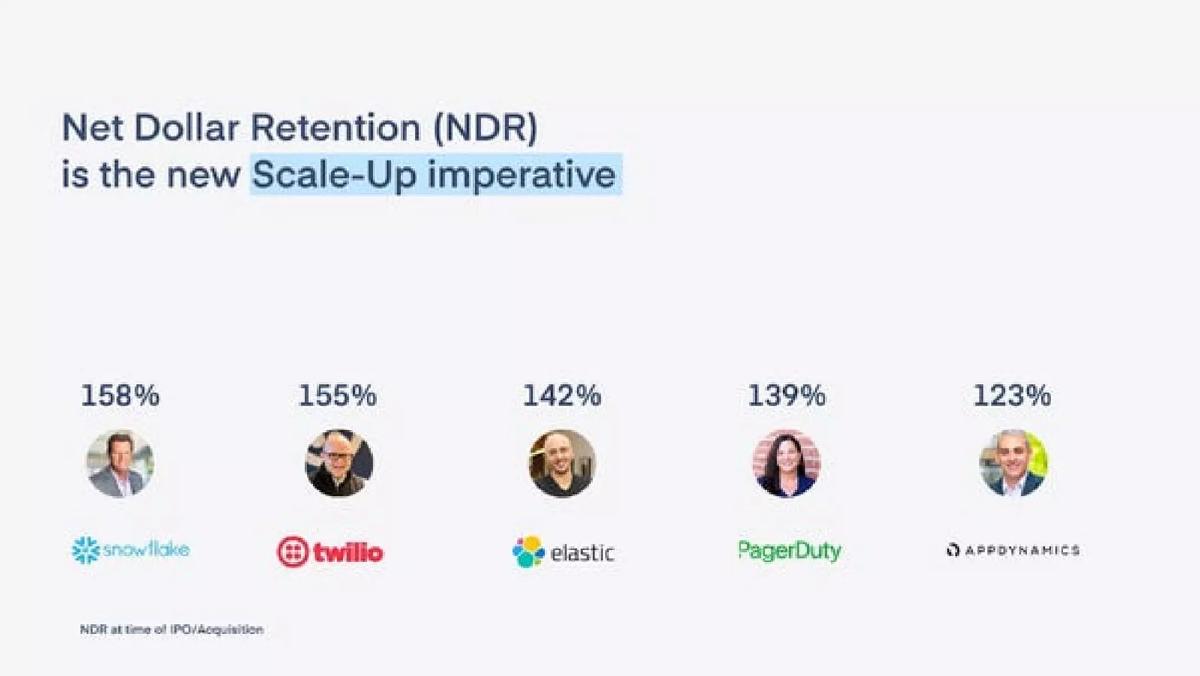
- High-growth benchmarks are used to create urgency, highlighting Snowflake at 158% and Twilio at 155% NDR on slide 3.
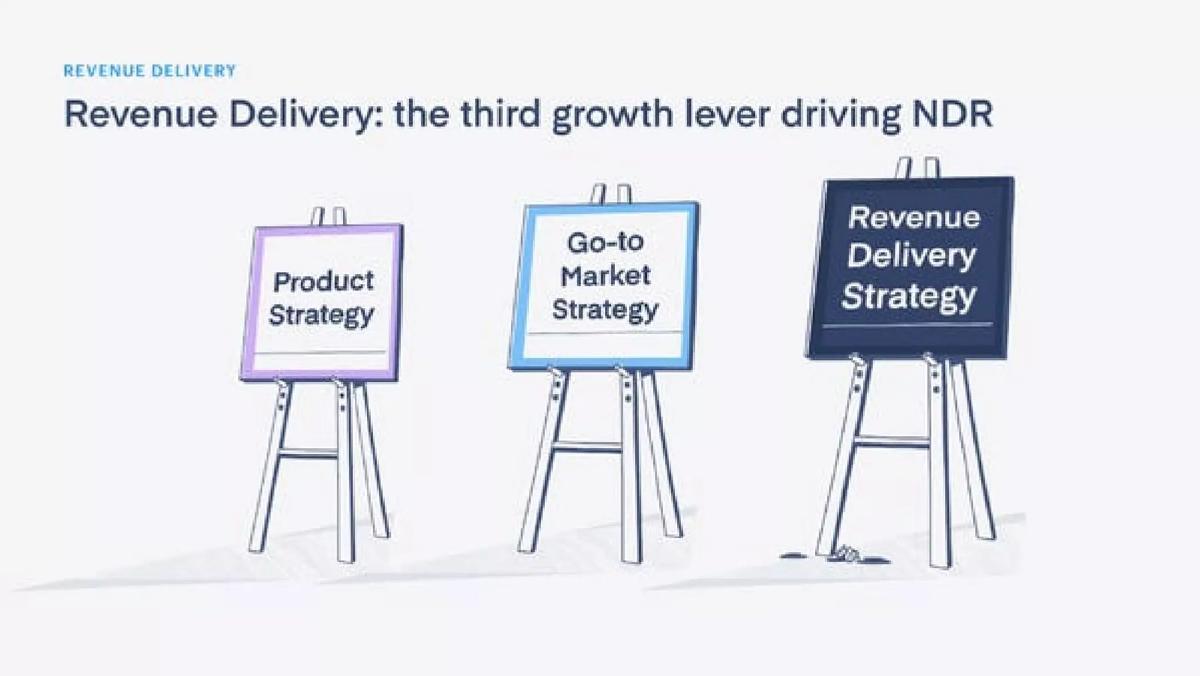
- Paddle introduces 'Revenue Delivery' as a third strategic growth lever alongside Product and GTM on slide 4.
- The 'Chaos' slide (slide 7) visualizes the problem as a fragmented mess of silos, billing engines, and tax compliance tools.
- The solution is framed as a 6-requirement framework including 'Global Day One' and 'Never Break the Law' on slide 10.
- Real-world impact is proven by Kaleido's growth to 42,000 customers in 181 countries within 18 months on slide 11.
- Framer’s transition from $15/month licenses to $100,000+ enterprise deals is credited to Paddle's infrastructure on slide 12.
- The product is simplified into four core 'engines': Invoice, Checkout, Comply, and Subscribe on slide 13.
The Strategic Narrative of a Series C Powerhouse
Paddle’s Series C pitch deck is a masterclass in narrative positioning. Rather than leading with features or internal metrics, the 14-slide presentation focuses on a macro-trend in the SaaS industry: the shift from acquisition-at-all-costs to Net Dollar Retention (NDR). By the time a company reaches Series C, the 'how it works' is often less important than 'why it wins in the current market.' Paddle uses this deck to convince investors that they are the essential infrastructure for the next generation of software giants.
Slides 1-3: Setting the Macro Benchmark
Slide 1 opens with a bold claim: "109% net dollar retention is the new standard." It uses a blurred background of public company data to suggest that this isn't just Paddle's opinion, but a market reality. This immediately frames the conversation around high-level financial health rather than technical specifications.
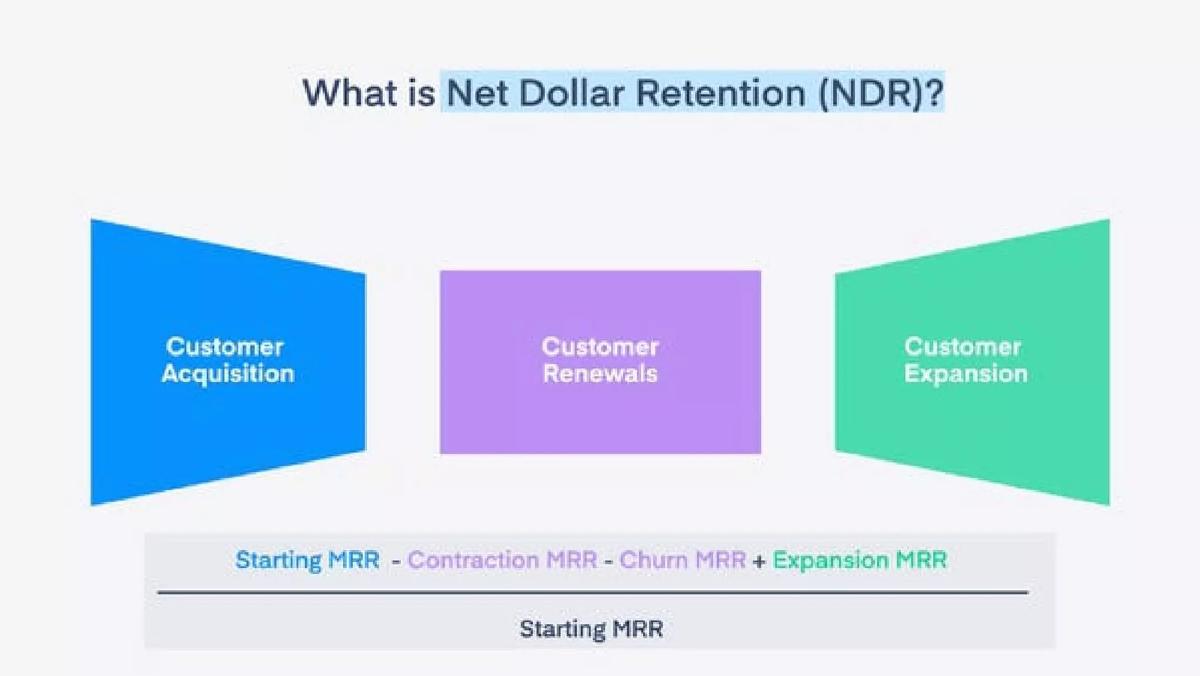
Slide 2 provides a brief educational interlude, defining NDR as the result of Starting MRR minus Contraction and Churn, plus Expansion. This ensures the investor is aligned with Paddle’s specific definition of the metric before moving into the competitive benchmarks.
Slide 3 hammers home the 'Scale-Up imperative.' It lists public market darlings and their NDR at the time of IPO or acquisition: Snowflake (158%), Twilio (155%), Elastic (142%), PagerDuty (139%), and AppDynamics (123%). By associating itself with these names, Paddle is signaling the caliber of customers it serves and the valuation multiples it expects to command.
Slides 4-7: Identifying the 'Chaos'
Slide 4 introduces the core thesis: "Revenue Delivery: the third growth lever driving NDR." It places Revenue Delivery alongside Product Strategy and Go-to-Market Strategy on three easels. This is a deliberate attempt to elevate Paddle’s category from a 'utility' to a 'strategic pillar.'
Slide 5 and 6 contrast existing infrastructure with what is needed for growth. Slide 6 acknowledges that companies have 'Growth-Ready' hosting (AWS) and 'Growth-Ready' GTM (HubSpot), but then points to a tangled web of logos on the right, asking, "Why would you settle for chaos with your revenue infrastructure?"
Slide 7 defines this 'Revenue Delivery Chaos.' It lists four pain points: Silos, Requires Integration, Difficult to modify, and Drains resources. The visual aid shows a mess of icons representing currencies, payment gateways, billing engines, and tax compliance (VAT), illustrating the fragmented reality most SaaS companies face before adopting Paddle.
Slides 8-10: The Solution and The Framework
Slide 8 presents the antidote: a strategic "Revenue Delivery Platform." It promises four outcomes: activating new business models instantly, entering new markets with ease, turning on new offerings with one-click, and making renewals friction-free. Note the focus on speed and ease—key selling points for a Series C company looking to accelerate.
Slide 9 asks, "What makes a Growth-Ready Revenue Delivery Platform?" and answers with a hexagonal framework on Slide 10 . The '6 Requirements' are: All-in-One NDR Optimization, Never Break the Law, Global Day One, Decide with Data, Respond Faster, and Friction-Free Scale. This slide acts as a 'moat' definition; it tells the investor that any competitor lacking even one of these pieces is not a complete solution.
Slides 11-12: Social Proof and Case Studies
Slide 11 features Kaleido (remove.bg). It states they launched to 42,000 customers from 181 countries in just 18 months. The bullet points credit this to the ability to acquire customers globally and experiment with usage billing models—direct applications of the '6 Requirements' mentioned earlier.
Slide 12 focuses on Framer. The headline is a powerful growth metric: "Framer moved from $15/month licenses to $100,000+ enterprise deals." It explicitly states that Paddle invoicing allowed for selling to bigger organizations and that positive NDR was key to their successful fundraise. This is 'meta' social proof—showing that Paddle helps other companies raise money.
Slides 13-14: The Product and The Vision
Slide 13 finally shows the product architecture, but keeps it extremely high-level. The 'Paddle Revenue Delivery Platform' is depicted as a central hub with four 'engines': Invoice (Sales Assisted), Checkout (Optimized Self-serve), Comply (Tax & data compliance), and Subscribe (Recurring Billing). This slide effectively summarizes the entire value proposition into a single image.
Slide 14 expands this slightly, showing 'data sync' with logos like Salesforce, HubSpot, and NetSuite, and mentioning the 'Paddle Global Finance Team' and 'Paddle Global Support Team.' This emphasizes that Paddle is not just software, but a managed service that takes the operational burden off the founder.
What Paddle Does Exceptionally Well
The brilliance of this deck lies in its category creation . Paddle doesn't want to be compared to Stripe or Braintree. By coining the term 'Revenue Delivery,' they move the goalposts. They focus on the 'Comply' and 'Tax' aspects (Slide 13), which are traditional weak points for standard payment gateways. They also do an excellent job of anchoring . By starting with Snowflake and Twilio’s NDR (Slide 3), they set a high bar for what 'success' looks like, then position themselves as the only way to reach that bar.
What is Missing from the Deck
Despite raising $68M with this narrative, the deck is missing several 'standard' components that a smaller startup would likely need:
Team Slide: There is no mention of the founders or the executive team. At Series C, the company's reputation often precedes it, but for most, this is a glaring omission. · Competition: There is no competitive matrix. Paddle relies on the 'Chaos' slide to imply that the competition is 'fragmentation' rather than specific companies like Stripe or Chargebee. · Financials: There are no slides showing Paddle’s own revenue growth, CAC, or LTV. These were almost certainly provided in a separate data room, but their absence in the main deck is notable. · The Ask: The deck does not specify how much they are raising or what they will do with the capital.
What Founders Should Copy
Founders should emulate Paddle’s metric-first storytelling . Instead of saying "our software is fast," Paddle says "NDR is the new standard" and then shows how they impact that specific number. This aligns the product with the investor's primary goal: ROI. Additionally, the use of specific customer outcomes (Slide 12: "$15/month to $100,000+ deals") is far more effective than vague testimonials. Finally, the visual simplification of a complex problem (Slide 7) is a great way to build empathy with the investor before presenting the solution.
Frequently asked questions
- Why does the deck focus so heavily on Net Dollar Retention (NDR)?
- At the Series C stage, investors are looking for scalable, efficient growth. By centering the narrative on NDR, Paddle aligns its value proposition with the single most important metric for SaaS valuation. They argue that their platform isn't just a cost center for payments, but a performance driver that helps companies retain and expand revenue from existing customers, which is more cost-effective than pure acquisition.
- Is it normal to omit a team slide in a Series C deck?
- While unusual for seed rounds, later-stage decks often prioritize the 'market thesis' and 'momentum' over individual bios. By Series C, the company's existence and previous funding rounds (raising $68M in this instance) serve as a proxy for team quality. Paddle likely used this deck as a visual aid for a conversation where the leadership's track record was already established or discussed separately.
- How does Paddle differentiate itself from competitors like Stripe?
- The deck differentiates by highlighting 'chaos' (Slide 7). It suggests that using individual tools for billing, tax (Taxamo), and payments creates silos that drain resources. Paddle positions itself as the 'all-in-one' platform that handles the 'Comply' and 'Tax' aspects natively, which is a direct jab at the 'integration-heavy' approach required by traditional payment gateways.
- What is the significance of the 'Revenue Delivery' terminology?
- This is a classic category creation play. By moving away from 'Payment Processing'—which is often viewed as a commodity—and toward 'Revenue Delivery,' Paddle creates a new strategic bucket. This allows them to claim a seat at the table during high-level strategy meetings regarding Product and Go-To-Market, rather than being relegated to a technical implementation detail.
- What are the '6 requirements' mentioned in the deck?
- On Slide 10, Paddle defines a growth-ready platform as having: All-in-One NDR Optimization, Deciding with Data, Friction-Free Scale, Responding Faster, Global Day One, and Never Breaking the Law. This framework serves as a checklist that subtly disqualifies competitors who might only solve one or two of these requirements, such as simple payment processing without global tax compliance.