PainWorth’s 14-slide deck is a masterclass in narrative-driven fundraising. By leading with a visceral personal story—the founder being hit by a drunk driver—the company establishes immediate founder-market fit. The deck effectively uses data to highlight systemic biases in the legal system, such as women receiving ~$5000 less than men for similar claims (Slide 4). While the deck is light on specific financial projections and unit economics, it compensates with strong social proof, including awards from Insurtech Hartford and the American Bar Association. The presentation focuses on the 'inju…
Key takeaways
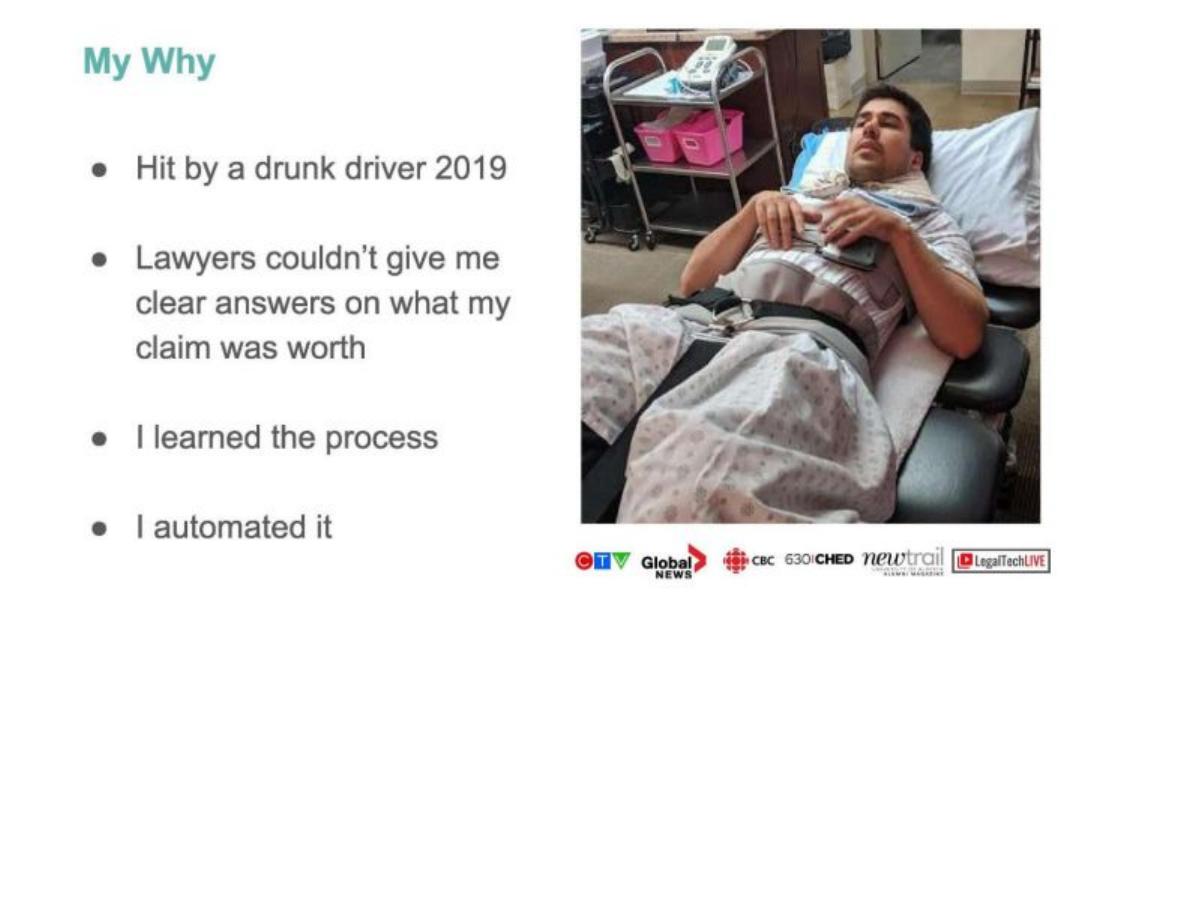
- The founder's personal experience being hit by a drunk driver in 2019 serves as the primary hook for the business (Slide 2).
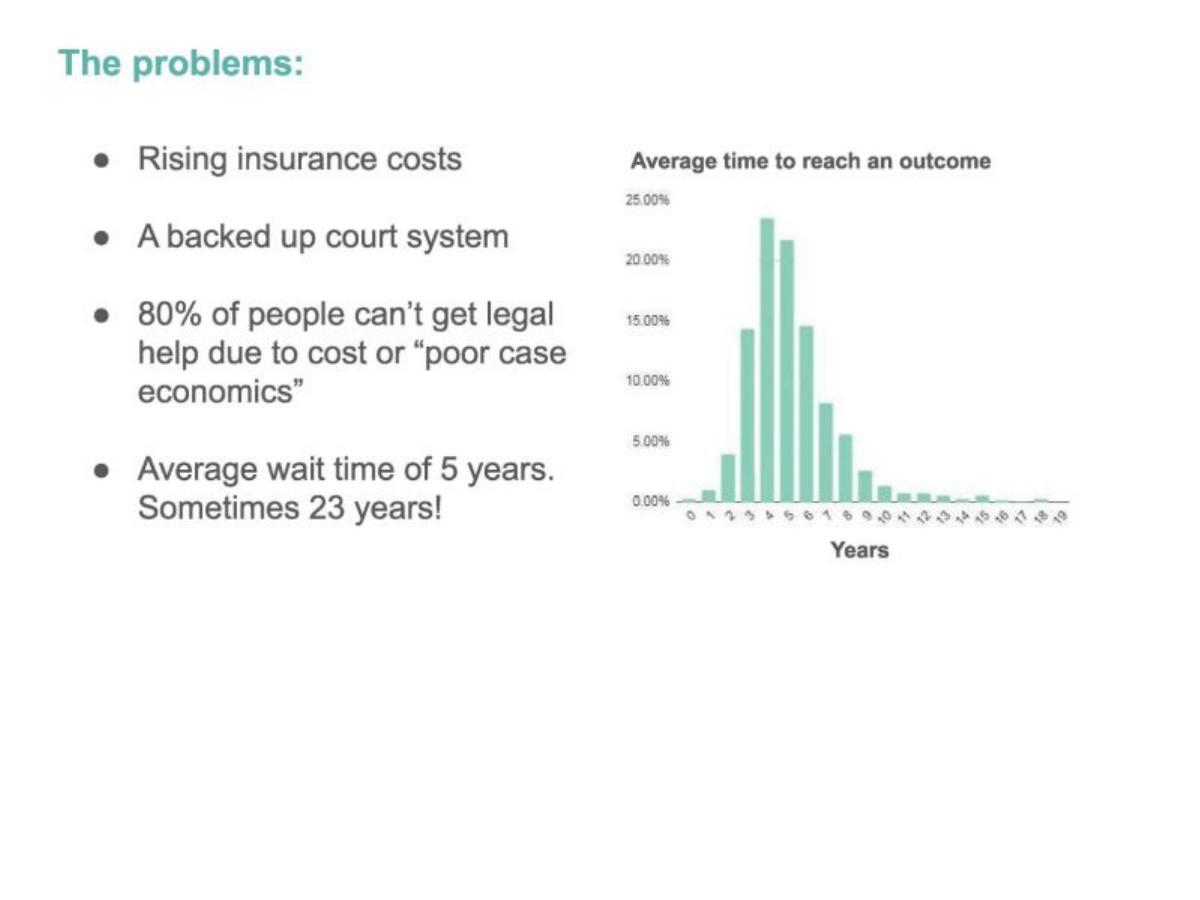
- PainWorth identifies a massive efficiency gap, noting an average wait time of 5 years and sometimes up to 23 years for court outcomes (Slide 3).
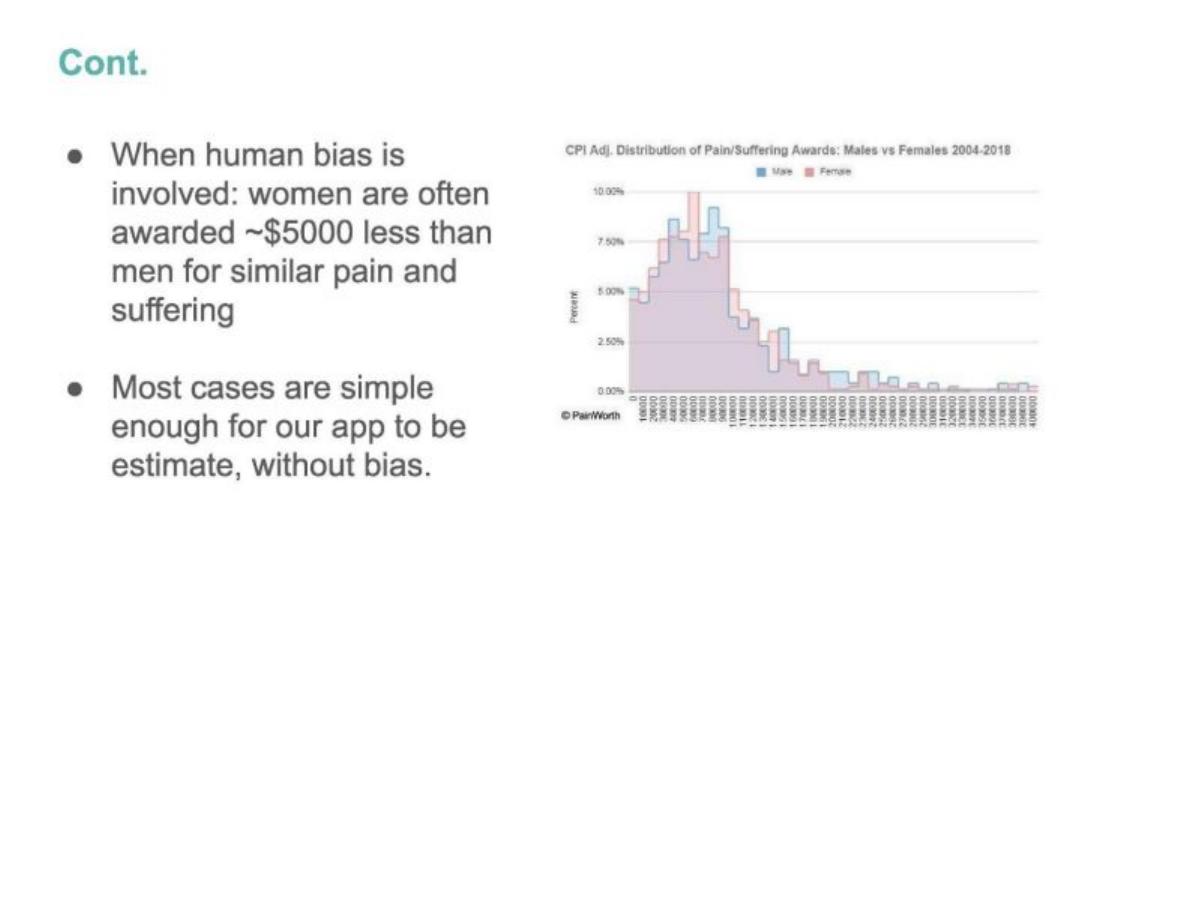
- The deck highlights a specific gender bias in human-led settlements, where women are awarded approximately $5,000 less than men for similar pain and suffering (Slide 4).
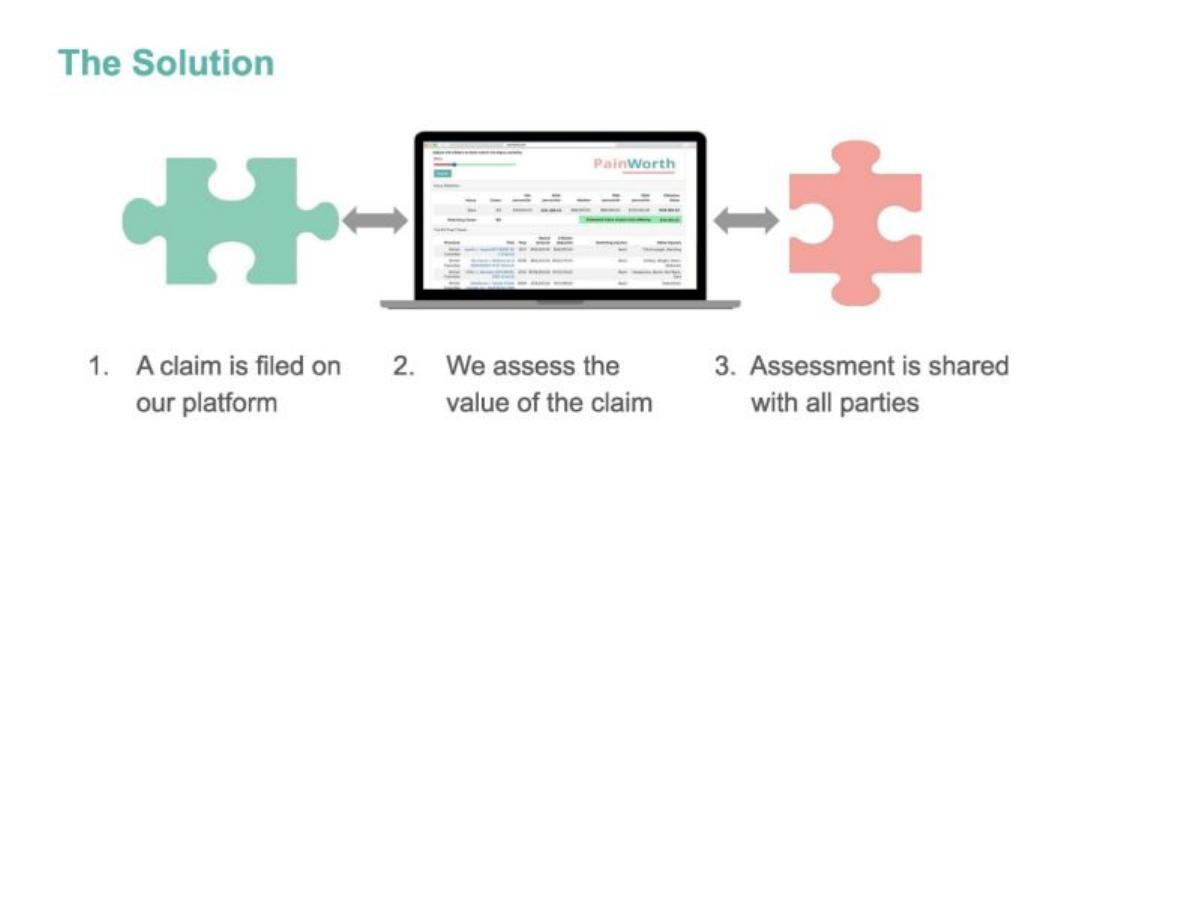
- The product is positioned as a three-step platform: file, assess, and share with all parties (Slide 5).
- Traction is shown through a 20x growth rate since bootstrapping, with a target of 20,000 users by late 2023 (Slide 7).
- The team includes a CTO with over 20 years of enterprise development experience and 3x startup experience (Slide 8).
- The company leverages high-authority advisors from the legal-tech and insurance sectors to build institutional trust (Slide 9).
- The deck omits a specific 'Ask' slide, failing to detail the exact dollar amount or valuation sought during the 2022 round (Slide 10).
The Narrative Power of Personal Tragedy
PainWorth’s pitch deck is a compelling example of how to build a venture-scale business around a personal pain point. The deck, used to raise $1.7M in 2022, focuses heavily on the 'Why' before diving into the 'How.' By framing the personal injury market not just as a financial opportunity but as a social justice issue, PainWorth creates a 'mission-driven' aura that is highly attractive to Seed-stage investors.
Slide 1: The Hook
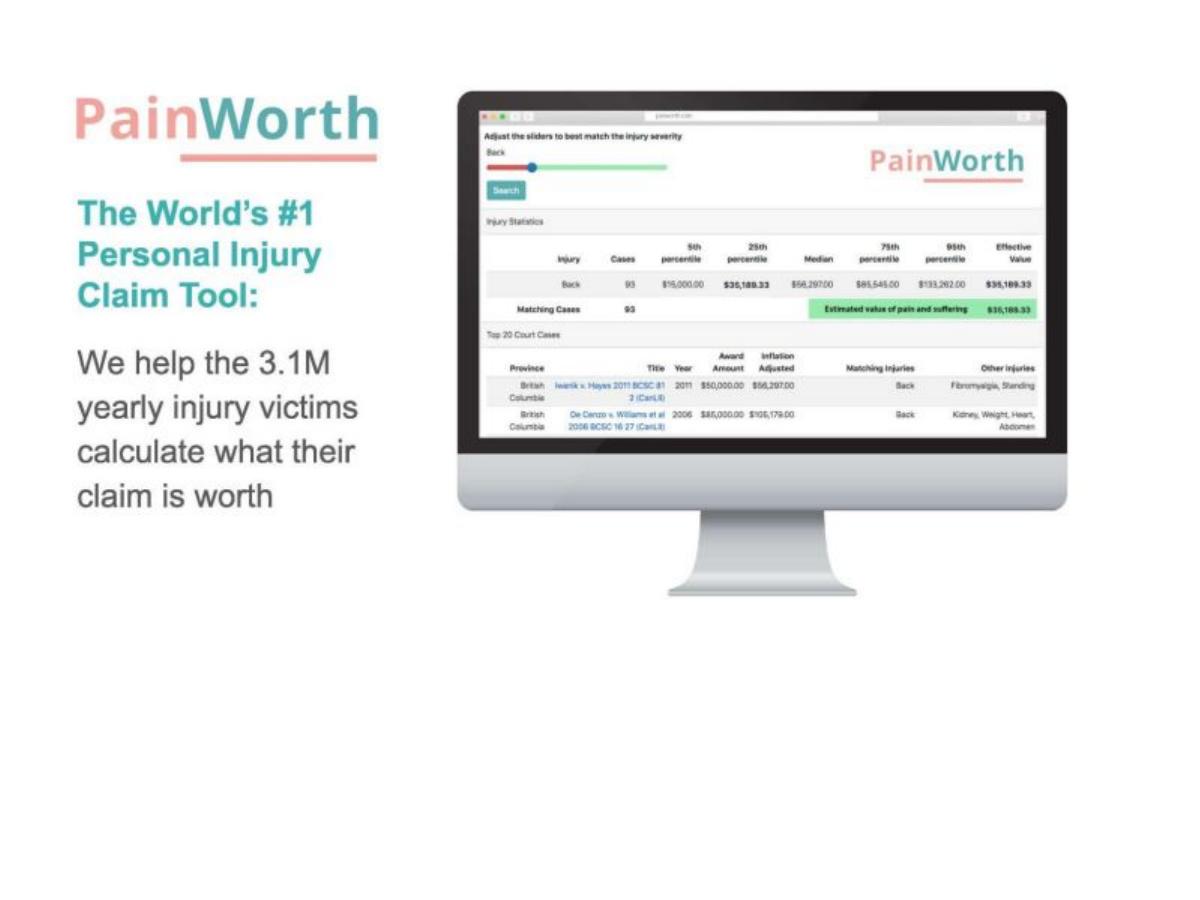
The cover slide immediately identifies the target audience: the 3.1M yearly injury victims. It positions PainWorth as the 'World’s #1 Personal Injury Claim Tool.' The visual is a clean mockup of the software, showing a data-heavy dashboard that calculates 'Effective Value' based on case percentiles. This sets the expectation that the company is a data-first organization.
Slide 2: The 'My Why'
This is arguably the most important slide in the deck. It features a photo of the founder, Mike Zouhri, in a hospital bed. The bullet points are sparse but powerful: 'Hit by a drunk driver 2019,' 'Lawyers couldn’t give me clear answers,' 'I learned the process,' and 'I automated it.' This slide establishes founder-market fit instantly. It tells investors that the founder has lived the problem and has the personal drive to solve it. The logos of Global News, CTV, and CBC at the bottom provide immediate external validation for the story.
Slides 3-4: Quantifying the Injustice
The problem slides move from the personal to the systemic. Slide 3 uses a bar chart to show the 'Average time to reach an outcome,' highlighting that while most cases take 3-6 years, some take up to 23 years. It notes that 80% of people cannot get legal help due to cost. Slide 4 introduces a unique angle: algorithmic fairness . It claims that human bias results in women being awarded ~$5,000 less than men for similar pain and suffering. This is a sophisticated way to pitch an AI solution—not just as a faster tool, but as a more equitable one.
Slide 5: The Three-Step Solution
PainWorth simplifies its complex backend into a three-step user journey: 1. File, 2. Assess, 3. Share. The use of puzzle piece icons suggests that PainWorth is the 'missing piece' connecting victims to fair settlements. It emphasizes that the assessment is 'shared with all parties,' hinting at a B2B2C or multi-sided platform play where insurance companies might also use the tool to settle claims faster.
Slides 6-7: Traction and Growth
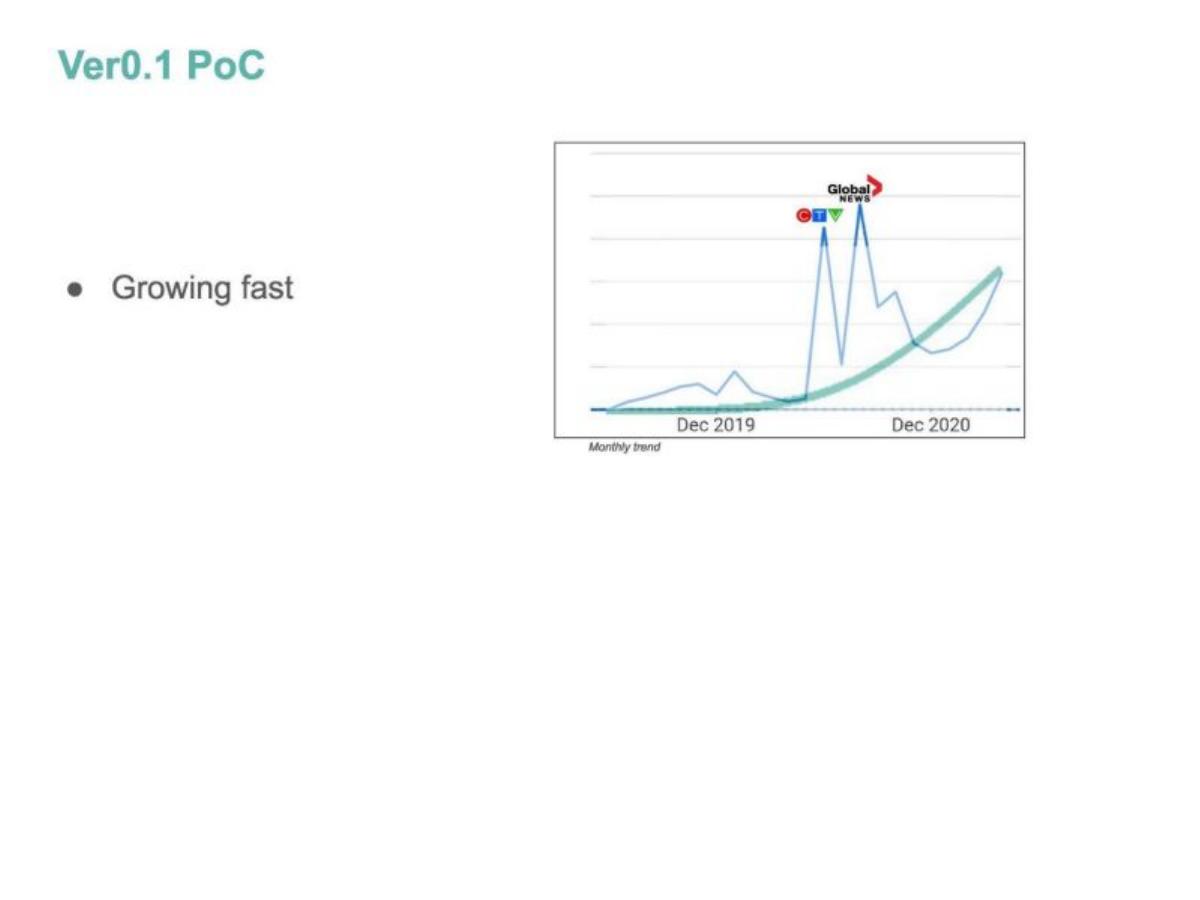
Slide 6, titled 'Ver0.1 PoC' (Proof of Concept), shows a growth chart with significant spikes tied to media appearances. This demonstrates that the product has 'viral' potential or at least high organic interest when discovered. Slide 7 is more forward-looking, claiming 20x bootstrapped growth and a projection of 20,000 users by late 2023. While the Y-axis lacks specific units (it is a stylized area chart), the 'Today' marker shows they are at the start of an exponential curve.
Slides 8-9: The Team and Advisors
The team slide (Slide 8) balances the CEO’s 'visionary/community' profile with the CTO’s 'technical/veteran' profile. Chris Trudel’s '20 years in enterprise development' is a crucial counterweight to the CEO’s more social-justice-oriented bio. Slide 9 lists seven advisors, including 'decorated insurtech, legal, legaltech and insurance entrepreneurs.' This is a 'trust by association' slide, signaling to investors that even if the founders are new to the legal industry, they are guided by those who know it deeply.
Slide 10: Next Steps (The Missing Ask)
Slide 10 is surprisingly vague. It lists 'Next steps' such as scaling data intake and improving machine learning, but it omits a formal 'Ask' . There is no mention of the $1.7M target, the valuation, or the specific milestones the funding will unlock. In a standard pitch, this slide should be the closing argument for the investment.
Slides 11-13: The Appendix and Social Proof
The deck concludes with an Appendix that doubles down on prestige. Slide 12 shows they were the 2021 Global Winner for Best Emerging Insurtech Product, presented by Travelers Insurance—a major incumbent in the space. Slide 13 highlights their win at the American Bar Association Startup Alley. For a legal-tech startup, winning over the ABA is a significant hurdle cleared, as it suggests the tool is viewed as a legitimate aid rather than a 'unauthorized practice of law' risk.
What Works in This Deck
The Emotional Anchor: Leading with the hospital photo (Slide 2) makes the problem undeniable. It moves the conversation from 'Is this a big market?' to 'How do we fix this broken system?'
Data-Driven Problem Definition: Instead of just saying 'lawyers are slow,' they cite specific figures: 5-year wait times and $5,000 gender pay gaps. This gives investors 'hard' facts to latch onto.
Industry Validation: Winning awards from both an insurance giant (Travelers) and the legal authority (ABA) is a rare 'double-win' that de-risks the regulatory and adoption hurdles of the business.
What Is Missing
Business Model: There is no mention of how PainWorth makes money. Do they charge victims a flat fee? A percentage of the settlement? Do they sell licenses to insurance companies? This is a major omission for a Seed round.
Unit Economics: There are no details on Customer Acquisition Cost (CAC) or Lifetime Value (LTV). While they mention 20x growth, investors need to know if that growth is profitable or sustainable.
Competitive Landscape: The deck assumes PainWorth is the only player. It doesn't address traditional law firms, other legal-tech tools, or insurance companies' in-house valuation software.
What a Founder Should Copy
The 'Why' Slide: If you have a personal connection to the problem, put it front and center. It is the one thing a competitor cannot copy.
The Appendix Strategy: Use the main deck for the narrative and the appendix for the 'bragging rights.' The ABA and Insurtech Hartford slides are perfect for the end of a presentation to leave a lasting impression of credibility.
Visualizing the Systemic Flaw: Slide 4’s gender bias chart is brilliant. It identifies a specific, measurable 'wrong' that the technology is uniquely positioned to 'right.' Founders should look for similar 'unfair' data points in their own industries to justify why an automated solution is superior to a human one.
Frequently asked questions
- What is the core problem PainWorth is solving?
- PainWorth addresses the inefficiency and bias of the personal injury claim process. According to Slide 3 and 4, the current system suffers from a 5-year average wait time, rising insurance costs, and human bias that results in women receiving ~$5,000 less than men for similar injuries. They aim to automate the valuation of these claims to provide instant, unbiased answers.
- How does PainWorth demonstrate product-market fit?
- The deck uses a combination of user growth and media recognition. Slide 6 shows a 'Monthly trend' graph with spikes corresponding to coverage on Global News and CTV. Slide 7 claims 20x bootstrapped growth and projects reaching 20,000 users by late 2023, suggesting a clear demand for their claim calculation tool.
- Who are the key members of the PainWorth team?
- The team is led by Co-Founder and CEO Mike Zouhri, described as a serial entrepreneur and community leader. He is joined by Co-Founder and CTO Chris Trudel, who brings over 20 years of enterprise development experience and has been involved in three previous startups (Slide 8).
- What is missing from the PainWorth pitch deck?
- The deck is notably missing a detailed 'Ask' slide (Slide 10 only mentions 'Next steps' like scaling data intake), a business model/revenue slide, and a competitor analysis. There are no mentions of CAC, LTV, or specific revenue figures, which is unusual for a Seed stage deck.
- What kind of industry validation does PainWorth have?
- PainWorth presents strong third-party validation in its appendix. They were the 2021 Global Winner for 'Best Emerging Insurtech Product' presented by Travelers Insurance (Slide 12) and the winner of the 2021 American Bar Association Startup Alley TechShow (Slide 13).