The Streetbees pitch deck is a masterclass in establishing market authority through social proof rather than raw financial data. Across 13 slides, the company positions itself as a disruptive force in market research, claiming that 75% of everyday choices are determined by immediate context and emotions (Slide 1). The deck successfully illustrates its 'Always ON' platform, which uses NLP trained on 2.5 billion data points (Slide 3) to capture real-world consumer behavior. However, the presentation is highly product-focused and lacks the traditional 'business' components of a fundraise. There…
Key takeaways
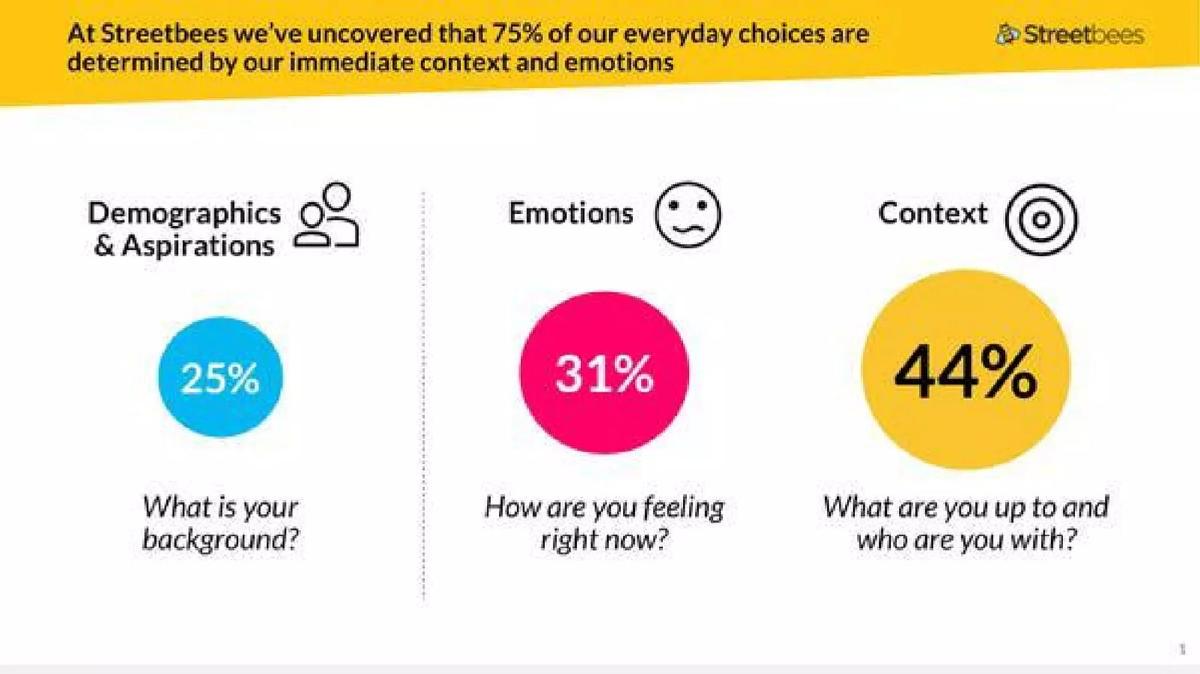
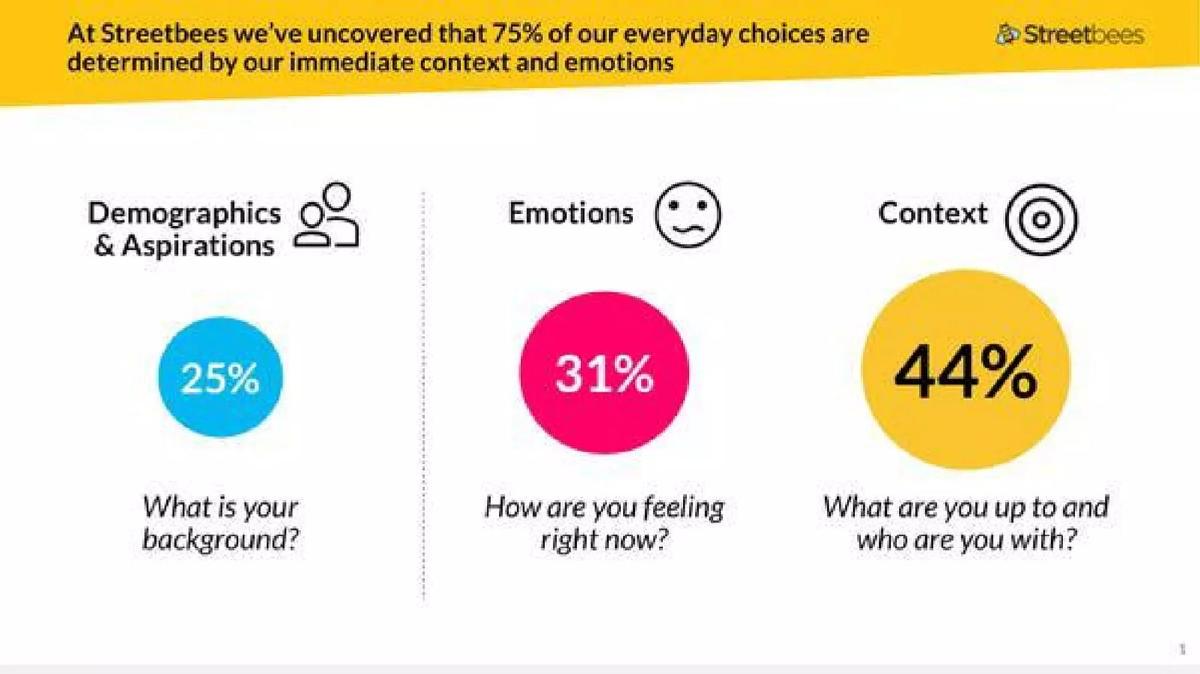
- The deck claims that 75% of consumer choices are driven by context and emotion rather than demographics (Slide 1).
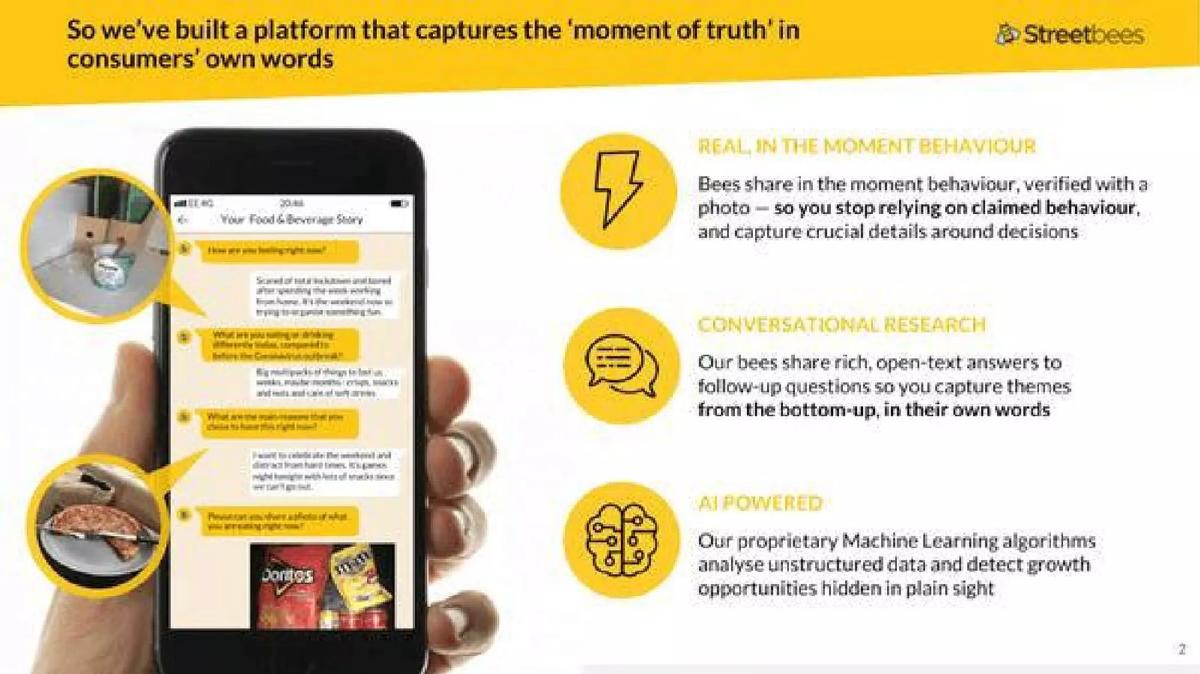
- Streetbees utilizes proprietary Machine Learning to analyze unstructured data from a global community of 'Bees' (Slide 2).
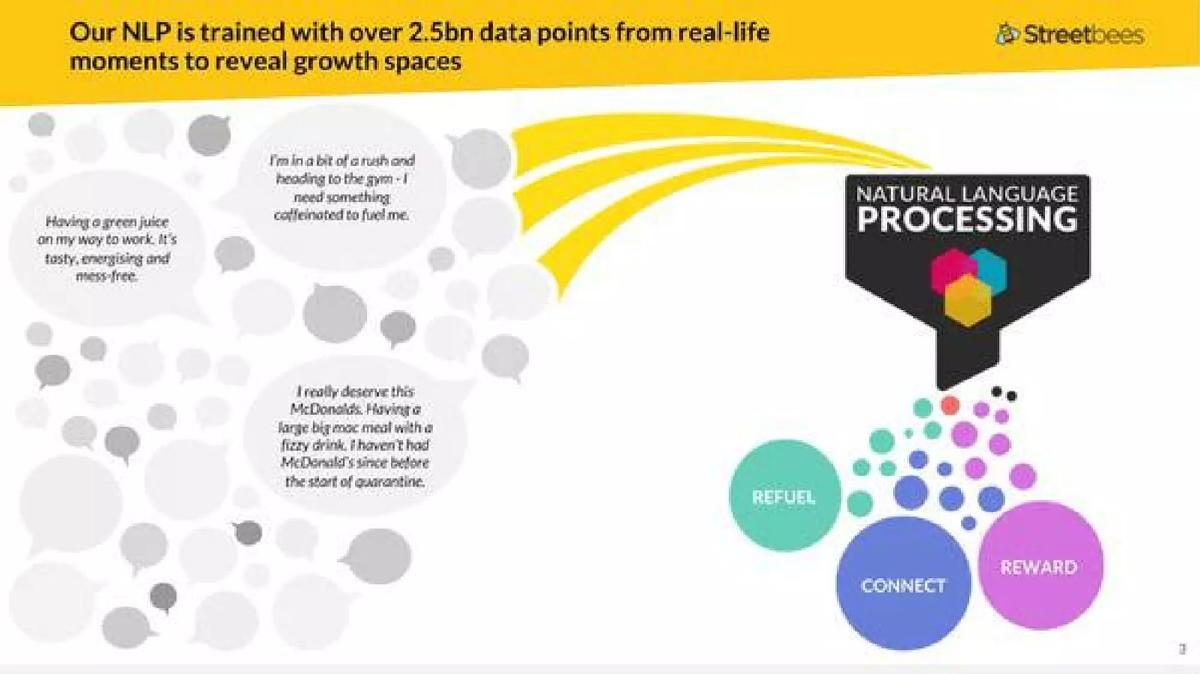
- The company's Natural Language Processing (NLP) engine is reportedly trained on over 2.5 billion data points (Slide 3).
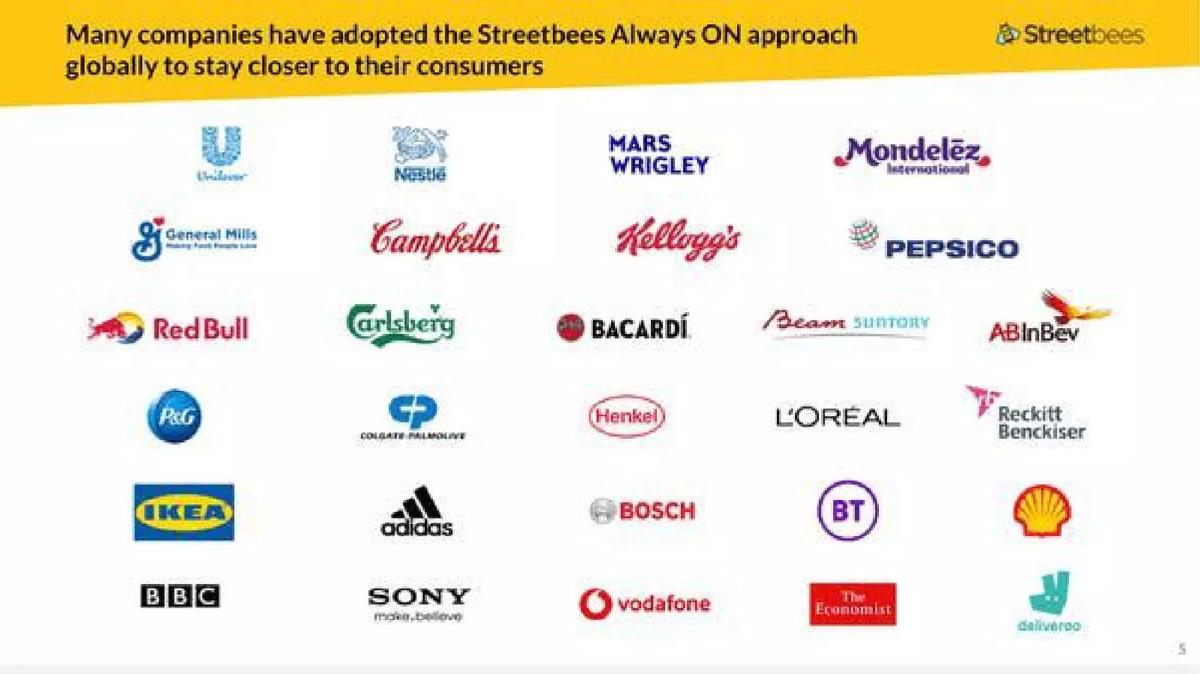
- Social proof is the deck's strongest asset, featuring 30 major enterprise logos including PepsiCo, Unilever, and Sony (Slide 5).
- The company was recognized as a World Economic Forum Technology Pioneer in 2020, joining a list that includes Google and Spotify (Slide 6).
- Streetbees offers four distinct solutions: Dynamic Growth Engine, Brand Experience Monitor, Dynamic Audience Solution, and Dynamic Media Landscape (Slide 8).
- The platform integrates with Google Ads to allow brands to buy custom audiences based on offline variables like 'Brands bought' and 'Hobbies' (Slide 11).
- The deck completely omits a team slide, financial history, projections, and a specific funding ask.
Introduction: The Power of Social Proof
The Streetbees pitch deck is an interesting artifact in the world of startup fundraising. While the catalogue facts indicate the company raised $16,800,000 in 2015, the deck itself feels like a later-stage iteration, specifically referencing awards from 2019 and 2020. It is a visually polished, 13-slide presentation that prioritizes credibility and product utility over traditional financial metrics. For any founder looking to understand how to leverage enterprise logos to build an 'inevitability' narrative, this teardown provides a clear roadmap.
Slides 1-3: The Thesis and the Technology
Slide 1: The Core Insight Streetbees opens with a psychological hook. The slide states that 75% of everyday choices are determined by immediate context and emotions. It breaks down consumer drivers into three buckets: Demographics & Aspirations (25%), Emotions (31%), and Context (44%). By marginalizing demographics, Streetbees immediately invalidates traditional market research methods, setting the stage for their 'moment of truth' solution.
Slide 2: The Solution This slide introduces the platform. It features a smartphone mockup showing a chat-style interface where a user is sharing their 'Food & Beverage Story.' The slide highlights three pillars: Real, in-the-moment behavior (verified with photos), Conversational Research (open-text answers), and AI Powered (proprietary Machine Learning). The goal here is to show that they capture 'unstructured data' that other platforms miss.
Slide 3: The AI Engine Streetbees leans heavily into its technical scale here. The slide claims their NLP is trained with 'over 2.5bn data points from real-life moments.' A graphic shows a funnel of speech bubbles—containing quotes like 'I really deserve this McDonald's'—being processed into categorized 'growth spaces' such as Refuel, Connect, and Reward. This slide serves to prove the scalability and sophistication of their backend.
Slides 4-7: Validation and Authority
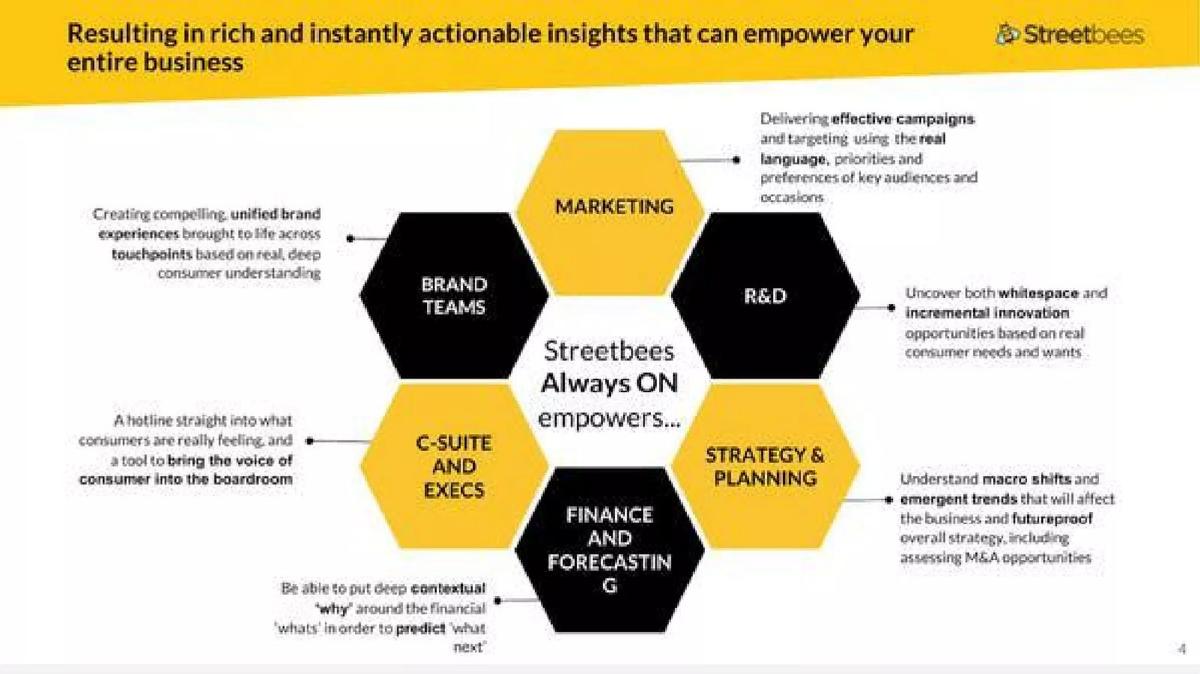
Slide 4: Organizational Impact Using a honeycomb graphic, Streetbees explains how their 'Always ON' platform empowers different departments. It lists Marketing, R&D, Strategy & Planning, Finance and Forecasting, C-Suite and Execs, and Brand Teams. This is a classic enterprise sales tactic: showing that the tool isn't just for a single manager, but is a 'hotline' for the entire boardroom to hear the voice of the consumer.
Slide 5: The Logo Wall This is the strongest slide in the deck. It features 30 high-profile logos including Unilever, PepsiCo, Red Bull, P&G, IKEA, Adidas, and Sony. For an investor, this slide answers the 'traction' question without needing to show a revenue graph. If these global giants have 'adopted the Streetbees Always ON approach,' the product-market fit is implied to be massive.
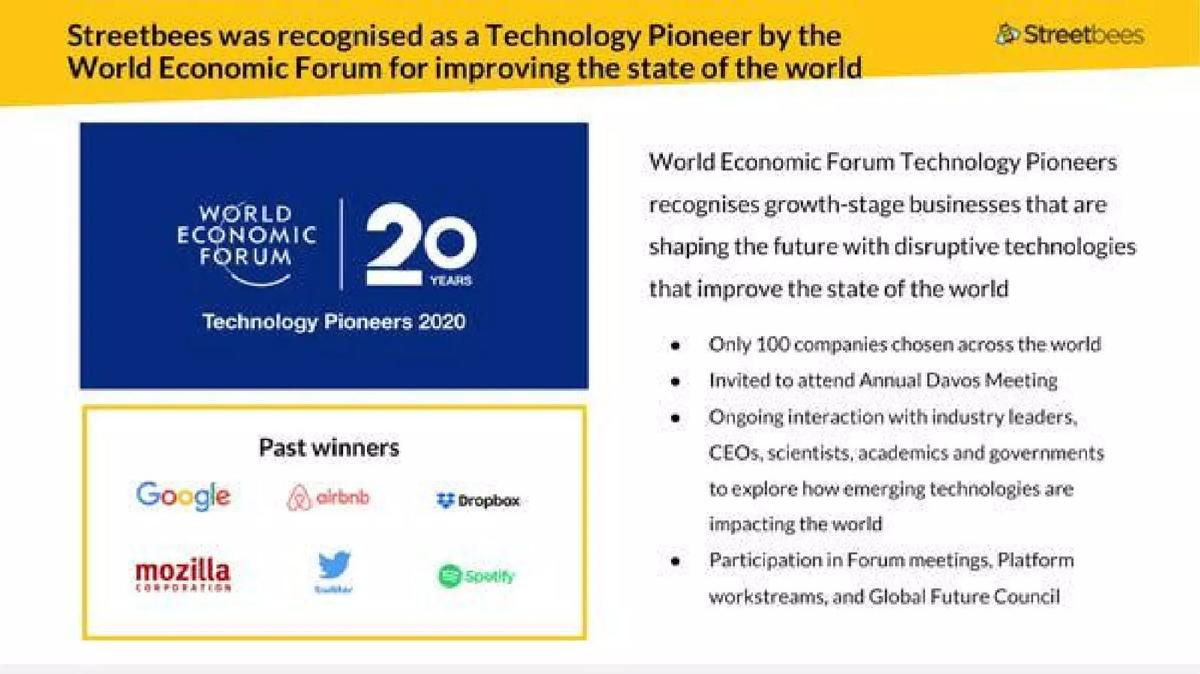
Slide 6: World Economic Forum Recognition Streetbees doubles down on prestige by highlighting their status as a 'Technology Pioneer 2020' by the World Economic Forum. They strategically place their logo alongside past winners like Google, Airbnb, Dropbox, and Spotify. This is a powerful 'association' play, suggesting that Streetbees is on the same trajectory as the most successful tech companies in history.
Slide 7: Awards and Growth The deck continues the validation streak with a grid of nine awards. Notable mentions include the Deloitte Technology Fast 50 (10th fastest growing tech company in London), CB Insights Top 9 Enterprise AI Startups, and the British Business Awards 2019. This slide reinforces the 'fast growth' narrative mentioned in the header.
Slides 8-12: The Product Suite
Slide 8: The Four Solutions This slide acts as a menu for the platform's capabilities. It introduces the Dynamic Growth Engine, Brand Experience Monitor, Dynamic Audience Solution, and Dynamic Media Landscape. Each is accompanied by a small screenshot, signaling that these are functional, shipping products.
Slide 9: Dynamic Growth Engine (DGE) The DGE is explained as a tool to detect 'product & category opportunities hidden in plain sight.' It uses a scatter plot to visualize 'Manic Mornings' (4% of moments), showing how brands can discover untapped demand and craft communications grounded in 'consumer empathy.'
Slide 10: Brand Experience Monitor (BrandX) This slide focuses on performance tracking. It promises a 'single score' for brand performance based on real interactions. The screenshot shows a dashboard with scores for different brands (e.g., 78, 63, 40), allowing companies to drill down into the 'deeper why' of consumer choice.
Slide 11: Dynamic Audience Solution This is a crucial slide for demonstrating monetization and ROI. Streetbees shows how they create 'custom buyable audiences' for Google Ads. By capturing offline variables like 'Brands bought,' 'Home type,' and 'Hobbies,' they allow advertisers to target users with a level of granularity that online-only data cannot provide.
Slide 12: Dynamic Media Landscape The final product slide targets 'Subscriber Media companies' like Amazon Prime Video, Netflix, YouTube, and Spotify. It argues that while these giants know everything about their users online, they have a 'blind spot' regarding their offline lives. Streetbees positions itself as the bridge to create 'rich audience profiles.'
Slide 13: Conclusion
Slide 13: Thank You The deck ends with a simple 'Thank You' over a photo of the Streetbees office. It includes social media handles and a general contact email. There is no call to action, no summary of the investment opportunity, and no mention of the team.
What Works in the Streetbees Deck
Unassailable Social Proof: The combination of Slide 5 (Logos) and Slide 6 (WEF Pioneer) makes it very difficult for an investor to dismiss the company. When you can show that PepsiCo and Unilever are customers, you have already won the 'credibility' battle. The deck uses these logos to act as a proxy for revenue and retention data.
Clear Value Proposition: The deck does an excellent job of explaining why their data is better than traditional research. By framing the problem as 'claimed behavior' vs. 'real behavior' (Slide 2), they create a clear 'before and after' scenario that justifies their existence.
Visual Consistency: The use of the yellow and black 'bee' theme is consistent throughout. The graphics are professional, the screenshots look like a real SaaS product, and the layout is clean. It feels like a deck from a company that is already 'winning.'
What is Missing from the Streetbees Deck
The Human Element: Perhaps the most glaring omission is the lack of a Team slide. Investors invest in people, especially at the early and growth stages. There is no mention of the founders' backgrounds, their previous exits, or the technical expertise of the AI team. This makes the company feel like a faceless entity.
Financial Transparency: There are no numbers regarding Revenue, ARR, Churn, or LTV. While the awards mention 'fast growth,' a sophisticated investor needs to see the actual trajectory. Without a business model slide, it is also unclear how they charge—is it per 'moment,' a monthly subscription, or a percentage of ad spend?
The Competitive Landscape: Streetbees operates in a crowded market research and data analytics space. The deck fails to mention competitors like Kantar, Nielsen, or newer digital-first players. By ignoring the competition, they miss the chance to explain their 'moat' (which is likely their proprietary data set).
The Ask: A pitch deck is a tool to get a check. This deck has no 'Ask' slide. We don't know if they are raising $5M or $50M, what the valuation expectations are, or how the money will be spent (e.g., hiring, international expansion, R&D). This suggests the deck might be a general 'Company Overview' used for both sales and preliminary investor intros, rather than a final closing deck.
What a Founder Should Copy
The 'Context' Hook: Start your deck by challenging a fundamental assumption in your industry. Streetbees' claim that demographics only account for 25% of choices is a great way to reframe the conversation in their favor. If you can change how an investor thinks about the problem, they are more likely to accept your solution.
The 'Empowers Everyone' Graphic: Slide 4 is a great template for enterprise startups. Showing how your product provides value to the C-Suite, Marketing, and Finance departments simultaneously makes the purchase seem like a 'no-brainer' for an organization. It reduces the perceived risk of the product being siloed and forgotten.
Strategic Benchmarking: If you have won an award or been part of an accelerator, don't just list the name. Do what Streetbees did on Slide 6: list the famous companies that were in your shoes previously. It creates a psychological link between your startup and household names like Google or Airbnb.
Product-to-Outcome Mapping: Instead of just showing features, Streetbees shows outcomes. Slide 11 doesn't just say 'we have data'; it says 'we help you buy variables more efficiently in Google Ads.' Always tie your technology back to a specific business result that a customer (or investor) can quantify.
Frequently asked questions
- What is the core problem Streetbees aims to solve?
- Streetbees addresses the inaccuracy of 'claimed behavior' in traditional market research. According to Slide 2, traditional methods rely on what consumers say they do after the fact. Streetbees captures 'real, in-the-moment behavior' verified with photos and text, arguing that 75% of choices are determined by immediate context and emotions (Slide 1) which are often forgotten in retrospective surveys.
- How does the Streetbees technology work?
- The platform uses a chat-style app where 'Bees' (users) share real-life moments via video, photo, and text. As shown on Slide 3, this unstructured data is processed through a Natural Language Processing (NLP) engine trained on 2.5 billion data points. This AI categorizes the data into 'growth spaces' like 'Refuel,' 'Connect,' and 'Reward' to help brands understand the 'why' behind consumer actions.
- Who are Streetbees' primary customers?
- The deck highlights a massive enterprise client base. Slide 5 displays logos for 30 global brands, including FMCG giants like Nestle, Mars Wrigley, and PepsiCo; retailers like IKEA; and tech/media companies like Sony, BBC, and Vodafone. Slide 12 specifically mentions that the platform helps 'Subscriber Media companies' like Netflix and Spotify understand the offline lives of their users.
- What specific products does Streetbees offer to brands?
- Slide 8 outlines four solutions: the Dynamic Growth Engine for identifying untapped demand, the Brand Experience Monitor for tracking performance scores, the Dynamic Audience Solution for creating buyable Google Ads segments, and the Dynamic Media Landscape for merging online and offline audience profiles.
- What is missing from this pitch deck?
- This deck is missing several critical components for a standard venture capital pitch. It lacks a Team slide (no mention of founders Oliver May or Tugce Bulut), a Competition slide, a Business Model/Pricing slide, and any Financials. Most importantly, there is no 'Ask' slide specifying the amount of capital sought or the planned use of funds.