VanMoof’s 2020 pitch deck is a lean, 8-slide introductory document that leans heavily on the company’s 11-year heritage and its 'back-to-front' vertical integration strategy. Rather than overwhelming investors with spreadsheets, the deck focuses on the 'why' and the 'how' of their product ecosystem, specifically highlighting the S3 and X3 models. It effectively captures the 'unprecedented upsurge' in demand caused by COVID-19, positioning the e-bike as a safer alternative to public transport. While it lacks traditional venture capital staples like a team slide, financial projections, or a spe…
Key takeaways
- The company highlights an 11-year journey with over 300,000 development hours dedicated to their products (Slide 2).
- VanMoof defines its 'Secret Weapon' as 'Back to Front Integration,' covering everything from component sourcing to customer relationships (Slide 4).
- The mission is explicitly stated as getting the 'next billion on bikes' (Slide 3).
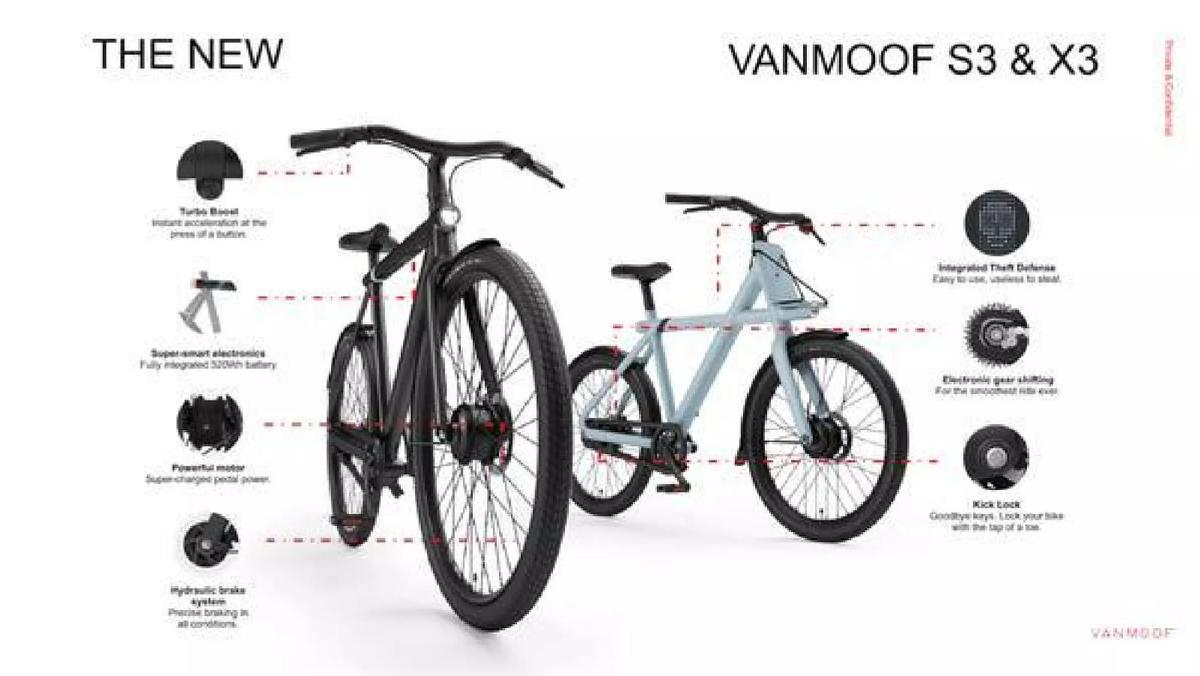
- The deck showcases specific technical features of the S3 and X3 models, including electronic gear shifting and integrated theft defense (Slide 5).
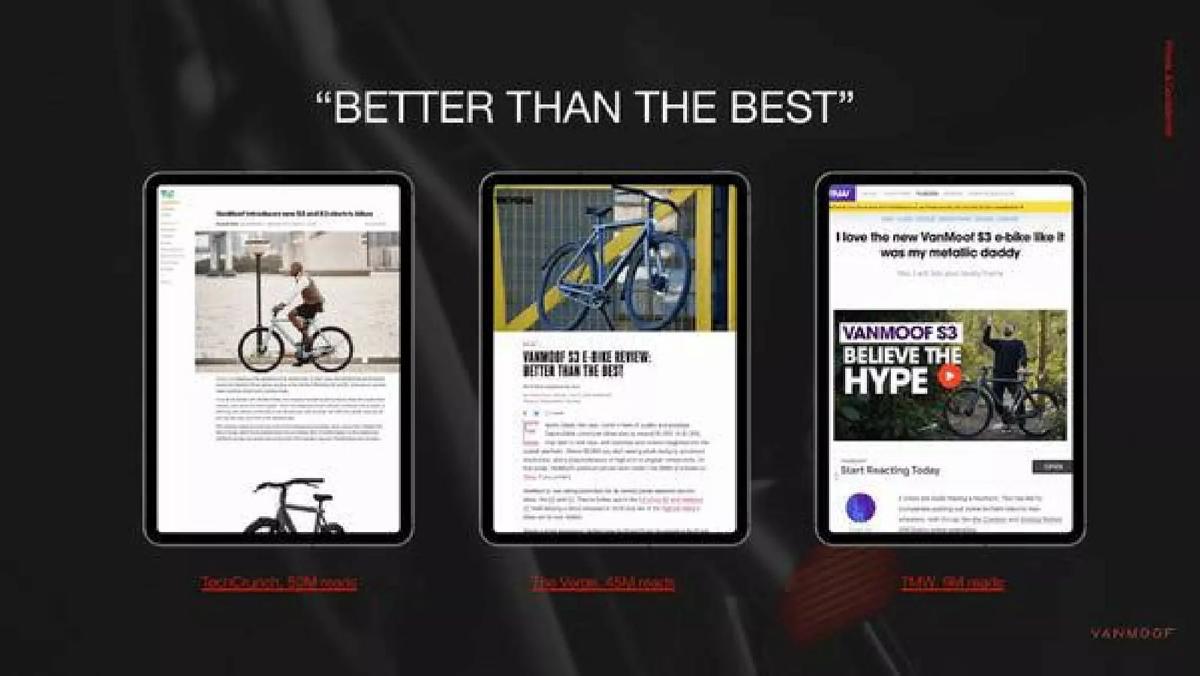
- Social proof is established through major media outlets like TechCrunch and The Verge, citing millions of reads (Slide 6).
- The deck capitalizes on the COVID-19 market impact, citing a 'surge in biking to avoid crowded trains' (Slide 7).
- There is a total absence of financial data, unit economics, or a specific fundraising target within these 8 slides.
- The presentation uses high-contrast, minimalist design to mirror the aesthetic of the hardware itself (Slides 1-8).
Introduction: The Aesthetic of Urban Mobility
The VanMoof pitch deck from September 2020 is a masterclass in minimalist hardware storytelling. At only 8 slides, it doesn't attempt to be an exhaustive financial report. Instead, it functions as a high-level manifesto for a company that had already spent over a decade in the market. Headquartered in Amsterdam, VanMoof uses this deck to transition from a niche designer to a global scale-up, riding the wave of a global pandemic that fundamentally changed urban transportation.
The Vision and the Mission (Slides 1-3)
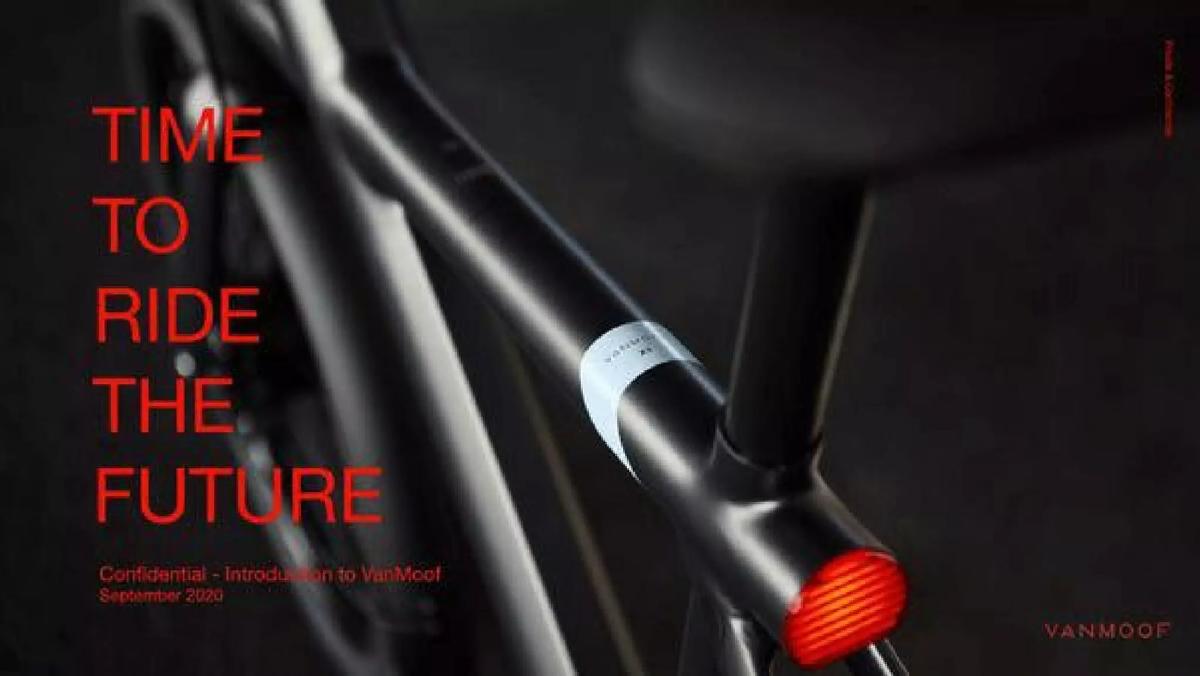
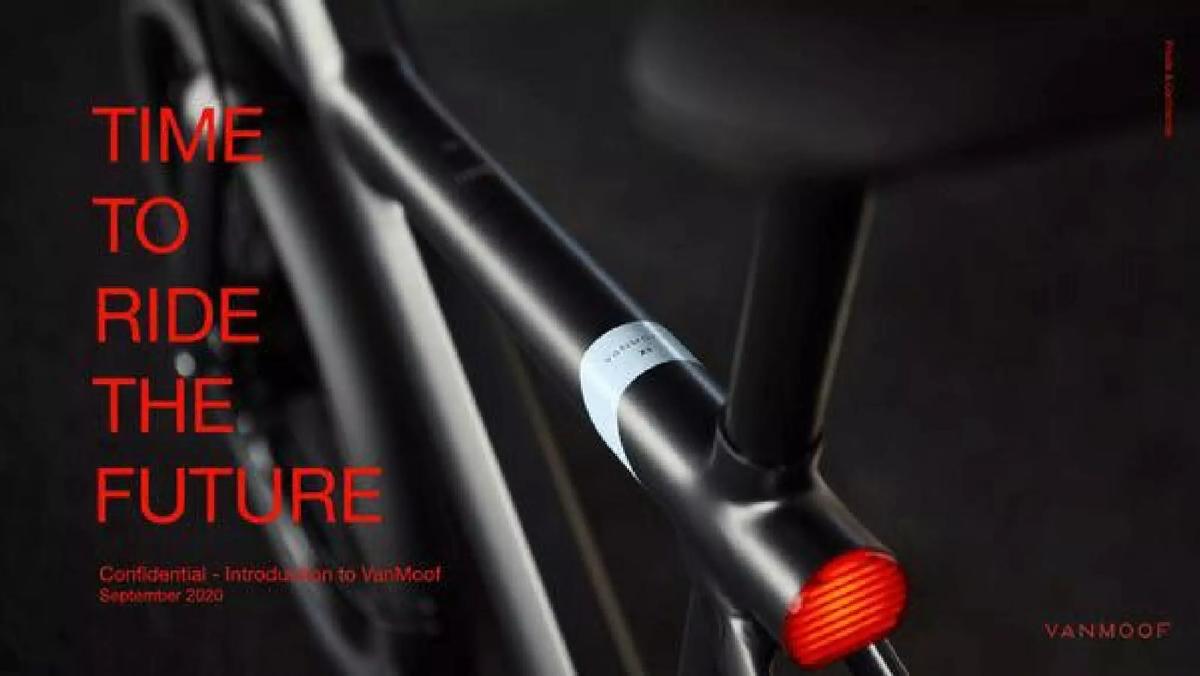
Slide 1: Title Slide The deck opens with a high-resolution, moody close-up of a VanMoof frame. The tagline 'TIME TO RIDE THE FUTURE' is set in a bold, red sans-serif font. It is dated September 2020 and marked as 'Confidential - Introduction to VanMoof.' The branding is immediate; this is not a software company, but a design-led hardware firm.
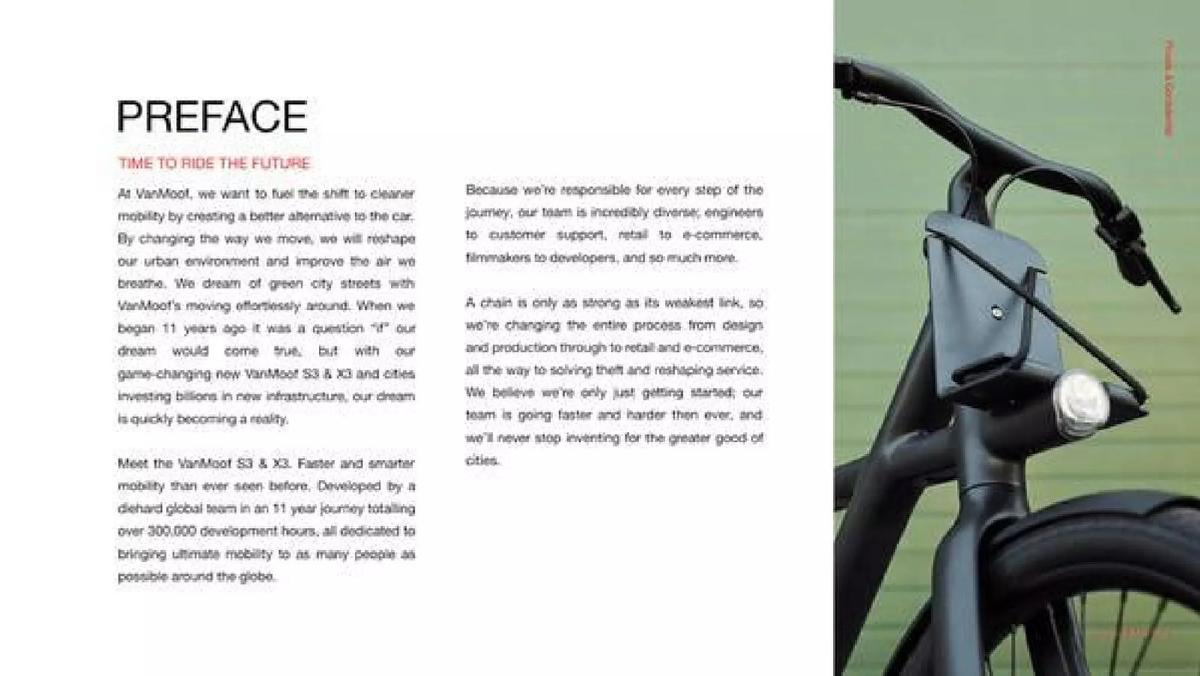
Slide 2: Preface This slide provides the historical context. It notes that the company began 11 years prior and has invested 'over 300,000 development hours' into its products. The text emphasizes a dream of 'green city streets' and positions the e-bike as a 'better alternative to the car.' This is a critical positioning move: VanMoof isn't competing with Trek or Specialized; they are competing with BMW and Ford.
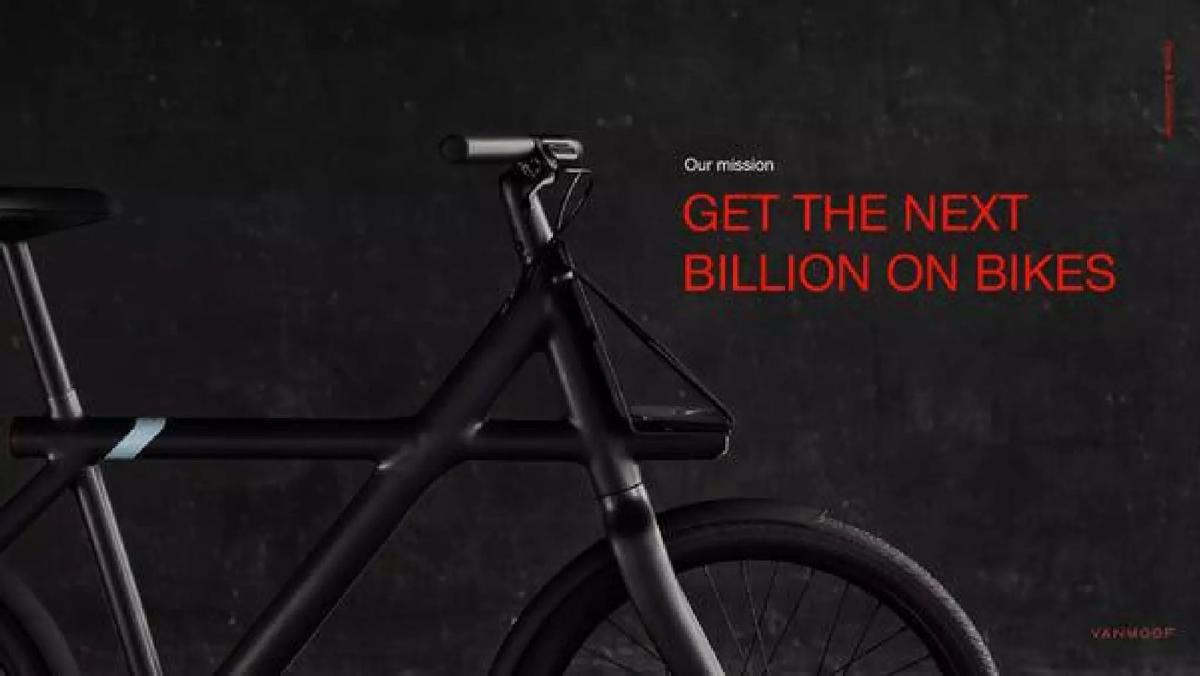
Slide 3: Our Mission The mission is simple and aggressive: 'GET THE NEXT BILLION ON BIKES.' The slide features a full-profile shot of the bike against a dark, textured background. By using the number 'billion,' VanMoof signals to investors that they are chasing a massive Total Addressable Market (TAM), moving beyond the enthusiast market into mass-market adoption.
The Strategy and the Product (Slides 4-5)
Slide 4: Back to Front Integration This is the most 'business-heavy' slide in the deck. VanMoof identifies its 'Secret Weapon' as vertical integration. They divide this into two pillars:
01 Back End: Designing, engineering, and sourcing every individual component and controlling manufacturing. · 02 Front End: Owning distribution, point of sale, and the customer relationship.
This strategy is intended to solve the common hardware pitfall of relying on off-the-shelf parts that don't work together, while also capturing the higher margins of direct-to-consumer (DTC) retail.
Slide 5: The New VanMoof S3 & X3 This slide serves as the technical spec sheet. It uses call-outs to highlight seven key features: Turbo Boost, Super-smart electronics (504Wh battery), Powerful motor, Hydraulic brake system, Integrated Theft Defense, Electronic gear shifting, and the Kick Lock. It’s a clean way to show that 'Ride the Future' isn't just a slogan—it's backed by proprietary hardware features that differentiate them from standard e-bikes.
Social Proof and Market Tailwinds (Slides 6-8)
Slide 6: Better Than The Best VanMoof uses this slide to showcase media validation. It features three tablet mockups showing reviews from TechCrunch ('50M reads'), The Verge ('45M reads'), and TMW ('5M reads'). The Verge headline 'BETTER THAN THE BEST' is used as the slide title. This provides third-party validation of the product quality and the brand's cultural relevance.
Slide 7: Unprecedented Upsurge Timing is everything in fundraising. This slide addresses the 'Covid-19 Market Impact.' It argues that social distancing made e-bikes a 'safer, more dependable mobility option compared to public transport.' It cites specific news items, such as NYC residents turning to bikes and the UK government's £250m investment in cycle lanes. This slide transforms a global crisis into a specific, actionable tailwind for the business.
Slide 8: Thanks! The deck concludes with a simple 'THANKS!' over another high-quality product shot. There is no contact information, no 'Ask' slide, and no summary of the management team. This reinforces the idea that this deck is an introductory 'hook' designed to lead into a deeper conversation.
What Works in the VanMoof Deck
Visual Consistency: The deck looks exactly like the product. The use of dark backgrounds, red accents, and high-quality photography creates a premium feel that justifies a higher price point for the hardware. Investors are buying into a brand, not just a bicycle.
Vertical Integration Narrative: By explicitly calling out 'Back to Front Integration' as a secret weapon, VanMoof addresses the primary concern of hardware investors: margins and supply chain control. It suggests they have a 'moat' because they own the entire stack.
Category Creation: The deck successfully frames the e-bike as a replacement for cars and public transit rather than a recreational toy. This significantly expands the perceived market size in the eyes of an investor.
What is Missing from the VanMoof Deck
The Team: There is no mention of the founders (Taco and Ties Carlier) or the leadership team. In venture capital, the 'who' is often as important as the 'what,' especially in hardware where execution is notoriously difficult.
Financials and Unit Economics: The deck contains zero data on revenue, growth rates, or margins. While it mentions '300,000 development hours,' it doesn't mention the cost of goods sold (COGS) or the customer acquisition cost (CAC). For a Series stage company, these are glaring omissions.
The Ask: A pitch deck usually ends with a clear statement of how much capital is being sought and what it will be used for (e.g., 'Raising $40M for US expansion'). This deck ends abruptly, leaving the investor to guess the objective of the presentation.
What a Founder Should Copy
The 'Secret Weapon' Slide: Every founder should have a slide that clearly identifies their structural advantage. VanMoof’s Slide 4 is a perfect example of how to explain a complex operational strategy (vertical integration) in two simple points.
Leveraging Macro Trends: Slide 7 is a masterclass in showing 'Why Now?' Founders should always link their company's growth to larger, unstoppable shifts in the world, whether they are regulatory, social, or economic.
High-Impact Imagery: Instead of cluttered slides with small text, VanMoof uses large, professional photos. This is particularly effective for physical products. If you are building hardware, your deck should be a gallery of your work, not a wall of text.
Conclusion
The VanMoof 2020 deck is an exercise in brand-led fundraising. It relies on the inherent 'cool factor' of the product and the undeniable logic of the micro-mobility trend during the pandemic. While it lacks the rigor of a full financial pitch, it succeeds as an introductory document that establishes VanMoof as the definitive leader in its category. For founders, it serves as a reminder that sometimes, a clear vision and a beautiful product can speak louder than a spreadsheet—at least for the first meeting.
Frequently asked questions
- What is the primary business model advantage claimed by VanMoof?
- VanMoof claims 'Back to Front Integration' as its secret weapon. As stated on slide 4, this means they design, engineer, and source every individual component and control manufacturing (Back End), while also owning distribution, point of sale, and the customer relationship (Front End). This vertical integration is positioned as a way to ensure quality and maintain a direct link with the user.
- How does VanMoof address the competitive landscape?
- The deck does not include a traditional competitor matrix. Instead, it positions the e-bike as a 'better alternative to the car' (Slide 2) and mentions that 'traditional players struggle with supply chain issues' (Slide 7). By framing the car and public transport as the primary competitors, VanMoof elevates its market category above other bicycle manufacturers.
- What specific products are featured in this deck?
- The deck focuses on the VanMoof S3 and X3. Slide 5 provides a detailed breakdown of these models, highlighting features such as the Turbo Boost, a 504Wh integrated battery, a powerful motor, hydraulic brakes, integrated theft defense, electronic gear shifting, and a 'Kick Lock' system.
- What external factors did VanMoof use to justify its growth potential?
- The deck leans heavily on the 'Covid-19 Market Impact' (Slide 7). It cites 'social distancing' as a driver for high-quality e-bike demand and references government initiatives, such as the UK’s £250m boost for cycle lanes, to show that the environment for urban cycling was rapidly improving due to the pandemic.
- Is this a complete Series round pitch deck?
- Based on the 8 slides provided, this appears to be an 'Introduction' or 'Teaser' deck rather than a full due diligence package. It lacks a team slide, a cap table, financial history, and a clear 'Ask' regarding how much money is being raised and at what valuation. It is designed to generate interest through brand and vision.