Vangst’s 13-slide Series B deck is a masterclass in market timing and category dominance. By positioning cannabis hiring not just as a recruitment task but as a complex regulatory and compliance hurdle, Vangst elevates its SaaS platform to an essential infrastructure play. The deck highlights significant traction, including over 150,000 cannabis gigs filled and a customer base exceeding 1,200 businesses. Notably, they claim that 80% of the largest cannabis companies globally use their platform. While the deck relies heavily on confidential placeholders for specific revenue and competitor data…
Key takeaways
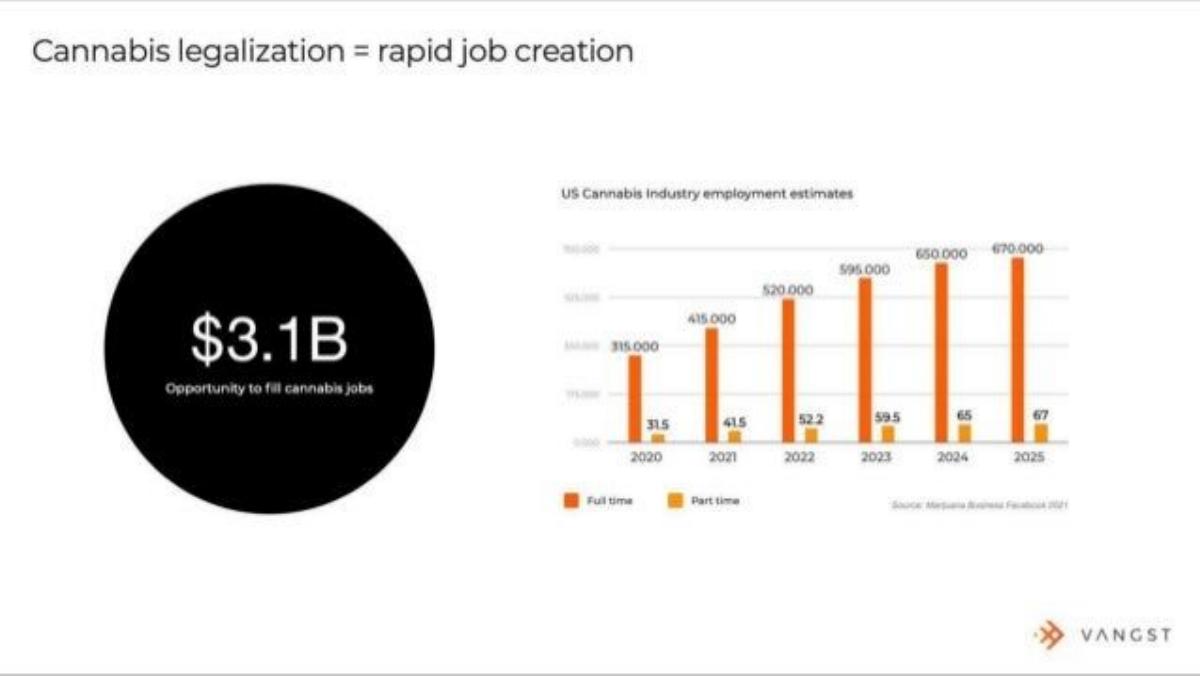
- Vangst identifies a $3.1 billion opportunity specifically in filling cannabis jobs as legalization scales (Slide 4).
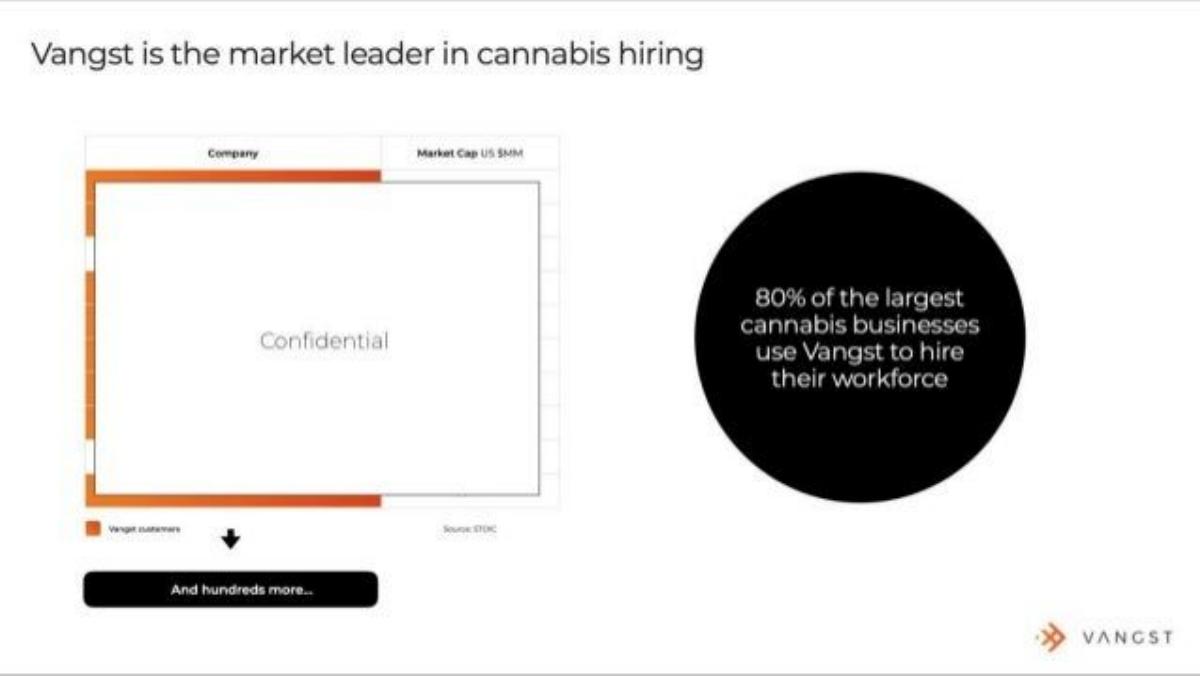
- The company claims a dominant market position, stating that 80% of the largest cannabis businesses in the world use their platform (Slide 5).
- Traction is quantified by over 150,000 cannabis gigs filled and a total customer count exceeding 1,200 (Slide 3).
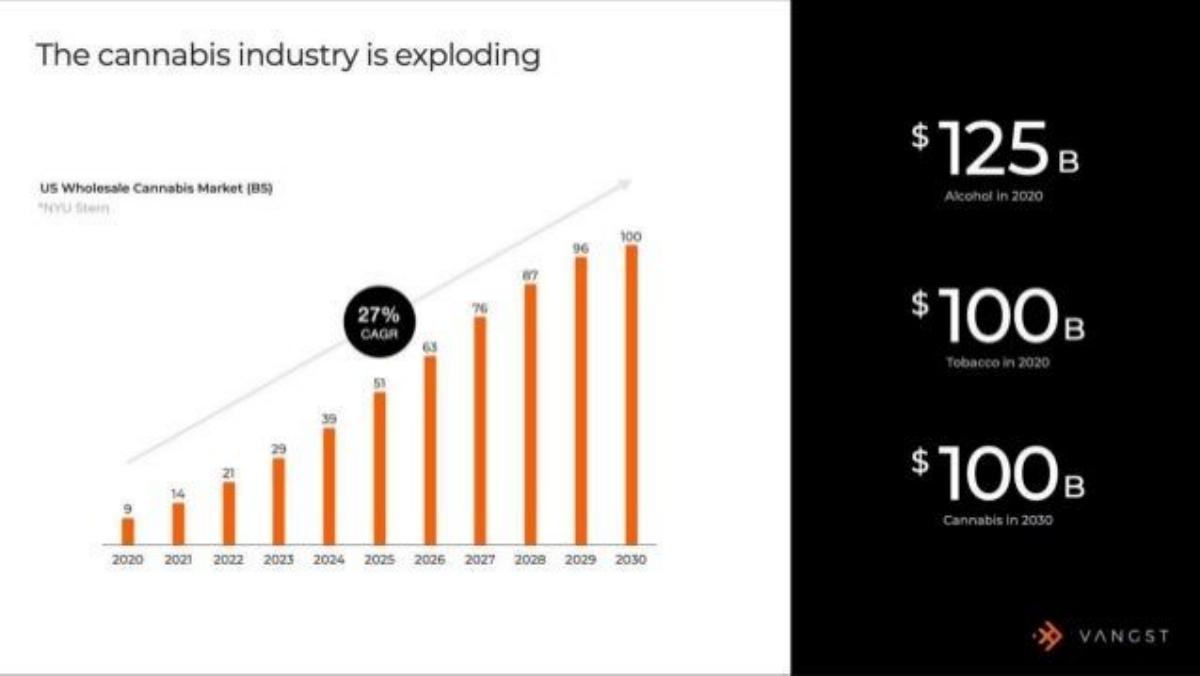
- The US wholesale cannabis market is projected to reach $100 billion by 2030, matching the tobacco industry in size (Slide 6).
- Vangst positions itself against 'boutique' agencies by highlighting its technology-first approach and a team of 55 employees (Slide 10).
- The platform is currently live in 5 states, despite cannabis being legal for adult use in 19 states plus DC, indicating significant expansion room (Slide 9).
- The leadership team includes a founder featured on the Forbes 30 Under 30 list and executives with experience at Robert Half and Adecco (Slide 11).
- Future revenue streams are clearly identified as Training, Community Ads, Payroll, and Advanced Search (Slide 12).
Vangst Pitch Deck Analysis
Vangst’s Series B pitch deck is a 13-slide presentation that focuses on the intersection of a rapidly maturing industry and a specialized labor crisis. The company raised $19M in 2022 to solidify its position as the primary labor marketplace for the cannabis sector. The deck is structured to move from the macro-opportunity of legalization to the micro-efficiency of their SaaS platform.
Slide 1: Title Slide
The deck opens with a minimalist title slide featuring the Vangst logo and a bright orange gradient background. It establishes the brand identity immediately but provides no subtitle or mission statement, relying on the subsequent slides to define the business.
Slide 2: The Problem - Hiring in Cannabis is Hard
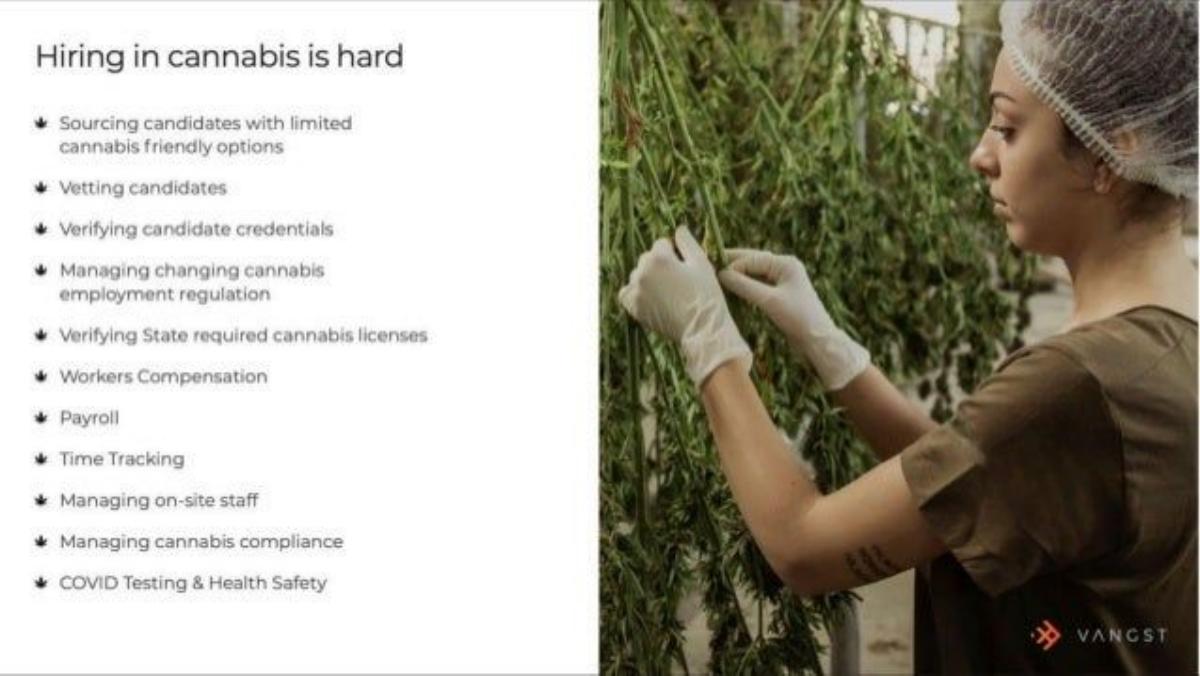
This slide lists 11 specific pain points that make cannabis recruitment unique. These include sourcing candidates in a 'limited cannabis friendly' environment, verifying state-required licenses, and managing changing employment regulations. By including 'COVID Testing & Health Safety' and 'Workers Compensation,' Vangst frames the problem as a complex operational burden rather than just a talent search issue.
Slide 3: The Solution and Traction
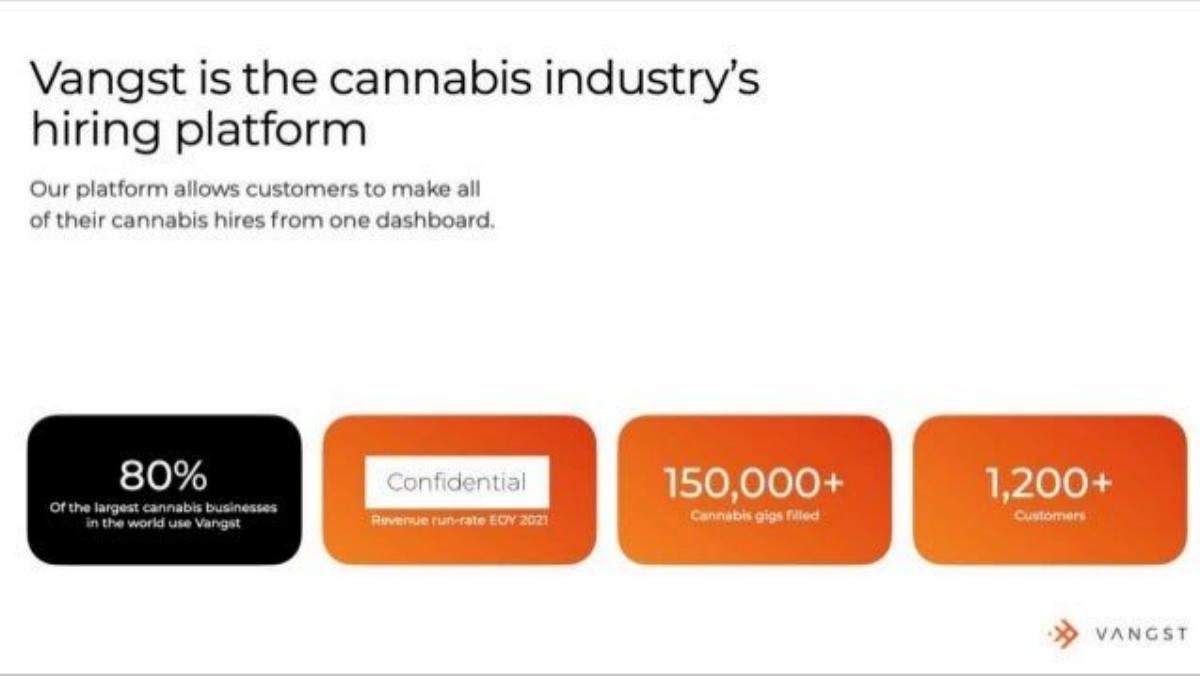
Vangst introduces itself as 'the cannabis industry’s hiring platform.' The slide features four key metrics: 80% of the largest cannabis businesses use the platform, 150,000+ cannabis gigs filled, and 1,200+ customers. A placeholder for 'Revenue run-rate EOY 2021' is marked as confidential, though the visual suggests a high-growth trajectory.
Slide 4: Rapid Job Creation
This slide connects legalization to labor demand. It features a bar chart showing US Cannabis Industry employment estimates growing from 315,000 full-time jobs in 2020 to a projected 670,000 by 2025. The slide highlights a '$3.1B Opportunity to fill cannabis jobs,' which serves as the company's Serviceable Addressable Market (SAM).
Slide 5: Market Leadership
Vangst doubles down on its competitive moat by stating it is the 'market leader.' A confidential table is shown, presumably comparing Vangst's market cap or reach against other players, while a large black circle reiterates that 80% of the largest businesses in the sector are already customers.
Slide 6: The Exploding Industry
To justify a Series B valuation, Vangst shows the total market tailwinds. A chart sourced from NYU Stern shows a 27% CAGR for the US wholesale cannabis market, reaching $100 billion by 2030. Crucially, it compares this to the 2020 figures for Alcohol ($125B) and Tobacco ($100B), suggesting cannabis is on track to become a top-tier vice industry.
Slide 7: Product and Technology
This slide illustrates the user journey in three steps: building a profile/posting jobs, accepting vetted employees, and hiring. It showcases the interface on tablet and mobile devices. At the bottom, it lists three core products: GIGS, Vetted, and Career Page & Job Boost, demonstrating a multi-product strategy.
Slide 8: Revenue Growth Projections
A bar chart shows revenue from 2016 through 2024 (projected). There is a visible dip or stagnation in 2020-2021 marked with a virus icon, acknowledging the impact of the pandemic. However, the 2022-2024 projections show aggressive, exponential growth, supported by the phrase 'And we’re just Getting started.'
Slide 9: GIGS Revenue and Geographic Expansion
This slide focuses on the 'GIGS' product line, showing a month-over-month revenue climb from January to October. It notes that Vangst is 'Live in 5 states,' while 'Cannabis is legal for adult use in 19 States + DC.' This contrast highlights the massive 'white space' available for geographic expansion.
Slide 10: Competitive Landscape
Vangst compares itself to FlowerHire, HempStaff, and Viridian Staffing. The table categorizes Vangst as a 'Hiring platform' with 1,200+ customers and 55 employees, while the competitors are dismissed as 'Boutique recruiting agencies' with 'No technology.' The customer counts for competitors are redacted as confidential.
Slide 11: Leadership and Investors
The team slide features Founder & CEO Karson Humiston (Forbes 30 Under 30), CFO Matt Karlin, CPO Bree Thomas, and others. The slide also highlights their commitment to Corporate Social Responsibility regarding criminal justice reform. Notable investors listed include Lerer Hippeau, Casa Verde Capital, and Colle Capital.
Slide 12: Future Revenue Opportunities
As the company scales, it plans to unlock four new revenue streams: Training, Community Ads, Payroll, and Advanced Search. This indicates a roadmap toward becoming a full-service HR tech stack for the industry, increasing the potential Lifetime Value (LTV) of each customer.
Slide 13: The Ask and Conclusion
The final slide summarizes the 'unique opportunity' through three pillars: Huge regulatory tailwinds, Cannabis business growth, and a Hot job market. While the catalogue facts state the round was for $19M, the slide itself does not list a specific dollar amount or a detailed 'Use of Funds' breakdown, which is a common omission in later-stage decks intended for broad distribution.
What Vangst Does Well
Vangst excels at category leadership positioning . By repeatedly citing that 80% of the largest cannabis businesses use their platform, they create a sense of inevitability. They also do an excellent job of translating regulatory news into business metrics . Instead of just saying 'cannabis is being legalized,' they show exactly how many jobs that creates and what the dollar value of filling those jobs is ($3.1B).
The deck is also visually clean and uses a consistent color palette that avoids the stereotypical 'green' cannabis aesthetic, opting instead for a professional SaaS-orange. This helps position them as a serious technology company rather than a niche industry player.
What is Missing from the Vangst Deck
The most glaring omission is unit economics . For a Series B round, investors typically want to see Customer Acquisition Cost (CAC), Lifetime Value (LTV), and churn rates, especially for a SaaS/Marketplace hybrid. While they show revenue growth, they don't show the efficiency of that growth.
Additionally, the competitive data is heavily redacted . While this is understandable for a public-facing version of a deck, the lack of specific customer counts or revenue for competitors makes the 'market leader' claim harder to verify independently within the document. Finally, there is no 'Use of Funds' slide . A Series B investor wants to know exactly how $19M will be deployed—whether it's for engineering, sales expansion into the other 14 legal states, or marketing.
Founder's Guide: What to Copy
The 'Why Now' Slide: Slide 13 is a perfect example of how to summarize macro trends (regulatory, economic, and labor) to create urgency for an investment. · Market Comparison: Comparing a new industry (Cannabis) to established giants (Tobacco and Alcohol) as seen on Slide 6 is a powerful way to help investors anchor the potential scale of the opportunity. · Problem Specificity: Slide 2 doesn't just say 'hiring is hard.' It lists 11 granular reasons why. Founders should always aim for this level of specificity to prove they understand their domain better than anyone else. · The 'White Space' Visual: Slide 9 effectively uses a simple comparison (Live in 5 states vs. 19 legal states) to show that the company has only captured a fraction of its immediate potential, even while being a 'leader.'
Frequently asked questions
- What is Vangst's primary value proposition?
- Vangst positions itself as the central hiring dashboard for the cannabis industry. According to Slide 3, it allows B2B customers to manage all cannabis hires from a single interface. The platform solves specific industry pain points listed on Slide 2, such as verifying state-required licenses, managing changing employment regulations, and handling cannabis-specific compliance and payroll.
- How does Vangst quantify its market opportunity?
- The deck uses two primary metrics for market size. Slide 4 identifies a $3.1 billion specific opportunity for filling cannabis jobs. Slide 6 provides broader context, showing a 27% CAGR for the US wholesale cannabis market, projected to grow from $9 billion in 2020 to $100 billion by 2030, rivaling the tobacco industry.
- What level of traction had Vangst achieved by the Series B round?
- By the time of this deck, Vangst had filled more than 150,000 gigs and acquired over 1,200 customers (Slide 3). Slide 9 shows a consistent month-over-month increase in 'GIGS Revenue' from January to October, and Slide 5 notes that their client list includes 80% of the world's largest cannabis businesses.
- Who are Vangst's main competitors according to the deck?
- Slide 10 lists FlowerHire, HempStaff, and Viridian Staffing as competitors. Vangst differentiates itself by labeling these firms as 'boutique' agencies that lack technology and 'GIG' offerings. Vangst emphasizes its 55-person team and tech-enabled platform as a superior alternative to traditional manual recruiting.
- What are the projected future revenue drivers for the company?
- Beyond its core hiring and gig platform, Vangst identifies four expansion areas on Slide 12: Training, Community Ads, Payroll, and Advanced Search. These additions suggest a transition from a pure recruitment tool to a comprehensive human capital management (HCM) suite tailored for the cannabis sector.