Vana App positions itself as an 'at-home beauty specialist,' aiming to capture the intersection of physical product discovery and digital community. The deck relies heavily on emotional storytelling regarding female self-confidence and the influence of beauty bloggers. While it identifies a clear price point of $8.00 for its 'Beauty Box,' it lacks the fundamental financial rigor required for a professional fundraise. There are no mentions of customer acquisition costs, churn rates, or detailed revenue projections. The timeline is vague, lacking specific years, and the competitive analysis is…
Key takeaways
- The deck identifies a specific price point of $8.00 for its 'Beauty Box' product on slide 5.
- Market validation is attempted on slide 3 using percentages (81%, 65%, 25% more) but lacks any source citations or context for these figures.
- The business model relies on a multi-platform approach, including an app (slide 6) and a website (slide 7) to build community.
- Competitive landscape is acknowledged on slide 4 by featuring logos for Birchbox and Em Michelle Phan, though no direct comparison is provided.
- The project timeline on slide 8 spans one year (March to February) but does not specify which calendar year the company is targeting.
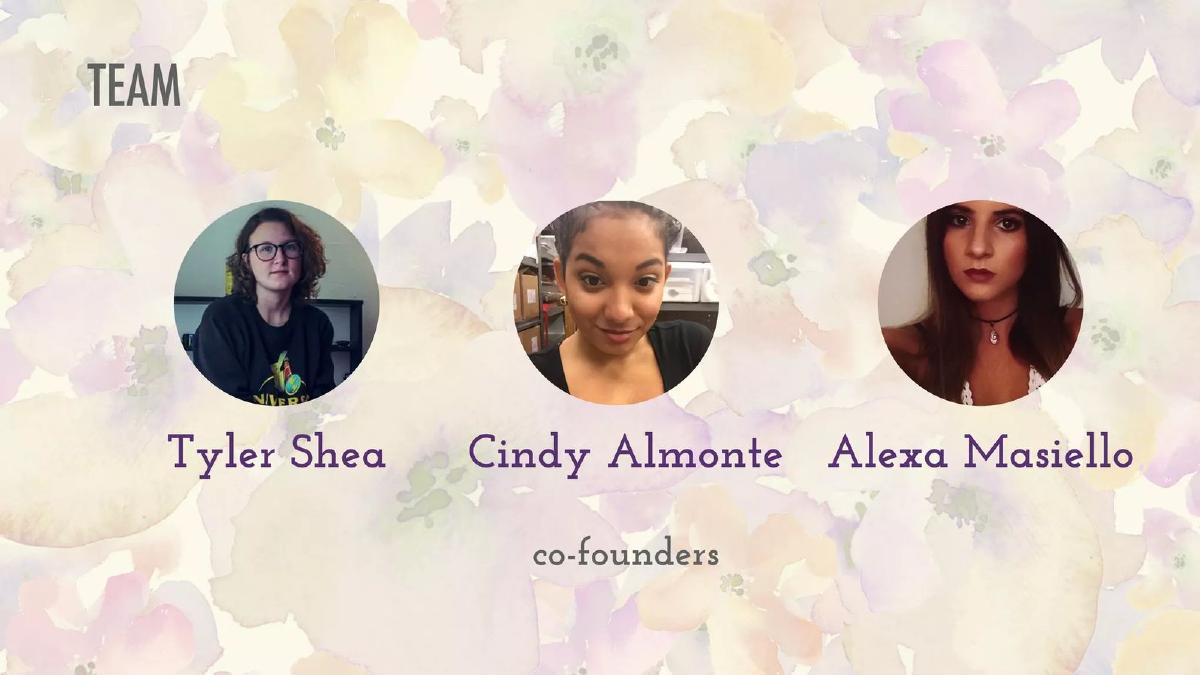
- The deck omits a team slide, failing to introduce the founders or their relevant experience in the beauty or tech sectors.
- There is no 'Ask' slide, leaving potential investors unaware of the capital requirements or valuation expectations.
- Unit economics, such as the cost of goods sold (COGS) for the $8.00 box, are entirely missing from the presentation.
Introduction and Brand Positioning
Vana App presents itself as a solution to the complex emotional and commercial landscape of the beauty industry. The deck is characterized by a soft, floral aesthetic that aligns with its target demographic but lacks the data-heavy slides typically found in seed-stage tech pitches. The narrative focuses on the 'at-home beauty specialist' concept, attempting to bridge the gap between digital advice and physical product testing.
Slide 1: The Emotional Hook
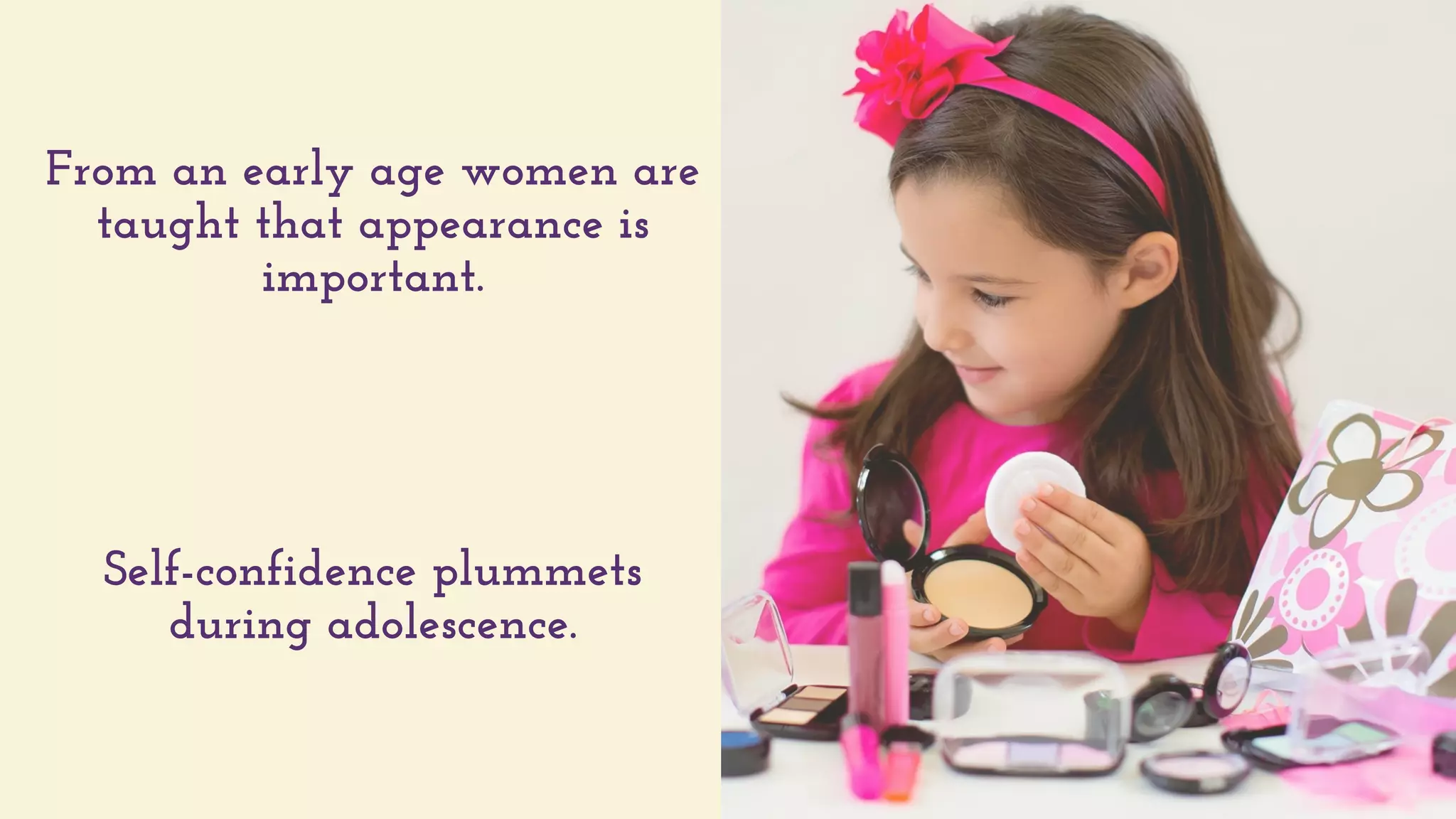
The deck opens not with a business metric, but with a social observation. Slide 1 features a photo of a young girl playing with makeup accompanied by the text: "From an early age women are taught that appearance is important. Self-confidence plummets during adolescence." This slide establishes the 'Why' behind the company, suggesting that Vana App aims to address the self-esteem issues inherent in the beauty industry. However, it does not yet explain how a mobile app or subscription box solves this systemic issue.
Slide 2: Title Slide
Slide 2 introduces the brand name, "Vana," with the tagline "The at-home beauty specialist." The visual theme is consistent, using a purple script font over a watercolor floral background. This slide confirms the company's identity but offers no information regarding the stage of the company or the location of its headquarters.
Slide 3: What Women Want
Slide 3 attempts to provide market validation through three statistics: "81%," "65%," and "25% more." The slide uses icons—a person applying makeup and a house—to imply these figures relate to beauty habits and home-based services. Critically, there are no labels explaining what these percentages represent, nor are there any citations for the data. In a professional teardown, this is a significant red flag; data without context or source is effectively meaningless to an investor.
Slide 4: Competitive Landscape
Titled "Who's Responsible for the Sales?" , slide 4 identifies the current gatekeepers of the beauty market. It displays the logos for Birchbox and Em Michelle Phan . Below these, it lists three categories: "beauty forums," "beauty suppliers," and "beauty bloggers." This slide acknowledges that the market is currently driven by influencers and existing subscription models, though it fails to articulate Vana's unique competitive advantage over these established players.
Slide 5: The Beauty Box Product
Slide 5 provides the most concrete business information in the deck. It shows a smartphone mockup displaying the Vana interface. The slide highlights a "Flat sale rate for each box" of "$8.00." It also notes that users can "Discover each product featured and how it's good for you." The interface shows a 'Skin Saviour' kit and mentions ingredients like 'Brown Sugar Scrub' and 'Mint and Lemon Face Mask.' This slide confirms that Vana is a subscription or per-box commerce model, priced significantly lower than many competitors like Birchbox (which typically started at $10.00+).
Slide 6: The App Strategy
Slide 6 focuses on the digital component: "Launch Vana the app. This is where Vana gains members and their trust in finding all things beauty." The slide is minimalist, featuring a smartphone icon. It suggests that the app is the primary acquisition channel and the place where the brand relationship is established, though it lacks screenshots of the app's actual functionality beyond the shop view seen on the previous slide.
Slide 7: The Website Strategy
Slide 7 introduces the secondary digital layer: "Vana's website will be launched to build upon the app and create a stronger relationship with its members." This suggests a cross-platform approach. However, the deck does not explain why a separate website is necessary for 'relationship building' if the app is already the trust-building platform, nor does it detail the specific features the website would host (e.g., a blog, forum, or account management).
Slide 8: Project Timeline
Slide 8 outlines a roadmap for the company's development. The milestones are:
March: Build partnerships with beauty companies to provide samples. · August: Vana's first platform for interactive services is launched. · December: Build Vana community through another online base. · February: Continue growing Vana as popularity rises and more members sign up.
The timeline is problematic because it omits the year. Furthermore, the milestones are vague. 'Interactive services' and 'another online base' are not defined, making it difficult to assess the technical or operational complexity of the rollout.
Slide 9: The Vision Statement
The final slide in this set returns to the emotional narrative. Over a faded image of a beauty salon, the text reads: "The future of the beauty industry relies on making that personal connection with women. Vana understands and utilizes that in order to give women the confidence they need to choose the products that will make them look fierce." This serves as a closing mission statement but lacks a call to action or contact information.
What Works in This Deck
The deck is visually cohesive. The use of a consistent color palette and floral motifs creates a clear brand identity that feels appropriate for the beauty sector. By identifying a specific price point ($8.00), the founders have at least committed to a pricing strategy, which allows for a basic discussion on market positioning. The focus on 'trust' and 'personal connection' identifies a genuine pain point in a market often criticized for being impersonal or overly commercial.
What Is Missing
This deck is missing almost all the fundamental components required for a successful fundraise. First, there is no team slide. Investors back people, especially at the early stage, and there is no mention of who is building Vana. Second, there is no 'Ask.' The deck does not state how much money is being raised or what the milestones for that capital would be. Third, the unit economics are absent. Selling a box for $8.00 is a low-margin play; without showing the cost of goods, shipping, and customer acquisition, it is impossible to determine if this is a viable business. Finally, the market data on slide 3 is unusable due to the lack of context and sourcing. The deck functions more as a student project or a preliminary brand concept than a professional investment vehicle.
Founder Takeaways
Founders should note that while a strong brand aesthetic is helpful, it cannot replace business logic. If you include statistics, they must be cited and explained. If you propose a physical product (like a subscription box), you must address the logistics and margins. Most importantly, never omit the team slide; your background is often the most valuable asset in the room during an early-stage pitch.
Frequently asked questions
- What is the primary product offered by Vana App?
- Based on slide 5, the primary product is a 'Beauty Box' priced at a flat rate of $8.00. The app and website are presented as supporting platforms to facilitate product discovery and community engagement, helping users understand how each featured product is 'good for you.'
- How does Vana App justify its market need?
- The deck uses a sociological hook on slide 1, stating that women are taught the importance of appearance from an early age and that self-confidence plummets during adolescence. It suggests that the future of the industry relies on personal connections to restore this confidence (slide 9).
- Who does Vana App consider its competition?
- Slide 4, titled 'Who's Responsible for the Sales?', displays logos for Birchbox and Em Michelle Phan. It also lists 'beauty forums,' 'beauty suppliers,' and 'beauty bloggers' as the current drivers of sales in the industry, implying Vana intends to compete or collaborate within this ecosystem.
- What is the projected timeline for Vana App's rollout?
- Slide 8 outlines a four-stage timeline: building partnerships in March, launching the app in August, building the community via a website in December, and focusing on growth and member sign-ups in February. No specific year is attached to these months.
- Is there any financial data regarding profitability or growth?
- No. The deck is notably thin on financial metrics. Beyond the $8.00 price point for the box, there is no information on margins, projected revenue, user growth targets, or the cost to acquire a customer (CAC).