Vaivolta, a Brazilian marketplace for construction equipment rental, utilized a 14-slide deck in 2012 to secure $100,000 in pre-seed funding. The deck is notable for its aggressive 'traction-first' strategy, placing a massive $7M equipment request figure and a 40% month-over-month growth chart at the very beginning of the presentation. While the deck lacks traditional financial projections, unit economics, or a specific 'ask' slide, it compensates with strong local market validation through partnerships with PINI and SindusCon-SP. The visual style is minimalist, relying on high-impact photogr…
Key takeaways
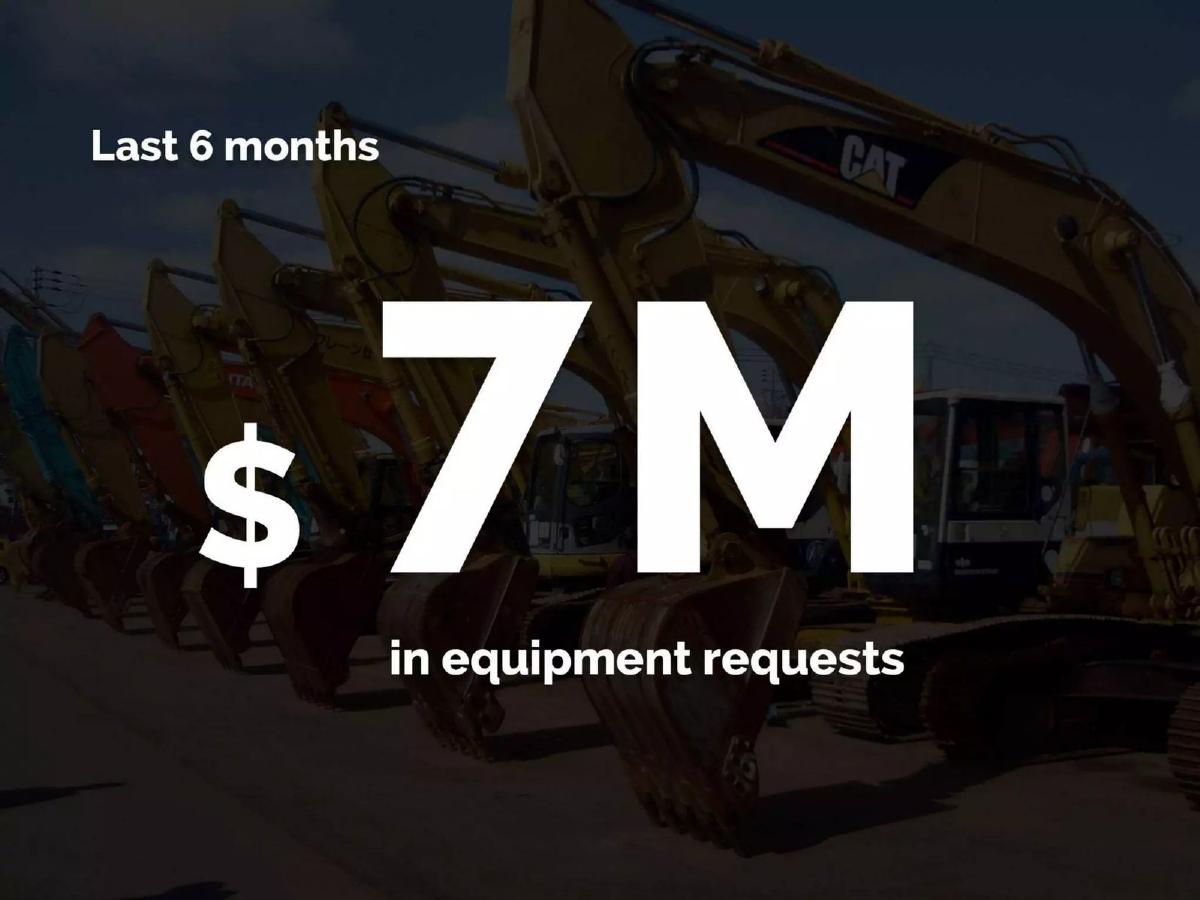
- The deck leads with a massive traction hook, citing $7M in equipment requests over the last 6 months on slide 3.
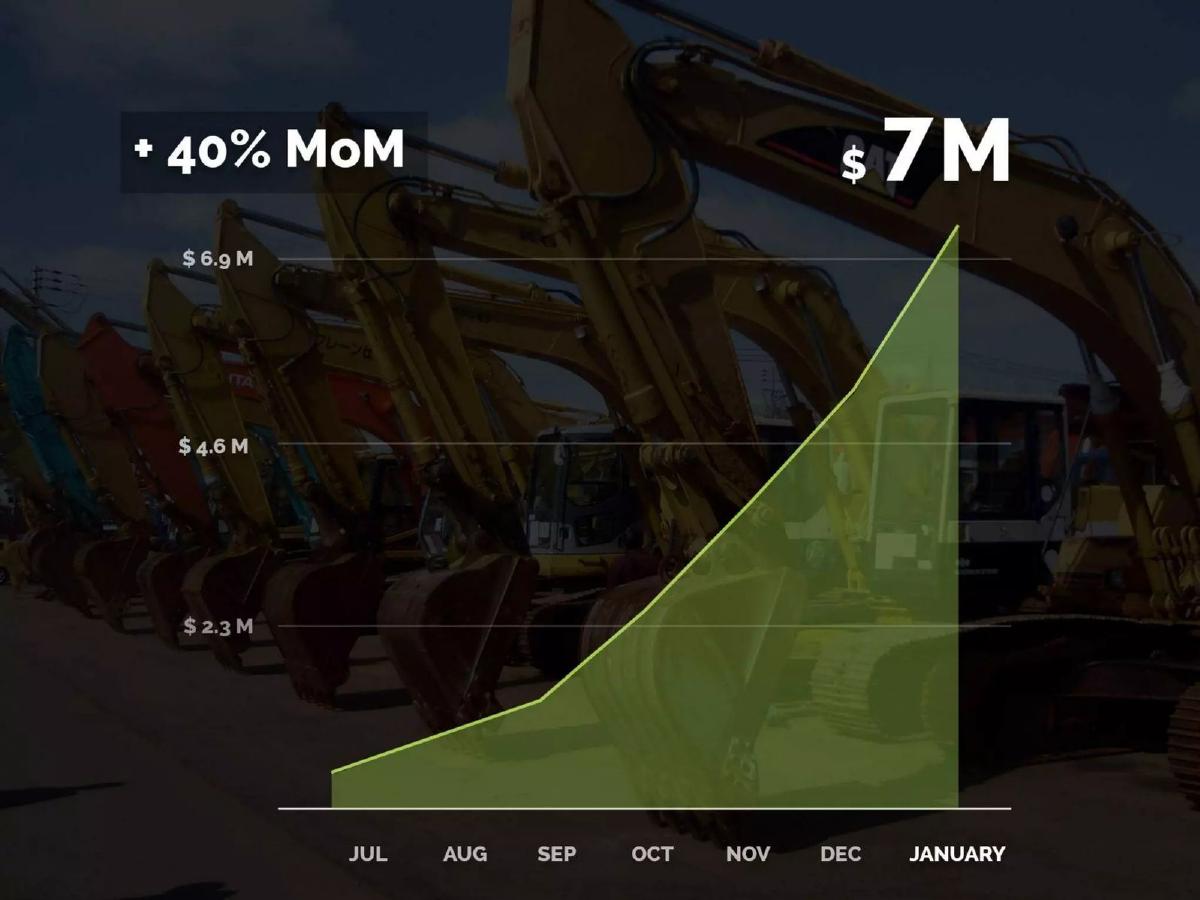
- Growth is demonstrated through a 40% month-over-month increase in request volume from July to January on slide 4.
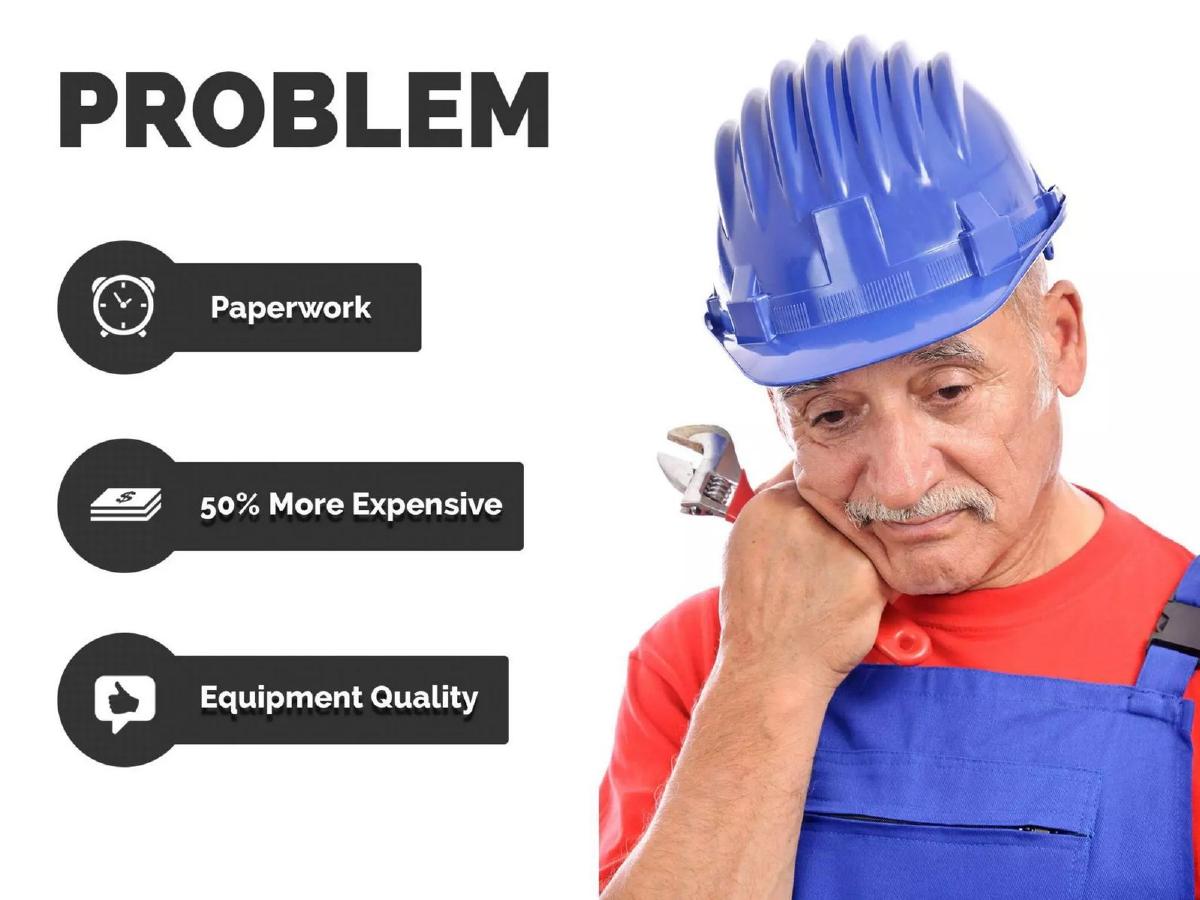
- The problem slide identifies three specific pain points: paperwork, 50% higher costs, and equipment quality on slide 5.
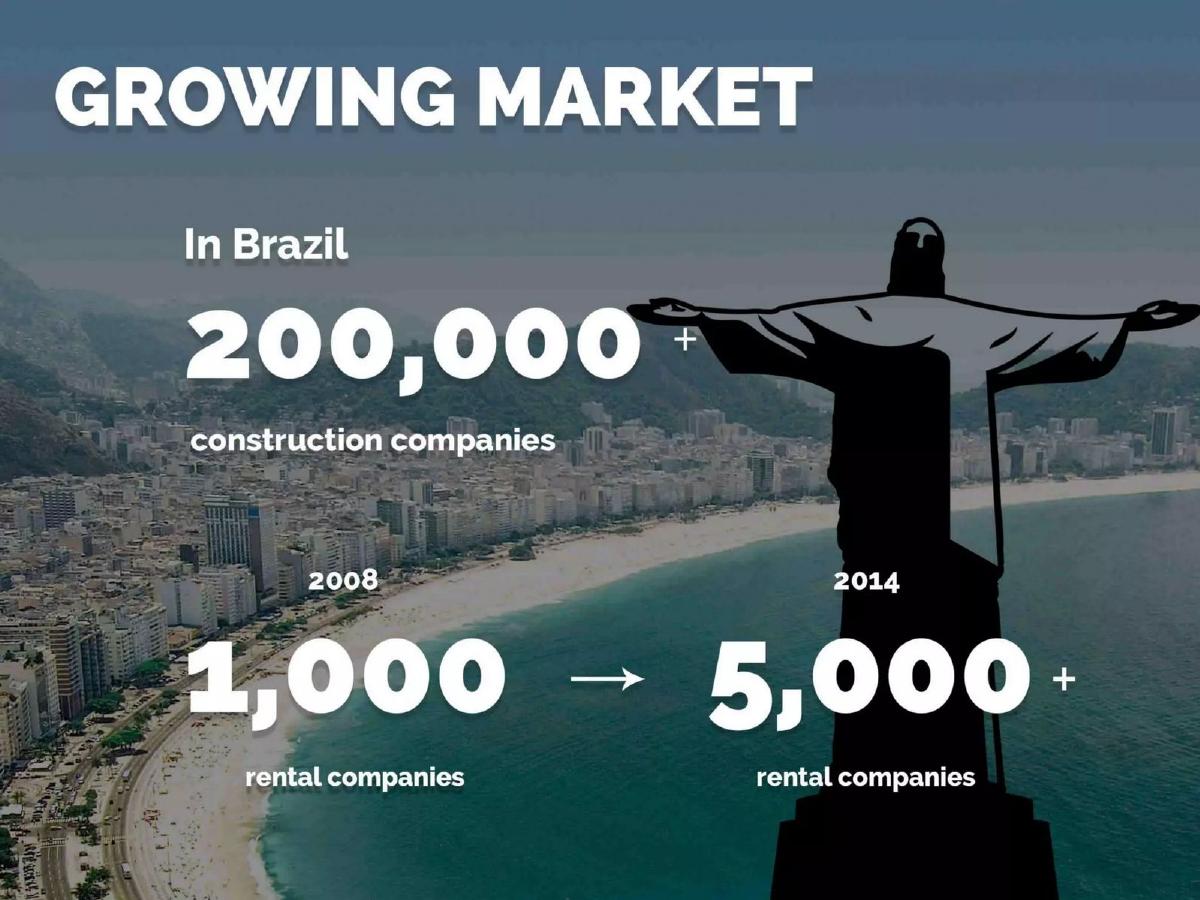
- Market sizing focuses on Brazil, noting 200,000+ construction companies and a growth from 1,000 to 5,000+ rental companies on slide 6.
- The total addressable market for equipment rental in Brazil is valued at $3.5B on slide 7.
- Product validation is shown through UI mockups of a search interface and a specific 'Bobcat Skid Steer Loader' rental page on slides 9 and 10.
- Strategic partnerships are a core pillar, featuring PINI as an investor and SindusCon-SP as a partner expected to bring 2,000+ companies on slide 11.
- The deck completely omits a financial 'ask' slide, a use of funds breakdown, and a detailed competitor analysis.
The Traction-First Marketplace Pitch
Vaivolta’s 2012 pitch deck is a classic example of using raw volume to distract from a lack of structural business detail. At the pre-seed stage, investors are often looking for two things: a massive market and evidence that the founders can capture it. Vaivolta answers these two questions emphatically in the first four slides, leaving the 'how' and the 'how much' for later discussion. By the time an investor reaches the end of the 14-slide deck, they have been hit with a $7M traction figure and a $3.5B market size, which likely served as the primary catalyst for their $100,000 raise.
Slides 1-4: The Hook and the Growth
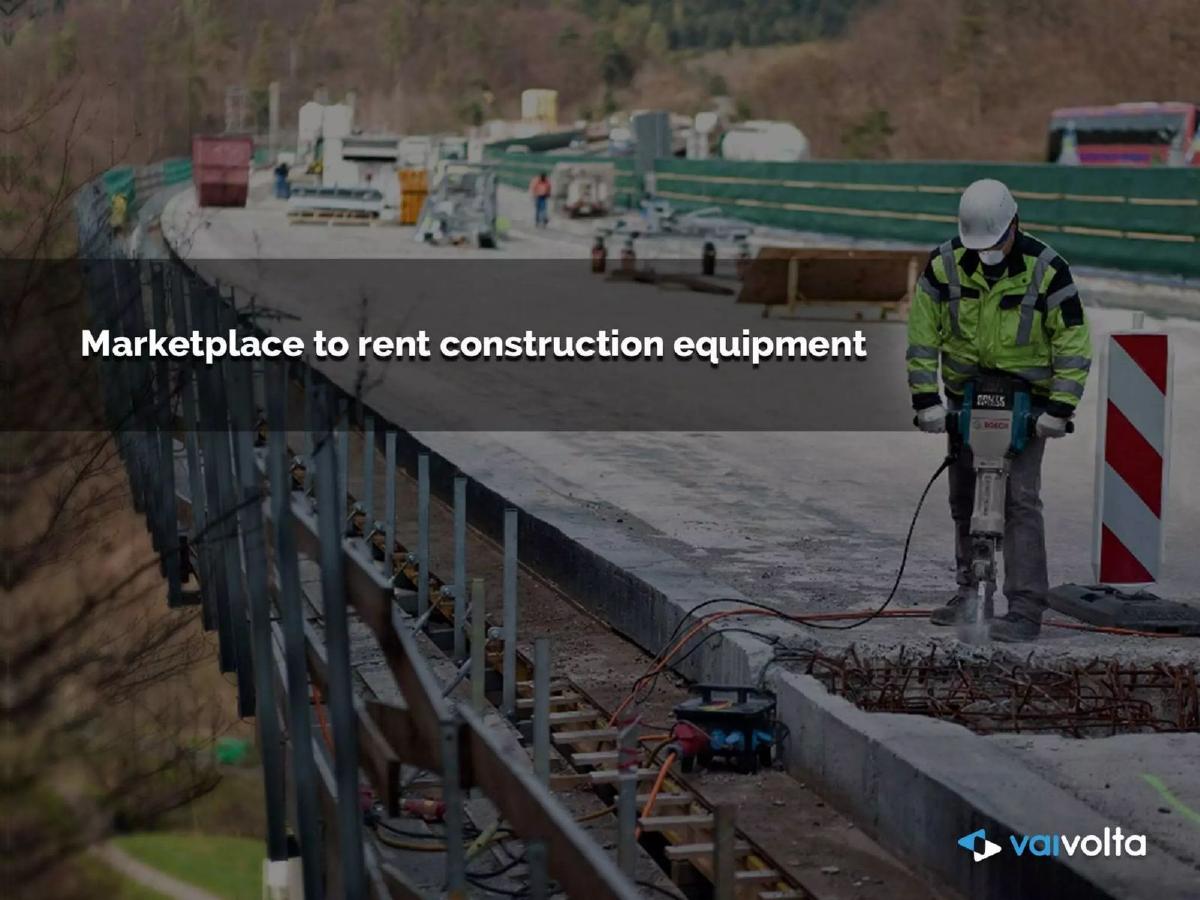
Slide 1 is a standard title slide featuring the Vaivolta logo over a construction site. It establishes the industry context immediately without words. Slide 2 follows with a simple one-sentence value proposition: "Marketplace to rent construction equipment." This is an effective use of a 'high-concept pitch' that requires zero cognitive load from the viewer.
Slide 3 is where the deck does its heavy lifting. It features a massive "$7M" in white text, labeled as "in equipment requests" over the "Last 6 months." For a pre-seed company in 2012, this is a staggering number. However, as an analyst, it is important to note the phrasing: "requests." This is not revenue, nor is it necessarily Gross Merchandise Volume (GMV). It represents the total value of quotes requested through the platform. While it proves demand, it doesn't prove the ability to close or monetize those deals. Slide 4 doubles down on this momentum, showing a 40% month-over-month growth chart from July to January, culminating in that $7M peak. The visual choice of a bright green area chart against a dark background emphasizes the upward trajectory.
Slides 5-7: Problem and Market Sizing
Slide 5 outlines the problem using three icons: Paperwork, 50% More Expensive, and Equipment Quality. The claim that current methods are "50% More Expensive" is a bold quantitative hook, though the deck provides no data to back up how that percentage was calculated. The imagery of a frustrated worker is a bit cliché but serves the purpose of humanizing the B2B pain point.
Slide 6 and 7 focus on the Brazilian market. Slide 6 uses the iconic Christ the Redeemer silhouette to localize the opportunity, noting 200,000+ construction companies. More importantly, it shows a trend: the number of rental companies grew from 1,000 in 2008 to over 5,000 in 2014. This suggests a fragmenting market that is ripe for a centralizing marketplace. Slide 7 puts a dollar value on this: a $3.5B equipment rental market. By keeping these slides extremely sparse, Vaivolta ensures the big numbers are the only thing the investor remembers.
Slides 8-10: The Solution and Product
Slide 8 defines the solution as a way to "Quote hundreds of equipment in many different suppliers and choose which one to rent comparing price, company reputation and services offered." This slide effectively explains the three-pronged value of a marketplace: discovery, price transparency, and trust (reputation).
Slides 9 and 10 provide product screenshots. Slide 9 shows a clean, search-centric homepage that mirrors the user experience of successful consumer marketplaces like Airbnb or Expedia. Slide 10 is a deep dive into a product page for a "Bobcat Skid Steer Loader." This slide is particularly effective because it shows social proof: "226 Customers have used the VaiVolta for the rental of Bobcat Skid Steer Loader" and "45 Rental fleet is equipped." These micro-metrics suggest that the $7M in requests mentioned earlier is distributed across a real supply base.
Slides 11-14: Partnerships, Team, and Summary
Slide 11 focuses on institutional validation. It lists PINI as an investor, identifying them as the "Biggest marketing company for construction." It also lists a partnership with SindusCon-SP, the construction union of Sao Paulo. The claim that this partnership is "expected to bring more than 2,000 construction companies" gives the investor a clear view of the company’s go-to-market strategy and customer acquisition channel.
Slide 12 introduces the founders, Lincoln Ando and Victor Queiroz. The slide includes logos for UNICAMP (a top Brazilian university) and Banco Original. However, the slide is weak on specifics; it doesn't state their roles (CEO, CTO, etc.) or their specific professional backgrounds. Slide 13 is a summary slide that restates the three main pillars: the 200,000-company problem, the $7M traction, and the "right partners." Slide 14 is a contact slide for Lincoln Ando, notably including both a US and a Brazilian phone number, suggesting international ambitions or a presence in a US-based accelerator.
What Works
Traction Up Front: Leading with the $7M figure immediately qualifies the startup as a high-growth opportunity. · Visual Simplicity: The deck uses very little text, opting for large numbers and clear imagery. This is ideal for a presentation deck where the founder is speaking over the slides. · Local Dominance: The deck makes a very strong case for why this is the right time and place for this business in Brazil, citing specific local growth in rental companies and key local partnerships. · Social Proof: Including the number of customers who rented specific equipment (Slide 10) adds a layer of authenticity to the larger $7M request figure.
What is Missing
The Ask: There is no mention of how much money is being raised, the terms of the round, or what the milestones will be for the next 18 months. · Business Model: The deck never explains how Vaivolta makes money. Is it a commission on the rental? A subscription for suppliers? A lead-gen fee? This is a significant omission for a marketplace. · Competition: There is no competitive landscape slide. Even if they were the first in Brazil, they should have compared themselves to traditional methods or international analogues (like United Rentals in the US). · Unit Economics: There is no mention of Customer Acquisition Cost (CAC) or Lifetime Value (LTV), which are critical for evaluating the scalability of a marketplace. · Financial Projections: The deck shows past growth but offers no forward-looking projections on revenue or volume.
What a Founder Should Copy
The 'Traction Hook': If you have a number that sounds impressive, put it on Slide 3. Don't bury it in the middle of the deck. Vaivolta uses their request volume to create an immediate sense of FOMO (fear of missing out). · Localized Market Sizing: Instead of just using a global TAM, Vaivolta showed the specific growth of suppliers in their target geography (Slide 6). This proves the market is not just big, but actively evolving in a way that favors their platform. · Partnership Validation: If you have a partnership with a major industry body, treat it as a core asset. Slide 11 does a great job of showing how Vaivolta will scale without needing a massive direct sales force. · High-Fidelity Mockups: Showing a specific product page with real-world data (like the Bobcat on Slide 10) is much more convincing than a generic homepage mockup.
Frequently asked questions
- What was the primary metric Vaivolta used to demonstrate traction?
- Vaivolta used 'Equipment Requests' as their primary metric. Slide 3 highlights $7M in requests over a six-month period, and slide 4 shows this volume growing at 40% month-over-month. It is important to note that this represents gross request volume, not necessarily realized revenue or GMV, which is a common way for early-stage marketplaces to show demand before transactions are fully captured on-platform.
- How did the deck define the market opportunity in Brazil?
- The deck focused on the rapid professionalization of the Brazilian construction sector. Slide 6 shows the number of rental companies quintupling from 1,000 in 2008 to over 5,000 in 2014. Slide 7 identifies a $3.5B total market for equipment rental, supported by the presence of over 200,000 construction companies nationwide.
- Who were the key partners mentioned in the deck?
- Vaivolta highlighted two major institutional relationships on slide 11. They listed PINI, described as the 'biggest marketing company for construction,' as an investor. They also touted a partnership with SindusCon-SP, the union of construction companies in Sao Paulo, which they expected to provide access to over 2,000 construction firms.
- What critical information is missing from the Vaivolta deck?
- The deck is missing several standard fundraising components. There is no 'Ask' slide detailing how much capital is being raised or the valuation. It lacks a 'Use of Funds' slide, a 'Competition' slide, and any mention of unit economics or the business model (e.g., take rates or subscription fees). Additionally, the team slide lacks specific professional titles or past achievements.
- Is the product shown in the deck a functional platform or a prototype?
- The deck shows high-fidelity mockups on slides 8, 9, and 10. Slide 10 specifically shows a functional-looking rental page for a Bobcat Skid Steer Loader, including a 'See Prices Now' button and a counter showing that 226 customers had used the platform for that specific equipment type. This suggests the platform was live and facilitating requests at the time of the pitch.