Organise’s 14-slide Seed deck is a compelling example of how to lead with results rather than theory. Instead of spending time on the abstract philosophy of labor rights, the deck immediately showcases high-profile 'wins' at major UK employers like McDonald’s, Tesco, and ITV. By documenting specific outcomes—such as securing the biggest pay rise in a decade for McDonald's workers—the founders prove the platform's efficacy before even introducing themselves. The team slide further reinforces this credibility, highlighting deep domain expertise in digital campaigning from organizations like 38…
Key takeaways
- The deck leads with a 'Traction Timeline' on slide 3, highlighting major wins at ITV, Tesco, McDonald's, Ted Baker, and Boots between 2017 and 2019.
- Slide 4 provides specific proof of impact, citing a campaign for £10 an hour that resulted in the biggest McDonald's pay rise in 10 years.
- The platform uses crowdsourced data to drive change, such as identifying patterns of kitchen burns at McDonald's to demand better safety (slide 4).
- Competitive benchmarking is used as a lever for change, as seen on slide 5 where ITV staff compared their 12-week maternity pay to Sky's 26 weeks to win an increase.
- The team slide (slide 6) establishes founder-market fit by noting Nat Whalley took 38 Degrees to £5 million in annual revenue via user subscriptions.
- CTO Bex Hay brings significant scale experience, having led a platform with 2 million regular users and 10 million global users (slide 6).
- The deck sets a clear growth milestone on slide 7, aiming for one million users in the UK by the end of 2020.
- Business Insider reports the company raised $750,000 in a 2020 Seed round following this presentation.
The Power of Proof: Organise's Seed Deck Analysis
Organise entered the market with a unique proposition: a digital platform for worker rights. In a sector often viewed as 'non-profit' or 'social impact only,' the founders needed to prove that their technology could move the needle at the world's largest corporations. The resulting 14-slide deck, which helped secure $750,000 in 2020, is a masterclass in using traction as a shield against skepticism.
Slide 1: The Visual Hook
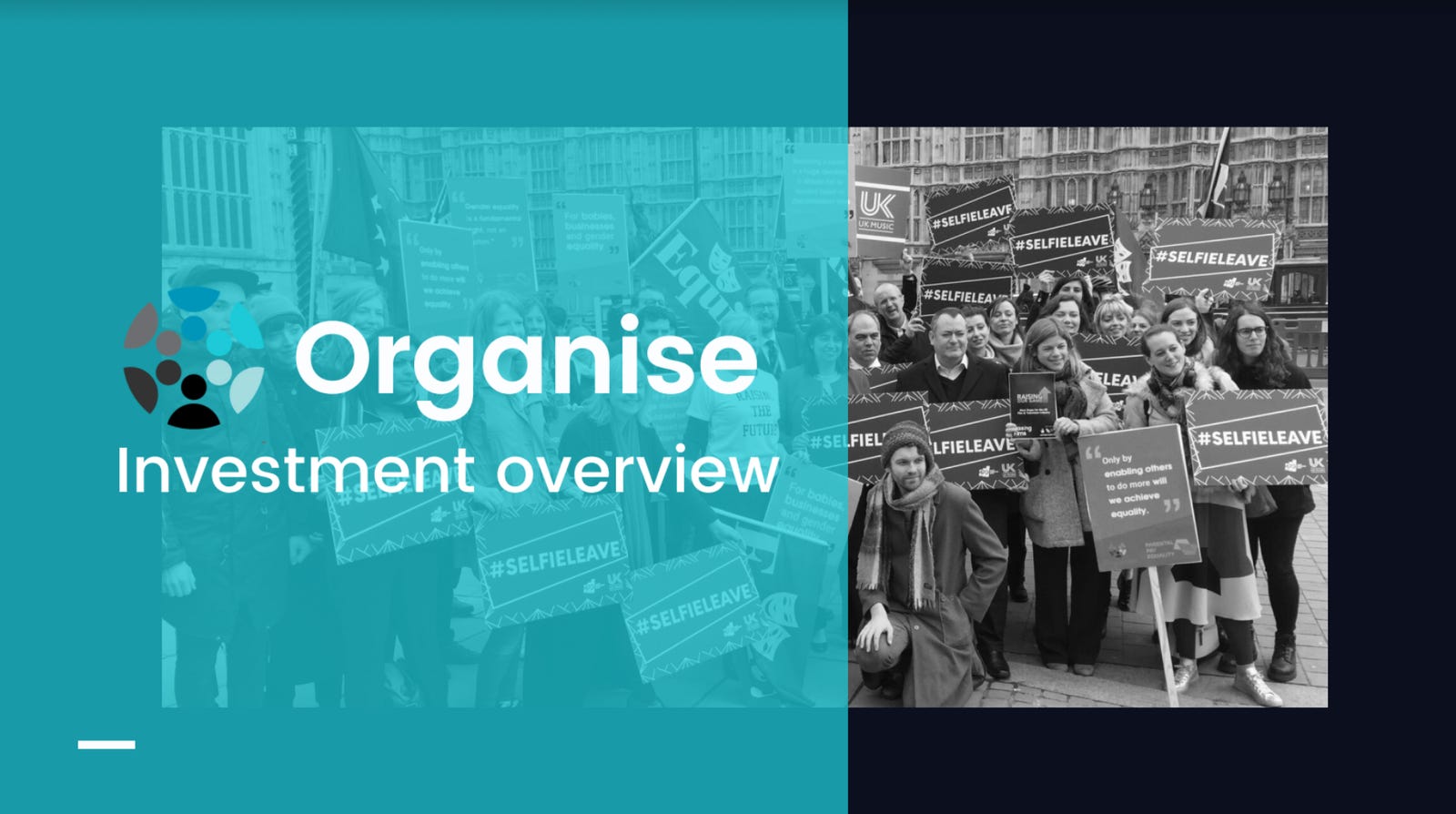
The cover slide sets a somber but determined tone. It features a black-and-white photograph of a protest, with participants holding signs featuring the hashtag #SELFIELEAVE. The Organise logo and the text 'Investment overview' are overlaid on a teal color block. This immediately signals that the company operates in the social advocacy space, specifically targeting labor and workplace issues.
Slide 2: The Mission Statement
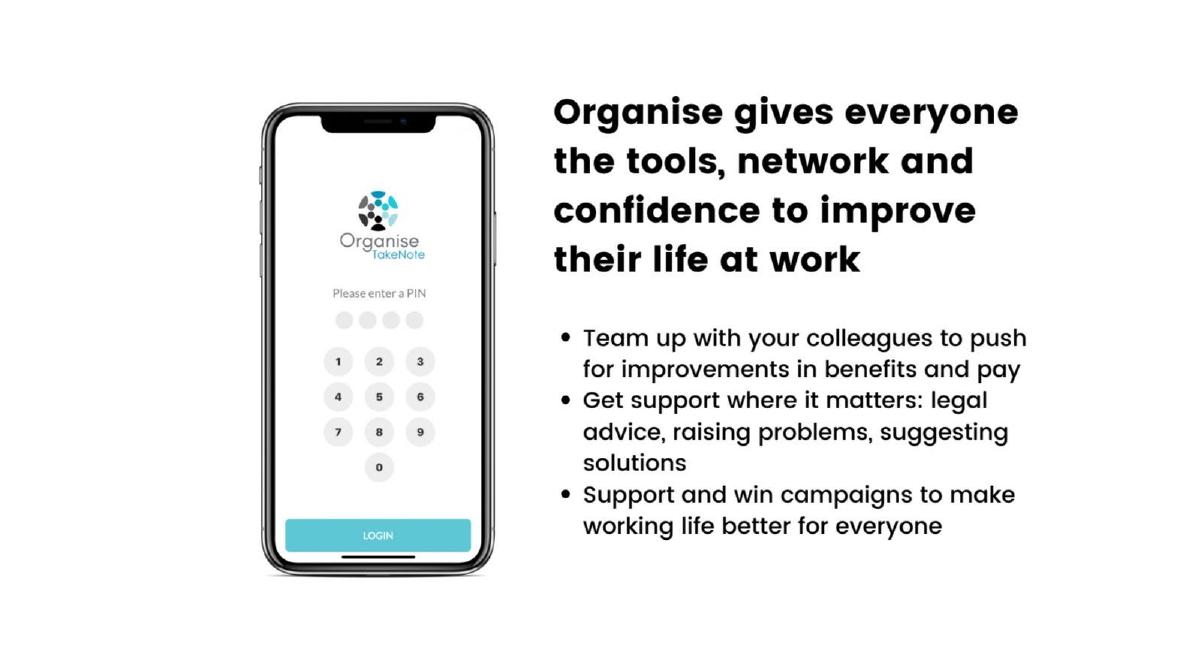
Slide 2 defines the product: 'Organise gives everyone the tools, network and confidence to improve their life at work.' It lists three core functions: teaming up for pay improvements, getting legal advice/suggesting solutions, and winning campaigns. A mobile mockup shows a simple PIN entry screen for an app called 'TakeNote,' suggesting a focus on privacy and security for workers who may be fearful of employer retaliation.
Slide 3: The Traction Timeline
This is arguably the most important slide in the deck. Instead of explaining how the tech works, it shows where it has worked. A chevron timeline lists 'Wins' at major UK brands: ITV and Tesco in 2017, McDonald's and Ted Baker in 2018, and Boots in 2019. The background text states the platform is 'helping thousands of people fix problems in the UK's biggest companies.' By naming these household brands, Organise validates its scale and effectiveness early in the presentation.
Slide 4: Deep Dive - McDonald's Case Study
To move beyond vague 'wins,' slide 4 provides granular detail on the McDonald's campaign. It claims the campaign for £10 an hour went viral and resulted in the 'biggest McDonald's pay rise in a decade.' Crucially, it mentions that the network crowdsourced data about kitchen burns, allowing workers to spot patterns and demand safety changes. This demonstrates the platform's ability to turn qualitative worker complaints into quantitative data that forces corporate action.
Slide 5: Comparative Benchmarking and Policy Change
Slide 5 covers two more wins: ITV and Boots. The ITV case study is particularly clever; it shows how workers used Organise to run a confidential survey comparing their 12-week maternity pay to competitors like Sky (26 weeks). This 'market pressure' approach led to an increase to 18 weeks within six months. The Boots example highlights a petition with 5,000 signatories that ended a policy requiring staff to book annual leave a full year in advance. These examples show the platform is versatile enough to handle both financial (pay) and operational (scheduling) grievances.
Slide 6: The Leadership Team
The team slide focuses on 'founder-market fit.' CEO Nat Whalley is credited with taking 38 Degrees to £5 million in annual revenue via user subscriptions and building a 3-million-person list for Avaaz. CTO Bex Hay is described as the 'thorn in the side of Jeff Bezos' for her work with Amazon Anonymous and her role leading a tech platform with 10 million global users. The slide explicitly states they have the 'right blend of product, tech and workplace organising skills,' which is backed up by these high-level stats.
Slide 7: The 2020 Vision
The final slide in the provided sequence marks a transition point. It notes that the founders have 'bootstrapped Organise in our spare time' but are moving to full-time status in 2020. It sets a bold KPI: 'We'll hit a million users in the UK by the end of 2020.' This provides investors with a clear sense of the growth trajectory and the urgency of the round.
What Works in the Organise Deck
1. Immediate Credibility: By placing the 'Wins' timeline on slide 3, the founders bypass the need to explain why their platform is necessary. The results speak for themselves. Investors see names like McDonald's and Tesco and immediately understand the potential for massive scale.
2. Data-Driven Activism: The mention of 'crowdsourcing data about burns' (slide 4) is a vital detail. It shifts the perception of the app from a simple 'petition tool' to a data analytics platform for labor relations. This is a much more venture-backable narrative than just 'social impact.'
3. Proven Revenue Potential: While the deck lacks a formal business model slide, the mention of Nat Whalley's success with 'user subscriptions' at 38 Degrees (slide 6) subtly informs investors that the team knows how to monetize a large base of advocates. It suggests a B2C subscription or donation model that has already been tested in the real world.
What is Missing from the Organise Deck
1. The Business Model: There is no explicit slide explaining how Organise itself generates revenue. While the team's history suggests subscriptions, a Seed deck usually requires a clear breakdown of pricing tiers, take rates, or corporate partnership models.
2. The 'Ask' and Use of Funds: The slides provided do not state how much money is being raised or how it will be allocated. While we know from external reports that they raised $750,000, a standard pitch deck should detail whether the funds are for engineering, marketing, or legal expansion.
3. Unit Economics and CAC: For a platform aiming for one million users, investors would typically want to see the Cost Per Acquisition (CAC) and the Lifetime Value (LTV) of a user. The deck relies heavily on the 'viral' nature of the McDonald's campaign without explaining if that growth is repeatable through paid or organic channels.
4. Competitive Landscape: The deck ignores other players in the space, such as traditional unions or other digital petition sites like Change.org. Explaining why Organise is a better 'moat' for workers would have strengthened the case.
Founder Takeaways
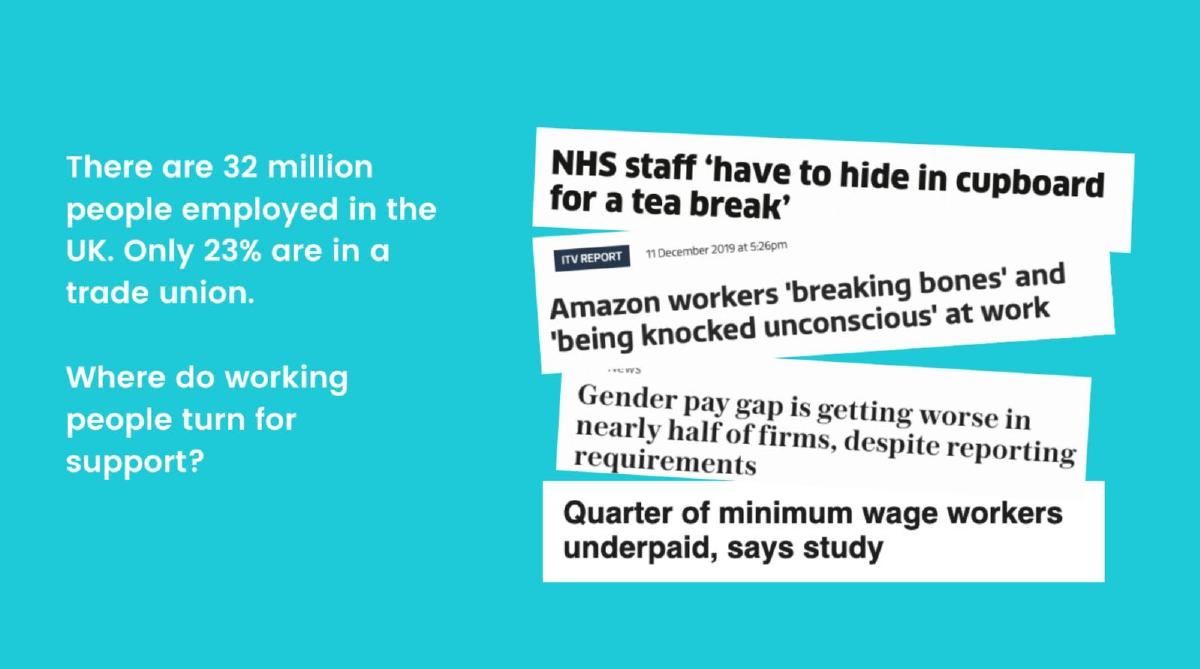
Lead with the 'Who': If you have worked with massive brands or achieved significant policy changes, don't bury them at the end. Organise put their biggest trophies on slide 3. · Quantify the Impact: Don't just say you 'helped workers.' Say you won the 'biggest pay rise in 10 years.' Specificity creates belief. · Leverage Founder History: If your previous job involved managing millions of users or millions in revenue, those numbers belong on your team slide. It reduces the perceived risk of the 'new' venture. · Use Social Proof: The inclusion of news clippings from the Independent and other outlets (slides 4 and 5) acts as third-party validation, proving that the company's work is newsworthy and culturally relevant.
Frequently asked questions
- What is the primary value proposition of Organise?
- As stated on slide 2, Organise provides the tools, network, and confidence for employees to improve their lives at work. This includes teaming up with colleagues for better pay, accessing legal advice, and launching campaigns to change corporate policies.
- How does Organise prove its platform actually works?
- The deck uses specific case studies on slides 4 and 5. It cites a campaign that won McDonald's workers their biggest pay rise in a decade and a petition at Boots that attracted 5,000 signatories to change unfair holiday booking policies.
- What is the background of the founding team?
- The founders have deep roots in digital activism. CEO Nat Whalley was the 2nd UK staffer at Avaaz, and CTO Bex Hay was the CTO at 38 Degrees and co-founded Amazon Anonymous, earning the nickname 'thorn in the side of Jeff Bezos' (slide 6).
- Does the deck mention how the company makes money?
- The slides do not include a dedicated business model slide. However, slide 6 mentions that CEO Nat Whalley previously built a campaigning organization to £5 million in annual revenue through 'user subscriptions,' hinting at a potential path for Organise.
- What were the growth goals at the time of the raise?
- According to slide 7, the company aimed to transition from a part-time 'bootstrapped' project to a full-time operation in 2020, with a target of reaching one million users in the UK by the end of that year.