Orbit's 16-slide deck is a narrative-heavy presentation that prioritizes category creation over raw financial metrics. The founders, Patrick Woods and Josh Dzielak, leverage their deep experience at companies like Keen IO and Algolia (Slide 2) to argue that software is now 'adopted' rather than 'sold' (Slide 3). The deck relies heavily on social proof, using tweets from industry figures to validate the failure of existing CRMs (Slide 8) and the organic rise of the 'Orbit Model' (Slide 11). While the deck lacks specific financial figures, unit economics, or a defined dollar amount for the 'Ask…
Key takeaways
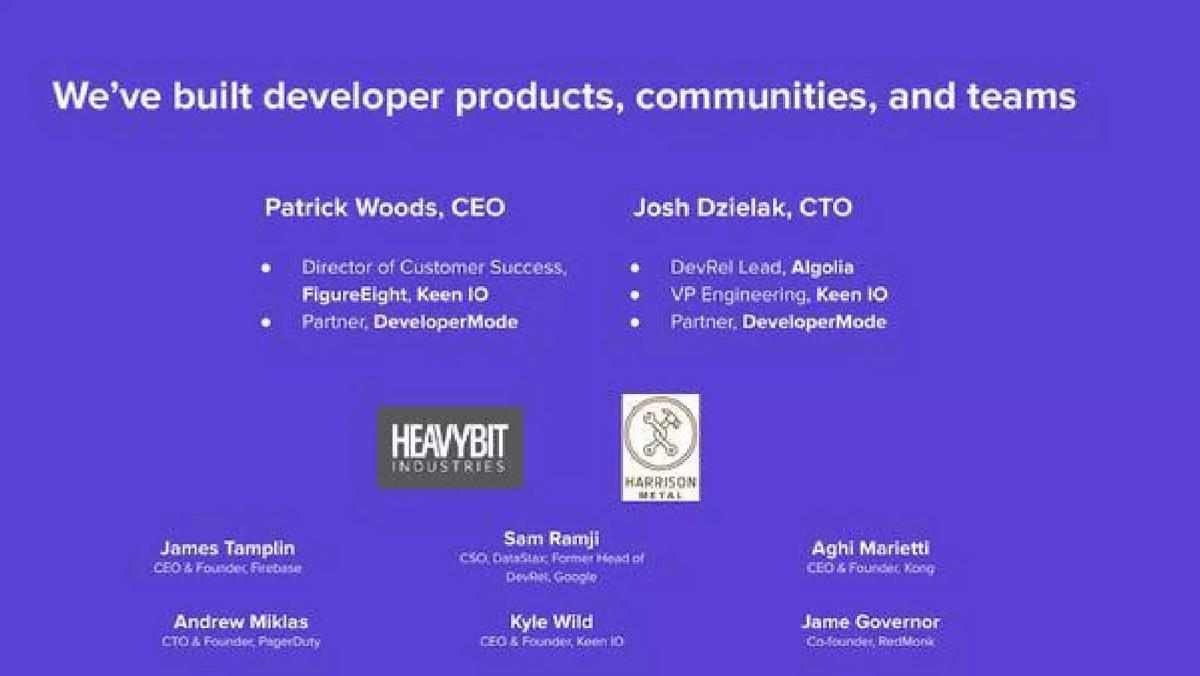
- The deck leads with a high-pedigree team slide featuring founders from Keen IO and Algolia, plus advisors from Firebase and PagerDuty (Slide 2).
- It establishes a strong narrative hook: 'Software is no longer sold—it’s adopted' (Slide 3).
- Orbit uses social proof as a primary validation tool, including a tweet from Martin Casado to critique existing CRMs (Slide 8).
- The 'Orbit Model' is presented as an open-source framework, showing community buy-in before the product is even fully detailed (Slide 10).
- The product is positioned as an actionable layer that connects to services like GitHub, Slack, and Twitter via API (Slide 13).
- The deck introduces proprietary metrics, 'Love' and 'Reach', to replace traditional 'Engagement' and 'Influence' (Slide 11).
- There is a total absence of financial data, revenue projections, or market size (TAM) calculations throughout the 16 slides.
- The 'Ask' slide is vague, requesting 'Thoughtful partners' and investment to scale without naming a specific funding target (Slide 15).
The Narrative of Category Creation
The Orbit pitch deck is a distinct example of a narrative-driven presentation. Rather than leading with growth charts or revenue milestones, it focuses on a fundamental shift in the software industry. The core thesis is that the way software is bought has changed, but the tools used to manage those relationships have not. This teardown examines how Orbit uses a mixture of high-pedigree team branding, cultural critique, and proprietary methodology to make a case for a new category of software: the Community Relationship Management platform.
Slides 1-2: The Foundation of Credibility
Slide 1 is a minimalist title slide featuring the Orbit logo—a stylized 'O' with orbiting bodies, reinforcing the company's name and celestial theme. It sets a professional, tech-forward tone without distracting text.
Slide 2 is the team and advisor slide. This is strategically placed at the beginning to establish immediate authority. Founders Patrick Woods (CEO) and Josh Dzielak (CTO) highlight their backgrounds at Keen IO, Algolia, and Figure Eight. The slide also lists a heavy-hitting roster of advisors and investors, including James Tamplin (Firebase), Andrew Miklas (PagerDuty), and Sam Ramji (Google/DataStax). By listing these names early, Orbit signals that they are 'insiders' in the developer tool space, which is critical for a company targeting the DevRel market.
Slides 3-5: The Market Thesis
Slide 3 delivers the 'hook': "Software is no longer sold—it’s adopted." This is a bold, declarative statement that challenges the traditional sales-led growth model. It sets the stage for the entire problem/solution arc of the deck.
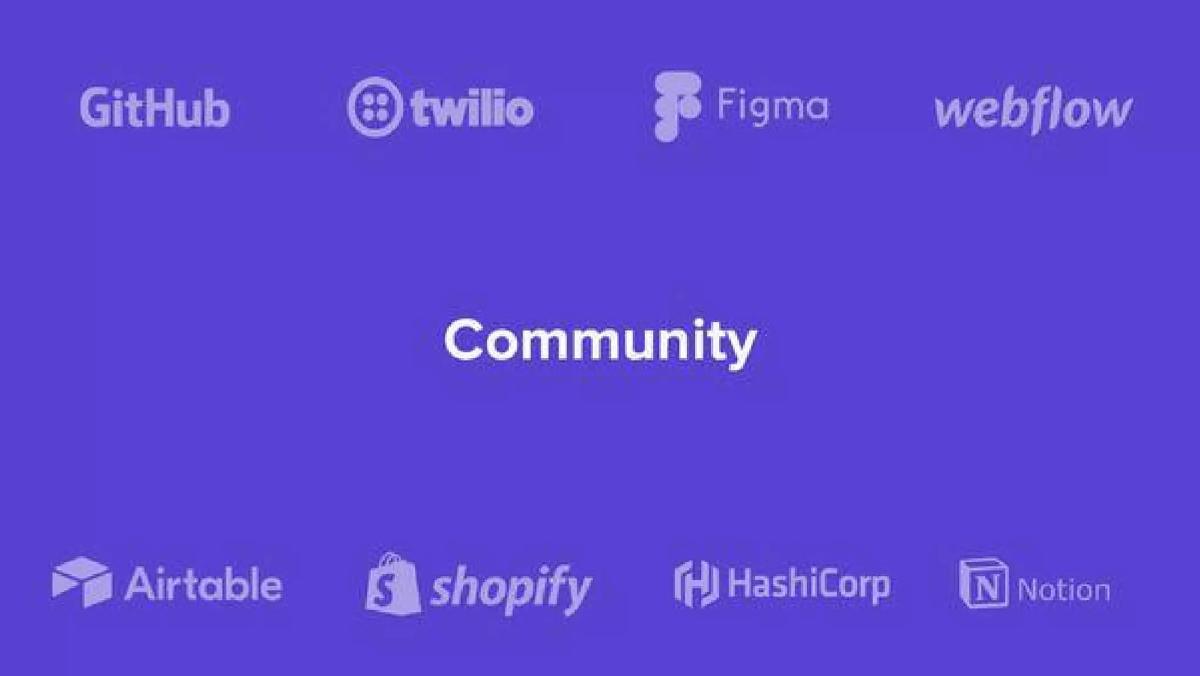
Slide 4 asks the rhetorical question, "What drives adoption?" which is answered immediately on Slide 5 with a single word: "Community." This slide is bolstered by the logos of iconic community-led companies like GitHub, Twilio, Figma, Webflow, Airtable, Shopify, HashiCorp, and Notion. This uses the 'halo effect,' associating Orbit with the most successful software companies of the last decade.
Slides 6-9: Defining the Problem
Slide 6 transitions to the conflict: "But most companies are still playing by the old top-down rules." This sets up the 'villain' of the story—outdated business practices. Slide 7 elaborates on the pain point, stating that companies "can't answer even the most basic questions about their community."
Slide 8 is a standout example of using external validation to prove a problem. It features a tweet from Martin Casado (a partner at Andreessen Horowitz) stating that "Existing CRMs are being pushed into service to handle this. But often they are an ill fit." Using a respected VC's public opinion to validate the market gap is a powerful move. Slide 9 adds a human element to the problem, featuring a tweet from a developer (Amara Graham) complaining about enterprise sales teams spamming her on LinkedIn. This illustrates the 'cultural' mismatch Orbit aims to fix.
Slides 10-11: The Orbit Model as a Solution
Slide 10 introduces "The Orbit Model." Instead of showing a product screenshot first, they show a conceptual framework. The model uses concentric circles (Ambassadors, Fans, Users, Observers) to visualize community gravity. The slide also shows a GitHub repository, indicating that this model is open-source. This is a brilliant tactical move; by open-sourcing the methodology, Orbit builds a community around the idea of their product before the product is even sold.
Slide 11 provides the 'proof of concept' through social proof. It shows a dashboard chart alongside tweets from users who are already adopting the Orbit vocabulary. One tweet specifically mentions using "Love" and "Reach" instead of "Engagement" and "Influence." This demonstrates that Orbit is successfully creating a new language for the category they are trying to own.
Slides 12-14: The Product in Action
Slide 12 defines the users: "Orbiters." It claims these users understand their community and can measure impact on retention and growth. This is the first time the deck explicitly mentions business outcomes like retention.
Slide 13 shows the product interface. It highlights the ability to "Connect any service via integration or API," showing logos for Slack, Discord, Twitter, and GitHub. The slide emphasizes "Recommendations and Actions," showing a UI where a user can reply to a GitHub PR or send a tweet directly from Orbit. This moves the product from a passive analytics tool to an active engagement platform.
Slide 14 focuses on "Reports." It shows two charts: a "Community Overview" and "Activities Recorded by Type." This slide is intended to prove that Orbit can provide the 'ROI' that Slide 7 claimed was missing from traditional tools. The visuals are clean and suggest a high level of product polish.
Slides 15-16: The Ask and Conclusion
Slide 15 is the "Ask." It is notably vague regarding the financial target. It asks for "Thoughtful partners" and investment to scale engineering, onboard customers, define the category, and refine pricing. The mention of 'refining pricing' suggests the company is in the pre-revenue or very early monetization stage. Slide 16 is a simple "Thank you" slide, maintaining the clean aesthetic of the rest of the deck.
What Works in This Deck
The Orbit deck is exceptionally strong in its narrative arc . It doesn't just present a tool; it presents a worldview. By starting with the shift in how software is adopted, it makes the need for a new tool feel inevitable. The use of social proof is also masterfully executed. Rather than just saying "people like us," they show specific tweets from industry leaders and potential customers that articulate the exact pain points Orbit solves. This 'show, don't tell' approach builds significant credibility.
Furthermore, the branding and design are top-tier. The consistent use of purple, the celestial metaphors, and the clean UI screenshots suggest a company that cares deeply about user experience—a trait highly valued in the developer tools market. The decision to lead with the team's pedigree (Slide 2) was the right choice, as it assures investors that the founders have the technical and market expertise to execute this ambitious 'category creation' play.
What Is Missing from This Deck
The most glaring omission is hard data . There is no mention of the number of users, the number of companies currently using the platform, or any revenue figures. While the deck shows a growth chart on Slide 11, the Y-axis is not clearly labeled with absolute numbers, making it difficult to gauge the actual scale of traction.
Additionally, there is no Market Size (TAM) slide. Investors generally want to see that a new category has the potential to become a multi-billion dollar market. Orbit assumes the investor already understands that 'community' is a massive, untapped vertical. There is also a lack of competitive analysis . While they position themselves against 'traditional CRMs,' they don't address other emerging community tools, which could be a red flag for a thorough analyst. Finally, the Ask (Slide 15) lacks a dollar amount, which is unusual for a fundraising deck and may suggest this version was used for general partnership pitches rather than a specific funding round.
What a Founder Should Copy
Founders should emulate Orbit's category-first approach . If you are building something that doesn't fit into an existing bucket, don't try to force it. Instead, create a new framework (like the Orbit Model) and give it away for free to build a movement. This creates a 'moat' of brand and methodology that is harder to copy than features alone.
Another takeaway is the strategic use of screenshots . Orbit doesn't overwhelm the viewer with every feature. Instead, Slide 13 and 14 focus on the 'magic moments'—connecting an API and taking an action. This keeps the deck focused on the value proposition rather than the technical specifications. Lastly, the integration of social proof directly into the problem and solution slides is a tactic every founder should use. A tweet from a target customer complaining about a competitor is worth more than ten slides of your own marketing copy.
Final Summary
Orbit's pitch deck is a sophisticated piece of storytelling that successfully elevates a developer tool into a cultural necessity. While it lacks the financial rigor required for later-stage rounds, it is perfectly calibrated for a Seed or Series A round where the goal is to sell a vision and a team. By focusing on 'Love' and 'Reach' rather than just 'Leads' and 'Sales,' Orbit positions itself as the essential infrastructure for the next generation of software companies.
Frequently asked questions
- What is the primary problem Orbit is trying to solve?
- Orbit addresses the inability of traditional CRMs to handle community-led growth. As stated on Slide 8, existing CRMs are built for a 'traditional, direct model' where sales teams drive engagement. Orbit argues that modern software adoption happens through communities, and companies currently lack the tools to measure or engage these communities effectively, leading to cultural friction between sales teams and developers (Slide 9).
- How does Orbit define its unique value proposition?
- Orbit's value proposition is centered on the 'Orbit Model' (Slide 10), which redefines the relationship between a company and its community. Instead of a linear sales funnel, it uses a gravity-based model to measure 'Love' (member activity) and 'Reach' (sphere of influence). The product provides a dashboard to visualize these metrics and suggests 'Actions'—like replying on GitHub or shouting out on Twitter—to deepen community ties (Slide 13).
- Who is the target audience for this deck?
- The deck is clearly aimed at early-stage VCs who specialize in developer tools and 'bottom-up' SaaS. By highlighting logos like GitHub, Twilio, and Figma (Slide 5), and featuring advisors from PagerDuty and Firebase (Slide 2), the founders are signaling that they are building for the 'Developer Relations' (DevRel) and community management departments of high-growth tech firms.
- What metrics does the deck use to show traction?
- The deck eschews traditional business metrics like ARR or CAC. Instead, it uses 'social traction' and 'framework adoption.' Slide 11 shows a chart of community growth labeled by 'Orbit Levels' and includes tweets from users who are already using the 'Orbit Model' dashboard. This suggests that the methodology has achieved product-market fit even if the commercial product is in its early stages.
- What are the most significant omissions in the Orbit deck?
- The deck is missing almost all standard 'late-seed' or 'Series A' data. There is no slide for Total Addressable Market (TAM), no competitive landscape analysis, no business model or pricing strategy, and no financial history. Most notably, Slide 15 (the Ask) does not state how much money is being raised, only what the funds will be used for, such as scaling engineering and refining pricing.