SUMA Wealth’s 15-slide deck is a masterclass in niche market positioning. By framing the Latino community not just as a demographic but as a $3.4 trillion economic force (Slide 2), the company successfully moved beyond 'social impact' into a high-growth fintech narrative. The deck leans heavily on 'The Latino Youth Multiplying Effect' (Slide 4), arguing that one user influences three family members, which justifies their B2C focus. With 1 million users and engagement 17x higher than the industry average (Slide 6), the data supports their claim that cultural relevance is a competitive moat. Wh…
Key takeaways
- The deck identifies a $3.4 trillion contribution by Latinos to the US economy as the primary market opportunity (Slide 2).
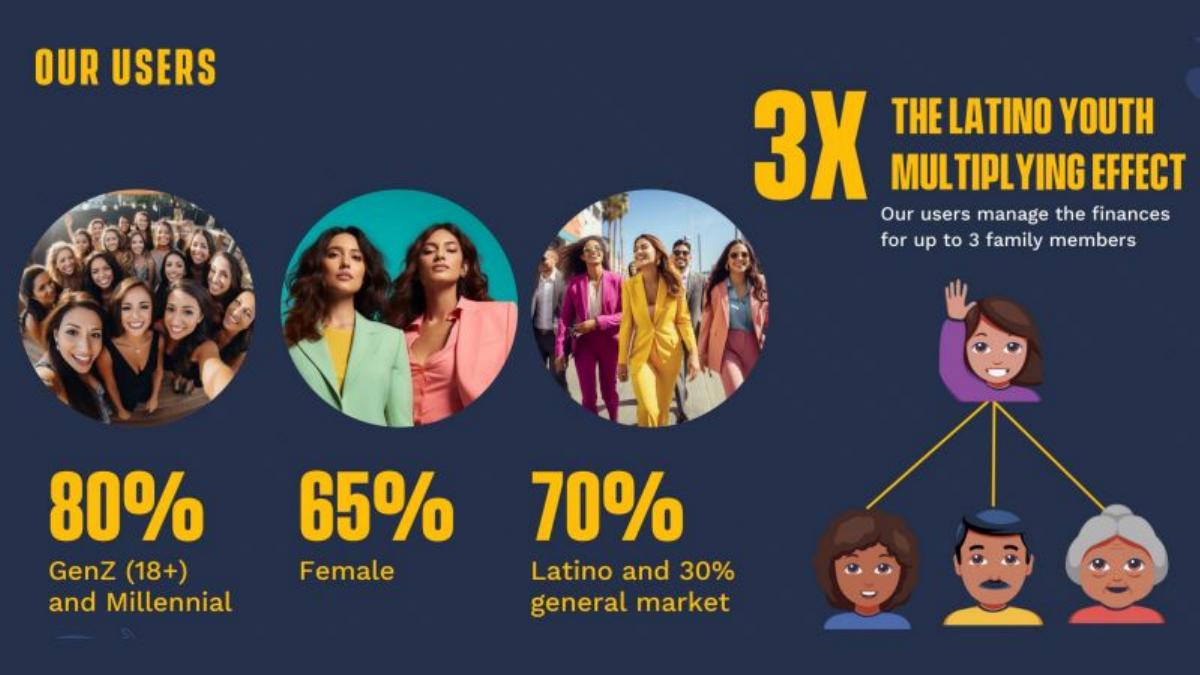
- SUMA claims a 'multiplying effect' where one young user manages finances for up to three family members (Slide 4).
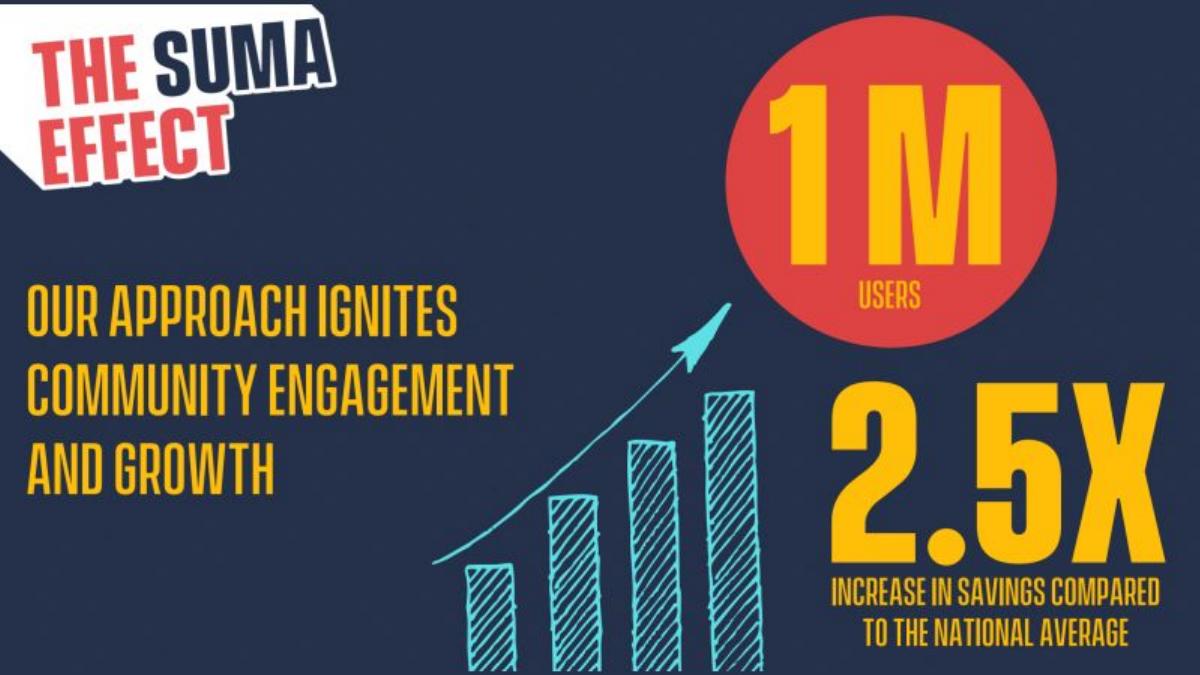
- The platform has reached 1 million users with a 2.5x increase in savings compared to the national average (Slide 5).
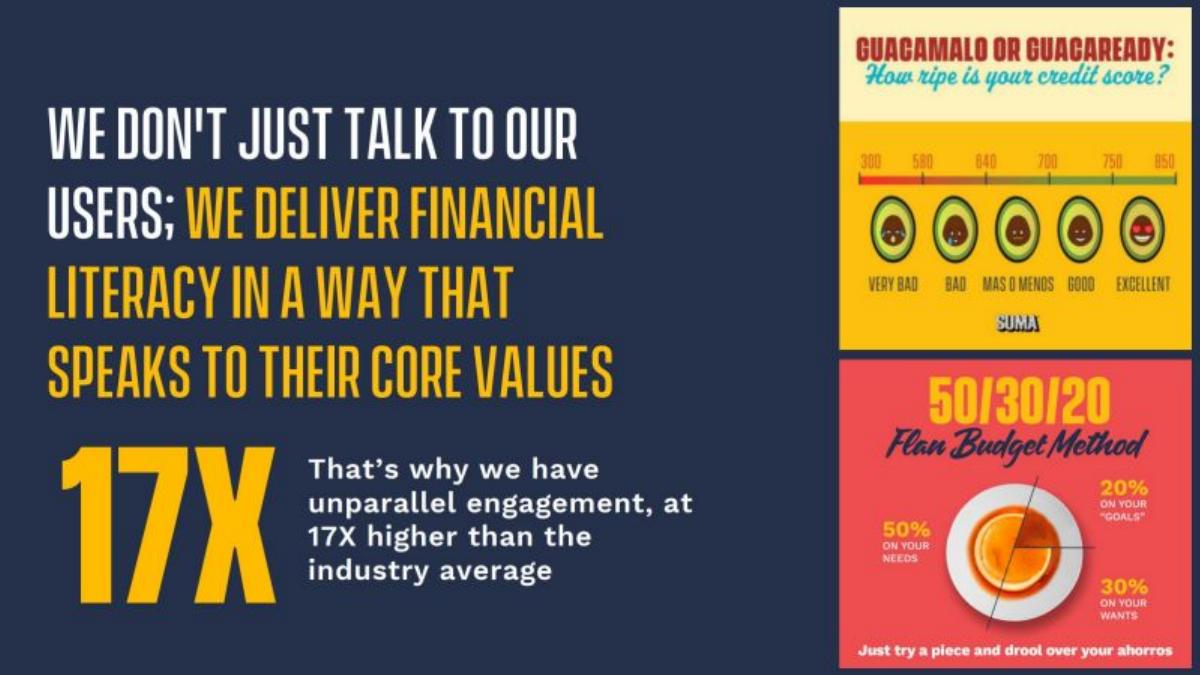
- Engagement is reported at 17x higher than the industry average, attributed to culturally relevant content like the 'Flan Budget Method' (Slide 6).
- The company achieved 4.8x secured revenue growth and 61% user growth in 2023 (Slide 7).
- A high enterprise repeat rate of 87% is cited across partners like Morgan Stanley, Fidelity, and Verizon (Slide 8).
- The business model is diversified across sales revenue (lead gen), memberships (DTC/Enterprise), and non-dilutive educational certifications (Slide 10).
- The competitive landscape slide positions SUMA as the only player with a sole focus on Latinos and community-driven features (Slide 11).
Introduction: The Power of Cultural Context in Fintech
SUMA Wealth’s pitch deck is a focused argument for the economic power of the Latino community. Rather than presenting as a generic personal finance app, SUMA positions itself as a cultural bridge. The deck, used to secure a $2.2M round led by Radicle Impact, relies on the premise that traditional banks have failed to build trust with a demographic that adds trillions to the GDP. By the end of the 15 slides, the founders make a compelling case that 'in-culture' content isn't just a nice-to-have—it is a high-engagement growth engine.
Slide 1: The Hook
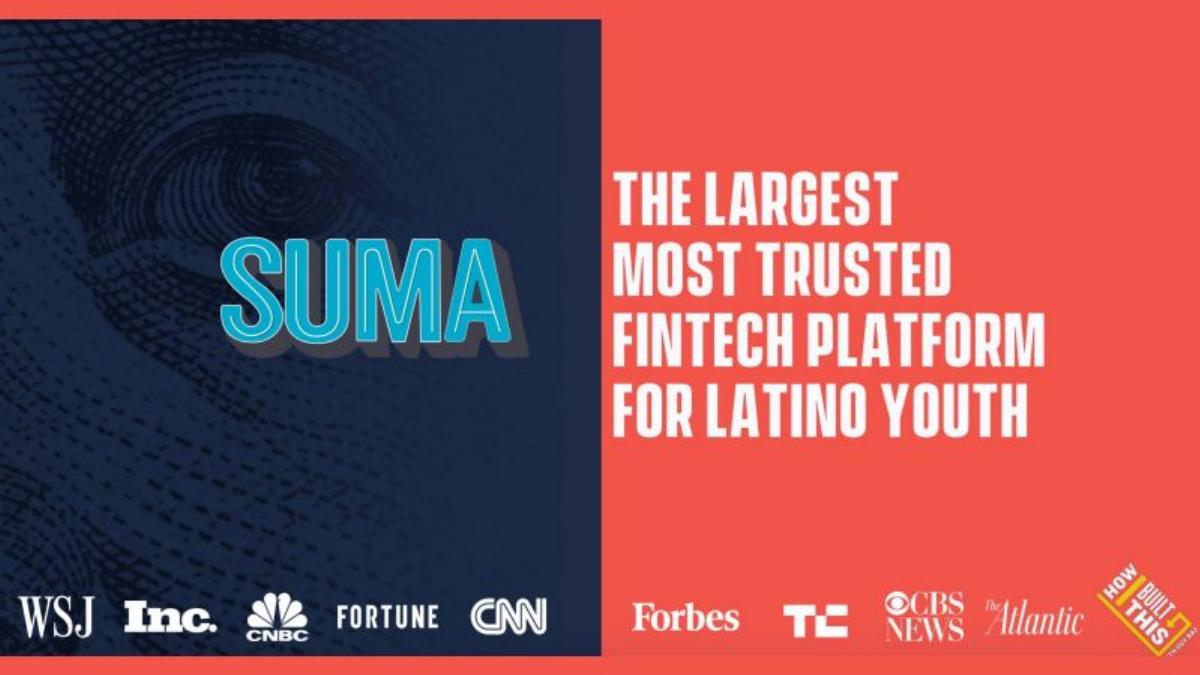
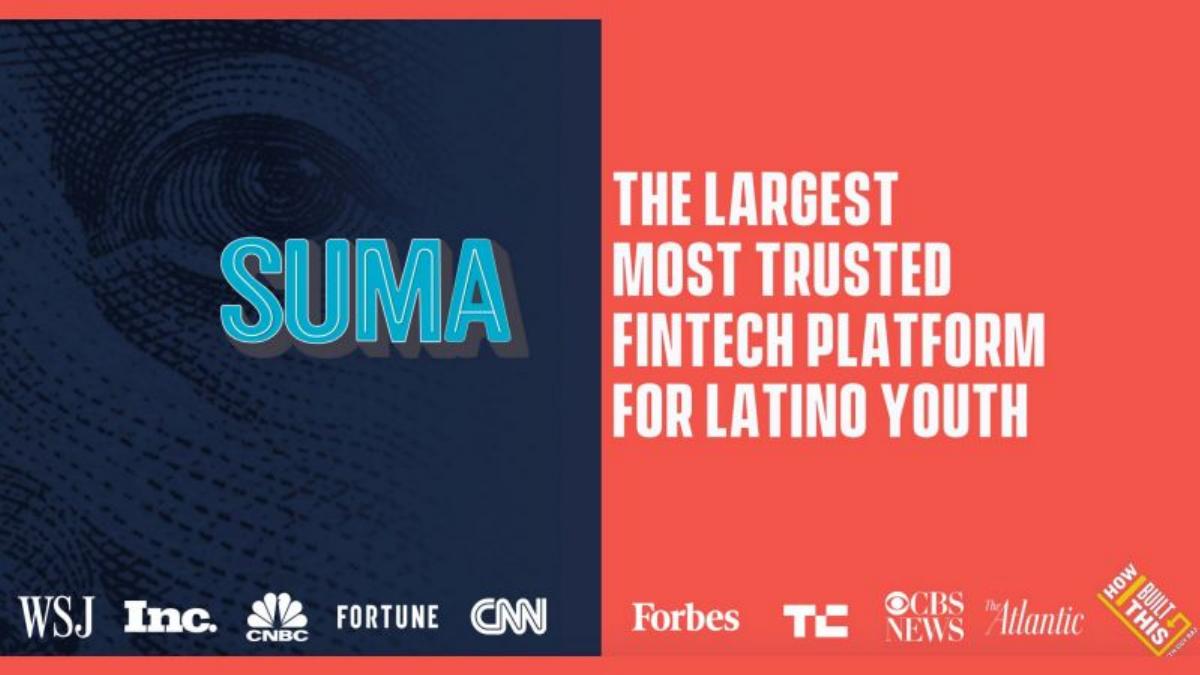
The cover slide is bold, using high-contrast red and blue. The tagline, "The largest most trusted fintech platform for Latino youth," immediately establishes a leadership position. The bottom of the slide is crowded with high-authority media logos including WSJ, CNBC, Fortune, CNN, and Forbes. This is a classic social proof tactic intended to signal that the brand is already a recognized player in the national conversation before the investor even sees a metric.
Slide 2: The $3.4 Trillion Problem
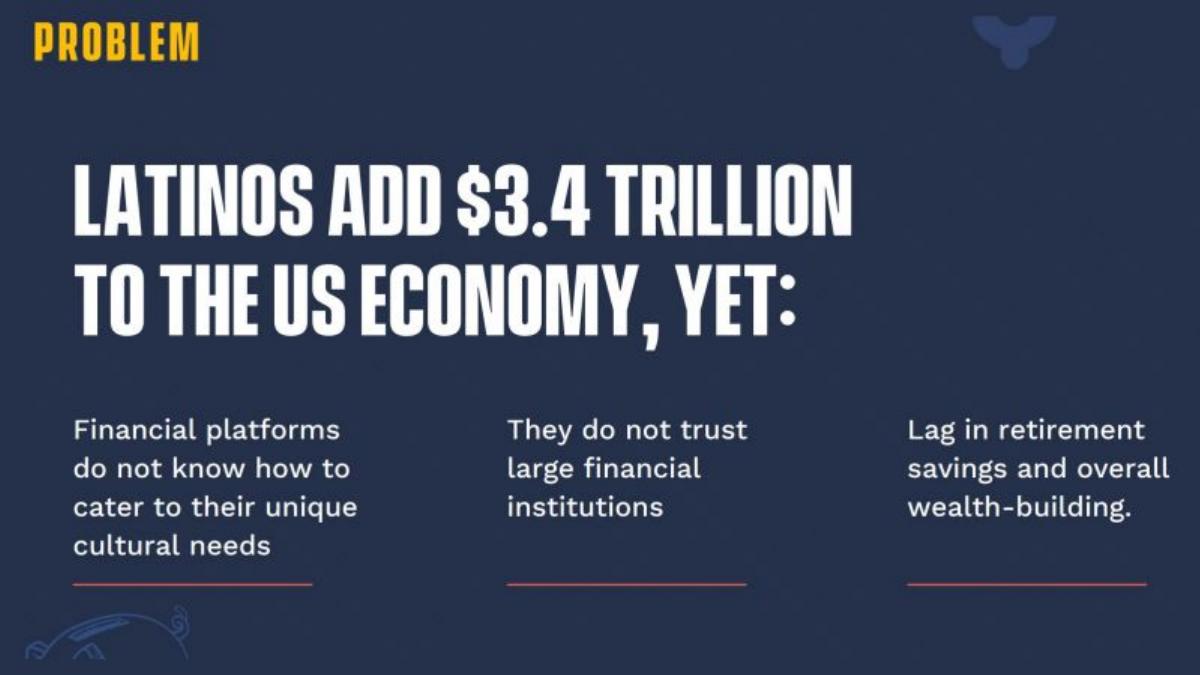
SUMA frames the problem through a massive macro-economic lens. They state that "Latinos add $3.4 trillion to the US economy," yet face three specific barriers: a lack of cultural catering from existing platforms, a lack of trust in large institutions, and a lag in retirement savings. By starting with the $3.4T figure, they move the conversation from 'niche social project' to 'massive untapped market opportunity.'
Slide 3: The Mission-Driven Solution
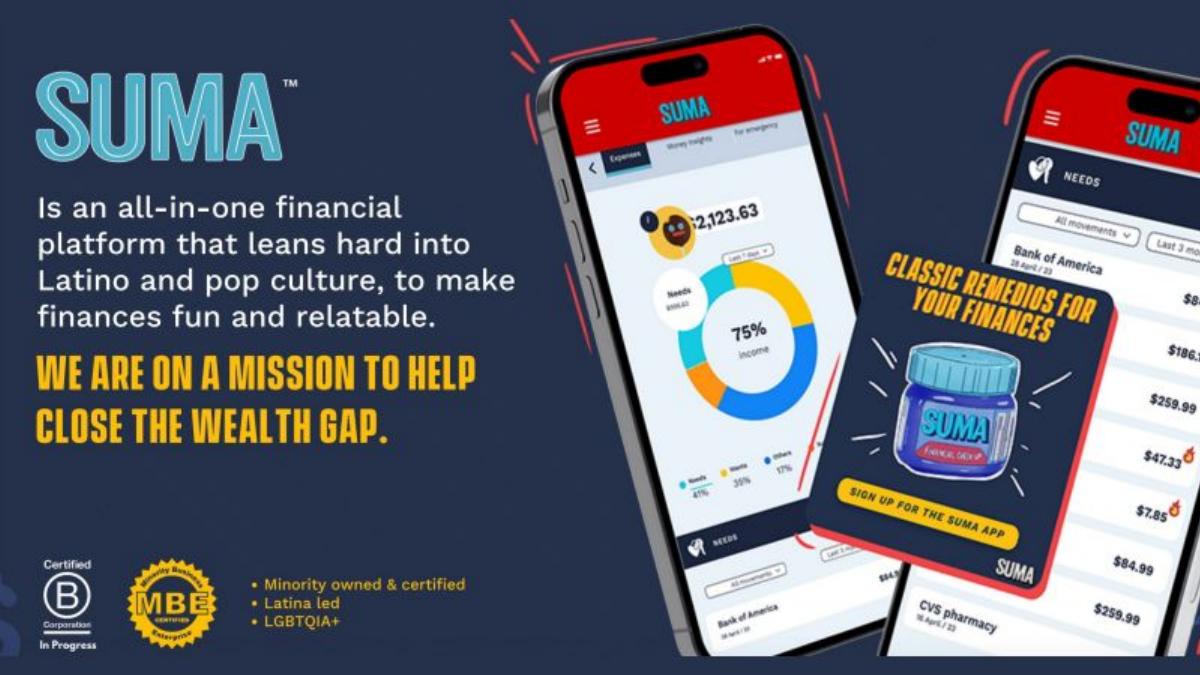
Slide 3 introduces the product as an "all-in-one financial platform that leans hard into Latino and pop culture." The slide includes mobile mockups showing a clean UI and a specific marketing asset: "Classic Remedios for your finances," styled like a jar of VapoRub. This visual shorthand reinforces their claim of being 'in-culture.' The slide also highlights their status as a "Certified B Corporation In Progress" and a "Minority owned & certified" enterprise, appealing to ESG-focused investors.
Slide 4: The Multiplying Effect
This is arguably the most important strategic slide in the deck. It breaks down the user base: 80% Gen Z and Millennial, 65% Female, and 70% Latino. However, the standout metric is "3X The Latino Youth Multiplying Effect." SUMA argues that their users manage the finances for up to three family members. This effectively triples their LTV (Life Time Value) and market reach without increasing CAC (Customer Acquisition Cost), a point that would be highly attractive to Series A investors.
Slide 5: The SUMA Effect (Traction)
Traction is presented with three large figures: 1M Users , a 2.5X increase in savings compared to the national average, and a bar chart showing upward momentum. While the bar chart lacks specific Y-axis labels for the historical months, the 1 million user milestone is the primary anchor here. It proves that their cultural approach has successfully moved past the early-adopter phase.
Slide 6: Engagement as a Moat
Slide 6 doubles down on the 'culture' argument with a specific data point: "17X higher [engagement] than the industry average." They illustrate this with examples of their content, such as the "Guacamalo or Guacaready" credit score scale and the "50/30/20 Flan Budget Method." By showing these specific examples, they prove they aren't just translating English content into Spanish, but reimagining financial concepts through a specific cultural lens.
Slide 7: 2023 Growth Metrics
This slide provides the hard numbers investors look for in a Series A deck. They report 4.8X secured revenue growth and 61% user growth between 2022 and 2023. The slide also notes that 70% of users increased their savings and 51% now have 3 months of emergency savings. This links the company’s financial success directly to positive outcomes for the user, a core tenet of their B-Corp mission.
Slide 8: The Enterprise Proof Point
To prove their model is scalable and bankable, Slide 8 lists an impressive roster of partners: Morgan Stanley, Chase, Fidelity, Wells Fargo, and Verizon. The key metric here is the 87% repeat rate. This suggests that their B2B2C or 'Financial Culture as a Service' model is not a one-off marketing gimmick for these banks, but a sustainable channel for reaching the Latino market.
Slide 9: Product Ecosystem
The 'SUMA Membership' slide details the feature set: Money Management, Tailored financial tools, In-Culture content, AI Financial Coaching, Family Co-Savings, and Gamified Education. The UI mockups show a 'Luchador' character as a money coach, further emphasizing the gamified, culturally specific nature of the app.
Slide 10: The Business Model
Sales Revenue: Lead generation, amplification, and consumer insights. · Memberships: Direct to Consumer, Enterprise, and Community Partners. · Non-dilutive: Financial literacy and educational certifications.
This diversification shows they aren't solely reliant on a monthly subscription fee, which can be a hard sell in the personal finance space.
Slide 11: Competitive Landscape
The landscape slide compares SUMA to MoneyLion, Rocket, and Cleo. Unsurprisingly, SUMA checks every box (Education, Community, Sole Focus on Latinos, Money Coach, Savings, AI Insights, Rewards). The most significant differentiator they claim is being the only platform with a "Sole Focus on Latinos" and a "Community" aspect. This positions them as a specialist in a field of generalists.
Slide 12: Theory of Change
This slide serves as a bridge between the business metrics and the social mission. It states that "Young Latinos are the influencers of their families... critical accelerators in closing the wealth gap within one generation." It’s a philosophical slide that reinforces the 'Multiplying Effect' mentioned earlier.
Slide 13: The Team
The team slide is strong on experience. Beatriz Acevedo (CEO) is noted as a 3X founder with experience at mitú and Beneficial State Bank. Xavier A. Gutiérrez (Chairman) and Mary Hernandez (COO) also bring significant corporate and community leadership. The right side of the slide features a 'wall of logos' from non-profits and foundations where the founders hold board seats, emphasizing their deep community ties.
Slide 14: The Ask (or lack thereof)
Slide 14 is a closing slide that states, "OUR SEED ROUND IS NOW OVERSUBSCRIBED!" It invites "mission aligned investors" to reach out. While this deck was likely used for the Series A, this specific slide acts as a placeholder or a FOMO-inducing (Fear Of Missing Out) closing for a bridge or follow-on conversation. The actual $2.2M raise details (valuation, specific use of funds) are not present on this slide.
What SUMA Wealth Does Well
The deck is exceptionally good at market framing . By connecting the Latino demographic to a $3.4 trillion GDP contribution, they transform a 'diversity' play into a 'growth' play. The use of culturally specific icons (the VapoRub jar, the flan, the luchador) provides concrete evidence of their 'in-culture' claim, making it more than just a buzzword. Furthermore, the 87% repeat rate for enterprise partners is a high-signal metric that proves product-market fit in a B2B context.
What is Missing from the Deck
The most notable omission is a detailed Use of Funds slide. While the catalogue facts state they raised $2.2M, the deck doesn't explain how that capital will be allocated (e.g., 40% engineering, 30% marketing). Additionally, while they mention 'Sales Revenue' and 'Memberships,' there is no Unit Economics slide. Investors would want to see the CAC (Customer Acquisition Cost) vs. LTV (Life Time Value), especially given the claim that one user brings in three family members. Finally, there is no Financial Projection slide showing the path to profitability or future revenue targets.
Founder's Playbook: What to Copy
Founders building for specific niches should copy SUMA’s 'Multiplying Effect' argument . If you can prove that your target user acts as a gateway to a larger, harder-to-reach group, you significantly increase your perceived market size. Also, the 'Engagement vs. Industry Average' comparison (Slide 6) is a powerful way to show that your niche focus is a competitive advantage rather than a limitation. Finally, if you have enterprise partners, highlighting a repeat rate is often more persuasive than simply listing logos, as it proves the partners are getting actual value from the collaboration.
Conclusion
SUMA Wealth’s deck is a masterclass in positioning. It takes a demographic that is often underserved by traditional finance and presents them as the most significant economic opportunity in the US. By backing up their cultural claims with 17x engagement metrics and 1 million users, they successfully raised $2.2M to continue their mission of closing the wealth gap. For any founder targeting a specific community, this deck provides a blueprint for how to turn cultural competency into a venture-scale business case.
Frequently asked questions
- What is the primary problem SUMA Wealth aims to solve?
- According to Slide 2, the problem is three-fold: existing financial platforms do not understand Latino cultural needs, there is a lack of trust in large financial institutions, and the community lags in retirement savings and wealth-building despite contributing $3.4 trillion to the US economy.
- How does SUMA Wealth define its target user base?
- Slide 4 specifies that 80% of users are Gen Z (18+) and Millennials, 65% are female, and 70% are Latino. A key part of their strategy is the 'multiplying effect,' where these young users act as financial influencers for their older family members.
- What are the core features of the SUMA platform?
- As shown on Slide 9, the 'SUMA Membership' includes money management tools, tailored financial products, in-culture content, AI financial coaching, family co-savings features, and gamified education.
- What evidence of market traction does the deck provide?
- Slide 7 highlights 2023 as a year of growth, citing 4.8x secured revenue growth and 61% user growth. Additionally, Slide 5 claims the platform has reached 1 million users who save at a rate 2.5x higher than the national average.
- Who are the key members of the leadership team?
- Slide 13 lists Beatriz Acevedo (CEO & Co-Founder, 3x founder), Xavier A. Gutiérrez (Chairman & Co-Founder), Mary Hernandez (COO & Co-Founder), and Daniela Corrente (Chief of Strategy and BD), along with heads of product and engineering from companies like NuBank and Mercado Libre.