StudySmarter’s 14-slide Series A deck is a masterclass in timing and traction. By positioning their platform as the solution to the 'failed digitization' of education during the COVID-19 pandemic, the company showcased a jump from 170,000 to over 1.5 million users within 12 months. The deck emphasizes a content-agnostic model that transforms static text into interactive courses, allowing for rapid scaling across K-12, Higher Ed, and Corporate sectors. While the deck is light on specific financial unit economics and lacks a dedicated team slide, it compensates with heavy social proof, includin…
Key takeaways
- The problem is framed through the lens of the COVID-19 pandemic, citing that 33% of students drop out and 73% cannot structure their learning (Slide 2).
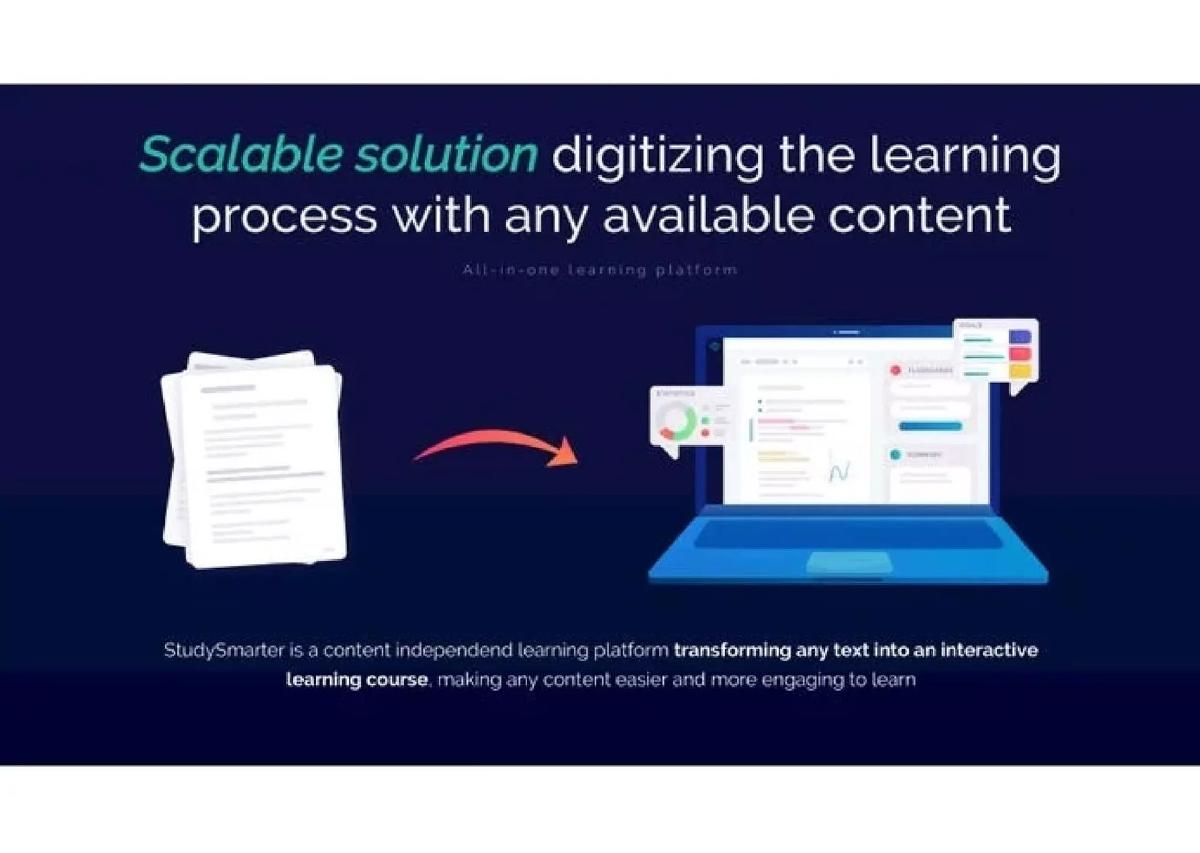
- The solution is a content-independent platform that transforms any text into an interactive course (Slide 4).
- Traction is the deck's strongest point, showing growth from 170k to 1.5M+ users in one year with over 25 million shared pieces of user-generated content (Slide 9).
- The platform achieved significant social proof by becoming the #1 most popular app in the Apple App Store across all categories during school closings (Slide 10).
- StudySmarter positions itself as a 'holistic' platform, aiming to replace fragmented tools like Evernote, Quizlet, and Forest (Slide 11).
- The business model is diversified into three streams: B2B recruiting, B2C premium features, and B2C publisher content monetization (Slide 12).
- The company seeks a USD 15M Series A round to achieve 5X revenue and user growth by the end of 2021 (Slide 13).
- There is a notable absence of a team slide, which is unusual for a Series A deck where founder pedigree is typically emphasized (Omission).
Executive Summary: The Power of Momentum
StudySmarter’s Series A deck is a high-energy presentation that leans heavily on the 'why now' factor. By utilizing the global shift toward digital education during 2020, the company presented itself not just as a tool, but as an essential infrastructure for the new normal. The deck is visually consistent, using a dark theme with vibrant accents that mirror their product interface, creating a professional and modern aesthetic.
Slide 1: Title and Social Proof
The title slide sets the tone immediately. Beyond the logo and the mission statement— "Empowering everyone to achieve their educational goals" —the bottom half of the slide is crowded with logos. These include the Telekom EdTech Gold Award 2018, the Bundesministerium für Wirtschaft und Technologie, and the Axel Springer Plug & Play Accelerator. This level of front-loaded social proof is designed to establish immediate credibility before a single metric is shared.
Slides 2-3: The Problem of Failed Digitization
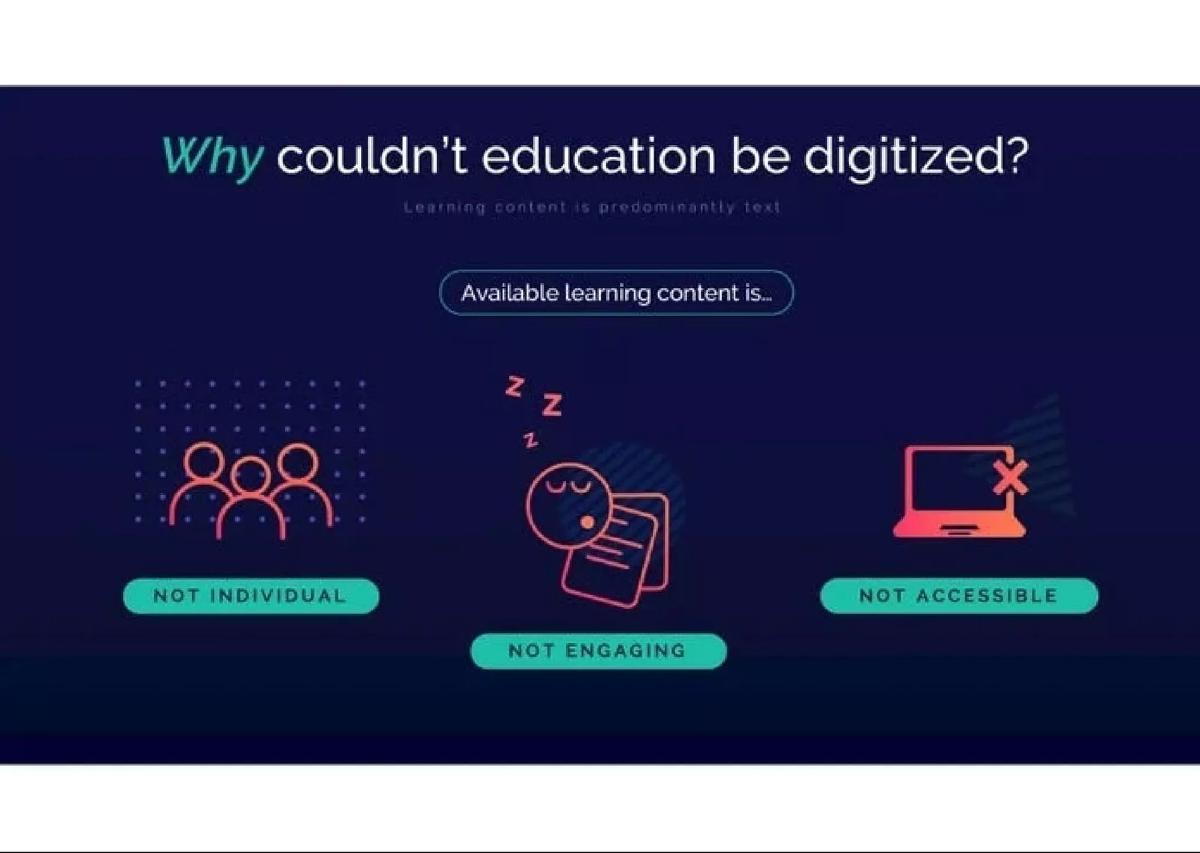
Slide 2 uses the COVID-19 pandemic as a backdrop to highlight systemic failures in education. It cites two critical pain points: "33% of students drop out" and "73% can't structure their learning." Slide 3 digs deeper into why previous digitization efforts failed, labeling existing content as "Not Individual," "Not Engaging," and "Not Accessible." By framing the problem as a failure of engagement rather than a lack of content, they pave the way for their process-oriented solution.
Slides 4-6: The Content-Agnostic Solution
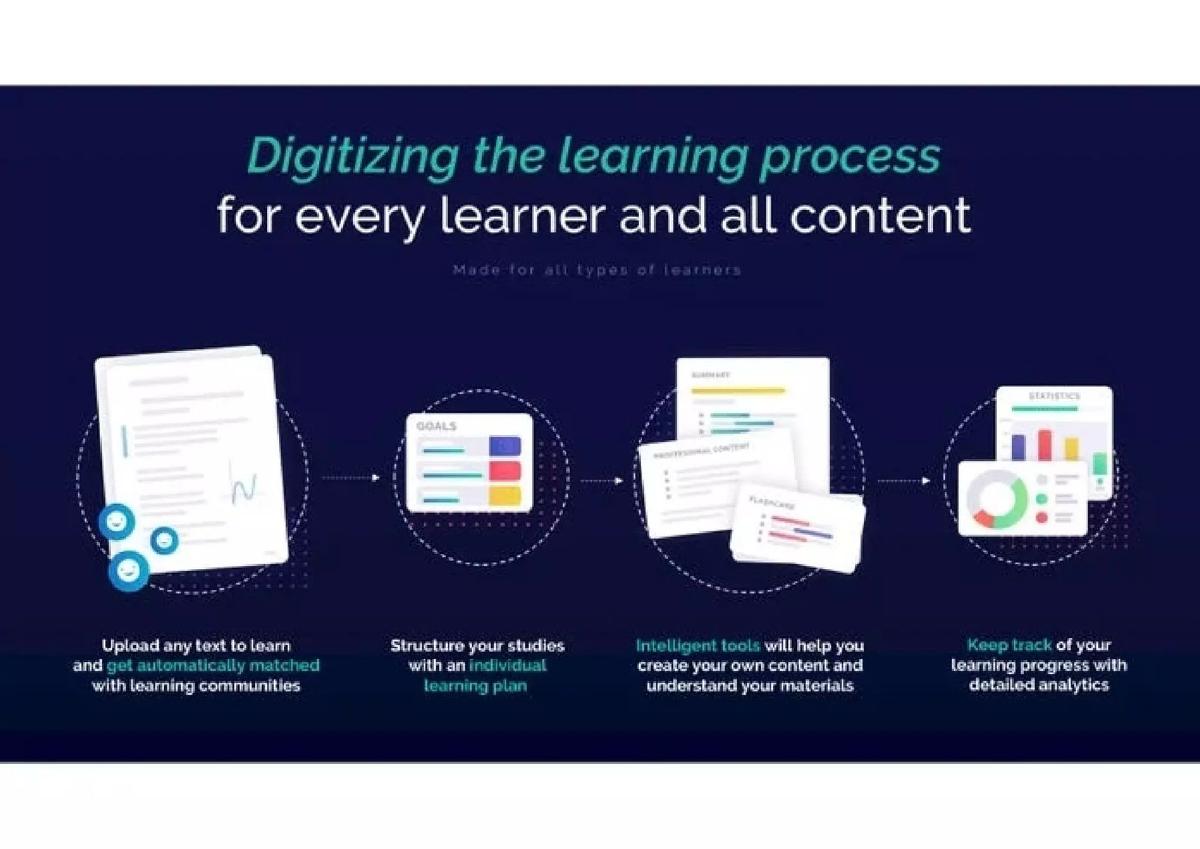
Slide 4 introduces the core product: a "content independent learning platform transforming any text into an interactive learning course." This is a crucial distinction from traditional EdTech companies that produce their own content. Slide 5 breaks down the user journey into four steps: Upload, Structure, Create (using "Intelligent tools" ), and Track. Slide 6 reinforces this by positioning the platform as the "world's central hub for learning," emphasizing the community aspect alongside the individual tools.
Slides 7-8: Market Expansion and Awards
Slide 7 outlines the trajectory for "Lifelong learning," showing a path from K-12 to Higher Education and finally Corporate Learning. It notes a school platform launch in Q1 2020 and a B2B pilot in Q3 2020. Slide 8 returns to social proof, featuring photos of the founders receiving awards. It lists titles such as "#1 German EdTech Start-up" and "Best learning platform worldwide," reinforcing the narrative that they are the dominant player in their home market and beyond.
Slides 9-10: The Traction Inflection Point
Slide 9 is the 'money slide.' It shows a cumulative shared content graph skyrocketing toward 25,000,000 units by 2021. The text highlights that registered users grew from 170,000 to more than 1,500,000 within 12 months, specifically noting this was achieved with "limited marketing spend" through "product virality." Slide 10 provides a case study of the pandemic, showing the app at the top of the Apple App Store charts, even above TikTok and WhatsApp, and mentions giving away 5 million EUR worth of licenses to support students.
Slides 11-12: Competition and Revenue
Slide 11 uses an atomic model to show how StudySmarter sits at the center of various single-feature applications like Evernote (Notebook), Quizlet (Flashcards), and Studydrive (Sharing). This visualizes their 'holistic' strategy. Slide 12 explains the "Three Revenue Streams" : B2B Recruiting (matching learners to employers), B2C Premium Features, and B2C Publisher Content. This diversification suggests a resilient business model that doesn't rely solely on student subscriptions.
Slide 13: The Ask and Vision
The final substantive slide (Slide 13) presents the "USD 15M Series A Round." The goals for this capital are ambitious: "5X in revenue by the end of 2021" and "5X in users by the end of 2021." It concludes with the vision of becoming the "most intelligent learning platform in the world."
What Works in This Deck
The 'Why Now' is Undeniable: The deck perfectly captures the urgency of the 2020 educational shift. By showing their app outranking social media giants during the lockdown, they prove product-market fit in a high-stress environment. Social Proof as a Moat: The sheer volume of awards and government endorsements listed on Slide 1 and Slide 8 makes it difficult for an investor to dismiss them as a flash-in-the-pan startup. Clear Product Differentiation: The emphasis on being 'content-agnostic' is a brilliant strategic move. It tells investors that the company doesn't have the high overhead of content production and can scale into any language or subject instantly.
What is Missing
The Team Slide: It is highly unusual for a Series A deck to omit a team slide. Investors at this stage are buying into the leadership's ability to execute a $15M expansion. Without knowing if the founders have previous exits or deep technical expertise, the 'intelligent platform' claims are harder to verify. Unit Economics: While the user growth is impressive, there is no mention of Customer Acquisition Cost (CAC) or Lifetime Value (LTV). For a Series A, investors typically want to see that the 'virality' mentioned on Slide 9 is sustainable and that the path to profitability is clear. Use of Funds: A $15M ask should be accompanied by a high-level breakdown of where that money goes. Is it 60% engineering? 30% international expansion? The deck leaves this to the imagination.
What a Founder Should Copy
The Traction Graph: Slide 9 is an excellent example of how to visualize growth. By combining user numbers with 'shared content' (a proxy for engagement), they show that the platform isn't just being downloaded—it's being used. The Holistic Competitive Map: Slide 11 is a great way to handle a crowded market. Instead of a standard X/Y axis chart where the startup is in the top right, they show how they encompass the features of many other apps, making them a 'platform' rather than just a 'tool.' Visual Consistency: The deck uses a consistent color palette and high-quality custom illustrations. This gives the impression of a mature, well-funded brand even before the round is closed.
Final Thoughts
StudySmarter’s deck is a textbook example of how to pitch during a period of hyper-growth. It prioritizes momentum and market dominance over granular financial data. While the lack of a team slide is a significant deviation from standard practice, the strength of their 2020 traction likely made this a secondary concern for Series A investors. The deck successfully transitions the company from a 'German EdTech startup' to a 'European learning hub,' which is exactly what a Series A presentation needs to achieve.
Frequently asked questions
- What is StudySmarter's core value proposition?
- StudySmarter offers a content-agnostic platform that allows users to upload any text-based learning material and automatically convert it into interactive tools like flashcards, summaries, and individual learning plans. Unlike competitors that provide specific content, StudySmarter focuses on the process of learning, making it applicable to any subject matter from K-12 to corporate training.
- How did the pandemic impact their growth strategy?
- The pandemic served as a massive catalyst. According to Slide 10, the company gave away licenses worth more than 5 million EUR during school closings, which propelled them to the #1 spot in the Apple App Store. This 'freemium' surge allowed them to capture a massive user base (1.5M+) which they then aimed to monetize through premium features and B2B recruiting.
- What does the competitive landscape look like for StudySmarter?
- Slide 11 illustrates their 'holistic' approach, positioning StudySmarter at the center of a fragmented ecosystem. They aim to consolidate features currently spread across sharing platforms (Studydrive), notebooks (Evernote), flashcard apps (Brainyoo), and document viewers (Foxit). By integrating these into one hub, they argue for higher user retention and better data collection.
- How does StudySmarter plan to generate revenue?
- The business model is three-pronged. First, B2B Recruiting, where they match learners with employers using unique user data. Second, B2C Premium, offering exclusive features to help students pass exams. Third, Content Monetization, where they partner with publishers to host and monetize premium educational content directly on the platform.
- What is missing from this Series A pitch deck?
- The most glaring omission is a team slide; investors at the Series A stage usually require detailed backgrounds on the founders and key hires. Additionally, the deck lacks a detailed breakdown of unit economics (CAC, LTV, Churn) and a clear roadmap of how the $15M will be allocated across departments like engineering, sales, or marketing.