Exana.io positions itself as a 'collection of tools' designed to help developers build faster and stay stable by consolidating fragmented services under one brand. The deck identifies a problem of 'low momentum' caused by disparate data and low-quality vendor relationships. Their primary traction point is phoreplay.com, a Phabricator hosting service that achieved 6,000 signups and 160 active users at a $2/user price point with no marketing spend. The roadmap outlines a transition toward 'ramen profitability' by 2016 through the addition of uptime monitoring and OSQuery-as-a-Service. While the…
Key takeaways
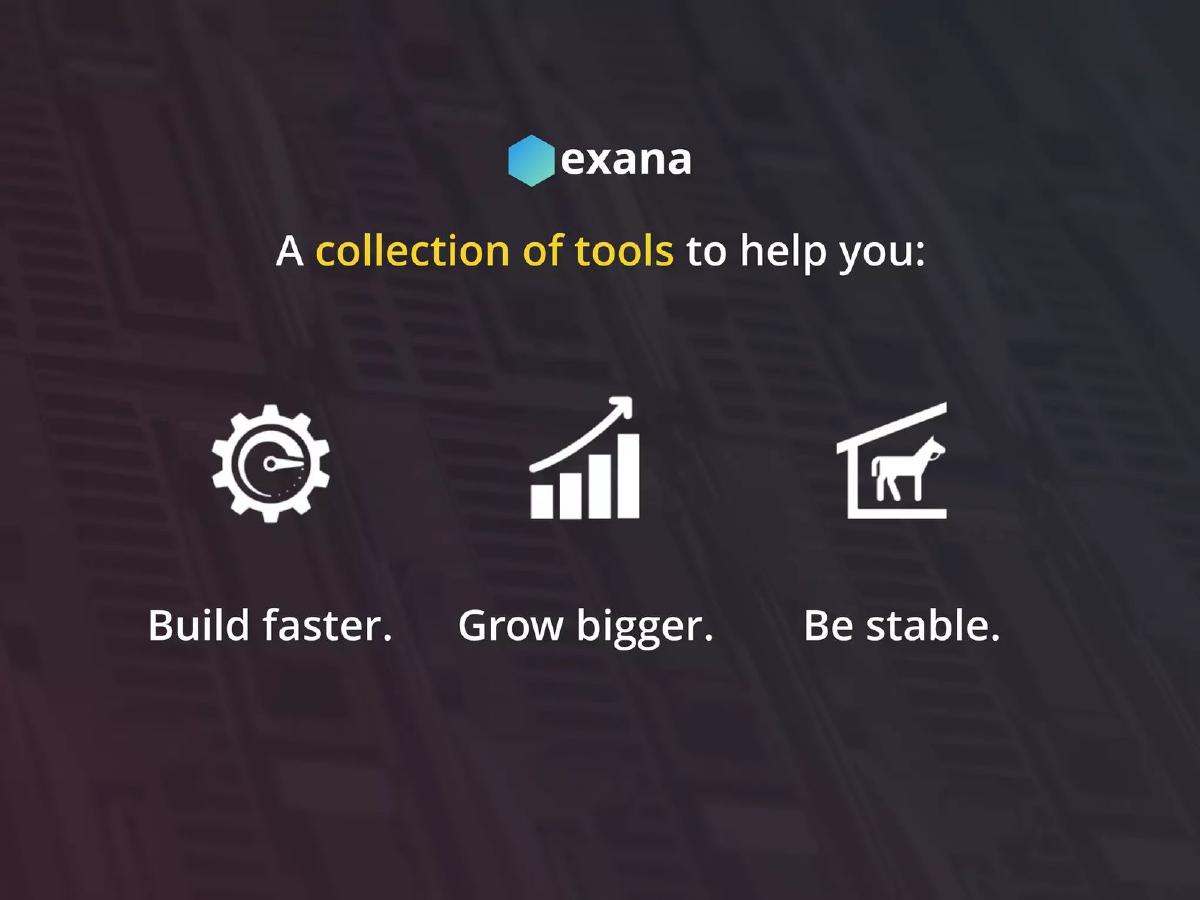
- The company defines its value proposition as a collection of tools to help users build faster, grow bigger, and be stable (Slide 2).
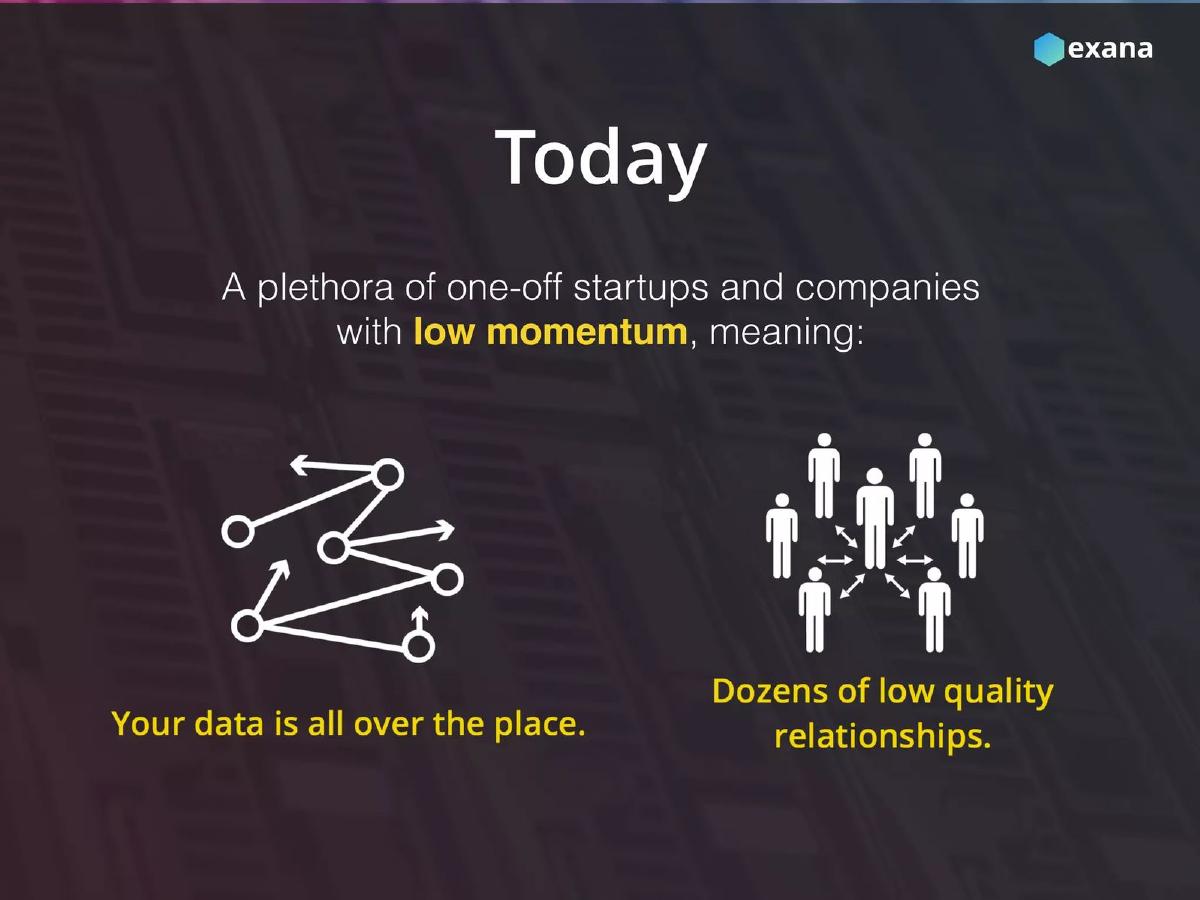
- Exana.io identifies the core problem as a plethora of one-off startups leading to fragmented data and low-quality vendor relationships (Slide 5).
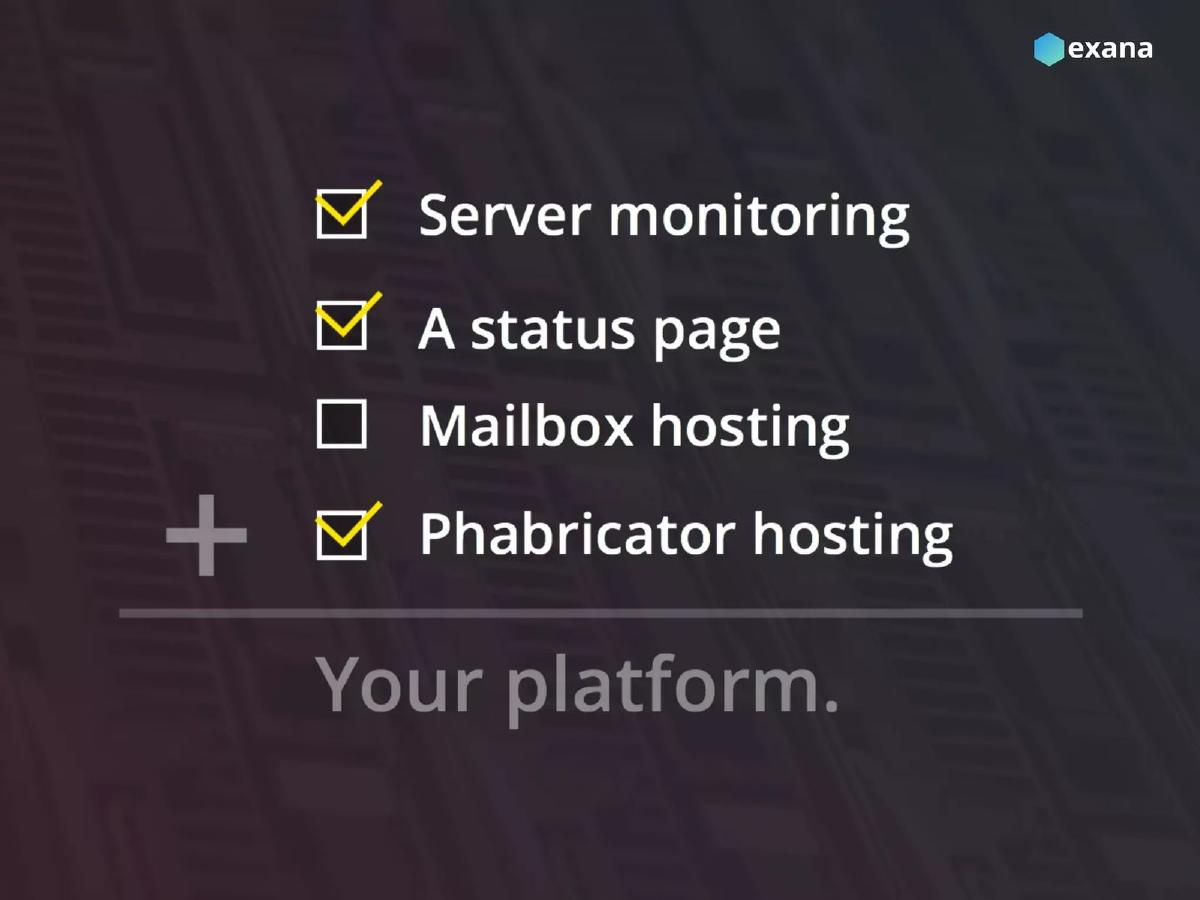
- The platform aims to integrate server monitoring, status pages, and Phabricator hosting into a single environment (Slide 4).
- Traction is demonstrated through phoreplay.com, which secured 6,000 signups and 160 active users at $2 per user (Slide 9).
- The business model is a standard SaaS approach with monthly or annually priced services (Slide 8).
- The roadmap targets 'ramen profitability' by 2016, indicating the deck was likely produced in 2015 (Slide 10).
- Future expansion plans include Facebook’s OSQuery-as-a-Service and mailbox hosting (Slide 10).
- The deck concludes with a Big Hairy Audacious Goal (BHAG) to 'monopolize the development workflow' (Slide 11).
Exana.io Pitch Deck Teardown
Exana.io presents a minimalist, 12-slide pitch deck that focuses on the consolidation of developer tools. The deck is structured to highlight the inefficiency of the current 'fragmented' market and proposes a single-brand solution for DevOps needs. While the visual style is consistent, the deck leaves several critical questions unanswered regarding the team and the specific capital requirements.
Slide 1: Title Slide
The deck opens with the company logo and name, exana , set against a dark, textured background that resembles server racks. There is no tagline or mission statement on this slide, which is a missed opportunity to immediately define the sector.
Slide 2: Value Proposition
Slide 2 introduces the core purpose of the company: "A collection of tools to help you: Build faster, Grow bigger, Be stable." It uses three simple icons (a gear, a growth chart, and a stable/horse) to represent these pillars. This is a high-level benefits slide that lacks technical specificity but sets a broad tone for the platform's utility.
Slide 3: Integration Philosophy
This slide features the phrase "Independent, but integrable." This addresses a common concern in the developer tool space: vendor lock-in. It suggests that while the tools work best together, they can still function within a user's existing stack. The icon of two interlocking gears reinforces the theme of connectivity.
Slide 4: The Platform Components
Slide 4 provides a checklist of what the platform offers or intends to offer: Server monitoring , A status page , and Phabricator hosting . Mailbox hosting is shown with an empty checkbox, indicating it is a future roadmap item. This is the first slide that gives a concrete look at the product suite.
Slide 5: The Problem - Fragmentation
Under the heading "Today," the deck argues that the market is saturated with "a plethora of one-off startups and companies with low momentum." It identifies two specific pain points: "Your data is all over the place" and "Dozens of low quality relationships." This slide effectively sets up the 'why' behind the company's existence, focusing on the administrative and data-silo burdens placed on developers.
Slide 6: The Problem - Workflow Inefficiency
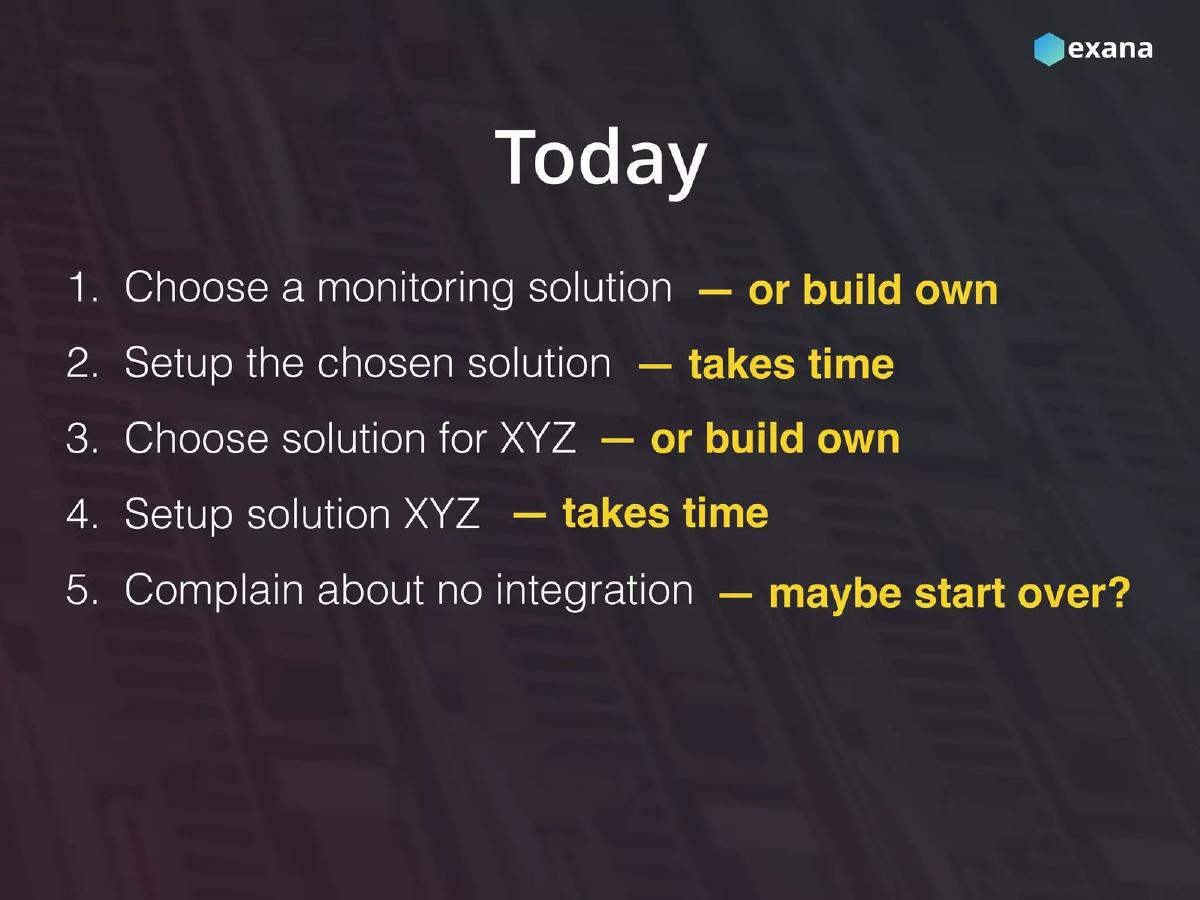
Continuing the "Today" theme, Slide 6 outlines a five-step cycle of frustration for developers: choosing a solution, setting it up (which "takes time"), repeating the process for another tool, and eventually complaining about the lack of integration. The final step, "maybe start over?", highlights the lack of sustainability in current developer workflows.
Slide 7: Competitive Advantages
The company lists three advantages: "multiple services under one brand," "traction for new services leveraging existing distribution channels," and "agility: the ability to quickly implement and push new services." This slide focuses on the business logic of a multi-product company rather than technical superiority, emphasizing the efficiency of their distribution model.
Slide 8: Business Model
Titled "Making Money," this slide is extremely brief. It describes the model as "SaaS-y" with "Monthly/annually priced services." While it confirms a recurring revenue model, it lacks specific pricing tiers or Average Contract Value (ACV) projections.
Slide 9: Traction
This is the most data-rich slide in the deck. It notes that "last year" the company founded phoreplay.com , described as "Straightforward Phabricator Hosting." The results cited are "6000 signups, 160 active users ($2/user), with zero business development and marketing." This serves as a proof of concept for their ability to acquire users organically in the developer space.
Slide 10: Roadmap
The roadmap is divided into three phases: Core (Phabricator hosting), Aux (Uptime monitoring & Status Pages), and Expand (OSQuery-as-a-Service, Mail Hosting). Crucially, it sets a goal for "Ramen profitability by 2016," which provides a timeframe for the deck's creation and the company's near-term financial expectations.
Slide 11: The BHAG
The deck introduces a "Big Hairy Audacious Goal" (BHAG): "Monopolize the development workflow." This is a bold claim intended to show the scale of the founders' ambition, moving from a niche hosting provider to a dominant platform player.
Slide 12: Contact Information
The final slide provides a contact email and a link to their AngelList profile. Notably, there is no call to action regarding a specific funding round amount or terms.
What Works in This Deck
Clear Problem Identification: The deck does a good job of articulating the 'fragmentation' problem that plagues the DevOps space. By focusing on the time wasted on setup and integration, it speaks directly to developer pain points. · Organic Traction: The mention of 6,000 signups with zero marketing spend is a strong signal of product-market fit for their initial offering. It suggests that the founders understand how to reach their target audience without expensive customer acquisition costs. · Consistent Branding: The deck is visually cohesive, using a dark theme and consistent iconography that fits the developer-centric nature of the product.
What Is Missing
Team Slide: This is the most glaring omission. Investors fund people, especially at the early stage. The lack of bios, technical backgrounds, or previous successes makes it impossible to judge the team's ability to execute on a complex multi-product roadmap. · Funding Ask: The deck never specifies how much money is being raised, what the valuation expectations are, or how the funds will be allocated. Without this, it functions more as a company overview than a pitch deck. · Market Size (TAM/SAM/SOM): While the deck mentions a "plethora of startups," it does not quantify the market opportunity in dollars. Investors need to see the potential for a billion-dollar outcome to justify the risk. · Unit Economics: While $2/user is mentioned, there is no information on the cost to serve those users or the Lifetime Value (LTV). At $2/user, the company would need massive scale to reach significant revenue, and the deck doesn't explain how they will achieve that scale. · Competitive Landscape: The deck assumes that the main competition is "fragmentation," but it ignores established players in monitoring (like Datadog or New Relic) and hosting (like GitHub or GitLab).
What a Founder Should Copy
The 'Today' vs. 'Tomorrow' Structure: Slides 5 and 6 are effective at building a narrative of current frustration that makes the proposed solution feel like a logical necessity. · Focus on Distribution: Slide 7 correctly identifies that the real advantage of a multi-product company is the ability to cross-sell to an existing user base. Highlighting "existing distribution channels" is a smart way to show how the company will scale efficiently. · Simplicity: The deck is not cluttered with text. It uses short, punchy sentences that are easy to digest during a quick flip-through.
Frequently asked questions
- What is the primary product offered by exana.io?
- According to Slide 10, the core product is Phabricator hosting and support. The company uses this as a foundation to build 'auxiliary' services like uptime monitoring and status pages. The long-term goal is to create a unified platform for multiple developer tools that are typically purchased from separate, 'one-off' startups.
- How much revenue was exana.io generating at the time of this deck?
- Slide 9 states the company had 160 active users paying $2 per user. This equates to approximately $320 in monthly recurring revenue (MRR). The deck notes this was achieved with 'zero business development and marketing,' suggesting a product-led growth organic acquisition strategy.
- Who are the founders of exana.io?
- The deck does not include a team slide or mention any individual founders by name. It only provides a generic 'founders@exana.io' email address on the final slide (Slide 12). This is a significant omission for a fundraising deck, as investor interest often hinges on the team's technical background.
- What is the 'BHAG' mentioned in the deck?
- Slide 11 defines their Big Hairy Audacious Goal (BHAG) as the intent to 'Monopolize the development workflow.' This suggests the company views its current hosting and monitoring tools as an entry point into a much larger ecosystem of developer operations (DevOps) software.
- What are the planned future features for the platform?
- Slide 10 lists several expansion targets: Facebook’s OSQuery-as-a-Service, mailbox hosting, and other unspecified ideas in the pipeline. The strategy appears to be horizontal expansion, adding more utility to the platform to increase the 'stickiness' of the brand for existing users.