Vinyl.st presents a compelling case for the 'vinyl revival,' citing a 52% year-over-year growth in sales as of 2015 (Slide 3). The deck identifies a clear friction point: the disconnect between streaming discovery and the fragmented, price-variable physical market. Their solution is a price comparison and recommendation engine that integrates with Spotify. While the deck provides a robust revenue roadmap—ranging from 7-10% affiliate fees to a 50% margin on direct label sales (Slide 6)—it suffers from a total lack of team information and a specific funding ask. The financial projections are am…
Key takeaways
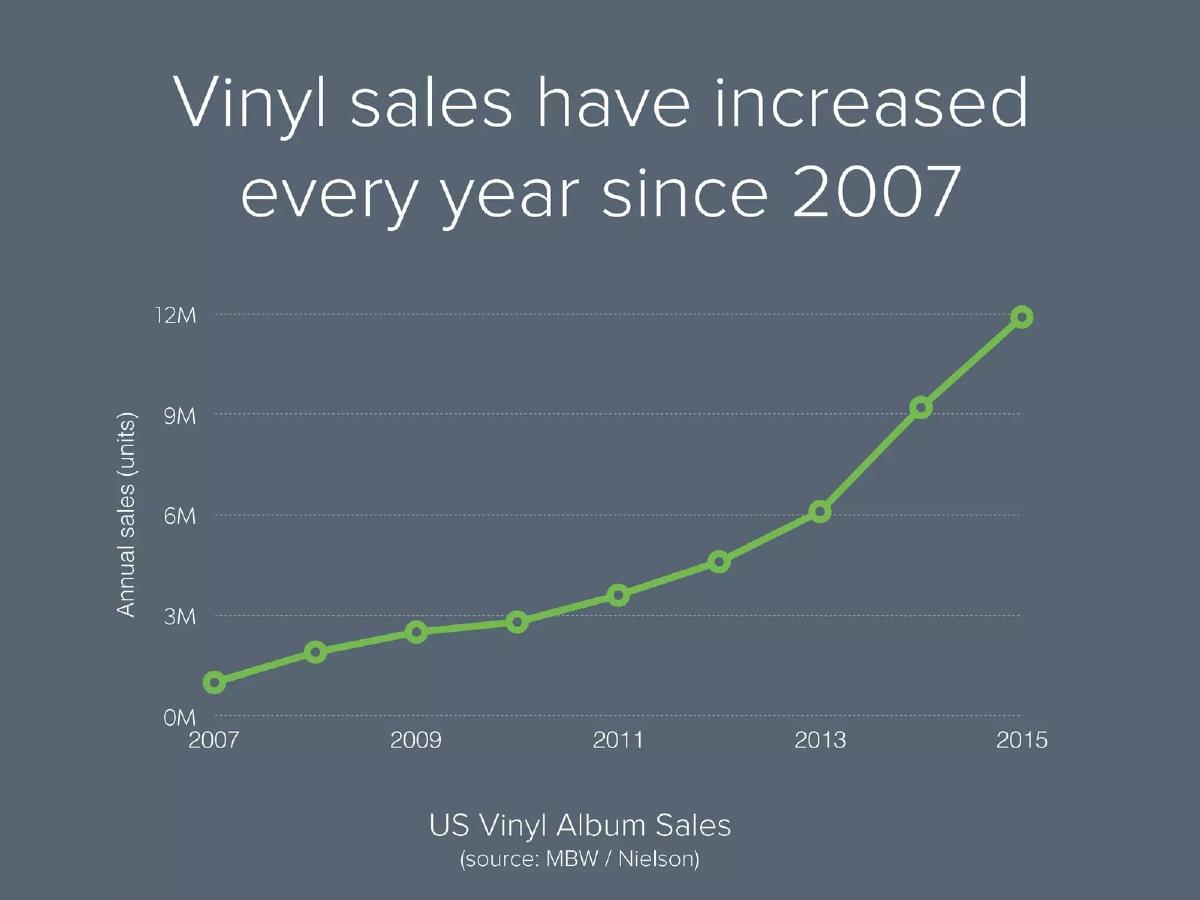
- Vinyl sales showed consistent growth from 2007 through 2015, reaching 12 million units annually (Slide 2).
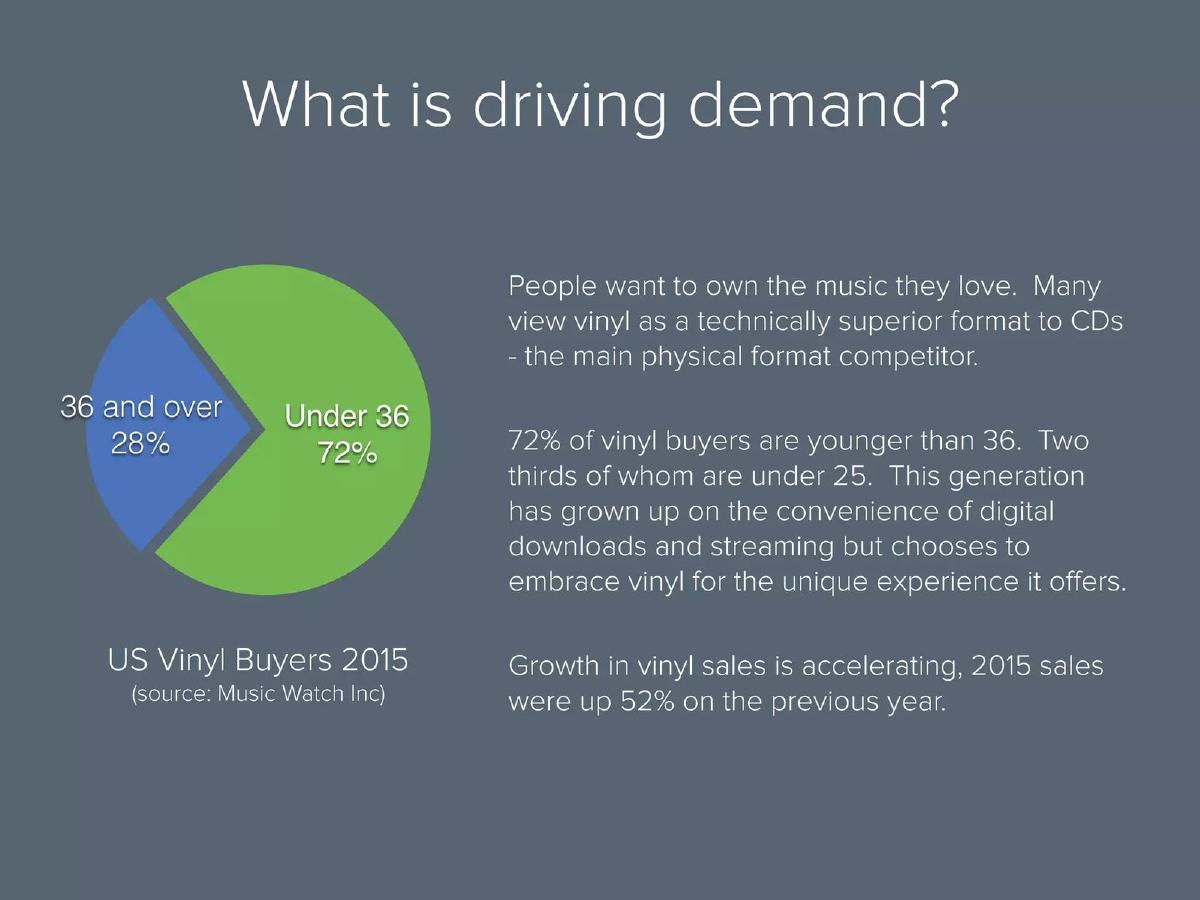
- The target demographic is surprisingly young, with 72% of vinyl buyers under the age of 36 (Slide 3).
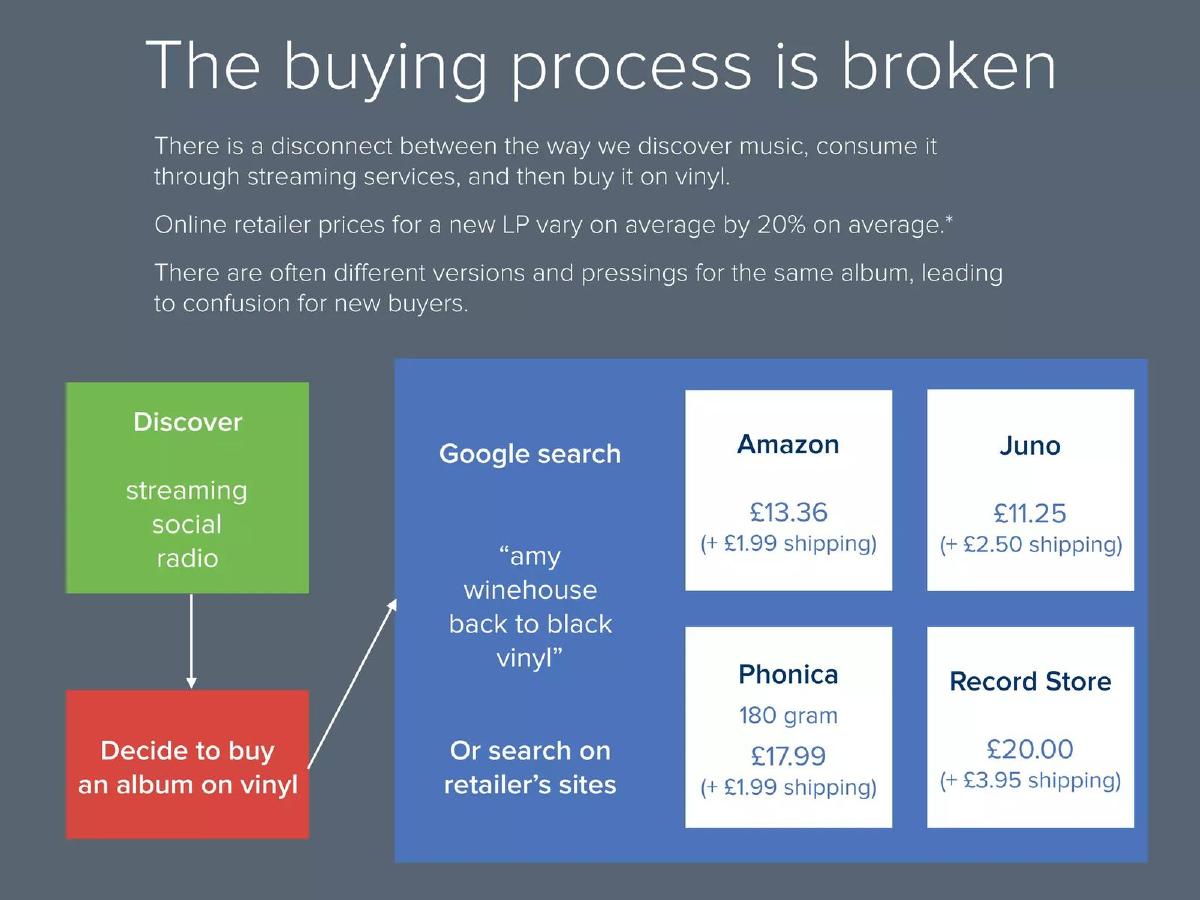
- Price fragmentation is a core problem, with LP prices varying by an average of 20% across retailers like Amazon, Juno, and Phonica (Slide 4).
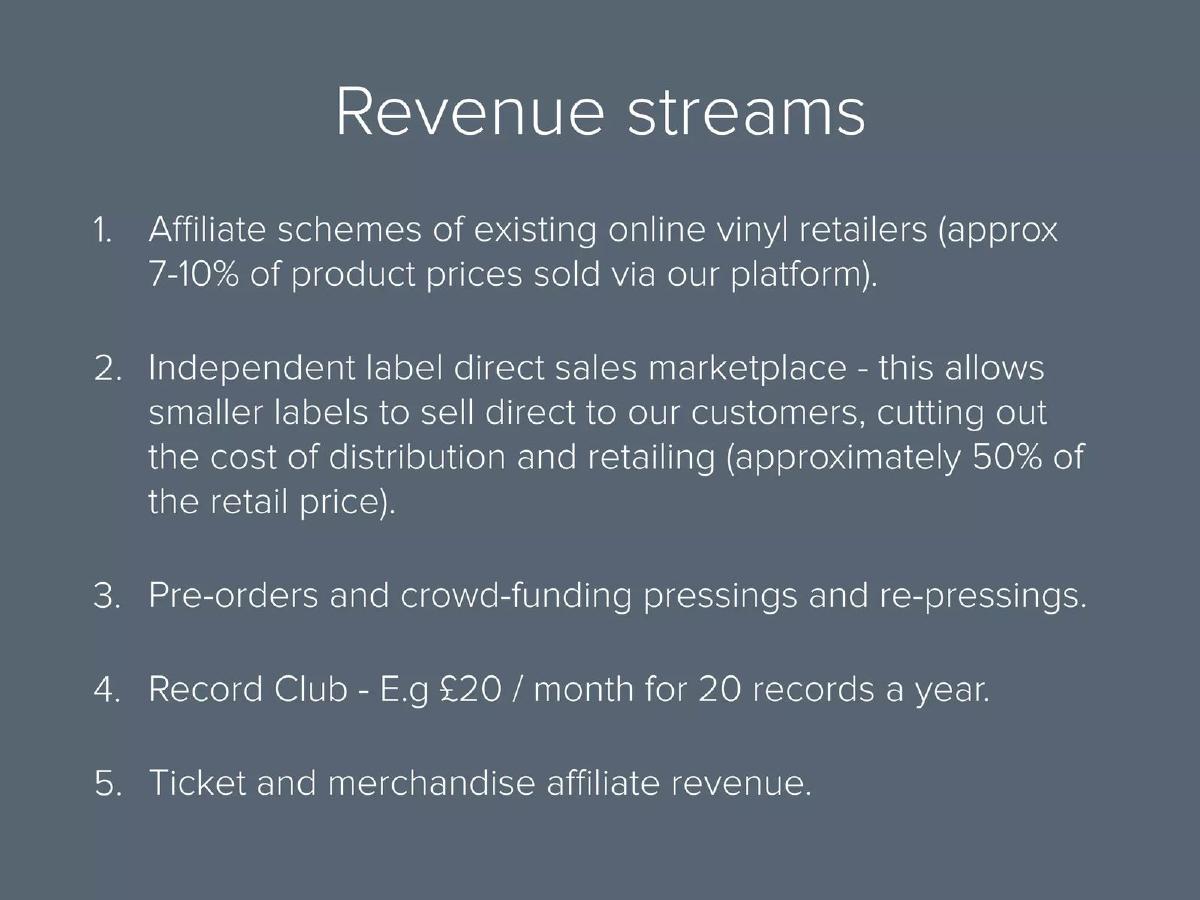
- The revenue model is diversified into five streams, including affiliate fees, a direct marketplace, and a £20/month subscription club (Slide 6).
- Market opportunity projections for 2019 estimate £3.1M from affiliates, £4.1M from the marketplace, and £7.2M from the subscription service (Slide 7).
- The 'Why Now' is supported by the fact that Amazon sold more turntables than any other audio product in Christmas 2015 (Slide 9).
- The deck includes a detailed competitive analysis of Discogs, noting they sold $43M of vinyl in 2015 with an 8% margin (Slide 16).
- There is no team slide, no historical traction data, and no specific investment ask included in the deck.
Vinyl.st Pitch Deck Analysis
Vinyl.st presents a deck focused on the intersection of the digital streaming economy and the physical vinyl resurgence. The deck, dated Q3 2016, relies heavily on market data from 2014 and 2015 to justify a new aggregator model for music collectors.
Slide 1: Title Slide
The title slide introduces the brand and the tagline: "The Missing Link Between Digital and Physical Music Collections." It lists John Griffin as the founder. The design is minimalist, using a stylized record groove logo.
Slides 2-3: Market Context and Demand
Slide 2 uses a line graph to show that US vinyl album sales have increased every year since 2007, peaking at 12 million units in 2015. Slide 3 breaks down the demographic, citing Music Watch Inc. data that 72% of vinyl buyers are under 36, and two-thirds are under 25. This challenges the stereotype of the older collector and establishes a "digital native" target audience that values the physical experience.
Slide 4: The Problem Statement
The deck argues that "The buying process is broken." It illustrates a fragmented journey from discovery (streaming/social) to purchase. A comparison table shows price variance for an Amy Winehouse album: £11.25 at Juno, £13.36 at Amazon, £17.99 at Phonica, and £20.00 at a physical record store. This 20% average price variance is the core pain point the startup intends to solve.
Slide 5: The Vision
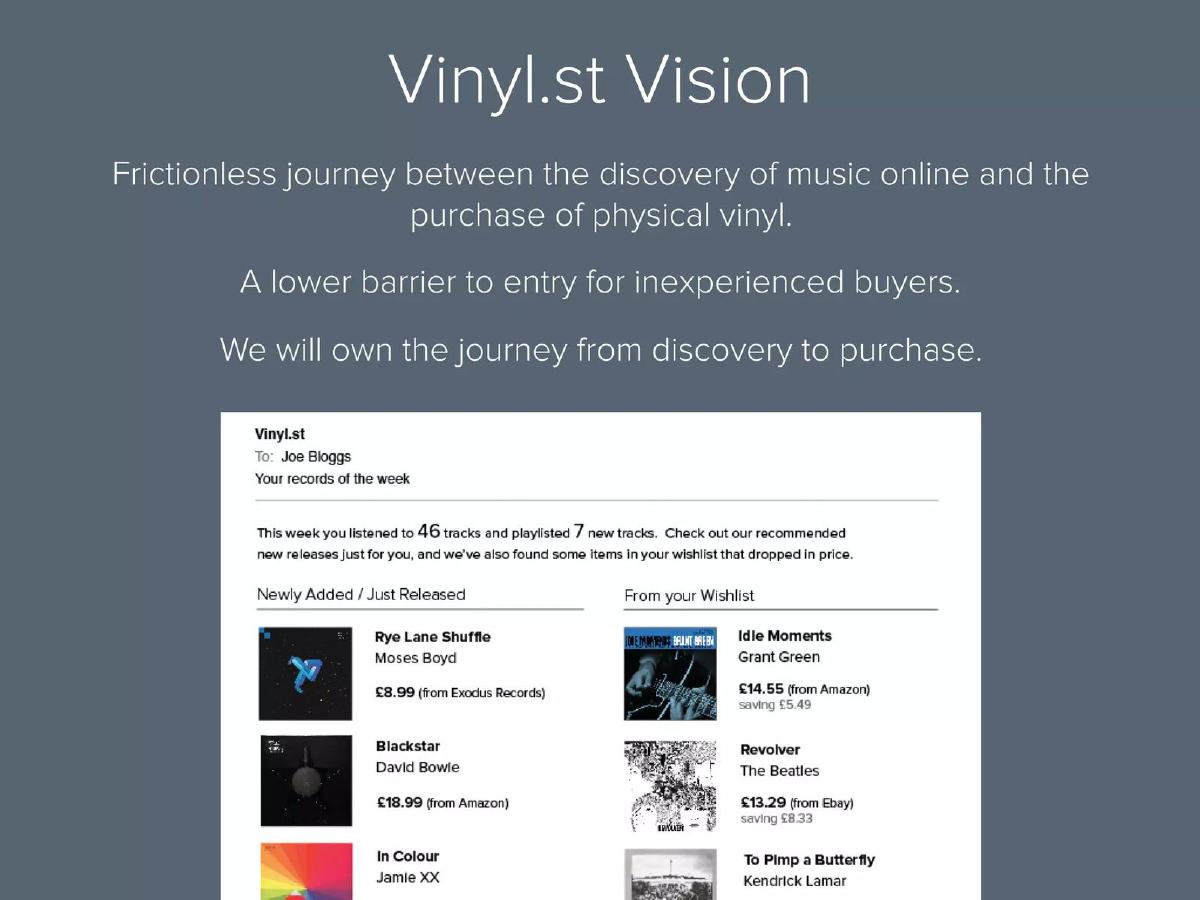
The vision is a "frictionless journey" between discovery and purchase. The slide includes a mockup of a weekly email recommendation titled "Your records of the week," which shows tracks the user listened to (e.g., "46 tracks and playlisted 7 new tracks") alongside purchase links from various retailers like Amazon and eBay, highlighting potential savings.
Slides 6-7: Revenue and Market Opportunity
Slide 6 lists five revenue streams. Notably, they expect a 50% margin on direct label sales by cutting out traditional distribution. Slide 7 quantifies this into a 2019 projection. The most significant projected earner is the "Vinyl Club" at £7.2M, which assumes 30,000 customers paying £20/month. The affiliate revenue is projected at £3.1M, assuming they capture 10% of online sales and take a 10% cut of the retail price.
Slide 8: Go-to-Market Strategy
The strategy is three-fold: build trust through price transparency, integrate with Spotify and Shazam for targeted recommendations, and build partnerships for exclusive product drops. The deck emphasizes customer retention due to the "instant value" of the price comparison tool.
Slide 9: Why Now?
This slide provides a specific catalyst: Amazon sold more turntables than any other audio product during Christmas 2015. This is a strong indicator of a growing hardware install base that will require software (vinyl records).
Slides 10-15: Appendices and Data Dumps
These slides contain raw data from Nielsen Music 360 (2015). Slide 11 shows entertainment spending, noting Millennials spend $163 annually on music-related activities. Slide 12 highlights that radio is still the top discovery method (61%), followed by friends (45%). Slides 13 and 14 provide genre breakdowns, showing that Rock (32.6%) and R&B/Hip-Hop (15.1%) dominate album consumption.
Slide 16: Competitive Analysis (Discogs)
The deck identifies Discogs as the primary competitor in the second-hand market. It notes Discogs sold $43M worth of vinyl in 2015 with an 8% margin. By showing Discogs' growth in new releases and users, Vinyl.st validates that there is a massive, active community of collectors to tap into.
Slide 17: The MVP
The final slide outlines the Minimum Viable Product. It focuses on testing the hypothesis that people buy vinyl based on their playlists. The MVP is a simple Spotify integration that sorts albums into "ignore / watch / buy" piles and tracks prices across the four largest UK retailers.
What Vinyl.st Does Well
Clear Problem Identification: The price comparison table on Slide 4 is the strongest part of the deck. It immediately demonstrates the value proposition to a consumer: "We save you money by finding the cheapest version of this record."
Demographic Insight: By proving that the market is dominated by people under 36, the deck justifies the need for a digital-first, mobile-friendly solution rather than a traditional brick-and-mortar approach.
Diversified Revenue: The plan doesn't rely solely on thin affiliate margins. The inclusion of a subscription club and a direct-to-consumer marketplace for labels shows a path toward higher-margin revenue.
What is Missing from the Deck
The Team: This is a fatal omission for a seed-stage deck. There is no information on the founder's background, technical capability, or industry connections. Investors bet on people, and this deck provides no one to bet on.
Traction: There are no numbers regarding current users, waitlist signups, or early pilot results. The deck is entirely theoretical.
The Ask: The deck never specifies how much capital is needed, what the valuation is, or what the milestones are for the next 12-18 months. It ends on an MVP description rather than a call to action for investors.
Unit Economics: While Slide 7 assumes a 50% COGS for the subscription service, it doesn't account for shipping costs, which are notoriously high for heavy, fragile items like vinyl records.
Founder's Playbook: What to Copy
Use Specific Price Comparisons: If you are building an aggregator or a marketplace, show the actual price delta you are solving. Slide 4 is a perfect example of "show, don't tell." · Leverage Hardware Trends: Using the Amazon turntable sales stat (Slide 9) is a clever way to show that the market for your "software" (records) is being expanded by a third party's hardware success. · Detailed Appendices: Including raw Nielsen data (Slides 11-15) shows that the founders have done their homework, even if the data is third-party. It provides a safety net for investors who want to dig into the macro trends without leaving the deck.
Frequently asked questions
- What is the primary problem Vinyl.st is solving?
- According to Slide 4, the 'buying process is broken.' There is a disconnect between discovering music on streaming services and purchasing it on vinyl. The deck highlights price inconsistency, noting that prices for a new LP vary by 20% on average across different online retailers, leading to confusion for new buyers.
- How does the company plan to make money?
- Slide 6 outlines five revenue streams: 7-10% affiliate fees from existing retailers, a direct marketplace for independent labels (taking approximately 50% of retail price), crowdfunding for pressings, a £20/month 'Record Club,' and affiliate revenue from tickets and merchandise.
- What is the projected scale of the business?
- By the end of 2019, the company projects a total revenue of approximately £14.4M. This is broken down on Slide 7 into £3.1M from affiliates, £4.1M from the marketplace (assuming 250 releases selling 5,000 units each), and £7.2M from 30,000 subscription customers.
- What is the proposed MVP functionality?
- Slide 17 describes the MVP as a 'Log in with Spotify' service. It scans user playlists, finds available vinyl albums at the best price, and allows users to organize them into 'ignore / watch / buy' piles. It also includes a weekly newsletter based on listening behavior and price changes.
- What critical information is missing from this deck?
- The deck is missing three essential components for a professional fundraise: a Team slide (who is building this?), a Traction slide (current user numbers or revenue), and an Ask slide (how much money is being raised and what are the terms?). Without these, it functions more as a product concept than a business investment proposal.