Zevoy’s 11-slide Series A deck is a masterclass in speed and regulatory positioning. Rather than relying on third-party banking-as-a-service providers, Zevoy emphasizes its status as an EMI-regulated entity with its own Visa license, a move that allowed them to launch in under a year with just €1M. The deck identifies a €170B market opportunity and a strategic 'Wolt-style' rollout into underserved European regions. While the deck is light on detailed unit economics and a specific funding 'ask' slide, it leans heavily on the 'seasoned' nature of its 35+ person team, boasting over 100 years of…
Key takeaways
- Zevoy is an EMI regulated entity authorized by the Finnish Financial Supervisory Authority, allowing for EU-wide passporting (Slide 1).
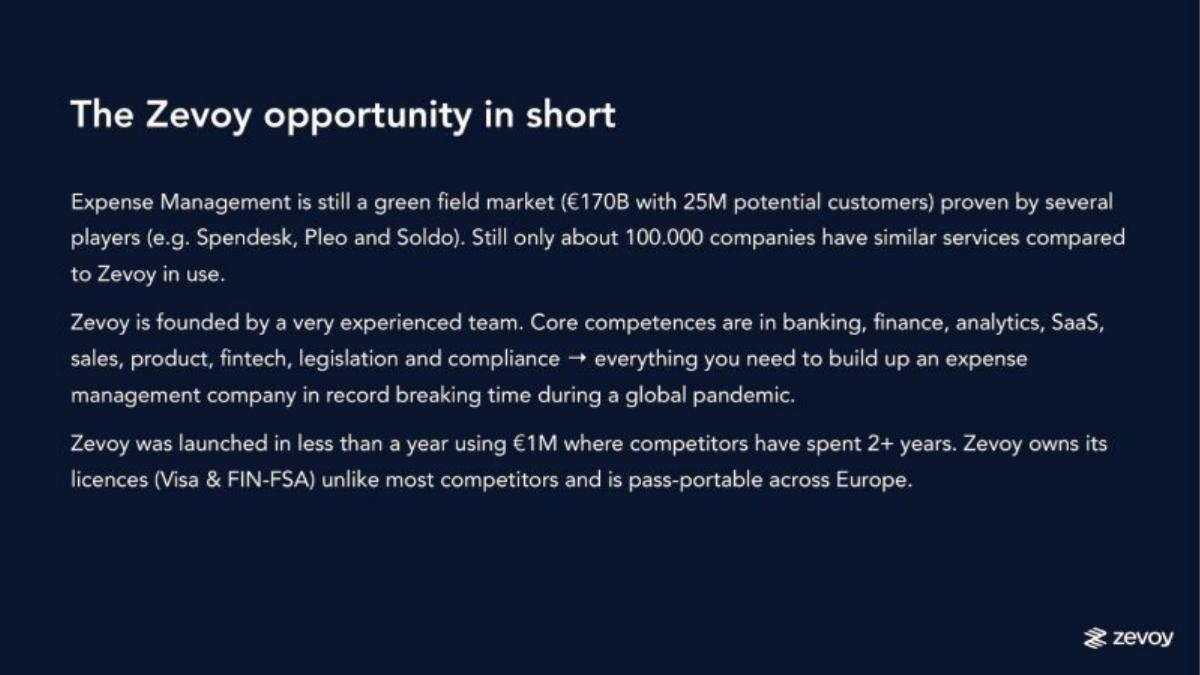
- The company identifies a €170B market with 25M potential customers, noting that only 100,000 companies currently use similar services (Slide 2).
- Zevoy launched in less than a year using €1M, whereas competitors typically spent 2+ years to reach the same stage (Slide 2).
- The strategic plan includes leveling up to a Credit Institute Licence to secure cheaper funding (Slide 3).
- The outbound sales model delivers a 1/10 conversion rate from cold call to signing (Slide 8).
- 80% of Zevoy's customers possess A+ credit ratings or better (Slide 8).
- The company follows a 'Wolt route' expansion strategy, targeting underserved markets where competitors like Pleo and Soldo are less active (Slide 9).
- The team consists of 35+ FTEs across Helsinki, Stockholm, and Skopje (Slide 10).
The Zevoy Series A Teardown
Zevoy’s pitch deck is a concise, 11-slide presentation that focuses on regulatory moats and execution speed. In a crowded FinTech landscape, Zevoy differentiates itself not just through software, but through its foundational licensing. The following teardown examines how they leveraged these facts to secure a $164M Series A.
Slide 1: Title and Regulatory Status
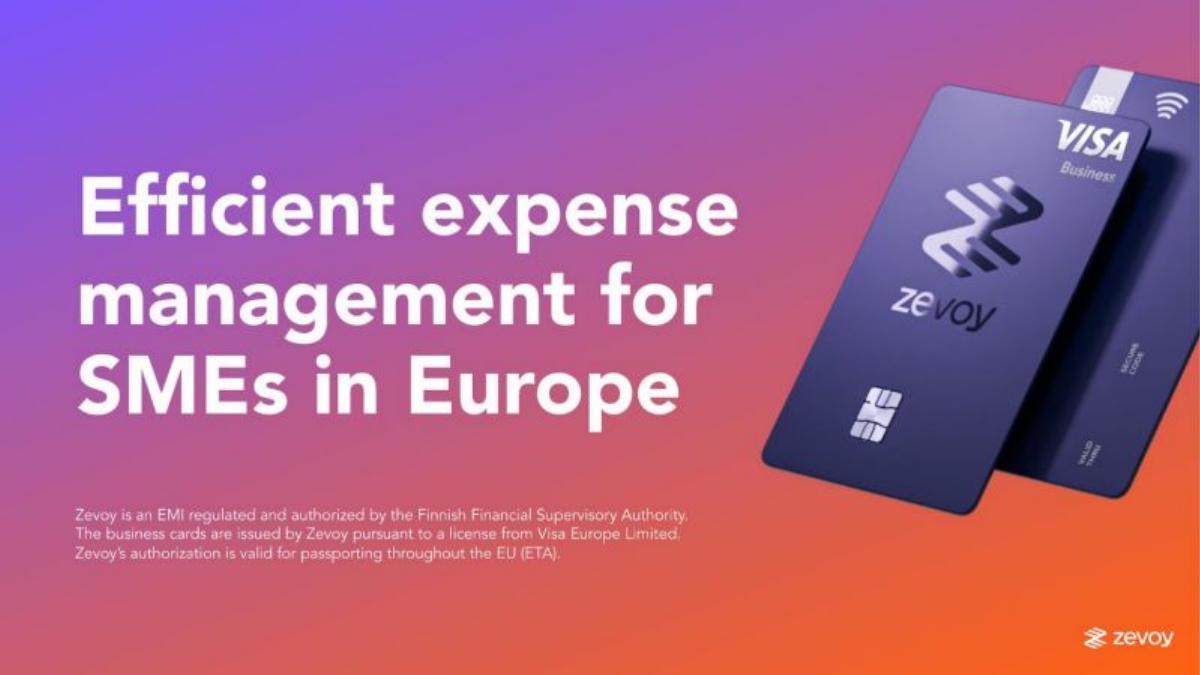
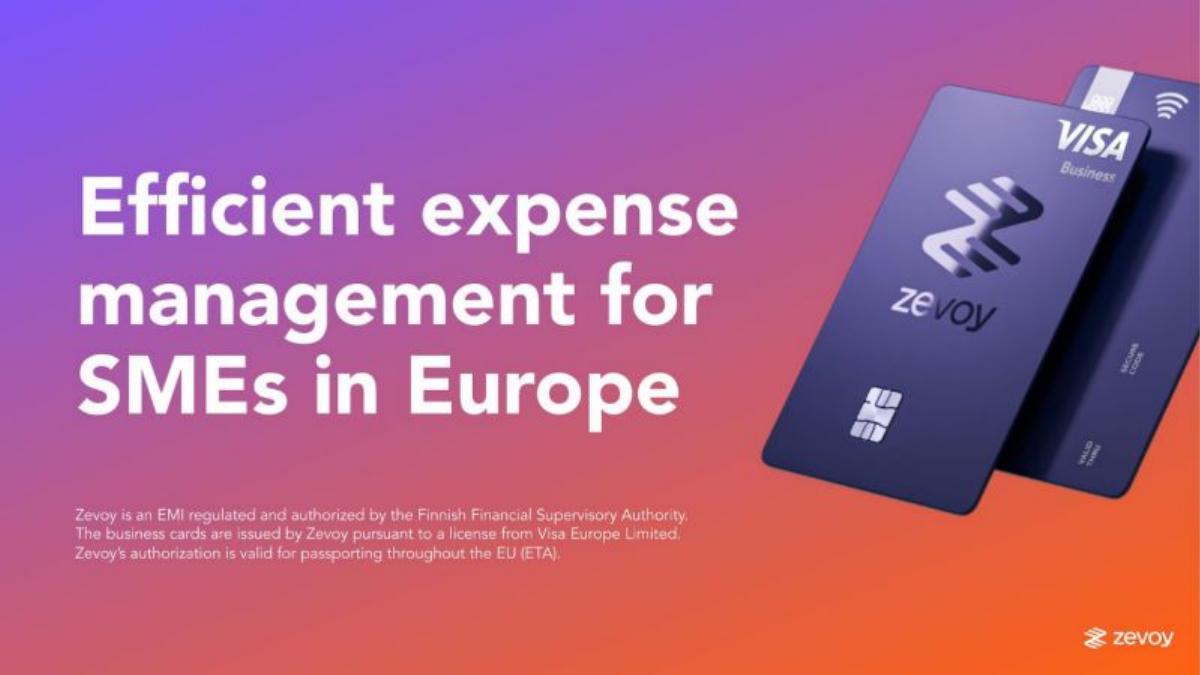
The cover slide immediately establishes the value proposition: "Efficient expense management for SMEs in Europe." However, the most critical information is in the fine print at the bottom. It states that Zevoy is an EMI regulated entity authorized by the Finnish Financial Supervisory Authority and holds a license from Visa Europe Limited. This establishes immediate credibility, noting that their authorization is valid for passporting throughout the EU .
Slide 2: The Opportunity in Short
Slide 2 serves as an executive summary. It defines the market as a €170B green field with 25M potential customers. Crucially, it claims that only 100,000 companies currently use similar services, suggesting a massive untapped market. The slide also highlights Zevoy's efficiency, stating they launched in less than a year using €1M , while competitors took over two years. This slide sets the tone for a high-velocity, capital-efficient business.
Slide 3: The Strategic Game Plan
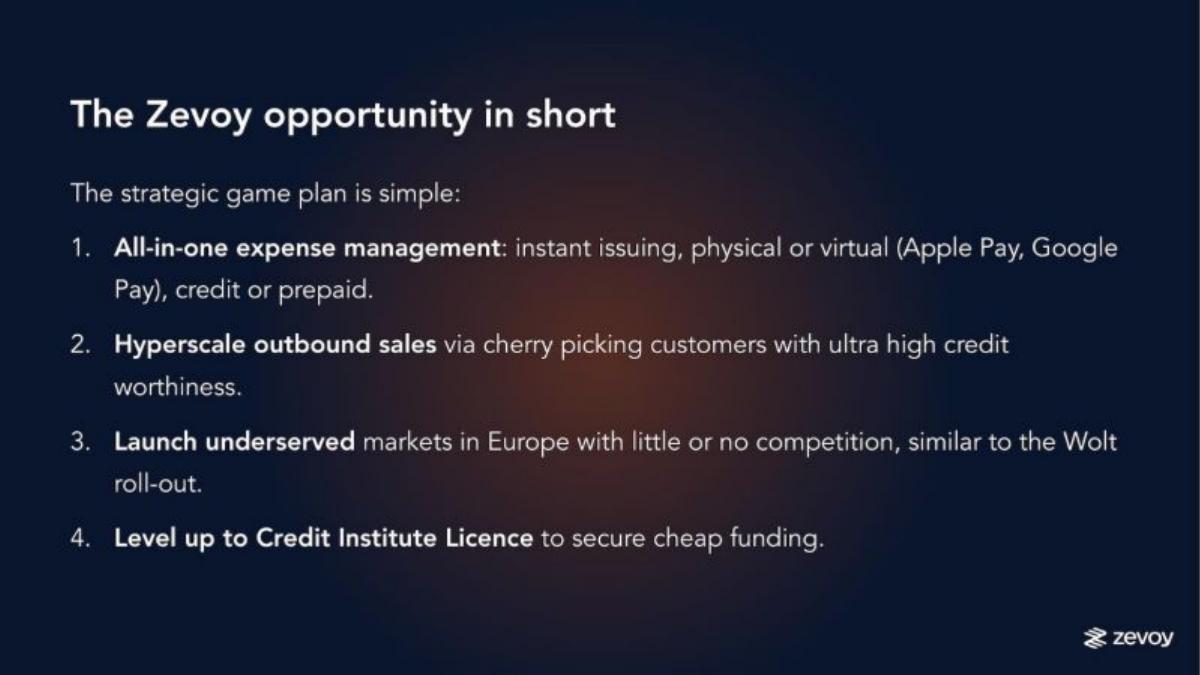
Zevoy outlines a four-step strategy: 1) All-in-one expense management with instant issuing; 2) Hyperscale outbound sales targeting ultra-high credit worthiness ; 3) Launching in underserved markets (the "Wolt roll-out"); and 4) Leveling up to a Credit Institute Licence to secure cheaper funding. This last point is a sophisticated financial play that signals to investors that Zevoy intends to own the full stack of the financial value chain.
Slide 4: The Problem
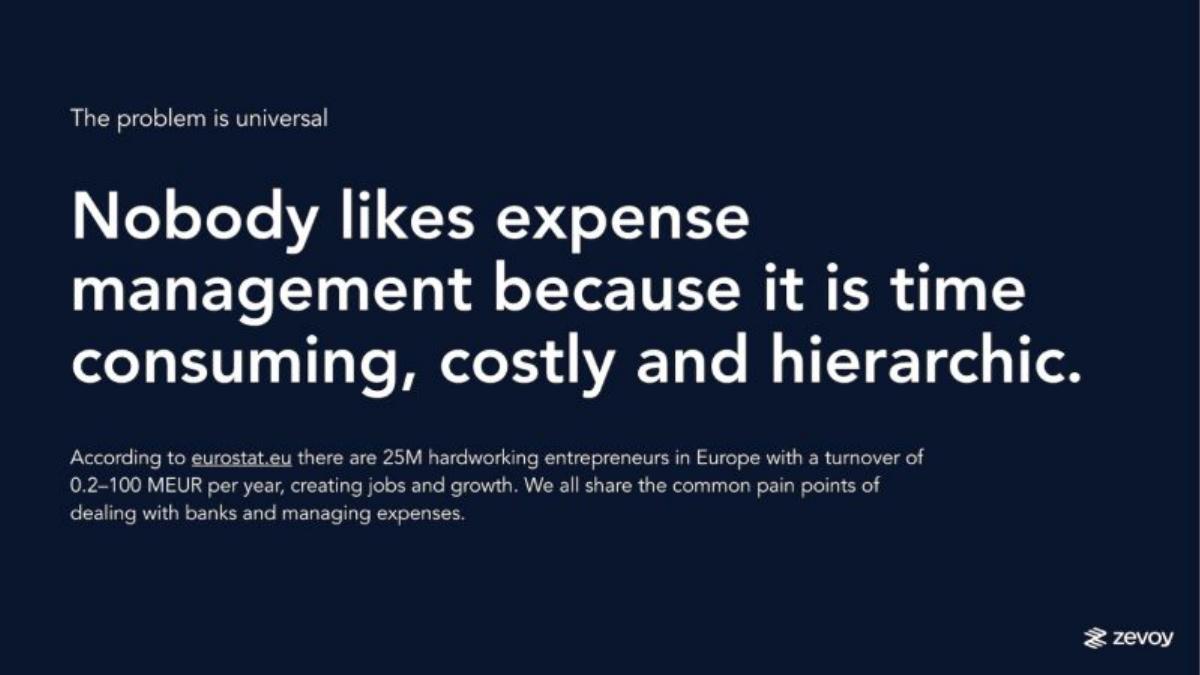
The problem slide is minimalist. It uses a large headline: "Nobody likes expense management because it is time consuming, costly and hierarchic." It cites eurostat.eu data regarding 25M entrepreneurs in Europe with turnovers between 0.2–100 MEUR. By focusing on the "common pain points of dealing with banks," Zevoy positions itself as the modern alternative to legacy financial institutions.
Slides 5-7: The Solution and Product
These three slides use a consistent visual language to break down the product into three pillars:
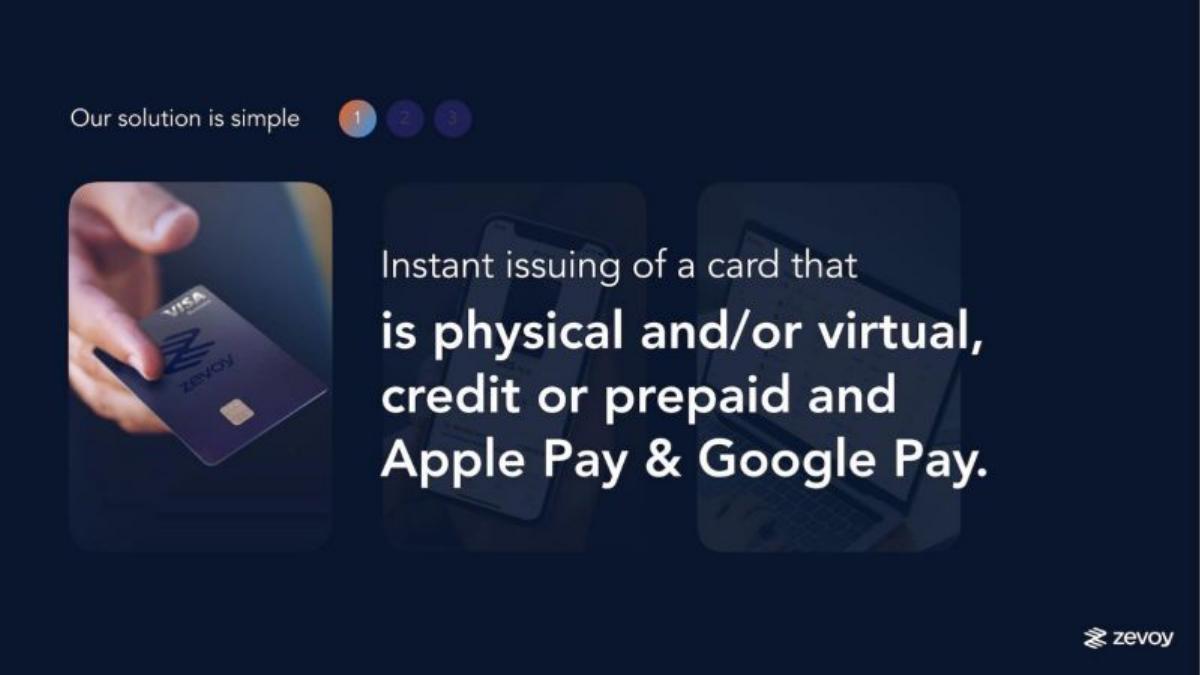
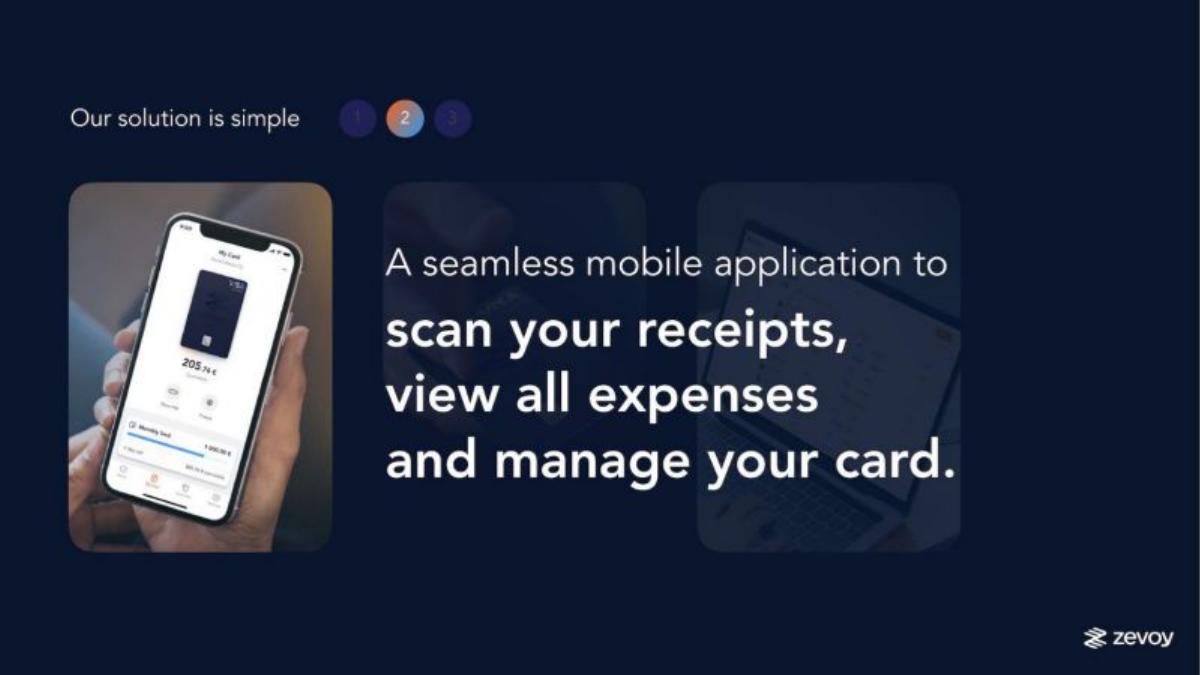
Slide 5: Instant issuing of physical/virtual cards, supporting credit, prepaid, Apple Pay, and Google Pay. · Slide 6: A mobile application for receipt scanning and expense viewing. · Slide 7: A user-friendly hub for administrators to manage cards, limits, and accounting exports.
The product appears to be a standard modern expense management suite, but the emphasis remains on the ease of use and the "all-in-one" nature of the platform.
Slide 8: Traction and Sales Model
This is a high-impact slide. It features a growth chart (though the Y-axis is unlabelled) showing a sharp upward trend from 04/2021 to 12/2021. Key metrics provided include:
80% of customers have A+ ratings or better. · 1/10 conversion rate from cold call to signing. · 100+ signed new customers per month. · 2 markets live (Finland and Sweden).
The focus on high credit ratings (A+) is a strategic signal that Zevoy is minimizing risk while scaling rapidly.
Slide 9: Market Expansion Strategy
Slide 9 introduces the "Wolt route." It argues that competitors like Pleo, Soldo, and Spendesk are "battling in the West," which will cause them to "bleed." Zevoy’s strategy is to target underserved markets with favourable demographics (younger populations and growing education levels). A map of Europe highlights their intended expansion path, reinforcing the idea that they are avoiding the "red ocean" of Western Europe in favor of "blue ocean" opportunities elsewhere.
Slide 10: The Team
The team slide emphasizes seniority. It lists seven key leaders, including CEO Christoffer Rosqvist (20+ years experience) and COO Valtteri Hasa (25+ years experience). The slide notes that Hasa, Rosqvist, and Jonas Strahl (CFO) have worked together for over 10 years . This level of historical collaboration is a strong de-risking factor for investors. The slide also mentions a current status of 35+ FTEs across Helsinki, Stockholm, and Skopje.
Slide 11: External Reference
The final slide is a promotional slide for the source of the deck, bestpitchdeck.com, and does not contain company-specific information.
What Zevoy Does Well
Zevoy’s deck is exceptionally strong at regulatory positioning . By leading with their EMI license and Visa partnership, they bypass the common investor concern regarding dependency on third-party banking-as-a-service (BaaS) providers. This independence suggests better margins and more control over the product roadmap.
The "Wolt route" narrative is also a clever piece of storytelling. It acknowledges the strength of competitors like Pleo and Soldo but reframes their presence as a disadvantage (a "battlefield") while positioning Zevoy’s expansion into underserved markets as a path to "better organic growth."
What is Missing from the Zevoy Deck
Despite raising $164M, the deck is missing several key components typically found in a Series A presentation:
The Ask: There is no slide detailing how much capital is being raised or how it will be spent. (The $164M figure is known from the catalogue listing, not the slides). · Unit Economics: While they mention a 1/10 sales conversion rate, there is no mention of Customer Acquisition Cost (CAC), Lifetime Value (LTV), or monthly recurring revenue (MRR) figures. · Detailed Financial Projections: The deck lacks a forward-looking financial model or specific revenue targets. · Competitive Matrix: While they name competitors, they do not provide a feature-by-feature comparison to show why their software is superior to existing solutions.
Founder Lessons: What to Copy
1. Lead with your Moat: If your company has a hard-to-attain regulatory license or a unique technical advantage, put it on Slide 1. Zevoy didn't wait for the "Why Us" slide to mention their EMI license; they made it the foundation of their identity.
2. Use Strategic Analogies: Referencing the "Wolt route" provides investors with a mental model they already understand. It explains a complex geographic expansion strategy in just two words.
3. Highlight Team History: Investors don't just invest in individuals; they invest in teams. Highlighting that the core leadership has worked together for over a decade (Slide 10) is one of the strongest signals of stability a startup can provide.
4. Focus on Quality of Revenue: By stating that 80% of their customers have A+ credit ratings, Zevoy signals that they are building a high-quality, low-risk book of business, which is particularly attractive in the FinTech sector.
Frequently asked questions
- How much did Zevoy raise with this deck?
- According to the catalogue listing, Zevoy raised $164M in a Series A round in 2022. Interestingly, the 11-slide deck itself does not include a specific 'Ask' slide or a breakdown of how the funds would be allocated, focusing instead on the market opportunity and execution speed.
- What is Zevoy's primary competitive advantage?
- Zevoy highlights its regulatory independence as a core advantage. As stated on Slide 2, Zevoy owns its own licenses (Visa and FIN-FSA), which are pass-portable across Europe. This allowed them to launch in under a year with €1M, a feat they claim took competitors over two years to achieve.
- What is the 'Wolt route' mentioned in the deck?
- On Slide 9, Zevoy explains the 'Wolt route' as a strategy to capture market share by launching in underserved European markets with little to no competition. They contrast this with competitors like Pleo, Soldo, and Spendesk, who they claim are 'battling in the West' and competing in the same crowded markets.
- What are the key features of the Zevoy product?
- The product is an all-in-one expense management solution. According to Slides 5, 6, and 7, it includes instant issuing of physical and virtual cards (supporting Apple and Google Pay), a mobile app for scanning receipts and managing cards, and a central hub for administrators to manage limits and forward data to accounting.
- Who are the key members of the Zevoy leadership team?
- The team is led by CEO Christoffer Rosqvist (20+ years in banking), CTO Joakim Lundborg (former CTO at Wrapp/Meniga), and COO Valtteri Hasa (25+ years in risk management). Slide 10 emphasizes that the leadership has worked together for over 10 years, managing a team of 35+ employees.