Zeta’s 2021 Series C deck is a study in high-growth enterprise sales. Raising $250M at a $1.45B valuation, the company moved away from simple product pitches to a 'platform of platforms' narrative. The deck highlights a six-year journey from the first line of code in 2015 to managing 10 million cards by 2021. It effectively balances the technical complexity of its 'Tachyon' and 'Photon' product suites with clear value propositions for legacy banks, such as improved cost-to-income ratios and 100% API coverage. While the deck lacks specific financial unit economics in the provided slides, the s…
Key takeaways
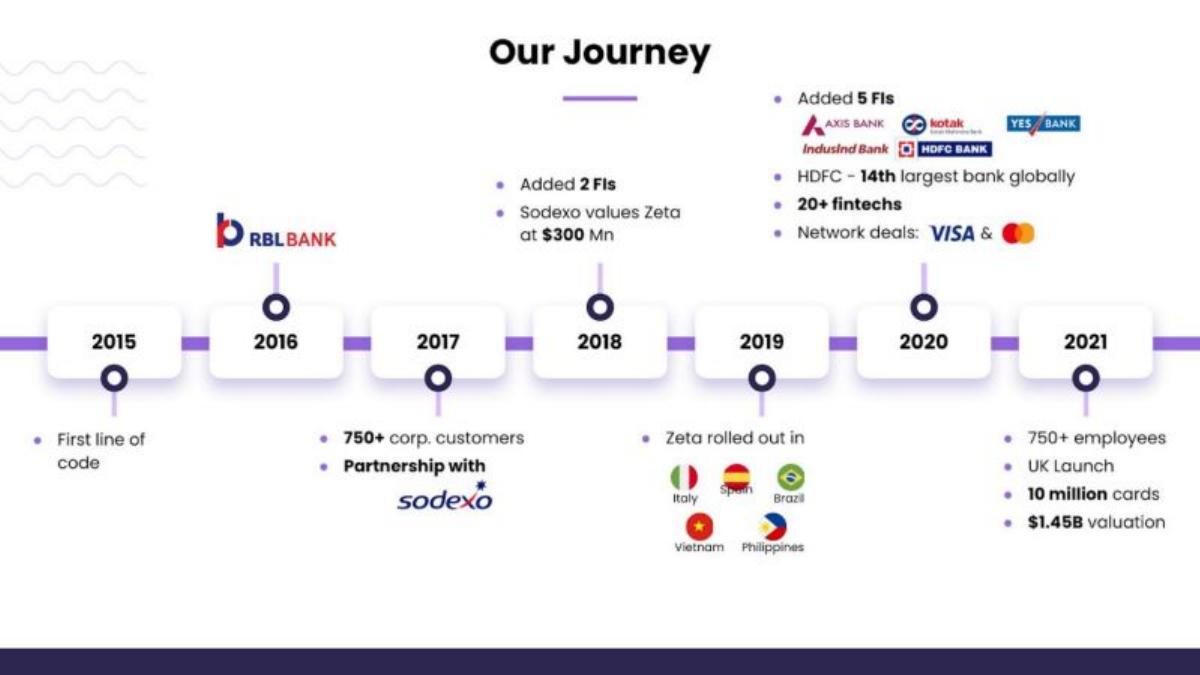
- The company reached a $1.45B valuation in 2021, as stated on the journey timeline (Slide 2).
- Zeta's technology stack is divided into two primary brands: Tachyon for core banking/payments and Photon for digital engagement (Slide 6).
- The platform manages over 10 million cards as of the 2021 update (Slide 2).
- Traction is anchored by major institutional partnerships, including HDFC Bank, Axis Bank, and network deals with Visa and Mastercard (Slide 2).
- The product offers 100% API coverage to address the 'slow to innovate' problem in legacy banking (Slide 4, Slide 7).
- Global footprint expanded to 8 countries by 2021, including the USA, UK, Brazil, and India (Slide 11).
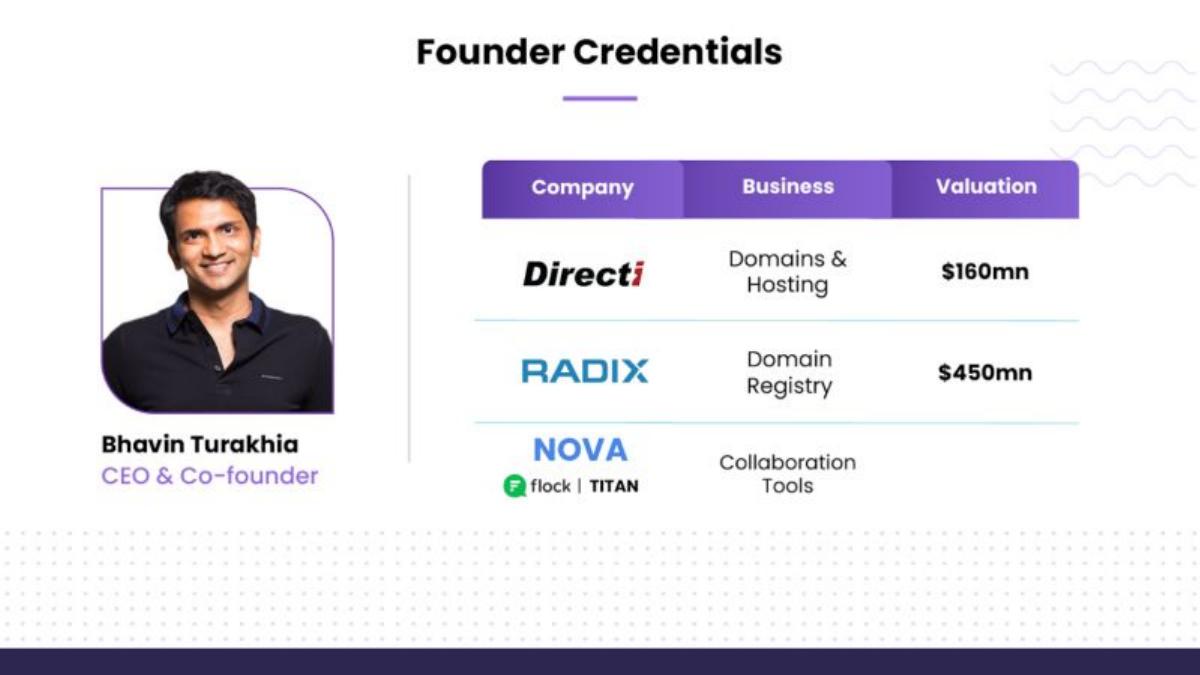
- The founder's credentials highlight engineering leadership at Morgan Stanley and a previous exit with Bridle (Slide 3).
- The deck identifies 'Reducing Income' and 'High Costs' as the primary pain points for banks stuck in the 80s (Slide 4).
The Series C Shift: From Product to Platform
Zeta’s pitch deck for its $250M Series C round is a masterclass in establishing institutional credibility. By 2021, the company was no longer a startup looking for product-market fit; it was an infrastructure provider to some of the world's largest financial institutions. The deck reflects this by prioritizing a timeline of massive milestones and a comprehensive map of its 'Omni Stack.' The narrative is built on the premise that banking infrastructure is fundamentally broken, and Zeta is the only modern, API-first alternative capable of global scale.
Slide 1: Title Slide
The deck opens with a bold, minimalist cover. The tagline 'The World’s First Omni Stack for Banks' immediately positions the company as a category creator. The visual identity is professional and tech-forward, using a deep purple palette that suggests stability—a critical trait when selling to banks.
Slide 2: Our Journey
This is arguably the most important slide in the deck for a Series C investor. It tracks the company’s evolution from 'First line of code' in 2015 to a '$1.45B valuation' in 2021. Key milestones include the 2017 partnership with Sodexo, the 2018 valuation of $300M, and the 2020 addition of five major Financial Institutions (FIs) including HDFC, the 14th largest bank globally. The slide also notes network deals with Visa and Mastercard and the milestone of 10 million cards. This slide proves that the company can navigate the long sales cycles of enterprise banking.
Slide 3: Founder Credentials
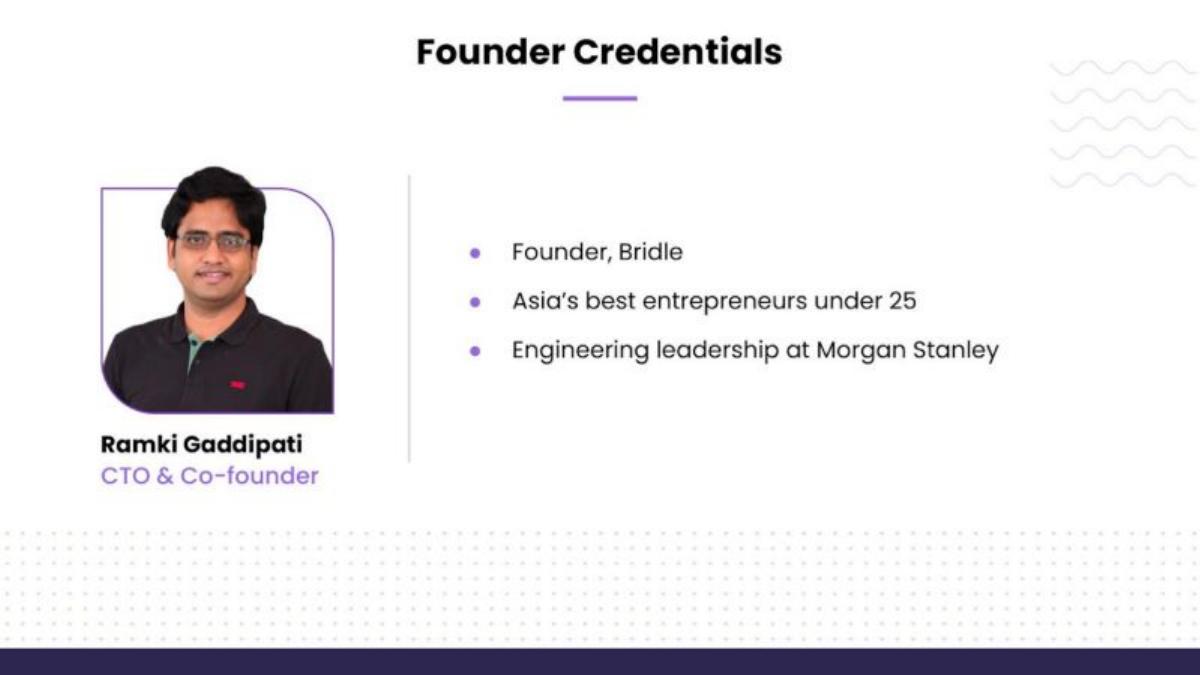
Zeta highlights CTO and Co-founder Ramki Gaddipati. The slide focuses on three pillars: entrepreneurial success (Founder of Bridle), industry recognition (Asia’s best entrepreneurs under 25), and domain expertise (Engineering leadership at Morgan Stanley). In the world of FinTech infrastructure, having a founder who understands the 'old world' (Morgan Stanley) while building the 'new world' is a significant de-risking factor for investors.
Slide 4: The Problem - Banks are stuck in the 80s
This slide uses simple iconography to define the market gap. It lists four symptoms of legacy banking: Slow to innovate, Poor user experience, High Costs, and Reducing Income. By framing the problem this way, Zeta justifies the need for a total stack replacement rather than a simple software add-on.
Slide 5: The Solution - Zeta’s Modern Platform
Using a puzzle-piece visual, Zeta shows how its 'Tachyon Core' serves as the anchor for various modules. These include Debit, Credit, and Prepaid cards, Mobile interfaces, Loans, Card Controls, FRM (Fraud Risk Management), and PFM (Personal Financial Management). The visual implies that Zeta is a modular system that 'just fits' into a bank's existing or future ecosystem.
Slide 6: Zeta’s Omni Stack
This slide provides a technical deep dive into the product architecture. It divides the offering into two brands: Tachyon (the backend) and Photon (the frontend/engagement layer). Tachyon is split into Retail Payments, Retail Banking, Acquiring, and Identity & Risk. Photon covers CRM, Insights, and Rewards. This level of detail is necessary for a Series C round to show the breadth of the intellectual property and the high barriers to entry for competitors.
Slide 7: Key Benefits
Zeta translates its technical stack into business outcomes. The four pillars are Modern UX, Speed and Agility, Better Cost to Income Ratio, and 100% API coverage. For a bank, the 'Cost to Income Ratio' is a primary metric of health, making this a highly effective value proposition for both customers and investors.
Slides 8-10: Transition Slides
Slides 8, 9, and 10 are simple divider slides for 'Product Suites,' 'Opportunity,' and 'Our Success.' While these don't contain data, they provide a necessary structural pause in a 25-slide deck, signaling a shift from 'what we built' to 'how we are winning.'
Slide 11: Global Footprint
Zeta declares it is 'Live in 8 countries.' The map shows presence in the USA, UK, Brazil, Italy, Spain, India, Vietnam, and the Philippines. This demonstrates that the 'Omni Stack' is not just a regional solution for the Indian market but a globally portable infrastructure that can handle different regulatory and currency environments.
Slide 12: Our Fintech Customers
To supplement the large bank logos on Slide 2, Zeta showcases its agility by listing 20+ Fintech customers. Logos include BharatPe, Mobikwik, and FamPay. This proves that while they can serve the '14th largest bank globally,' their tech is also modern enough for the fastest-growing startups in the world.
What Zeta Does Exceptionally Well
1. Credibility by Association: Zeta doesn't just say they are successful; they name-drop the most conservative institutions in the world (HDFC, Axis, Visa, Mastercard) and tie them to specific years on a timeline. For a Series C, this 'social proof' is the primary driver of valuation.
2. Product Naming and Branding: By branding their internal modules as 'Tachyon' and 'Photon,' Zeta creates a sense of proprietary technology that feels like a cohesive ecosystem rather than a collection of random APIs. This makes the 'Omni Stack' feel like a tangible asset.
3. Problem-Solution Alignment: The deck follows a very traditional but effective logical flow. Slide 4 (Problem) and Slide 7 (Benefits) are perfect mirrors of each other. They identify a pain point and then explicitly state how they solve it.
What is Missing from the Zeta Deck
1. Detailed Unit Economics: While the deck mentions a $1.45B valuation and 10 million cards, the provided slides omit specific revenue figures, Gross Merchandise Volume (GMV), or Average Revenue Per User (ARPU). In a Series C, investors typically want to see the 'magic number' or the efficiency of their sales spend.
2. Competitive Landscape: There is no mention of other core banking providers like Mambu, Thought Machine, or Marqeta. At this stage, investors need to know why Zeta wins against other modern incumbents.
3. The Ask: The provided slides do not include a 'Use of Funds' or a specific 'Ask' slide. While the catalogue listing confirms they raised $250M, the deck itself (in this version) does not specify how that capital will be deployed—whether for R&D, sales expansion, or M&A.
Founder's Playbook: Lessons to Copy
Build a 'Journey' Slide: If your company has been around for more than 3 years, do not just list your current stats. Show the trajectory. Zeta’s Slide 2 is a perfect example of how to show momentum. It makes the company look like an inevitable force rather than a lucky startup.
Modularize Your Product: If you have a complex enterprise product, break it down into a 'Stack' visual like Slide 6. It helps non-technical investors understand the scope of your build and helps technical investors see the logic of your architecture.
Focus on 'Hard' Metrics for Enterprise: Notice that Zeta doesn't talk about 'happiness' or 'innovation' in a vacuum. They talk about 'Cost to Income Ratio.' When selling to the C-suite of a bank, you must speak the language of their P&L. Founders should identify the 2-3 most important financial ratios for their target industry and put them front and center.
Final Verdict: Zeta’s deck is a high-signal, low-noise presentation. It relies on the gravity of its partnerships and the clarity of its architecture to justify a unicorn valuation. It is an excellent template for any B2B infrastructure company moving from early traction to global scale.
Frequently asked questions
- What is the core problem Zeta solves for banks?
- According to Slide 4, Zeta addresses the issue of banks being 'stuck in the 80s.' The specific pain points identified are slow innovation cycles, poor user experience for end customers, high operational costs, and reducing income. By providing a modern 'Omni Stack,' Zeta allows these institutions to bypass legacy infrastructure limitations.
- How does Zeta categorize its product offerings?
- Zeta uses a modular architecture branded under two names. Slide 6 shows 'Tachyon' covers Retail Payments (Credit, Debit, Prepaid), Retail Banking (Savings, Loans), Acquiring, and Identity & Risk. 'Photon' handles the digital layer, including Origination, CRM, Insights, Upsell, and Rewards. This suggests a full-stack replacement or enhancement capability.
- What does the traction look like for Zeta's fintech business?
- Beyond traditional banks, Zeta has significant penetration in the startup ecosystem. Slide 12 displays logos for over 20 fintech customers, including well-known names like BharatPe, Mobikwik, and FamPay. This dual-track approach shows the platform's versatility for both legacy institutions and neobanks.
- Who are the key leaders mentioned in the deck?
- The provided slides focus on Ramki Gaddipati, the CTO and Co-founder. His credentials (Slide 3) include being the founder of Bridle, being recognized as one of Asia's best entrepreneurs under 25, and holding engineering leadership roles at Morgan Stanley. This emphasizes technical depth and industry-specific experience.
- What are the primary benefits Zeta promises to its clients?
- Slide 7 outlines four key benefits: Modern UX, Speed and Agility, Better Cost to Income Ratio, and 100% API coverage. These metrics directly counter the problems listed on Slide 4, positioning Zeta as a direct solution to the inefficiencies of legacy banking systems.