Tappur’s 16-slide deck is a study in repurposing existing hardware for a larger TAM. By 2013, the founders had already achieved visibility with DrumPants, but this deck shifts the narrative toward the '50 Billion Devices' projected by Intel (Slide 3). The presentation excels at demonstrating friction—contrasting a 6-step smartphone process to unlock a door with a single tap (Slides 4-5). However, it is notably thin on business fundamentals. There is no slide dedicated to unit economics, manufacturing costs, or a specific financial 'ask.' While it leverages impressive social proof from Shark T…
Key takeaways
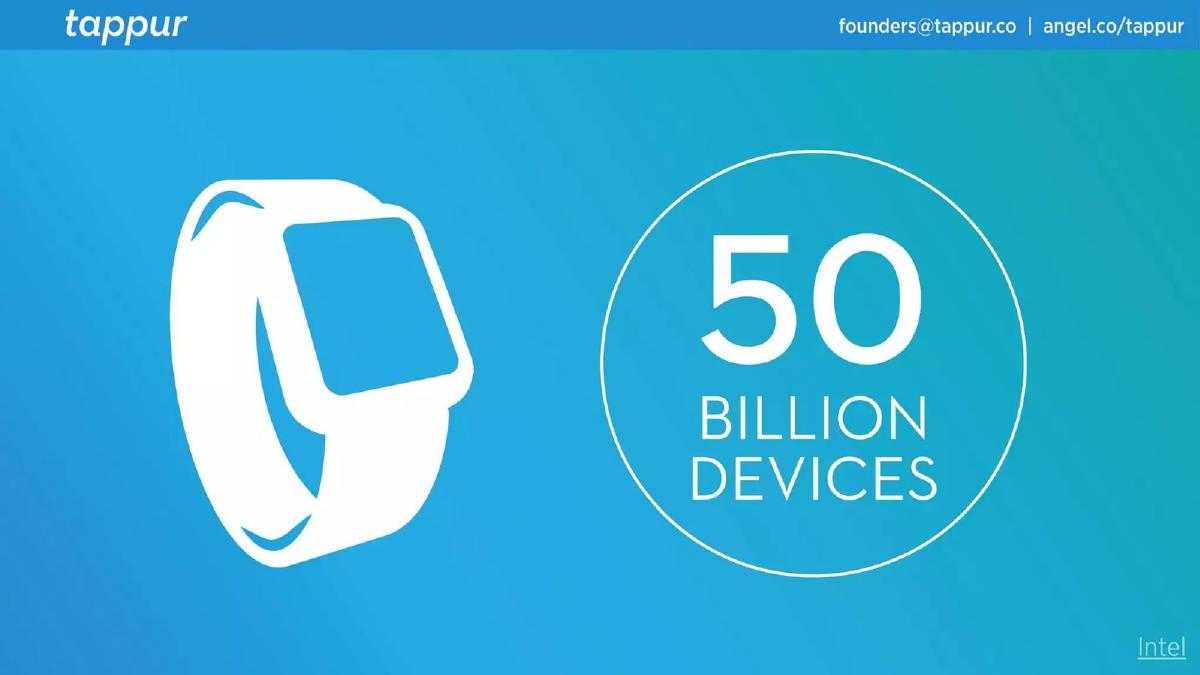
- The deck uses a macro-market hook citing Intel's projection of 50 billion connected devices to justify the pivot (Slide 3).
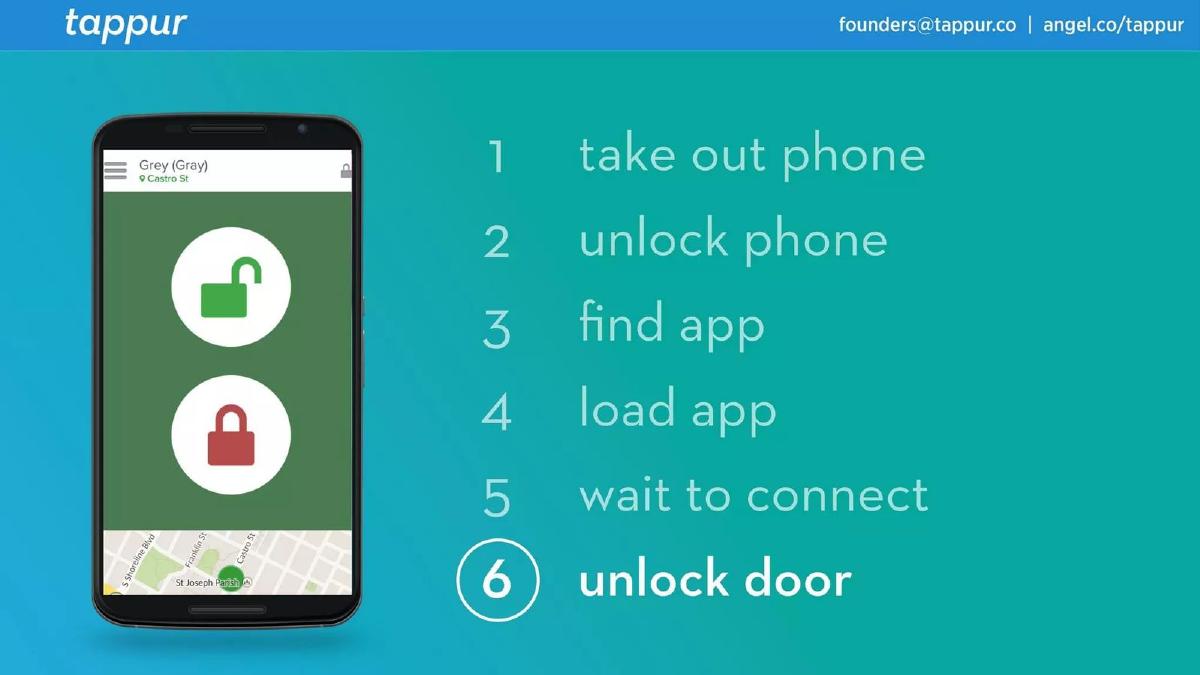
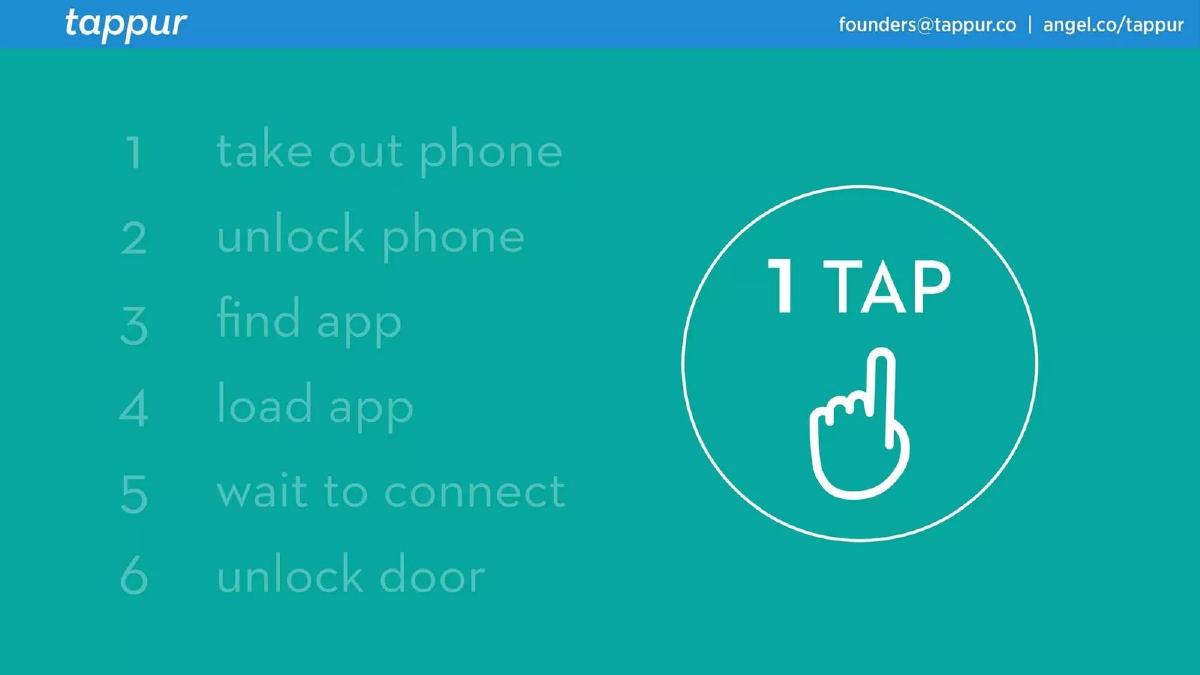
- A clear 'Before vs. After' comparison illustrates the problem of smartphone friction in smart home management (Slides 4-5).
- The company leverages its existing hardware product, DrumPants, as the foundation for the new Tappur app (Slide 9).
- Tappur claims compatibility with over 200 devices through partnerships with iControl Networks and OpenHome (Slide 13).
- Social proof is a core strength, featuring logos from Shark Tank, TEDx, and Kickstarter (Slide 14).
- The team slide highlights high-level corporate experience at Google and Honeywell but lacks specific roles for the current venture (Slide 15).
- The deck completely omits a financial 'ask' slide, leaving investors unaware of the funding target or use of proceeds.
- There is no mention of competition or how Tappur differentiates from native wearable OS controls like Apple Watch or Android Wear.
The Pivot from Performance to Utility
The Tappur pitch deck is a fascinating artifact from the early wearable era. At its core, the company is attempting to solve a problem that plagued early smart home adopters: the 'app for everything' fatigue. By 2013, the founders had already built DrumPants, a niche but successful wearable instrument. This deck represents the attempt to move from a $199 novelty toy to a central piece of the IoT ecosystem. It is a highly visual, low-text presentation that prioritizes the 'magic' of the user experience over the grit of the business model.
Slides 1-3: The Vision and the Macro Opportunity
The deck opens with a minimalist title slide featuring the tagline "Control Your World" and a hand icon. Slide 2 defines the vision: "To make life easier, by creating simpler to use devices." This is a broad, horizontal ambition that moves the company away from the 'music' vertical.
Slide 3 provides the market justification. It features a large graphic of a wearable device and the text "50 BILLION DEVICES," attributed to Intel. This slide serves as the 'Why Now?' factor, suggesting that as the number of connected devices explodes, the current methods of controlling them will break down. It is a standard venture capital trope to cite a massive, third-party market projection to establish the ceiling of the opportunity.
Slides 4-6: The Friction Problem and the 'One Tap' Solution
Slides 4 and 5 are the strongest part of the narrative. Slide 4 lists the "6 steps" required to unlock a door using a smartphone: 1. take out phone, 2. unlock phone, 3. find app, 4. load app, 5. wait to connect, 6. unlock door. This effectively highlights the 'friction' of mobile-first smart home control.
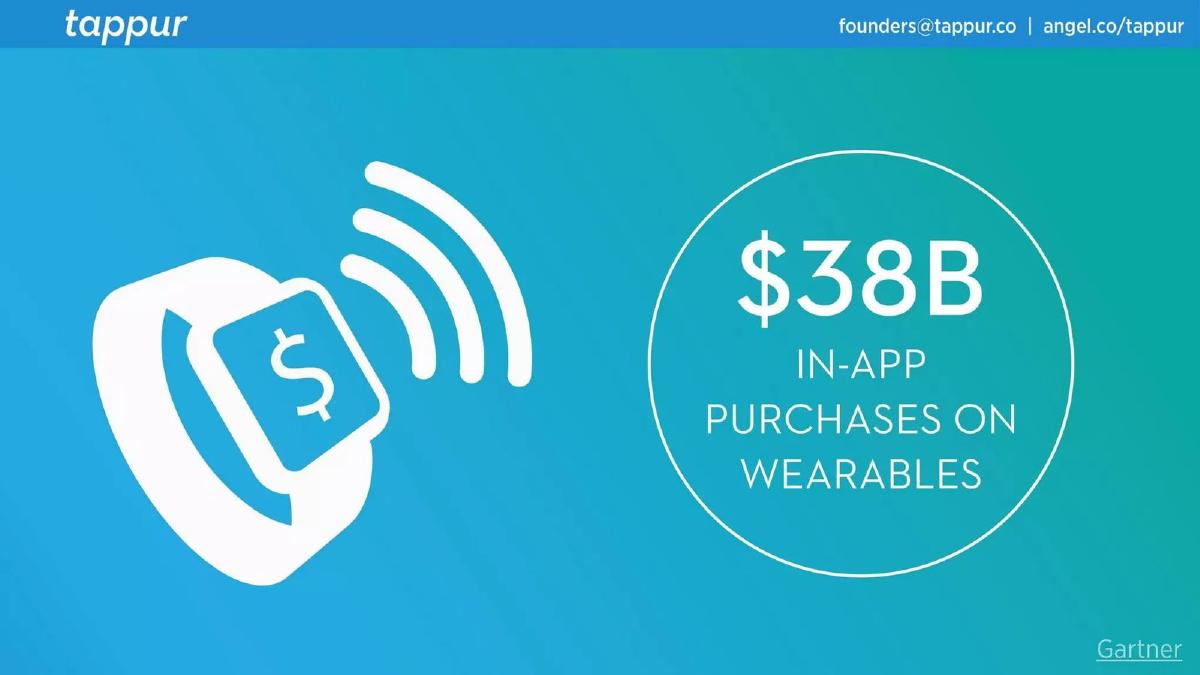
Slide 5 immediately presents the counter-solution: "1 TAP." By contrasting six steps with one, the founders make a visceral argument for their hardware. Slide 6 adds a financial layer to the opportunity, citing a Gartner stat of "$38B IN-APP PURCHASES ON WEARABLES." This suggests that Tappur isn't just a hardware play, but a platform that could facilitate transactions.
Slides 7-9: Hardware Heritage and the Tappur Pivot
Slide 7 is a full-bleed image of a person using the original DrumPants hardware. Interestingly, the person is wearing a shirt that says "DRUMPANTS," acknowledging the brand's origins. Slide 8 shows the technical components: the control box and the sensor strips that can be placed in shoes or clothing. It highlights compatibility with the App Store, Google Play, Mac, and Windows.
Slide 9 is the 'bridge' slide. It shows the "DrumPants & tappur app" together under the date "2015." This slide informs the investor that the existing hardware product is being repurposed to work with a new software interface. This is a smart way to show that the 'R' in R&D is already finished; they are now focused on the 'D' of the new application.
Slides 10-13: Use Cases and Ecosystem Integration
Slides 10, 11, and 12 focus on the 'how.' Slide 10 notes that the "app runs in the background" to eliminate repetitive tasks. Slide 11 uses icons to show the variety of devices Tappur can control: lights, garage doors, thermostats, microwaves, and hair dryers. It also shows the app working alongside other wearables like Fitbit.
Slide 12 introduces the concept of "automagically" changing the device you control based on context (showing a living room vs. a garage). This hints at a location-aware or gesture-aware intelligence that goes beyond simple triggers. Slide 13 is the 'moat' slide, claiming the ability to "control 200+ devices" through partnerships with iControl Networks and OpenHome Certified . For a small hardware startup, these partnerships are crucial for credibility, as they prove the device isn't a silo.
Slides 14-16: Social Proof and Team
Slide 14 is a 'logo soup' of high-tier media validation. Being featured on Shark Tank, Wired, CNET, and TEDx provides a level of 'pre-vetting' that helps investors overcome the skepticism associated with hardware startups. Slide 15 introduces the founders. Lei Yu (CEO) is credited with Fortune 100 marketing and Six Sigma manufacturing experience, while Tyler Freeman (CTO) is noted for developing apps for Google and holding a patent. The slide also lists Honeywell, YouTube, and Google as companies they have worked with, further bolstering their professional pedigree.
The deck ends on Slide 16 with the same branding as the first slide, providing no contact information or specific call to action on the final page.
What Works in This Deck
The Friction Argument: The 6-step vs. 1-tap comparison is a masterclass in identifying a specific pain point and offering a clear solution. · Leveraging Existing Assets: Instead of pretending they are starting from scratch, the founders show that they already have a manufactured, functional hardware product (DrumPants) and are simply expanding its utility. · High-Quality Social Proof: The inclusion of the Shark Tank logo and major tech publications immediately elevates the company's status. · Partnership Focus: By mentioning iControl and OpenHome, they answer the 'interoperability' question that kills most smart home pitches.
What is Missing
The Ask: There is no mention of how much capital the company is seeking or what the valuation expectations are. · Unit Economics: For a hardware-centric business, investors need to know the Bill of Materials (BOM), the retail price, and the margins. None of this is present. · Go-to-Market Strategy: While the product is cool, the deck doesn't explain how they will acquire users for the Tappur app or if they plan to sell through retail, D2C, or B2B partnerships. · Competitive Analysis: In 2013, the Apple Watch was on the horizon. The deck fails to address how Tappur competes with major tech giants entering the wearable space. · Financial Projections: There are no charts showing projected revenue growth or user acquisition targets.
What a Founder Should Copy
The Minimalist Aesthetic: The deck uses a consistent color palette and very little text, making it ideal for a live presentation where the speaker provides the detail. · The Macro Hook: Starting with a massive market number (50 Billion Devices) from a reputable source (Intel) helps frame the startup as a 'must-have' in a future landscape. · The Problem Visualization: Using a numbered list to show how annoying a current process is (Slide 4) is much more effective than a paragraph of text explaining 'market inefficiency.' · The Partnership Slide: If you are building in a crowded ecosystem, showing that you are 'Certified' or 'Partnered' with the incumbents is the fastest way to build trust.
Frequently asked questions
- What is the relationship between Tappur and DrumPants?
- DrumPants was the original wearable musical instrument developed by the founders. As shown on Slide 9, Tappur is the software layer and rebranded application that uses the DrumPants sensor hardware to control smart home devices rather than just playing music. The deck positions Tappur as the evolution of the hardware into a broader utility tool.
- How does Tappur solve the 'friction' problem in smart homes?
- The deck argues that using a smartphone to control home devices is inefficient, requiring six steps: taking out the phone, unlocking it, finding the app, loading it, waiting for connection, and finally acting (Slide 4). Tappur proposes a '1 Tap' solution (Slide 5) where the app runs in the background and responds to physical gestures on the wearable sensors.
- What evidence of market traction does the deck provide?
- The deck relies heavily on external validation rather than internal sales metrics. Slide 14 lists features on CNET, Wired, Shark Tank, and a successful Kickstarter campaign. While these prove public interest, the deck does not disclose actual revenue, unit sales, or user retention for the DrumPants hardware or the Tappur app.
- Who are the founders and what is their background?
- The team consists of Lei Yu (CEO) and Tyler Freeman (CTO). According to Slide 15, Yu has experience in Fortune 100 marketing and Six Sigma manufacturing, while Freeman developed apps for Google and holds one patent. Their previous work includes collaborations with Honeywell, YouTube, and BandPage.
- What is missing from this pitch deck?
- This is a 'vision' deck that lacks several critical investor components. It omits a 'The Ask' slide (how much money they want), a 'Use of Funds' slide, a 'Competition' slide, and any 'Unit Economics' or 'Financial Projections.' It focuses almost entirely on the product's utility and the founders' pedigree.