Tapouts secured a $3.2M Seed round in 2023 by positioning itself at the intersection of healthcare and ed-tech. The deck focuses heavily on the 'state of emergency' in youth mental health, citing World Health Organization data to establish urgency. Rather than relying on abstract promises, the company presents specific efficacy metrics: 89% of youth feeling calmer within five weeks and 81% of parents reporting increased emotional expressiveness within 12 weeks. The narrative moves from a direct-to-consumer marketplace model toward a future of B2B and insurance integrations. While the deck is…
Key takeaways
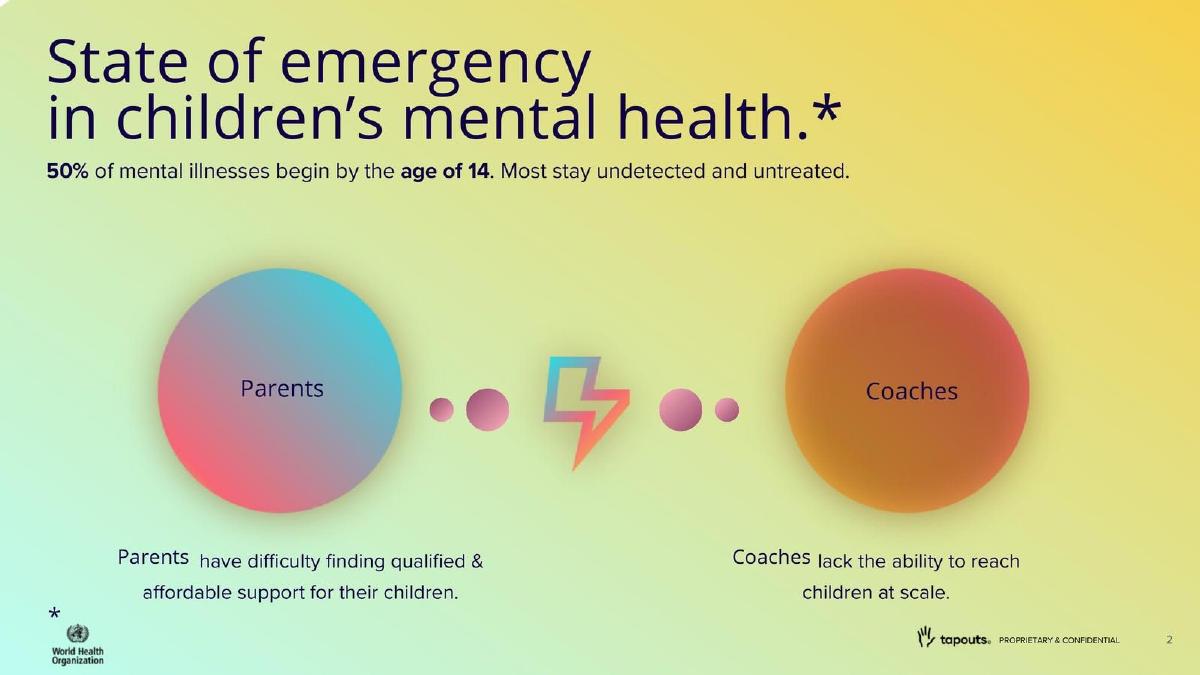
- The deck establishes market urgency on slide 2 by citing that 50% of mental illnesses begin by age 14.
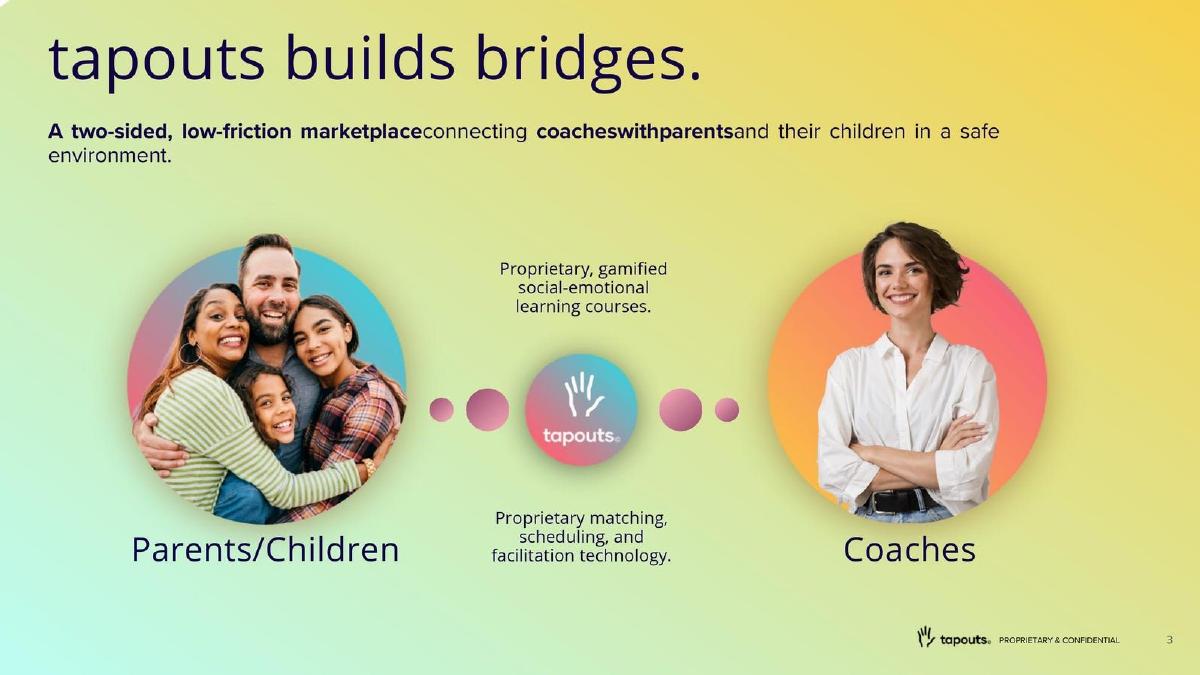
- Tapouts defines its solution as a two-sided marketplace connecting vetted coaches with parents and children on slide 3.
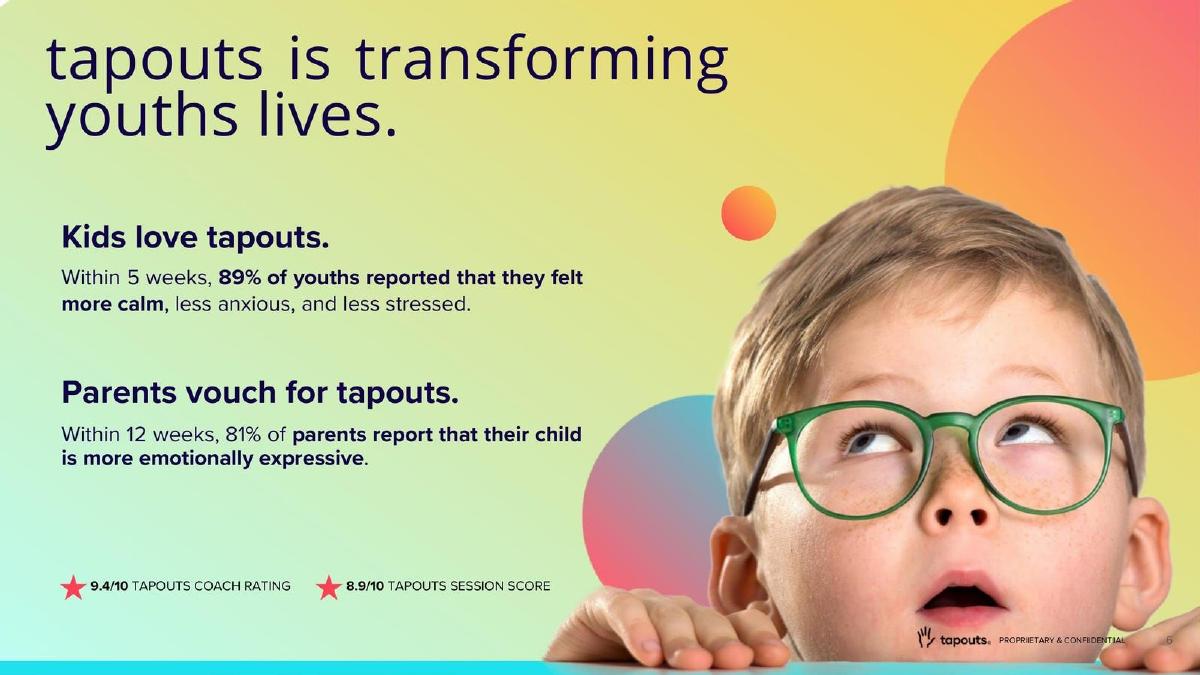
- Product efficacy is quantified on slide 5, claiming 89% of youth feel less anxious within five weeks of starting the program.
- Parental satisfaction is highlighted on slide 5 with a 9.4/10 coach rating and an 8.9/10 session score.
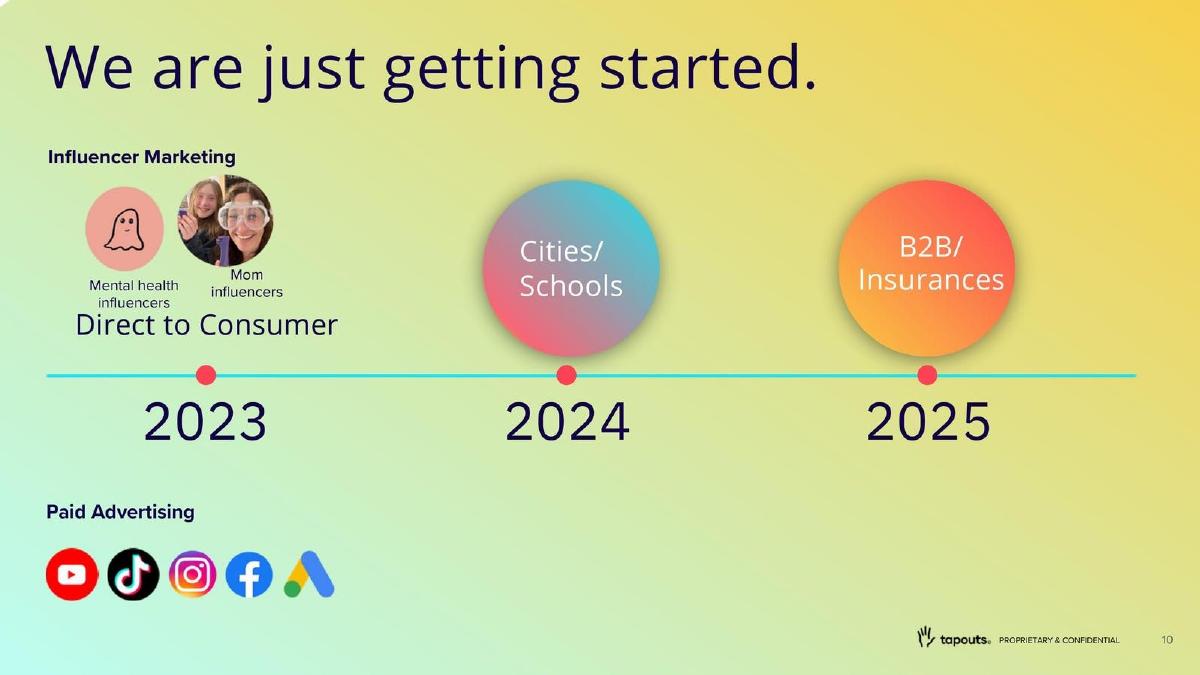
- The roadmap on slide 7 outlines a strategic shift from DTC influencer marketing in 2023 to B2B and insurance partnerships by 2025.
- The competitive matrix on slide 8 positions Tapouts as the only player offering live group settings combined with real-time efficacy tracking.
- The team slide (slide 9) highlights a mix of 20+ years of advertising experience and clinical expertise from Keck Medicine of USC.
- The deck omits a specific 'Ask' slide, failing to detail the exact dollar amount sought or the intended use of funds within the presentation itself.
The Narrative: Urgency Meets Efficacy
Tapouts entered the market during a period of heightened awareness regarding youth mental health. Their pitch deck, used to secure a $3.2M Seed round as reported by Business Insider, follows a classic problem-solution-traction arc. The visual language is bright and child-centric, which aligns with their gamified product offering. However, beneath the friendly aesthetic is a rigorous focus on clinical outcomes and market scalability.
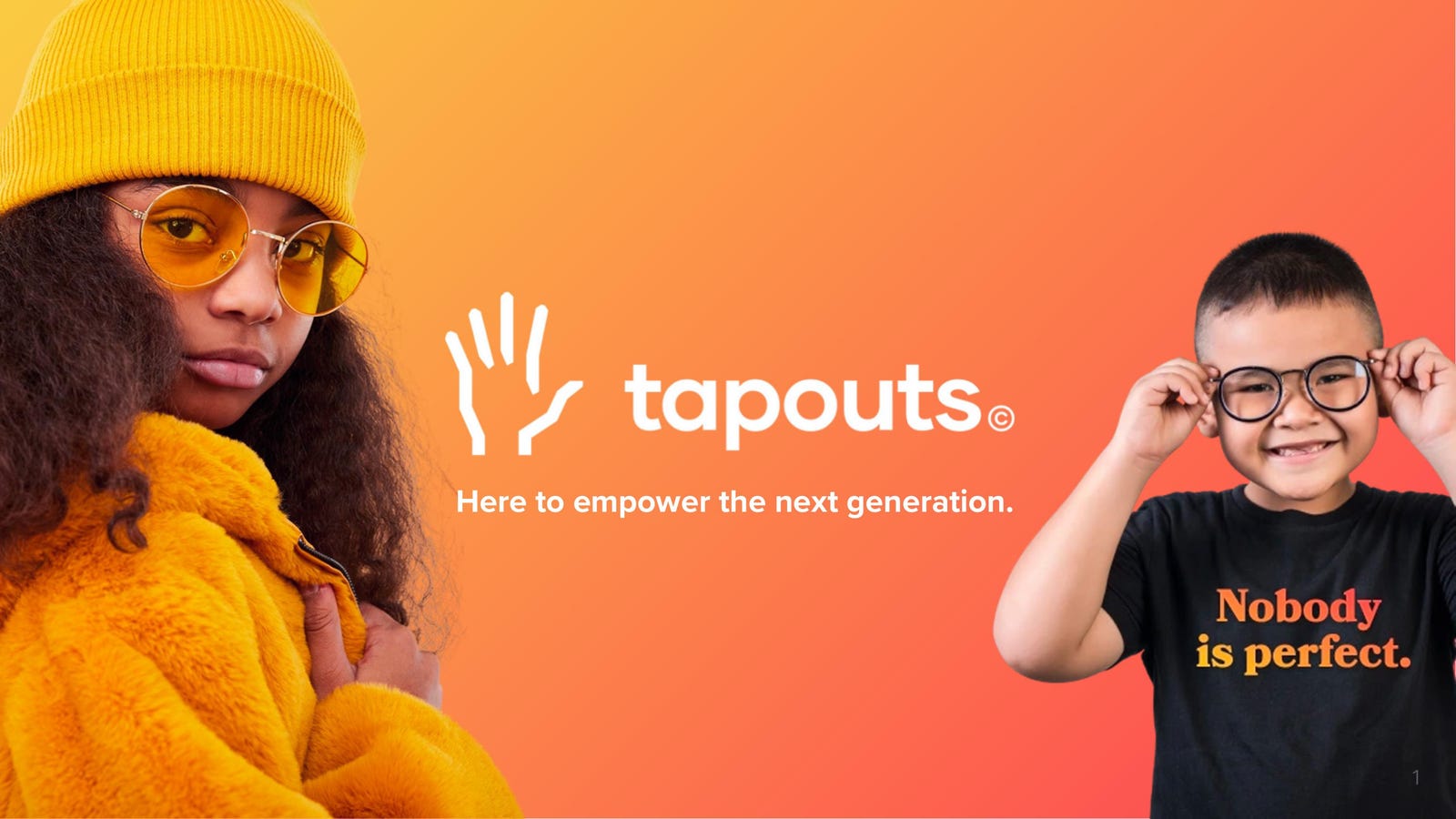
Slide 1: Title and Brand Identity
The opening slide introduces the brand with the tagline 'Here to empower the next generation.' The imagery features diverse children, immediately signaling the target demographic. The logo—a stylized hand—suggests support and connection, which are central themes of the service. It is a standard, clean entry point that establishes the brand's visual identity.
Slide 2: The Problem Statement
Tapouts frames the problem as a 'State of emergency in children’s mental health.' By citing the World Health Organization and the statistic that 50% of mental illnesses begin by age 14, they move the conversation from a niche parenting tool to a critical healthcare intervention. The slide identifies a friction point: parents can't find affordable support, and coaches can't scale. This sets the stage for a marketplace solution.
Slide 3: The Solution (The Bridge)
Slide 3 defines Tapouts as a 'two-sided, low-friction marketplace.' This is a key phrase for investors, as marketplaces are known for their scalability and network effects. The slide highlights two proprietary elements: gamified social-emotional learning courses and matching/facilitation technology. This suggests that Tapouts isn't just a Zoom room for kids; it is a structured platform with intellectual property.
Slide 4: Product Mechanics
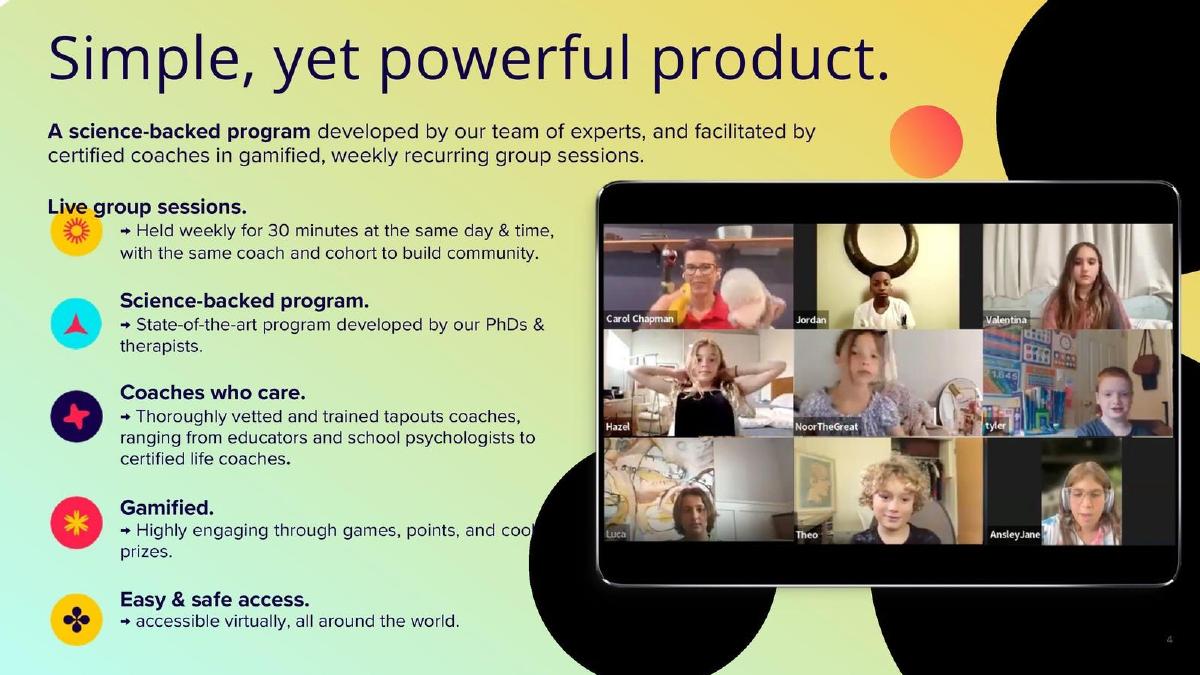
This slide provides the 'how.' It details 30-minute weekly live group sessions with the same coach and cohort. The emphasis on 'community' and 'science-backed' programs developed by PhDs and therapists addresses potential concerns about the quality of care. The mention of 'gamified' elements like points and prizes explains how they maintain engagement in a demographic known for short attention spans.
Slide 5: Traction and Efficacy Data
This is arguably the most important slide in the deck. Tapouts presents two major data points: 89% of youth feeling calmer within 5 weeks and 81% of parents reporting improved emotional expression within 12 weeks. For a healthcare-adjacent startup, these efficacy metrics are vital. They also list high satisfaction scores (9.4/10 for coaches), which helps de-risk the 'marketplace' aspect of the business for investors.
Slide 6: Social Proof
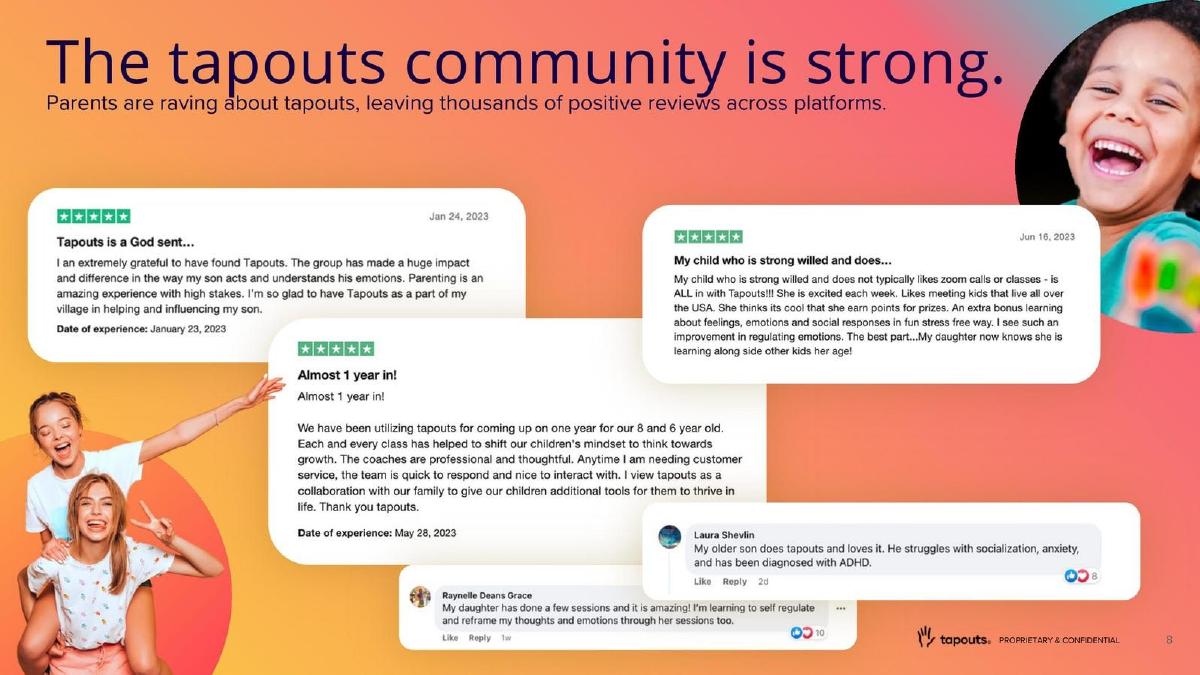
Slide 6 is dedicated to parent testimonials. While data is persuasive, stories often close deals. The reviews mention specific challenges like ADHD and the difficulty of finding a 'village' to help raise a child. These testimonials validate the 'low-friction' claim from earlier slides, showing that even 'strong-willed' children who usually dislike Zoom calls are engaging with the platform.
Slide 7: The Roadmap to Scale
Tapouts outlines a clear evolution of their business model. In 2023, the focus is on Direct to Consumer (DTC) via influencer marketing and paid ads on platforms like TikTok and Instagram. By 2024, they aim to move into schools, and by 2025, they target B2B and insurance. This transition is crucial because DTC healthcare often suffers from high churn and high acquisition costs; moving toward insurance reimbursement is a path to long-term sustainability.
Slide 8: Competitive Landscape
The competitive matrix on slide 8 is a standard 'check-mark' slide. It compares Tapouts to Coachbit and Rolemodels.me. The differentiators highlighted are 'Live group setting' and 'Real-time efficacy tracking.' By positioning themselves against traditional therapists (who are marked as not 'affordable' or 'easy to use'), Tapouts carves out a middle-ground niche: more effective than a self-led app, but more accessible than 1-on-1 therapy.
Slide 9: The Team
The team slide balances commercial success with clinical authority. CEO George Moringer is described as a 'Serial Founder' with 20+ years in advertising and Cannes Lion wins, suggesting the company knows how to acquire users. This is balanced by Daniel Lee, Ph.D., who brings 20+ years of youth therapy experience and a background at Keck Medicine of USC. The presence of advisors from Morgan Stanley and Tatler Asia adds further institutional weight.
Slide 10: Conclusion
The final slide reiterates the mission to 'impact millions of children’s lives' and provides contact information. It is a simple, high-note ending that maintains the brand's optimistic tone.
What Works in This Deck
Efficacy-First Messaging: In the crowded 'wellness' space, Tapouts stands out by leading with data. The 5-week and 12-week metrics on slide 5 provide a concrete reason for investors to believe the product works, which is often a major hurdle for mental health startups.
Clear Strategic Pivot: The roadmap on slide 7 shows that the founders are thinking beyond the expensive DTC acquisition model. By identifying insurance and schools as future targets, they demonstrate an understanding of the broader healthcare ecosystem.
Balanced Team: The combination of a marketing-heavy CEO and a clinically-heavy Program lead is a strong signal. It suggests the company can both build a product that works and sell it to a mass audience.
What Is Missing
The Financial Ask: The deck does not explicitly state how much they are raising or the valuation they are seeking. While this is often handled in a separate document or a verbal pitch, including a 'Use of Funds' slide is standard practice to show how the capital will accelerate the roadmap.
Unit Economics: There is no mention of Customer Acquisition Cost (CAC), Lifetime Value (LTV), or churn rates. For a DTC-heavy business in 2023, investors would typically want to see these metrics to ensure the marketing spend is efficient.
Market Size (TAM/SAM/SOM): While the deck mentions a 'state of emergency,' it doesn't quantify the total addressable market in dollar terms. Investors need to know if this is a $100M opportunity or a $10B opportunity.
Founder Takeaways
Quantify the 'Soft' Benefits: If your product deals with social-emotional learning or mental health, you must find a way to turn 'feeling better' into a percentage. Tapouts did this effectively by setting specific timeframes (5 weeks and 12 weeks) for their results.
Use Social Proof to Humanize Data: A table of numbers is dry. Pairing those numbers with a testimonial from a parent of a child with ADHD (as seen on slide 6) makes the problem and the solution feel real and urgent.
Design for Your Audience: The deck's use of bright colors and photos of happy children isn't just for show; it reflects the product's 'gamified' and 'friendly' nature. Ensure your deck's aesthetic matches the user experience of the product you are selling.
Frequently asked questions
- What is the core problem Tapouts aims to solve?
- Tapouts addresses the 'state of emergency' in children's mental health, specifically the fact that 50% of mental illnesses begin by age 14 but often go untreated. As noted on slide 2, the company identifies a gap where parents struggle to find affordable support and qualified coaches lack the infrastructure to reach children at scale.
- How does the Tapouts product actually work?
- According to slide 4, the product consists of 30-minute weekly live group sessions. These sessions are facilitated by vetted coaches—including educators and school psychologists—using a science-backed, gamified curriculum that includes points and prizes to maintain engagement among children.
- What evidence of success does the company provide?
- Tapouts relies on internal efficacy data shown on slide 5. They report that 89% of children feel calmer within 5 weeks, and 81% of parents see improved emotional expression within 12 weeks. They also showcase a 9.4/10 coach rating and several long-form parent testimonials on slide 6.
- Who are the primary competitors identified by Tapouts?
- Slide 8 compares Tapouts to traditional coaches/therapists, Coachbit, and Rolemodels.me. Tapouts claims a competitive advantage by being the only provider that offers a live group setting, a data-driven program, gamification, and real-time efficacy tracking simultaneously.
- What is the company's long-term growth strategy?
- The growth roadmap on slide 7 indicates a transition from influencer-led direct-to-consumer marketing in 2023 to institutional sales. They plan to target cities and schools in 2024, followed by a move into B2B and insurance reimbursement models in 2025.