TopHatch's 2012 Seed pitch deck, comprising 8 slides, effectively communicates the company's value proposition for its 'Concepts: Smarter Sketching' application. The deck immediately establishes the product's purpose and highlights significant user traction with "55k creative professionals every month" (Slide 2). It quantifies a large market opportunity for designers spending "$9B on tools" (Slide 3) and demonstrates early revenue with "$200k 12 mo. sales" and a ">12% free-to-paid" conversion rate (Slide 4). The deck leverages strong social proof through a "4.7 / 5.0" App Store rating (Slide…
Key takeaways
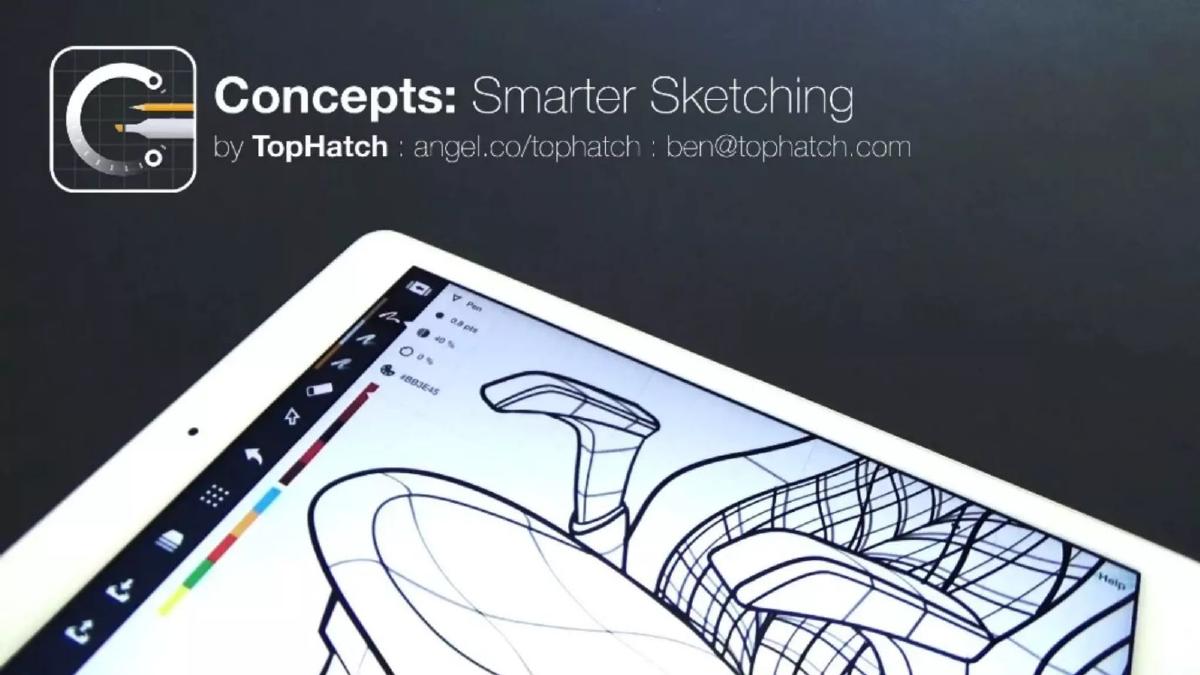
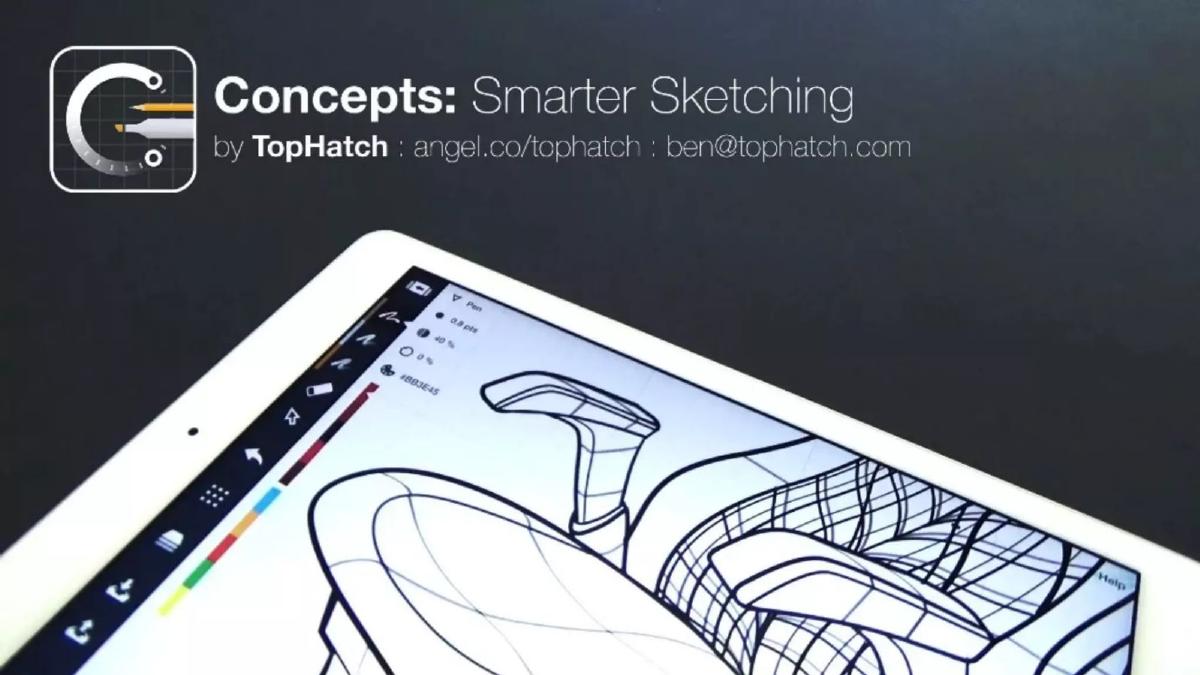
- The deck immediately introduces the product, 'Concepts: Smarter Sketching,' and its company, TopHatch, on the title slide (Slide 1).
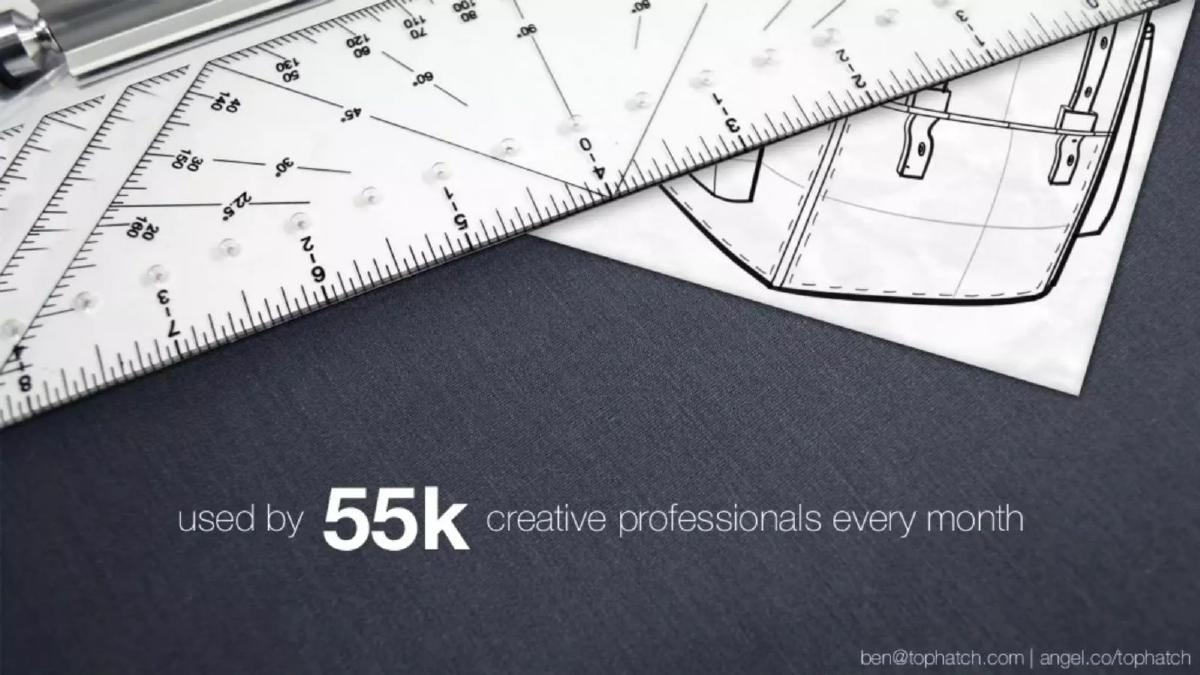
- It highlights significant user traction early, stating the product is "used by 55k creative professionals every month" (Slide 2).
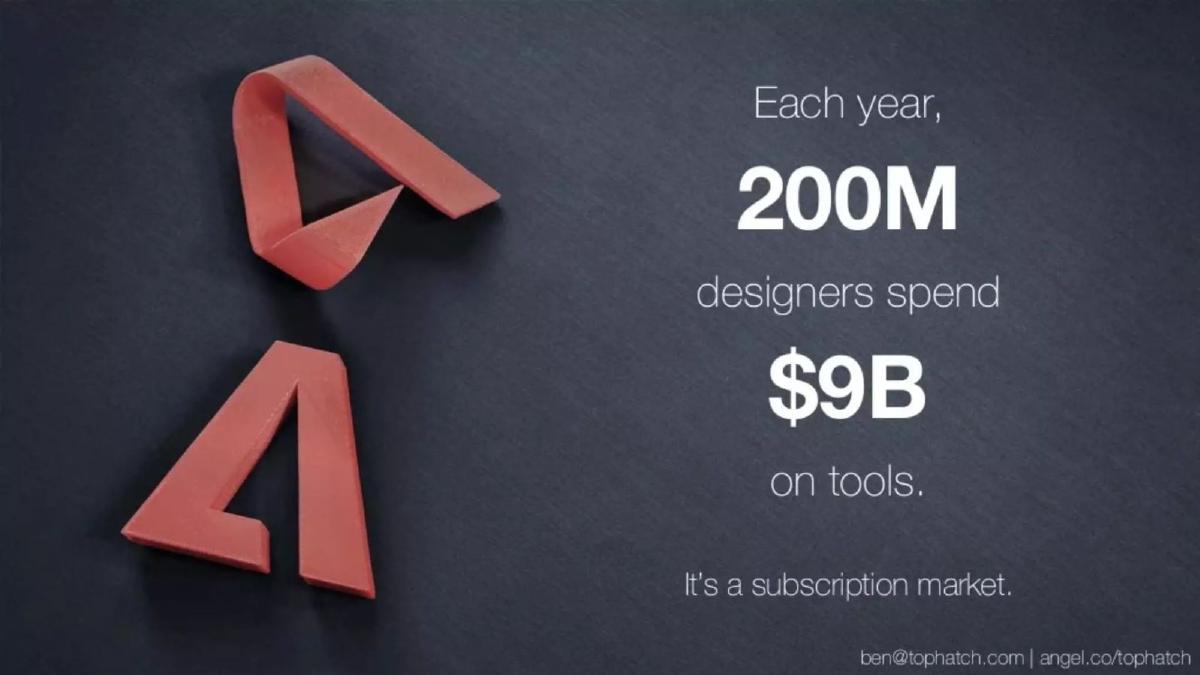
- A large market opportunity is presented, noting "200M designers spend $9B on tools" annually in a "subscription market" (Slide 3).
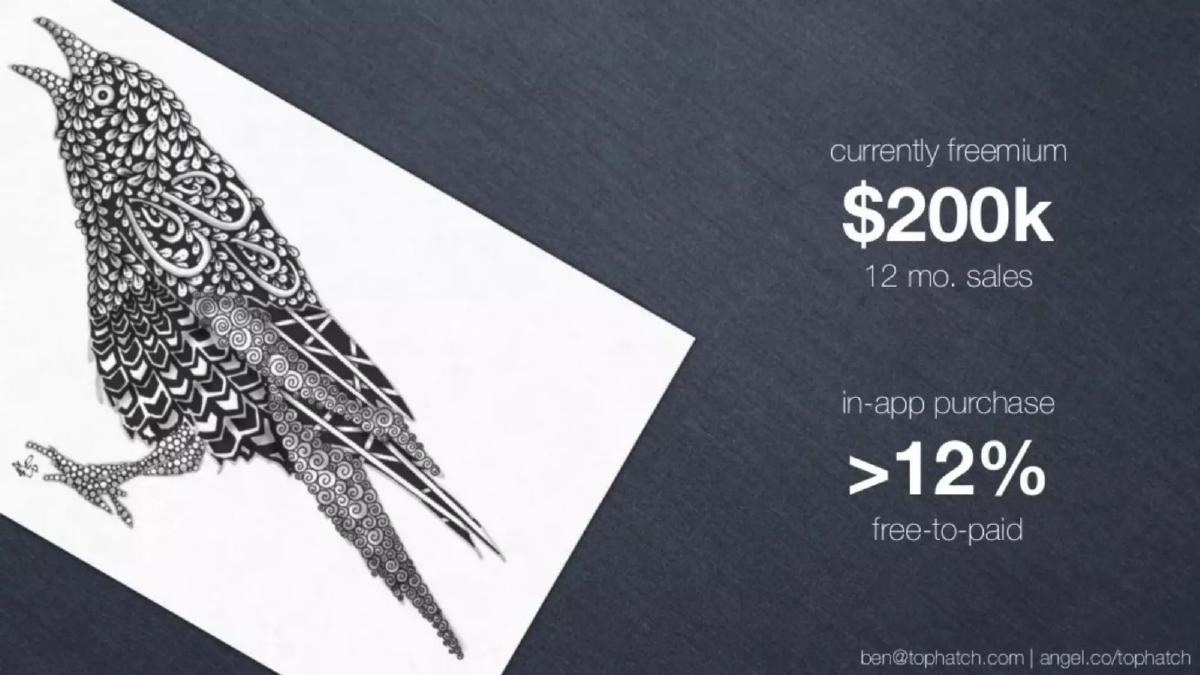
- The deck provides early revenue metrics: "$200k 12 mo. sales" and a "currently freemium" model with ">12% free-to-paid" conversion (Slide 4).
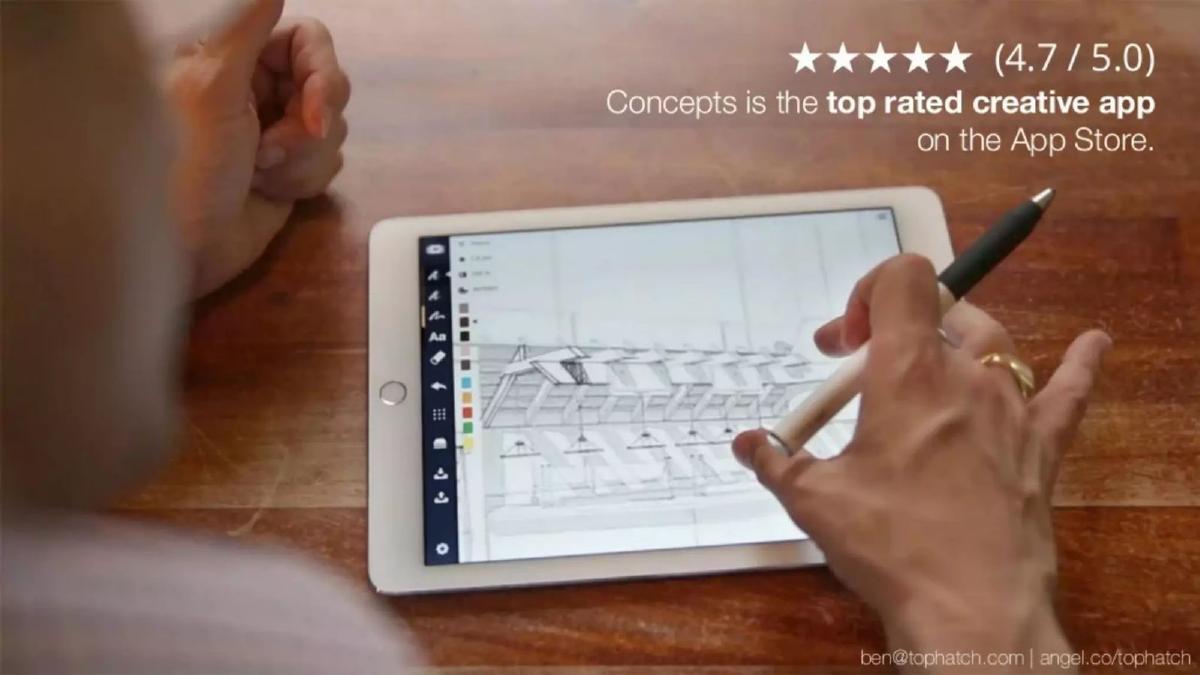
- Social proof is established through a "4.7 / 5.0" rating, calling Concepts the "top rated creative app on the App Store" (Slide 5).
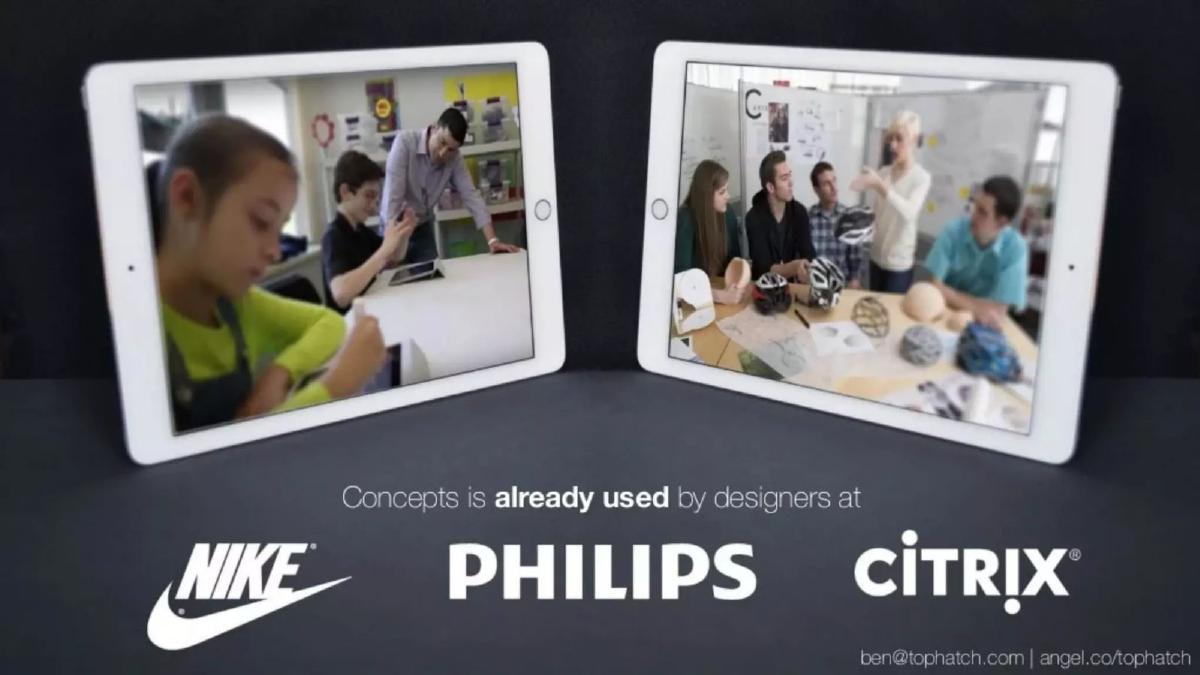
- Enterprise adoption is shown with logos of Nike, Philips, and Citrix, indicating Concepts is "already used by designers at" these companies (Slide 6).
- Two key team members, Dave (Technology) and Ben (Product & Design), are introduced with prior experience (Slide 7).
- The deck concludes with a vision statement: "Our next-generation engine will power the future of design" (Slide 8).
TopHatch Pitch Deck Teardown: A Concise Seed Pitch for Creative Tools
This teardown provides a slide-by-slide analysis of the TopHatch pitch deck, used in 2012 to raise $625,000 in Seed funding. The company, TopHatch, describes itself as providing next-generation tools for creative people, with its primary product being 'Concepts: Smarter Sketching.' The deck is notably concise, comprising only 8 slides, which is typical for a Seed-stage presentation focused on early traction and market opportunity. The analysis will detail the content of each slide, highlight what works well, identify any omissions, and offer insights for other founders.
What This Deck Is
The TopHatch pitch deck is an 8-slide Seed-stage presentation from 2012 for a company developing a creative sketching application called 'Concepts.' It aims to quickly convey the product's purpose, market opportunity, early user adoption, and team capabilities to potential investors. The deck emphasizes visual appeal and succinct data points over extensive text, aligning with a fast-paced pitch environment. It successfully secured $625,000, indicating its effectiveness in communicating key value propositions despite its brevity.
Slide-by-Slide Walkthrough
Slide 1: Title Slide - Concepts: Smarter Sketching
The first slide serves as the title slide, prominently featuring the TopHatch logo and the product name, 'Concepts: Smarter Sketching.' The tagline 'Smarter Sketching' immediately communicates the core value proposition. Below the title, the company is identified as 'by TopHatch,' followed by contact information: 'angel.co/tophatch' and 'ben@tophatch.com.' The background image displays a tablet device rendering a technical drawing, visually reinforcing the product's function as a digital sketching tool. The overall design is clean and professional, setting a modern tone for a technology company.
Slide 2: Traction - 55k Creative Professionals
Slide 2 focuses on early user traction. The background image shows a close-up of a ruler and a technical drawing on paper, subtly connecting the digital tool to traditional design methods. The central message, displayed in large, bold font, states: "used by 55k creative professionals every month." This metric immediately establishes a significant user base and ongoing engagement, providing strong social proof and indicating product-market fit. The bottom of the slide reiterates the contact information: 'ben@tophatch.com | angel.co/tophatch'.
Slide 3: Market Opportunity - $9B for Designers
This slide addresses the market opportunity. It features two abstract, red, arrow-like shapes on a dark background. The text on the right side of the slide outlines the market size: "Each year, 200M designers spend $9B on tools." Below this, it adds, "It's a subscription market." This slide effectively quantifies the target market and highlights a key characteristic—the prevalence of subscription models—which suggests a potential for recurring revenue. The contact information is again present at the bottom.
Slide 4: Business Model & Early Revenue - $200k Sales
Slide 4 delves into the company's business model and initial revenue. The left side features an intricate, detailed black and white illustration of a bird, likely created using the Concepts application, showcasing the product's capabilities. On the right, key financial metrics are presented: "currently freemium," " $200k 12 mo. sales," and "in-app purchase >12% free-to-paid." These figures demonstrate a viable monetization strategy and early revenue generation, along with a healthy conversion rate from free to paid users. The contact information is repeated at the bottom.
Slide 5: Product Validation - Top Rated App
This slide provides further product validation through user feedback. The main image shows a person using the Concepts app on a tablet with a stylus, illustrating the user experience. Overlaying this image, a five-star rating is displayed, indicating "(4.7 / 5.0)" and stating, "Concepts is the top rated creative app on the App Store." This high rating and claim of being 'top rated' offer strong social proof and credibility for the product's quality and user satisfaction. Contact information is at the bottom.
Slide 6: Enterprise Adoption - Used by Nike, Philips, Citrix
Slide 6 highlights enterprise adoption, showcasing the product's appeal beyond individual users. The slide features two tablets displaying what appear to be collaborative or educational settings, suggesting professional use cases. Below these images, the text reads: "Concepts is already used by designers at " followed by the logos of Nike, Philips, and Citrix. This demonstrates significant validation from well-known corporations, indicating the product's utility in professional design environments. The contact information is maintained at the bottom.
Slide 7: Team - Dave & Ben
This slide introduces key members of the TopHatch team. It features two men, presumably Dave and Ben, with smaller circular headshots of other team members below them. For Dave, his role is listed as "Technology" with prior experience at "Motorola, glumobile." For Ben, his role is "Product & Design" with prior experience at "SimpleScripts (acq. 2010)." The acquisition of SimpleScripts by Ben's previous company is a significant credential, suggesting entrepreneurial success and relevant experience. This slide provides crucial information about the founding team's expertise. The contact information is at the bottom.
Slide 8: Vision - Future of Design
The final slide presents a forward-looking vision for TopHatch. It displays a holographic-like wireframe rendering of a complex mechanical object on a digital drawing board, again showcasing the product's advanced capabilities. The bold statement reads: "Our next-generation engine will power the future of design." This slide aims to inspire and convey the long-term potential and ambition of the company, positioning it as an innovator in the design tools space. A small Concepts logo and tagline are visible in the bottom left corner, and the contact information is at the bottom right.
What Works Well
The TopHatch pitch deck, despite its brevity, effectively communicates several key strengths. Firstly, the deck is highly visual, using product screenshots, user interface elements, and professional imagery to convey the product's nature and capabilities without relying on excessive text. This visual storytelling is particularly effective for a design-focused product. The immediate presentation of strong traction metrics on Slide 2 ("55k creative professionals every month") is a powerful opener, quickly establishing product-market fit and user engagement. This is followed by a clear articulation of a large and valuable market opportunity on Slide 3, quantified by "200M designers" and "$9B" spending. The deck also provides concrete evidence of early revenue and a viable business model on Slide 4, with "$200k 12 mo. sales" and a ">12% free-to-paid" conversion rate. This shows investors that the company is not just building a product but also successfully monetizing it. The inclusion of strong social proof, such as the "4.7 / 5.0" App Store rating (Slide 5) and the logos of enterprise users like Nike and Philips (Slide 6), significantly boosts credibility and demonstrates broad appeal. Finally, the team slide (Slide 7) highlights relevant experience, particularly Ben's prior acquisition, which signals entrepreneurial success and domain expertise. The concise nature of the deck ensures that investors can quickly grasp the core value proposition and key data points.
What Is Missing
While the TopHatch deck is effective for its stage and purpose, several common elements found in pitch decks are omitted. Most notably, there is no explicit 'ask' slide. Investors are not told how much funding TopHatch is seeking, what the funds will be used for, or what milestones the investment will achieve. This is a critical omission as it leaves investors guessing about the company's immediate financial needs and strategic plan. Furthermore, the deck lacks detailed financial projections. While it provides current sales figures, it does not offer a glimpse into future revenue forecasts, growth assumptions, or burn rate, which are essential for investors to assess potential returns and runway. There is also no dedicated slide for the competitive landscape. While the deck implies superiority by claiming to be the "top rated creative app," it doesn't explicitly identify competitors or explain TopHatch's unique differentiation in a structured manner. A more comprehensive team slide could have included all key personnel, their specific roles, and perhaps an advisory board if one existed. Finally, while the vision slide is impactful, a more concrete roadmap or strategic plan for achieving that vision could have strengthened the deck, especially regarding how the "next-generation engine" would be developed and commercialized.
What a Founder Should Copy
Founders can learn several valuable lessons from the TopHatch pitch deck. Firstly, the emphasis on strong, early traction is paramount. Presenting a clear user count and engagement metric, like "55k creative professionals every month" (Slide 2), early in the deck immediately captures investor interest and validates the product. Secondly, clearly articulating a large and addressable market opportunity, complete with financial figures (e.g., "$9B on tools" on Slide 3), is crucial for demonstrating scalability. Thirdly, showcasing early revenue and a working business model, even at the Seed stage, with metrics like "$200k 12 mo. sales" and ">12% free-to-paid" (Slide 4), proves that the company can monetize its user base. Fourthly, leveraging social proof through high ratings (Slide 5) and recognizable enterprise clients (Slide 6) significantly enhances credibility and reduces perceived risk. Fifthly, a concise and visually appealing design, as seen throughout this deck, helps maintain investor engagement and makes complex information digestible. Lastly, highlighting key team members' relevant experience, especially prior entrepreneurial success like an acquisition (Slide 7), builds confidence in the team's ability to execute. While the omissions are notable, the strengths in presenting traction, market, and team in a visually compelling manner are highly transferable lessons for early-stage founders.
Frequently asked questions
- What is the primary product being pitched by TopHatch?
- The primary product pitched by TopHatch is an application named 'Concepts: Smarter Sketching.' It is presented as a next-generation tool for creative people, specifically designers, enabling sketching on a tablet device as shown on the title slide and throughout the deck.
- What market size does TopHatch identify for its product?
- TopHatch identifies a significant market, stating that "Each year, 200M designers spend $9B on tools." This market is also characterized as a "subscription market," indicating a recurring revenue opportunity for the company, as shown on Slide 3.
- What traction metrics does TopHatch present in its deck?
- TopHatch presents several key traction metrics. It states the product is "used by 55k creative professionals every month" (Slide 2). Financially, it reports "$200k 12 mo. sales" and a "currently freemium" model with ">12% free-to-paid" conversion (Slide 4).
- How does TopHatch demonstrate product validation and credibility?
- Product validation and credibility are demonstrated through several points. Concepts is described as the "top rated creative app on the App Store" with a "4.7 / 5.0" rating (Slide 5). Additionally, the deck lists prominent companies like Nike, Philips, and Citrix as users of the application (Slide 6).
- Does the TopHatch pitch deck include an 'ask' or financial projections?
- No, the TopHatch pitch deck does not include a dedicated 'ask' slide detailing the amount of funding sought or how it would be used. It also omits detailed financial projections, such as future revenue forecasts or burn rate, which are common in pitch decks.