Xyte’s Series A deck is a sophisticated example of category-led growth. By coining the term 'Servitization,' the company positions itself as the essential infrastructure for hardware manufacturers transitioning to recurring revenue models. The deck effectively uses social proof, showcasing a $37MM total funding history and a board featuring heavyweights from Intel Capital and S Capital. While the financial data is largely blurred in this public version, the structural flow—from the 'Epic Market Transition' to a multi-layered business model—provides a clear roadmap for how B2B hardware can be…
Key takeaways
- Xyte defines its market through the 'Servitization' category, positioning itself as the bridge between hardware sales and SaaS (Slide 1).
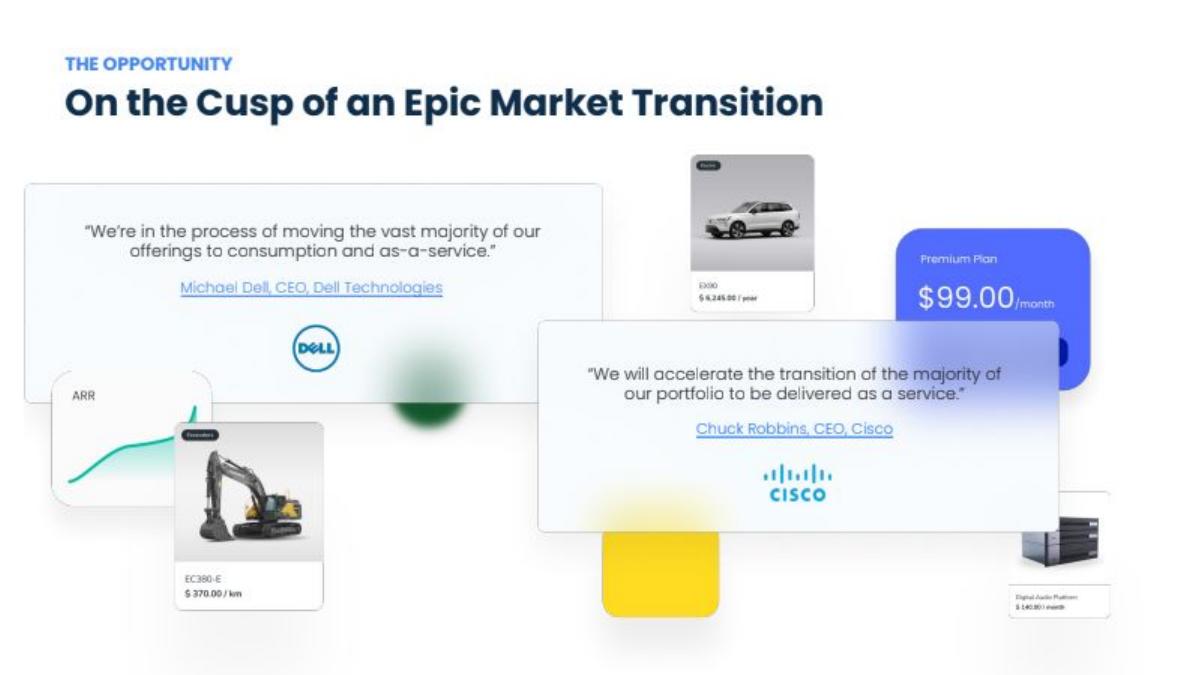
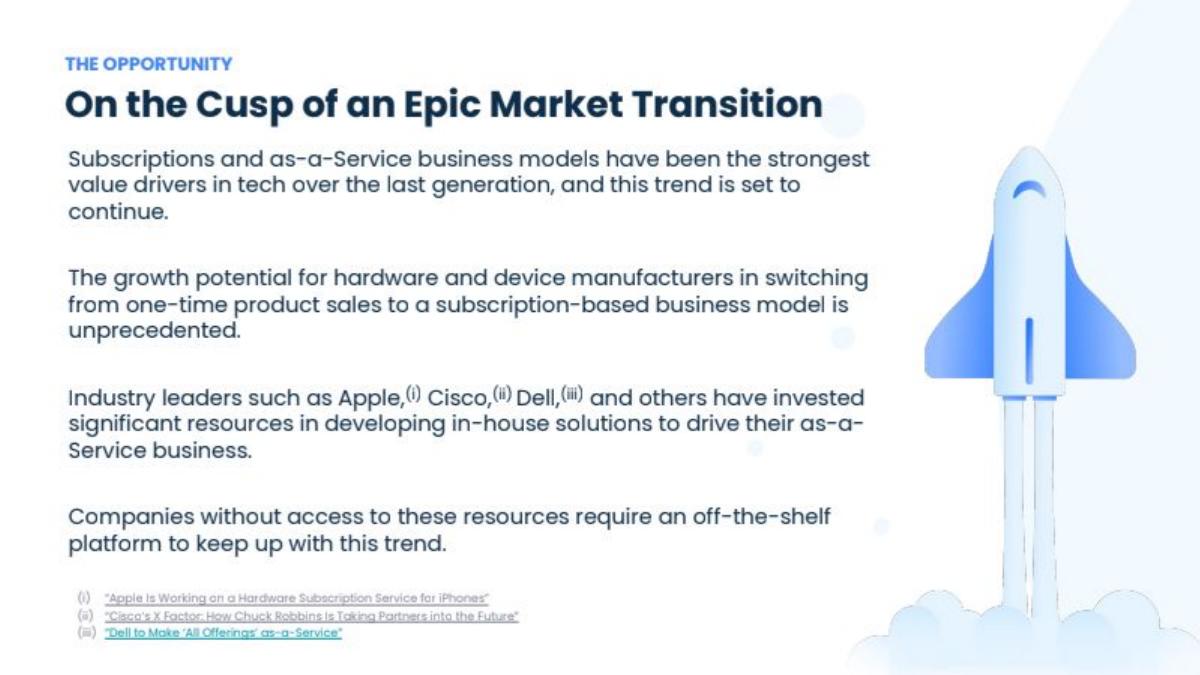
- The company highlights a massive market shift, citing Apple, Cisco, and Dell as leaders in hardware subscription models (Slide 3).
- The 'Problem' slide identifies a specific 'lack of visibility' in the traditional distribution chain that prevents recurring revenue (Slide 4).
- The product is presented as a 'Full-Stack Servitization Platform' covering commerce, support, and fleet management (Slide 6).
- Xyte utilizes a 'Venn Diagram' competitive landscape to show it sits at the intersection of IoT, MSP monitoring, and subscription billing (Slide 10).
- The business model is diversified across fixed platform fees, value-added services, and usage-based fulfillment fees (Slide 12).
- The deck emphasizes a 'Fully Federated' architecture, allowing OEMs and channel partners to collaborate within a single ecosystem (Slide 9).
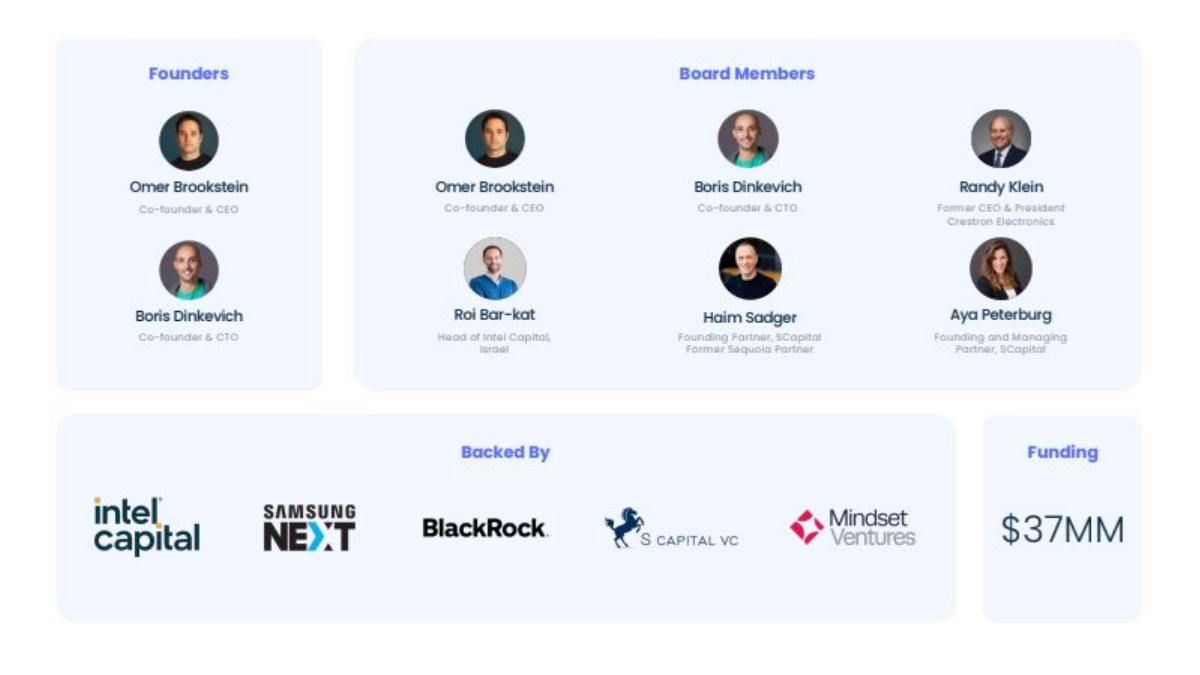
- Total funding of $37MM is explicitly stated, alongside high-profile backing from Intel Capital and Samsung Next (Slide 2).
Introduction: The Rise of Hardware-as-a-Service
Xyte’s 2023 Series A deck is a clinical study in how to pitch a complex B2B infrastructure product. Raising $30M in a round led by Intel Capital, the company focuses on the 'Servitization' of hardware—a term they use to describe the digital transformation of physical device manufacturers. The deck is structured to move an investor from a high-level macroeconomic trend down to the granularities of a multi-tenant software architecture.
Slide 1: Title and Category Definition
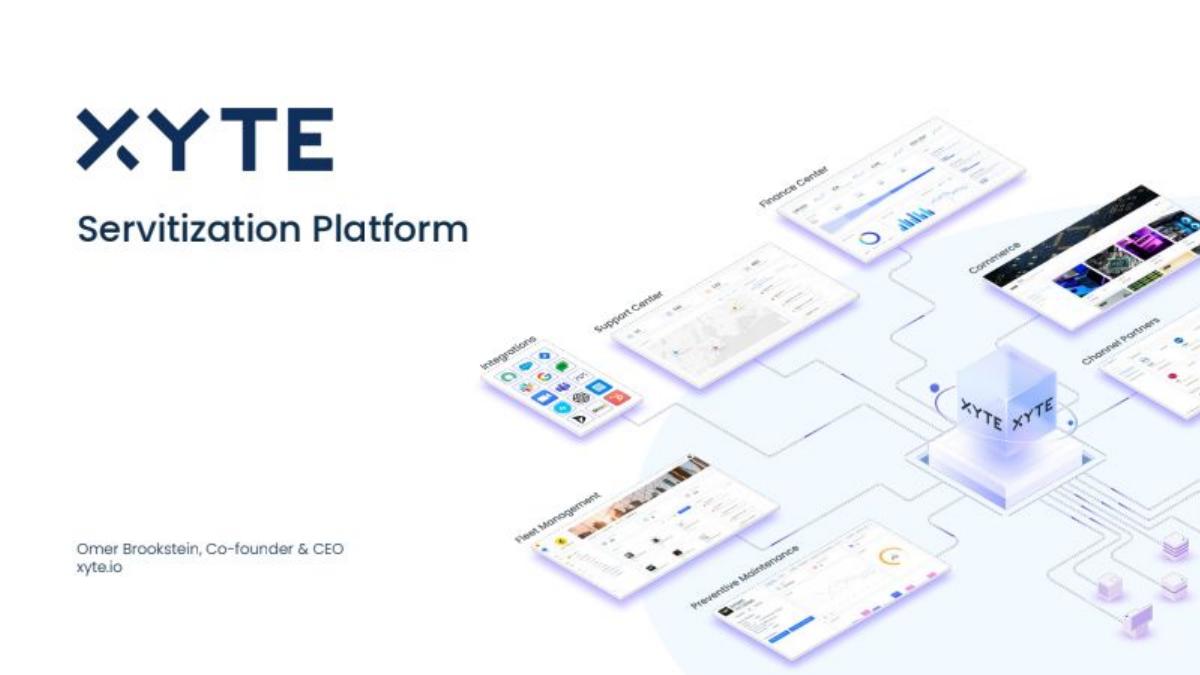
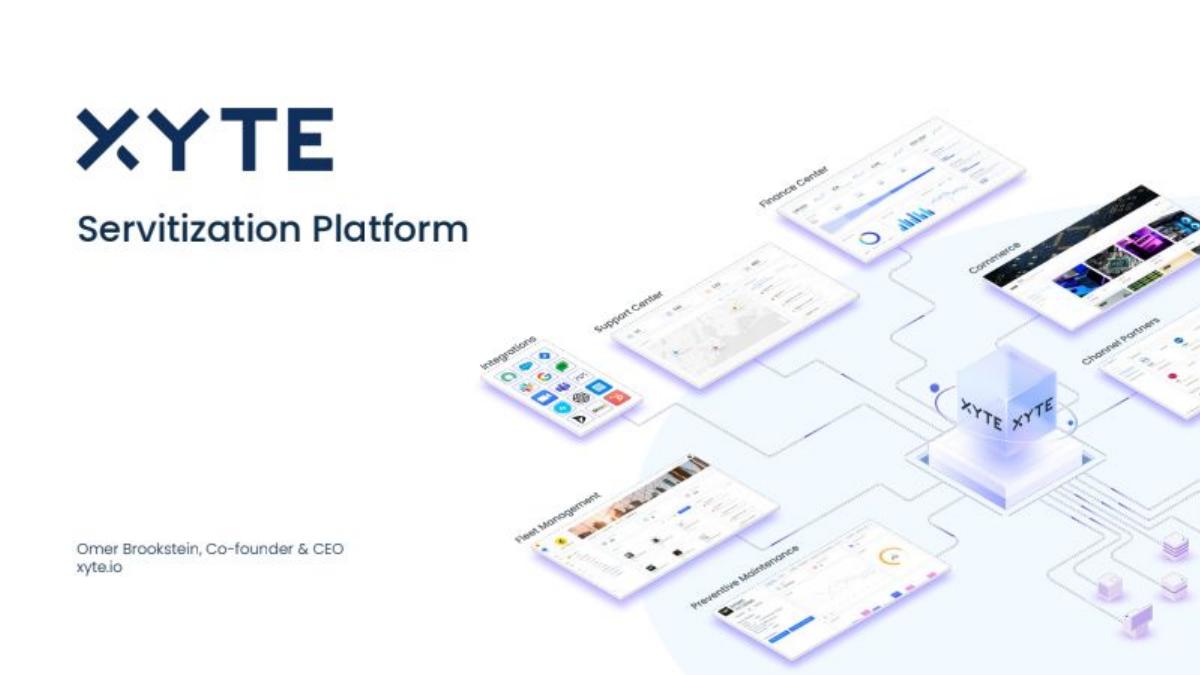
The cover slide is minimalist but strategic. It features the Xyte logo and the bold subtitle: 'Servitization Platform.' By leading with a category name rather than a product description, Xyte immediately signals that they are building a new type of software. The background graphic shows an exploded view of various dashboard modules (Finance Center, Support Center, Fleet Management), visually representing the 'full-stack' nature of the platform. It also identifies Omer Brookstein as the Co-founder & CEO.
Slide 2: The Power of the Cap Table
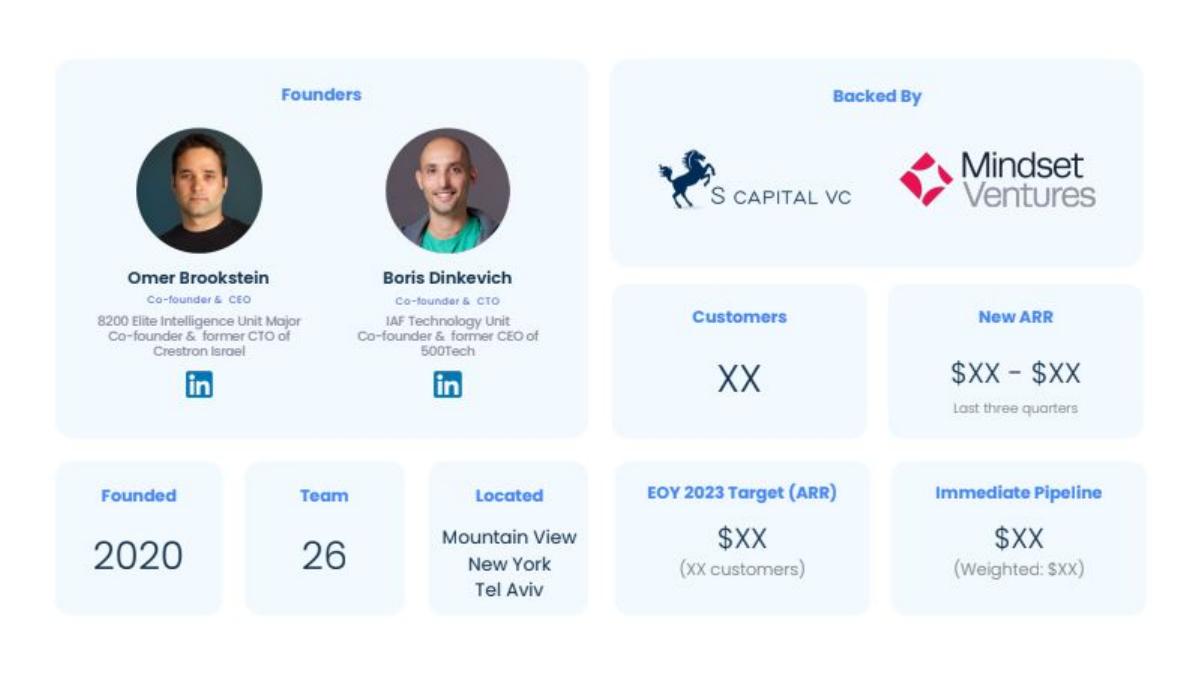
Xyte moves its 'Backed By' and 'Board' information to the very front of the deck. This is a common tactic for Series A companies with high-pedigree investors. The slide notes a total of '$37MM' in funding. The logos for Intel Capital, Samsung Next, BlackRock, S Capital VC, and Mindset Ventures provide immediate institutional credibility. The board members listed include Roi Bar-kat (Head of Intel Capital, Israel) and Haim Sadger (Former Sequoia Partner), which tells investors that the company is being guided by seasoned industry veterans.
Slide 3: The Opportunity and Market Transition
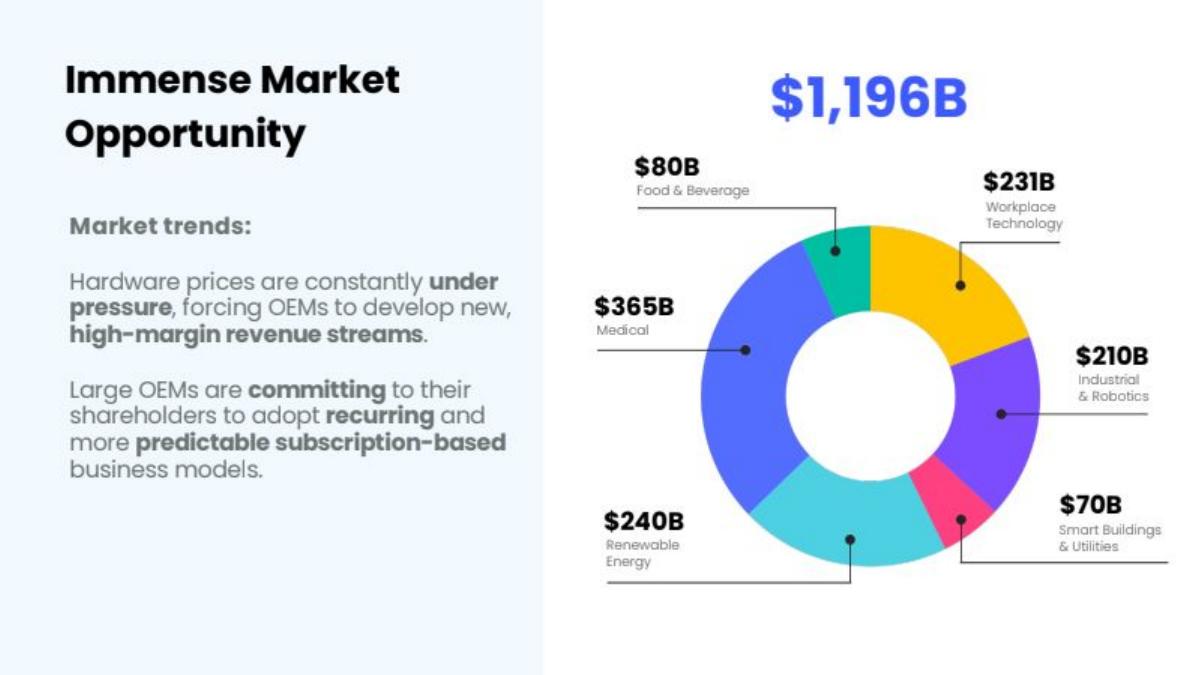
This slide sets the stage by framing the investment as a bet on an 'Epic Market Transition.' It argues that the 'as-a-Service' model is the strongest value driver in tech. Crucially, it uses social proof by citing that Apple, Cisco, and Dell have already invested in in-house solutions for hardware subscriptions. The takeaway is clear: the giants are doing this internally, but every other hardware company needs an 'off-the-shelf platform' to survive. This creates a sense of urgency and a massive Addressable Market (TAM) without needing a traditional 'bubble chart' slide.
Slide 4: The Visibility Gap
The 'Problem' slide focuses on the broken supply chain. It uses a diagram to show a manufacturer losing visibility as devices move through Distributors and Resellers to End Users . The red line cutting through the flow indicates a total disconnect. Xyte identifies three specific pain points: losing visibility after the warehouse, the lack of a sustainable customer relationship, and the impossibility of introducing recurring revenue models in this fragmented state.
Slide 5 & 6: The Full-Stack Solution
Xyte defines its solution as a 'Full-Stack Servitization Platform.' Slide 5 uses a collage of UI elements—showing MRR charts ($28,399.00), device health (Intel NUC), and customer retention rates (79%)—to prove the software is functional and comprehensive. Slide 6 breaks the platform into 'Hubs': Commerce, Marketing, Support, Operations, Finance, and Products. This modular approach suggests that Xyte isn't just a billing tool; it is the operating system for the entire hardware business.
Slide 7: Traction and Growth
The traction slide shows an upward-sloping curve from September 2022 to June 2023 . While the specific ARR and Customer figures are blurred in this version, the annotations indicate significant milestones and new customer acquisitions during that period. The curve is exponential, which is the standard requirement for a Series A pitch to demonstrate 'product-market fit' and 'readiness to scale.'
Slide 8: Unique Value Proposition
This slide summarizes the benefits for B2B device manufacturers. It lists five pillars: owning the customer experience, commercializing through subscriptions, improving after-sales experience, empowering channel partners, and providing best-in-class support tools. This slide bridges the gap between the technical 'how' and the business 'why.'
Slide 9: Architecture and Multi-tenancy
One of the most technical slides in the deck, Slide 9 explains the 'Fully Federated' nature of the platform. It shows an OEM at the top, managing multiple 'Organizations' and 'Channels.' This is a critical point for B2B investors: Xyte understands that hardware is sold through complex partner networks. The software allows for 'Multitenancy out of the Box,' meaning a manufacturer can give their resellers their own 'tenants' to manage their own customers, all while the manufacturer retains top-level data visibility.
Slide 10: Pioneering a New Category
The competitive landscape is presented as a three-way Venn diagram. Xyte places itself at the intersection of:
IoT/Fleet Management: (Particle, Thingworx, Microsoft Azure IoT Hub) · Monitoring/MSP: (Atera, Domotz, HP OpenView) · Subscription Management & Billing: (Stripe, Zuora, Recurly)
The argument is that while these tools exist in silos, Xyte is the only platform that combines device connectivity with commercial billing and partner management.
Slide 11: The Team
The 'Exceptional Team' slide features five key executives: Andrew Gross (VP Sales), Lital Grossman (VP Marketing), Tal Reis (VP R&D), Aya Schickler (VP Business Operations), and Ran Zaksh (VP Product). This slide focuses on the leadership layer beneath the founders, signaling that the company has used its previous funding to build a robust management team capable of scaling the business.
Slide 12: The Business Model
Fixed platform fee: Tier-based recurring revenue. · Value added services: Optional premium features for OEMs and subscribers. · Fulfillment fee for digital products: A usage-based fee (e.g., when a user buys a software upgrade for their hardware). · Lending (Future): A planned fintech play.
This diversified model suggests high Net Revenue Retention (NRR) potential, as customers can start small and expand their usage of the platform over time.
Slide 13: Forecast and Drivers
The final data slide shows projections for 2022 through 2025 . While the Y-axis is blurred, the charts show a clear shift in revenue composition. By 2025, the 'Core platform revenue' (yellow) is supplemented by significant 'Seats revenue' (red) and 'Monitoring license revenue' (blue). This indicates a 'land and expand' strategy where the initial platform sale leads to multiple recurring revenue streams as the customer’s fleet of connected devices grows.
Slide 14: Conclusion
The deck ends with a 'Thank you' slide that mirrors the cover, reinforcing the visual identity of the platform and the various modules it offers.
What Works in the Xyte Deck
1. Category Creation: By naming the platform a 'Servitization Platform,' Xyte avoids being compared to simple billing tools or generic IoT platforms. They define the rules of their own game.
2. Institutional Credibility: Placing the $37MM funding and the Intel/Samsung logos on Slide 2 immediately de-risks the investment for a Series A lead. It says, 'The smartest money in the world has already vetted this.'
3. Addressing the Channel: Most SaaS decks ignore the reality of B2B distribution. Xyte’s focus on 'Federated' architecture and 'Channel Partners' (Slide 9) shows a deep understanding of how hardware is actually sold.
What Is Missing from the Xyte Deck
1. Unit Economics: While the business model is explained, there is no mention of LTV (Lifetime Value), CAC (Customer Acquisition Cost), or Payback Period. For a Series A, investors usually want to see the efficiency of the sales engine.
2. Case Studies: The deck mentions that 'Early Adopters are Embracing the Change,' but it doesn't provide a specific, named case study showing how a manufacturer increased their revenue or margin by using Xyte. Real-world ROI data would have strengthened the 'Unique Value Proposition' slide.
3. Implementation Timeline: 'Cloudifying' hardware is notoriously difficult. The deck doesn't explain how long it takes for a new OEM to integrate Xyte into their existing hardware stack, which is a major hurdle in this sector.
What Founders Should Copy
1. The Problem Visualization: Slide 4 is a perfect example of how to use a simple diagram to explain a complex supply chain issue. It identifies exactly where the 'value leak' happens.
2. The Competitive Intersection: Instead of a standard 'Checklist' grid where the company has all the checks and competitors don't, the Venn diagram on Slide 10 is a more honest and sophisticated way to show how a product bridges multiple existing categories.
3. Revenue Source Diversification: Slide 12 and 13 show how a platform can have multiple 'hooks' for revenue. Founders should look at how Xyte separates the 'Platform Fee' from 'Usage Fees' and 'Value Added Services' to maximize the long-term value of each customer.
Frequently asked questions
- What is 'Servitization' as defined in the Xyte deck?
- As shown on Slide 5, Servitization is the process of enabling equipment and device manufacturers to 'cloudify, operate, support, and commercialize' their hardware. It represents the transition from one-time product sales to a continuous, service-based relationship with the end-user, managed through a unified business operations platform.
- How does Xyte address the traditional hardware distribution problem?
- Slide 4 illustrates that manufacturers typically lose visibility of their products once they leave the warehouse and move through distributors and resellers. Xyte solves this by providing a digital layer that connects the manufacturer directly to the device and the end-user, enabling a sustainable customer relationship regardless of the channel.
- What are the primary revenue drivers for Xyte?
- According to Slide 12, the business model consists of three active streams and one future stream: a tier-based fixed platform fee, optional premium features (value-added services), and usage-based fulfillment fees for digital products. They also list 'Lending' as a future revenue driver.
- Who are Xyte's main competitors according to the deck?
- Slide 10 categorizes competitors into three buckets: IoT/Fleet Management (e.g., Particle, Thingworx), Monitoring/MSP (e.g., Atera, Domotz), and Subscription Management (e.g., Stripe, Zuora). Xyte positions itself in the center, claiming to be the only solution that integrates all three domains.
- What does the 'Fully Federated' architecture mean for their customers?
- Slide 9 explains that the platform is built for multi-tenancy. This means OEMs can manage their own organizations while allowing channel partners and end-users to see only the devices they have permission to access. This structure supports the complex, multi-layered sales cycles common in B2B hardware.