Wysa’s deck (presented under the project name Xeem) is an anomaly in the Series B landscape. While the company has raised $29.4 million, this specific 12-slide presentation functions more as a high-level sales deck than a venture capital pitch. It meticulously outlines the benefits of its 'challenge' platform for both employers and talent, utilizing heavy social proof from blue-chip clients like SAP, Vodafone, and Merck. However, the deck is entirely devoid of the 'hard' data required for a late-stage fundraise: there are no slides covering ARR, churn, CAC/LTV, market size (TAM), or a specifi…
Key takeaways
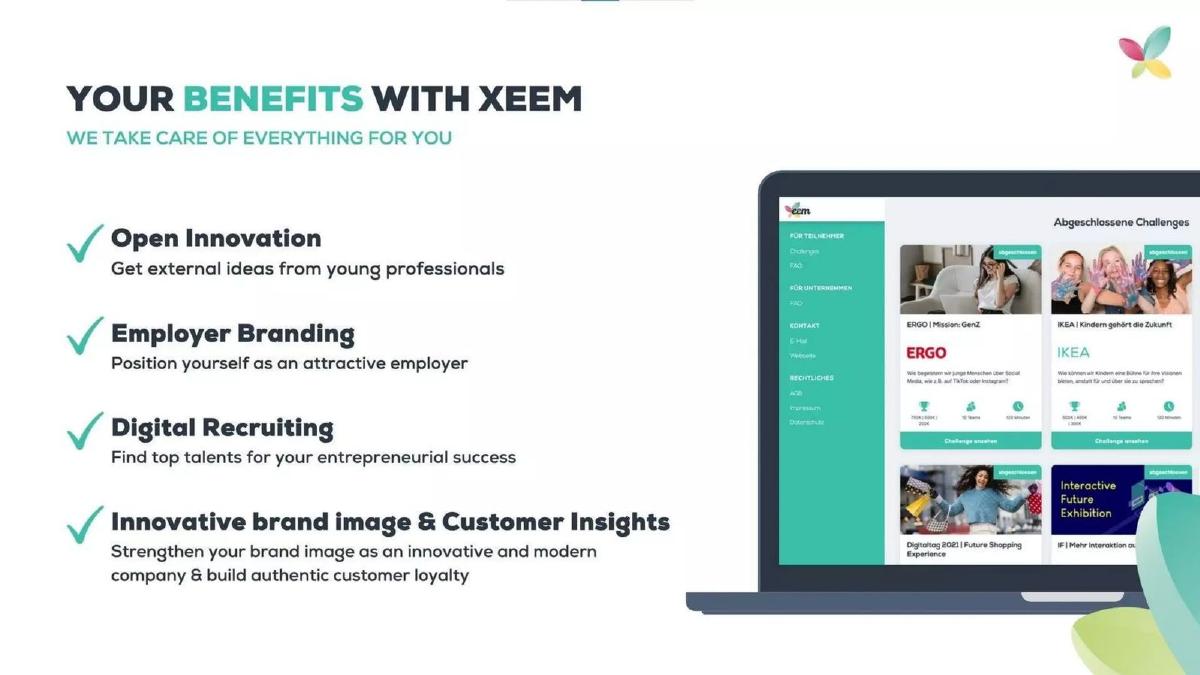
- The deck focuses on four core B2B pillars: Open Innovation, Employer Branding, Digital Recruiting, and Customer Insights (Slide 2).
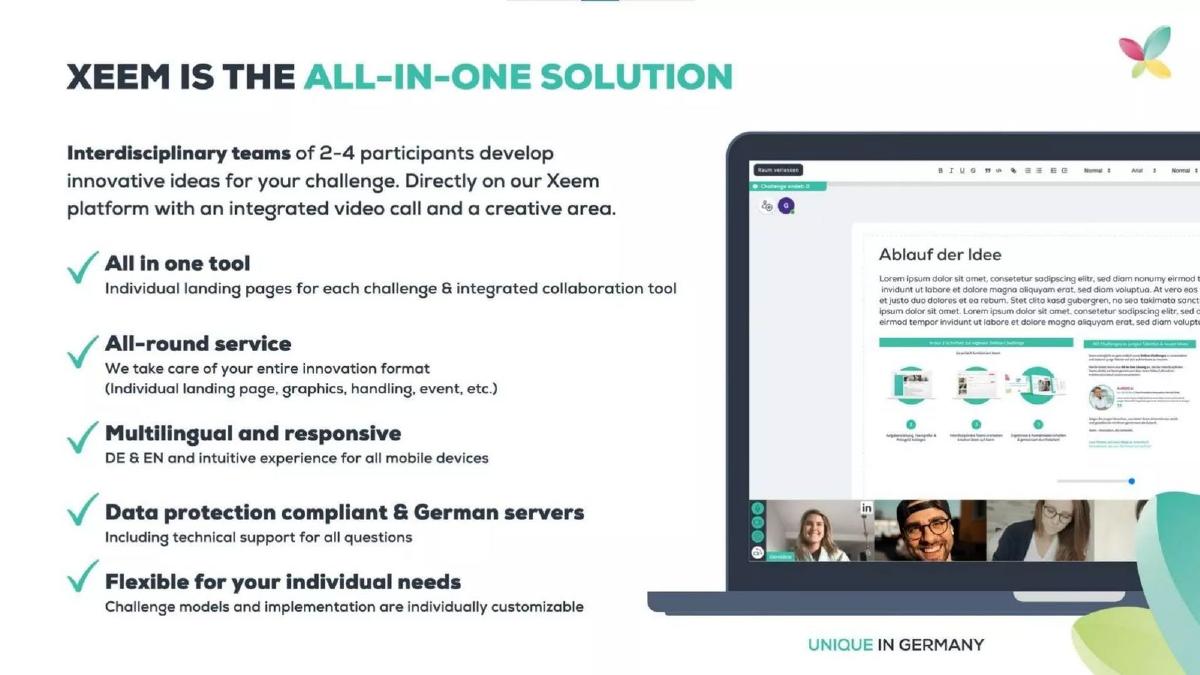
- The platform facilitates interdisciplinary teams of 2-4 participants to develop ideas within an integrated video and collaboration tool (Slide 4).
- Social proof is the deck's primary currency, featuring logos from SAP, Vodafone, Merck, and DB Schenker (Slide 9).
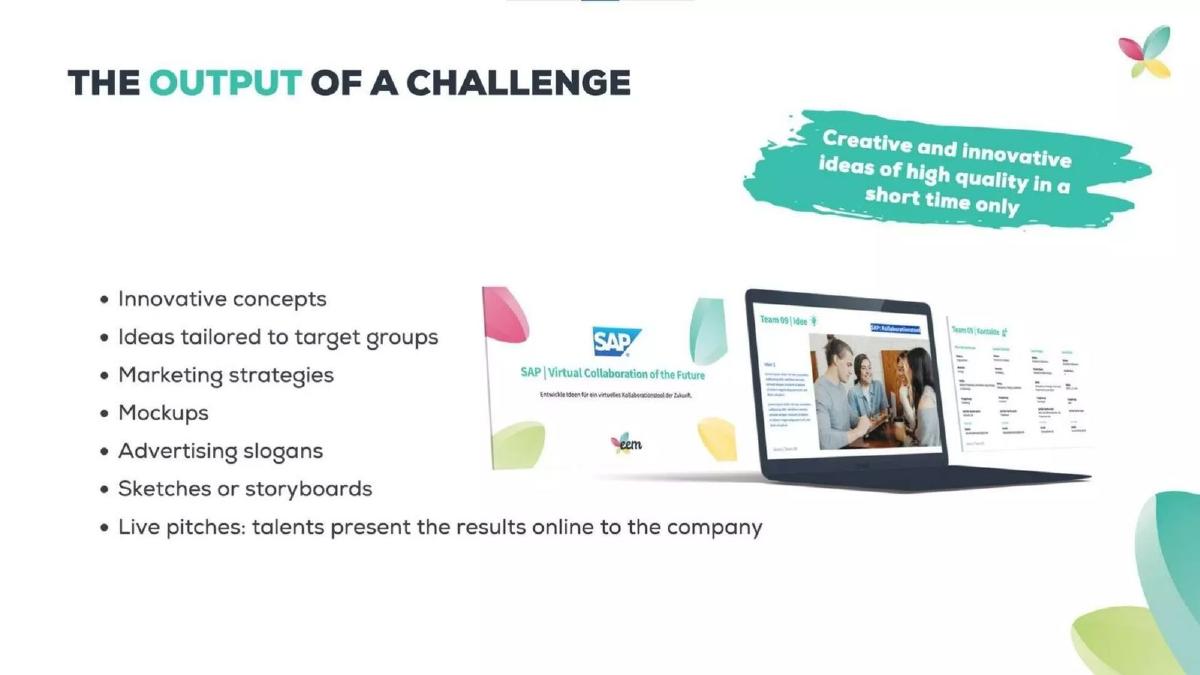
- The 'output' of a challenge is defined qualitatively, ranging from marketing strategies to mockups and live pitches (Slide 6).
- Talent incentives are highlighted as 'attractive prizes' and 'certificates for the CV,' with one testimonial citing a €333 win (Slides 10 and 11).
- The deck completely omits a financial slide, missing revenue figures, growth rates, and unit economics.
- There is no 'Ask' slide detailing how much capital is being raised or how it will be deployed.
- The team slide only lists two co-founders, Janine Weirich and Géraldine Ulrichs, omitting the broader executive team or advisory board (Slide 12).
The B2B Innovation Playbook: A Teardown of the Wysa (Xeem) Deck
Wysa, a company known for its AI-driven mental health support, presents a specific platform called Xeem in this 12-slide deck. While the catalogue facts indicate a Series B stage with $29.4 million raised, the presentation itself is a lean, highly focused value proposition for a corporate innovation tool. It positions itself as a bridge between large enterprises and 'young professionals' or 'Generation Z' through structured online challenges.
Slides 1-3: The Value Proposition and Employer Benefits
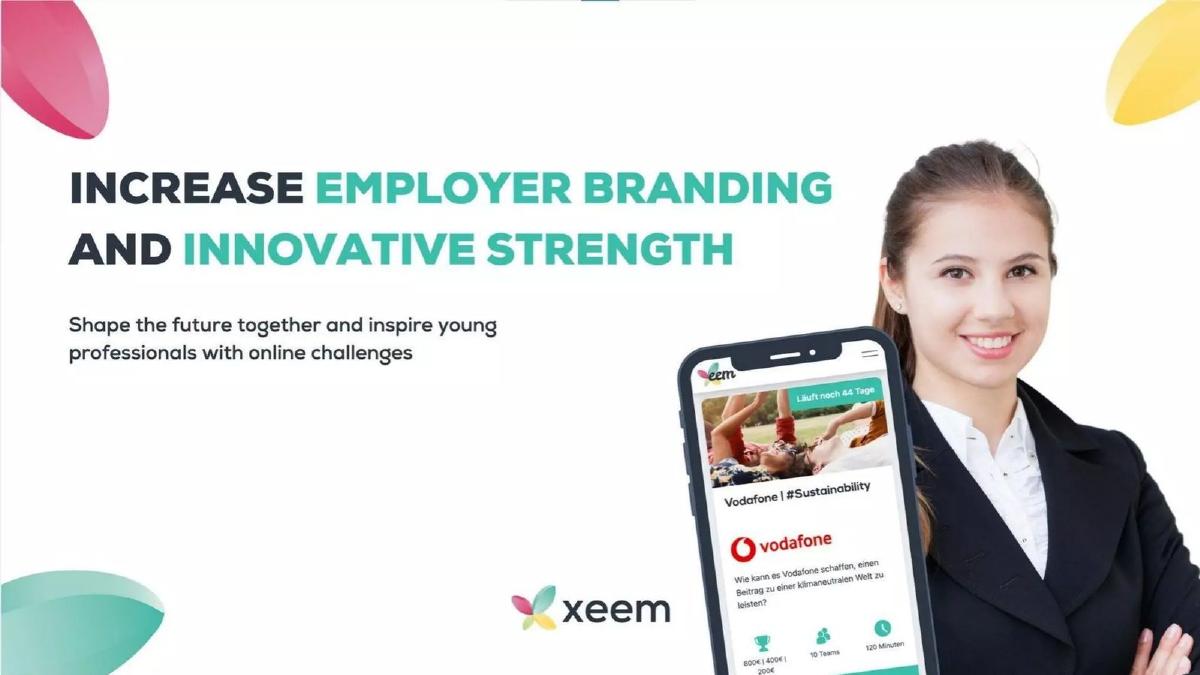
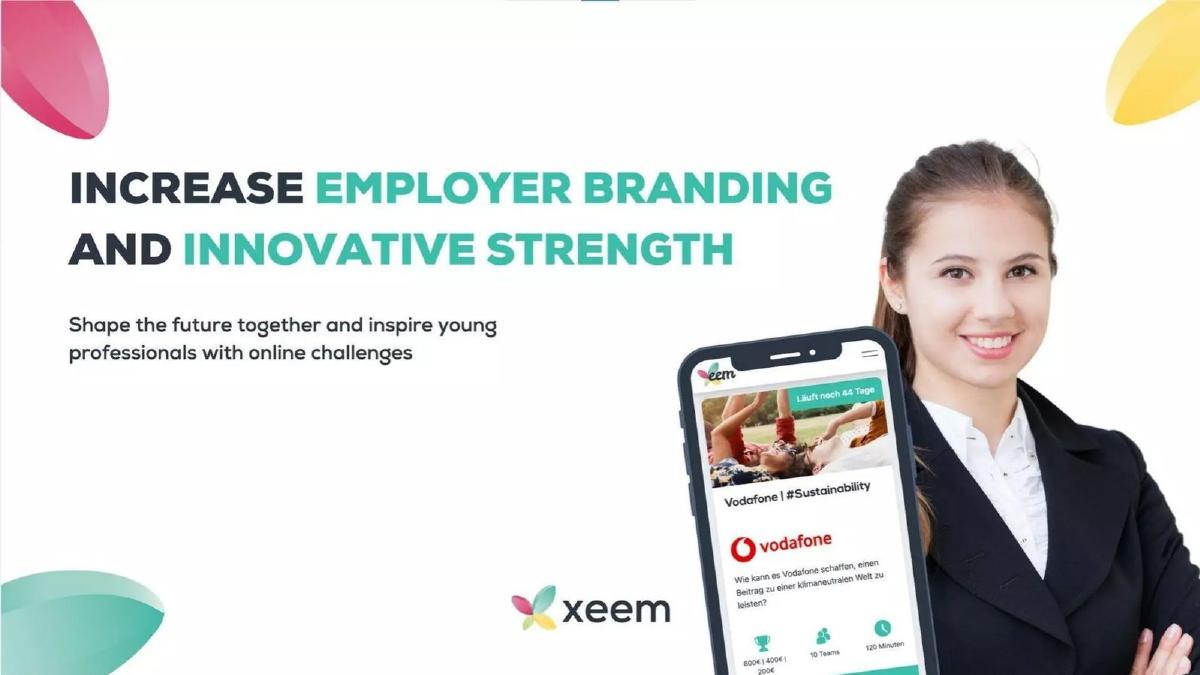
The deck opens with a clear, albeit generic, headline: "INCREASE EMPLOYER BRANDING AND INNOVATIVE STRENGTH" (Slide 1). The subtitle introduces the mechanism: "online challenges." This immediately tells the reader that this is a B2B2C play. The visual language is clean, using a smartphone mockup featuring a Vodafone sustainability challenge to ground the concept in reality.
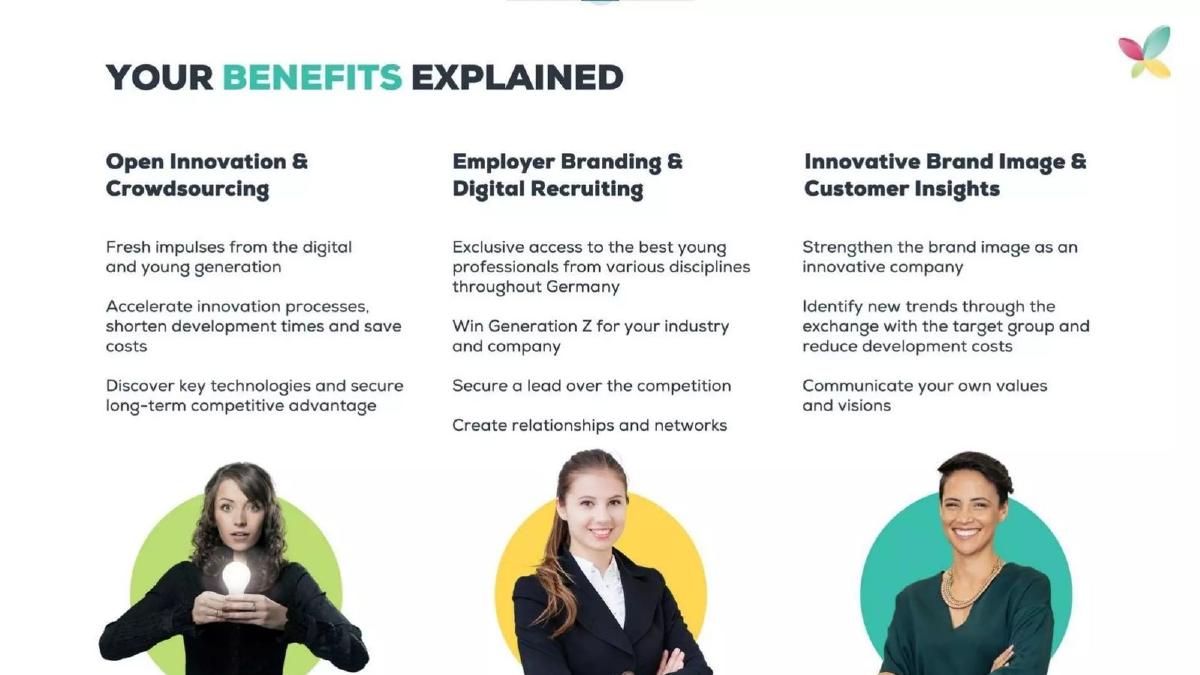
Slide 2, titled "YOUR BENEFITS WITH XEEM," breaks the value down into four quadrants: Open Innovation, Employer Branding, Digital Recruiting, and Innovative Brand Image & Customer Insights. This is a classic 'shotgun' approach to B2B sales—trying to appeal to the Innovation department, the HR department, and the Marketing department simultaneously. Slide 3 expands on these, specifically mentioning the ability to "Win Generation Z for your industry" and "shorten development times." There is a heavy emphasis on the German market, noting access to professionals "throughout Germany."
Slides 4-6: Product Mechanics and Output
Slide 4 introduces the "ALL-IN-ONE SOLUTION." It describes interdisciplinary teams of 2-4 participants working within a platform that includes integrated video calls and a creative area. The slide makes a bold claim of being "UNIQUE IN GERMANY." It also addresses enterprise concerns regarding security, stating they use "German servers" and are "Data protection compliant."
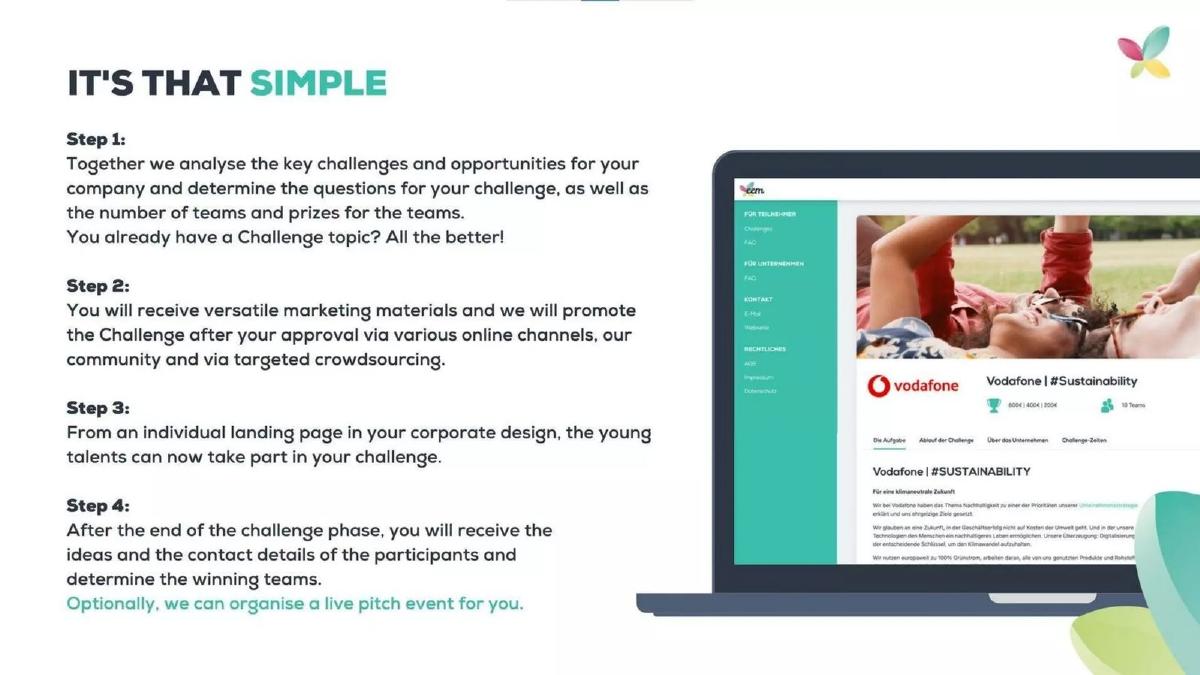
The process is simplified into a four-step workflow on Slide 5. Step 1 is analysis and question determination; Step 2 is the provision of marketing materials and promotion; Step 3 is the launch of a custom landing page; and Step 4 is the delivery of ideas and contact details of participants. This slide is crucial because it positions Xeem as a service-heavy platform ("We take care of everything for you") rather than just a self-service SaaS tool.
Slide 6 defines the "OUTPUT OF A CHALLENGE." It lists deliverables such as innovative concepts, marketing strategies, mockups, and advertising slogans. By showing an SAP-branded challenge mockup, the deck reinforces that the end product is tangible and high-fidelity, not just a list of names.
Slides 7-9: Social Proof and Corporate Validation
This section of the deck is its strongest asset. Slide 7 features a testimonial from Derya Bozkurt of Evonik , focusing on the "eye level" exchange with students. Slide 8 provides two more detailed testimonials from Commerzbank Business Consulting and Zentis . Britta Gayko (Commerzbank) specifically mentions the "How to Love a Bank" challenge, which adds a layer of specific, relatable project history.
Slide 9 is the standard 'Logo Slide,' but it is impressive for a Series B company. It features Vodafone, Merck, DB Schenker, SAP, Red Bull Basement, and Volksbank Kurpfalz . For a platform that relies on the quality of its corporate partners to attract talent, this slide does the heavy lifting of establishing trust and market fit.
Slides 10-12: The Talent Side and The Team
Slide 10 shifts focus to the participants: "HOW TALENTS BENEFIT." The benefits listed are career-centric: practical experience, having a say, prizes, and certificates. Slide 11 provides the 'C' in the B2B2C model with testimonials from two students, Sophie and Niklas. Niklas provides a rare hard figure, mentioning he won "€333 more in my account for two hours of work." This gives a glimpse into the incentive structure for the talent side of the marketplace.
The deck concludes on Slide 12 with the founders: Janine Weirich and Géraldine Ulrichs . The slide includes a direct call to action to "Arrange a meeting" and provides a phone number and email address. Notably, there are no bios, no mention of previous exits, and no technical leadership listed, which is unusual for a Series B deck.
What Works in This Deck
Hyper-Focus on Use Case: The deck never wanders. It is entirely about the 'Challenge' format. An investor or partner knows exactly what the product does by slide 5. · Blue-Chip Validation: The inclusion of SAP, Merck, and Vodafone provides immediate credibility. In the B2B space, showing that you can navigate the procurement and legal hurdles of a company like Commerzbank is a significant signal. · Clear Participant Incentives: By including student testimonials and specific prize amounts, the deck proves that there is a supply-side pull for the platform, not just a corporate push. · Localized Security: Mentioning German servers and data compliance is a smart move for a company operating in the DACH region, where privacy concerns often stall B2B tech adoption.
What is Missing from This Deck
Financial Performance: There is zero mention of revenue, ARR growth, or contract sizes. For a Series B teardown, this is a massive omission. We don't know if these challenges cost €5,000 or €50,000. · Market Size (TAM/SAM): The deck doesn't quantify the opportunity. How many companies in Germany need this? What is the total spend on employer branding and open innovation? · Competitive Landscape: There is no mention of how Xeem competes with traditional hackathon platforms, recruiting agencies, or internal innovation labs. · The Capital Ask: A fundraising deck usually ends with a slide detailing the amount being raised and the milestones it will fund. This deck ends with a sales contact, suggesting it was used for business development rather than the final investment committee pitch. · Scalability Logic: The deck describes an "all-round service" where they handle graphics and events. This sounds like an agency model. A VC would want to see how this scales without a linear increase in headcount.
What a Founder Should Copy
The 'It's That Simple' Slide: Slide 5 is a perfect example of how to demystify a complex service. Breaking a multi-week engagement into four clear steps reduces the perceived friction for a buyer. · Visual Consistency: The deck uses a consistent color palette and high-quality photography that makes the brand feel established and professional. · Testimonial Placement: Instead of burying testimonials at the end, the deck weaves them throughout, using them to validate specific claims about employer branding and talent access. · Outcome Definition: Slide 6 is excellent. Don't just say you provide 'value'; list the specific artifacts (mockups, slogans, strategies) the customer will receive.
Frequently asked questions
- Why does the deck look like a sales presentation rather than a Series B pitch?
- This deck is likely a 'product-first' or 'partnership' deck used during the Series B roadshow to demonstrate the platform's utility to stakeholders. It lacks the financial rigor (P&L, projections) usually found in a lead investor's data room, focusing instead on the user journey and corporate value proposition.
- What is the core business model described in these slides?
- The model is a three-sided marketplace: Wysa (Xeem) provides the platform, corporations provide the 'challenges' and prizes, and young talent (Gen Z) provides the innovation and labor. Wysa monetizes by managing the 'all-round service,' including marketing materials and landing pages (Slide 5).
- How does the company address data security?
- Slide 4 explicitly states that the platform is 'Data protection compliant' and utilizes 'German servers.' This is a critical selling point for their target market of large European enterprises like Commerzbank and Volksbank, where GDPR compliance is a non-negotiable prerequisite.
- What specific metrics are missing that an investor would need?
- An investor would require the Total Addressable Market (TAM), the current Annual Recurring Revenue (ARR), the cost to acquire a corporate client (CAC), the lifetime value (LTV) of those clients, and a clear roadmap of how the $29.4M will scale these operations.
- Who are the key people behind the company according to the deck?
- The deck identifies Janine Weirich (Co-Founder & Head of Business Development) and Géraldine Ulrichs (Co-Founder & Head of Marketing). While the catalogue listing mentions Wysa's broader mental health scope, this deck focuses exclusively on the Xeem challenge platform led by these two founders.