Wunderlist’s 10-slide Series B deck from 2013 is a high-signal document that prioritizes traction and market positioning over granular operational detail. Raising $19M at a stage where many companies produce 30-page manifestos, Wunderlist relied on a 'show, don't tell' philosophy. The deck highlights a massive user base of over 5 million registered users and a highly engaged core (50% DAU/MAU ratio). It successfully frames the company as the third pillar of the productivity era, claiming 'Tasks' in the same way Dropbox claimed 'Files' and Evernote claimed 'Notes.' While it lacks a team slide,…
Key takeaways
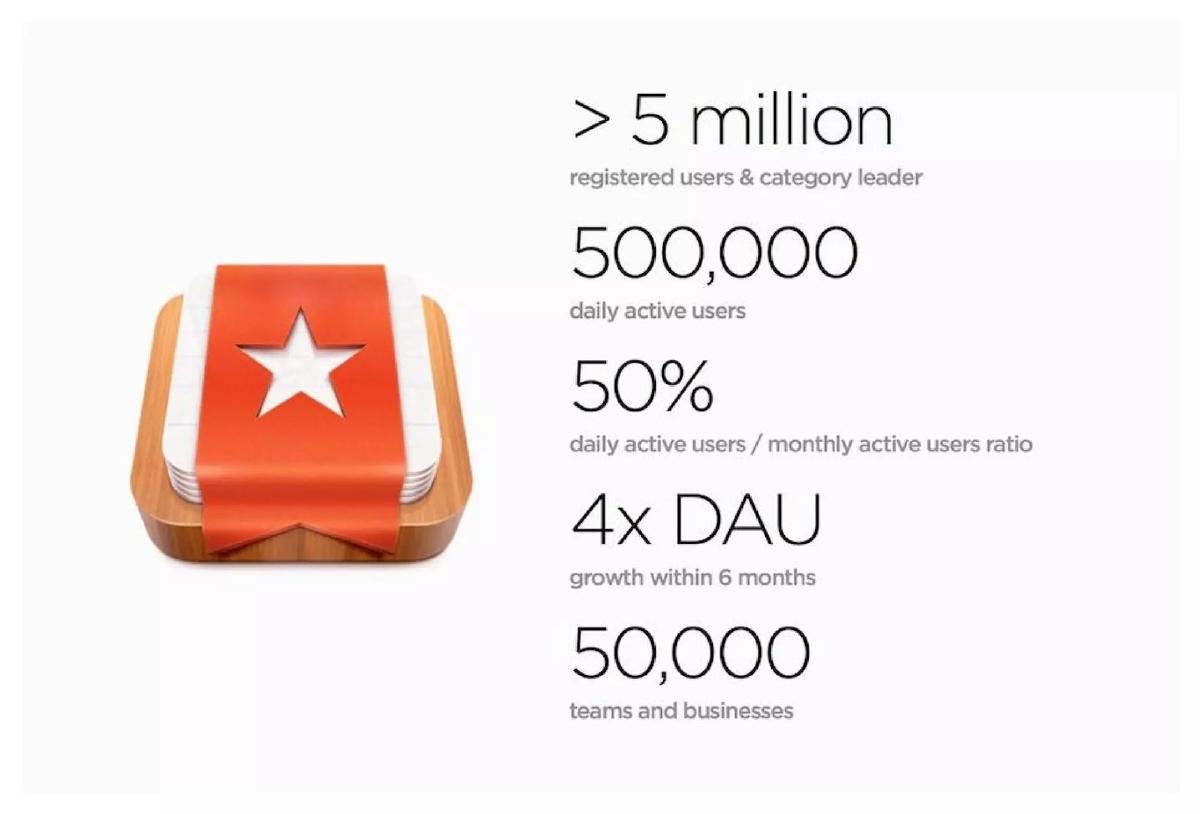
- The company reported over 5 million registered users and 500,000 daily active users on slide 2.
- Engagement is exceptionally high for a utility app, with a 50% DAU/MAU ratio cited on slide 2.
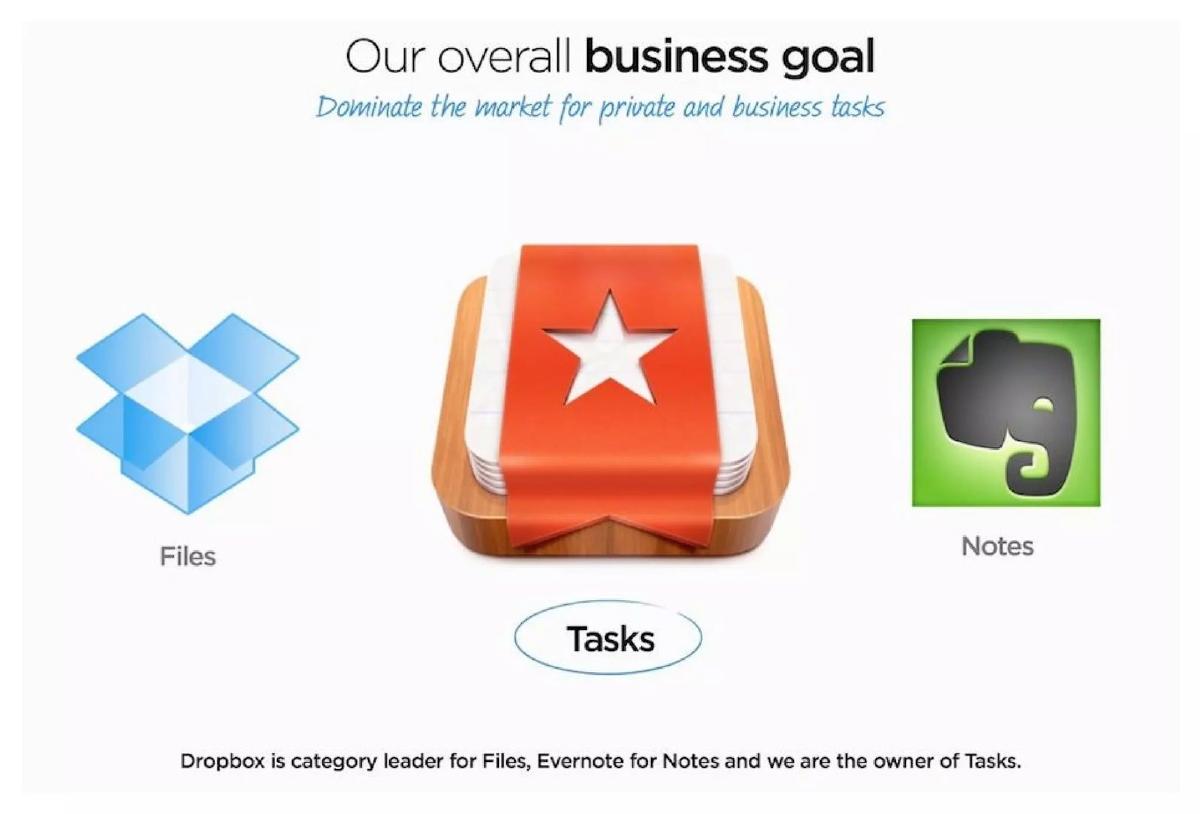
- Wunderlist positioned itself as the 'owner of Tasks' to complete a productivity trinity alongside Dropbox (Files) and Evernote (Notes) on slide 3.
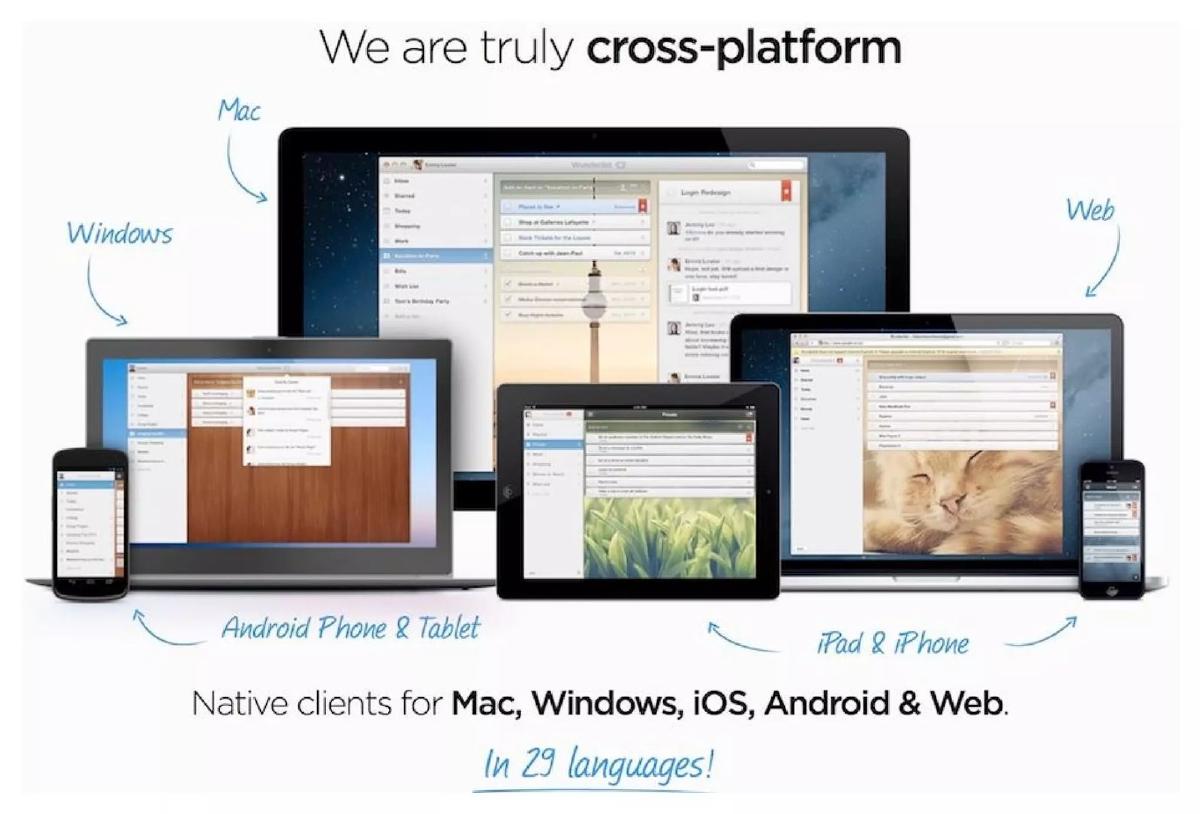
- The product achieved significant cross-platform reach with native clients for Mac, Windows, iOS, Android, and Web in 29 languages as shown on slide 4.
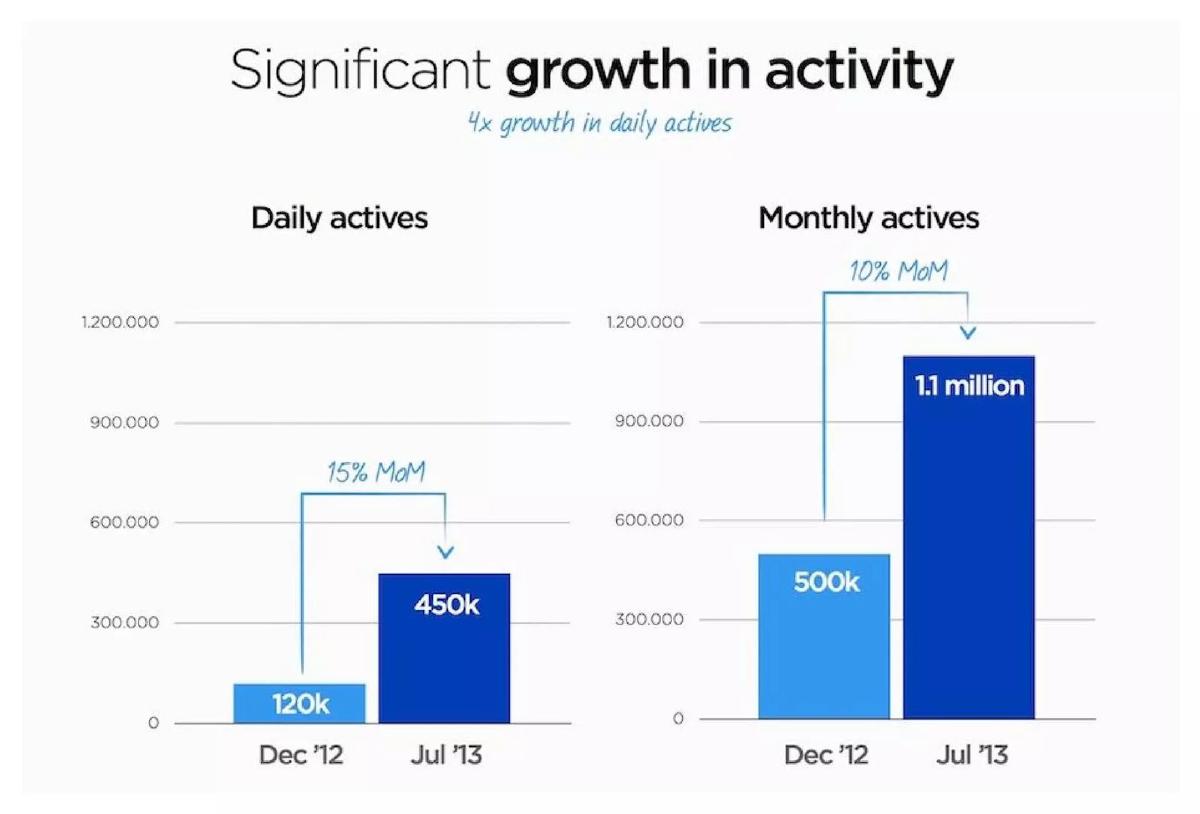
- Growth was accelerating at the time of the pitch, with a 4x increase in daily active users within six months (slide 5).
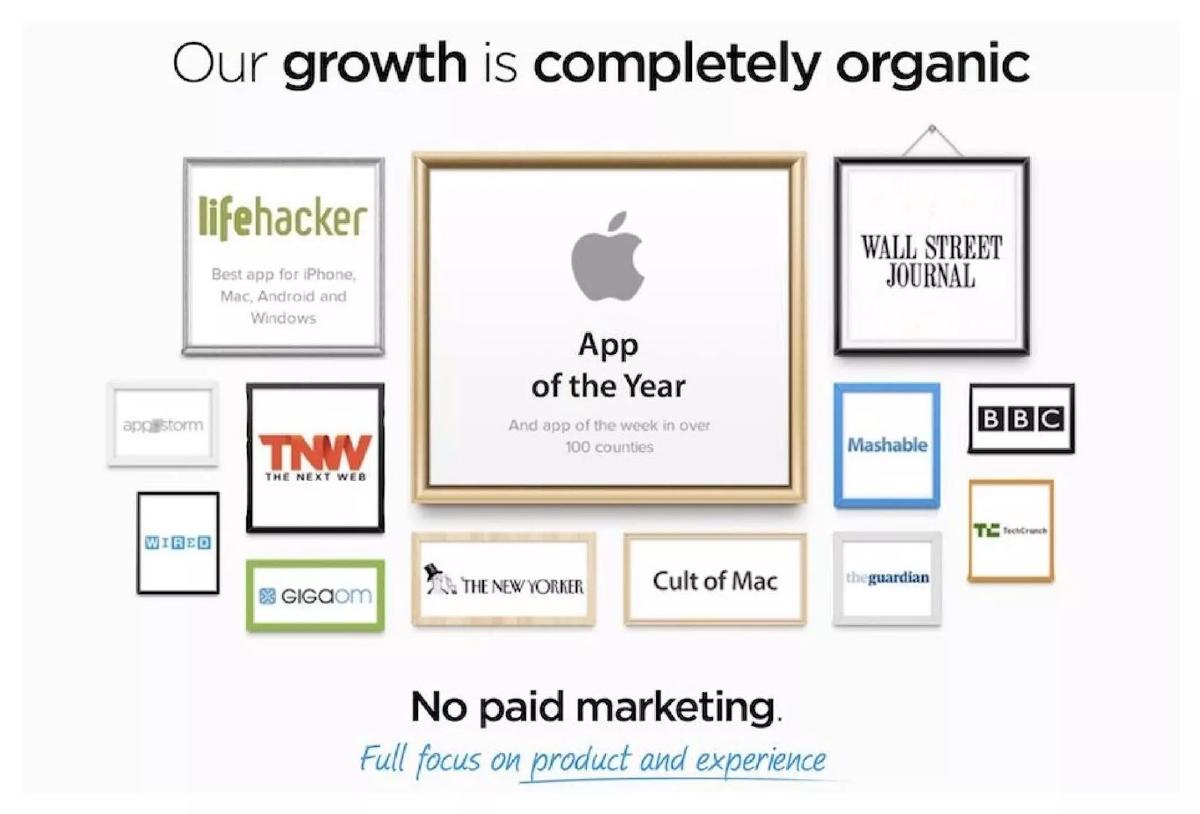
- The deck claims 100% organic growth with 'no paid marketing' on slide 6, a powerful signal for Series B investors.
- Geographic diversification is strong, with the US representing 29% of the market and Germany at 10% (slide 7).
- The monetization strategy relies on a three-tier freemium model, including a $4.99/month Pro tier and a team offering for up to 500 members (slide 9).
The 10-Slide Series B Blueprint
The Wunderlist pitch deck is a minimalist masterpiece from the 2013 era of SaaS. At only 10 slides, it defies the conventional wisdom that later-stage rounds require exhaustive financial modeling and 40-page appendices. Instead, the deck focuses on a singular narrative: ubiquity . By the time this deck was circulated, Wunderlist was already a household name in the productivity space, and the slides reflect a company that isn't asking for permission to lead, but rather stating that it already does.
Slide 1: Title and Vision
The deck opens with the iconic Wunderlist logo and the tagline: "The only way to organize your life and work." This is a bold, all-encompassing claim. It signals that the product is not just a 'to-do list' but a central hub for both personal and professional productivity. The design is clean, mirroring the product's own aesthetic, which was a major selling point at the time.
Slide 2: The Traction Snapshot
Slide 2 is arguably the most important slide in the deck. It lists five massive figures that immediately validate the business:
> 5 million registered users & category leader · 500,000 daily active users · 50% daily active users / monthly active users ratio · 4x DAU growth within 6 months · 50,000 teams and businesses
The 50% DAU/MAU ratio is the standout metric here. In the world of mobile apps, a 50% stickiness rate is elite, typically reserved for social media giants. For a utility app, it proves that the product has become a daily habit for its users.
Slide 3: Market Positioning and the Productivity Trinity
Wunderlist uses slide 3 to define the competitive landscape by association. They place their logo between Dropbox and Evernote. The text below reads: "Dropbox is category leader for Files, Evernote for Notes and we are the owner of Tasks." This is a brilliant framing device. It bypasses smaller competitors like Todoist or Any.do and positions Wunderlist as a peer to multi-billion dollar companies. It tells the investor: "If you missed the boat on files and notes, this is your chance to own the third pillar."
Slide 4: Cross-Platform Ubiquity
In 2013, the 'sync' problem was still a major pain point for users. Slide 4 emphasizes that Wunderlist is "truly cross-platform," listing native clients for Mac, Windows, iOS, Android, and Web. They also highlight that the app is available in 29 languages. This slide demonstrates the technical maturity of the product and its readiness for global scale. It isn't just an app; it is an ecosystem.
Slide 5: Growth Velocity
While slide 2 gave a snapshot, slide 5 provides the trend lines. It shows two bar charts comparing December 2012 to July 2013. Daily actives grew from 120k to 450k (a 15% MoM growth rate), and monthly actives grew from 500k to 1.1 million (a 10% MoM growth rate). The visual contrast between the bars makes the growth feel explosive, providing the 'why now' for the Series B investment.
Slide 6: The Organic Engine
Slide 6 addresses the efficiency of their growth. With the headline "Our growth is completely organic," they showcase a gallery of high-tier press logos including The New York Times, The Guardian, and Wired. The centerpiece is the "App of the Year" award from Apple. The statement "No paid marketing" is a powerful signal to VCs that every dollar of investment will go toward product development and scaling an already-functioning viral loop, rather than subsidizing expensive user acquisition.
Slide 7: Global Footprint
Slide 7 uses a world map to show geographic distribution. The US is the largest market at 29%, followed by Germany (DE) at 10% and the UK at 6%. Notably, they mention that China and Japan are in the Top 10 countries. This proves that the 'Task' problem is universal and that the product has successfully localized in difficult markets like Asia without significant marketing spend.
Slide 8: Social Proof and Quality
To reinforce the 'organic' claim, slide 8 focuses on user sentiment. It displays star ratings across three major platforms:
Google Play: 30,000 reviews, 4.43 stars · App Stores: 70,000 reviews, 4.50 stars · Chrome Store: 11,500 reviews, 4.50 stars
This volume of high-quality reviews (over 110,000 total) serves as a massive 'moat' of social proof that is very difficult for new competitors to replicate.
Slide 9: The Business Model
Slide 9 outlines the "Freemium strategy." It presents three tiers: the free version for basic syncing, "Wunderlist Pro" at $4.99/month for collaboration, and "Pro for Teams" for up to 500 members. By showing the 'Pro for Teams' option, they signal their intent to move upmarket into the enterprise space, which is where the highest valuations in SaaS are found. However, the slide is light on actual revenue figures or conversion rates from free to paid.
Slide 10: Conclusion
The deck ends simply with a "Thank you!" slide. There is no contact information, no 'ask' amount, and no closing argument. This suggests the deck was likely used as a visual aid for a presentation where the founders were already in deep discussions with known investors.
What Works in the Wunderlist Deck
The 'Rule of Three' Positioning: By grouping themselves with Dropbox and Evernote, they simplified a complex market into a simple 'productivity suite' narrative that was easy for investors to buy into.
Metric Density: The deck doesn't waste time with fluff. Almost every slide contains a hard number that proves traction, whether it's the 50% DAU/MAU ratio, the 29 languages, or the 110,000+ reviews. This creates an overwhelming sense of momentum.
Visual Consistency: The deck looks like the product. It is clean, professional, and uses high-quality assets. For a company selling a productivity tool based on 'experience,' the deck itself serves as a portfolio piece for their design standards.
What is Missing from the Wunderlist Deck
The Team Slide: This is the most glaring omission. Even at Series B, investors generally want to see the leadership team, their backgrounds, and why they are the right people to take the company to an IPO or major acquisition. Its absence suggests the traction was so undeniable that the founders felt the 'who' was secondary to the 'what.'
Financials and Unit Economics: While we see the pricing tiers, we don't see the LTV (Lifetime Value), CAC (Customer Acquisition Cost), or Churn rates. For a Series B, these are usually mandatory. The deck also omits current ARR (Annual Recurring Revenue) or even a hint of their burn rate.
The Roadmap: The deck shows where the company is, but not where it is going. There is no mention of upcoming features, AI integrations (which were nascent but relevant), or specific enterprise expansion plans beyond the 'Pro for Teams' mention.
What a Founder Should Copy
The Traction-First Approach: If you have numbers as strong as Wunderlist's, put them on slide 2. Don't make investors wait until the end of the deck to find out you have 5 million users. Lead with your strongest evidence.
Category Anchoring: If you are in a crowded space, don't try to fight every small competitor. Find the 'giants' in adjacent categories and explain why you are the equivalent giant in your specific niche. It helps investors understand your potential ceiling.
Proof of Organic Growth: In an era where many startups are 'buying' their growth through Facebook and Google ads, proving that you can grow to millions of users with zero paid spend is the ultimate competitive advantage. If you have organic traction, dedicate an entire slide to the press and awards that fueled it.
Frequently asked questions
- How did Wunderlist justify its market position against competitors?
- Instead of a traditional feature-comparison grid, Wunderlist used slide 3 to create a 'category ownership' narrative. They associated themselves with the dominant players of the era—Dropbox and Evernote—arguing that just as those companies owned files and notes, Wunderlist owned the 'Tasks' category. This psychological anchoring made their leadership feel like an established fact rather than a claim.
- What were the key engagement metrics used in the Series B pitch?
- The deck focused heavily on the DAU/MAU ratio. On slide 2, they reported a 50% ratio, meaning half of their monthly users were using the app every single day. For a task management tool, this level of stickiness is rare and served as a proxy for product quality and user habit formation.
- How did the deck address the cost of user acquisition?
- Slide 6 explicitly states 'No paid marketing.' By showcasing a wall of press logos from the Wall Street Journal to Wired and highlighting the 'App of the Year' award from Apple, the founders demonstrated that their 5 million users were acquired through organic virality and brand equity, suggesting high capital efficiency.
- What was the revenue model presented in the deck?
- Wunderlist presented a 'Freemium strategy' on slide 9. It consisted of a free tier for basic syncing, a 'Pro' tier at $4.99/month or $49.99/year for collaboration features, and a 'Pro for Teams' tier supporting up to 500 members with a 30% discount structure. This showed a clear path from consumer usage to B2B revenue.
- Is the lack of a team slide a mistake in this deck?
- For a Series B with 5 million users and a clear category lead, the team's ability to execute was already proven by the product's success. While generally discouraged, the omission suggests the founders felt the traction data was the strongest possible argument for their capability, though most modern decks should still include one.