Xoom Park’s demo day deck presents a clear, albeit narrow, solution to the frustration of event parking. By focusing specifically on sporting events and large venues, the company identifies a $613 million sub-sector within the broader $8.2 billion U.S. parking industry. The deck leans heavily on the team’s deep domain expertise, featuring founders who previously built airport reservation sites and parking access platforms. While the financial projections are aggressive—forecasting over 300,000 spots under contract within a year—the acquisition strategy is grounded in a proven Google Ads model…
Key takeaways
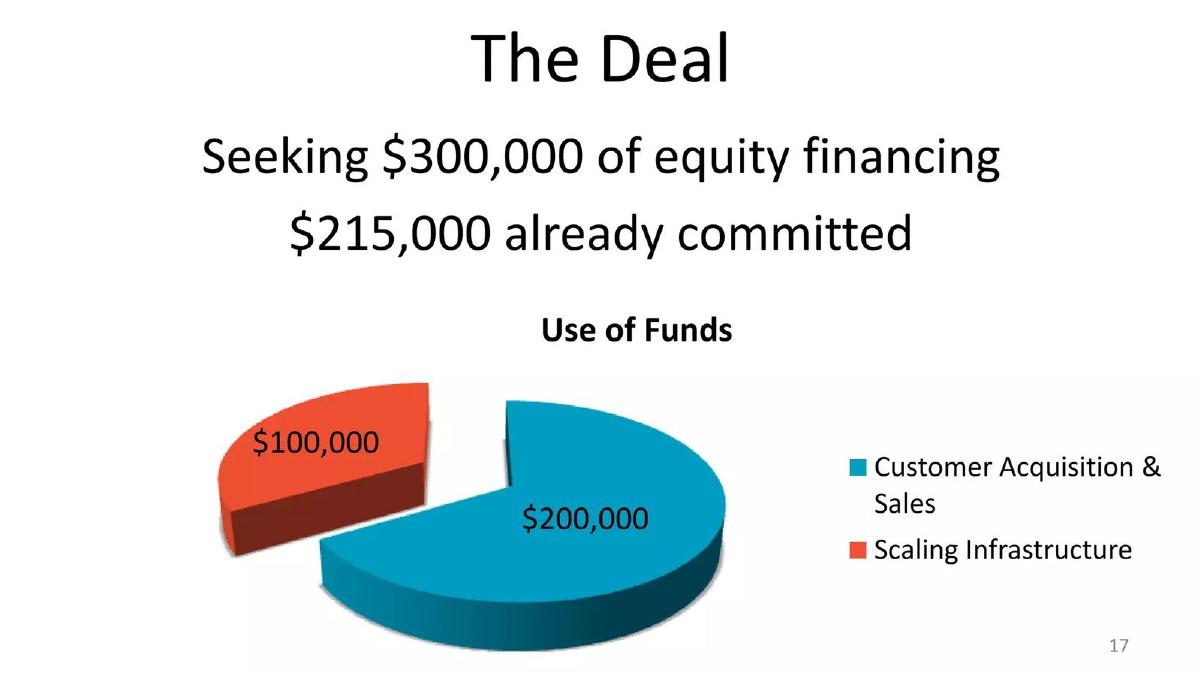
- The company is seeking $300,000 in equity financing, with $215,000 already committed at the time of the presentation (Slide 17).
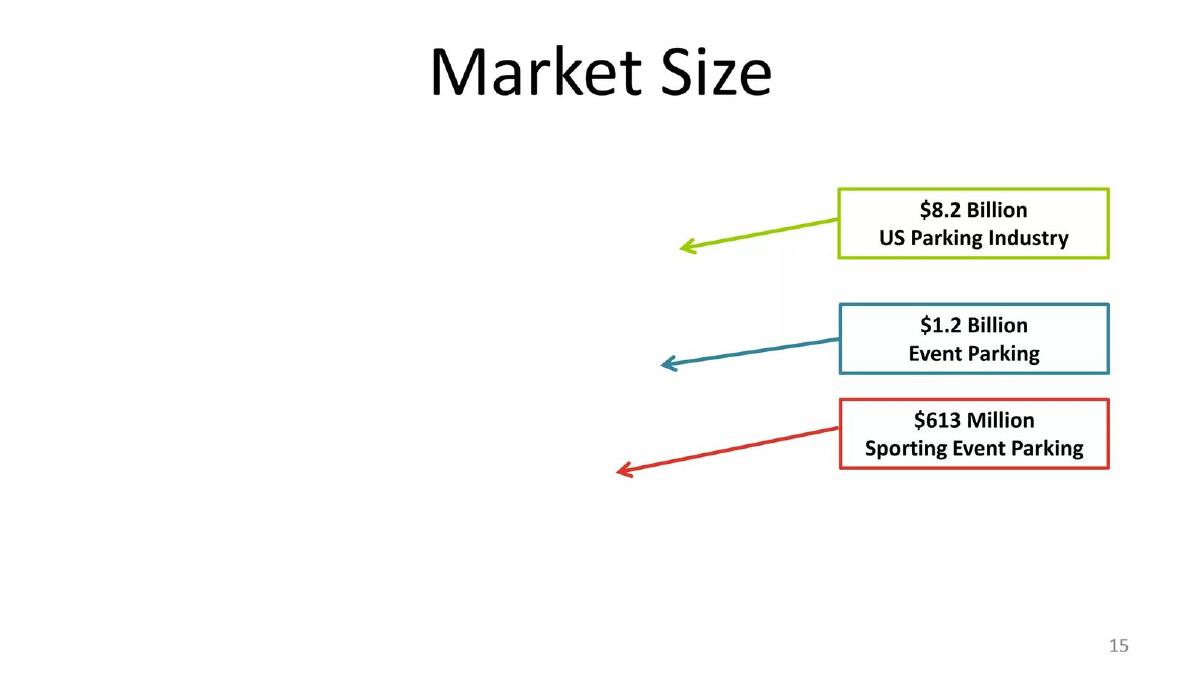
- Xoom Park identifies the total US parking industry at $8.2 billion, narrowing their serviceable market to $613 million for sporting events (Slide 15).
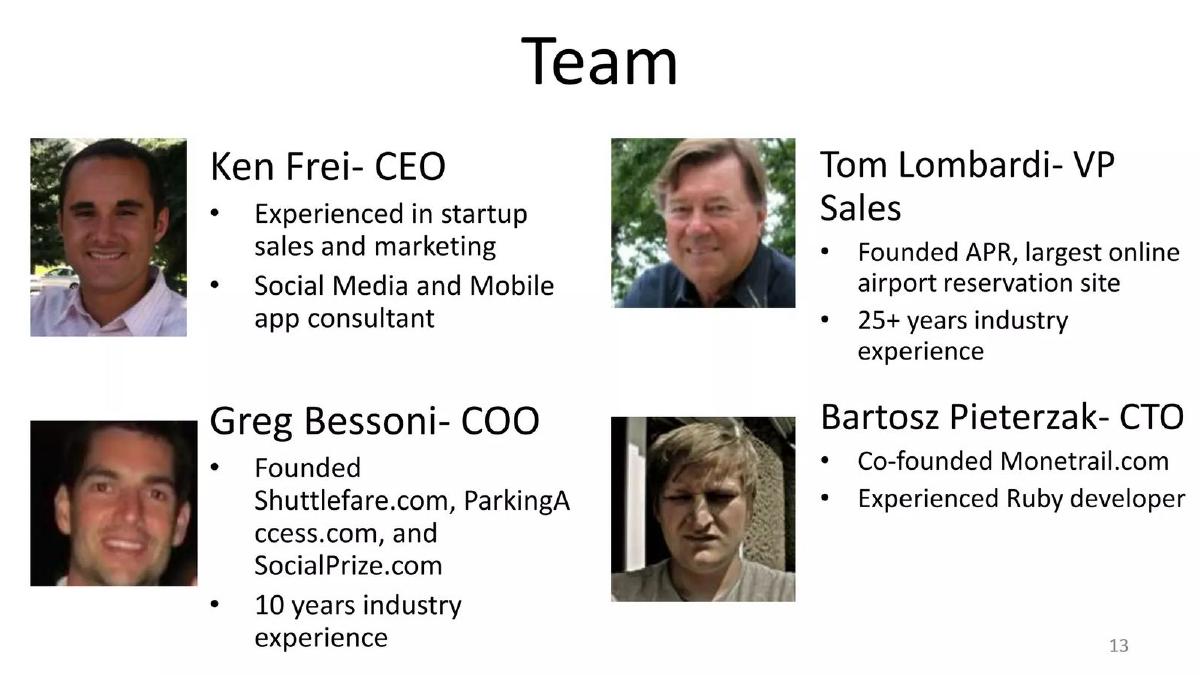
- The team possesses significant industry experience; COO Greg Bessoni previously founded Shuttlefare.com and ParkingAccess.com (Slide 13).
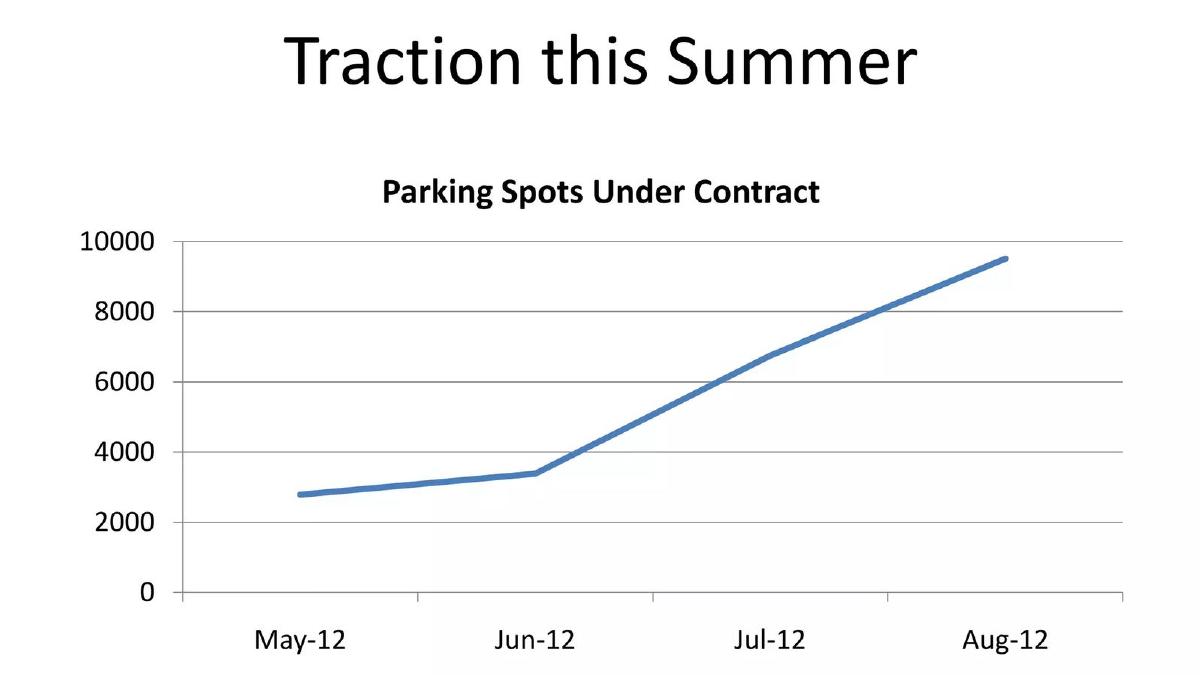
- Projected growth is highly ambitious, aiming to scale from near-zero to over 300,000 parking spots under contract between May 2012 and September 2013 (Slide 6).
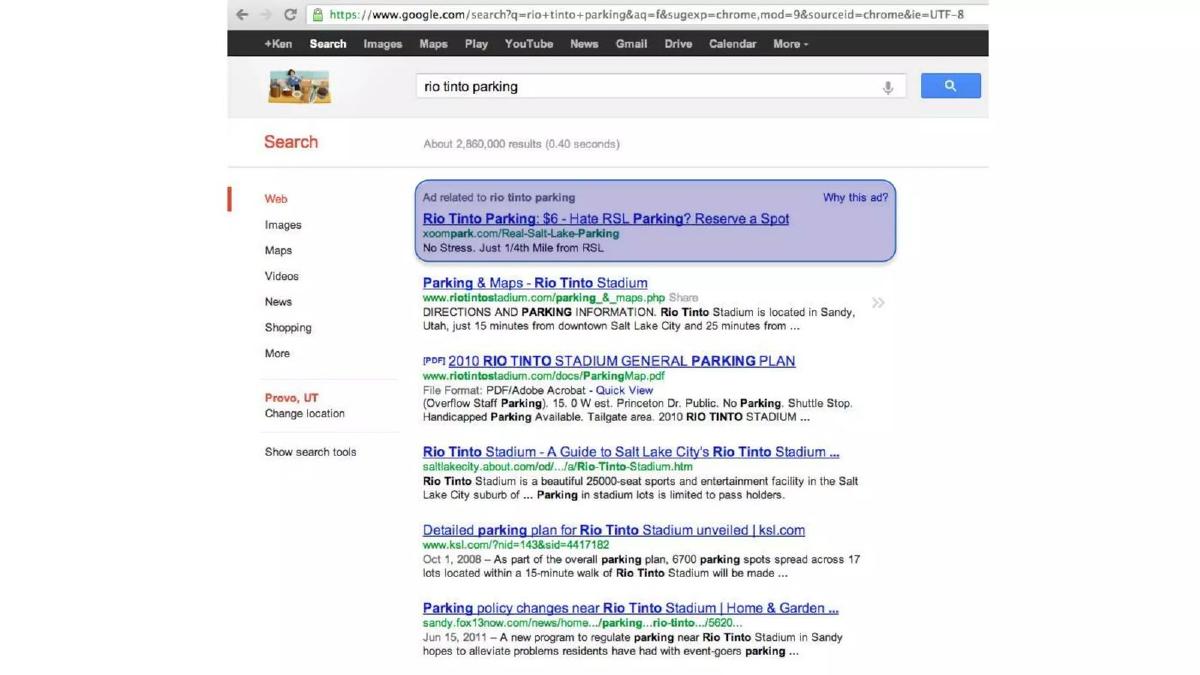
- The customer acquisition strategy relies on hyper-local search intent, demonstrated by a Google Ad targeting 'rio tinto parking' (Slide 7).
- Scaling is envisioned through partnerships with ticketing platforms, represented visually by Boston Red Sox tickets (Slide 9).
- The use of funds is split simply: $200,000 for Customer Acquisition & Sales and $100,000 for Scaling Infrastructure (Slide 17).
- The deck lacks a detailed competitor analysis slide, focusing instead on their own traction and market opportunity.
Slide-by-Slide Analysis
Slide 1: Title Slide
The deck opens with the Xoom Park logo and contact information for CEO Ken Frei. It includes a phone number and a professional email address. The branding is clean, using a multi-colored 'X' icon that suggests intersection or location, fitting for a parking utility.
Slide 3: The Visual Problem
This slide contains no text, only a high-angle photograph of a massive, densely packed parking lot. This is a classic 'emotional hook' slide intended to remind the audience of the frustration associated with stadium or event parking. It sets the stage for a solution that promises order in this chaos.
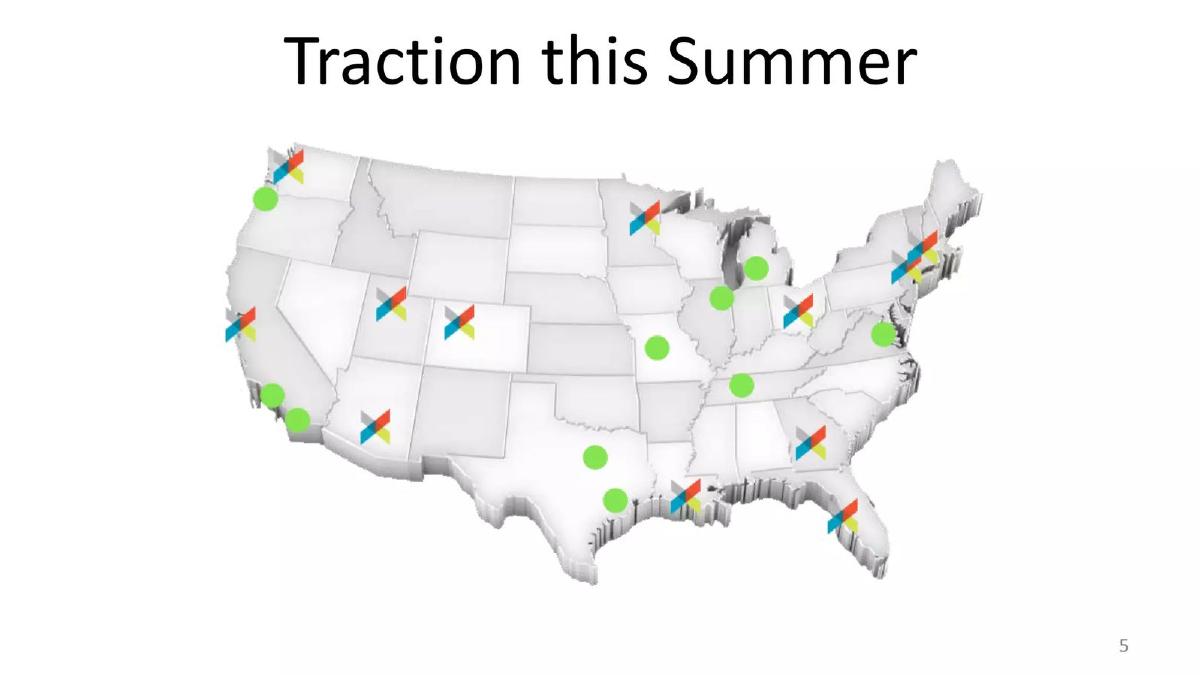
Slide 5: Traction this Summer (Map)
A 3D map of the United States features two types of markers: the Xoom Park logo and green circles. While the legend is missing, the distribution suggests active locations or 'spots under contract' across major metropolitan areas, including the West Coast, Midwest, and Northeast. This indicates the business is not merely a local pilot but has national aspirations from the outset.
Slide 6: Projected Inventory Growth
Titled 'Traction this Summer,' this slide shows a 'Year 1 Projected Parking Spots Under Contract' graph. The curve is exponential, starting at near-zero in May 2012 and projected to reach 325,000 spots by September 2013. It is important to note these are projected figures, not historical data, which places a heavy burden on the 'Use of Funds' to prove such growth is achievable.
Slide 7: Customer Acquisition Proof of Concept
This slide shows a screenshot of a Google search for 'rio tinto parking.' The top sponsored result is for xoompark.com, featuring the copy: '$6 - Hate RSL Parking? Reserve a Spot. No Stress. Just 1/4th Mile from RSL.' This is a vital slide because it demonstrates a clear, repeatable customer acquisition cost (CAC) model. It shows they know exactly where their customers are looking (Google) and what their pain points are (price and stress).
Slide 9: Scaling Strategy
Under the question 'How do we scale?', the slide shows a fan of Boston Red Sox tickets for Fenway Park. This implies a B2B2C strategy where Xoom Park intends to integrate their parking reservations directly into the ticket-buying flow of major sports franchises or platforms like Ticketmaster and StubHub.
Slide 13: The Team
This is arguably the strongest slide in the deck. Ken Frei (CEO) brings sales and mobile experience. Greg Bessoni (COO) is the domain expert, having founded ParkingAccess.com and Shuttlefare.com with 10 years of industry experience. Tom Lombardi (VP Sales) adds another 25 years of experience and a successful exit/founding of an airport reservation site. Bartosz Pieterzak (CTO) provides the technical execution. This team composition significantly de-risks the investment by showing they have 'done this before' in adjacent parking verticals.
Slide 15: Market Size
The market is broken down into three tiers: the $8.2 Billion US Parking Industry (TAM), the $1.2 Billion Event Parking (SAM), and the $613 Million Sporting Event Parking (SOM). By focusing on the smallest, most specific number, the founders demonstrate a realistic understanding of their immediate entry point rather than claiming they will capture the entire $8 billion market on day one.
Slide 17: The Deal
The final slide outlines the 'ask.' They are seeking $300,000 in equity financing. Crucially, they state that $215,000 is 'already committed,' which creates a sense of urgency and social proof for remaining investors. The pie chart for 'Use of Funds' shows a 2:1 split between 'Customer Acquisition & Sales' ($200,000) and 'Scaling Infrastructure' ($100,000), indicating a growth-heavy deployment of capital.
What Works Well
Specific Targeting: By focusing on 'Sporting Event Parking' ($613M) rather than just 'Parking,' the deck feels focused. The Google Ad example on Slide 7 proves they understand the 'intent' phase of their customer's journey.
Domain Expertise: The team slide is excellent. Investors in seed rounds buy teams, and this team has a collective 35+ years of experience specifically in parking and travel reservations. The mention of previously founded companies like ParkingAccess.com gives the founders immediate credibility.
Momentum: Stating that 71% of the round ($215k of $300k) is already committed is a powerful closing tactic. It suggests that the 'train is leaving the station,' which is often the final nudge a hesitant angel investor needs.
What Is Missing
Unit Economics: While we see the cost of a parking spot in the ad ($6), there is no mention of the take-rate, the cost per click (CPC) for the ads, or the lifetime value (LTV) of a user. Without these, the projected growth on Slide 6 is purely speculative.
Competitive Landscape: The deck does not address incumbents or other startups in the space (like ParkWhiz or SpotHero, which were active around this time). Investors would want to know how Xoom Park's technology or inventory access differs from existing players.
Product Walkthrough: There are no screenshots of the actual mobile app or booking interface. We see the 'ad' and the 'result' (a parking lot), but the 'how' (the user experience) is left to the imagination.
Founder Takeaways
Show, Don't Just Tell: Instead of saying 'we have a marketing plan,' Xoom Park showed a live Google Ad. This is much more convincing to an investor because it proves the founders have already tested the channel. · Niche Down to Scale Up: By identifying sporting events as their primary target, they make their $300k ask seem sufficient. If they were trying to take on all parking everywhere, $300k would look like a drop in the bucket. · Leverage Social Proof: If you have money committed, put it on the slide. It changes the conversation from 'Should I invest?' to 'Can I get into this round before it closes?' · Highlight Relevant Failures or Successes: The COO and VP of Sales listing their previous companies in the same industry is the strongest part of the pitch. If you have domain expertise, make it the centerpiece of your deck.
Frequently asked questions
- What is the specific problem Xoom Park is solving?
- While not explicitly stated in a 'Problem' slide in this selection, the visual of a congested parking lot (Slide 3) and a Google Ad promising 'No Stress' and 'Reserve a Spot' (Slide 7) implies they are solving the difficulty and uncertainty of finding parking at high-traffic events like sporting matches.
- How does Xoom Park plan to acquire customers?
- The deck highlights a two-pronged approach. First, direct-to-consumer via search engine marketing, as shown by their ad for Rio Tinto Stadium parking (Slide 7). Second, they plan to scale by integrating with event ticketing, suggested by the 'How do we scale?' slide featuring Red Sox tickets (Slide 9).
- What is the background of the leadership team?
- The team is industry-heavy. CEO Ken Frei has a background in startup sales and mobile consulting. COO Greg Bessoni is a serial parking entrepreneur (Shuttlefare.com, ParkingAccess.com). VP of Sales Tom Lombardi founded APR, an airport reservation site, and CTO Bartosz Pieterzak co-founded Monetrail.com (Slide 13).
- What are the financial requirements and current status of the raise?
- Xoom Park is raising a $300,000 seed round. The deck notes that $215,000 of this has already been committed, leaving a $85,000 gap for new investors. Two-thirds of the capital is earmarked for sales and marketing (Slide 17).
- How large is the market opportunity according to the founders?
- They use a top-down approach: the total U.S. parking market is $8.2 billion. They focus on the $1.2 billion event parking segment, specifically targeting the $613 million sporting event parking niche (Slide 15).