Kamino’s 9-slide pre-seed deck is a textbook example of how to raise significant capital on the strength of founder-market fit. By positioning themselves as the 'Razorpay of LatAm' or the 'Brex of Brazil,' the founders identified a specific, high-value segment: the 3 million high-growth businesses in Latin America that are underserved by an 'analog banking oligopoly.' The deck leans heavily on the team’s pedigree—featuring founders who previously scaled companies like Ontruck and Guiabolso to over $80M in funding. While the deck lacks a product demo, detailed roadmap, or specific use of funds…
Key takeaways
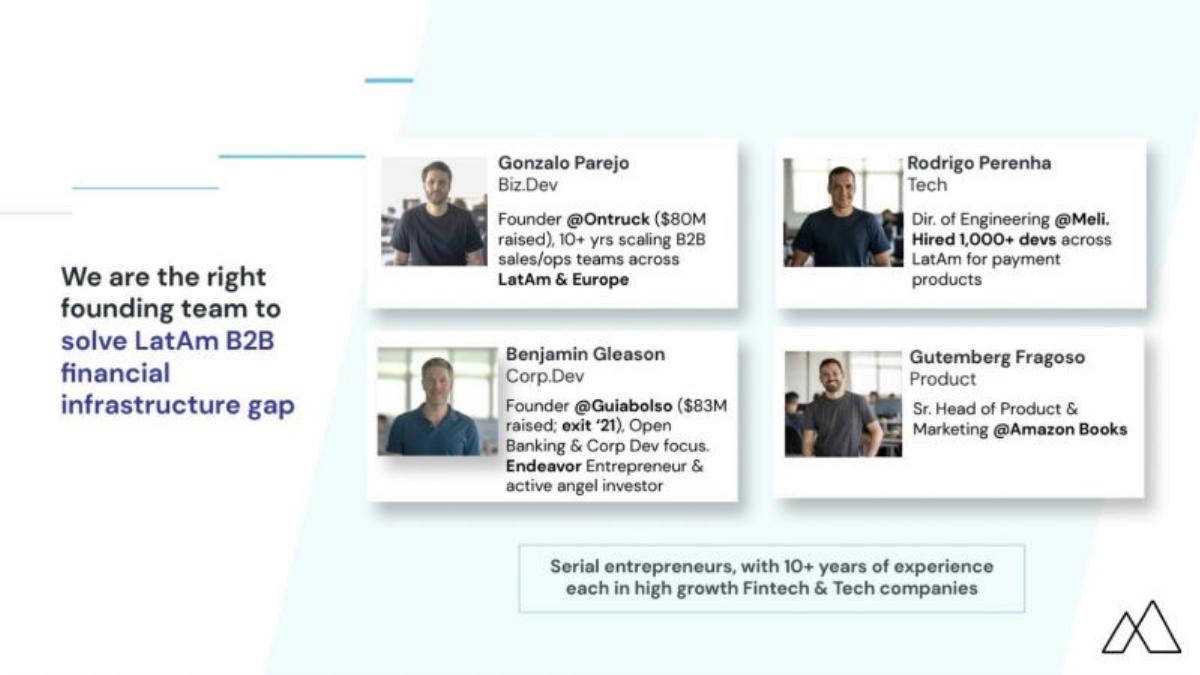
- The team slide (Slide 2) is positioned immediately after the title, highlighting two founders who previously raised a combined $163M for prior ventures.
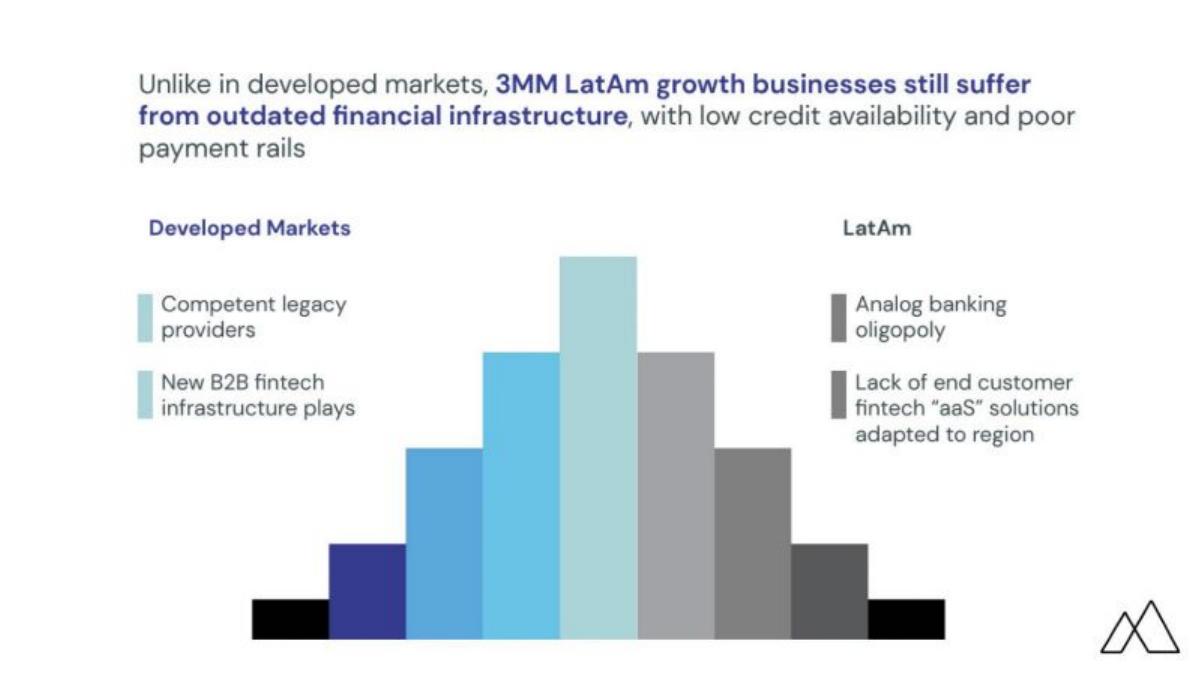
- Kamino identifies a specific total addressable market (TAM) of 3 million high-growth businesses in Latin America (Slide 3).
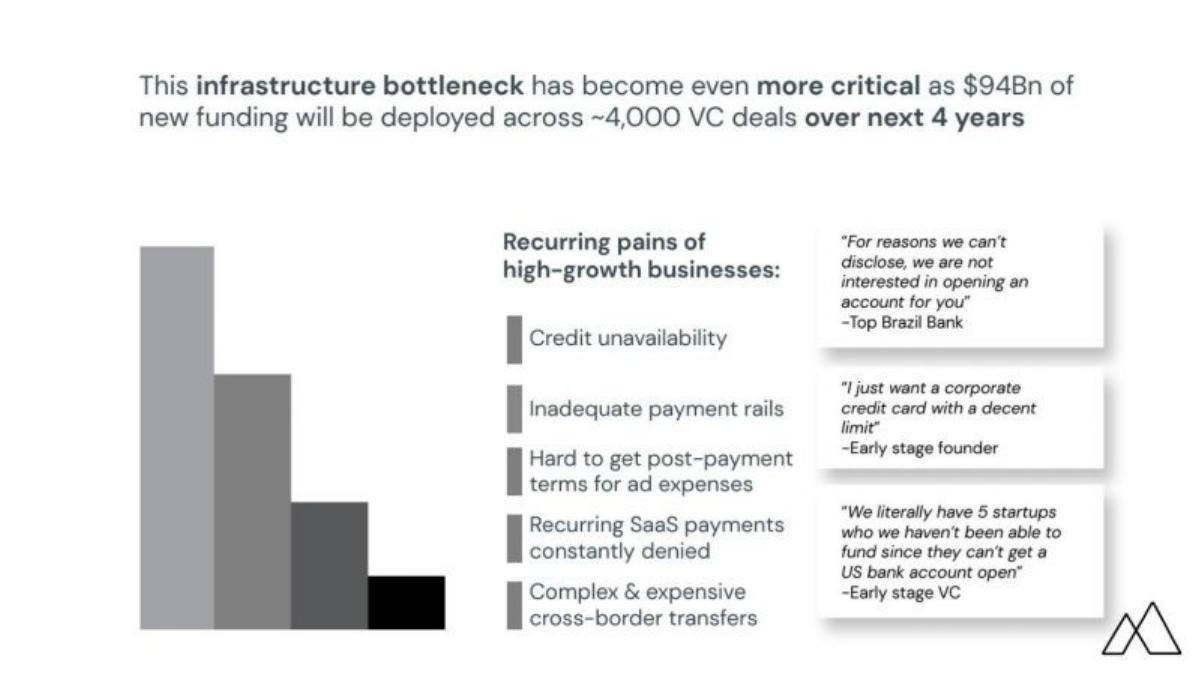
- The deck quantifies a massive infrastructure bottleneck, citing $94Bn of new funding to be deployed across 4,000 VC deals in the next 4 years (Slide 4).
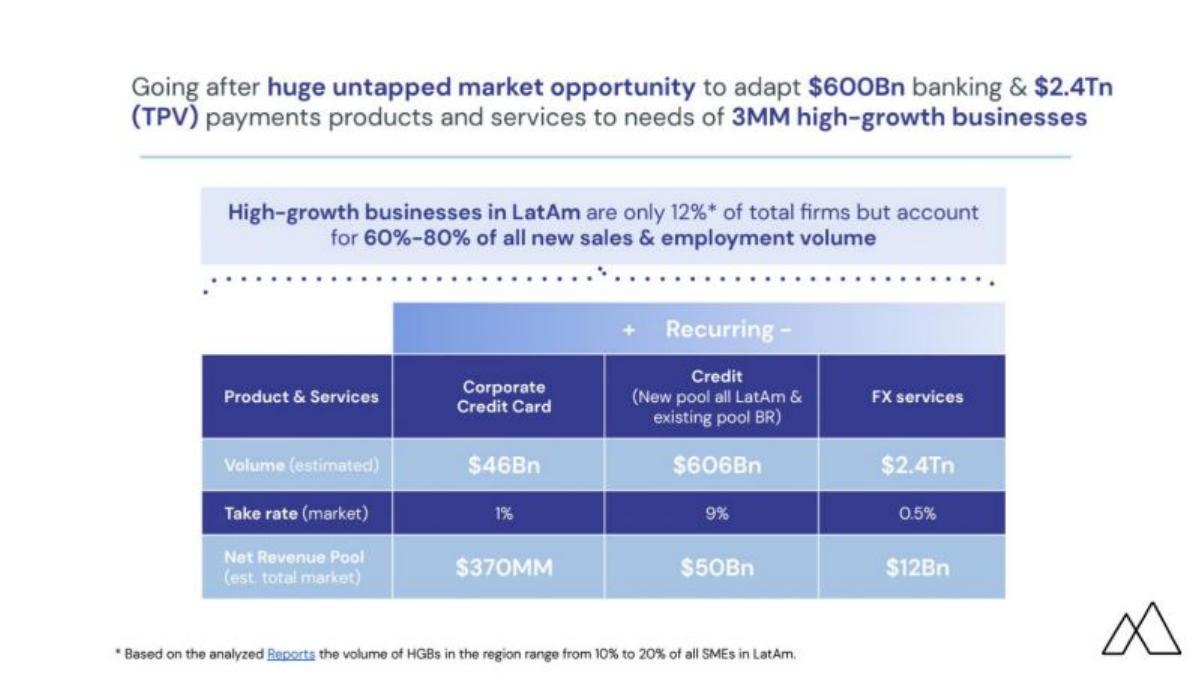
- Market opportunity is broken down into three specific revenue pools: Corporate Credit Cards ($370MM), Credit ($50Bn), and FX services ($12Bn) (Slide 6).
- High-growth businesses are identified as only 12% of total firms but accounting for 60%-80% of all new sales and employment volume (Slide 6).
- The strategy uses global benchmarks like Mercury, Brex, and Razorpay to validate the 'End-to-End Financial Infrastructure' model (Slide 7).
- The deck completely omits a product UI/UX walkthrough, a financial forecast, and a specific 'Ask' or use of funds slide.
- The problem is framed as an 'analog banking oligopoly' that denies accounts and credit to startups (Slide 3 and 4).
The Power of Pedigree: A Pre-Seed Teardown
Kamino’s 2022 pitch deck is a masterclass in narrative-driven fundraising. At the pre-seed stage, investors are primarily betting on two things: the size of the problem and the ability of the team to solve it. Kamino, a Brazilian fintech startup, raised $6.1 million using a lean 9-slide deck that almost entirely ignores product screenshots in favor of market dynamics and founder history. This teardown explores how they framed a 'Brex for LatAm' story that resonated with investors.
Slide 1: The Vision Statement
The title slide establishes Kamino as "The End-to-End Financial Hub for High Growth LatAm Businesses." The imagery of hikers in a mountain range suggests a journey or a 'path' (fitting for the name Kamino, a play on 'camino' or path). The sub-headline is critical: it doesn't just say 'businesses,' it specifies 'High Growth,' signaling a focus on the venture-backed ecosystem rather than traditional SMEs.
Slide 2: The Team (The 'Why Us' Slide)
Unusually, Kamino places the team slide second. This is a strategic move. When your founding team includes Gonzalo Parejo (Founder of Ontruck, $80M raised) and Benjamin Gleason (Founder of Guiabolso, $83M raised, exited in '21), you lead with that. The slide highlights 10+ years of experience for each member and specific achievements, such as Rodrigo Perenha hiring 1,000+ devs at Meli. This slide effectively de-risks the execution for investors before the problem is even fully articulated.
Slide 3: The LatAm Infrastructure Gap
Slide 3 uses a bar chart comparison to contrast 'Developed Markets' with 'LatAm.' It identifies a market of 3 million high-growth businesses suffering from 'outdated financial infrastructure.' The key takeaway here is the 'analog banking oligopoly.' By framing the existing banks as an oligopoly, Kamino positions itself as the necessary disruptor in a region where credit availability is low and payment rails are poor.
Slide 4: The $94Bn Bottleneck
This slide adds urgency. It cites that $94Bn of new funding will be deployed across ~4,000 VC deals over the next 4 years. It then uses 'voice of the customer' quotes to humanize the data. One quote from a 'Top Brazil Bank' says, "we are not interested in opening an account for you," while an 'Early stage VC' mentions five startups they couldn't fund because they couldn't open a bank account. This creates a visceral sense of a market that is literally leaving money on the table.
Slide 5: The Solution Hub
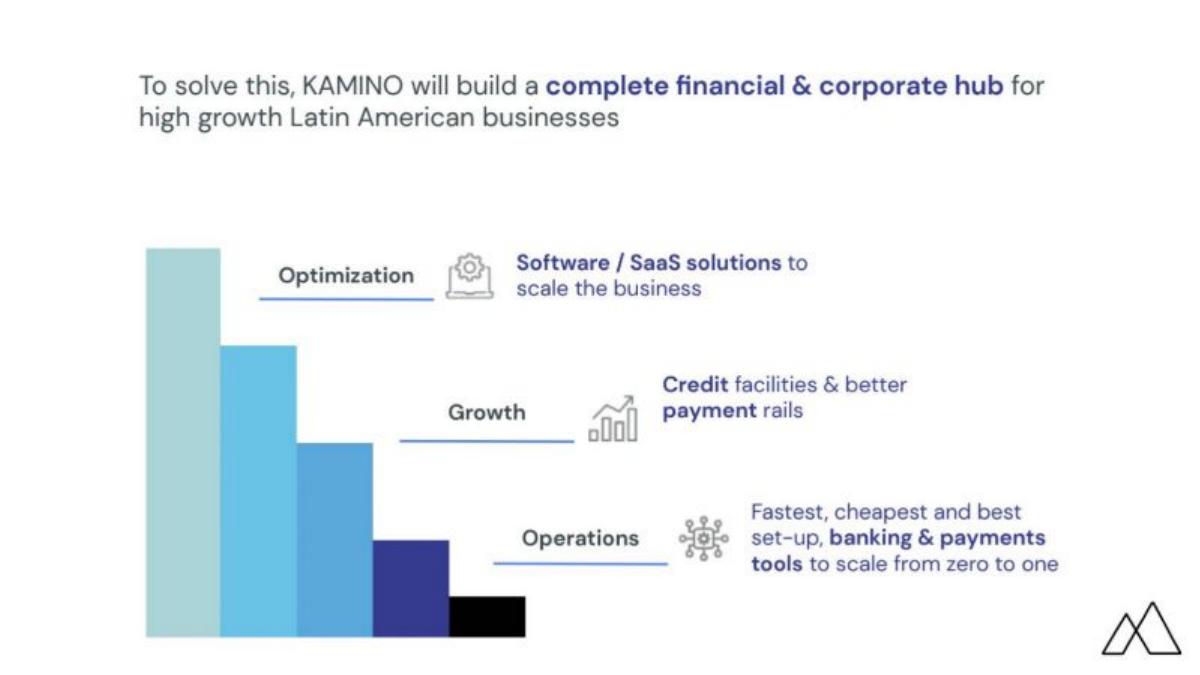
Slide 5 introduces the Kamino solution as a three-tiered stack: Operations (banking and payments), Growth (credit facilities), and Optimization (SaaS solutions). It uses a staircase graphic to show how Kamino scales with a business from 'zero to one' and beyond. Note the lack of product features; the focus is entirely on the functional categories of the business model.
Slide 6: The $2.4Trillion Opportunity
This is the 'money slide.' It breaks down the Net Revenue Pool into three buckets: Corporate Credit Cards ($370MM), Credit ($50Bn), and FX services ($12Bn). It provides specific take rates (1% for cards, 9% for credit, 0.5% for FX). By showing that high-growth businesses account for 60-80% of new sales and employment despite being only 12% of firms, Kamino justifies its narrow but deep focus on this specific segment.
Slide 7: Global Benchmarks
To help investors understand the potential outcome, Slide 7 maps Kamino against global fintech unicorns. It places Mercury, Rho, and Brex in the 'Developed Economies' category and Razorpay (India) alongside Kamino in the 'Emerging Economies' category. This 'Razorpay of LatAm' comparison is a powerful shorthand for a multi-product financial infrastructure play that has already reached decacorn status elsewhere.
Slide 8 & 9: Closing and Branding
The deck ends with a simple logo slide and a placeholder. Notably, there is no 'Ask' slide in this version of the deck. There is no mention of the $6.1M target, the valuation, or the specific milestones they intend to hit with the capital. This suggests the deck was used as a high-level teaser or that the 'Ask' was handled in a separate document or during the verbal pitch.
What Works in This Deck
Founder-Market Fit: The team slide is the strongest part of the deck. It doesn't just list names; it lists 'dollars raised' and 'exits.' For a pre-seed round, this is the ultimate social proof. It tells the investor that these founders already know how to navigate the venture lifecycle.
Clear Market Segmentation: Kamino doesn't try to be everything to everyone. They specifically target the 'high-growth' segment. This allows them to use the VC funding boom (Slide 4) as a tailwind for their own growth.
Revenue Transparency: Slide 6 is exceptionally clear about how the company makes money. Many fintech decks hide behind vague 'transaction fees.' Kamino explicitly states their expected take rates for three different product lines, which helps investors model the upside.
What Is Missing
Product UI/UX: There isn't a single screenshot of the app or the dashboard. While the founders' reputations might carry the day, a visual representation of the 'End-to-End Hub' would have made the solution feel more tangible.
The 'Ask': As mentioned, the lack of a specific funding request or use-of-funds breakdown is a major omission for a standard pitch deck. Investors want to know if the $6.1M is for hiring, regulatory licensing, or credit capital.
Competitive Landscape: While they benchmark against global companies, they don't mention local competitors. In 2022, companies like Cora or even Nubank's business accounts were active in Brazil. Addressing why Kamino is different from these local players would have strengthened the 'White Space' argument.
What Founders Should Copy
The 'Problem Urgency' Slide: Slide 4 is a great template. Combine a macro stat ($94Bn in VC funding) with micro pain points (customer quotes). It proves that the problem isn't just theoretical; it's actively blocking economic activity.
The Benchmark Strategy: If you are building in an emerging market, find your 'twin' in a developed market or another emerging market (like India). It helps investors visualize the 'ceiling' for your valuation based on existing unicorns.
The Pedigree-First Approach: If your team has significant wins, don't bury them at the end of the deck. Move the team slide to the front to set the tone for the rest of the presentation. It changes how investors perceive every subsequent slide.
Frequently asked questions
- How did Kamino raise $6.1M with only 9 slides?
- The raise was driven primarily by founder pedigree. Slide 2 shows a team of serial entrepreneurs with over 10 years of experience each in high-growth fintech. When founders have already raised $80M+ and exited companies (like Guiabolso), investors often require less 'proof' of product and more 'proof' of vision and market size, both of which this deck delivers effectively.
- What is the primary business model described in the deck?
- Kamino operates as a 'Financial & Corporate Hub.' According to Slide 5 and 6, they generate revenue through a multi-product stack: corporate credit cards (1% take rate), credit facilities (9% take rate), and FX services (0.5% take rate). They position themselves as the 'operations' layer for startups, handling banking, payments, and credit.
- Who is the target customer for Kamino?
- The deck specifically targets 'High Growth LatAm Businesses.' Slide 6 notes that while these represent only 12% of total firms, they drive the majority of economic activity. Slide 4 uses quotes from early-stage founders and VCs to illustrate that these companies are currently being rejected by traditional 'Top Brazil Banks.'
- Does the deck show any actual product features?
- No. The deck is entirely conceptual and strategic. Slide 5 outlines the categories of the solution—Software/SaaS, Credit, and Operations—but does not show a single screenshot of the Kamino platform. This is common in pre-seed decks for highly experienced teams where the 'what' is understood and the 'who' is the selling point.
- What is the 'White Space' mentioned in the deck?
- Slide 7 defines the 'white space' as the lack of end-to-end financial infrastructure in emerging economies. It contrasts 'Verticalized Banking' (Mercury, Rho) and 'Payments' (Brex) in developed markets with the need for a single, comprehensive hub in LatAm, similar to how Razorpay operates in India.