Rundit’s 12-slide seed deck is a masterclass in ecosystem positioning. By identifying a specific friction point—the manual, PDF-based reporting process between startups, General Partners (GPs), and Limited Partners (LPs)—Rundit proposes a transition to real-time data dashboards. The deck is notably light on traditional metrics like revenue or user count, instead focusing heavily on the mechanics of their 'node-to-node' viral growth strategy. They argue that by winning over investors first (the 'stick tactic'), they can force portfolio-wide adoption. While the deck lacks a team slide and a spe…
Key takeaways
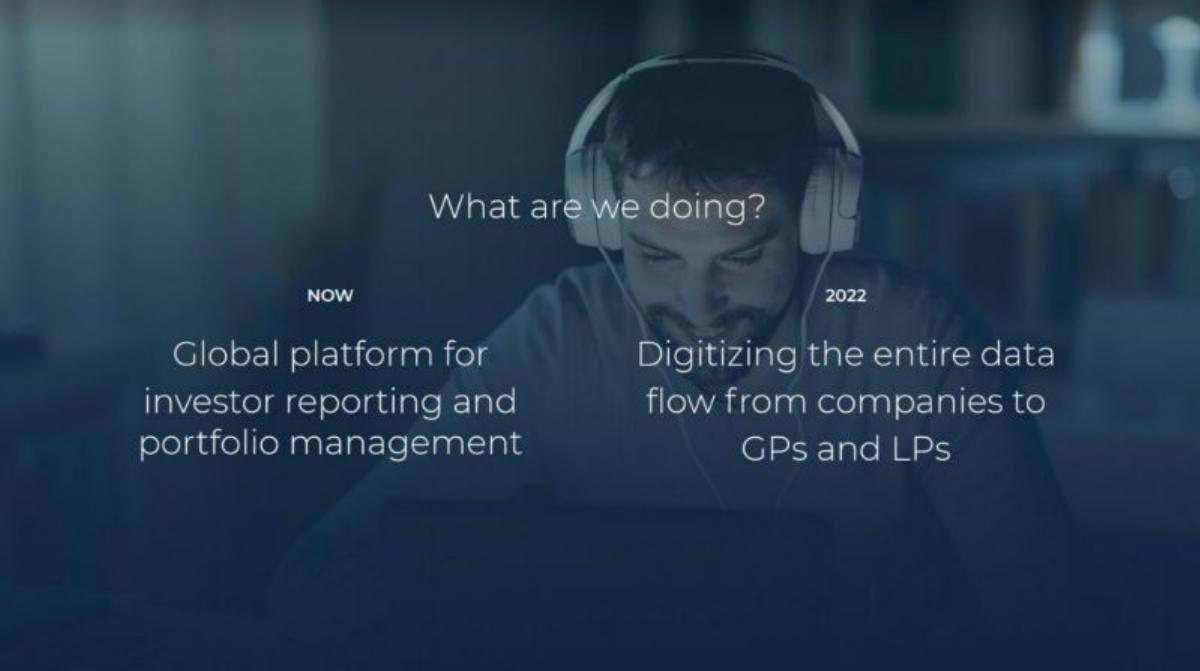
- The company aims to digitize the entire data flow from companies to GPs and LPs by 2022 (Slide 2).
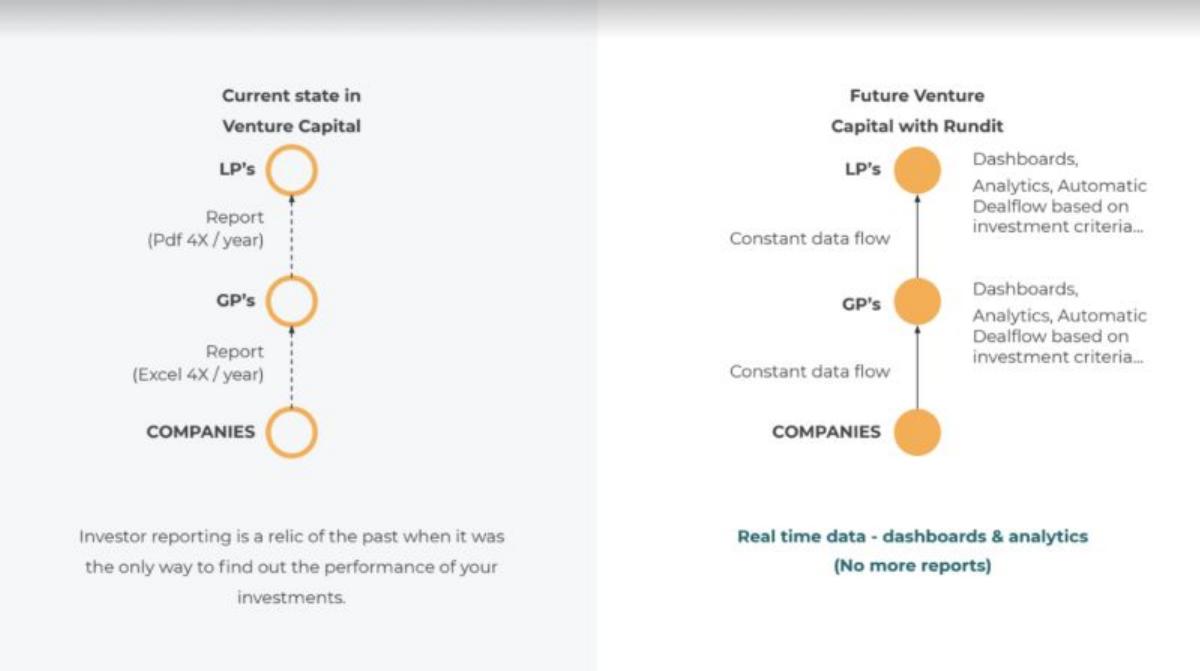
- Rundit identifies the current state of reporting as a 'relic of the past' relying on PDFs and Excel 4X per year (Slide 3).
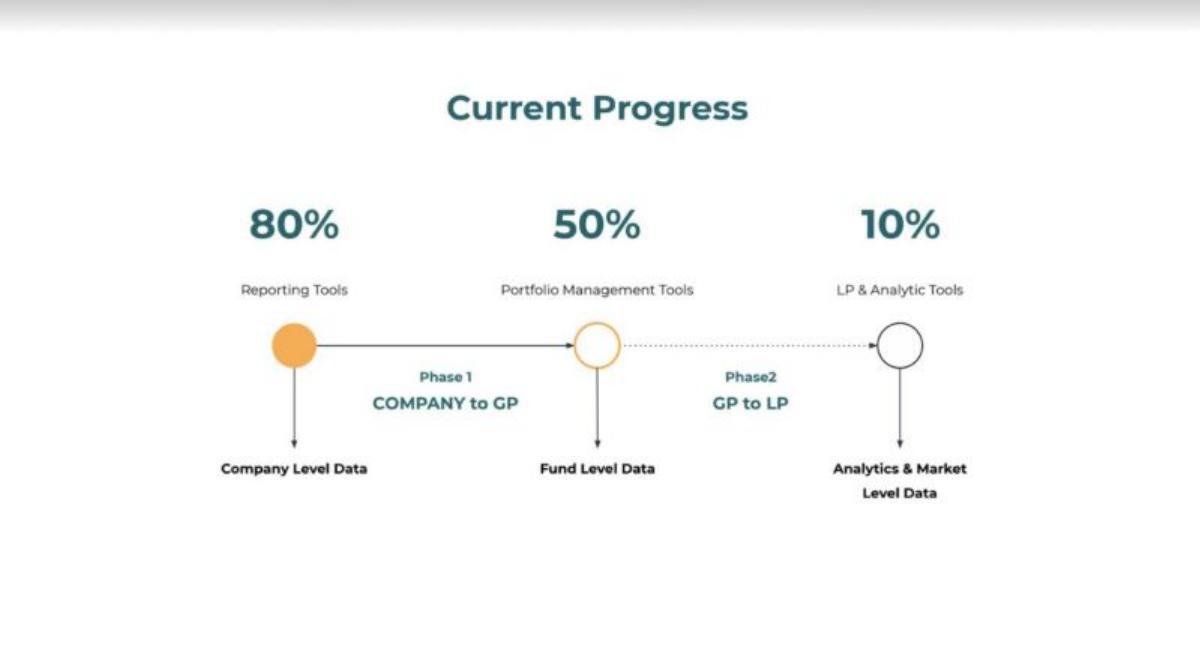
- The product roadmap is divided into Phase 1 (Company to GP) and Phase 2 (GP to LP), with 80% of reporting tools already complete (Slide 5).
- A 'node-to-node' strategy is the core of their go-to-market, where one VC can bring 40 companies and 10 other investors to the platform (Slide 8, 9).
- The deck explicitly uses a 'stick tactic' for investors, providing enough value so they force their portfolio companies to use the tool (Slide 10).
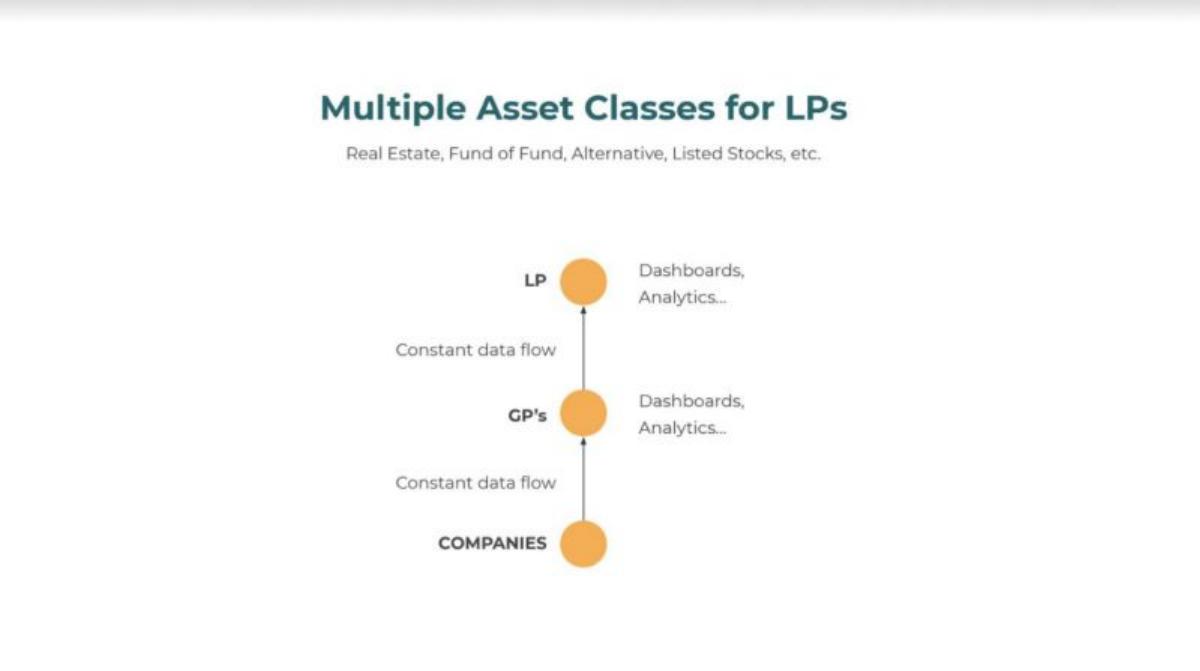
- Rundit targets an expansion into multiple asset classes including Real Estate, Fund of Funds, and Listed Stocks (Slide 4).
- The deck identifies Investran ($9B exit) and E-Front ($1.5B exit) as Phase 2 competitors and potential exit opportunities (Slide 11).
- There is no team slide, no financial history, and no specific 'ask' or use of funds mentioned in the 12 slides.
The Rundit Pitch Deck: A Strategic Deep Dive
Rundit’s 2021 seed deck is a lean, 12-slide presentation that focuses almost entirely on product-market fit and ecosystem dynamics. In an era where many decks are bloated with team bios and vague market size graphs, Rundit takes a different path, spending the majority of its real estate explaining how the product will spread through the venture capital industry. According to catalogue facts, this deck helped secure a $1M seed round.
Slide 1: Title and Visual Identity
The deck opens with a clean, minimalist title slide featuring the Rundit logo and a laptop mockup showing the platform interface. The text 'RUNDIT.COM' is prominent, and a 'Confidential Q2 2020' watermark appears in the corner, suggesting this version of the deck was in circulation for some time before the 2021 funding was finalized.
Slide 2: The Mission Statement
Slide 2 asks, 'What are we doing?' and provides a two-part answer. 'Now,' they are a global platform for investor reporting and portfolio management. By '2022,' the goal is 'Digitizing the entire data flow from companies to GPs and LPs.' This sets a clear trajectory from a simple reporting tool to a comprehensive data infrastructure play.
Slide 3: The Current State vs. The Future
This slide uses a side-by-side comparison to illustrate the 'Current state in Venture Capital' versus the 'Future Venture Capital with Rundit.' It identifies the current reliance on 'Pdf 4X / year' and 'Excel 4X / year' as a 'relic of the past.' The Rundit solution promises 'Constant data flow' and 'Real time data - dashboards & analytics (No more reports).' This is a classic 'Old Way vs. New Way' slide that clearly defines the value proposition.
Slide 4: Expansion into Multiple Asset Classes
Rundit signals its ambition to move beyond just startups. Slide 4, titled 'Multiple Asset Classes for LPs,' lists Real Estate, Fund of Fund, Alternative, and Listed Stocks. By showing the same 'Constant data flow' diagram applied to these sectors, they demonstrate that their technology is a horizontal solution for the broader private equity and investment world.
Slide 5: Current Progress and Product Roadmap
Slide 5 provides a rare glimpse into their development status. They claim to be 80% complete with 'Reporting Tools' (Company to GP), 50% complete with 'Portfolio Management Tools' (Fund Level Data), and 10% complete with 'LP & Analytic Tools' (Analytics & Market Level Data). This transparency helps investors understand exactly what they are funding: the bridge between Phase 1 and Phase 2.
Slide 6: The Feature Set
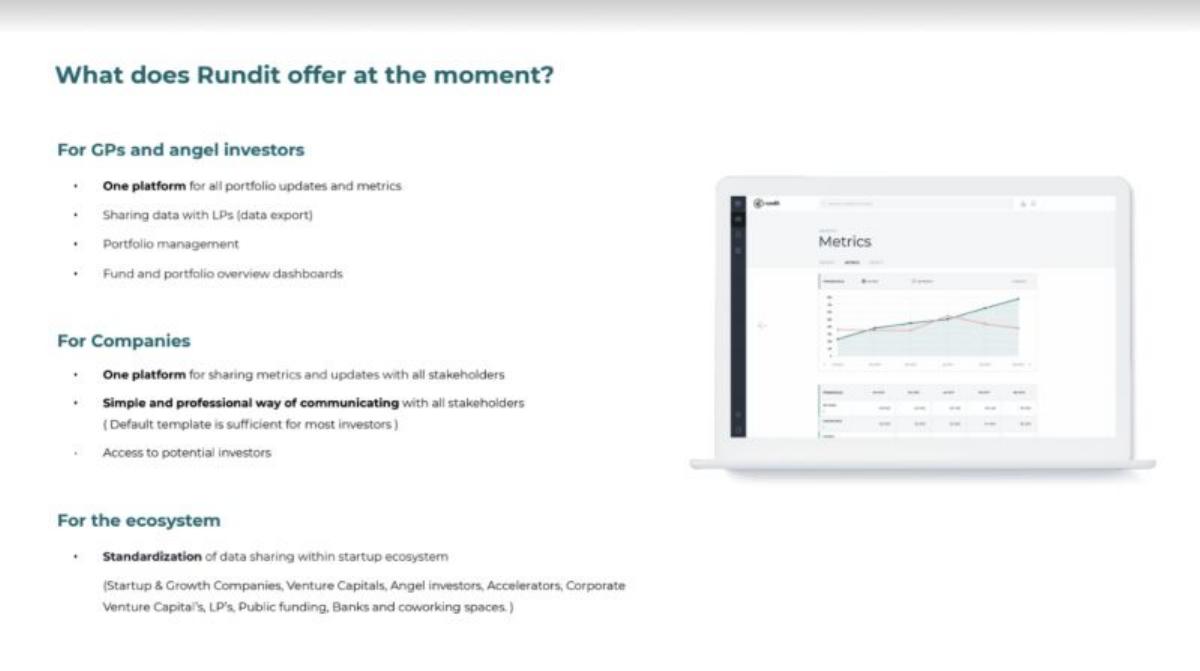
This slide breaks down the offering by user type. For GPs and angel investors, it offers 'One platform for all portfolio updates' and 'Fund and portfolio overview dashboards.' For companies, it provides a 'Simple and professional way of communicating' and 'Access to potential investors.' For the ecosystem, it promises 'Standardization of data sharing.'
Slide 7: Ecosystem Positioning and Strategy
Slide 7 is one of the most complex in the deck. It maps out 'Rundit strategy' against a timeline of funding rounds (Pre-seed to B+ Round). It explicitly states: 'Rundit wants to start with small VCs (Pre-seed, seed and A round) since their needs are easier to achieve.' This shows a pragmatic, bottom-up approach to market entry, targeting the high-volume, early-stage market before moving toward PE and Banks.
Slide 8: The Viral Go-to-Market Strategy
Slide 8 introduces the 'node-to-node strategy.' It features a network graph showing connections between 'Reaktor Ventures,' 'Inventure,' and various portfolio companies. The text explains that 'Investor invites a portfolio company who invites their other users,' resulting in 'viral growth.' This is the core of the Rundit investment thesis: the product sells itself through the existing web of VC relationships.
Slide 9: Quantifying Viral Growth
Following the strategy slide, Slide 9 provides a visual representation of the viral loop. It suggests that 1 VC can lead to 40 companies, which in turn can lead to 10 additional investors. This 1:40:10 ratio is a powerful visualization of the potential for exponential user acquisition without a corresponding increase in sales spend.
Slide 10: Competition and the 'Stick Tactic'
Slide 10 is refreshingly honest about competition. It splits the market into 'Company Focus' (using 'Carrot tactics') and 'Investor Focus' (using 'Stick tactics'). Rundit places itself in the latter category. They argue that because companies dislike reporting, the best way to ensure adoption is to make investors love the tool so much that they 'ask their portfolio companies to use it.' This 'stick' approach is a sophisticated take on B2B2B sales.
Slide 11: Phase 2 and Exit Opportunities
The final content slide focuses on the transition from GPs to LPs. It reiterates the 'bottom up approach' and 'virality of the platform.' Crucially, it lists 'Phase 2 Main Competitors' as 'Investran (Acquired for 9B$)' and 'E-Front (Acquired for 1.5B$).' This serves as a proxy for their potential valuation and exit strategy, showing the massive scale of the incumbents they intend to disrupt.
Slide 12: Closing
The deck ends with a promotional slide for the platform where the deck was hosted, rather than a traditional 'Contact Us' or 'The Ask' slide. This suggests the version available publicly may have had the final closing slide removed for privacy.
What Rundit Does Well
Clear Ecosystem Mapping: The deck does an excellent job of explaining the relationship between LPs, GPs, and portfolio companies. Slides 3, 7, and 8 work together to show exactly where Rundit sits in the flow of capital and data. · Viral Loop Logic: The 'node-to-node' strategy (Slide 8) is the strongest part of the pitch. It gives investors a reason to believe that the company can scale efficiently without a massive sales force. · Honest Competitive Analysis: By categorizing competitors by their 'tactics' (Slide 10), Rundit demonstrates a deep understanding of the psychological barriers to adoption in their industry. · Phased Roadmap: The distinction between Phase 1 (Company to GP) and Phase 2 (GP to LP) provides a clear narrative for how the company will grow from a seed-stage startup into a major fintech infrastructure player.
What is Missing from the Rundit Deck
The Team: There is no team slide in this 12-slide deck. For a seed round, the background of the founders is usually a primary factor in the investment decision. The omission of their experience in finance or software is a significant gap. · The Ask: The deck does not state how much money they are raising, the valuation, or how they plan to spend the funds. While the catalogue facts state they raised $1M, the deck itself is silent on the terms. · Traction Metrics: While they mention being 80% done with reporting tools, they do not list the number of active VCs, companies, or the amount of 'Assets Under Management' (AUM) currently being tracked on the platform. · Financial Projections: There are no charts showing projected revenue growth, burn rate, or unit economics. The deck is purely focused on the product and the growth strategy.
What Other Founders Should Copy
The 'Current vs. Future' Visual: Slide 3 is a perfect example of how to visualize a problem and solution without using too much text. It’s a template any SaaS founder should emulate. · The Viral Growth Visualization: Slide 9 takes a complex concept (viral coefficients) and makes it instantly understandable through simple iconography. If your product has a network effect, show it this way. · Strategic Sequencing: Slide 7 shows that the founders have thought about which segment of the market to attack first and why. Explaining that you are starting with 'Small VCs' because their needs are 'easier to achieve' shows maturity and focus. · Exit Benchmarking: By listing the acquisition prices of competitors like Investran and eFront (Slide 11), Rundit gives investors an immediate sense of the 'size of the prize' without needing a generic TAM/SAM/SOM slide.
Frequently asked questions
- What is the core problem Rundit is solving?
- Rundit addresses the inefficiency of manual investor reporting. According to Slide 3, the current state involves sending PDFs and Excel files four times a year. Rundit replaces this with a 'constant data flow' and real-time dashboards, aiming to eliminate the need for traditional reports entirely.
- How does Rundit plan to acquire customers?
- They utilize a viral 'node-to-node' strategy detailed on Slide 8. The process begins with large VCs and accelerators who invite their portfolio companies. These companies, often having multiple investors, then invite their other VCs onto the platform, creating a self-sustaining growth loop.
- Who are Rundit's primary competitors?
- The deck categorizes competitors by focus. 'Company Focus' competitors include Visible.vc and Angelloop. 'Investor Focus' competitors include Investory.io and eFront. Slide 11 specifically highlights eFront and Investran as major players in the GP-to-LP space with multi-billion dollar exits.
- What is the 'stick tactic' mentioned in the deck?
- On Slide 10, Rundit explains that companies generally dislike reporting. Instead of trying to convince companies to love the tool ('carrot tactics'), Rundit uses 'stick tactics' by giving so much value to investors that they mandate their portfolio companies use the platform to keep the investors happy.
- What asset classes does Rundit target beyond venture capital?
- While they start with VCs and startups, Slide 4 and Slide 7 show a strategy to move into Real Estate, Fund of Funds, Alternatives, and Listed Stocks. Their long-term goal is to standardize data sharing across the entire startup and investment ecosystem, including banks and public funding.