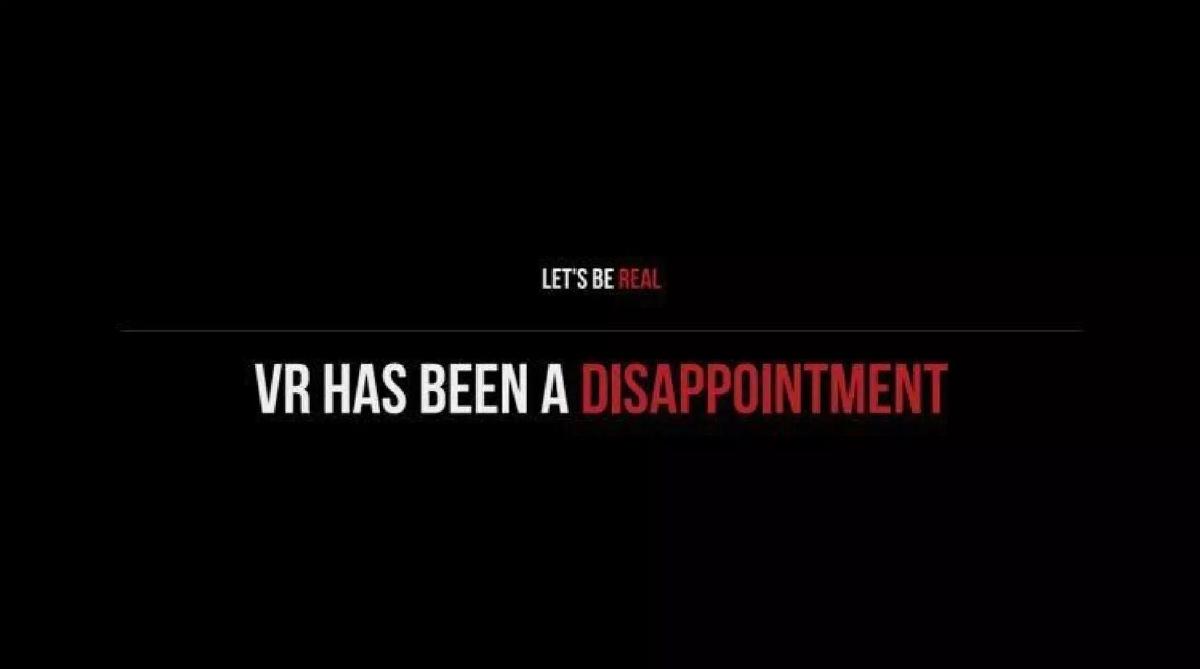
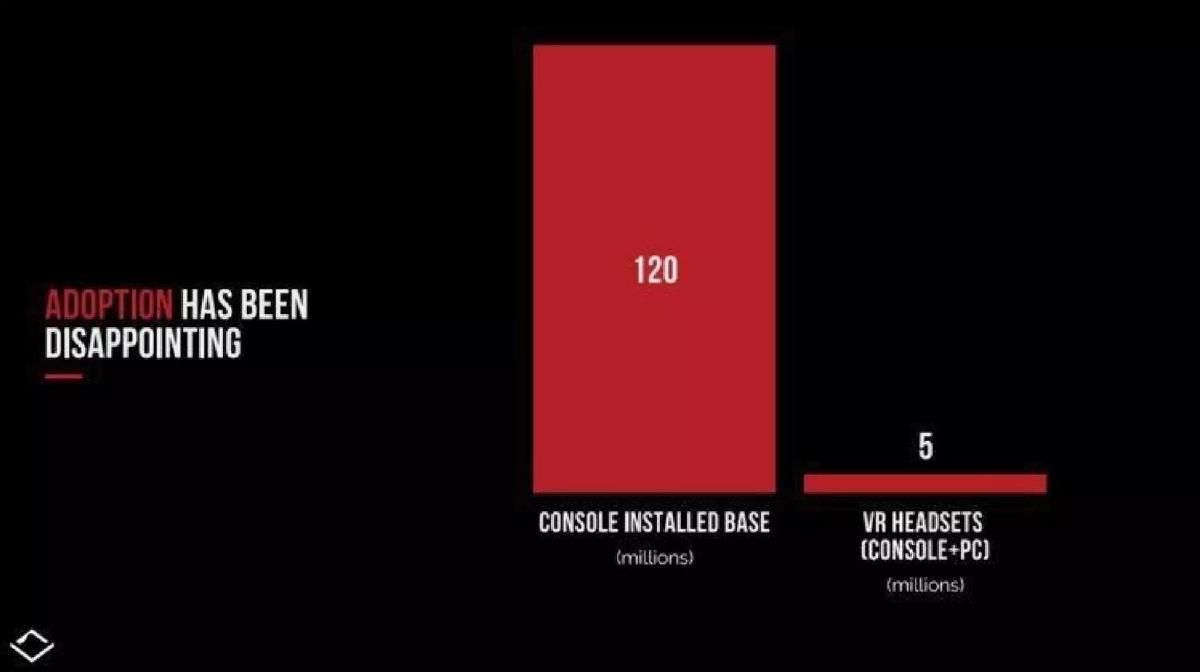
Sandbox VR's Series A deck is a masterclass in narrative positioning, framing the entire VR industry as a 'disappointment' (Slide 2) to highlight their own solution. By contrasting the 120 million console install base against a mere 5 million VR headsets (Slide 3), they establish a massive gap in the market. The deck successfully transitions from a hardware play to a retail and content play, showcasing a revenue jump from near-zero to over $150K monthly following their San Mateo opening (Slide 12). While the deck heavily redacts specific unit economics in this public version, the focus on 'so…
Key takeaways
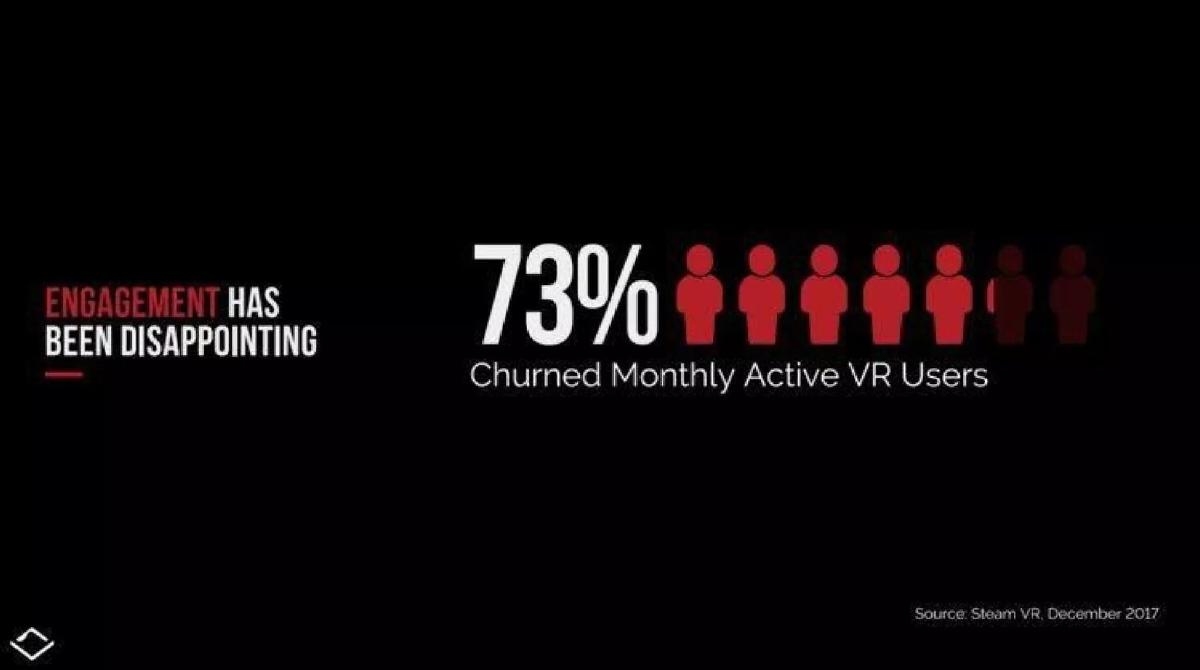
- The deck identifies a massive engagement gap, citing a 73% churn rate for monthly active VR users on Steam (Slide 4).
- It positions the product as a 'Holodeck' experience, emphasizing untethered movement and movie-quality motion capture (Slide 7).
- Revenue growth is demonstrated via a chart showing a sharp climb to $150K+ monthly revenue after the San Mateo store launch (Slide 12).
- The business model relies on a flywheel effect where strong demand enables exclusive content, which in turn builds network effects (Slide 16).
- Customer satisfaction is validated by #1 rankings on TripAdvisor for activities in Hong Kong and Singapore (Slide 11).
- The team slide highlights significant industry experience, including the Lead Designer of the Assassin's Creed franchise (Slide 22).
- The deck argues that 'Experiences are King,' showing a rising trend in consumer spend on live events since 2000 (Slide 20).
- Market positioning is defined by a 2x2 matrix placing Sandbox VR at the top-right for both 'Immersiveness' and 'Scalability' (Slide 21).
Introduction: The Holodeck Vision
The Sandbox VR Series A pitch deck, used to raise $68 million in 2019, is a compelling example of how to sell a physical retail business as a high-growth tech platform. The deck consists of 23 slides that move from a scathing critique of the current VR market to a data-backed expansion plan. By framing their product as 'The Holodeck Company,' Sandbox VR taps into a recognizable sci-fi trope to immediately communicate the level of immersion they provide.
Slides 1-4: The Industry Critique
The deck begins with a bold statement on Slide 2 : 'VR HAS BEEN A DISAPPOINTMENT.' This is a risky but effective opening. It acknowledges the elephant in the room—that VR hasn't hit the mainstream—and prepares the investor for a solution that differs from the failed status quo. Slide 3 quantifies this disappointment by comparing the 120 million console installed base to just 5 million VR headsets. Slide 4 delivers the final blow to home VR, citing Steam VR data from December 2017 showing a 73% churn rate among monthly active users. This section establishes that the problem isn't VR itself, but the home-based delivery method.
Slides 5-8: The Solution and The 'Holodeck'
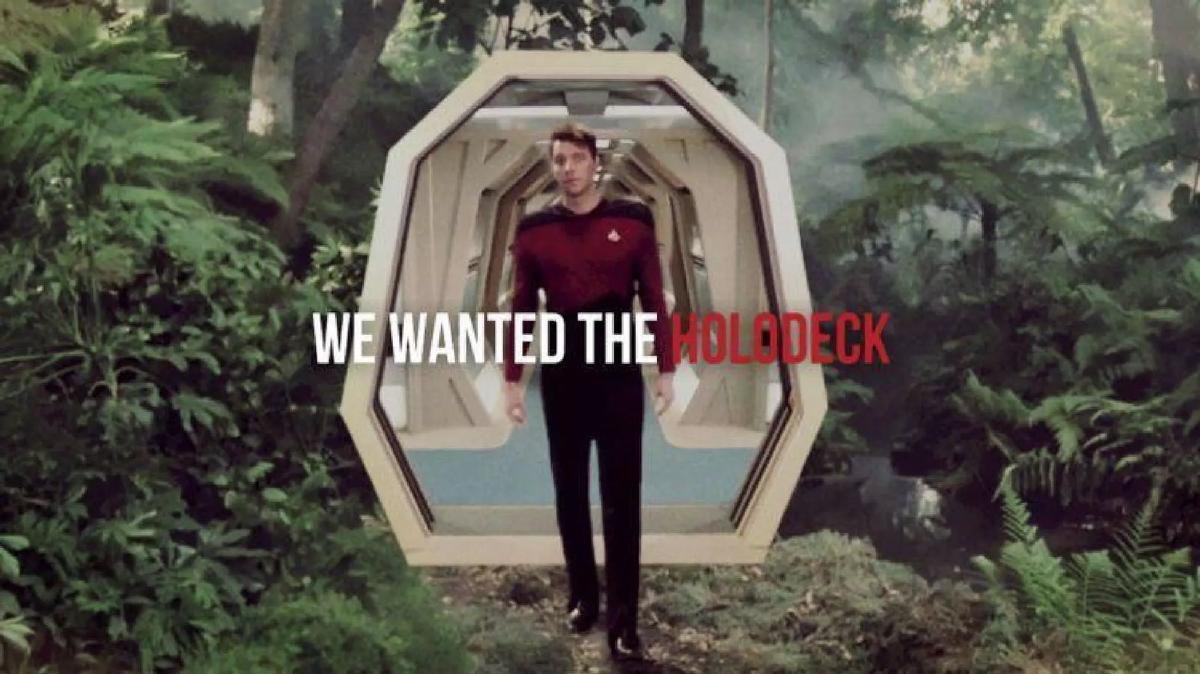
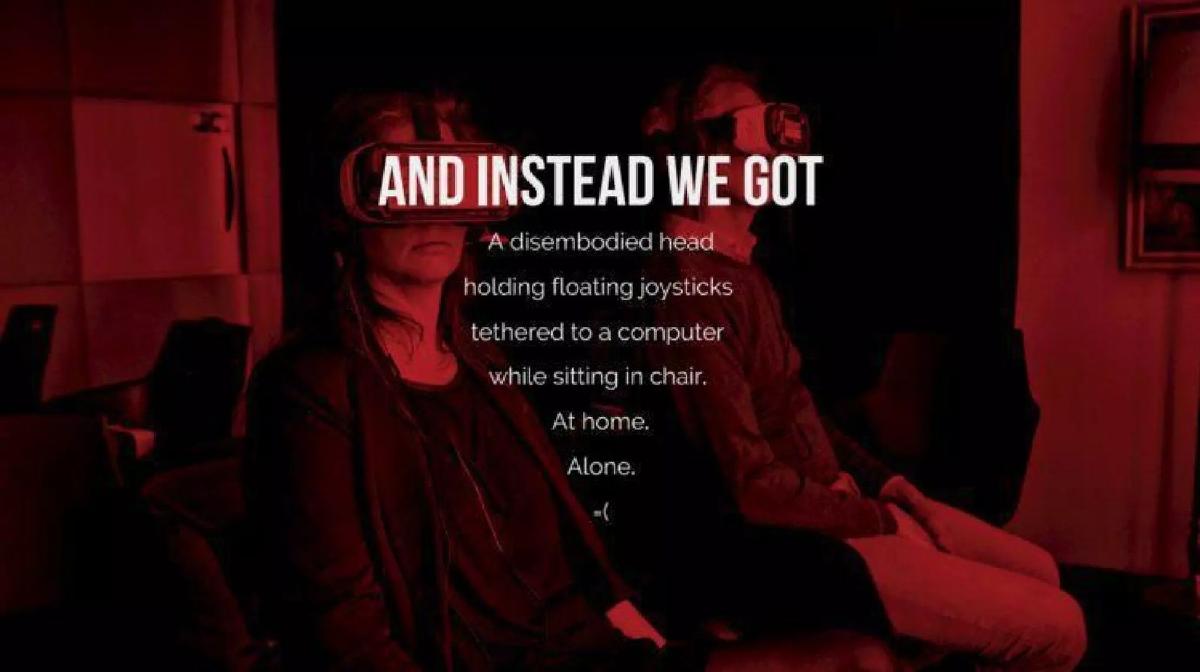
Slide 5 and Slide 6 contrast the 'isolated' home experience with the 'Holodeck' dream. The use of a Star Trek-style visual on Slide 5 sets the bar for expectations. Slide 7 introduces the Sandbox VR solution, emphasizing two pillars: 'Be Anyone' (motion capture) and 'Go Anywhere' (untethered movement). The deck claims their technology 'just works' for running, jumping, and crouching. Slide 8 transitions into the retail reality, showing photos of their physical locations and green-screen rooms, grounding the high-tech promise in real-world infrastructure.
Slides 9-12: Content and Initial Traction
Content is king in entertainment, and Slide 9 showcases three exclusive 'AAA' experiences: Deadwood Mansion, Curse of Davy Jones, and Amber Sky 2088. Slide 10 highlights the social aspect, noting that the experiences are 'fun to watch' and result in shareable social media content. This is a key growth driver for retail. Slide 11 provides social proof through high ratings across Facebook, Google, and TripAdvisor, claiming the #1 spot in major Asian hubs. Slide 12 is the most important slide for investors, showing a revenue chart that remained flat during the 'First Test Room' phase but exploded to over $150,000 monthly revenue once the San Mateo and HK Flagship stores opened.
Slides 13-16: The Economic Flywheel
This section focuses on the business model. Slide 13 and Slide 14 discuss store economics and growth. Although the specific percentages are redacted (marked as XX%), the narrative is clear: high occupancy and sales per square foot enable rapid scaling. Slide 15 projects a massive increase in 'rooms,' targeting over 2,000 by 2023. Slide 16 ties this all together into a flywheel: demand drives economics, which drives growth, which attracts exclusive content, which further increases demand. This is the 'moat' slide, suggesting that once they reach a certain scale, no one else can afford to compete for the best content.
Slides 17-21: Market Opportunity and Positioning
Slide 17 uses a high-fidelity render of a Sandbox VR flagship to visualize the future of the brand. Slide 18 asks 'Why Now?' and Slide 19 answers by listing technological milestones: wireless VR, motion capture, and haptics that only recently became 'barely possible.' Slide 20 provides a macro-economic context, showing a graph where consumer spend on experiences has risen sharply since 2000, driven by Millennials. Slide 21 is a standard competitive matrix, positioning Sandbox VR as the leader in both 'Immersiveness' and 'Scalability' compared to five unnamed competitors (Company A through E).
Slides 22-23: The Team and The Vision
Slide 22 introduces the leadership team. The focus is on their pedigree in gaming and growth, with specific mentions of Blue Tea Games, Zynga, Postmates, and Ubisoft. The inclusion of Michael Hampden, with his Assassin's Creed and Sony VR background, gives the company immediate credibility in content production. The deck concludes on Slide 23 with the company's mission: 'A Holodeck in every neighborhood.'
What Works in This Deck
The Narrative Pivot: By starting with the failure of home VR, the founders turn a market headwind into a tailwind for their specific business model. They aren't fighting the 'VR is dead' narrative; they are agreeing with it and offering an alternative.
Social Proof: Slide 11 is exceptionally strong. Being the #1 activity on TripAdvisor in a city like Hong Kong is a metric that any investor can understand, regardless of their familiarity with VR technology.
The Flywheel Logic: The deck does a great job of explaining why this is a venture-scale business and not just a chain of arcades. The idea that scale leads to exclusive content (Slide 16) is a classic tech platform play.
What Is Missing
Detailed Unit Economics: While the redacted version hides these, a Series A deck usually needs to be very explicit about the cost to build a store vs. the payback period. The deck mentions 'Strong Economics' but doesn't show the breakdown of CapEx for a new location.
The 'Ask' Slide: There is no slide in this deck that explicitly states how much money they are raising or how they plan to allocate the capital. While this information is often in the cover letter or discussed in person, its omission from the deck leaves a gap in the narrative flow.
Competitor Names: Slide 21 uses 'Company A' through 'Company E.' While this is common in some decks to avoid giving competitors free airtime, naming major players like The Void or Dreamscape would have provided more concrete context for the 'Scalability' claims.
What a Founder Should Copy
The 'Why Now' Slide (Slide 19): This is a perfect example of how to explain technical readiness. It breaks down the four components (Wireless, Mocap, HMDs, Haptics) and explains why they were insufficient in 2016 but ready in 2018/2019.
The Revenue Inflection Point (Slide 12): If you have a chart that shows a clear 'before and after' (in this case, before and after opening a flagship store), use it. It proves that your model works once the right variables are in place.
Visual Consistency: The deck uses a consistent black, white, and red color palette that feels premium and 'cinematic,' matching the brand's goal of being 'The Holodeck Company.'
Frequently asked questions
- What was the primary problem Sandbox VR aimed to solve?
- According to Slides 2 through 6, the problem was that home-based VR failed to meet consumer expectations. The deck cites low adoption (5 million headsets vs. 120 million consoles) and high churn (73%). It argues that home VR is isolating—'sitting in a chair, at home, alone'—whereas Sandbox VR offers a social, untethered 'Holodeck' experience that people actually want to share.
- How does the deck demonstrate product-market fit?
- Slide 11 uses third-party social proof, showing 5.0/5.0 ratings on Facebook, Google, and TripAdvisor, specifically noting they are the #1 activity in Hong Kong and Singapore. Slide 12 supports this with financial data, showing 18% of guests book 2+ sessions despite limited content, and a revenue trajectory that spiked significantly upon opening their San Mateo location.
- What is the 'Flywheel' mentioned in the deck?
- Slide 16 illustrates a four-part cycle: 1. Strong Demand leads to 2. Strong Economics, which funds 3. Aggressive Growth, which attracts 4. Exclusive Content. The deck suggests that as they scale to more rooms (projecting 2,000+ by 2023 on Slide 15), they can generate hundreds of millions in revenue for studio partners, creating a barrier to entry for competitors.
- Who are the key members of the leadership team?
- Slide 22 lists three key executives: CEO Steve Zhao (founder of Blue Tea Games), CPO Siqi Chen (formerly of Zynga and Postmates), and Head of Studios Michael Hampden. Hampden’s background is particularly emphasized, noting his role as Lead Designer for the Assassin's Creed franchise at Ubisoft and VR titles for Sony.
- What are the redacted 'XX' metrics on the economics slides?
- Slides 13, 14, and 15 contain placeholders like 'XX%' for EBITDA margins and occupancy rates, and '$XXX+' for sales per square foot. While the specific numbers are hidden in this version of the deck, the headers explicitly state that these economics are 'strong' and enable 'aggressive growth,' suggesting the actual figures were high enough to convince Series A investors.