Splitwise’s Series A deck focuses heavily on the 'interpersonal finance' category, a term they use to elevate a simple bill-splitting app into a massive market opportunity. The deck is light on financial projections but heavy on social proof and organic growth mechanics. With tens of millions of users and a presence in dozens of countries, the narrative centers on a growth flywheel where the product experience naturally generates more invites. The deck highlights a 73% NPS and over 112,000 combined app store ratings as evidence of deep user love. By emphasizing a $0 CAC and high retention, Sp…
Key takeaways
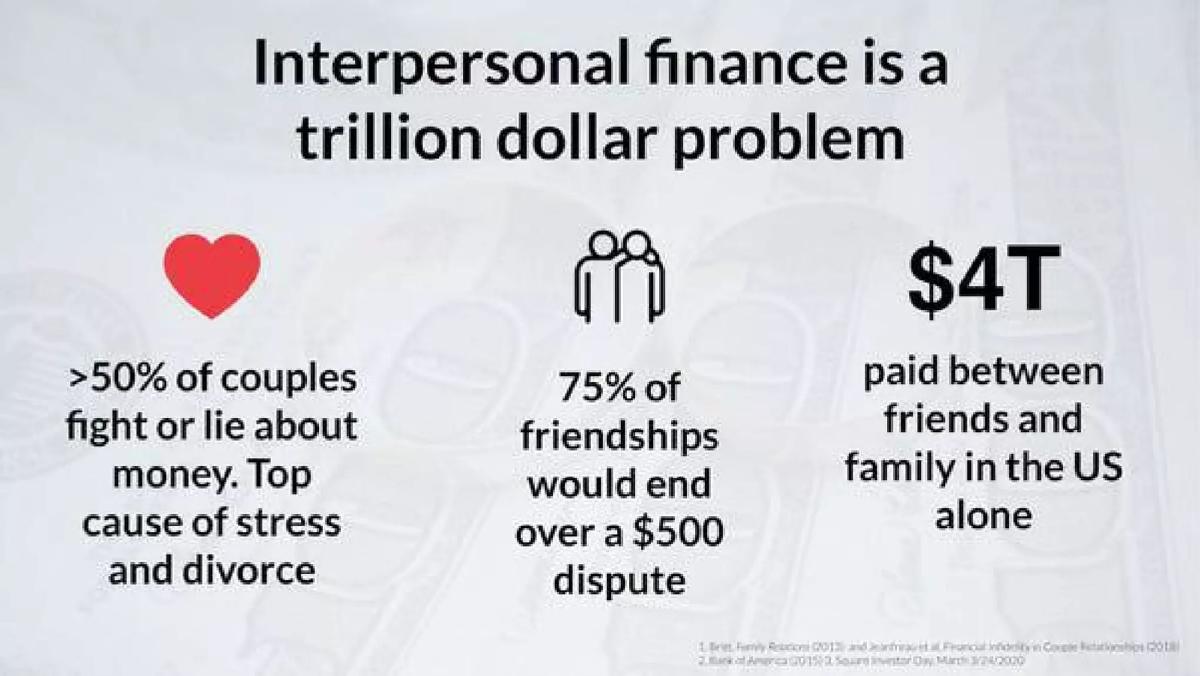
- Splitwise defines its market as 'interpersonal finance,' claiming it is a trillion-dollar problem on slide 3.
- The company cites $4T is paid between friends and family in the US alone to justify its scale potential on slide 3.
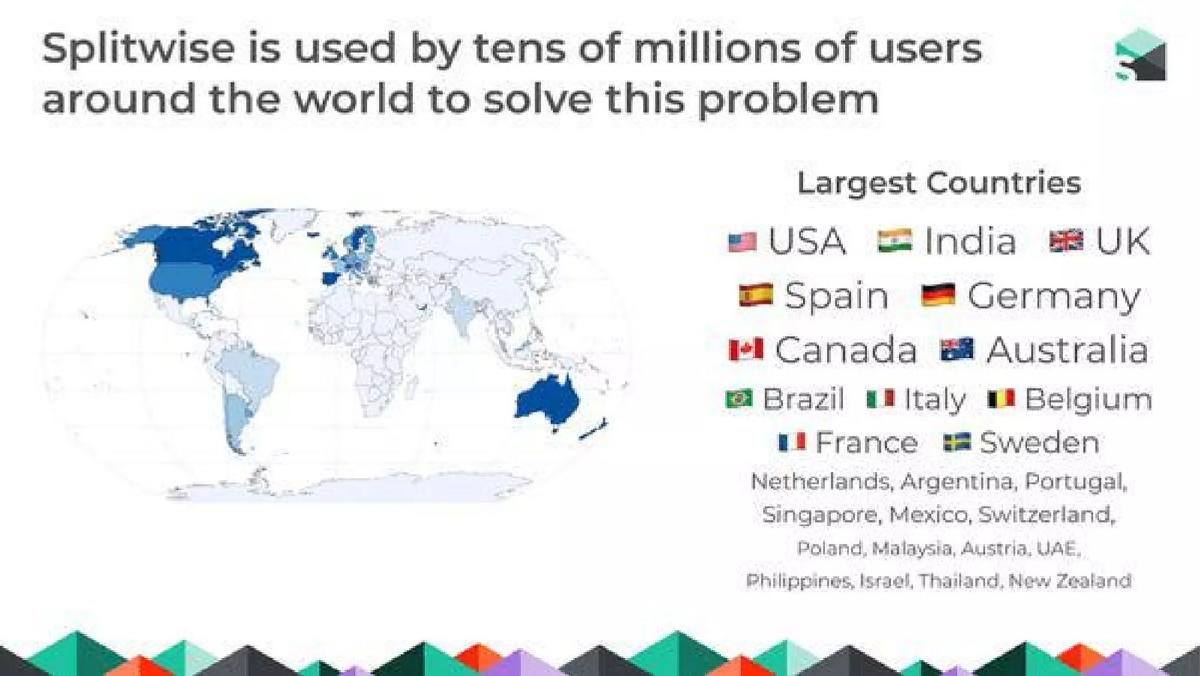
- Global reach is a core pillar, with the app being used in tens of millions of users across countries like the USA, India, UK, and Spain as shown on slide 4.
- Product-market fit is supported by a 73% Net Promoter Score (NPS) and 100,000+ ratings on Google Play on slide 7.
- The business model relies on a growth flywheel where more users lead to more groups and more invites, as illustrated on slide 8.
- The deck explicitly states a $0 CAC, having spent nothing on paid marketing as of the deck's creation on slide 9.
- Network effects are cited as the primary driver for deepening user engagement and increasing retention on slide 10.
- The future vision involves growing to 100MM+ users and building partnerships to reduce product friction on slide 12.
The Interpersonal Finance Narrative
The Splitwise pitch deck is a concise 14-slide presentation that successfully rebrands a utility app as a foundational financial platform. Dated January 2021, this deck reflects a company that has already achieved significant scale and is looking to institutionalize its lead in the market. The design is clean, using the brand's signature green and geometric patterns, which mirrors the app's own focus on organization and clarity.
Slide 1-2: The Vision Statement
The deck opens with a standard title slide (Slide 1) and immediately moves to a bold mission statement on Slide 2: "Splitwise is the platform for interpersonal finance." This is a strategic choice. By coining the term "interpersonal finance," the founders move away from being a "bill-splitting app"—a category that sounds small and competitive—to owning a new, broader category that sounds essential and expansive.
Slide 3: Quantifying the Emotional and Financial Problem
Slide 3 is the "Problem" slide, but it approaches the topic through three distinct lenses: emotional, social, and economic. It claims that over 50% of couples fight about money and that 75% of friendships would end over a $500 dispute. Most importantly for investors, it attaches a massive number to the opportunity: "$4T paid between friends and family in the US alone." This slide justifies why a Series A investor should care about what might otherwise look like a simple calculator tool.
Slide 4-5: Global Traction and Product Functionality
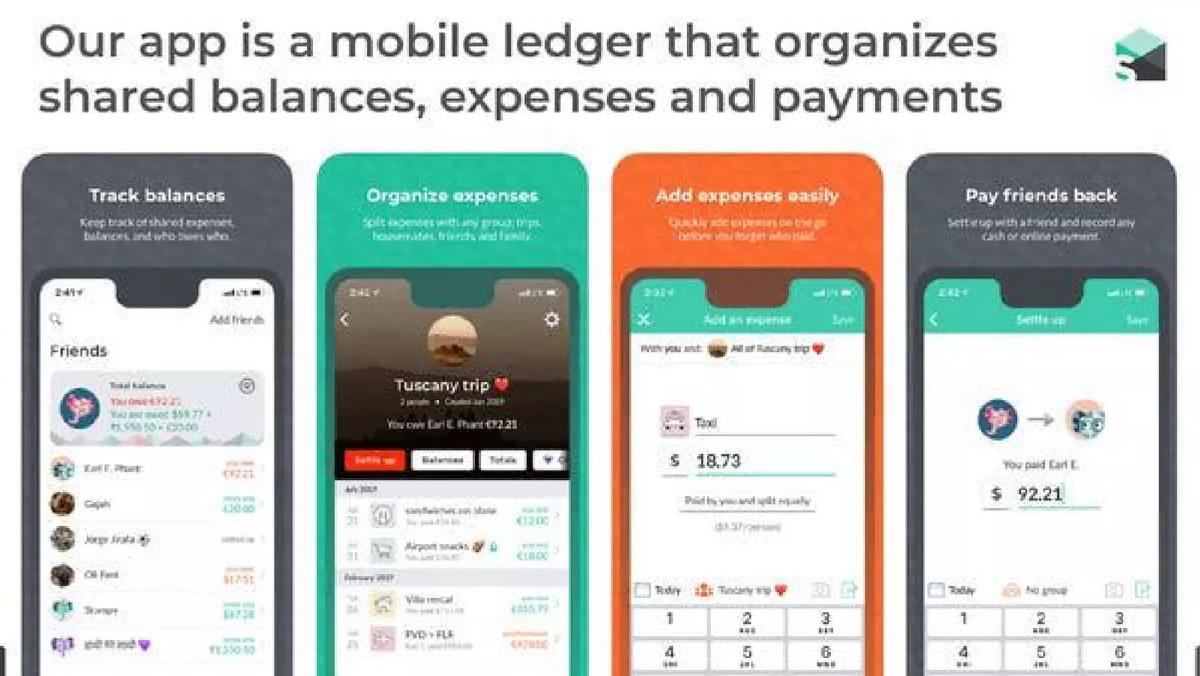
Slide 4 showcases the company's global footprint. It lists the USA, India, UK, Spain, and Germany as its largest countries and mentions "tens of millions of users around the world." This demonstrates that the problem Splitwise solves is not culturally specific to the US, but a universal human friction point. Slide 5 provides a high-level product overview, describing the app as a "mobile ledger" that allows users to track balances, organize expenses, add expenses easily, and pay friends back. The screenshots are clear and emphasize the UI/UX, which is critical for a consumer-facing app.
Slide 6-7: Use Cases and User Sentiment
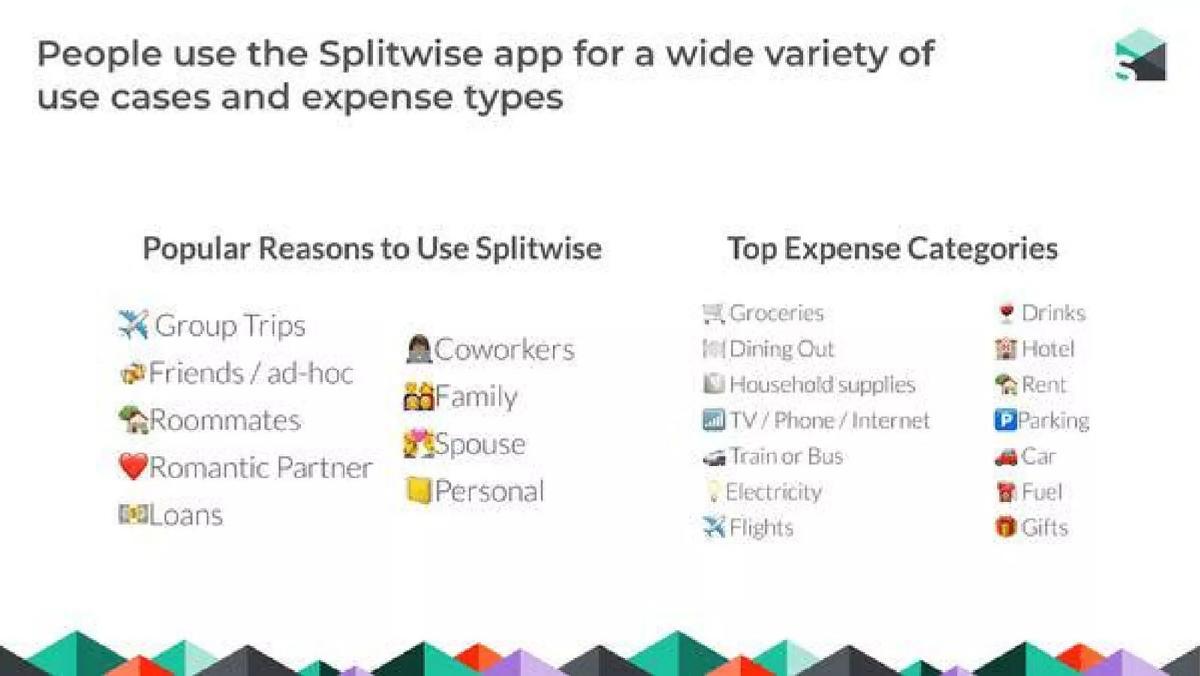
Slide 6 breaks down why people use the app, listing everything from group trips to rent and groceries. This variety is meant to signal high frequency of use. Slide 7 is the "Social Proof" slide. It highlights a 73% NPS and massive rating counts: 12,000+ on the App Store and 100,000+ on Google Play. For a Series A deck, these numbers are exceptionally high and serve to de-risk the investment by showing that the product is already a market leader with a loyal base.
Slide 8-10: The Growth Flywheel and Unit Economics
The core of the investment thesis is found in Slides 8, 9, and 10. Slide 8 illustrates the "growth flywheel" : more users lead to more groups, which lead to more invites. Slide 9 contains the most impressive metric in the deck: "$0 spent on paid marketing so far." Achieving tens of millions of users with zero CAC is a rare feat that suggests a powerful viral coefficient. Slide 10 reinforces this by discussing network effects and how engagement deepens over time as users join multiple groups, which in turn increases retention.
Slide 11-12: Future Roadmap
After establishing what they have built, the deck pivots to the future. Slide 11 asks, "Where are we going?" and Slide 12 answers with a goal to "Grow Splitwise to 100MM+ users." The roadmap includes expanding features for a global mainstream audience and building partnerships to reduce friction. Notably, the deck does not explicitly detail its monetization strategy or revenue figures on these slides, focusing instead on user growth and platform ubiquity.
Slide 13: The Team
The co-founding team is presented on Slide 13. It highlights strong academic backgrounds (Harvard, Yale) and relevant industry experience. Jon Bittner (CEO) is noted as a Forbes 30 Under 30 recipient, and Marshall Weir is credited with experience at Mobiata, a company acquired by Expedia. This provides the necessary credibility to show that the team has both the technical and leadership skills to scale the platform further.
What Works in the Splitwise Deck
The $0 CAC Claim: In a venture landscape where many consumer startups die due to unsustainable customer acquisition costs, Splitwise’s ability to grow to tens of millions of users organically is its strongest selling point. It proves the product is a "pull" product, not a "push" product.
Category Creation: By using the term "interpersonal finance," Splitwise elevates its status. It frames the app as a piece of financial infrastructure rather than a social utility. This makes the $4T market figure on Slide 3 feel relevant rather than inflated.
Massive Social Proof: The inclusion of 100,000+ Google Play ratings and a 73% NPS is a powerful way to end the "traction" section of the deck. It tells investors that the product is not just being used, but is being loved and recommended.
What is Missing from the Splitwise Deck
Revenue and Monetization: The deck is almost entirely silent on how the company makes money. While it mentions "interpersonal finance," it doesn't detail the take rate, subscription models (Splitwise Pro), or advertising revenue. For a Series A, investors usually expect to see a clearer path to profitability or at least current revenue run rates.
Competitive Landscape: There is no slide addressing competitors like Venmo, Zelle, or Revolut, all of which have integrated bill-splitting features. The deck relies on the assumption that Splitwise’s "ledger" approach is sufficiently differentiated from simple P2P payment apps, but it doesn't explicitly make that argument.
The Ask: The deck does not state how much money is being raised or how the funds will be allocated. While this is often left for the verbal pitch or a separate data room, including a high-level use-of-funds slide is standard practice.
What a Founder Should Copy
The Flywheel Visualization: Founders of social or network-based products should copy the simplicity of Slide 8. It clearly explains why the business gets stronger and cheaper to run as it grows.
Market Sizing via Friction: Instead of just showing a TAM (Total Addressable Market) chart, Splitwise shows the cost of the problem (divorce, lost friendships). This creates an emotional hook that makes the market size feel more urgent.
Focus on Global from Day One: If your product has international traction, highlight it as Splitwise did on Slide 4. It suggests that your solution is a universal human need, which significantly increases the perceived ceiling of the company.
Frequently asked questions
- What is the primary market Splitwise is targeting?
- Splitwise targets what it calls 'interpersonal finance.' According to slide 3, this includes the $4 trillion paid between friends and family in the US. They frame the problem as both emotional and financial, noting that money is a top cause of stress and divorce, and that 75% of friendships could end over a $500 dispute.
- How does Splitwise acquire users?
- The company relies entirely on organic growth. Slide 9 states they have spent $0 on paid marketing. Their 'growth flywheel' (slide 8) functions by users inviting friends as a core part of using the product. When these invited users create their own groups, it creates a self-sustaining growth loop.
- What evidence of product-market fit does the deck provide?
- The deck uses high-volume social proof. Slide 7 highlights a 73% NPS, over 12,000 ratings on the App Store, and over 100,000 ratings on Google Play. Slide 4 also mentions 'tens of millions of users' globally, indicating significant scale before the Series A round.
- What are the key use cases for the app?
- Slide 6 lists group trips, roommates, romantic partners, and loans as popular reasons to use the app. Top expense categories include groceries, dining out, rent, and household supplies. This variety suggests the app is a daily or weekly utility rather than a seasonal one.
- Who are the founders of Splitwise?
- The co-founding team (slide 13) consists of Jon Bittner (CEO, Harvard Astrophysics), Ryan Laughlin (CTO + Design, Yale CS), and Marshall Weir (Mobile apps, formerly of Mobiata, which was acquired by Expedia).