Squire’s 12-slide deck is a masterclass in vertical SaaS positioning. By framing the barbershop industry as a neglected niche requiring a specific, end-to-end solution, Squire justifies its displacement of horizontal giants like Square and Mailchimp. The deck focuses heavily on the 'Commander' management system and integrated payment processing, which drives the core of their business model. Despite significant redactions in the public version, the narrative remains clear: Squire isn't just a booking tool; it is the operating system for the shop. The presentation highlights a robust recovery…
Key takeaways
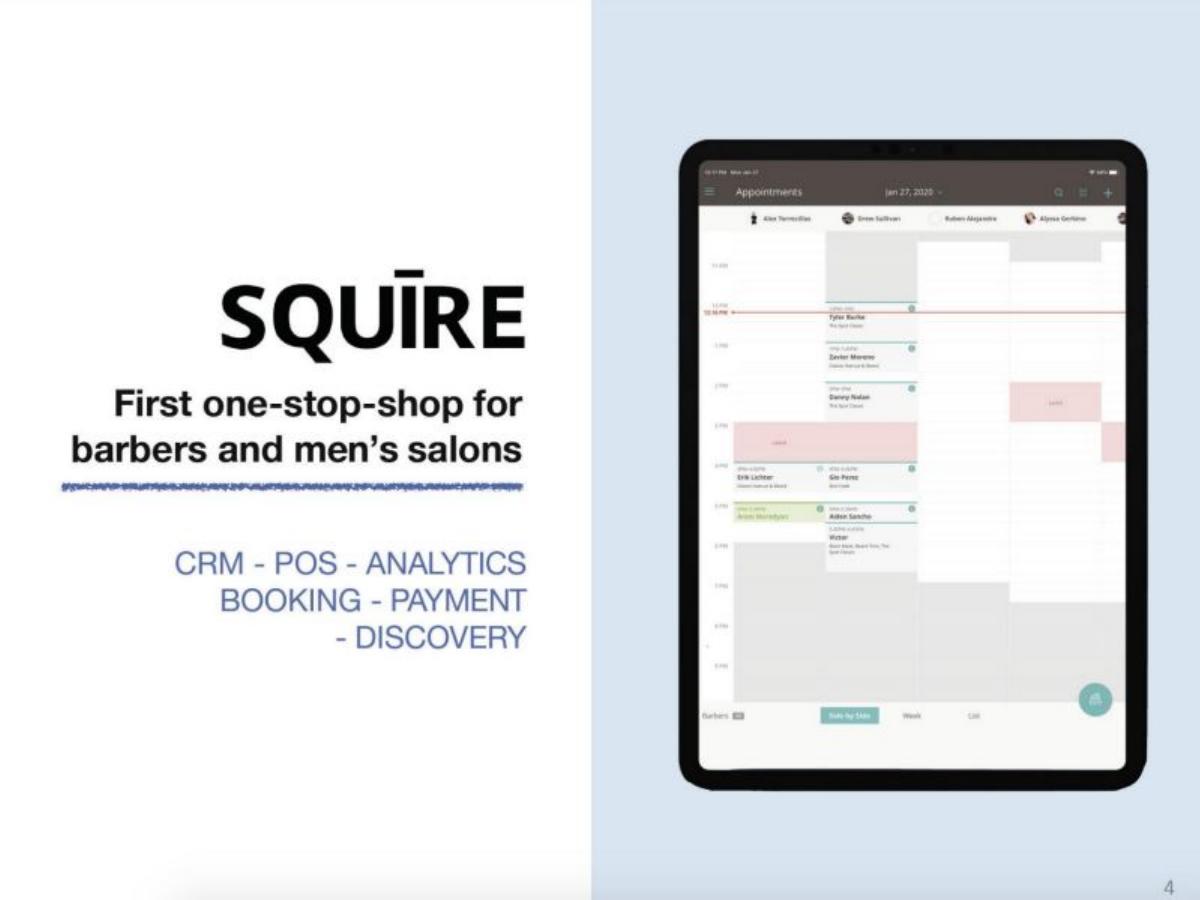
- Squire positions itself as the 'first one-stop-shop' for barbers, combining CRM, POS, analytics, and discovery (Slide 4).
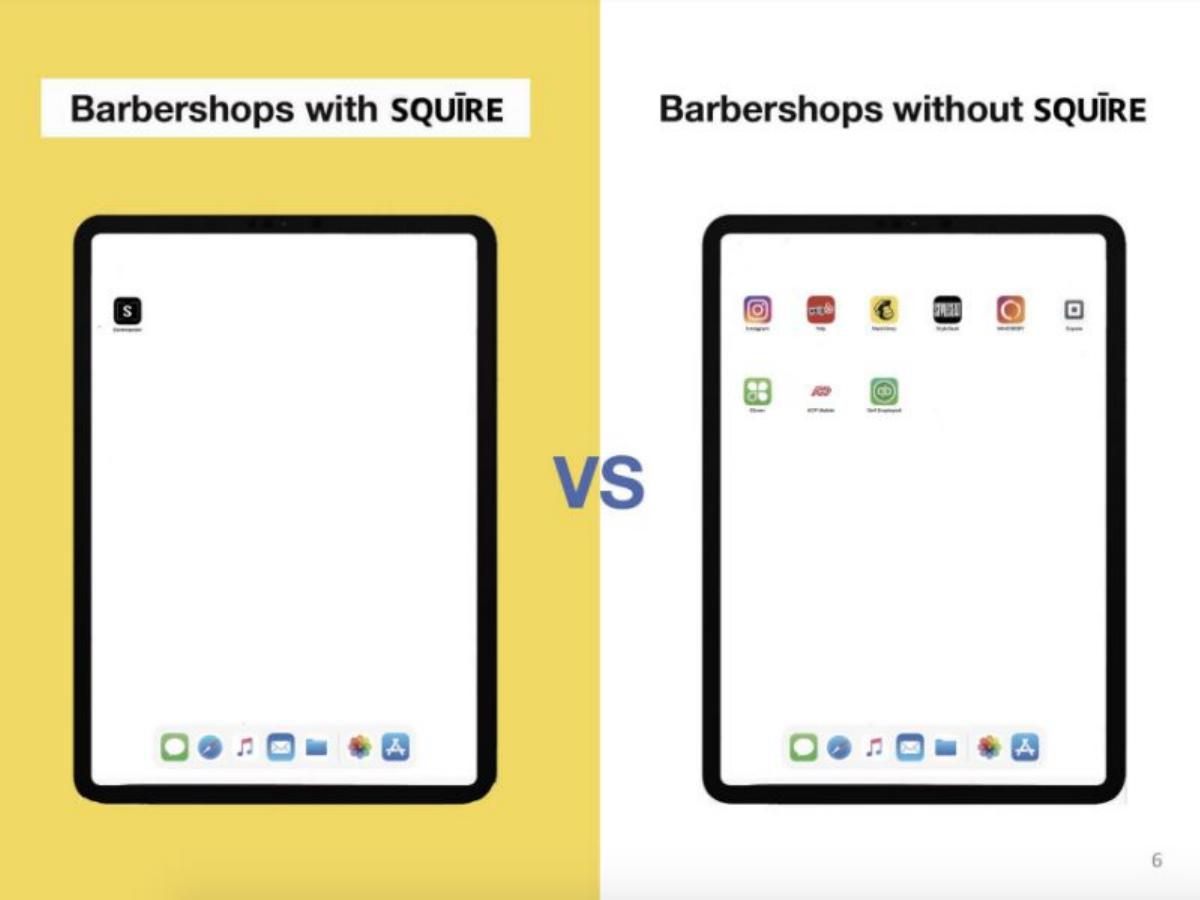
- The 'Before vs. After' slide effectively visualizes the fragmentation of competitors, showing one Squire app replacing ten disparate icons including Instagram, Yelp, and Mailchimp (Slide 6).
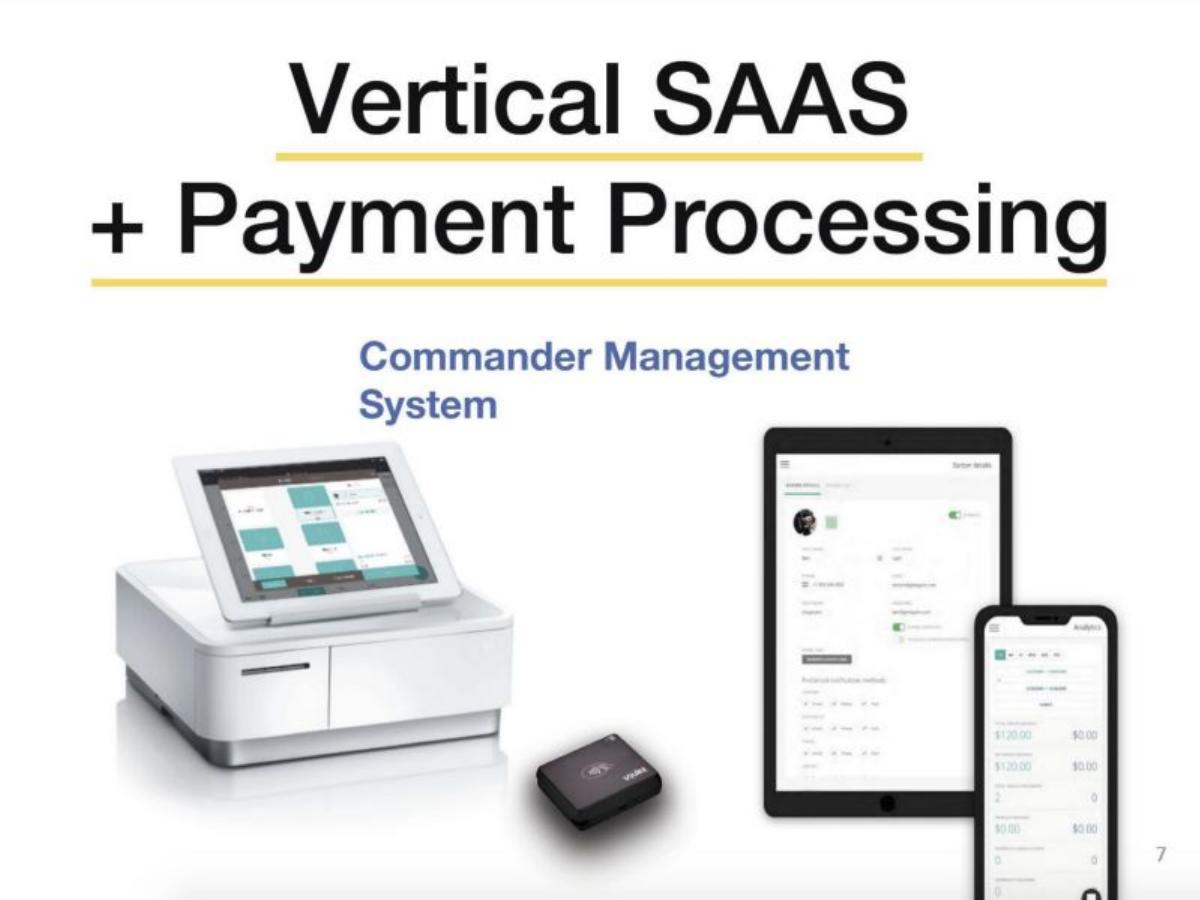
- The business model relies on a dual-revenue stream of Vertical SaaS subscriptions plus payment processing fees (Slide 7).
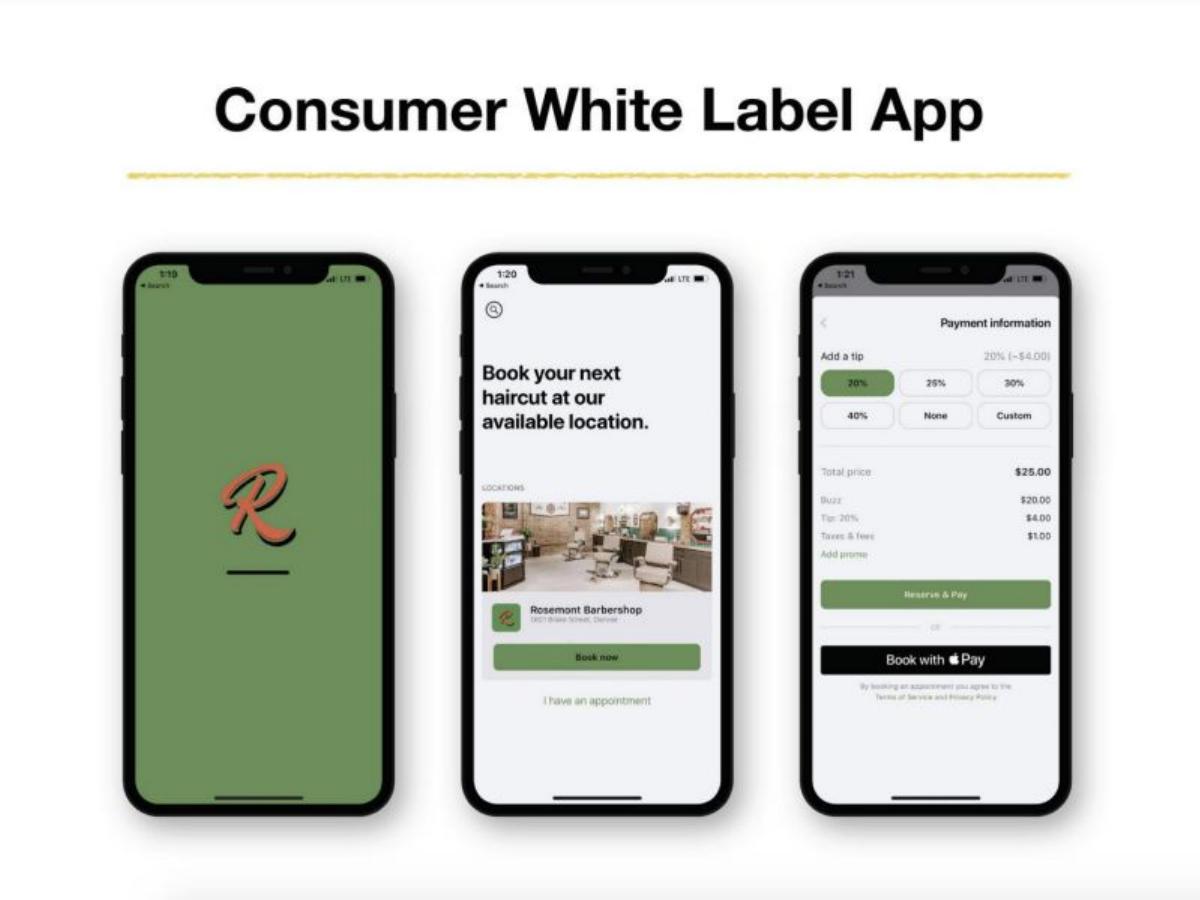
- Product-market fit is evidenced by a 'Consumer White Label App' that allows individual shops to offer a branded booking experience (Slide 8).
- The founders leverage high-prestige backgrounds, citing Yale Law School, Skadden, JP Morgan, and Y Combinator (Slide 9).
- Growth metrics show a massive spike in new ARR bookings and shop acquisitions in June and July 2020 following the initial COVID-19 dip (Slide 10).
- The deck emphasizes 'Net Retention' and 'Monthly ARPU' growth over a 15-month cohort period, proving that customers become more valuable over time (Slide 12).
- Competitive strategy is based on the 'niche' defense: large competitors are too broad, and small competitors lack end-to-end functionality (Slide 14).
The Vertical SaaS Playbook: A Teardown of Squire’s Series D Deck
Squire’s 2022 pitch deck is a concise, 12-slide presentation that focuses on the transition from a fragmented toolset to a unified industry operating system. At the Series D stage, investors are looking for proof of scale, unit economic stability, and a clear competitive moat. Squire addresses these by focusing on the 'Commander' ecosystem and the specific needs of the barbering community.
Slide 2: The Mission Statement
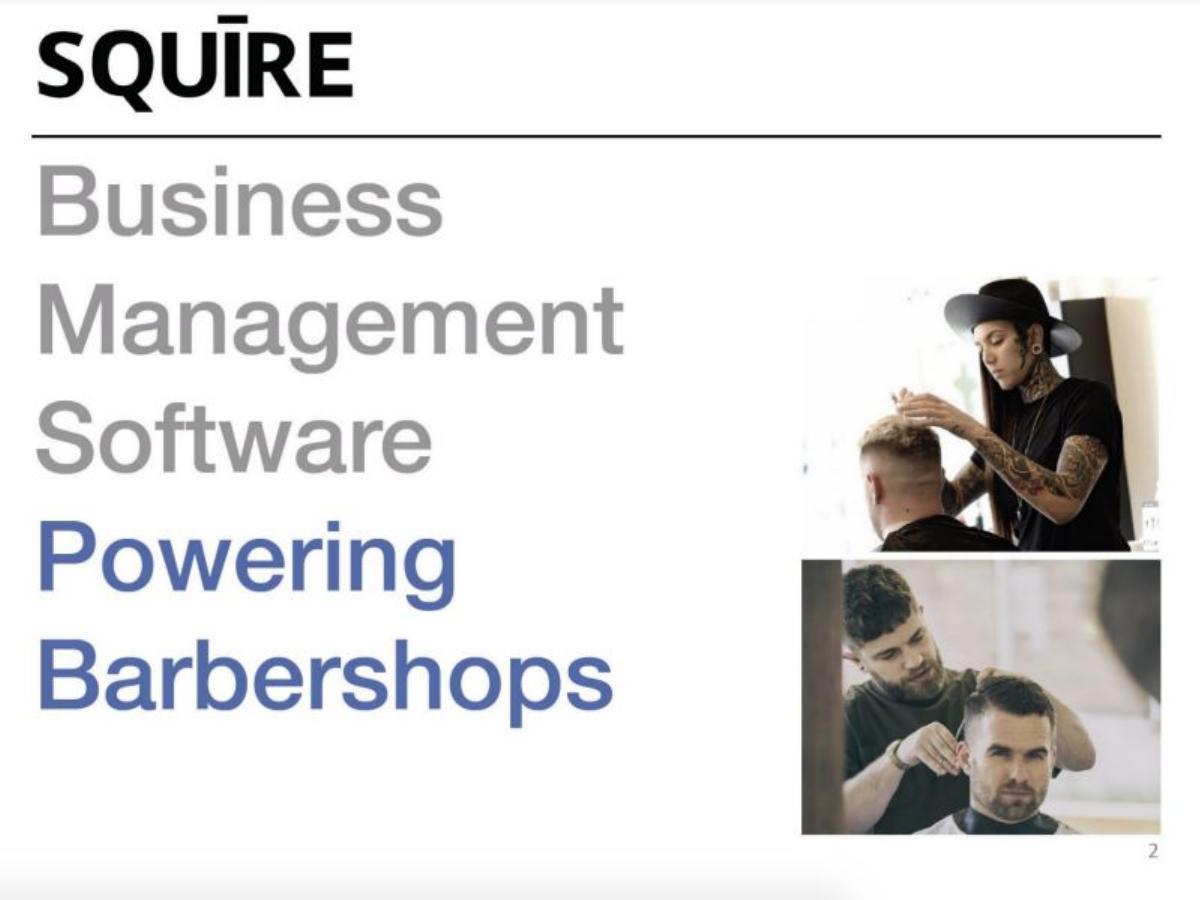
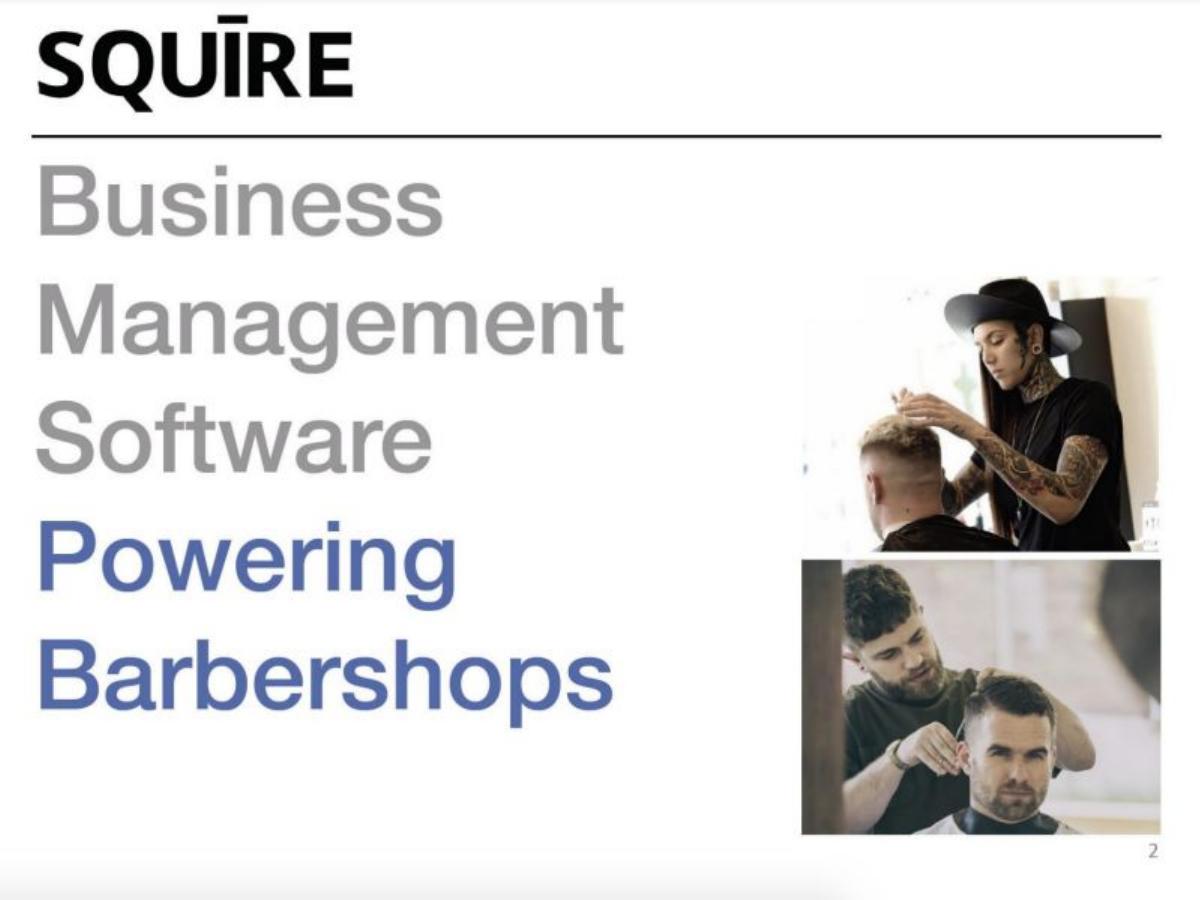
The deck opens with a clear, high-contrast title slide: "Business Management Software Powering Barbershops." It uses lifestyle photography of barbers at work to immediately ground the software in a physical, real-world industry. This sets the stage for a vertical SaaS pitch, where the software is built for a specific persona rather than a general business need.
Slide 3: The Problem Statement
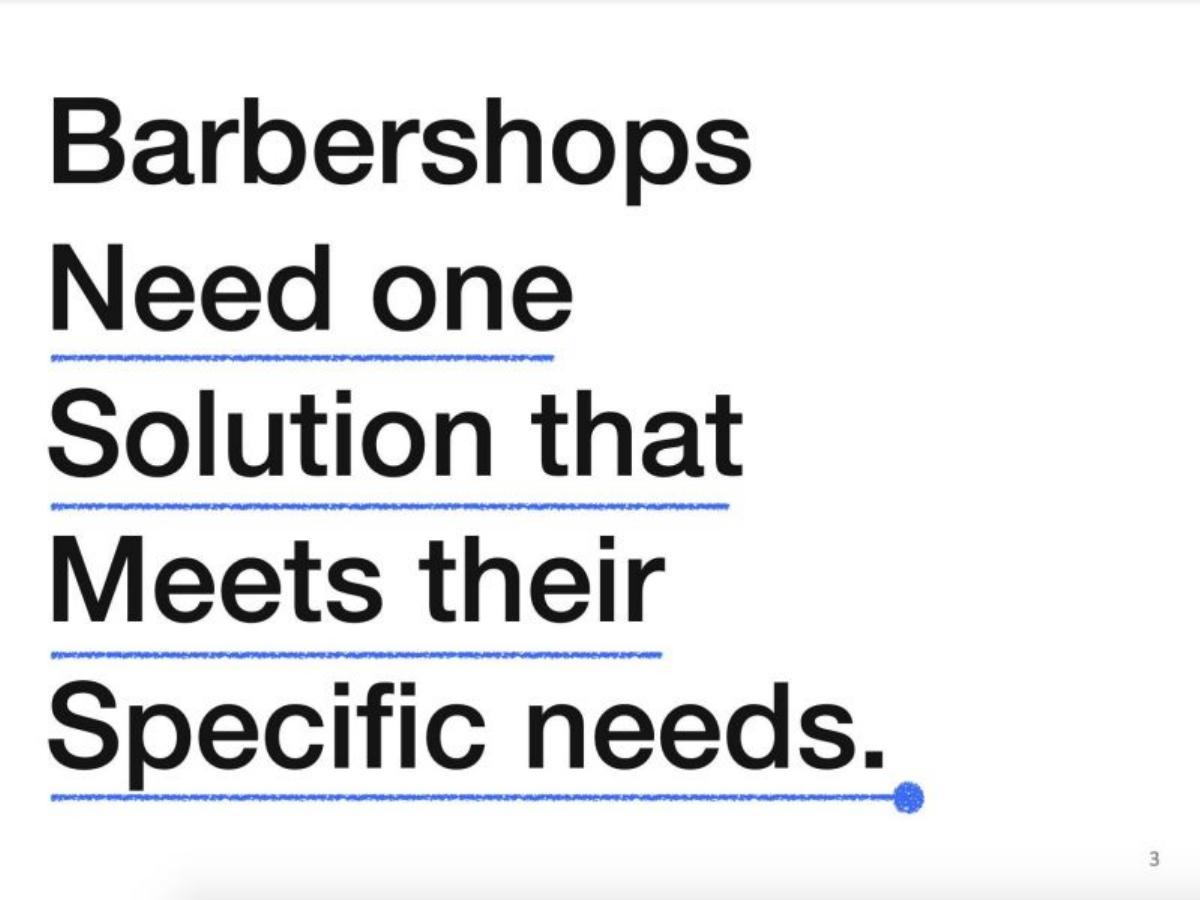
Slide 3 is minimalist, stating: "Barbershops Need one Solution that Meets their Specific needs." The underlining of "one Solution" and "Specific needs" highlights the core pain point: the inefficiency of using multiple generic tools that don't talk to each other. This is a classic setup for the 'unbundling' or 'rebundling' of software services.
Slide 4: The Solution and Product Overview
Squire introduces itself as the "First one-stop-shop for barbers and men’s salons." The slide lists the functional pillars of the platform: CRM, POS, Analytics, Booking, Payment, and Discovery. To the right, a product mockup on an iPad shows a clean, multi-column appointment calendar, demonstrating the UI's focus on shop floor management.
Slide 6: The Competitive Visual (Before vs. After)
This is one of the most effective slides in the deck. It compares "Barbershops with SQUĪRE" against "Barbershops without SQUĪRE." The 'without' side shows an iPad screen cluttered with icons for Instagram, Yelp, Mailchimp, StyleSeat, Mindbody, Square, Clover, ADP, and QuickBooks. The 'with' side shows a single app: Commander. This visualizes the reduction in complexity and the displacement of major horizontal competitors.
Slide 7: The Business Model
Slide 7 defines the engine of the company: "Vertical SAAS + Payment Processing." It showcases the hardware component—a sleek, white POS terminal and a mobile card reader—alongside the "Commander Management System" on mobile and tablet. This confirms that Squire is a full-stack provider, capturing both software fees and transaction volume.
Slide 8: Consumer Engagement
To demonstrate the 'Discovery' and 'Booking' aspects mentioned earlier, Slide 8 shows the "Consumer White Label App." The screenshots show a branded experience for "Rosemont Barbershop," including location selection, service booking, and an integrated "Book with Apple Pay" checkout. This indicates that Squire provides value not just to the shop owner, but to the end client, creating a stickier ecosystem.
Slide 9: The Team
The team slide features CEO Songe Laron and President Dave Salvant . Their credentials are presented with logos rather than long bios: Yale Law School, Skadden, JP Morgan, and Y Combinator. The slide also includes a full-page feature from "BarberEVO" magazine titled "The Rise of Squire," which serves as powerful social proof within the industry they serve.
Slide 10: Traction and Recovery
Titled "LAST 12 MONTHS," this slide uses bar charts to show "New Shops" and "New ARR Bookings ($K)." While the exact numbers are redacted in this version, the trend is clear: a significant dip in April 2020 (the height of COVID-19 lockdowns) followed by a massive, vertical recovery in May, June, and July. A text overlay claims "June and July [Redacted]%+ YoY Growth!"
Slide 11: Strategic Response to Crisis
Slide 11 details the "COVID-19 Response." Squire lists four key actions: waiving subscription fees until December 2020, launching online gift cards for revenue generation during closures, and releasing COVID-specific features like waiver forms and virtual waiting rooms. This slide is intended to show the company's agility and its commitment to its customer base, which likely fueled the retention seen in later slides.
Slide 12: Unit Economics and Cohort Growth
This slide argues that "SHOPS GROW OVER TIME." It features two line graphs: Net Retention and Monthly ARPU. Both charts show a steady upward trajectory from the 3-month mark through 15+ months. The fact that ARPU (Average Revenue Per User) increases over time suggests that shops are either processing more volume or adopting more Squire features as they mature on the platform.
Slide 13: Long-term Growth Trends
Slide 13, titled "SHOP GROWTH," provides a broader view of New Shops and New ARR Bookings ($M) over several years. The bars show exponential growth, with the final year's ARR bookings dwarfing previous periods. This slide is the "up and to the right" proof required for a Series D round.
Slide 14: Competitive Landscape
The final content slide addresses the "COMPETITIVE LANDSCAPE." It uses a simple text-based framework: "Large competitors are not focused enough... Small competitors don't offer end-to-end system." It concludes that "SQUIRE is unique to this industry....we have solved the core shop owner workflow." This reinforces the 'niche' moat—the idea that being an inch wide and a mile deep is better than being a mile wide and an inch deep.
What Works in the Squire Deck
The deck is exceptionally focused. It does not waste time on general market trends or the history of barbering. Instead, it focuses on the displacement of fragmented tools. The 'Before vs. After' slide (Slide 6) is a perfect example of how to communicate a complex value proposition in a single image. Furthermore, the inclusion of the COVID-19 response (Slide 11) turns a potential liability (the fact that their customers were forced to close) into a strength by highlighting product adaptability and customer loyalty.
What is Missing from the Squire Deck
For a Series D deck, there are several notable omissions in this public version. There is no mention of the 'Ask' or the specific use of funds for the $59M raised. There is also a lack of Total Addressable Market (TAM) calculations; the deck assumes the investor already understands that the barbershop market is large enough to support a unicorn-scale company. Additionally, while it mentions 'Discovery,' it doesn't provide data on how much new business Squire actually drives to the shops via its consumer app, which would be a key metric for a marketplace-plus-SaaS model.
What Founders Should Copy
Founders building in vertical SaaS should emulate Squire’s cohort analysis on Slide 12. Showing that your customers become more profitable the longer they stay with you is the holy grail of SaaS metrics. Additionally, the way Squire frames its competition—not by naming every small player, but by categorizing them into 'too big to care' and 'too small to be complete'—is a sophisticated way to position a company as the only logical choice for a specific industry.
Final Thoughts
Squire’s deck is a high-signal, low-noise document. It relies on the strength of its team and the undeniable momentum of its post-pandemic recovery. By focusing on the 'operating system' narrative, they move the conversation away from being a simple 'booking tool' and toward being an essential utility for a multi-billion dollar service industry.
Frequently asked questions
- What is Squire's primary value proposition?
- Squire positions itself as the comprehensive operating system for barbershops. According to Slide 4, it replaces fragmented tools by offering CRM, POS, analytics, booking, payments, and discovery in a single platform. This 'one-stop-shop' approach is designed to solve the specific workflow needs of barbers that generic point-of-sale systems overlook.
- How does Squire generate revenue?
- The company utilizes a Vertical SaaS model combined with payment processing. Slide 7 explicitly highlights 'Vertical SAAS + Payment Processing' as the core of their Commander Management System. This allows Squire to capture both recurring subscription revenue and a percentage of every transaction processed through the shops.
- How did the company handle the COVID-19 pandemic?
- Squire took a pro-customer approach during lockdowns. Slide 11 notes they waived all subscription fees until December 2020 and launched features like online gift cards, COVID waiver forms, and virtual waiting rooms. This strategy appears to have driven the significant growth seen in late 2020 as shops reopened.
- What does the team's background look like?
- The founders, Songe Laron and Dave Salvant, possess high-pedigree professional and academic backgrounds. Slide 9 lists Yale Law School, Skadden, and JP Morgan, along with participation in Y Combinator. This combination of legal, financial, and startup accelerator experience is a strong signal for Series D investors.
- Is the market for barbershop software large enough for a Series D?
- While the deck doesn't provide a TAM slide, it argues for the depth of the market through cohort expansion. Slide 12 shows that both Net Retention and Monthly ARPU increase significantly over a 15-month period. This suggests that even within a niche, there is substantial 'up-sell' and 'expand' potential as shops adopt more features.