The StackCommerce pitch deck is a highly visual 10-slide presentation that leans heavily on social proof and product-market fit. Eschewing traditional 'Problem' and 'Solution' text slides, the deck uses screenshots of live integrations with major publishers like The Next Web and Business Insider to demonstrate value. The core of the pitch rests on a 'Commerce-as-a-Service' growth chart (Slide 8) and a specific retailer case study showing $375,000 in revenue generated (Slide 5). While the deck lacks a formal team biography slide or a specific 'Ask' regarding valuation and terms, its focus on e…
Key takeaways
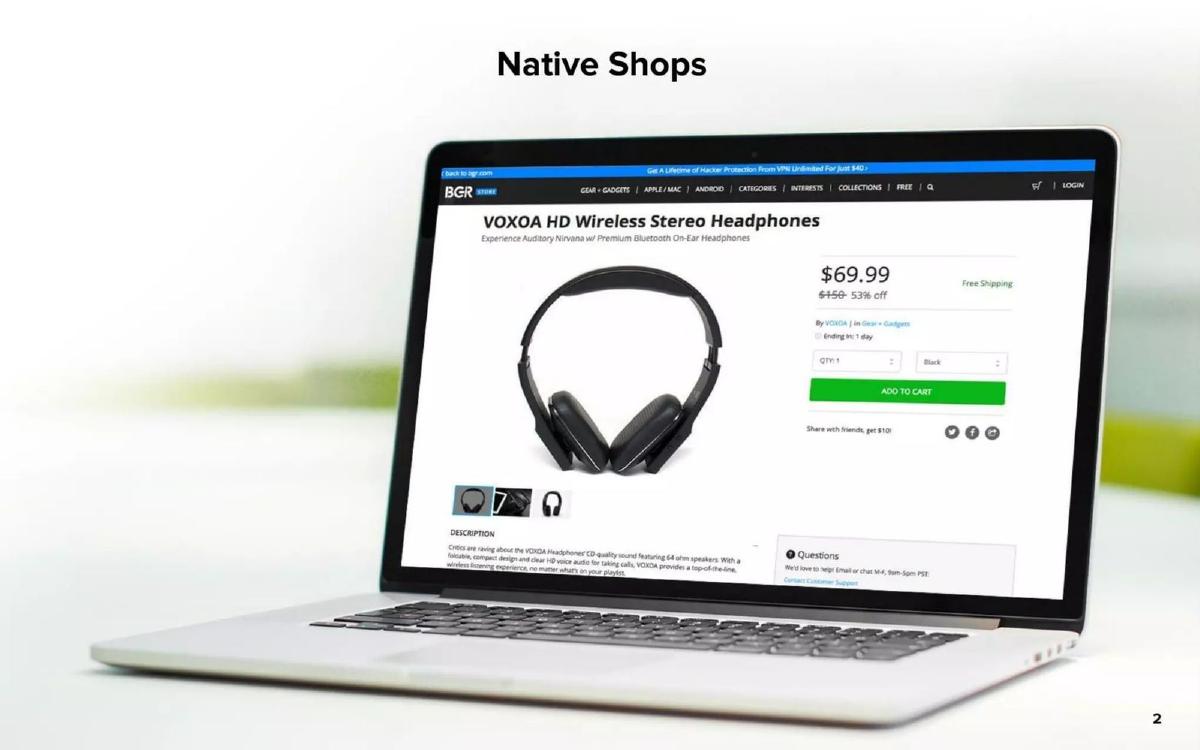
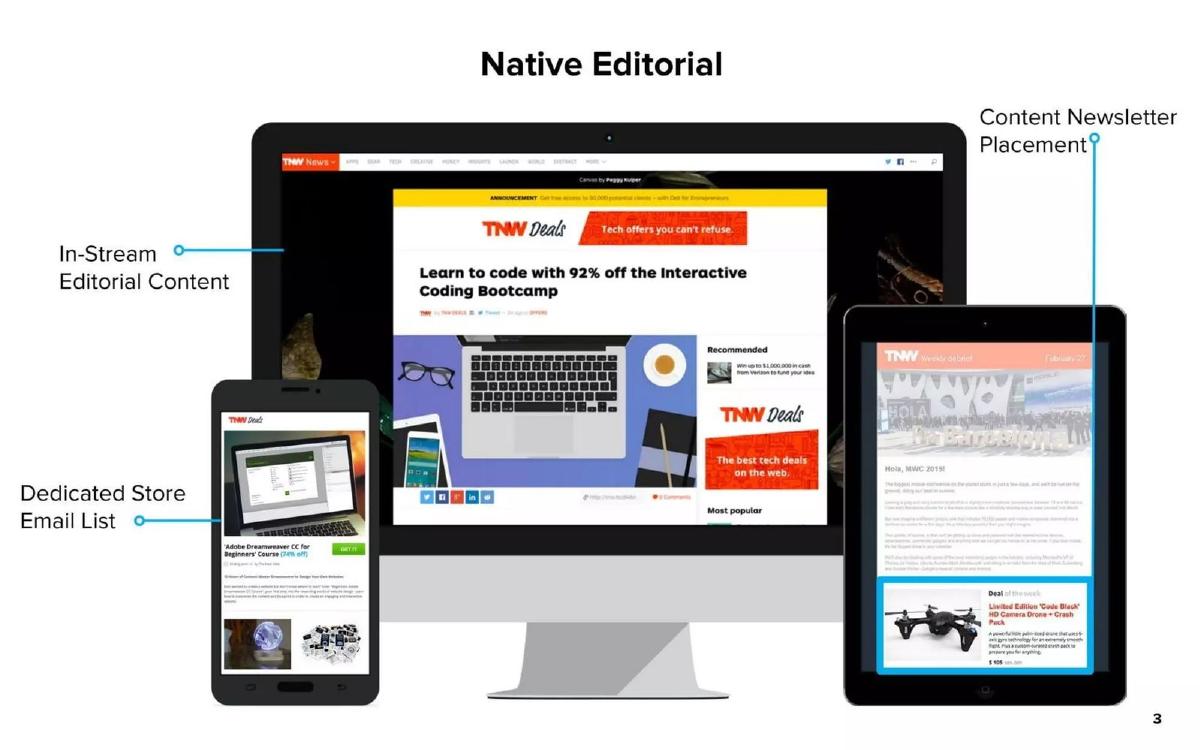
- The deck utilizes a 'show, don't tell' approach, using Slide 2 and Slide 3 to visually define 'Native Shops' and 'Native Editorial' through product screenshots.
- A specific retailer case study for 'Cloud Buds' on Slide 5 provides hard metrics: $375K revenue generated and 15,000 customers acquired.
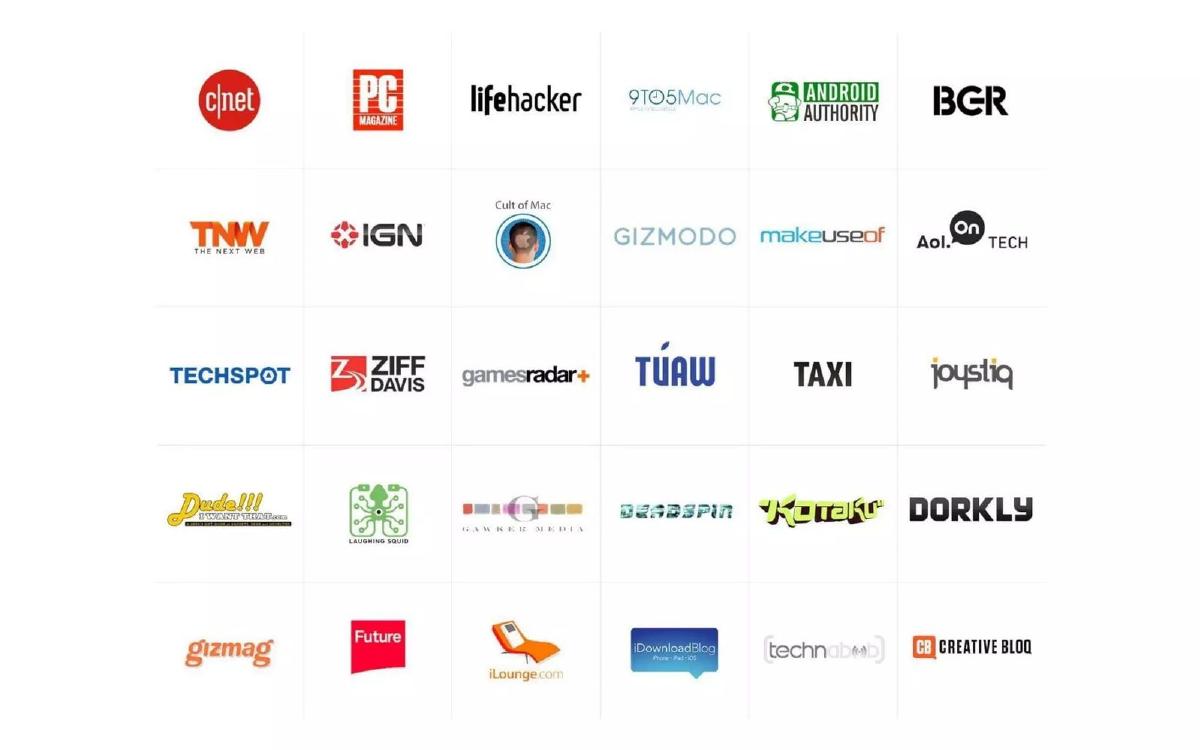
- The company demonstrates significant market penetration by showcasing 30 publisher logos on Slide 6, including CNET, PC Magazine, and Gizmodo.
- Slide 7 highlights a critical success metric: StackCommerce generated 10% of monthly revenue for The Next Web within three months of launching.
- The 'Commerce-as-a-Service' growth chart on Slide 8 visualizes a compounding revenue stream as new publishers like BGR and Android Community are onboarded.
- Market opportunity is segmented by vertical on Slide 9, identifying 'Lifestyle' as the largest potential segment at $1.36B.
- The deck omits a traditional team slide with professional backgrounds, opting instead for a group photo on Slide 10.
- There is no explicit financial 'Ask' or use of funds slide included in this 10-slide version of the deck.
The Visual Strategy of StackCommerce
The StackCommerce pitch deck is a departure from the text-heavy, bullet-pointed presentations common in the early 2010s. Comprising only 10 slides, it functions more as a visual portfolio of success than a traditional business plan. The deck assumes the investor understands the general decline of traditional display advertising and moves immediately into the 'how' and 'how much' of their native commerce solution.
Slide 1: Title and Brand Identity
The cover slide features the StackCommerce logo over a grayscale image of the Santa Monica Pier. The tagline is simple: NATIVE | CURATED | EXCLUSIVE . This immediately establishes the three pillars of their value proposition: the commerce is integrated (native), the products are selected by experts (curated), and the deals aren't available elsewhere (exclusive). By using a local landmark, they also subtly anchor their identity in the 'Silicon Beach' tech scene of Venice, California.
Slides 2-3: Defining the Product Through Screenshots
Instead of a 'Solution' slide with five bullet points, StackCommerce uses Slide 2 and Slide 3 to show the product in the wild. Slide 2, titled 'Native Shops,' shows a laptop displaying a white-label store for BGR (Boy Genius Report). It highlights a specific product—VOXOA HD Wireless Stereo Headphones—priced at $69.99. This demonstrates that the 'shop' looks and feels exactly like the publisher's own site.
Slide 3 , titled 'Native Editorial,' expands the definition of their product. It uses a multi-device mockup (desktop, tablet, smartphone) to show three distinct revenue drivers:
In-Stream Editorial Content: Articles about products that live within the publisher's news feed. · Dedicated Store Email List: Direct marketing to a commerce-specific audience. · Content Newsletter Placement: Featured 'Deal of the Week' slots in standard editorial newsletters.
This slide is crucial because it shows that StackCommerce isn't just a shop plugin; it is a full-funnel marketing engine for publishers.
Slide 4: The Inventory Strategy
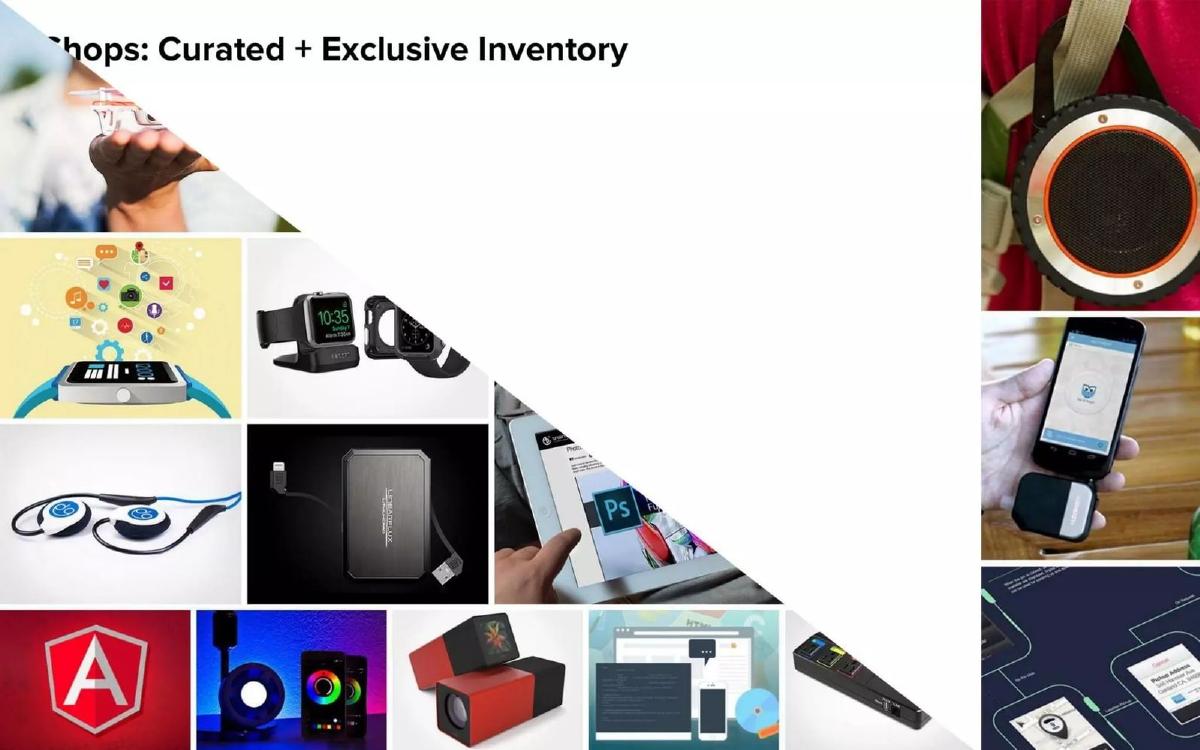
Slide 4 is a collage of products with the heading 'Shops: Curated + Exclusive Inventory.' The images include drones, smartwatches, headphones, and software (represented by the Adobe Photoshop and Angular logos). This slide addresses the 'Supply' side of the marketplace. It signals to investors that StackCommerce handles the difficult work of sourcing and vetting high-interest tech and lifestyle products, so the publishers don't have to.
Slide 5: The Proof of Concept (Retailer Case Study)
This is arguably the most important slide in the deck. Slide 5 presents a case study for 'Cloud Buds.' It lists three massive figures:
$375K Revenue Generated · 15,000 Customers Acquired · 55+ Editorial Posts
Below these numbers is a screenshot of a Business Insider article titled 'These hands-free headphones wirelessly connect to devices up to 30 feet away.' This slide proves that the model scales. It shows that a single product, when pushed through the StackCommerce network, can generate significant six-figure revenue and thousands of new customers.
Slide 6: The Publisher Network (Social Proof)
Slide 6 is a classic 'wall of logos.' It features 30 different publishers. The diversity is notable, ranging from massive mainstream tech sites like CNET and PC Magazine to niche enthusiast sites like Cult of Mac and Android Authority . For a Seed round, this level of partnership traction is exceptional. It tells the investor that the 'hard part'—convincing skeptical publishers to hand over their brand for a white-label store—has already been solved.
Slide 7: The 'Aha' Metric
Slide 7 focuses on a single partnership: The Next Web (TNW). The slide features a large '10%' graphic and a quote: 'WITH 3 MONTHS OF LAUNCHING ON THE NEXT WEB, STACKCOMMERCE WAS GENERATING 10% OF MONTHLY REVENUE.' This is a powerful 'bottom-up' validation. If StackCommerce can represent 10% of the total revenue for a major global publisher within 90 days, the potential for the rest of the logo wall on Slide 6 is enormous.
Slide 8: The Commerce-as-a-Service Growth Curve
Slide 8 provides the 'hockey stick' chart that every investor looks for. Titled 'Commerce-as-a-Service,' it shows a stacked area chart from Q1 2012 to Q1 2015. Each color represents a different publisher. You can see the revenue base growing as early partners like Cult of Mac and Mac|Life continue to perform, while new 'layers' like TNW , Android Authority , and BGR add significant vertical growth. The chart visualizes the 'stacking' effect of the business model—once a publisher is onboarded, they become a recurring revenue stream.
Slide 9: Market Opportunity and Segmentation
Slide 9 uses a concentric circle diagram to map out the 'Market Opportunity.' It shows where the company is 'Today' (Technology at 500M) and where it plans to go. The segments include:
Lifestyle: 1.36B · Business: 1.30B · News: 898.8M · Sports: 852.9M · Food: 589.5M · Automotive: 550.5M · Fashion/Beauty: 477.9M · Home: 430.8M · Health & Fitness: 275.1M
This slide demonstrates that while they started in tech (their 'beachhead'), the underlying technology is vertical-agnostic. The numbers likely represent the total addressable audience or reachable commerce spend in those categories.
Slide 10: The Team and Contact
The final slide, Slide 10 , is a full-color group photo of the StackCommerce team. While it conveys a sense of culture and scale (showing over 20 employees), it is notably missing the professional pedigree of the leadership. There are no mentions of Josh Payne’s background or the experience of the engineering team. The slide provides a link to their AngelList profile and a direct email for 'Josh.'
What Works in This Deck
The 'Show, Don't Tell' Philosophy: By using actual screenshots of their integrations on famous websites, StackCommerce bypasses the need to explain what 'native commerce' is. The investor can see it immediately. This builds instant credibility.
Focus on Publisher ROI: The 10% revenue contribution metric on Slide 7 is the ultimate hook. For an investor, this proves that the product is 'must-have' rather than 'nice-to-have' for publishers struggling with declining ad rates.
The Layered Growth Chart: Slide 8 is an excellent way to visualize a marketplace or platform business. It shows that they aren't just hunting for one-off deals; they are building a cumulative infrastructure where every new partner adds a permanent new layer of revenue.
What is Missing from This Deck
Detailed Team Biographies: For a Seed round, the 'Who' is often as important as the 'What.' This deck relies entirely on the 'What.' Investors usually want to see a slide detailing the founders' previous exits, industry experience, or technical expertise.
The Financial Ask: The deck does not state how much money they are looking for, what the valuation is, or what the specific milestones are for the next 18 months. While this might have been handled in a separate document or an in-person conversation, its absence makes the deck feel more like a sales presentation than a fundraising tool.
Unit Economics: While we see total revenue figures ($375K for Cloud Buds), we don't see the margins. What is the revenue split between the publisher, the retailer, and StackCommerce? What is the Customer Acquisition Cost (CAC) versus the Lifetime Value (LTV)? These are critical questions for a commerce-based business.
What a Founder Should Copy
The Single-Metric Success Slide: Slide 7 is the gold standard for a traction slide. Pick your best customer, find the most impressive percentage-based impact you've had on their business, and put it in giant font in the center of a slide. It is far more memorable than a table of 20 different KPIs.
Visualizing the 'Stack': If your business model involves onboarding partners that provide recurring value, use the stacked area chart format from Slide 8. It visually communicates the 'compounding' nature of your growth in a way a simple line graph cannot.
Vertical Expansion Map: Slide 9 is a great way to show a 'Land and Expand' strategy. By starting with a small center circle (Technology) and showing the larger surrounding circles (Lifestyle, Business), you show investors that you have a focused starting point but a massive eventual ceiling.
Frequently asked questions
- How much did StackCommerce raise with this deck?
- According to the catalogue listing from pitchdeckhunt.com, StackCommerce raised $800,000 in a Seed round in 2011. The deck itself does not state the amount raised or the valuation sought, which is common in decks shared publicly after a round closes.
- What is the core business model described in the deck?
- The deck describes a 'Commerce-as-a-Service' model. As shown on Slides 2 and 3, StackCommerce provides white-label 'Native Shops' and 'Native Editorial' content for publishers. They monetize by selling curated products (Slide 4) through these publisher channels, sharing revenue with the host site.
- Which publishers were already using StackCommerce at the time of this deck?
- Slide 6 displays a 'wall of logos' featuring 30 publishers. Notable names include CNET, PC Magazine, Lifehacker, 9to5Mac, BGR, The Next Web (TNW), IGN, Gizmodo, and Gawker Media. Slide 7 specifically notes a deep integration with The Next Web.
- What metrics are provided to prove the platform works?
- The deck provides three key proof points: a case study showing $375K in revenue for a single product (Slide 5), a 10% revenue contribution to a major publisher's total monthly income (Slide 7), and a layered growth chart showing accelerating revenue as the publisher network expands (Slide 8).
- Is there a team slide in the StackCommerce deck?
- Technically, no. Slide 10 features a group photo of approximately 25 people in front of the StackCommerce office, but it does not list names, titles, or previous experience of the founders or key executives. This is a notable omission for a Seed stage deck.